

The Vatican
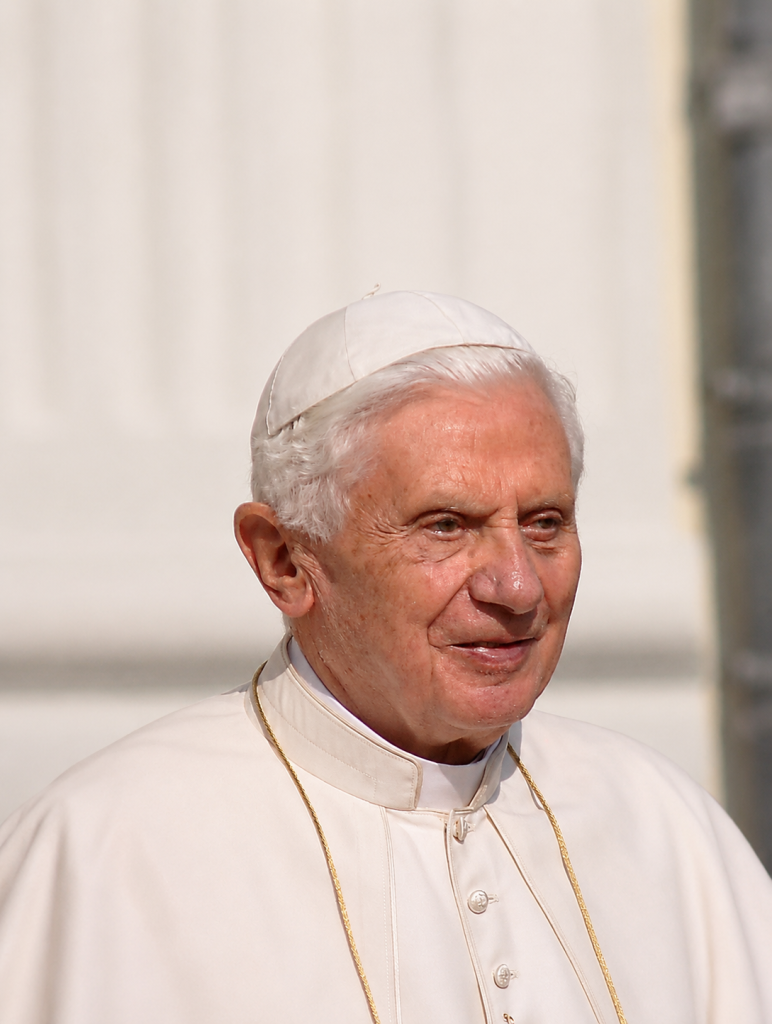
Vatican releases unpublished Benedict XVI homilies
The Vatican has released a collection of previously unpublished homilies preached by Pope Benedict XVI during private Masses as pope and pope emeritus The Vatican has published an English edition of a collection of previously unpublished homilies by Pope Benedict XVI just days before the 75th anniversary of his ordination to the priesthood. The volume, The Lord Holds Us by the Hand , gathers homilies delivered during private Masses celebrated by Benedict between 2005 and 2017, both during his pontificate and after his resignation from the papacy. Published by the Vatican Publishing House, LEV, the book makes available to English-speaking readers for the first time a series of reflections preached during the liturgical seasons of Advent, Lent and Easter in the chapel of the Apostolic Palace and later at the Mater Ecclesiae Monastery, where Benedict lived as pope emeritus. The publication comes ahead of 29 June, which marks the 75th anniversary of Joseph Ratzinger’s ordination as a priest in 1951, a milestone in a ministry that would eventually see the Bavarian theologian become prefect of the Congregation for the Doctrine of the Faith, pope and, following his historic resignation in 2013, pope emeritus. According to Vatican News, the collection was first published in Italian in 2025 under the title Il Signore ci tiene per mano . The English edition has been edited by Riccardo Bollati, Luca Caruso and Fr Federico Lombardi SJ, president of the Joseph Ratzinger-Benedict XVI Vatican Foundation. The volume includes a preface by Archbishop Georg Gänswein, Benedict’s former personal secretary, and an introduction by Fr Lombardi. The homilies were preached during Masses attended by members of the papal household and invited guests. Some were delivered while Benedict occupied the Chair of St Peter, while others came after he withdrew from public life following his resignation and took up residence at the Mater Ecclesiae Monastery in the Vatican Gardens. Although delivered in private settings, the texts revisit themes that ran throughout Benedict’s theological and pastoral work. Vatican News said they show his ability to draw from Sacred Scripture “light for faith, prayer, and daily Christian life”. The collection also highlights the central place of Christ in Benedict’s thought. Throughout the homilies he returns to the theme of a personal relationship with Jesus Christ and the conviction that the Christian life is sustained by God’s presence and mercy. Vatican News said the title itself points to the reality that “the Christian life is not a solitary path, but a journey guided by the presence and mercy of God”. The publication offers readers a further glimpse into Benedict’s life after his resignation, when he largely disappeared from public view while continuing a quiet routine of prayer, study and the celebration of Mass within the Vatican. Though he rarely intervened publicly during those years, the homilies show that he continued to reflect on Scripture and the liturgical life of the Church until advancing age gradually curtailed his activities. Pope Benedict died on 31 December 2022 at the age of 95, almost a decade after becoming the first pope in nearly 600 years to resign from office. Since his death, interest in his theological legacy has remained strong, with publishers and foundations continuing to make previously unpublished material from his long ecclesiastical career available. The release of The Lord Holds Us by the Hand forms part of that wider effort. Vatican News reported that a second volume containing Benedict’s unpublished homilies from Ordinary Time is expected to follow. To mark the 75th anniversary of Pope Benedict XVI’s ordination to the priesthood on 29 June, AdVaticanum has published a special nine-day series featuring some of the most significant homilies, addresses and reflections from across his public ministry. Readers can follow the commemorative series throughout the novena period in this publication. Image credit: WDKrauseDerivate work: Художник992 (talk) – This file was derived from: Benedicto XVI, 2011.jpg:, CC BY-SA 3.0, https://commons.wikimedia.org/w/index.php?curid=191776416
Jun. 25, 2026
SSPX sends 28-page profession of faith to Pope and cardinals ahead of consistory
The SSPX has sent a 28-page profession of faith and open letter to Pope Leo XIV and the College of Cardinals ahead of the Extraordinary Consistory, just days before its planned episcopal consecrations at Ecône. One senior cardinal tells AdVaticanum the looming consecrations are already on the minds of the princes of the Church as they prepare to gather in Rome The Society of Saint Pius X has issued an open letter to Pope Leo XIV and the College of Cardinals during the week of the Extraordinary Consistory at the Vatican, releasing a 28-page Profession of Faith just days before its planned episcopal consecrations at Ecône on 1 July. The letter, dated 24 June, the Feast of the Nativity of St John the Baptist, is signed by SSPX Superior General Fr Davide Pagliarani, First Assistant Bishop Alfonso de Galarreta, Second Assistant Fr Christian Bouchacourt, former Superior General Bishop Bernard Fellay and former Superior General Fr Franz Schmidberger. The documents were first published in Italian by the traditionalist website Messa in Latino, which said it had received them from “sources at the highest levels”. AdVaticanum later obtained the full text of the Profession of Faith through SSPX sources. Addressing Pope Leo XIV and the cardinals directly, the Society said it believed the time had come to make “an integral profession of the Catholic faith” and place it before the Church’s highest authorities. “On the eve of the Consistory scheduled for the end of this month, and only days before the episcopal consecrations planned for 1 July at Ecône, it seems to us that the time has come for the Priestly Fraternity of Saint Pius X to make an integral profession of the Catholic faith, which we wish to place into the hands of Your Holiness and of each of the Cardinals,” the letter states. The SSPX said the Church was facing grave difficulties and that it could not remain silent. “Today the Church suffers under the pressure of new forces, arising both from within and from without, which are driving her in every possible direction except, so it seems to us, the right one. Faced with such suffering, we cannot remain indifferent.” The Society said the answer to the Church’s present problems was not to be found in new solutions but in fidelity to Tradition. “It does not belong to the Priestly Fraternity of Saint Pius X to indicate the path to be followed, but rather to the Church’s bimillennial Tradition, faithfully preserved and handed down by the Apostolic See throughout the centuries, and which many now regard, in practice, as an outdated reality, subject to continual evolution.” The letter says the accompanying Profession of Faith was written “in the face of the principal errors and the gravest dangers of our time” and argues that Catholic Tradition contains the remedies for the Church’s present crisis. “We are convinced that Tradition contains all the remedies for the deepest evils from which the Church and the world suffer, and for which solutions are sought in vain outside it.” The Society also expressed the hope that the text could become the basis for future discussions with the Holy See. “We hope that one day this doctrinal text may serve as the basis for a frank discussion with the Holy See, in a peaceful, fraternal, and charitable spirit.” Describing the declaration as a positive affirmation of Catholic belief rather than a protest document, the SSPX added: “The text that we present to you is not the sterile litany of a group of nostalgics, but the necessary expression, peaceful yet resolute, of our faith.” The Profession of Faith itself is a detailed restatement of traditional Catholic doctrine and includes explicit rejections of a number of theological and philosophical currents which the Society says have contributed to confusion within the Church. Early in the document, the authors argue that current circumstances require a complete presentation of Catholic teaching. “In the present confusion, it is no longer sufficient to recall a few isolated truths. It has become indispensable to set in full light the entire order of Catholic doctrine, in its supernatural coherence and luminous harmony, omitting no dogma, diminishing no truth.” The text goes on to state: “I consequently reject all errors contrary to this Faith, and in particular those of liberalism, indifferentism, modernism, ecumenism, and laicism, condemned by Popes Pius IX, Leo XIII, Saint Pius X, Pius XI, and Pius XII.” Among the themes addressed are grace, original sin, redemption, the Church, the liturgy and the social kingship of Christ. Rejecting what it describes as modern attempts to redefine faith, the declaration states: “I consequently reject the error of modernism, as it still rages today, which reduces faith to an interior experience, to a sensible aspiration, or to a progressive realisation in the believing community.” On original sin, it says: “In Adam, however, the nature of man was not destroyed, but only wounded,” before adding: “I likewise reject all doctrines which, in a senseless optimism, minimise original sin, naively exalt the native goodness of man.” The document also reaffirms traditional teaching on Christ’s redemptive sacrifice. “I therefore reject every doctrine which would reduce the Redemption to a simple manifestation of God’s love. The Cross is not merely a sign: it is the altar of the redemptive Sacrifice.” The text follows this with a rejection of what it calls “false ecumenism”. “I therefore reject false ecumenism, which rests upon the idea that the Holy Ghost would not refuse to use separated communities as means of salvation.” One of the longest sections concerns the Social Kingship of Christ, a doctrine strongly associated with pre-conciliar Catholic social teaching. “I profess that Our Lord Jesus Christ is King not only of individuals, but also of families, institutions, peoples, and nations.” The declaration adds that Christ’s reign “must extend to the external forum, to laws, morals, education, culture, and public life”. The final section deals with the liturgy and offers a defence of the traditional Roman Mass while criticising the reforms introduced after the Second Vatican Council. “I profess that the traditional Roman Mass expresses with incomparable clarity the Catholic doctrine of Sacrifice.” The text continues: “I observe with sorrow that the contemporary liturgical reforms have departed considerably from the traditional liturgy, and thereby contributed preponderantly to the loss of the sense of the sacred.” The letter concludes with the words of St Paul, “For we can do nothing against the truth, but only for the truth,” before adding: “We too believe; therefore we speak.” As the Extraordinary Consistory convenes this Friday, with the Vatican expected to bring all the cardinals to Rome, including those beyond voting age, one senior cardinal speaking off the record to AdVaticanum earlier this week acknowledged that the impending 1 July SSPX episcopal consecrations remain a “looming topic” among the princes of the Church, even if they will not feature in any public discussion. “We are reminded by the statements from Cardinal Fernández earlier this year and more recently,” the senior cardinal said, “and we are intellectually aware of the episcopal consecrations.” The cardinal added: “As the consistory is only this Friday, we think about it, about the implications for unity and for the Church’s witness in a fractured age.”
Jun. 24, 2026
Vatican letter rules on German bishops’ request for lay preaching at Mass
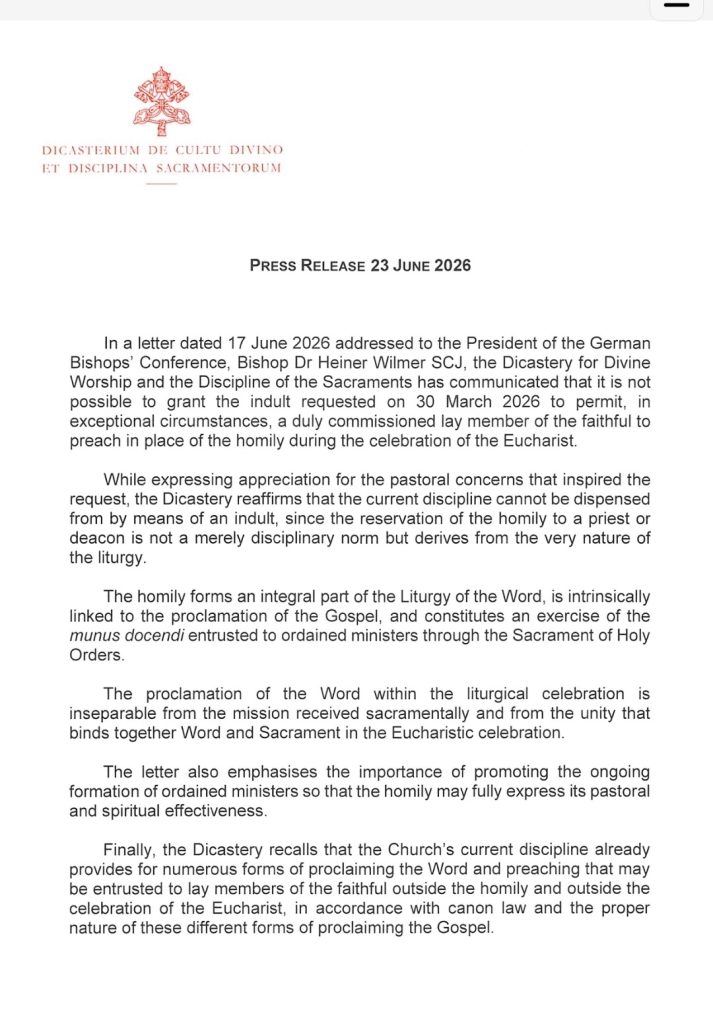
A Vatican letter has ruled on a request from the German bishops to allow lay people to preach the homily during Mass The Vatican has rejected a request from the German Bishops’ Conference to permit lay people to preach the homily during Mass. In a letter dated 17 June to Bishop Heiner Wilmer SCJ, president of the German Bishops’ Conference, the Dicastery for Divine Worship and the Discipline of the Sacraments said it was “not possible to grant the indult requested” by the bishops on 30 March. The request sought permission for “a duly commissioned lay member of the faithful to preach in place of the homily during the celebration of the Eucharist” in exceptional circumstances. The decision was made public by the dicastery on 23 June. While expressing appreciation for the pastoral concerns behind the request, the Vatican department said that “the current discipline cannot be dispensed from by means of an indult”. It added: “The reservation of the homily to a priest or deacon is not a merely disciplinary norm but derives from the very nature of the liturgy.” The dicastery said the homily “forms an integral part of the Liturgy of the Word”, is “intrinsically linked to the proclamation of the Gospel”, and “constitutes an exercise of the munus docendi entrusted to ordained ministers through the Sacrament of Holy Orders”. It further stated that “the proclamation of the Word within the liturgical celebration is inseparable from the mission received sacramentally and from the unity that binds together Word and Sacrament in the Eucharistic celebration”. The Holy See also used the letter to underline the importance of priestly formation, saying that ongoing formation should enable homilies to express their “pastoral and spiritual effectiveness”. At the same time, the dicastery noted that Church law already provides opportunities for lay Catholics to proclaim the Gospel and preach in settings other than the homily during Mass. The statement said: “The Church’s current discipline already provides for numerous forms of proclaiming the Word and preaching that may be entrusted to lay members of the faithful outside the homily and outside the celebration of the Eucharist, in accordance with canon law and the proper nature of these different forms of proclaiming the Gospel.” The request was submitted amid continuing discussions in Germany concerning the role of lay people within the life of the Church, with questions relating to lay ministry, governance and preaching featuring prominently in recent years, particularly during the Synodal Way process, which brought together bishops and lay representatives to debate a range of issues affecting the Church in Germany. The preaching of the homily during Mass has long been reserved to bishops, priests and deacons. Canon 767 of the Code of Canon Law states that, among the forms of preaching, “the homily is pre-eminent” and that it is reserved to a priest or deacon. The discipline was reaffirmed in the 1997 Vatican instruction Ecclesiae de Mysterio , issued with the approval of St John Paul II, which stated that the homily “must be reserved to the sacred minister, priest or deacon”, excluding “non-ordained members of the faithful” from preaching it during the Eucharistic celebration. The dicastery’s rejection directly addresses a formal request submitted by the German Bishops’ Conference following its spring plenary assembly, held from 23 to 26 February 2026 in Würzburg. At that meeting, the newly elected conference president, Bishop Heiner Wilmer SCJ, announced that the bishops had discussed and adopted a regulatory framework to govern lay preaching at Mass. The roots of the initiative go back to 10 March 2023, during the final plenary assembly of the Synodal Way in Frankfurt, where participants including bishops and lay delegates approved a text on the proclamation of the Gospel. That text called on the German bishops to “draw up a particular norm and obtain permission from the Holy See” allowing theologically and spiritually qualified lay faithful, commissioned by the bishop, to deliver the homily during Eucharistic celebrations on Sundays and feast days. This is not the first such rejection. After the 2023 Synodal Way vote, Cardinal Arthur Roche, then prefect of the Dicastery for Divine Worship and the Discipline of the Sacraments, responded negatively in a detailed letter dated 29 March 2023 to the then president of the German Bishops’ Conference, Bishop Georg Bätzing. Cardinal Roche rejected the proposal for regular lay preaching in place of the homily at Mass, warning that it could create “misunderstandings about the figure and identity of the priest” in the minds of the faithful. He stressed the inseparability of Word and Sacrament as expressions of sacra potestas conferred by Holy Orders, rather than merely functional tasks, and pointed to Pope Francis’s 2021 expansion of the instituted ministries of lector and acolyte to women and lay people as a more appropriate avenue for lay liturgical involvement. Despite that earlier rejection, the German bishops proceeded with their February 2026 decision to formalise and resubmit the request. The letter is reproduced in full below:
Jun. 23, 2026
Vatican publishes detailed programme for Extraordinary Consistory
The Vatican has published an unusually detailed programme for the Extraordinary Consistory, setting out the themes cardinals will discuss as well as the procedures, time limits and reporting structure for the two-day meeting The Vatican has released an unusually detailed briefing on this month’s Extraordinary Consistory of Cardinals, revealing not only the themes to be discussed but also the tightly controlled procedures that will govern the meeting. In an information note issued to accredited journalists, the Holy See Press Office confirmed that cardinals attending the 26–27 June meeting have been instructed to maintain confidentiality and refrain from speaking to the media during the proceedings “in order to maintain a climate of fraternal dialogue”. As usual, journalists will not be permitted into the hall during discussions, but the Vatican has promised a degree of transparency beyond that seen at many previous consistories. The Holy Father’s opening remarks and concluding address will be broadcast live by Vatican Media, while the texts of the biblical meditation and the principal introductory speeches delivered during the four sessions will be released to accredited journalists. The Vatican also said that summaries of proceedings will be distributed after each of the first three sessions. The briefing additionally disclosed the internal structure of the discussions. As was the case during the January consistory, participants will be divided into separate groups. One section will consist of nine groups made up of cardinal electors serving as ordinaries, including apostolic nuncios and cardinal electors who have completed service as diocesan ordinaries. A second section will comprise eleven groups made up of cardinals serving in the Roman Curia together with non-elector cardinals. Each group will be assigned a chairman and secretary. The chairman will moderate discussion, while the secretary will be responsible for collecting contributions and drafting a final report on behalf of the group. The Vatican also revealed a strict methodology for discussion. After a brief introduction lasting around ten minutes, proceedings in each group will unfold in three stages. The first stage consists of personal interventions, with each cardinal limited to a maximum of three minutes while responding to questions set out in the programme. The second stage, described by the Vatican as “shared listening”, will allow participants to speak again for a maximum of two minutes. During this phase, no new proposals may be introduced. Cardinals are instead expected to identify “the most significant points that emerged from the previous listening session”. The third stage will focus on drafting a report. According to the Vatican note, “The Secretary, with the help of all the Group members, collects the fruits of the discussion and proceeds to draft the final report.” Reports prepared by the groups will then be presented during plenary sessions. The Vatican said the groups of cardinal ordinaries will each present reports lasting no more than three minutes, while the other groups will also be given an opportunity to report back. The first session on 26 June will open with a biblical meditation by Cardinal Grzegorz Ryś under the title “In what world are we called to proclaim the Gospel?” Cardinals will then discuss two questions. The first asks: “What sufferings, tensions and questions are most forcefully affecting the peoples and ecclesial communities entrusted to your care today?” The second asks: “What signs of hope, of fidelity to the Gospel, and of possible reconciliation are important to bring to common listening?” The afternoon session will focus on “The culture of power and the civilisation of love”. The discussion will be introduced by Cardinal Víctor Manuel Fernández and will draw on Chapter V of the papal text Magnifica Humanitas , specifically paragraphs 182 to 192. Cardinals will be asked: “How do the tensions, divisions and conflicts that are sweeping across the world today affect the life of our Churches and our peoples?” A second question asks: “What languages, attitudes and practices can help build reconciliation, coexistence and peace?” The programme released by the Vatican shows that the following morning’s discussions will be introduced by Cardinal Stephen Brislin under the heading “Building for Good: The Construction Sites of Our Time”. The session will draw upon the introduction and conclusion of Magnifica Humanitas and ask cardinals to identify fractures within their own societies that make it more difficult to pursue the common good. The cardinals will also be invited to consider: “What expectations and questions emerge from the people and peoples that the Church is called to listen to and that perhaps we do not listen to enough?” A third question asks what “supports, guidelines, or initiatives from local Churches and the universal Church could most effectively assist the commitment to building the common good”. The final session of the consistory will move to the New Synod Hall and focus on implementation of the Synod. Cardinal Mario Grech will introduce discussions using the document Towards the Synodal Assemblies 2027–2028: Stages, Criteria, and Tools for Preparation . Unlike the previous sessions, the programme provides for a dedicated period of questions seeking clarification on the synodal process before cardinals enter into direct dialogue with Pope Leo XIV. The final exchange will consist of free interventions limited to three minutes before the Pope delivers a concluding address. The Vatican’s information note also confirmed that all reports produced by the discussion groups will be submitted electronically. “ The consistory will conclude with the singing of the Te Deum before a dinner with Pope Leo XIV in the Paul VI Hall. The publication of both the programme and the procedural framework provides one of the clearest indications yet of how this pontificate intends to conduct consultation with the College of Cardinals, while also revealing the specific texts, questions and discussion methods that will shape deliberations over the two days. The most striking aspect of the release is the extent to which the structures and working methods developed during the pontificate of Pope Francis have survived into the reign of Pope Leo XIV. The synodal framework established under Francis was never likely to disappear. Even so, the level of continuity revealed by the consistory programme is notable. The division of cardinals into small discussion groups, the emphasis on “shared listening”, the appointment of secretaries responsible for producing collective reports, and the strict time limits imposed on interventions all mirror procedures that became familiar during the Synod on Synodality. Rather than marking a departure from the Francis era, the arrangements suggest that many of its assumptions about consultation and decision-making remain firmly embedded within the Vatican’s institutional culture. We saw during the January consistory that synodal elements would remain part of the Vatican’s approach to consultation, and that expectation has now been borne out. That gathering was framed largely around listening, small-group discussion and collective reporting, and the same methodology now appears to have been carried over into the forthcoming Extraordinary Consistory. The prominence given to the Synod Secretariat is equally revealing. The final session of the consistory will not simply discuss synodality in general terms but will be structured around the Secretariat’s document, Towards the Synodal Assemblies 2027–2028: Stages, Criteria, and Tools for Preparation , with Cardinal Mario Grech leading the discussion. That decision points to the continuing influence of the synodal apparatus created during the previous pontificate. The fact that an Extraordinary Consistory of Cardinals is being organised according to methodologies developed by the Synod Secretariat, and that the future stages of the synodal process occupy a dedicated session with the Pope himself, shows that the office remains one of the most important centres of influence in the Vatican, with a role that extends well beyond the conclusion of the Synod on Synodality itself.
Jun. 23, 2026
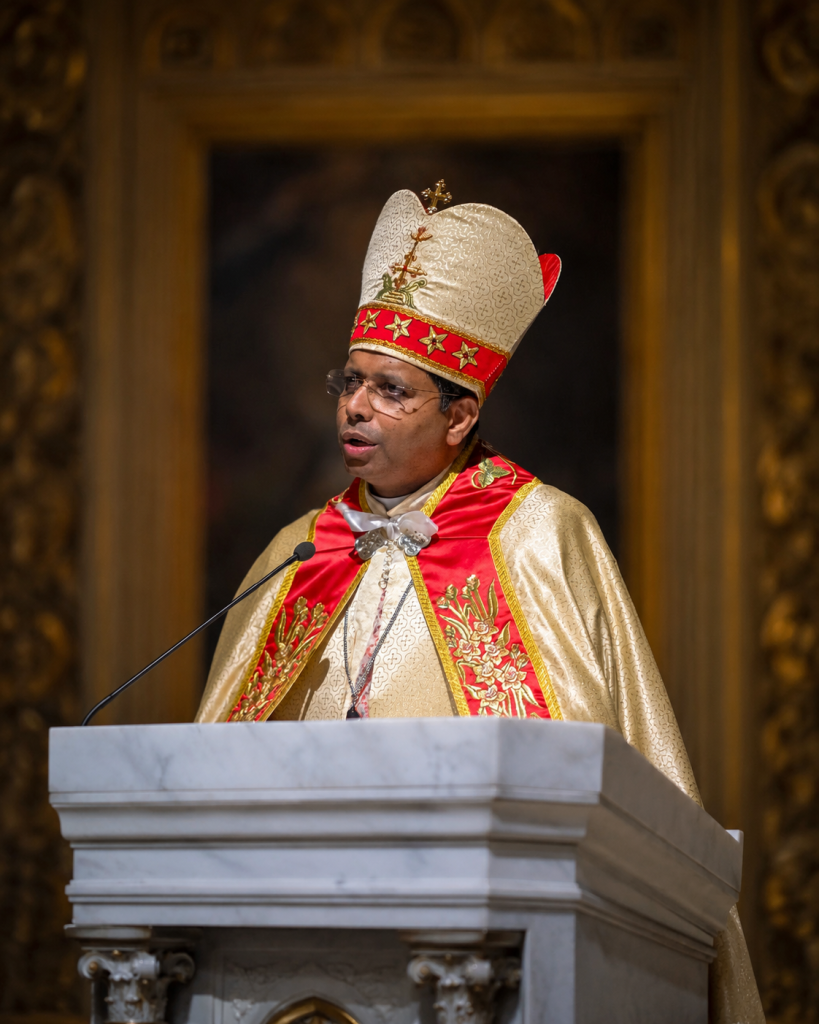
Cardinal Koovakad on dialogue with Patriarch Kirill and Pope Leo’s visit to a mosque
Cardinal Koovakad has spoken to AdVaticanum about the Church’s approach to interreligious dialogue, why he met Patriarch Kirill and what Pope Leo’s visit to a mosque meant. Cardinal George Jacob Koovakad is the Prefect of the Dicastery for Interreligious Dialogue, the Vatican department responsible for promoting understanding, cooperation and engagement between the Catholic Church and followers of other religious traditions. After joining the Holy See’s diplomatic service in 2006, following studies at the Pontifical Ecclesiastical Academy, he held posts in Algeria, South Korea, Iran, Costa Rica and Venezuela. His experience later led to his being entrusted with the organisation of papal trips, including high-risk journeys such as Pope Francis’s 2021 visit to Iraq, earning him the reputation of being the Francis pontificate’s “travel agent” as he arranged the complex itinerary of one of the most travelled popes in history. Created a cardinal in 2024 and appointed Prefect of the Dicastery for Interreligious Dialogue in 2025, his career has marked a series of firsts. He is the first member of the Syro-Malabar Catholic Church to head a curial department. He was also the first Indian priest to be created cardinal before being appointed a bishop, and, at the age of 51, the youngest cardinal in the history of the Syro-Malabar Church. In this exclusive interview with AdVaticanum, he discusses the work of his department, the justification for his 2025 meeting with the Patriarch of Moscow, and Pope Leo’s visit to the Great Mosque of Algiers. AV: Can interreligious dialogue and evangelisation coexist without tension, or is there an inherent conflict between them? +JK: The document Dialogue and Proclamation argues that interreligious dialogue and evangelisation can coexist because both are essential dimensions of the Church’s evangelising mission. It clearly states that dialogue and evangelisation are “interrelated yet not interchangeable” (§77). Dialogue does not replace proclamation, and proclamation must be carried out in a spirit of dialogue. Theologically, this document sees no inherent conflict between the two. Dialogue is part of the “dialogue of salvation” initiated by God (§80), while proclamation seeks to lead people to explicit faith in Jesus Christ (§81). The Church therefore recognises the presence of “seeds of the Word” in other religions (§82) while still affirming the uniqueness of Christ as Lord and Saviour. At the practical level, however, tensions can arise. Proclamation may sometimes be perceived as disrespectful or as hidden proselytism, while excessive emphasis on dialogue can weaken the call to proclaim the Good News. For this reason, the document stresses discernment, sensitivity to context, respect for freedom, and guidance by the Holy Spirit. To overcome this tension, Dialogue and Proclamation proposes a spirituality of dialogue rooted in humility, love, and authentic witness. Christians are called to engage sincerely with followers of other religions while also sharing, when appropriate, the joy and hope they have found in Christ (§83). Jesus himself is presented as the model who united openness to others with faithful proclamation (§85). Thus, dialogue and evangelisation are not opposing activities but complementary expressions of the Church’s one mission. AV: The Church often engages with religious actors and states whose records on human rights are contested. How do you balance dialogue with moral clarity? +JK: The Church is open to engaging in dialogue with everyone, based on her conviction that every human person is created in the image of God and remains the object of God’s salvific concern. Interreligious dialogue is not mere diplomacy or pragmatic coexistence, but part of the Church’s evangelising and salvific mission. Therefore, dialogue cannot mean moral relativism, silence in the face of injustice, or the dilution of truth claims. At the same time, moral clarity should not lead to hostility, exclusion, or a refusal of encounter. A “positive evaluation” of other religious traditions involves recognising in them “rays of truth”, “seeds of the Word”, and the action of the Holy Spirit. This theological openness obliges the Church to approach religious actors, even those situated within imperfect political or social systems, with “presence, respect and love”. Dialogue is thus maintained because the Church believes that God’s grace can operate within every human and religious context, and because genuine engagement may foster a change of mind and heart, purification, and a deeper commitment to truth and justice. At the same time, discernment is necessary. Not everything in religious traditions or their social expressions is good. Because sin affects all human institutions and cultures, the Church must be capable of recognising contradictions between certain practices and the demands of the Gospel. Thus, engagement with religious actors or states whose human rights records are problematic does not imply endorsement of all their actions. The Church distinguishes between respect for persons and approval of policies. The Church enters dialogue not by abandoning moral principles, but by witnessing to truth within relationship. Hence, moral clarity is exercised through prophetic witness, defence of human dignity, advocacy for peace and justice, and fidelity to conscience, while dialogue remains the preferred method because it mirrors God’s own “dialogue of salvation” with humanity. Therefore, the Church’s engagement with contested religious or political actors can be understood through a dual fidelity: fidelity to truth, justice, and the dignity of the human person; and fidelity to dialogue as a means of peace, mutual understanding, and cooperation with the action of the Holy Spirit in history. In practice, this means the Church neither withdraws from engagement nor compromises essential moral principles. Rather, she seeks a form of dialogue that is truthful, respectful, discerning, and transformative. AV: In regions marked by distrust or even persecution, what does meaningful “dialogue” actually look like in practice? +JK: In these contexts, meaningful dialogue does not primarily begin with formal theological discussions. According to Dialogue and Mission , dialogue first takes the form of an attitude: one of respect, patience, presence, and shared humanity (§29). In difficult contexts, dialogue often becomes a “dialogue of life”, where Christians and followers of other religions learn to live together with mutual dignity despite tensions and differences. Distrust and persecution often exist because of a lack of dialogue. In that context, dialogue can become one of the most powerful antidotes to misunderstanding and conflict. Practically, this may involve simple but significant acts: defending one another’s human rights, cooperating for peace and justice, helping the poor together, sharing daily life, or maintaining relationships of hospitality and solidarity (§31–32). In situations of persecution, dialogue may even consist in refusing hatred and revenge, and instead witnessing to forgiveness and reconciliation. Authentic dialogue requires learning “to forgive” and “to understand the heart of others” even amid disagreement and historical wounds. Dialogue is inseparable from respect for freedom of conscience. Therefore, meaningful dialogue cannot involve coercion, manipulation, or proselytism. Rather, Christians are called to give witness to their faith “with courtesy and respect”, while remaining open to listening and learning from others. In such fragile contexts, dialogue may not produce immediate visible results. Christians are invited to trust the work of the Holy Spirit, who acts silently within peoples and cultures. Thus, meaningful dialogue in hostile environments is often quiet, gradual, and relational rather than institutional or doctrinal. It is ultimately a witness to the Gospel through love, endurance, humility, and the commitment to remain open to the other even in times of fear and division. AV: In 2025 you met privately with Patriarch Kirill, who has lent theological legitimacy to the war in Ukraine, and described the encounter as “deeply meaningful.” Do you believe private diplomacy can exert any real moral pressure on religious leaders who have aligned themselves with political violence? +JK: The Dicastery for Interreligious Dialogue is entrusted with the mission of fostering encounter, communication, and mutual understanding among peoples of all faiths, religious traditions, and cultural backgrounds. Through its various initiatives and engagements, the Dicastery seeks to promote peace, justice, the common good, and the spirit of human fraternity that unites the members of the one human family. Pope Francis consistently maintained that dialogue should remain open even in moments of serious conflict and moral disagreement. While he criticised religious language used to justify war, he also believed that breaking communication entirely would not help the cause of peace. Authentic dialogue can only flourish when it is carried out with openness of heart and freedom from prejudice towards the persons one encounters. Conversations shaped by preconceived judgements or narrow assumptions seldom bear meaningful fruit. True dialogue, instead, calls for attentive listening, mutual respect, intellectual honesty, and a sincere appreciation of the dignity of every human person. Every encounter thus becomes more than a simple exchange of ideas; it is a hopeful and constructive effort to contribute to the harmony of society and to the advancement of humanity. In a world often marked by division and misunderstanding, dialogue remains an indispensable path towards reconciliation, solidarity, and peaceful coexistence among peoples and nations. AV: You accompanied Pope Leo on his visit to Africa in April, including his encounter with a mosque. What moments stood out to you as revealing the true potential, or limits, of interreligious dialogue? And what is the theological significance of a Pope entering and praying in a non-Catholic religious site? +JK: Theologically, a Pope entering and praying in non-Christian spaces is understood not as an act of religious relativism or syncretism, but as a gesture of respect, dialogue, peace, and shared human solidarity. The document Dialogue in Truth and Charity makes a careful distinction between “praying together” and “being together for prayer” (§83). Catholics believe that authentic Christian prayer is always through Christ and in the Holy Spirit (§81); therefore, common interreligious prayer implying a shared understanding of God is generally avoided. When a Pope visits a mosque, synagogue, temple, or other non-Christian sacred space, such gestures should be interpreted primarily as expressions of openness, mutual respect, and the Church’s commitment to interreligious dialogue. They witness to the dignity of the religious search present in humanity and encourage peace and fraternity among peoples. Pope John Paul II explained after the Assisi meeting that while believers of different religions cannot ordinarily “pray together” in the strict sense, they can remain present while others pray, showing reverence for the sincere search for God by others. Thus, Catholics should understand papal gestures in non-Christian spaces as symbolic acts of encounter and dialogue, not as a denial of the uniqueness of Christ or as approval of all religious beliefs equally. The document insists that such occasions require prudence and must avoid any appearance of relativism or syncretism (§83). The Pope’s presence in such places therefore has a pastoral and diplomatic significance: it reflects the Church’s mission to foster peace, mutual understanding, and respectful coexistence while remaining faithful to Christian doctrine.
Jun. 22, 2026
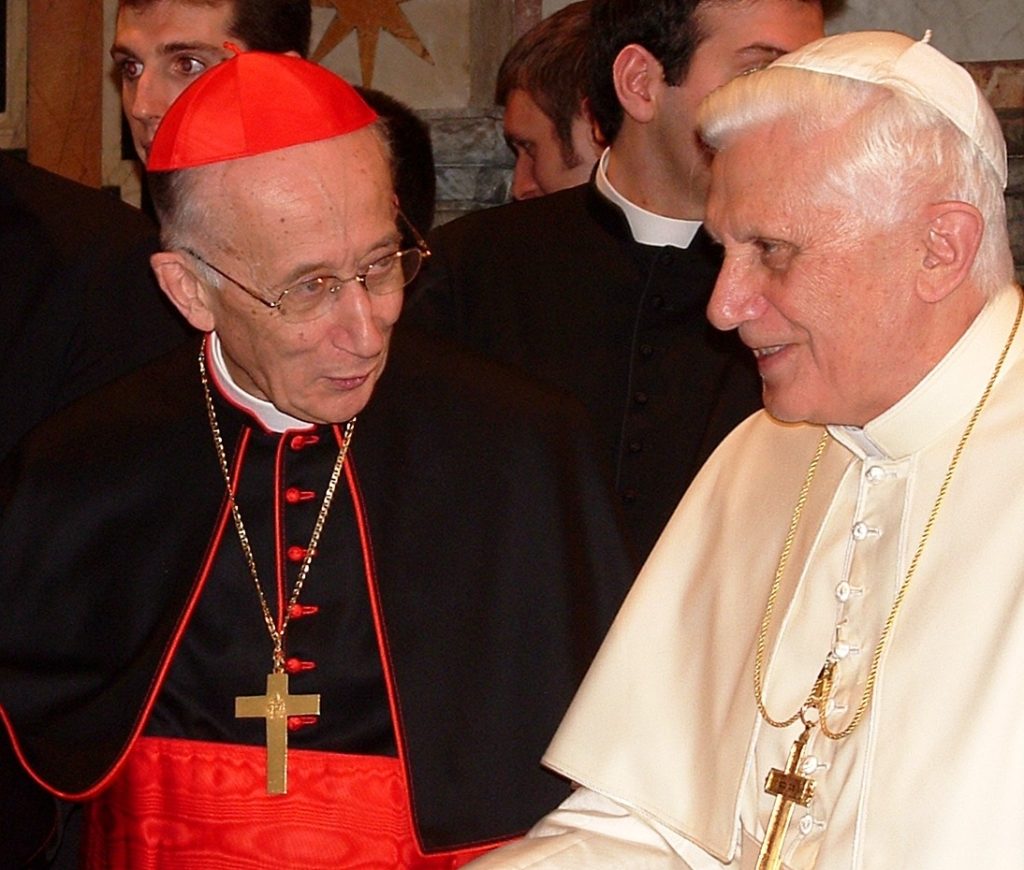
Cardinal Ruini’s testament reveals final thoughts on Pope Francis
The full testament of Cardinal Camillo Ruini has been published, including passages on Pope Francis and the post-conciliar Church that this publication can reveal some close to the late cardinal feared might never be made public. Read more. The full testament of Cardinal Camillo Ruini has been published after people close to the late cardinal expressed concern that parts of the document might never be made public. The disclosure followed the late cardinal’s death and Pope Leo XIV’s citation of the testament during his homily at Ruini’s Requiem Mass. The testament was exclusively published by Messa in Latino , which released the complete spiritual text and stated that it was doing so to prevent the document from being “cut” or amended. The revelation has taken on additional significance as AdVaticanum can reveal that there were concerns the testament would not be published in its entirety. To date, neither the Holy See Press Office nor the Vatican has done so. On good authority, this publication can reveal that people close to the late cardinal wanted the complete testament published, particularly those sections dealing with the post-Second Vatican Council Church and Pope Francis. Reflecting on the last pontificate, Cardinal Ruini expressed gratitude for what he described as the late Pope’s “extraordinary evangelising drive”, but also acknowledged a struggle with some of the directions taken by the Church in recent years. “When Pope Francis was elected, I rejoiced and, to the extent I could, immediately supported him,” the late cardinal wrote. “Even today, I rejoice and thank him for his extraordinary evangelising drive.” Yet the cardinal continued with a note of candour unusual in a spiritual testament: “I must confess, however, that I find myself in a state of unease, certainly not for personal reasons, but because I struggle to understand certain orientations that seem to reopen wounds that have barely healed since the Council. I humbly ask the Lord to convince me inwardly that the Church is His and that He Himself cares for it, beyond our human views.” Long regarded as one of the most influential churchmen of the post-war Italian Church, Cardinal Ruini was a steadfast supporter of the Second Vatican Council while also becoming one of the most prominent critics of what he viewed as distortions in its implementation. That dual concern is visible throughout the testament. Reflecting on his years as a priest in Reggio Emilia, Cardinal Ruini gave thanks for the Council itself, writing that he was grateful “for the Second Vatican Council, for having experienced it and helped others experience it joyfully in Reggio Emilia, and also for having given me the clarity and strength to oppose the post-conciliar excesses”. The cardinal presented himself as a defender of the Council who believed that some developments undertaken in its name had gone beyond the intentions of the Fathers who gathered in Rome between 1962 and 1965. The testament also sheds fresh light on Ruini’s relationship with the last three pontificates. He described St John Paul II as “a very special grace”, recalling more than two decades of close collaboration after becoming one of the Polish Pope’s most trusted advisers. “In John Paul II, I experienced your presence, Lord,” Cardinal Ruini wrote. “I was able to touch firsthand the union in prayer, the inseparability of prayer, life and apostolate, the courage of faith that guides history, and the capacity to love and forgive.” His words concerning Pope Benedict XVI were similarly affectionate. “After John Paul II, I collaborated for three years with Benedict XVI, and I thank him wholeheartedly, also for the affection he continues to show me,” the late cardinal wrote. Yet despite his immense ecclesiastical influence, the testament is notable for its intensely personal and penitential tone. Cardinal Ruini repeatedly asks forgiveness for failures, weaknesses and sins, presenting himself not as a prince of the Church but as a Christian preparing for judgement. “I confess first of all the weakness of my faith,” the former Cardinal Archpriest of St John Lateran wrote. “Despite all this, however, in the depths of my heart I have always been sustained by faith, even though, by the grace of God, I believe I have never succumbed to temptation.” The testament also reveals a recurring theme of gratitude. Cardinal Ruini meticulously recalled family members, friends, priests, collaborators and colleagues who shaped his life, from his childhood in Sassuolo to his years at the Gregorian University and the Almo Collegio Capranica, and later his service as President of the Italian Bishops’ Conference and Cardinal Vicar of Rome. At the same time, he acknowledged that the authority he exercised could sometimes be accompanied by severity. “I recognise and confess, however, that I have at times acted with substantial harshness,” he wrote, before asking forgiveness from those whom he had caused pain. In the end, however, the testament is less a political statement than a spiritual examination of conscience. Its final pages are occupied not by ecclesiastical disputes but by an appeal for mercy and perseverance. “Lord, faithful God, never tire of loving me, calling me, and converting me,” Cardinal Ruini wrote. “Father, rich in mercy, grant me and all my brothers and sisters in humanity the grace of final perseverance.”
Jun. 18, 2026