

The Vatican
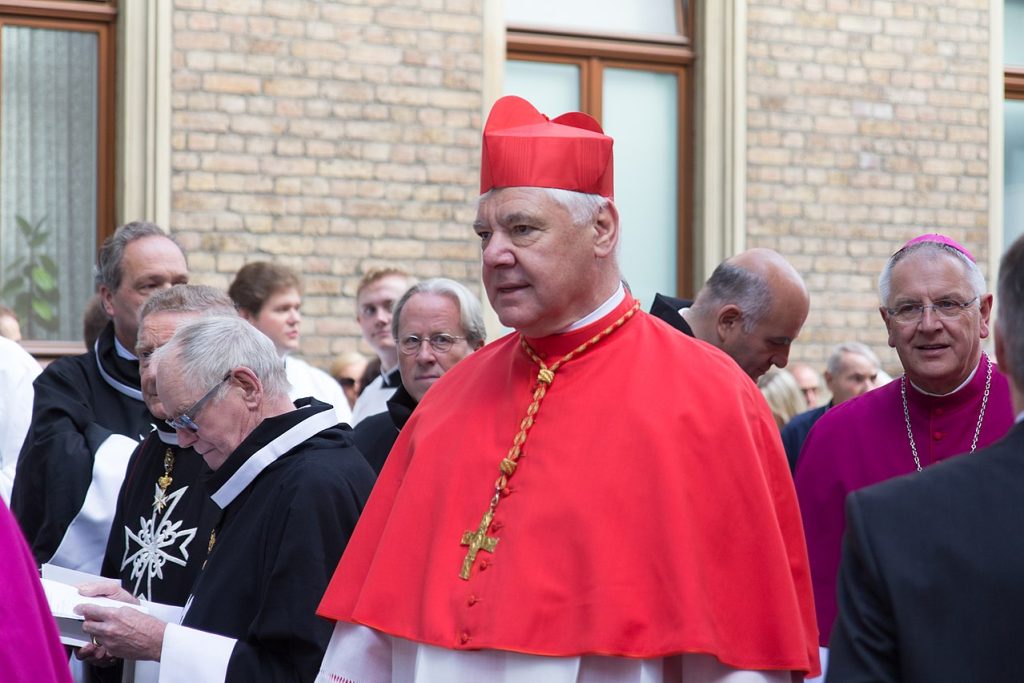
Cardinal Müller’s warning to Europe: recover your Christian roots or face decline
Cardinal Gerhard Müller used a Rome conference organised by I RadicaTi dal diritto naturale alla legge to deliver a warning about the EU and the future of Europe Cardinal Gerhard Müller has warned that Europe risks losing its identity and even its future unless it rediscovers the Christian foundations upon which it was built. The former Prefect of the Congregation for the Doctrine of the Faith was the principal speaker at a conference in Rome on 17 June entitled “Eurogender Diktat: Christian Roots, Religious & Educational Freedom at Risk in the EU”, organised by the newly established Catholic association I RadicaTi dal diritto naturale alla legge and hosted at the Chamber of Deputies by Massimo Milani, a member of the governing Brothers of Italy party. The event offered a sweeping critique of secularism, gender ideology, globalism and the growing ideological conformity within the European Union. The conference took place less than 24 hours after the death of Cardinal Camillo Ruini, the influential former president of the Italian bishops’ conference. His passing cast a shadow over the proceedings and was referenced repeatedly by speakers, who presented his legacy as an example of Catholic engagement in public life. Opening the conference, the association’s president, Luigi Trisolino, recalled Cardinal Ruini’s call for Catholics to remain active in politics despite their increasingly minority status in Europe. “Ruini told Catholics: even if you are now a minority in Europe, at least be a creative minority,” he said. “And that is what we will try to do together this evening.” The conference was convened to discuss the implications of recent European legislation and broader cultural developments within the EU. Speakers argued that contemporary interpretations of anti-discrimination measures risk undermining religious liberty and freedom of expression. Trisolino claimed that European institutions had increasingly embraced gender ideology, describing it as hostile to Christianity and traditional understandings of the family and human identity. He argued that recent European measures created an unequal system of protection based on identity categories and warned that criticism of progressive social policies could increasingly be treated as a form of discrimination. “Sacred religious and educational freedoms are put at risk by this illiberal EU measure,” he said, adding that those who defended Europe’s Christian roots were frequently portrayed as opponents of progress. Massimo Milani, the host of the event, whose party forms part of Prime Minister Giorgia Meloni’s governing coalition, likewise argued that many of the liberties celebrated by modern European societies were rooted in Christianity. “If today we in Europe and in the West in general can talk about human rights, of personal liberties, we must remember that if this is possible it is because we live in a society, in a free culture that owes this freedom precisely to the religious principles that have informed our culture for centuries,” he said. The strongest intervention of the evening, however, came from Cardinal Müller, who delivered an extensive address examining Europe’s religious, cultural and political trajectory since the Second World War. Drawing on the thought of figures including Konrad Adenauer, Alcide De Gasperi, Robert Schuman, Joseph Ratzinger and Benedetto Croce, he argued that Europe’s future could not be separated from its Christian inheritance. The German cardinal argued that the architects of European integration envisaged a Europe deeply conscious of its Christian foundations. Christianity, he said, had not merely influenced European culture but had provided the moral basis upon which concepts such as human dignity, conscience, freedom and equality had developed. Europe, he argued, was not simply a political or geographical project but a civilisation shaped by Christianity. Referring to the continent’s gradual Christianisation and the formation of a common Christian culture, he said Europe had become a historical unity through a shared understanding of the human person rooted in the Gospel. “On this foundation stands today the EU,” he said, warning that without the Gospel Europe would “suicidally give itself over to its downfall”. The cardinal repeatedly returned to the theme of Christian identity, arguing that Europe’s present crisis stemmed from a deliberate attempt to sever the continent from its religious roots. Among his sharpest criticisms was the state of the family. Cardinal Müller said Europe was experiencing “the dissolution of marriage and the family and of personal identity”, presenting this as one of the defining features of the continent’s cultural crisis. He also criticised gender ideology and attempts to redefine human nature itself. Warning against transhumanist and post-human philosophies, he criticised what he called a “Jacobin-like gender transformation contra to the natural family and personal identity”. He also accused European institutions and some national governments of promoting what he termed a “gender-totalitarianism”, warning that democratic societies risked drifting towards what the nineteenth-century French thinker Alexis de Tocqueville described as a “soft despotism”. Rather than relying on overt repression, Cardinal Müller argued, such systems sought to shape public behaviour through bureaucracy, regulation and cultural pressure. He claimed this process could already be seen in parts of Europe through policies promoting gender ideology and restricting dissent from progressive orthodoxies. His Eminence’s criticism of the European Union became increasingly direct as the address progressed. He singled out the Digital Services Act and broader regulatory structures as examples of excessive bureaucratic intervention. Referring to what he called the “Orwellian fantasy” of surveillance and content regulation, he warned against allowing political institutions to assume responsibility for determining truth and falsehood in public discourse. Governments, he argued, should pursue the common good rather than claim authority over truth itself. The cardinal’s criticisms extended beyond the EU and governments to international organisations and networks that he associated with globalist thinking. Cardinal Müller referred to the “globalists of the New World Order” and criticised the influence of organisations such as the World Economic Forum and the Club of Rome. The Prefect Emeritus argued that such elites were advancing an ideological programme that marginalised Christianity while promoting secular and technocratic approaches to society. He claimed Europe was increasingly being transformed into “an experimental field for atheistic woke ideology”, in which religious belief was gradually pushed from public life and reduced to a private matter. The cardinal further expressed concern about migration, arguing that Europe faced significant cultural and demographic challenges. He claimed that large-scale immigration had been encouraged by political leaders without adequate consideration of integration or social cohesion. Throughout the address, Cardinal Müller drew heavily on the Catholic intellectual tradition, citing figures including Benedict XVI, Joseph Ratzinger, Marcello Pera, Benedetto Croce and Reinhold Niebuhr. He argued that faith and reason must work together if societies were to address the ethical challenges posed by technological developments, including artificial intelligence. Cardinal Müller also pointed to Pope Leo XIV’s encyclical Magnifica Humanitas and Benedict XVI’s Regensburg Lecture as guides for addressing the moral questions raised by emerging technologies. Echoing themes found in both texts, he warned that technological progress must remain subject to moral truth and the dignity of the human person. “We must not become dogs to the masters of AI,” he said, arguing that faith and reason together offered the only adequate framework for ensuring that humanity remained master of its inventions rather than their servant. Quoting Benedict XVI’s reflections on reason and faith, Cardinal Müller maintained that Europe needed a broader understanding of reason capable of engaging questions of morality, truth and human dignity rather than reducing human knowledge solely to what could be scientifically verified. He concluded by urging Europeans to recover confidence in their Christian heritage rather than abandon it. The continent’s future, he argued, depended upon recognition of natural moral law and universal human rights rooted in the dignity of every person.
Jun. 18, 2026
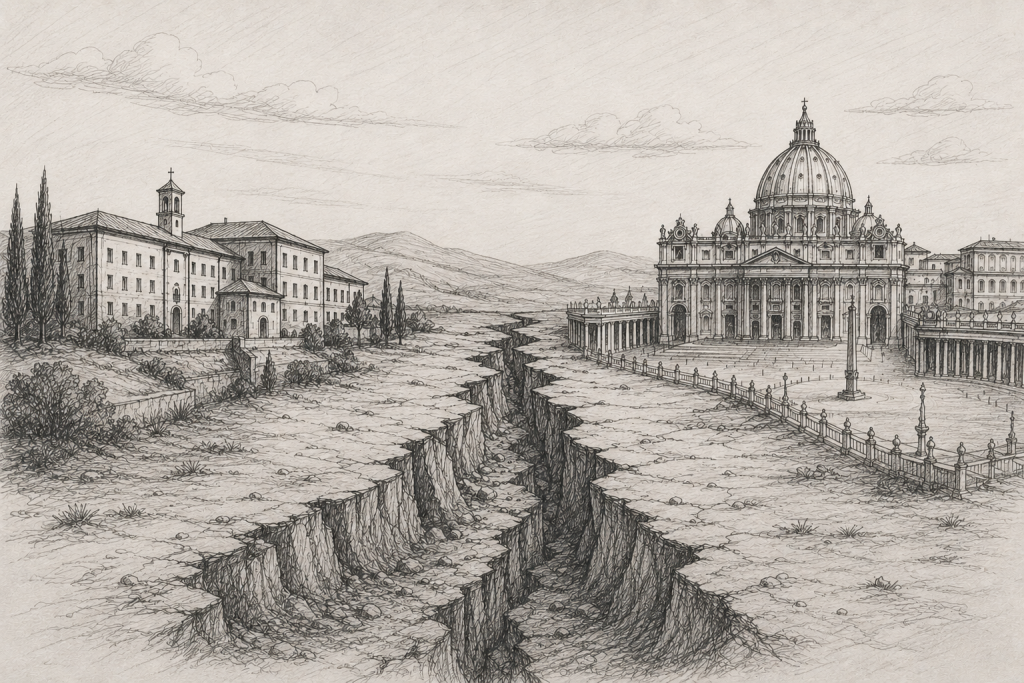
Pope Leo’s SSPX appeal reveals the real fault line
Pope Leo XIV has urged the SSPX not to proceed with its planned episcopal consecrations on 1 July. Yet his remarks may have revealed something more significant: where Rome believes the real obstacle to reconciliation lies. Analysis by Niwa Limbu Pope Leo XIV has made a fresh appeal to the Society of St Pius X (SSPX) to abandon plans to consecrate four bishops without papal approval. Speaking to journalists outside Villa Barberini in Castel Gandolfo on 16 June, the Pope said he was considering making one final request to the traditionalist society before the planned consecrations on 1 July at the SSPX seminary in Écône, Switzerland. “We have invited them, and I am still considering making another appeal, to say: ‘Do not do this. Let us try to live communion in the Church,’” the Pope said. “But it is their choice. They must understand what it means for them and for the Church.” The remarks represent Pope Leo’s clearest public intervention since the SSPX announced earlier this year that it intended to proceed with the episcopal consecrations despite the absence of a pontifical mandate. The Society has argued that the measure is necessary to ensure the continuation of its sacramental and apostolic work. Its leadership has maintained that an “objective state of grave necessity” exists within the Church, requiring the appointment of new bishops to safeguard the future of the fraternity’s ministry. The Vatican, however, has repeatedly expressed concern that episcopal consecrations carried out against the explicit will of the Roman Pontiff would constitute a grave rupture in ecclesial discipline. The prospect of such a step led to the crisis of 1988, when Archbishop Marcel Lefebvre consecrated four bishops without papal approval, resulting in Rome declaring that a schismatic act had taken place. Pope Leo indicated that the dispute is not merely procedural but touches on deeper theological questions. Referring to the SSPX’s longstanding criticisms of the Second Vatican Council, he said division within the Church remained “a painful matter”, adding that the Society continued to reject “certain fundamental elements of the Church, beginning with various points of the Second Vatican Council”. His Holiness added: “If they make those choices, I am sorry. But we must move forward.” The Pope’s comments come after months of exchanges between the Holy See and the Society. Earlier this year, the SSPX confirmed its intention to proceed with the consecrations, while subsequent contacts between Rome and the fraternity failed to produce an agreement. On 12 February, a meeting took place in Rome between SSPX Superior General Fr Davide Pagliarani and Cardinal Víctor Manuel Fernández, Prefect of the Dicastery for the Doctrine of the Faith. The encounter, described by the Vatican as “cordial and sincere”, saw Cardinal Fernández propose a structured path of theological dialogue aimed at addressing unresolved doctrinal questions, particularly those concerning the Second Vatican Council and the “minimum requirements necessary for full communion”. Cardinal Fernández made clear that any such dialogue could only proceed if the SSPX agreed to suspend the planned 1 July consecrations. He warned that proceeding without a papal mandate would constitute a “decisive rupture of ecclesial communion (schism)” with grave canonical consequences, including automatic excommunication. In a letter dated 18 February and made public the following day, Fr Pagliarani responded that, while the SSPX welcomed the idea of renewed doctrinal discussions in principle, it could not accept the condition of postponing the consecrations. “We both know in advance that we cannot agree doctrinally, particularly regarding the fundamental orientations adopted since the Second Vatican Council,” he wrote, while renewing the Society’s request for a personal audience with Pope Leo XIV. Subsequent exchanges failed to bridge the gap. In May, the Vatican reiterated its warnings, and the SSPX published a “Declaration of Catholic Faith” outlining what it considers the minimum necessary for communion while reiterating its concerns about post-conciliar errors. On 26 May, the Society publicly named the four priests slated for consecration, framing the act as a necessary service to souls amid the ongoing crisis in the Church. As the 1 July date at the Écône seminary approaches, negotiations appear effectively stalled. The SSPX maintains its position that an “objective state of grave necessity” justifies the consecrations to ensure the continuation of its sacramental ministry, while the Vatican insists on canonical obedience and prior doctrinal resolution. Generally speaking, Pope Leo XIV addressed the Society of St Pius X in a manner that was pastoral, regretful yet resolute, characteristic of his style thus far. The delivery was conversational and non-confrontational, yet doctrinally unambiguous. By speaking informally to journalists rather than issuing a formal Vatican statement, the Pope signalled personal investment without escalating the matter into a formal magisterial intervention. This approach is indicative of how Vatican communications have evolved in handling such matters. Most importantly, it marks a change from previous pontificates. It represents the first time a Pope has offered an off-the-cuff public comment on the SSPX situation in the lead-up to planned episcopal consecrations. By contrast, there was no specific public comment by Pope John Paul II on the planned 1988 SSPX episcopal consecrations prior to Archbishop Lefebvre’s announcement and the immediate lead-up in early June 1988. What is really happening remains unclear, with little clarified in the public exchanges between Rome and the Society. The Pope’s remarks reflect this ongoing and opaque reality. For many hoping for a resolution to the SSPX question, the latest developments will bring both frustration and renewed determination. The Pope’s sorrow is evident and more irenic than some had feared. Yet the public emphasis on Vatican II as the fault line confirms long-held suspicions. Rome still views critiques the of post-conciliar Church as the core obstacle, not merely Lefebvrist intransigence. If the SSPX holds to what the Church taught before Vatican II, and Leo indicates that it cannot be accepted because of what Vatican II taught, then there is a perceived mutual exclusivity between what Catholicism was and what Catholicism is. How can continuity be maintained when pre-conciliar teachings appear at odds with the post-conciliar emphases now presented as essential?
Jun. 17, 2026
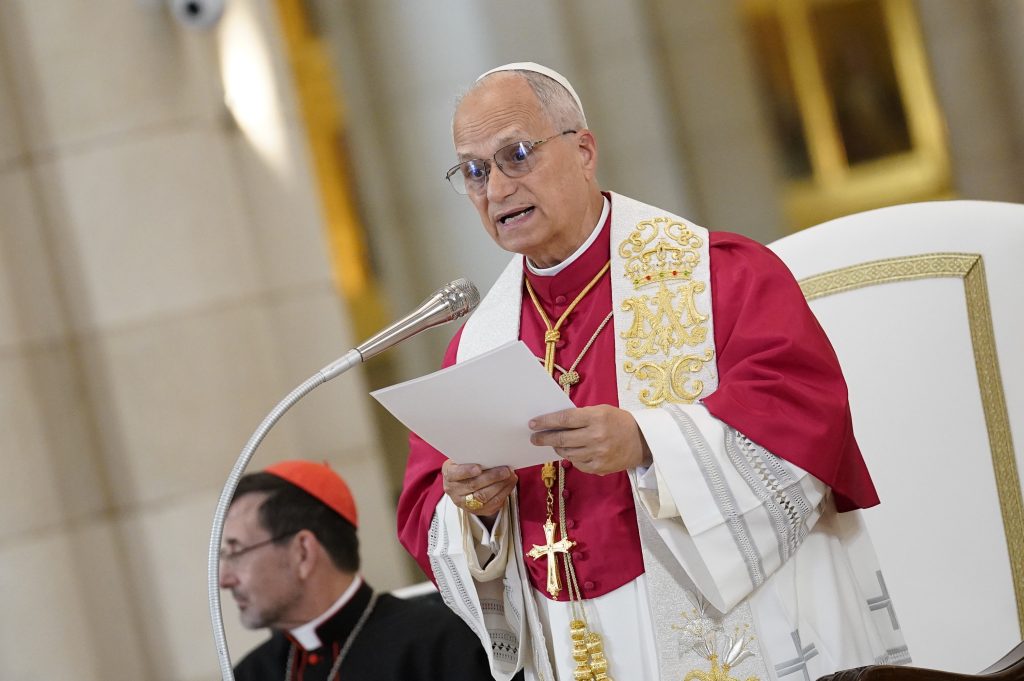
Details of June consistory revealed
New documents have shed light on Pope Leo XIV’s extraordinary consistory later this month, offering a clearer picture of what cardinals will discuss when they gather in Rome The full calendar for Pope Leo XIV’s Extraordinary Consistory has been revealed. Documents circulated to participants and published by the Italian blog MessainLatino show that the two-day meeting on 26 and 27 June will focus on the implementation of the Synod, the Church’s missionary mission and Pope Leo’s recent encyclical Magnifica Humanitas . While the broad themes had already been disclosed to the press, the additional documents reveal strict rules governing interventions, the drafting of reports and communications with the media. The gathering will begin on the morning of 26 June with Mass in St Peter’s Basilica celebrated by Pope Leo XIV. Cardinals are due to assemble beforehand in the Chapel of St Sebastian before proceeding to the liturgy. Following the Mass, participants will move to the Paul VI Hall, where documentation and identification badges will be distributed before the formal opening of proceedings. The first working session, entitled “In What World Are We Called to Proclaim the Gospel?”, will begin with the singing of the Veni Creator Spiritus , an address by Cardinal Giovanni Battista Re, Dean of the College of Cardinals, and introductory remarks by the Pope. Cardinals will then hear a biblical meditation before breaking into discussion groups. They will be asked to reflect on “what sufferings, tensions and questions” are most urgently affecting the peoples and ecclesial communities entrusted to their care, and to identify signs of hope, fidelity to the Gospel and possibilities for reconciliation. The afternoon session, entitled “The Culture of Power and the Civilisation of Love”, will draw directly upon Chapter Five of Magnifica Humanitas . Cardinals will be invited to consider how global conflicts and divisions affect both local Churches and wider society, while discussing what “languages, attitudes and practices” might contribute to reconciliation and peace. A third session on the morning of 27 June will focus on what organisers describe as “The Construction Sites of Our Time”. Using the introduction and conclusion of Magnifica Humanitas as points of reference, participants will discuss social, cultural and ecclesial fractures that make it more difficult to pursue the common good. They will also examine expectations emerging from ordinary Catholics and wider society and consider what support local Churches may require in responding to contemporary challenges. The final session will be devoted to the implementation of the Synod. Cardinals will receive an update on preparations for the Synodal Assemblies planned for 2027 and 2028 before participating in an open dialogue with Pope Leo XIV. The programme concludes with a final address by the Pope and the singing of the Te Deum , before a dinner with the Holy Father in the Paul VI Hall. The accompanying confidential note sheds considerable light on how Pope Leo intends the discussions to be conducted. According to the document, the Pope wishes to draw upon “the wealth of experience and wisdom present in the College of Cardinals” and regards the meeting as an opportunity for “fraternal discussion” on the principal challenges facing the Church’s life and mission. Participants have been divided into twenty discussion groups. Nine groups consist of cardinal electors serving as diocesan ordinaries, together with apostolic nuncios and retired ordinaries. The remaining eleven groups are composed of members of the Roman Curia and cardinals over the age of eighty. The organisers state that this structure demonstrates the Holy Father’s desire to give particular attention to the experiences of local Churches throughout the world and to ensure that perspectives from different continents and ecclesial contexts are heard. Each group will be led by a chairman responsible for moderating discussions and ensuring that time limits are respected. A secretary will be tasked with collecting contributions and preparing a final report on behalf of the group. The discussions themselves will follow a carefully defined three-stage methodology. In the first phase, each cardinal will be permitted to speak for a maximum of three minutes while responding to the questions assigned to the session. In the second phase, participants will be allowed a further intervention of no more than two minutes. Rather than introducing new proposals, they will be expected to identify the most important themes that emerged during the earlier round of discussion. The third phase will involve the preparation of a report summarising the principal points raised. The secretary will draft the text with assistance from the other members of the group before it is approved and submitted electronically to organisers. The reports will then form the basis of plenary discussions. Groups composed of cardinal ordinaries will present their conclusions to the assembly, while the remaining groups will also be given an opportunity to report on their deliberations. Presentations will be limited to three minutes. The confidential note stresses that Pope Leo attaches particular importance to these plenary exchanges. Time has been reserved at the conclusion of each session for additional personal interventions, while cardinals may also submit written observations of up to two pages. One of the most notable features of the programme is the final open dialogue with the Holy Father. Cardinals will be able to address Pope Leo directly, although contributions are again expected to remain within a three-minute limit. The organisers emphasise that disagreements should not be suppressed. “Tensions and disagreements should not be avoided,” the note states, provided they are addressed “with respect and fraternal affection”. Moderators have nevertheless been instructed to enforce speaking limits strictly in order to ensure broad participation. The documents also impose strict confidentiality requirements on the Vatican press corps. Cardinals have been asked not to issue statements to journalists during the course of the consistory. While a press conference will be held after the meeting concludes, participants are specifically instructed not to reveal the identity of speakers when discussing the proceedings. The note further establishes confidential channels through which cardinals may communicate privately with the Pope. Contributions submitted through these channels will not be included in summaries of the discussions and will be accessible only to the Holy Father. The Extraordinary Consistory will conclude on 29 June when cardinals join Pope Leo for Mass marking the Solemnity of Saints Peter and Paul. Metropolitan archbishops appointed during the past year will receive the pallium during the liturgy. (Photo credit: Á. Pérez Meca/EUROPA PRESS)
Jun. 17, 2026
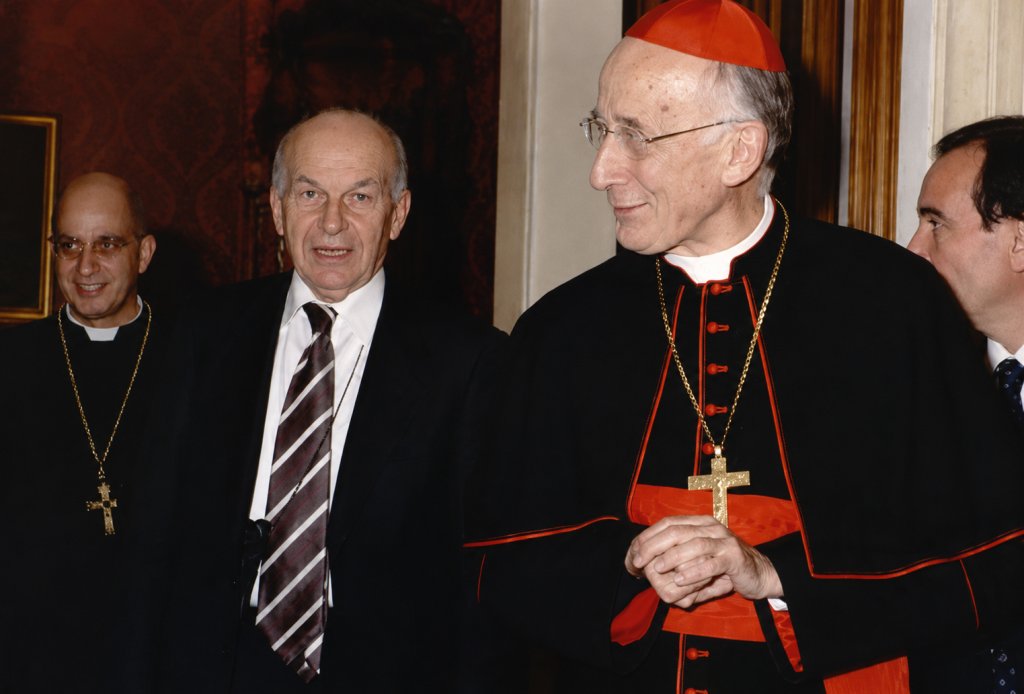
Cardinal Camillo Ruini dies aged 95 ahead of extraordinary consistory
Cardinal Camillo Ruini, one of the most influential figures in modern Italian Catholicism and a close collaborator of Pope John Paul II, has died aged 95. His death comes just days before cardinals gather in Rome for Pope Leo XIV’s extraordinary consistory Cardinal Camillo Ruini, former head of the Italian bishops and one of the most consequential Church leaders of the pontificate of Pope John Paul II, has died aged 95, little more than a week before cardinals from around the world are due to gather in Rome for an extraordinary consistory. The Diocese of Rome announced his death on Tuesday evening. In a statement issued by Cardinal Baldassare Reina, the Pope’s Vicar for Rome, and the diocesan episcopal council, the Church in Rome said: “Grateful for his long and fruitful Christian life and for his service to the Church, we entrust Cardinal Camillo Ruini to the mercy of the Lord.” As president of the Italian Bishops’ Conference from 1991 until 2007 and Vicar General of the Diocese of Rome from 1991 until 2008, he exercised a level of influence rarely achieved by a churchman in post-war Italy. Born in Sassuolo, in the province of Modena, on 19 February 1931, Ruini pursued studies in philosophy and theology in Rome at the Pontifical Gregorian University while residing at the Almo Collegio Capranica. Ordained a priest on 8 December 1954, he returned to his native Emilia-Romagna and spent decades engaged in teaching, formation and pastoral work. He taught philosophy and dogmatic theology in seminaries and theological institutes across the region and became known for his intellectual gifts and organisational abilities. His rise through the Church hierarchy accelerated during the 1980s, particularly after his involvement in preparations for the 1985 National Ecclesial Convention in Loreto, an event that sought to define the Church’s engagement with Italian society after the political and cultural upheavals of the preceding decades. Appointed an auxiliary bishop of Reggio Emilia-Guastalla in 1983, he soon attracted the attention of Rome. In 1986, Pope John Paul II brought him to the capital as secretary-general of the Italian Bishops’ Conference. Five years later, the Polish pontiff elevated him to the College of Cardinals and entrusted him with two of the most important positions in Italian Catholicism. Throughout his leadership, he argued that Catholics should not retreat from public life but should instead engage confidently in the cultural and political debates shaping the nation. His most notable interventions often concerned issues relating to marriage and the family. Cardinal Ruini repeatedly warned against legal measures that he believed would weaken the institution of marriage or undermine the family founded upon it. He emerged as one of the most prominent Catholic opponents of efforts to grant full legal recognition to same-sex relationships, arguing that such measures risked obscuring the unique social role of the family. He also played a decisive role during the 2005 referendum campaign concerning Italy’s laws on artificial insemination and assisted reproduction. Rather than urging Catholics to vote against proposed changes, he encouraged abstention in order to prevent the referendum from reaching the turnout threshold required for validity. The strategy proved successful when participation fell short of the required level, a significant victory for the Church and for Ruini personally. Beyond individual political battles, he frequently reflected on broader cultural trends affecting Europe. He warned against aggressive forms of secularism and argued that Europe risked losing touch with its Christian roots. Tributes poured in from across the political and ecclesiastical spectrum following news of his death. Cardinal Matteo Zuppi, the current president of the Italian Bishops’ Conference, praised his predecessor’s contribution to the Church in Italy. “We gather in prayer and entrust to the mercy of the Father Cardinal Camillo Ruini, whom the Lord has called to Himself. We remember with gratitude his long and fruitful Christian life and his service to the Church,” Cardinal Zuppi said. His Eminence added: “He served the Church with intelligence and pastoral passion. He helped the Church in Italy to think, discern, speak and walk in its own time.” Italian Prime Minister Giorgia Meloni described Ruini as “a great man of the Church, of extraordinary intelligence and profound humanity, who defended with vigour the identity, mission and role of Catholics in Italian society”. She said she had been honoured to know him personally and called him “one of the most lucid minds of Italian society”, expressing hope that his “spiritual, cultural and human legacy” would continue to bear fruit. Deputy Prime Minister Matteo Salvini wrote that Ruini had been “a point of reference for millions of Italian Catholics” who dedicated his life to “the Church, to dialogue, and to the defence of Western values, always with courage and consistency”. Foreign Minister Antonio Tajani also paid tribute, describing him as “an authoritative figure of the Church” and “a strenuous defender of traditional values” who remained “a precious interlocutor for politics and institutions”. His death comes at a notable moment in the life of the Church, arriving shortly before cardinals gather in Rome for Pope Leo XIV’s extraordinary consistory, where Cardinal Ruini would have been a valued participant. The meeting, whose programme was recently outlined by Cardinal Giovanni Battista Re, will draw together members of the College of Cardinals for discussion and consultation. In his letter to the cardinals, Cardinal Re explained that the Holy Father wished to draw upon the experience and counsel of the College while fostering a climate of “listening, freedom and parrhesia” among the participants. The gathering will open with a period of prayer and discussion focused on the international situation, with cardinals invited to share the sufferings, tensions and concerns affecting their local Churches, as well as signs of hope and reconciliation emerging amid conflict and uncertainty. Subsequent sessions will centre on Pope Leo XIV’s encyclical Magnifica humanitas , particularly its reflections on war, peace and the moral responsibilities of nations. Discussions are expected to examine the Holy Father’s call for a renewed commitment to peace and his rejection of attempts to justify armed conflict through appeals to the traditional theory of the “just war”. A further session will consider the encyclical’s broader vision of Christian hope and integral human development in a rapidly changing world. The final day of discussions will focus on the implementation of the Synod process and preparations for the Synodal Assemblies of 2027 and 2028, before concluding with an open dialogue between the cardinals and the Pope.
Jun. 17, 2026
Pope Leo strengthens safeguarding commission with new Vatican statute
Pope Leo XIV has approved a new statute for the Pontifical Commission for the Protection of Minors, strengthening the Vatican body’s role in promoting safeguarding standards across the Church. The revised statute, approved ad experimentum for three years, was promulgated through a rescript signed by Cardinal Pietro Parolin, the Vatican Secretary of State, following an […] Pope Leo XIV has approved a new statute for the Pontifical Commission for the Protection of Minors, strengthening the Vatican body’s role in promoting safeguarding standards across the Church. The revised statute, approved ad experimentum for three years, was promulgated through a rescript signed by Cardinal Pietro Parolin, the Vatican Secretary of State, following an audience with the Pope on 20 May. It replaces the commission’s previous governing norms issued in 2015 and aligns its work with the reforms of the Roman Curia introduced under the apostolic constitution Praedicate Evangelium . Among the most significant changes is the formal requirement that the commission prepare an annual report on safeguarding policies and initiatives throughout the Church. The report will be submitted directly to the Pope and may be published with his consent. The commission said the annual review is intended to provide “a reliable account of the Church’s policies and initiatives for protection” while also identifying shortcomings and proposing improvements. Drawing on information supplied by Vatican departments, bishops’ conferences, religious institutes and other ecclesiastical bodies, it is expected to become one of the principal instruments through which safeguarding practices are monitored at a global level. The new statute also gives the commission a more clearly defined role in helping dioceses, episcopal conferences, Eastern Catholic Churches and religious congregations develop and update safeguarding guidelines. It emphasises the need for accessible reporting mechanisms and support structures for victims and survivors of abuse. Under the revised norms, the commission is tasked with encouraging the establishment of stable and easily accessible systems through which allegations of abuse can be reported. It is also instructed to promote centres where victims can receive support, spiritual assistance, and medical, therapeutic and psychological care. The statute further provides for intervention when safeguarding systems are judged to be inadequate. Article 6 states that in cases involving “repeated violations” of safeguarding norms or “serious deficiencies” in local reporting structures, the commission may submit assessments and recommendations to the competent dicasteries of the Holy See so that they can exercise their responsibilities. While the commission remains an advisory body rather than a governing authority, the provision establishes a clearer pathway through which concerns about safeguarding failures can be communicated to Vatican departments with disciplinary or supervisory powers. The revised text also envisages a role for the commission during bishops’ ad limina visits to Rome. These regular visits, during which bishops meet the Pope and Vatican officials to discuss the state of their dioceses, may now include discussions concerning safeguarding conditions and the implementation of protection measures. Archbishop Thibault Verny, president of the Pontifical Commission for the Protection of Minors, welcomed the publication of the new statute and said it demonstrated a growing commitment to safeguarding throughout the life of the Church. “The Statutes mark an important step in deepening our shared responsibility to protect and care for the most vulnerable,” the Archbishop said. He continued: “They reflect listening to victims and survivors, to safeguarding experts, and to the experience of local Churches, and reaffirm that safeguarding remains a central priority.” The commission said the revised statute strengthens its operational effectiveness while maintaining an emphasis on approaches informed by the experience of victims and survivors. It added that the new framework reinforces its role in promoting “accountability, transparency and good safeguarding practices globally”. The document also clarifies the commission’s relationship with the Dicastery for the Doctrine of the Faith, the Vatican department responsible for handling allegations of clerical sexual abuse. The commission is formally established within the dicastery while retaining its own distinct mandate. The two bodies will exchange information, collaborate on safeguarding methodologies and training programmes, and work together in preparing the annual safeguarding report. To facilitate cooperation, either the president or secretary of the commission will serve as a member of the Dicastery for the Doctrine of the Faith for the duration of his mandate, while the dicastery may appoint observers to the commission’s plenary assemblies. The commission itself may consist of up to 23 members appointed by the Pope for renewable five-year terms. Members may be clerics, religious or lay people and are chosen from different countries on the basis of their expertise, professional competence and experience in safeguarding. The publication of the statute comes more than a decade after Pope Francis established the Pontifical Commission for the Protection of Minors in 2014. The commission was originally created to advise the Pope on safeguarding policies and to help develop a culture of prevention throughout the Church. Its work has included producing safeguarding guidelines, promoting training initiatives and supporting local Churches in developing procedures for handling allegations of abuse. Its history has not been without difficulties. Over the years, some members expressed frustration at limitations on its authority and the pace of reform. Questions were also raised about how effectively recommendations were being implemented in different parts of the world. Nevertheless, the commission has gradually become more closely integrated into the structures of the Roman Curia. In 2022, under Praedicate Evangelium , it was formally placed within the Dicastery for the Doctrine of the Faith while retaining direct access to the Pope. Although the revised norms do not create new judicial powers, they establish a more structured framework for gathering information, identifying weaknesses and promoting best practice across the Catholic world.
Jun. 16, 2026
Cardinal Baldassare Reina not under investigation, lawyer says
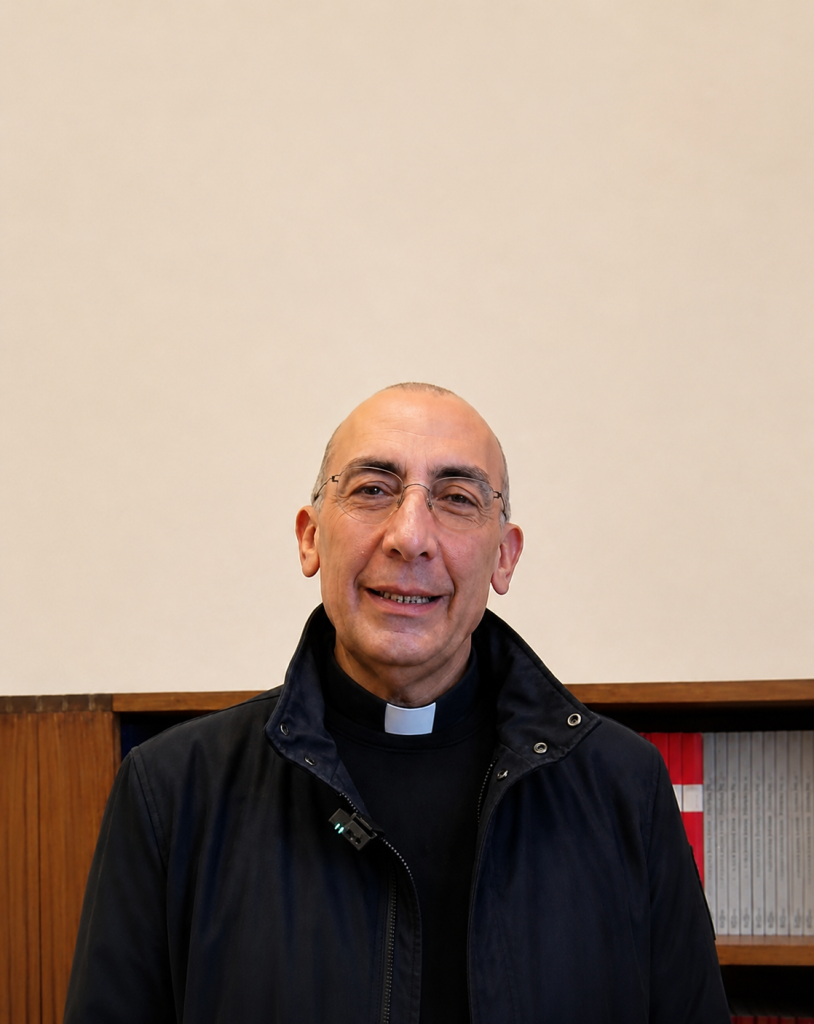
Cardinal Baldassare Reina has moved to clear his name following reports surrounding a Sicilian corruption inquiry. A statement issued through his lawyer says the Cardinal is not a suspect and had no knowledge of the alleged efforts to use his influence The Cardinal Vicar General of Rome has moved to clear his name of any involvement in a corruption and favouritism investigation in Sicily. Cardinal Baldassare Reina, Vicar General of Rome, was allegedly seen by prosecutors as a figure whose family connections could be exploited to win support from Catholic voters. However, a clarification was issued on 8 June through the Cardinal’s lawyer, Pier Luigi Cappello, following media reports surrounding an investigation into Cefpas, the Sicilian regional centre responsible for the training of healthcare personnel. Prosecutors are examining alleged irregularities in the awarding of contracts and appointments at the agency. In a statement released through his lawyer, Cardinal Reina rejected any suggestion that he was involved in the affair. “The Cardinal Baldassare Reina is not under investigation nor formally involved in the criminal proceeding in question; he is completely unrelated to the facts under investigation and is, according to the same accusatory hypothesis, absolutely unaware of his brother’s actions and the intentions of his interlocutors,” the statement said. It continued: “Any possible reference to the Cardinal in the investigation documents pertains exclusively to evaluations or intentions of third parties, not supported by any agreement or pact with him, and does not imply any responsibility, not even moral, on the part of the Cardinal himself.” Among the 12 people under investigation is Domenico Reina, the Cardinal’s brother, who received a direct contract worth €128,000 for the creation of a digital library at Cefpas, according to court documents cited by Italian media. Prosecutors allege the contract formed part of a wider system of patronage and favouritism operating within the agency. According to investigators, those involved hoped to gain favour with Cardinal Reina in order to attract Catholic votes for Margherita La Rocca Ruvolo, a Forza Italia regional deputy who is not herself under investigation. Prosecutors allege that the arrangement was facilitated by Forza Italia deputy Riccardo Gallo Afflitto, who is among those facing requests for precautionary measures. The investigation centres on the activities of Cefpas, a public body run by the Sicilian regional government. Prosecutors allege that a network of officials and associates used the agency to distribute contracts and positions for personal and political purposes. Court documents describe the award of the digital library project to Domenico Reina as part of the conduct under examination. Investigators claim the contract was awarded despite concerns regarding his suitability for the role. In documents cited by ANSA, prosecutors referred to the assignment of the project to “a subject without previous experience” in multimedia documentation networks. The prosecution has sought precautionary measures against eight of the 12 people under investigation. Requests include pre-trial detention for Gallo Afflitto, former Cefpas director Roberto Sanfilippo and Gioacchino Pontillo, while house arrest has been sought for five others connected to the case. The Sicilian regional government has meanwhile replaced the leadership of the agency. Sanfilippo’s mandate was not renewed after it expired earlier this year, and Gianluigi Amico has since been appointed extraordinary commissioner. Cardinal Reina, 55, is one of the most senior churchmen in Italy. A native of the Archdiocese of Agrigento in Sicily, he was appointed Vicar General of the Diocese of Rome by Pope Francis in October 2024 and was created a cardinal two months later. He also serves as Archpriest of the Basilica of St John Lateran, the cathedral church of the Bishop of Rome. While his brother remains among those under investigation, prosecutors have stated that Cardinal Reina is not a suspect and that he had no knowledge of the alleged efforts to use his name or influence in connection with the contract award.
Jun. 11, 2026