

The Vatican
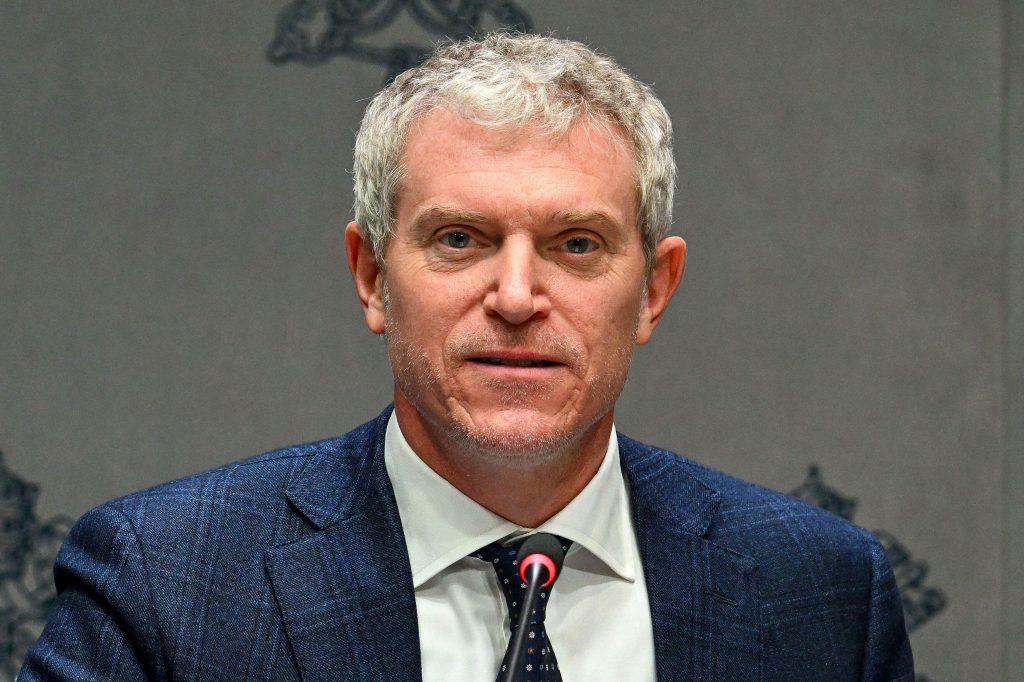
Vatican rejects reports that Rupnik has been acquitted
The Vatican has dismissed reports that Father Marko Ivan Rupnik has been acquitted in his canonical criminal trial, insisting the judges have reached no decision and are still examining evidence submitted from dioceses, the Jesuits, interested parties and the press Matteo Bruni, Director of the Holy See Press Office, has rejected reports that Father Marko Ivan Rupnik has been acquitted in the Vatican’s ongoing canonical criminal trial. The clarification follows reports alleging that the case had concluded in Father Rupnik’s favour. Responding to those claims, Bruni said the tribunal had reached no such decision and stressed that the judges were continuing to examine evidence submitted from multiple sources before reaching any determination. “Regarding some information that has appeared in the media in recent days, I reiterate that reports of any deliberation by the judges following the case of Rev. Marko Ivan Rupnik are absolutely unfounded,” Bruni said. “The evaluation of the case is still ongoing, and the panel is examining documentation from the dioceses involved, the Jesuits, interested parties and the press.” Bruni also defended the confidentiality surrounding the proceedings, arguing that the tribunal could not release details while the case remained under consideration. “During the trial, as with any judicial proceeding, no information regarding ongoing activity can be shared in any way, out of respect for the trial itself and to avoid harming anyone involved, as has occurred in recent days,” he said. He added that, should the judges conclude that further evidence was required, “the panel will be responsible for obtaining it independently”. Bruni also reiterated the nature of the proceedings, emphasising that the Vatican tribunal is examining the case under canon law after Pope Francis authorised an exception to the normal statute of limitations governing the alleged offences. He said the case “is judicial in nature” and is proceeding “in derogation of the statute of limitations for any crimes”, allowing the tribunal to determine guilt or innocence according to canon law. He also underlined the distinction between ecclesiastical and civil jurisdictions, noting that any criminal liability under state law remains a matter for the countries where the alleged offences took place. “Canon Law can judge and impose penalties regarding the internal life of the Church,” Bruni said, while Father Rupnik “remains subject to the legislation of the countries in which any crimes were committed, and the statute of limitations for such crimes is established by the legislation of each country, regardless of ecclesiastical authority.” The Vatican statement came after the Italian blog Messa in Latino reported that it had learned from what it described as “persistent and highly authoritative sources” that the criminal trial had ended in Father Rupnik’s favour. The publication also reported, citing highly placed sources, that the proceedings concern allegations relating to “violence” rather than clerical abuse itself, and that a retrial could ultimately take place. AdVaticanum sources gave similar accounts. Father Rupnik was once regarded as one of the Catholic Church’s best-known sacred artists, with mosaics installed in churches, shrines and chapels across the world. That standing was overshadowed by allegations from multiple women accusing him of sexual, psychological, spiritual and abuse-of-authority offences spanning several decades. Many of the earliest complaints originated from former members of the Loyola Community, while further allegations later emerged from women connected with Centro Aletti, the Jesuit artistic and spiritual centre in Rome led by Father Rupnik, and his wider ministry.” Before the current proceedings, Father Rupnik had already been the subject of a separate canonical case concerning the offence of absolving in confession a woman with whom he had engaged in sexual activity, an offence that incurs automatic excommunication under canon law. In 2020, the then Congregation for the Doctrine of the Faith declared that he had incurred automatic excommunication after external judges unanimously confirmed the offence. The penalty was lifted later that month after Father Rupnik admitted the facts, expressed repentance and fulfilled the conditions laid down by the Holy See, although restrictions were subsequently placed on his ministry. Attention later shifted to the broader allegations connected with members of the Loyola Community. Following further complaints, the Society of Jesus conducted an investigation and forwarded its findings to the Dicastery for the Doctrine of the Faith, recommending that a penal process be opened. The dicastery concluded in 2022 that the alleged offences could not proceed because they were barred by the applicable statute of limitations then in force. That decision prompted widespread criticism after details of the allegations became public. In October 2023, Pope Francis waived the canonical statute of limitations, allowing the case to move forward despite the passage of time. The Society of Jesus later dismissed Father Rupnik, citing what it described as a persistent refusal to obey legitimate instructions. The order said he had declined opportunities to acknowledge his conduct publicly, seek forgiveness and undertake a process of rehabilitation. Father Rupnik was subsequently incardinated into the Diocese of Koper in his native Slovenia. The Vatican announced on 13 October 2025 that the trial would be heard by a panel of five judges composed of women and clerics who neither belonged to the Dicastery for the Doctrine of the Faith nor held office within the Roman Curia. The Holy See said the arrangement was intended to safeguard the tribunal’s autonomy and independence. The identities of the judges have not been disclosed, and the Vatican has continued to release only limited information about the progress of the proceedings.
Jul. 22, 2026
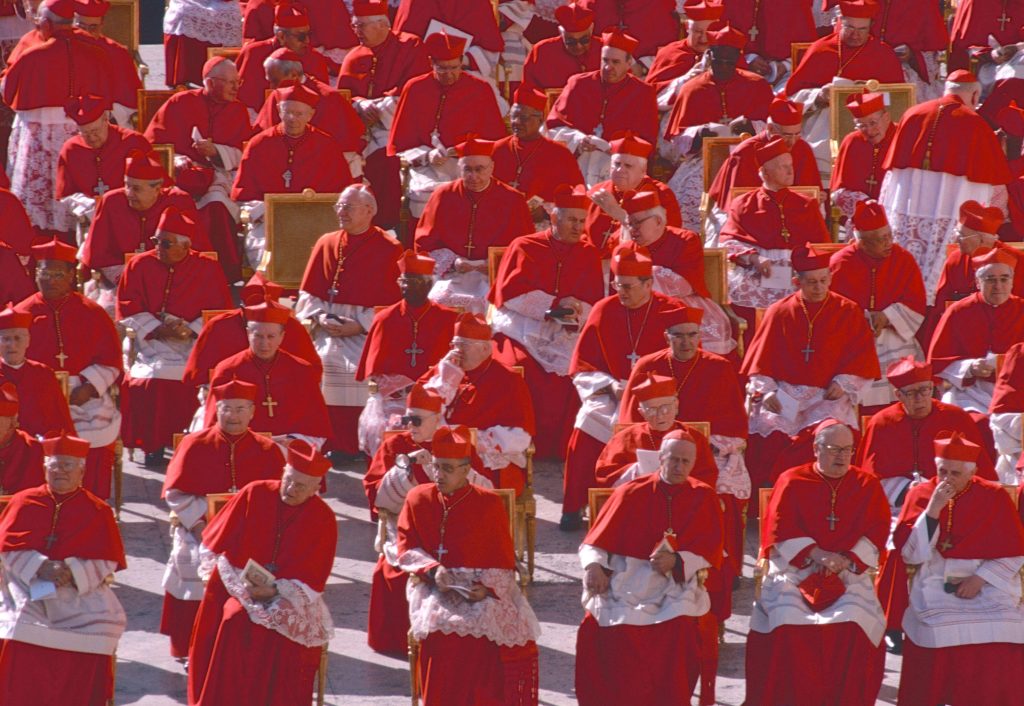
The leading contenders for Pope Leo XIV’s first cardinals
With the number of voting cardinals continuing to fall, rumours of a consistory are gathering pace. Who is most likely to receive the red hat? Niwa Limbu assesses the strongest candidates Cardinal Michael Czerny, the former Prefect of the Dicastery for Promoting Integral Human Development, turned 80 on Saturday 18 July, celebrating his birthday in Africa. With that milestone, he is no longer a cardinal elector, reducing the number of voting cardinals to 116. At the time of the 2025 conclave, there were 136 cardinal electors, of whom 133 cast votes. The number of cardinal electors is set out in Paul VI’s Romano Pontifici Eligendo (1975). The apostolic constitution states that the number of cardinal electors “must not exceed 120”, and Pope John Paul II retained this provision in Universi Dominici Gregis (1996). In practice, however, Popes John Paul II, Benedict XVI and Francis all exceeded the stipulated number, allowing the number of voting cardinals to rise above 120. With the reduced number of cardinal electors, recent weeks have seen a steady stream of rumours that a consistory for the creation of new cardinals will be held later this year. Additional speculation suggests that such a consistory could be announced after the Pope’s summer stay at Castel Gandolfo, which is due to end on Monday 27 July, or scheduled between a papal visit to either France or South America. If Pope Leo chooses to create new cardinals simply to replace those reaching retirement age over the coming year, the consistory would most likely be a relatively small one, perhaps involving fewer than ten new cardinals. If, however, his intention is to shape the College of Cardinals well into the future, the consistory could be considerably larger. By comparison, at his final consistory in December 2024, Pope Francis created 21 new cardinals. But if a consistory does take place this year, who is most likely to receive the red hat? The easiest place to start is the Curia. Archbishop Filippo Iannone, currently serving as Prefect of the Dicastery for Bishops, is expected to receive a red hat. After being passed over by Pope Francis when appointed Prefect of the Dicastery for Legislative Texts, the prefecture of the Dicastery for Bishops has traditionally been accompanied by the cardinalate. Pope Leo himself served as prefect from January 2023 until his election to the papacy and was created a cardinal in September of the same year. Archbishop Luis Marín de San Martín, the papal almoner and head of the Dicastery for the Service of Charity, is another name frequently mentioned. Although the office of papal almoner is not automatically tied to the cardinalate, his long-standing Augustinian friendship with Pope Leo XIV makes the prospect realistic. The two worked closely in Rome while the future pope was Prior General of the Order of Saint Augustine and have known one another for three decades. There is also a parallel with the elevation of the previous almoner, Cardinal Konrad Krajewski, who was closely associated with Pope Francis. Several senior curial posts are occupied by prefects already past the usual retirement age, among them Cardinal Kurt Koch, Cardinal Arthur Roche and Cardinal Marcello Semeraro. This raises the possibility that Pope Leo could appoint a new prefect to one of these dicasteries before announcing his first group of cardinals, with the newly appointed official then appearing on the consistory list. Cardinal Koch’s successor as Prefect of the Dicastery for Promoting Christian Unity is the subject of particular interest. Vatican sources have indicated to AdVaticanum that Bishop Erik Varden, Bishop of Trondheim in Norway and former Abbot of Mount St Bernard Abbey in the United Kingdom, stands a strong chance of being chosen. He made a notable impression when he preached the annual Lenten Spiritual Exercises for Pope Leo XIV and the Roman Curia. Bishop Varden also has considerable experience in the field of Christian unity, particularly with the Oriental Churches, making him a natural fit for the dicastery’s mission. Turning to the more realistic, yet harder-to-predict, category are the traditional cardinalatial sees. It is worth noting that when a cardinal retires from a diocesan see but remains of voting age, his successor is not customarily created a cardinal until the predecessor turns eighty. In the English speaking world, Archbishop Charles Philip Richard Moth, Archbishop of Westminster, appointed in December 2025 and installed in February 2026, is likely to recieve the red hat. There is, however, one important caveat. Cardinal Vincent Nichols, who held the see from 2009 until 2025, turned eighty in November 2025 and is now an emeritus, non-voting cardinal. Every Archbishop of Westminster since the restoration of the hierarchy has been created a cardinal. Basil Hume, appointed on 9 February 1976, received the red hat from Paul VI on 24 May 1976, roughly three and a half months later, at the very next consistory. Similarly, Cardinal Cormac Murphy-O’Connor, appointed on 15 February 2000 and installed the following month, was elevated by John Paul II on 21 February 2001, almost exactly a year after his appointment and at the first consistory held after he took office. Cardinal Vincent Nichols himself, however, waited nearly five years. Appointed in April 2009, he was passed over in Benedict XVI’s consistories of 2010 and 2012 before Pope Francis created him a cardinal in February 2014. In short, Hume was elevated almost immediately, Murphy-O’Connor at the next available consistory, and Nichols only after a noticeably longer interval that spanned two intervening consistories. Whether Nichols’ delay reflected a particular circumstance or a temporary shift in attitude towards the see is unclear. What history does show is that the Archbishop of Westminster has, without exception since the restoration of the hierarchy, eventually been made a cardinal, with the traditional pattern being elevation at the first or second consistory following appointment. Whether Archbishop Moth follows that quicker timetable is, of course, entirely for Pope Leo to decide. The historical record simply suggests that the next consistory is the point at which such an elevation would normally be expected. The next name is likely to surprise many readers and represents something of a curveball. Yet, as the Church continues to grow and its centre of gravity shifts towards Asia, the case for Archbishop Peter Chung Soon-taick, OCD, becomes increasingly persuasive. He succeeded Cardinal Andrew Yeom Soo-jung as Archbishop of Seoul in 2021 but was passed over at the 2024 consistory. The archbishop is already well connected in Rome, having previously served as Definitor General of the Order of Discalced Carmelites. More decisive still are his personal ties to the Holy Father and the fact that he is the principal organiser of World Youth Day 2027 in Seoul. He has been heavily involved in preparations for the event, which will effectively be “his” World Youth Day. With South Korea once again hosting a major international gathering, it would be natural for the Pope to restore Seoul to the College of Cardinals and see its archbishop wearing red. Another straightforward candidate is Archbishop Josef Grünwidl, who succeeded Cardinal Christoph Schönborn as Archbishop of Vienna. He presents another classic example of a traditional European cardinalatial see awaiting its next red hat. Appointed by Pope Leo XIV on 17 October 2025 and installed on 24 January 2026, Grünwidl had already been leading the archdiocese as apostolic administrator since Schönborn’s retirement in January 2025. A product of the Viennese Church, he was ordained by Cardinal Franz König, served as Schönborn’s personal secretary in the mid-1990s, later held several important pastoral posts, chaired the priests’ council and became episcopal vicar for the southern vicariate. What makes his candidacy particularly interesting is the combination of deep local roots and a deliberately understated style. Grünwidl repeatedly hesitated before accepting the appointment, explaining that he believed God desired availability rather than perfection. Whether he receives the red hat at the next consistory will depend on how strongly Pope Leo wishes to reaffirm Vienna’s place in the College of Cardinals. Historically, the archbishops of Vienna have been elevated relatively quickly after their appointment. Many therefore regard him as one of the more straightforward European names likely to appear on an early list of new cardinals. One significant factor, however, is the number of Italian cardinal electors, which fell sharply during Francis’s pontificate. Twenty-eight Italians entered the conclave that elected him in 2013, representing almost a quarter of the entire electorate. Even after that rebalancing, however, Italy remains the country with the largest number of cardinal electors. Two Italian sees that have traditionally carried the red hat are currently unrepresented in the College of Cardinals: Genoa, where Archbishop Marco Tasca, OFM Conv., succeeded Cardinal Angelo Bagnasco, and Florence, where Archbishop Gherardo Gambelli succeeded Cardinal Giuseppe Betori. Another intriguing possibility is Archbishop Mario Delpini of Milan. Born in 1951, he reached the retirement age of seventy-five on 29 July this year. He has confirmed to the Italian press, however, that Pope Leo has indicated he will not immediately accept his resignation, and Delpini therefore expects to remain in office for at least the coming pastoral year. Creating him a cardinal would be a clear gesture of goodwill towards one of Italy’s most important sees. In that scenario, conventionally, his successor would not be appointed until Delpini eventually lost his voting rights at the age of eighty. Whether one, two or even three of these Italians appear on an early consistory list will depend on how far Pope Leo intends to depart from the internationalising pattern established by his predecessor. With the number of cardinal electors already standing at 116, and many other cardinalatial sees pressing their claims, it seems unlikely that every major Italian vacancy will be filled immediately. As a modest sign of continuity and unity with the Italian Church, however, the creation of at least one new Italian cardinal elector would not be surprising. All that being said, the custom of waiting until a retired cardinal reaches the age of eighty before elevating his successor is not an absolute rule and has been set aside before. Pope John Paul II created Archbishop Péter Erdő a cardinal on 21 October 2003 even though his immediate predecessor as Archbishop of Esztergom-Budapest, Cardinal László Paskai, OFM, had retired only the previous year and was still just seventy-six, meaning he remained a cardinal elector. Paskai retained voting rights until May 2007, and both men participated in the 2005 conclave. This was, however, a clear exception to the usual practice of avoiding two voting-age cardinals associated with the same residential see. For now, an ordinary consistory where Cardinals are created remains speculative. However, as the number of voting Cardinals continues to drop, the likelihood of one increases. Whilst Pope Francis was somewhat unpredictable in his choice of Cardinal’s, Pope Leo has generally been more conventional in his papal decisions thus far, indicting that his choice of Cardinals may in turn be more calculable.
Jul. 22, 2026
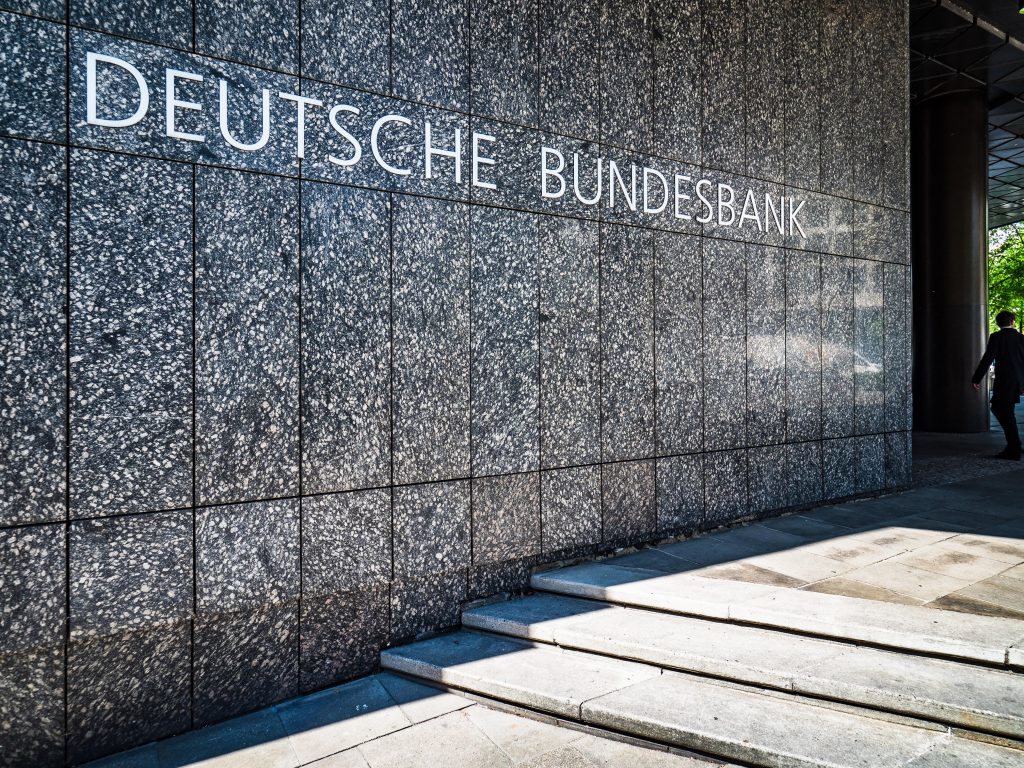
Vatican financial watchdog signs cooperation agreement with Germany’s central bank
The Vatican’s financial watchdog has signed a cooperation agreement with Germany’s central bank following Pope Leo XIV’s recent overhaul of the authority’s governing statutes. The memorandum of understanding was signed on 17 July at Palazzo San Carlo by ASIF Director Federico Antellini Russo and Dr Burkhard Balz, a member of the Executive Board of the […] The Vatican’s financial watchdog has signed a cooperation agreement with Germany’s central bank following Pope Leo XIV’s recent overhaul of the authority’s governing statutes. The memorandum of understanding was signed on 17 July at Palazzo San Carlo by ASIF Director Federico Antellini Russo and Dr Burkhard Balz, a member of the Executive Board of the Deutsche Bundesbank. The agreement establishes technical cooperation between the Vatican’s Supervisory and Financial Information Authority (ASIF) and Germany’s central bank, with both institutions working together on financial supervision through training initiatives and the exchange of expertise and best practice. The signing follows Pope Leo XIV’s promulgation of new statutes for ASIF, the Vatican body responsible for supervising the Holy See’s financial sector and combating money laundering and the financing of terrorism. The revised statutes came into force after the Pope issued a chirograph dated 25 June, replacing the previous norms introduced during the pontificate of Pope Francis. Speaking at the ceremony, Balz said the agreement demonstrated a shared commitment to strengthening cooperation between the two institutions. “By signing this memorandum of understanding, we reaffirm our shared commitment to the principles of integrity, transparency, and international cooperation,” Balz said. “This agreement provides a framework for ongoing exchange and mutual support, reflecting our common aspiration to serve the common good through a stable and fair financial system.” The Vatican said the agreement builds on an established relationship between ASIF and the Bundesbank that has developed over a number of years. It added that closer cooperation had been made possible by the Holy See’s commitment to strengthening its financial framework in accordance with international standards, pointing to greater transparency, accountability and professionalism within its financial institutions. Under the memorandum, the two authorities will cooperate in financial supervision, exchange technical knowledge and develop training opportunities designed to strengthen regulatory practice. According to the Vatican, the objective is to contribute to greater transparency and sustainability across the international financial system. For ASIF, the agreement also coincides with the fifteenth anniversary of the authority’s creation. Antellini Russo said the anniversary, together with Pope Leo XIV’s new statutes, marked an opportunity to assess the body’s development while looking ahead. “The signing of this memorandum of understanding takes place in the year marking the fifteenth anniversary of the establishment of this Authority, and only a few weeks after the entry into force of the new Statute of the Supervisory and Financial Information Authority, promulgated by His Holiness Pope Leo XIV,” Antellini Russo said. “As is often the case with such milestones and anniversaries, this offers us an opportunity to reflect on the path we have travelled, but above all to look to the future with confidence. I hope that the cooperation between our two institutions will continue to grow stronger and become even closer.” The signing ceremony was attended by Monsignor Mihăiţă Blaj, Under-Secretary of the Section for Relations with States and International Organisations at the Secretariat of State, and Dr Christoph Braner, Minister Plenipotentiary at the German Embassy to the Holy See. The agreement follows the evolution of the Vatican’s financial watchdog. Pope Benedict XVI established the Financial Information Authority in 2010 as part of a programme of financial reform. Pope Francis subsequently introduced revised statutes in 2013 before issuing further reforms in 2020, when the body received its current name, the Supervisory and Financial Information Authority. Pope Leo XIV’s revised statutes now provide the framework under which ASIF will continue its supervisory role.
Jul. 21, 2026
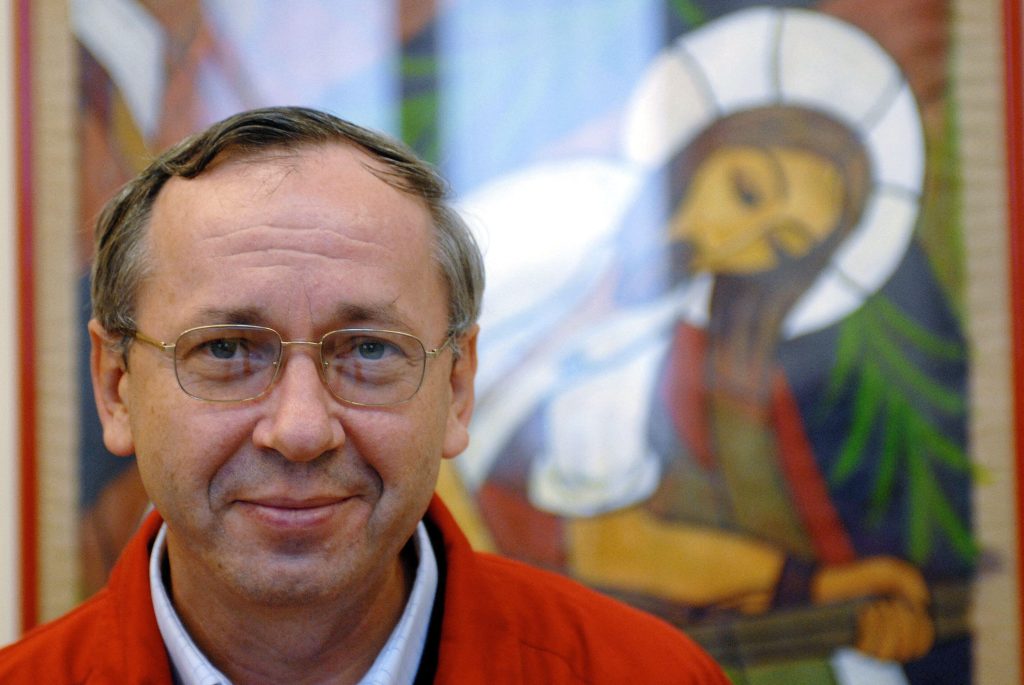
Father Marko Rupnik acquitted in canonical trial, sources say
MessainLatino and AdVaticanum sources indicate that Father Marko Rupnik has been acquitted in the canonical criminal proceedings relating to allegations involving violence. The Holy See has not publicly confirmed the reported ruling or released the sentence MessainLatino has reported that Father Marko Ivan Rupnik has been acquitted in his canonical criminal trial. According to the pulication, after corroborating “persistent and highly authoritative sources”, it concluded that the verdict was in favour of Father Rupnik. While the reported outcome has not been confirmed publicly by the Holy See, AdVaticanum has corroborated MessainLatino’s reporting through its own sources, which have also confirmed the ruling. AdVaticanum has spoken to Vatican sources who would like the Holy See to publish the sentence publicly. Many, however, believe the Vatican will be reluctant to do so. From this publication’s understanding, the trial centred on whether the alleged abuse involved violence. The judges ruled in favour of Father Rupnik, citing insufficient certainty. This publication has also learned that a further case is likely being prepared. The sentence itself has not been released publicly, and no official statement has been issued by the Dicastery for the Doctrine of the Faith. The absence of any formal Vatican announcement has renewed questions about transparency in the handling of high-profile canonical cases. As this publication understands, the reported acquittal concerns only the specific canonical criminal proceedings relating to allegations involving violence. It does not necessarily bring every aspect of the wider Rupnik affair to a conclusion. The formal judicial process has always been conducted under canon law rather than through the secular courts. Unlike civil criminal proceedings, canonical trials before the Dicastery for the Doctrine of the Faith are confidential by their nature, with evidence, witness testimony and judicial deliberations ordinarily remaining sealed unless the Holy See decides otherwise. Consequently, little official information has emerged since the case was reopened. Father Rupnik, born in Slovenia in 1954, rose to international prominence as both a theologian and an artist. His mosaics adorn churches, shrines and chapels across the Catholic world, including the Vatican, Lourdes and Fatima, while his theological reflections on sacred art earned him considerable influence in ecclesiastical circles. The allegations that later emerged fundamentally altered that reputation. Multiple women accused Father Rupnik of sexual, psychological, spiritual and abuse-of-authority offences spanning several decades, with many of the earliest complaints originating from former members of the Loyola Community. Further accusations later involved women connected with Centro Aletti and his wider ministry. Before the current proceedings, Father Rupnik had already faced another canonical process concerning the crime of absolving in confession a woman with whom he had engaged in sexual activity. That offence carries an automatic excommunication under canon law. In 2020, the then Congregation for the Doctrine of the Faith declared that excommunication after external judges unanimously confirmed the offence. The penalty was subsequently lifted in the same month after Father Rupnik admitted the facts, expressed repentance and fulfilled the conditions required by the Holy See. Restrictions on his ministry followed. Attention later shifted to the wider allegations relating to members of the Loyola Community. After further complaints reached both the Society of Jesus and the Vatican, an investigation was conducted and forwarded to the Dicastery for the Doctrine of the Faith with a recommendation that a penal process should begin. The dicastery ultimately concluded in 2022 that the alleged offences were barred by the applicable statute of limitations then in force under canon law. That decision attracted widespread criticism after details of the allegations entered the public domain. In October 2023, Pope Francis waived the canonical statute of limitations, allowing the case to proceed despite the passage of time. The move was interpreted as a sign of the seriousness with which the Holy See intended to address the allegations and followed concerns expressed by the Pontifical Commission for the Protection of Minors regarding aspects of the case’s handling. Meanwhile, Father Rupnik’s relationship with the Society of Jesus deteriorated. The Jesuits ultimately dismissed him, citing a persistent refusal to obey legitimate instructions. The order stated that he had declined opportunities to acknowledge his conduct publicly, seek forgiveness and undertake a process of rehabilitation. Father Rupnik was subsequently incardinated into the Diocese of Koper in his native Slovenia. On 13 October 2025, the Dicastery for the Doctrine of the Faith disclosed that five judges had been appointed to hear the case, explaining that the panel consisted of women and clerics who neither belonged to the dicastery nor held office within the Roman Curia. The Holy See stated that the arrangement was intended to guarantee the tribunal’s autonomy and independence. The Vatican did not publish the identities of the judges, nor did it provide details regarding their backgrounds or expertise. The confidentiality surrounding the process has led to criticism from some representing the alleged victims, who argue that they received little information regarding the tribunal’s progress despite repeated requests for clarification. Those concerns persisted throughout the trial. Lawyer Laura Sgrò, who represents several of the women bringing allegations against Father Rupnik, repeatedly stated publicly that she had sought procedural information from the Dicastery for the Doctrine of the Faith but had received no substantive response. The Society of Jesus has itself publicly acknowledged shortcomings in its handling of the affair. Father Johan Verschueren SJ, acting on behalf of the order in Rome, apologised to those who said they had suffered because of Father Rupnik’s actions and announced efforts aimed at reparation and healing. Jesuit Superior General Father Arturo Sosa later admitted that the order had failed to recognise warning signs and described that failure as a form of institutional blindness.
Jul. 20, 2026
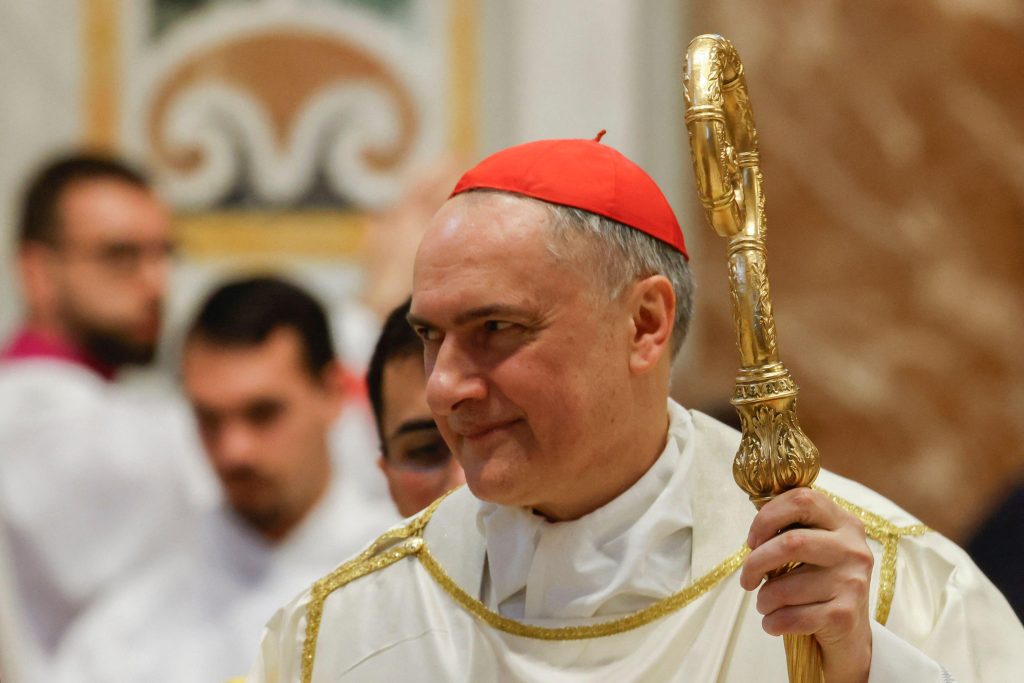
Exclusive: Why Cardinal Gambetti is expected to leave St Peter’s Basilica
EXCLUSIVE: AdVaticanum understands that Cardinal Mauro Gambetti is expected to leave St Peter’s Basilica later this summer. Our investigation examines the circumstances behind the expected move AdVaticanum can confirm that Cardinal Gambetti is expected to leave his position as Archpriest of St Peter’s Basilica later this summer. AdVaticanum sources in the Vatican have confirmed that he is expected to move to the Archdiocese of Chieti. While this will not come as a surprise to many Vatican watchers, as Archbishop Bruno Forte is already beyond the customary retirement age, the move is nonetheless notable. Although Chieti is a metropolitan archdiocese, it has not traditionally been a cardinalatial see and is relatively small. As such, the appointment could reasonably be interpreted as a demotion for Cardinal Gambetti. Sources close to Cardinal Gambetti say he feels burnt out after his time at St Peter’s and that a move away from Rome may suit him. They added: “He doesn’t like the spotlight.” AdVaticanum understands that when Pope Leo initially reconfirmed office holders, Gambetti’s appointment was extended for only six months. AdVaticanum also understands that Cardinal Gambetti’s standing within the Conventional Franciscan General Curia in Rome is no longer regarded as being as strong as it once was, a factor that could make a move away from the Vatican increasingly likely. However, there appears to be more to the story than meets the eye. It seems to be a classic case of Vatican politics, with three principal factors: a loss of confidence following the handling of St Peter’s Basilica, tensions with the canons of St Peter’s, and the initial confidence placed in Fr Enzo Fortunato. Since his appointment in 2021, Cardinal Mauro Gambetti has overseen St Peter’s Basilica during a series of high-profile security breaches and desecrations of its main altar, the Altar of the Confession beneath Bernini’s baldacchino above the tomb of St Peter. Several of these incidents attracted widespread attention and required penitential rites of reparation under canon law for serious profanations of sacred places. Cardinal Gambetti presided over these rites. On 1 June 2023, a Polish man approached the high altar near closing time, stripped naked except for socks and trainers, climbed onto the altar and displayed the words “Save children of Ukraine” written across his back. Security detained him without resistance before handing him over to the Italian authorities, who expelled him. Cardinal Gambetti led a penitential rite on 3 June involving prayers, the Creed, the blessing with holy water and the use of incense, describing the incident within the context of the “structure of sin” in the world. On 7 February 2025, a man, reported in some accounts to be Romanian and suffering from mental health problems, climbed onto the Altar of the Confession, threw six candelabra to the ground, damaging them, and began removing the altar cloth before security intervened. Reports differ as to whether a formal rite of reparation followed immediately. On 10 October 2025, another man climbed onto the Altar of the Confession in front of hundreds of tourists, undressed and either urinated on, or attempted to urinate on, the altar. Cardinal Gambetti presided over a penitential rite on 13 October, including a procession, the sprinkling of holy water, incense and prayers for forgiveness, attended by the Chapter of the Basilica. Additional concerns have included reported Eucharistic profanations, irreverence during Masses and other security failures, all of which have led to questions about oversight and vigilance among staff, including the Sampietrini. However, the issue that appears to have caused the greatest damage was the proposal to expand a small refreshment point on the basilica’s terrace into a larger bistro or catering area. The plans led to petitions signed by thousands of people and addressed to the Secretary of State. The petitions criticised what was regarded as the commercialisation of a sacred space and called for a canonical review of the basilica’s management. The Vatican maintained that the project was simply a modest expansion designed to serve pilgrims and tourists more effectively, offering pre-prepared food heated by microwave rather than a full restaurant, while also creating additional exhibition space on the terrace dedicated to the basilica’s history. Nevertheless, Cardinal Gambetti and the Fabric of St Peter came under sustained criticism in the Italian media over the project and his wider approach to managing the basilica. Ultimately, it was Cardinal Gambetti who bore the political cost. AdVaticanum also notes that questions were raised in some quarters about Cardinal Gambetti’s personal style and public image, which some believed fell short of the dignity expected of his office. A 2023 article published by MessainLatino questioned why Cardinal Gambetti would wear a “Jamaica shirt and vest” when, to quote MessainLatino , he should instead be “a man dressed in the sacred purple”. Beyond Cardinal Gambetti’s own leadership, his position was not helped by divisions within his own team, particularly with the canons of St Peter’s. To understand the present difficulties, it is necessary to understand the longstanding tensions between the two sides. Gambetti’s tenure has been marked by a programme of centralising reform. He brought several associates from his previous role as Custos of the Sacred Convent of Assisi into senior positions. These reforms included financial and operational changes affecting the Chapter of St Peter’s, the college of canons. The tensions appear to stem from structural reforms, including the transfer of financial oversight to the Fabric of St Peter, as well as differing visions for the role of the basilica. Cardinal Gambetti played a central role in reforming the Chapter of St Peter’s Basilica, the body responsible for the basilica’s liturgical life, pastoral ministry and certain historic administrative functions. These reforms, initiated under Pope Francis and later refined, sought to clarify responsibilities, reduce expenditure and improve efficiency. The Chapter of Canons dates back to at least the eleventh century, with origins traditionally traced to 1053 under Pope St Leo IX. Historically, it was responsible not only for prayer and liturgy but also for administering significant patrimony, including real estate and donations. Over time, these responsibilities increasingly overlapped with those of the Fabric of St Peter. The reforms began shortly after Gambetti’s appointment, when Pope Francis issued transitional norms on 28 August 2021, which came into force on 1 October that year while new statutes were being prepared. As Archpriest and President of the Fabric of St Peter, Gambetti oversaw their implementation. The definitive statutes and regulations were approved by Pope Francis through a chirograph dated 29 June 2024, the Solemnity of Saints Peter and Paul. Under the reforms, responsibility for the Treasury Museum and the sale of religious articles passed to the Fabric of St Peter. Employees previously working directly for the Chapter were also transferred to the Fabric. This centralised commercial and administrative responsibilities under Gambetti’s leadership. Canons and coadjutors now receive a single capitular stipend paid by the Fabric, broadly aligned with level VIII of the Roman Curia salary scale. This payment cannot be combined with salaries, pensions or commissions from other Vatican bodies. The reform reduced expenditure and addressed concerns over multiple sources of Vatican income. The Chapter nevertheless retained certain real estate and financial assets to continue its charitable work, including assisting priests and pilgrims in need. In 2025, Pope Leo XIV issued a motu proprio subjecting the Fabric of St Peter and related entities to the standard supervision of the Council for the Economy, abrogating certain previous provisions. This continued the trend towards greater transparency and accountability. The canons now focus principally on liturgical and pastoral ministry, while coadjutors assist in celebrations, pastoral work and duties assigned by the Archpriest and Chapter, with appointments made by the Pope. Existing canons and coadjutors who reach the age of 80 become honorary members. They are exempt from obligations and Chapter sessions, receive no capitular emolument, but retain their titles, vestments, participation in liturgical functions and the right to burial in the Chapter chapel. Those who remain inactive for more than a year, even if under the age of 80, may also be transferred to honorary status. Sources close to the canons told AdVaticanum that they believe the Chapter’s autonomy has been significantly reduced as Cardinal Gambetti has centralised authority, diminished the canons’ influence and funding, and prioritised what one source described as “liberal efficiency”. Some viewed the reforms as sidelining long-serving canons in favour of a more managerial style. While it cannot be denied that Cardinal Gambetti introduced significant changes to the Chapter of St Peter’s, reshaping long-established customs and altering the institution’s traditional character, one well-placed source’s observation that the cardinal had prioritised “liberal efficiency” over tradition encapsulates much of the disquiet that has emerged. Resistance to Cardinal Gambetti’s reforms has gradually coalesced within sections of the Chapter, with some canons becoming increasingly organised in their opposition. According to AdVaticanum’s sources, concerns have been raised with figures outside the Vatican over a series of issues, including matters that might otherwise have appeared relatively minor. One such matter, AdVaticanum can reveal, concerns the replacement of the Basilica’s long-standing metal chairs with transparent plastic chairs. According to sources familiar with the matter, several canons raised formal complaints, arguing that the traditional chairs formed part of the Basilica’s dignity and historic character. Cardinal Gambetti defended the decision to both the canons and the Fabbrica di San Pietro on practical grounds, maintaining that the previous chairs had contributed to damage to the basilica’s marble flooring and that the Fabric had been spending more than $1 million annually replacing worn marble slabs. Sources indicate that the replacement seating cost around $200,000. Nevertheless, the canons have maintained that the change came at the expense of an established aesthetic and liturgical tradition, viewing the original metal chairs as an integral part of the Basilica’s historic identity rather than simply functional furnishings. One defender of Cardinal Gambetti, who is a conservative and close to the matter, told AdVaticanum: “Some of the reality has been that the canons have really exaggerated things about Cardinal Gambetti. All of that mess, combined with the resentment of the canons, hasn’t done Gambetti any favours.” Another source said: “Cardinal Gambetti is more of an engineer than a politician, and he’s not good at managing the internal politics. Whereas all these canons are politicians.” Furthermore, AdVaticanum was told by multiple sources that Pope Francis did not like the bureaucracy of the Chapter of Canons and that his desire to sideline it served a deliberate purpose. Beyond these disputes, AdVaticanum understands that one of the principal sources of tension surrounding Cardinal Gambetti has been his early confidence in Fr Enzo Fortunato, whose prominence within the administration of St Peter’s Basilica proved unpopular with many of the canons and, according to sources, with a significant number within the Fabbrica di San Pietro. Formerly head of communications for the Basilica, Fr Fortunato has since relinquished that position and now serves as Special Project Manager for St Peter’s Basilica. Before moving to the Vatican, the Franciscan friar served at the Sacred Convent of Assisi during Cardinal Gambetti’s tenure as Custos, where the two developed a close working relationship. Sources told AdVaticanum that Cardinal Gambetti’s confidence in Fr Fortunato led to his appointment to a prominent role at St Peter’s. Many within St Peter’s questioned Fr Fortunato’s approach and his handling of major initiatives, including the organisation of World Children’s Day. While the Holy See has never attributed subsequent institutional changes to Fr Fortunato personally, Pope Leo XIV later dissolved the Pontifical Committee for World Children’s Day, transferring its responsibilities to the Dicastery for the Laity, Family and Life as part of a broader reorganisation. According to sources who spoke to AdVaticanum, “a substantial amount of money was wasted due to Fr Fortunato’s running of World Children’s Day.” The financial and organisational issues surrounding World Children’s Day (Giornata Mondiale dei Bambini) primarily concerned questions of fund management, transparency, partner organisations and administrative controls under the Pontifical Committee led by Fr Enzo Fortunato. Donations, sponsorships and funding for the event were reportedly channelled through external Italian associations, including Be Human, which was linked to partners such as the cooperative Auxilium, connected to figures including Angelo Chiorazzo. This arrangement raised questions about financial traceability and why funds for a Vatican initiative were channelled through non-Vatican entities. In one Report exchange, Fr Fortunato was asked about the arrangement and replied that it was the designated implementing body (“soggetto attuatore”), established earlier, with later adjustments including the creation of a dedicated account. One referenced balance from late 2025 reportedly showed approximately €1.2 million in income, around €580,000 in expenditure and approximately €650,000 in liquid assets remaining. After outstanding bills and suppliers had been paid, approximately €260,000 reportedly remained and was transferred into Vatican-managed accounts. As president of the committee, having been appointed by Pope Francis in late 2024, Fr Fortunato oversaw pastoral planning, organisation, invitations and accreditation. In interviews, he publicly deferred detailed accounting questions, saying: “This, ask accounting. I’m not good at it.” Beyond what is already publicly known, AdVaticanum understands that these issues contributed to a growing loss of confidence in Fr Enzo Fortunato. Sources told AdVaticanum that, as confidence in Cardinal Gambetti declined, Fr Fortunato sought to distance himself from the cardinal and, according to those sources, manoeuvred against him internally. Sources close to the situation also alleged that Fr Fortunato engaged in a number of activities that caused considerable frustration among Vatican staff. They said he frequently filmed within Vatican City, despite restrictions on such activity, including live-streaming Pope Francis during illness, and described him as frequently rude to employees. This proved significant because many of the canons closely associated Fr Fortunato with Cardinal Gambetti, further damaging the cardinal’s standing. It has not helped that Fr Fortunato has remained in a senior communications role connected with special projects at St Peter’s Basilica. AdVaticanum understands from multiple sources that Fr Fortunato is also expected to leave his post.
Jul. 19, 2026
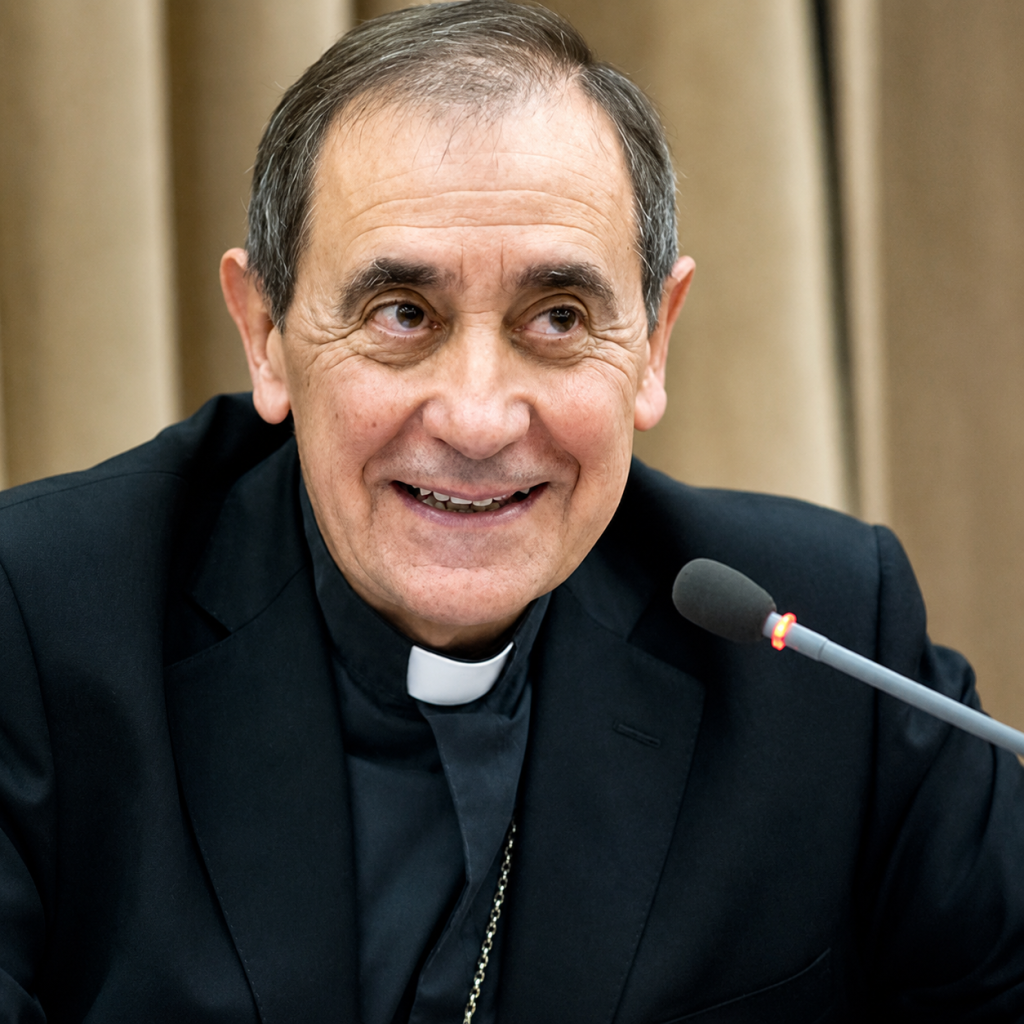
Canonist Archbishop Arrieta breaks down the Vatican’s response to the SSPX bishops
Archbishop Juan Ignacio Arrieta, former Secretary of the Pontifical Council for Legislative Texts and canon lawyer, speaks exclusively to AdVaticanum about the Vatican’s response to the SSPX’s latest episcopal consecrations, explaining what the recent decree means in practice for the Society, its clergy and the faithful, including the validity of SSPX confessions and marriages In an exclusive for AdVaticanum, Archbishop Arrieta, former Secretary of the Dicastery for Legislative Texts, has said that revoking the faculties necessary for the valid administration of the sacrament of Confession for the SSPX requires direct authorisation from the Pope himself. The veteran canon lawyer’s intervention follows the Holy See’s formal response to the Society’s latest illicit episcopal consecrations. The consecrations have led to the Dicastery for the Doctrine of the Faith to issue a decree declaring the bishops involved excommunicated and warning clergy and the faithful against adhering to what it describes as a “schismatic movement”. Arrieta told AdVaticanum that the recent consecrations are “a profound wound to the unity of the Church instituted by Christ”, echoing Pope Leo XIV’s warning issued shortly before the ceremony took place. He dismisses the Society’s longstanding justification that extraordinary circumstances created a “state of necessity” permitting episcopal consecrations without papal approval. “The argument of a ‘state of necessity’ invoked by them does not appear reasonable,” the Archbishop said, arguing that the consecration of bishops “is an extremely sensitive element of the very structure of the Church” and was carried out “in direct disobedience to the successor of the Apostle Peter”. For Archbishop Arrieta, the dispute extends beyond a single canonical offence. Arrieta told AdVaticanum that the latest consecrations reveal a deeper divergence in ecclesiology, saying they demonstrate that the Society’s reasoning “rests on a hierarchy of values and categories quite different from that taught by the Tradition of the Catholic Church”, making future doctrinal dialogue “highly problematic”. His assessment put the latest events within the historical pattern established in 1988, when Archbishop Marcel Lefebvre consecrated four bishops without papal mandate despite months of negotiations with Rome. Archbishop Arrieta recalled that Cardinal Édouard Gagnon had conducted a canonical visitation to the Society’s seminary at Écône while efforts were simultaneously underway to restore communion. He notes that the decisive negotiations were led by the then-Cardinal Joseph Ratzinger, Prefect of the Congregation for the Doctrine of the Faith, culminating in a protocol of agreement reached in early May 1988. According to Arrieta, Lefebvre subsequently withdrew from that agreement and refused to sign it, bringing the reconciliation effort to an end. Beyond the theological discussions, Archbishop Arrieta said Rome had also been examining possible canonical structures that could accommodate the Society within the framework of the 1983 Code of Canon Law should an agreement have been reached. When those negotiations collapsed, attention instead turned towards establishing what became the Pontifical Commission Ecclesia Dei to assist those wishing to remain attached to the older liturgy while staying in full communion with the Holy See. Archbishop Arrieta also pointed out to AdVaticanum that although the Holy See declared Lefebvre, Bishop Antônio de Castro Mayer and the four newly consecrated bishops excommunicated in 1988, it never questioned the validity of their episcopal ordinations, “not least because doing so would have reopened settled ecumenical questions”. The Archbishop also recalled that Pope John Paul II subsequently issued the motu proprio Ecclesia Dei, confirming that the consecrations constituted a schismatic act while establishing the Ecclesia Dei Commission. More than two decades later, in 2009, the Congregation for Bishops lifted the excommunications imposed upon the four surviving bishops consecrated by Archbishop Lefebvre, despite competence over such grave offences having already passed to the Congregation for the Doctrine of the Faith following Sacramentorum Sanctitatis Tutela. That transfer of competence, Arrieta argues, explains why the present case has been handled by the Dicastery for the Doctrine of the Faith rather than another Vatican department. Regarding the recent decree and explanatory note, Archbishop Arrieta first distinguishes carefully between the two documents recently published by the dicastery. The decree declaring the bishops excommunicated, he says, is what canon lawyers describe as “an act owed”. Rather than introducing a new penalty, it formally declares a juridical situation already established by canon law through the offence itself. “The two documents now issued by the Dicastery for the Doctrine of the Faith are of a different nature and scope. The decree now issued represents, on the part of the dicastery, what is usually called ‘an act owed’, in the sense that it was an act the dicastery was bound to perform; it is limited to carrying out what canon 1387 of the Code prescribes, declaring for general notice that the six bishops involved find themselves in a situation of excommunication.” Arrieta also notes that the co-consecrating bishop incurred the same automatic penalty, referring to a 2011 interpretative declaration issued by the Pontifical Council for Legislative Texts concerning illicit episcopal ordinations in China. In that case, questions existed over whether bishops had acted freely under pressure from the civil authorities, raising doubts about whether an automatic penalty had in fact been incurred. No such uncertainty exists in the present circumstances, he argues, making a formal decree necessary. He adds that the decree also contains a formal warning to clergy and the faithful against adherence to the schism. “In fact, unfortunately, even the co-consecrating bishop has incurred the automatic penal sanction of the aforementioned canon… In the present situation no such question arises, and so the dicastery had to issue a formal decree of excommunication… The current decree of the dicastery also contains a formal warning to clergy and the faithful not to adhere to the schism.” In reference to the explanatory doctrinal note, Archbishop Arrieta explains that this second document differs fundamentally in purpose. Rather than declaring penalties, it explores the possible canonical consequences for those who formally identify themselves with the Society following the latest developments. He pointed out that the note draws directly upon a 1996 explanatory document issued by the Pontifical Council for Legislative Texts, which examined the legal position of Catholics associated with the Lefebvrist movement after the 1988 consecrations. That earlier text concluded that the illicit episcopal ordinations had “constituted the culmination of a progressive overall situation of a schismatic nature” and stated that “until there are changes leading to the re-establishment of this necessary communion, the entire Lefebvrian movement is to be considered schismatic”. Arrieta stressed that the 1996 note carefully distinguished between the moral reality of schism and the canonical crime carrying legal penalties. It also established that formal adherence required both interior acceptance of schismatic positions and their external manifestation, criteria which apply differently to clergy and lay faithful. He cautions, however, that determining the legal position of individual members of the faithful remains considerably more complicated than assessing the status of the bishops themselves. Beyond the explanatory note, Archbishop Arrieta stated that many ordinary Catholics attached to the Society’s chapels may have acted in good faith, particularly those who have worshipped there for decades or were raised within those communities. The former Secretary argues that some could fall within the principles articulated by the Second Vatican Council’s decree Unitatis Redintegratio concerning baptised Christians raised within separated ecclesial communities. He also observes that genuine good faith could amount to a “state of necessity” sufficient to prevent the automatic application of canonical penalties under canon 1324. Canon law, he notes, requires grave personal culpability through malice or negligence before penalties can be imposed. At the same time, Archbishop Arrieta insists that this principle cannot be invoked indiscriminately. “Our conscience is not autonomous and must obey the teachings and authority of the Church,” he says, adding that personal responsibility ultimately depends upon each individual’s formation and knowledge. He also points out that, beyond the six bishops identified in the dicastery’s decree, accomplices “without whose assistance the offence would not have been committed” likewise incur the same automatic penalty under canon 1329. Perhaps the most practically significant part of Arrieta’s analysis concerns the validity of the sacraments administered by SSPX clergy following the latest schism. He states that, under present circumstances, the ministry exercised by priests of the Society is unlawful except in danger of death. Nevertheless, validity depends upon the sacrament concerned. Confession and marriage occupy a unique position because both require specific canonical faculties for validity. Regarding confession, Arrieta recalls that Pope Francis granted SSPX priests faculties to hear confessions validly during the Extraordinary Jubilee of Mercy in 2015 through Misericordiae Vultus. When the Jubilee concluded, Francis extended those faculties indefinitely through the apostolic letter Misericordia et Misera in November 2016. Because those faculties were granted directly by the Pope, Arrieta argues that only another papal act could withdraw them. “These priests received the faculty to hear confessions by a pontifical act, and an act of the same nature is required to revoke it,” he says, while observing what he describes as the paradox of priests exercising papally granted faculties while simultaneously acting in disobedience to the Roman Pontiff. AdVaticanum can also disclose that it contacted Archbishop John Joseph Kennedy, Secretary for the Disciplinary Section of the Dicastery for the Doctrine of the Faith, seeking clarification on whether any apostolic letter, pontifical mandate or other papal act had been issued revoking the faculties granted to SSPX priests to hear confessions validly. The dicastery declined to address the question, responding only with the words: “No comment.” Marriage, however, presents a different canonical situation. In 2017, Pope Francis instructed the Ecclesia Dei Commission to permit diocesan bishops to delegate SSPX priests the faculty to assist validly at marriages in individual cases, thereby safeguarding the canonical form required by the Church. Those faculties, Arrieta told this publication, depended upon delegation by local ordinaries rather than a universal faculty directly attached to every priest of the Society. In the aftermath of the latest episcopal consecrations, he considers it unlikely that diocesan bishops could now legitimately grant such faculties. “Present circumstances make it unlikely that a bishop could legitimately grant such a faculty,” he says, concluding that marriages witnessed by SSPX priests would therefore be “canonically null for lack of canonical form”. The six newly excommunicated bishops stand in an even more serious position. Arrieta notes that the declaration of excommunication bars them both from receiving the sacraments and from exercising ecclesiastical ministry, carrying further moral and canonical consequences should those prohibitions be disregarded. On more recent developments, the SSPX has formally challenged the Vatican’s 2 July decree. Archbishop Arrieta was not available to comment further because of his schedule, having filed his answers prior to the Society’s preliminary recourse. However, this publication can reveal that a priest close to the DDF told AdVaticanum that the appeal is unlikely to be granted, since it concerns a latae sententiae penalty based on a well-known offence. The dicastery did not “impose” the penalty, which is automatic, but simply “declared” it in the decree for the public knowledge of the faithful. The only way to lift a latae sententiae excommunication requires, as a starting point, the offender’s repentance for the act committed. Image credit: Pontificia Università della Santa Croce
Jul. 18, 2026