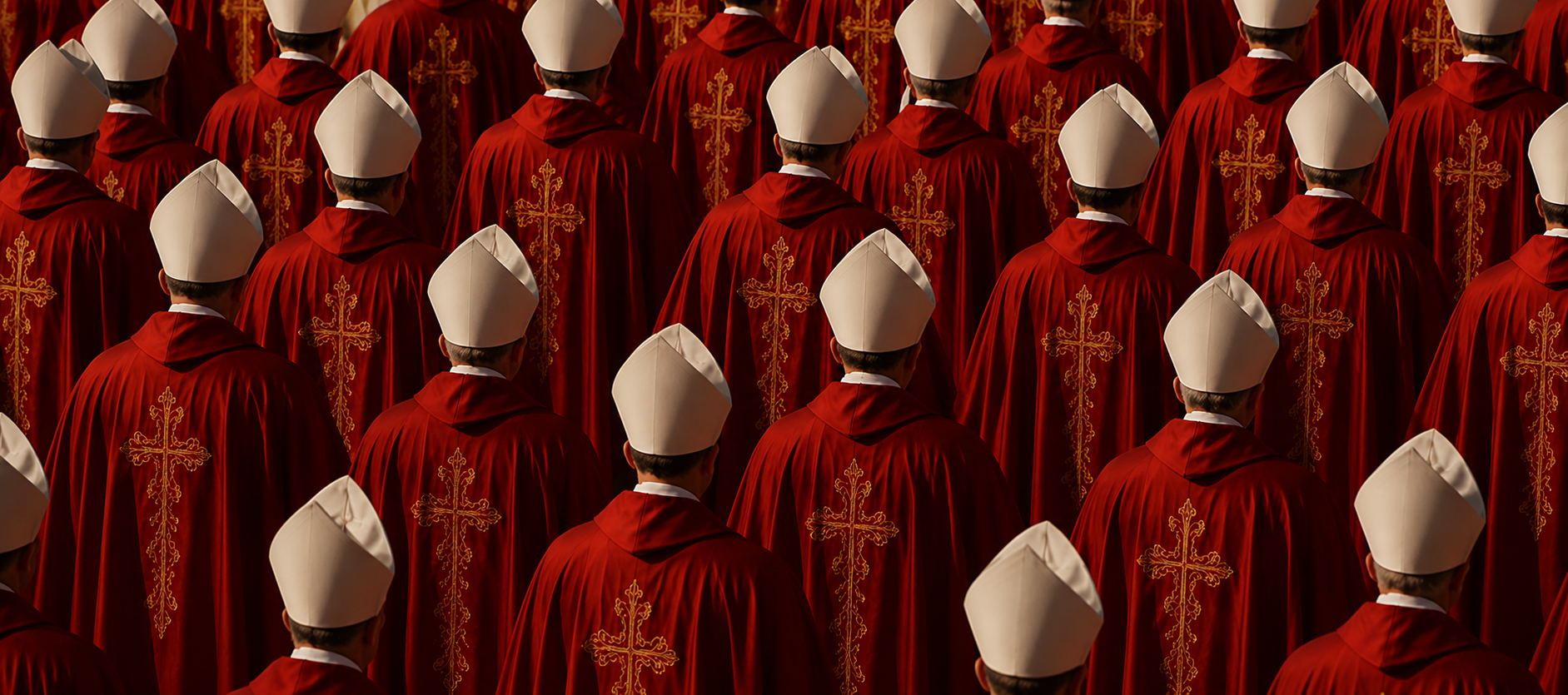
The Vatican has released an unusually detailed briefing on this month’s Extraordinary Consistory of Cardinals, revealing not only the themes to be discussed but also the tightly controlled procedures that will govern the meeting.
In an information note issued to accredited journalists, the Holy See Press Office confirmed that cardinals attending the 26–27 June meeting have been instructed to maintain confidentiality and refrain from speaking to the media during the proceedings “in order to maintain a climate of fraternal dialogue”.
As usual, journalists will not be permitted into the hall during discussions, but the Vatican has promised a degree of transparency beyond that seen at many previous consistories. The Holy Father’s opening remarks and concluding address will be broadcast live by Vatican Media, while the texts of the biblical meditation and the principal introductory speeches delivered during the four sessions will be released to accredited journalists. The Vatican also said that summaries of proceedings will be distributed after each of the first three sessions. The briefing additionally disclosed the internal structure of the discussions.
As was the case during the January consistory, participants will be divided into separate groups. One section will consist of nine groups made up of cardinal electors serving as ordinaries, including apostolic nuncios and cardinal electors who have completed service as diocesan ordinaries. A second section will comprise eleven groups made up of cardinals serving in the Roman Curia together with non-elector cardinals.
Each group will be assigned a chairman and secretary. The chairman will moderate discussion, while the secretary will be responsible for collecting contributions and drafting a final report on behalf of the group.
The Vatican also revealed a strict methodology for discussion. After a brief introduction lasting around ten minutes, proceedings in each group will unfold in three stages.
The first stage consists of personal interventions, with each cardinal limited to a maximum of three minutes while responding to questions set out in the programme. The second stage, described by the Vatican as “shared listening”, will allow participants to speak again for a maximum of two minutes. During this phase, no new proposals may be introduced. Cardinals are instead expected to identify “the most significant points that emerged from the previous listening session”. The third stage will focus on drafting a report. According to the Vatican note, “The Secretary, with the help of all the Group members, collects the fruits of the discussion and proceeds to draft the final report.”
Reports prepared by the groups will then be presented during plenary sessions. The Vatican said the groups of cardinal ordinaries will each present reports lasting no more than three minutes, while the other groups will also be given an opportunity to report back.
The first session on 26 June will open with a biblical meditation by Cardinal Grzegorz Ryś under the title “In what world are we called to proclaim the Gospel?”
Cardinals will then discuss two questions. The first asks: “What sufferings, tensions and questions are most forcefully affecting the peoples and ecclesial communities entrusted to your care today?” The second asks: “What signs of hope, of fidelity to the Gospel, and of possible reconciliation are important to bring to common listening?” The afternoon session will focus on “The culture of power and the civilisation of love”.
The discussion will be introduced by Cardinal Víctor Manuel Fernández and will draw on Chapter V of the papal text Magnifica Humanitas, specifically paragraphs 182 to 192.
Cardinals will be asked: “How do the tensions, divisions and conflicts that are sweeping across the world today affect the life of our Churches and our peoples?” A second question asks: “What languages, attitudes and practices can help build reconciliation, coexistence and peace?”
The programme released by the Vatican shows that the following morning’s discussions will be introduced by Cardinal Stephen Brislin under the heading “Building for Good: The Construction Sites of Our Time”.
The session will draw upon the introduction and conclusion of Magnifica Humanitas and ask cardinals to identify fractures within their own societies that make it more difficult to pursue the common good. The cardinals will also be invited to consider: “What expectations and questions emerge from the people and peoples that the Church is called to listen to and that perhaps we do not listen to enough?” A third question asks what “supports, guidelines, or initiatives from local Churches and the universal Church could most effectively assist the commitment to building the common good”.
The final session of the consistory will move to the New Synod Hall and focus on implementation of the Synod. Cardinal Mario Grech will introduce discussions using the document Towards the Synodal Assemblies 2027–2028: Stages, Criteria, and Tools for Preparation.
Unlike the previous sessions, the programme provides for a dedicated period of questions seeking clarification on the synodal process before cardinals enter into direct dialogue with Pope Leo XIV. The final exchange will consist of free interventions limited to three minutes before the Pope delivers a concluding address.
The Vatican’s information note also confirmed that all reports produced by the discussion groups will be submitted electronically. “
The consistory will conclude with the singing of the Te Deum before a dinner with Pope Leo XIV in the Paul VI Hall.
The publication of both the programme and the procedural framework provides one of the clearest indications yet of how this pontificate intends to conduct consultation with the College of Cardinals, while also revealing the specific texts, questions and discussion methods that will shape deliberations over the two days.
The most striking aspect of the release is the extent to which the structures and working methods developed during the pontificate of Pope Francis have survived into the reign of Pope Leo XIV.
The synodal framework established under Francis was never likely to disappear. Even so, the level of continuity revealed by the consistory programme is notable. The division of cardinals into small discussion groups, the emphasis on “shared listening”, the appointment of secretaries responsible for producing collective reports, and the strict time limits imposed on interventions all mirror procedures that became familiar during the Synod on Synodality.
Rather than marking a departure from the Francis era, the arrangements suggest that many of its assumptions about consultation and decision-making remain firmly embedded within the Vatican’s institutional culture.
We saw during the January consistory that synodal elements would remain part of the Vatican’s approach to consultation, and that expectation has now been borne out. That gathering was framed largely around listening, small-group discussion and collective reporting, and the same methodology now appears to have been carried over into the forthcoming Extraordinary Consistory.
The prominence given to the Synod Secretariat is equally revealing. The final session of the consistory will not simply discuss synodality in general terms but will be structured around the Secretariat’s document, Towards the Synodal Assemblies 2027–2028: Stages, Criteria, and Tools for Preparation, with Cardinal Mario Grech leading the discussion.
That decision points to the continuing influence of the synodal apparatus created during the previous pontificate. The fact that an Extraordinary Consistory of Cardinals is being organised according to methodologies developed by the Synod Secretariat, and that the future stages of the synodal process occupy a dedicated session with the Pope himself, shows that the office remains one of the most important centres of influence in the Vatican, with a role that extends well beyond the conclusion of the Synod on Synodality itself.