

Latest
Vatican rejects reports that Rupnik has been acquitted
The Vatican has dismissed reports that Father Marko Ivan Rupnik has been acquitted in his canonical criminal trial, insisting the judges have reached no decision and are still examining evidence submitted from dioceses, the Jesuits, interested parties and the press Matteo Bruni, Director of the Holy See Press Office, has rejected reports that Father Marko Ivan Rupnik has been acquitted in the Vatican’s ongoing canonical criminal trial. The clarification follows reports alleging that the case had concluded in Father Rupnik’s favour. Responding to those claims, Bruni said the tribunal had reached no such decision and stressed that the judges were continuing to examine evidence submitted from multiple sources before reaching any determination. “Regarding some information that has appeared in the media in recent days, I reiterate that reports of any deliberation by the judges following the case of Rev. Marko Ivan Rupnik are absolutely unfounded,” Bruni said. “The evaluation of the case is still ongoing, and the panel is examining documentation from the dioceses involved, the Jesuits, interested parties and the press.” Bruni also defended the confidentiality surrounding the proceedings, arguing that the tribunal could not release details while the case remained under consideration. “During the trial, as with any judicial proceeding, no information regarding ongoing activity can be shared in any way, out of respect for the trial itself and to avoid harming anyone involved, as has occurred in recent days,” he said. He added that, should the judges conclude that further evidence was required, “the panel will be responsible for obtaining it independently”. Bruni also reiterated the nature of the proceedings, emphasising that the Vatican tribunal is examining the case under canon law after Pope Francis authorised an exception to the normal statute of limitations governing the alleged offences. He said the case “is judicial in nature” and is proceeding “in derogation of the statute of limitations for any crimes”, allowing the tribunal to determine guilt or innocence according to canon law. He also underlined the distinction between ecclesiastical and civil jurisdictions, noting that any criminal liability under state law remains a matter for the countries where the alleged offences took place. “Canon Law can judge and impose penalties regarding the internal life of the Church,” Bruni said, while Father Rupnik “remains subject to the legislation of the countries in which any crimes were committed, and the statute of limitations for such crimes is established by the legislation of each country, regardless of ecclesiastical authority.” The Vatican statement came after the Italian blog Messa in Latino reported that it had learned from what it described as “persistent and highly authoritative sources” that the criminal trial had ended in Father Rupnik’s favour. The publication also reported, citing highly placed sources, that the proceedings concern allegations relating to “violence” rather than clerical abuse itself, and that a retrial could ultimately take place. AdVaticanum sources gave similar accounts. Father Rupnik was once regarded as one of the Catholic Church’s best-known sacred artists, with mosaics installed in churches, shrines and chapels across the world. That standing was overshadowed by allegations from multiple women accusing him of sexual, psychological, spiritual and abuse-of-authority offences spanning several decades. Many of the earliest complaints originated from former members of the Loyola Community, while further allegations later emerged from women connected with Centro Aletti, the Jesuit artistic and spiritual centre in Rome led by Father Rupnik, and his wider ministry.” Before the current proceedings, Father Rupnik had already been the subject of a separate canonical case concerning the offence of absolving in confession a woman with whom he had engaged in sexual activity, an offence that incurs automatic excommunication under canon law. In 2020, the then Congregation for the Doctrine of the Faith declared that he had incurred automatic excommunication after external judges unanimously confirmed the offence. The penalty was lifted later that month after Father Rupnik admitted the facts, expressed repentance and fulfilled the conditions laid down by the Holy See, although restrictions were subsequently placed on his ministry. Attention later shifted to the broader allegations connected with members of the Loyola Community. Following further complaints, the Society of Jesus conducted an investigation and forwarded its findings to the Dicastery for the Doctrine of the Faith, recommending that a penal process be opened. The dicastery concluded in 2022 that the alleged offences could not proceed because they were barred by the applicable statute of limitations then in force. That decision prompted widespread criticism after details of the allegations became public. In October 2023, Pope Francis waived the canonical statute of limitations, allowing the case to move forward despite the passage of time. The Society of Jesus later dismissed Father Rupnik, citing what it described as a persistent refusal to obey legitimate instructions. The order said he had declined opportunities to acknowledge his conduct publicly, seek forgiveness and undertake a process of rehabilitation. Father Rupnik was subsequently incardinated into the Diocese of Koper in his native Slovenia. The Vatican announced on 13 October 2025 that the trial would be heard by a panel of five judges composed of women and clerics who neither belonged to the Dicastery for the Doctrine of the Faith nor held office within the Roman Curia. The Holy See said the arrangement was intended to safeguard the tribunal’s autonomy and independence. The identities of the judges have not been disclosed, and the Vatican has continued to release only limited information about the progress of the proceedings.
Jul. 22, 2026
German bishop defends Church teaching after Jens Spahn’s USA surrogacy
Bishop Stefan Oster of Passau has defended the Church’s teaching on surrogacy after German politician Jens Spahn announced he had become a father through a surrogate mother in the United States, arguing that the practice violates human dignity and places the desires of adults above the rights of children Bishop Stefan Oster of Passau has issued a defence of the Church’s teaching on surrogacy after Christian Democrat politician Jens Spahn, who is openly homosexual, announced he had become a parent through a surrogate mother in the United States. The bishop argued in a video statement that surrogacy fundamentally violates human dignity and places the desires of adults above the rights of children. Without questioning the dignity of the child, Bishop Oster said the means by which the child had come into the world represented a serious moral and anthropological problem which Catholics could not accept. “There are good reasons why surrogacy is prohibited in our country,” the bishop said. “In my view, the most fundamental reason is that it violates human dignity.” Bishop Oster argued that the birth of a child should always be received as a gift rather than something obtained through a commercial arrangement. “As Christians, we believe that children are a gift from God and that their dignity as persons comes from God,” the bishop of Passau said. “But people also see it as a gift because children generally arise from the loving relationship between their parents, and because the experience of love itself is a gift that I cannot buy.” Contrasting the Christian understanding of love with commercial surrogacy arrangements, the Bishop of Passau continued, “So-called ‘love for sale’ is therefore the exact opposite of love – namely, a business transaction.” A significant part of the bishop’s intervention focused on the relationship between a mother and her unborn child. He argued that the bond formed during pregnancy is irreplaceable and forms the foundation of a child’s earliest human development. “Every person is unique and develops through unique relationships,” Bishop Oster said. “A child’s development begins in the womb. The unique relationship between mother and child has a profound impact on the child and also lays the foundation for the life ahead.” The bishop added that an unborn child experiences the mother’s voice, emotions and care even before birth, gradually encountering the world through the woman carrying the child. Drawing on Catholic teaching about marriage and family life, Bishop Oster described the union of husband and wife as “a uterus spiritualis, a kind of spiritual womb,” through which a child naturally comes to know both mother and father. “It is the unique child of this very mother and this very father,” Bishop Oster said. “By nature, it has a unique, irreplaceable, and irretrievable role in the new family structure.” Referring directly to the child acquired through surrogacy by Spahn and his partner, Daniel Funke, Bishop Oster expressed concern over the publicity surrounding the case. “This child of Jens Spahn and Daniel Funke is named Georg, and he is already a public figure – and, as such, is essentially a commodity,” the bishop said. “What a burden this will one day be for him to bear, even though he has no idea of it yet.” The bishop argued that every child possesses a prior claim to be raised, where possible, by his or her natural parents. “I am completely convinced, my dear friends, that above all other rights, every child has a right to its natural parents – and this right far outweighs any right potential parents might have to acquire a child, have one created, or even buy one.” Also, while acknowledging that some children are born into circumstances where alternative care becomes necessary, Bishop Oster maintained that such exceptional situations should not be confused with intentionally separating a child from his or her biological parents from the outset. He said that “a child’s natural circumstances can be so terrible that any other solution for their upbringing might be better than the ones they were originally given,” but argued that “under normal circumstances, the circumstances originally provided by nature are, by their very nature, the best possible.” Furthermore, the bishop reserved his strongest criticism for Spahn’s decision to use surrogacy while publicly identifying as a Catholic and belonging to a political party which officially opposes the practice. “So when a prominent CDU politician, to fulfil his own desires, uses surrogacy, deliberately violates the laws of his own country and the fundamental principles of his own party on this issue – which is so crucial to our view of humanity – and, on top of that, actively advocates for surrogacy, I consider that a genuine scandal,” Bishop Oster said. The bishop ended by saying, “This is especially true given that this politician has publicly professed his affiliation with the Catholic Church. In my view, he has thereby taken a step that we, as a faith community, will never be able to follow, even in the future.” The intervention came after Spahn announced last week that he had become a father through a surrogacy arrangement in the United States. The announcement led to criticism in Germany, not only because both commercial and altruistic surrogacy remains prohibited under German law, but also because Spahn has previously opposed efforts to legalise the practice. The Christian Democratic Union continues to maintain official opposition to surrogacy. The controversy rapidly developed into a political crisis for the former federal health minister. Spahn subsequently resigned as leader of the CDU/CSU parliamentary group in the Bundestag after facing growing pressure, including calls within his own party for him to step aside. He remains a member of both the Bundestag and the CDU. The bishop of Passau has long been one of the country’s most prominent critics of the German Synodal Way and has consistently argued that proposed reforms concerning sexual morality, ordained ministry and ecclesial governance depart from Catholic teaching. Alongside Cardinal Rainer Maria Woelki of Cologne, Bishop Rudolf Voderholzer of Regensburg and Bishop Gregor Maria Hanke of Eichstätt, Bishop Oster has stood among the small group of German diocesan bishops who declined to participate in the Synodal Committee and related permanent structures, arguing that they are incompatible with the Church’s sacramental constitution and fail to heed repeated warnings from the Vatican. Following the sixth and final assembly of the Synodal Way in Stuttgart earlier this year, Bishop Oster wrote that he remained convinced “that the problematic ramifications of the Synodal Way for the Church in Germany and worldwide clearly outweigh its positive aspects.” Reflecting on the process, he argued that many of its reform proposals touched “a very central core of the Church” and warned that implementing them would lead “very fundamentally” towards “a different kind of Church.” Bishop Oster has also criticised what he sees as increasing polarisation within German Catholicism, warning that implementation of many Synodal Way proposals would widen divisions between those advocating doctrinal change and those seeking to preserve the Church’s existing teaching. Although he has indicated a willingness to participate in future synodal structures conducted in agreement with the universal Church, he has consistently maintained that fidelity to Catholic doctrine and communion with Rome remain essential conditions for authentic reform. Surrogacy is prohibited in much of Europe. Although the European Union has no single law banning commercial surrogacy in every member state, Article 3 of the Charter of Fundamental Rights of the European Union prohibits “making the human body and its parts as such a source of financial gain”. Individual countries, including Germany, France, Italy and Spain, prohibit or severely restrict surrogacy. In the United States, there is no federal law governing surrogacy. Instead, each state sets its own rules, with states such as California, Nevada, Illinois, Colorado, Connecticut, Maine, New Hampshire, Rhode Island, Vermont, Washington and Oregon expressly permitting and regulating gestational surrogacy. A German resident can therefore travel to a US state where surrogacy is permitted and enter into an arrangement there. German law does not generally criminalise intended parents merely for pursuing surrogacy abroad, but considerable legal difficulties can arise when they attempt to bring the child home. Under German law, the woman who gives birth is ordinarily regarded as the legal mother, and a US birth certificate or parentage order may not automatically be recognised. The child may also face difficulties obtaining German citizenship or a passport, particularly where neither intended parent is legally or biologically recognised as a parent. Spahn is not the biological father of the child in question, his partner is. His decision to use surrogacy after previously being critical of the practice has been received badly across the political spectrum. His decision to resign as leader of the CDU/CSU parliamentary group in the BundestagGerman was described by Chancellor Friedrich Merz “the right one” and “unavoidable.” Spahn intensifies as a Catholic, but has said that he questions parts of the Church’s teaching on sexual morality.
Jul. 22, 2026
Australian bishop goes on trial over 26 charges involving Aboriginal men
The trial of Bishop Christopher Saunders has begun in Western Australia. The retired Bishop of Broome, 76, has pleaded not guilty to 26 charges relating to the alleged sexual abuse of three young Aboriginal males between 2008 and 2017 Bishop Christopher Saunders, the retired Bishop of Broome, has gone on trial in Western Australia charged with 26 offences relating to the alleged sexual abuse of three young Aboriginal males between 2008 and 2017. Bishop Saunders, 76, has pleaded not guilty to all charges before the District Court. The allegations concern the period during which he served as Bishop of Broome, a position he held from 1995 until his resignation in 2021 after the allegations first became public. Opening the prosecution’s case, prosecutor Adam Ebell told the jury that the State would argue Bishop Saunders cultivated relationships with vulnerable Aboriginal youths through gatherings where alcohol and cigarettes were freely supplied before allegedly committing sexual offences. “During that time, it is the State’s case that the accused sexually offended against multiple young Aboriginal males in different ways at different locations across the Kimberley,” Mr Ebell said. According to the prosecution, the gatherings became a means of obtaining access to young Aboriginal men. “These parties provided the accused with access to young Aboriginal men,” Mr Ebell told the court. Jurors heard that the gatherings allegedly followed particular routines, with attendees frequently instructed to remove most of their clothing and remain in boxer shorts. Those who did not have boxer shorts were allegedly provided with new pairs by Bishop Saunders. The prosecution further alleged that boxing matches and wrestling were encouraged during these gatherings, allowing Bishop Saunders to grapple with and touch those present. The court also heard allegations that Bishop Saunders at times indecently touched alleged victims using his feet. Mr Ebell argued that Bishop Saunders exploited both his status as bishop and the trust associated with his office. “The State says the accused, who took a vow of celibacy in 1975, had a sexual interest in young men and had a propensity to act when the opportunity presented itself,” the prosecutor told the jury. Most of the charges relate to one alleged victim who was said to have been around 16 years old when the alleged abuse began. According to the prosecution, the offending continued over several years into the complainant’s twenties. Among the incidents described in court was an allegation that Bishop Saunders supplied alcohol to the teenager before repeatedly sexually abusing him while the pair were camping. Another allegation concerns an incident at the bishop’s residence after the two had showered together. The prosecution also alleged that investigators later discovered a photograph of the semi-naked complainant on Bishop Saunders’ mobile telephone. The court further heard allegations that alcohol purchased using Church funds was transported into a dry Aboriginal community for young men to consume. The trial is the latest stage in a controversy that has surrounded the former bishop for several years. The allegations first emerged publicly following a lengthy investigation by 7NEWS Australia, which began reporting in 2020 that Western Australia Police had been investigating historical allegations involving Bishop Saunders under “Operation White Plane”. Bishop Saunders voluntarily stood aside from his position while inquiries continued. Although the initial police investigation concluded without criminal charges, the Holy See subsequently authorised a canonical investigation under the provisions of Vos estis lux mundi , Pope Francis’s framework establishing procedures for investigating allegations against bishops. The Vatican inquiry produced an independent report of approximately 200 pages, completed in 2023. Although intended to remain confidential, details were later leaked to Australian media. According to those reports, the canonical investigation concluded that Bishop Saunders had “likely sexually assaulted four youths while potentially grooming another 67”. The report further stated, “The bishop has been variously described by witnesses as … a sexual predator that seeks to prey upon vulnerable Aboriginal men and boys.” It also alleged that vulnerable young Aboriginal males had been groomed through gifts including alcohol, cash, mobile telephones, phone credit, accommodation and travel and that thousands of dollars were spent each month on alcohol for the young men. Publication of details from the Vatican-commissioned report in September 2023 reignited public debate over the handling of the allegations. Western Australian Premier Roger Cook publicly urged the Vatican to release the report to investigators, saying, “We want the Vatican to give the information they have to WA police so they can take their inquiries forward.” Within days, Archbishop Timothy Costelloe of Perth, president of the Australian Catholic Bishops Conference, confirmed that the Church had complied with a police request. “Following yesterday’s request from the Western Australia Police, the Church is taking immediate steps to provide them a copy of the Vatican-initiated report into Bishop Christopher Saunders,” Archbishop Costelloe said. The bishops’ conference later clarified that the Church immediately agreed to police access to the report and delivered it to Western Australia Police within two days of the request. “At no point did the Church oppose the provision of the report to WA Police. To portray the discussions as in any way adversarial is false,” the conference said in a subsequent statement. The statement also explained that the canonical investigation examined alleged offences under Vos estis lux mundi together with possible breaches of the Church’s Integrity in Ministry protocols. The bishops’ conference further disclosed that Bishop Saunders had declined to cooperate with the Church’s investigation. “The Church can confirm that Bishop Saunders refused to leave the Diocese and chose not to participate in the Church’s investigation within the deadline of six months initially stipulated by the Vatican.” The conference also maintained that mandatory reporting obligations relating to minors had been observed and that no alleged victims identified during the canonical inquiry had at that stage been confirmed as being under the age of 18. The subsequent criminal proceedings, however, include allegations concerning a complainant who was allegedly 16 when the offending began. Following publication of the canonical report in September 2023, Archbishop Costelloe described the allegations as “very serious and deeply distressing, especially for those making the allegations.” “The Catholic Church’s investigation into allegations against Bishop Saunders could not commence until the Western Australia Police Force concluded its inquiries,” Archbishop Costelloe said at the time. The archbishop explained that the investigation had been established by the Holy See, overseen by Archbishop Mark Coleridge of Brisbane and entrusted to an independent specialist investigations organisation. The Archbishop added that Bishop Saunders, “who has maintained his innocence, is able to respond to the report by communicating directly with the Holy See”, while expressing hope that “after what has been a long and painful process for so many, it is important that a just and authoritative finding be made.” When Bishop Saunders was formally charged in February 2024, Archbishop Costelloe again stressed the seriousness of the allegations. “Allegations against the former Bishop of Broome, Christopher Saunders, are very serious and deeply distressing, especially for those making those allegations,” the Archbishop of Perth said. The president of the conference added, “It is right and proper, and indeed necessary, that all such allegations be thoroughly investigated.” Bishop Saunders, who continues to deny all allegations, resigned as Bishop of Broome in 2021 after leading the diocese for more than a quarter of a century.
Jul. 22, 2026
The leading contenders for Pope Leo XIV’s first cardinals
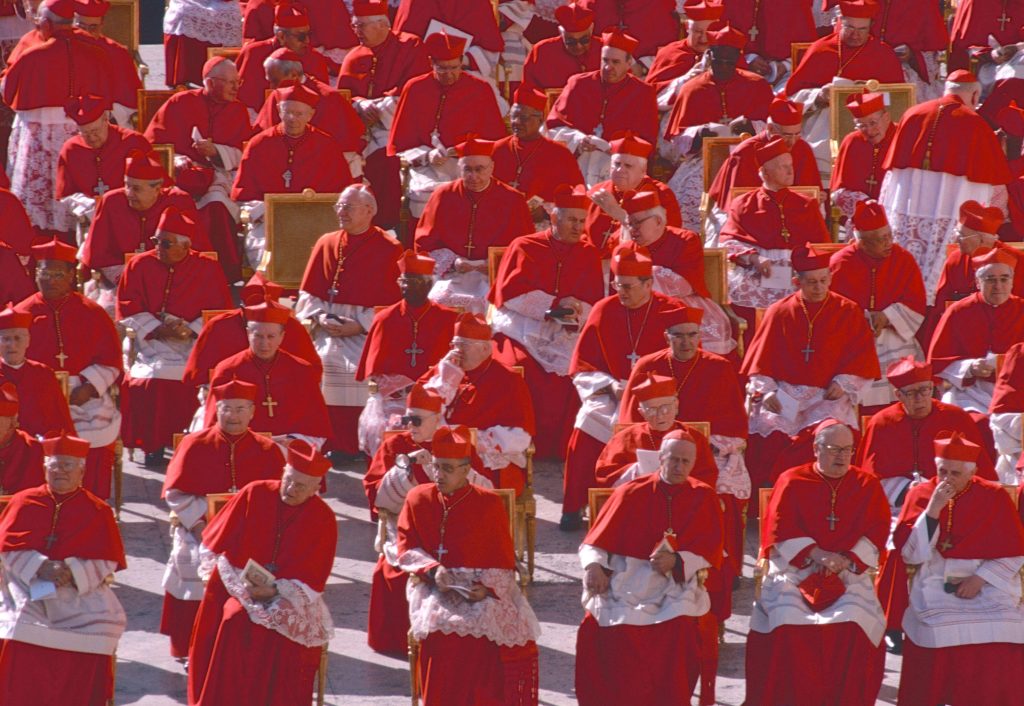
With the number of voting cardinals continuing to fall, rumours of a consistory are gathering pace. Who is most likely to receive the red hat? Niwa Limbu assesses the strongest candidates Cardinal Michael Czerny, the former Prefect of the Dicastery for Promoting Integral Human Development, turned 80 on Saturday 18 July, celebrating his birthday in Africa. With that milestone, he is no longer a cardinal elector, reducing the number of voting cardinals to 116. At the time of the 2025 conclave, there were 136 cardinal electors, of whom 133 cast votes. The number of cardinal electors is set out in Paul VI’s Romano Pontifici Eligendo (1975). The apostolic constitution states that the number of cardinal electors “must not exceed 120”, and Pope John Paul II retained this provision in Universi Dominici Gregis (1996). In practice, however, Popes John Paul II, Benedict XVI and Francis all exceeded the stipulated number, allowing the number of voting cardinals to rise above 120. With the reduced number of cardinal electors, recent weeks have seen a steady stream of rumours that a consistory for the creation of new cardinals will be held later this year. Additional speculation suggests that such a consistory could be announced after the Pope’s summer stay at Castel Gandolfo, which is due to end on Monday 27 July, or scheduled between a papal visit to either France or South America. If Pope Leo chooses to create new cardinals simply to replace those reaching retirement age over the coming year, the consistory would most likely be a relatively small one, perhaps involving fewer than ten new cardinals. If, however, his intention is to shape the College of Cardinals well into the future, the consistory could be considerably larger. By comparison, at his final consistory in December 2024, Pope Francis created 21 new cardinals. But if a consistory does take place this year, who is most likely to receive the red hat? The easiest place to start is the Curia. Archbishop Filippo Iannone, currently serving as Prefect of the Dicastery for Bishops, is expected to receive a red hat. After being passed over by Pope Francis when appointed Prefect of the Dicastery for Legislative Texts, the prefecture of the Dicastery for Bishops has traditionally been accompanied by the cardinalate. Pope Leo himself served as prefect from January 2023 until his election to the papacy and was created a cardinal in September of the same year. Archbishop Luis Marín de San Martín, the papal almoner and head of the Dicastery for the Service of Charity, is another name frequently mentioned. Although the office of papal almoner is not automatically tied to the cardinalate, his long-standing Augustinian friendship with Pope Leo XIV makes the prospect realistic. The two worked closely in Rome while the future pope was Prior General of the Order of Saint Augustine and have known one another for three decades. There is also a parallel with the elevation of the previous almoner, Cardinal Konrad Krajewski, who was closely associated with Pope Francis. Several senior curial posts are occupied by prefects already past the usual retirement age, among them Cardinal Kurt Koch, Cardinal Arthur Roche and Cardinal Marcello Semeraro. This raises the possibility that Pope Leo could appoint a new prefect to one of these dicasteries before announcing his first group of cardinals, with the newly appointed official then appearing on the consistory list. Cardinal Koch’s successor as Prefect of the Dicastery for Promoting Christian Unity is the subject of particular interest. Vatican sources have indicated to AdVaticanum that Bishop Erik Varden, Bishop of Trondheim in Norway and former Abbot of Mount St Bernard Abbey in the United Kingdom, stands a strong chance of being chosen. He made a notable impression when he preached the annual Lenten Spiritual Exercises for Pope Leo XIV and the Roman Curia. Bishop Varden also has considerable experience in the field of Christian unity, particularly with the Oriental Churches, making him a natural fit for the dicastery’s mission. Turning to the more realistic, yet harder-to-predict, category are the traditional cardinalatial sees. It is worth noting that when a cardinal retires from a diocesan see but remains of voting age, his successor is not customarily created a cardinal until the predecessor turns eighty. In the English speaking world, Archbishop Charles Philip Richard Moth, Archbishop of Westminster, appointed in December 2025 and installed in February 2026, is likely to recieve the red hat. There is, however, one important caveat. Cardinal Vincent Nichols, who held the see from 2009 until 2025, turned eighty in November 2025 and is now an emeritus, non-voting cardinal. Every Archbishop of Westminster since the restoration of the hierarchy has been created a cardinal. Basil Hume, appointed on 9 February 1976, received the red hat from Paul VI on 24 May 1976, roughly three and a half months later, at the very next consistory. Similarly, Cardinal Cormac Murphy-O’Connor, appointed on 15 February 2000 and installed the following month, was elevated by John Paul II on 21 February 2001, almost exactly a year after his appointment and at the first consistory held after he took office. Cardinal Vincent Nichols himself, however, waited nearly five years. Appointed in April 2009, he was passed over in Benedict XVI’s consistories of 2010 and 2012 before Pope Francis created him a cardinal in February 2014. In short, Hume was elevated almost immediately, Murphy-O’Connor at the next available consistory, and Nichols only after a noticeably longer interval that spanned two intervening consistories. Whether Nichols’ delay reflected a particular circumstance or a temporary shift in attitude towards the see is unclear. What history does show is that the Archbishop of Westminster has, without exception since the restoration of the hierarchy, eventually been made a cardinal, with the traditional pattern being elevation at the first or second consistory following appointment. Whether Archbishop Moth follows that quicker timetable is, of course, entirely for Pope Leo to decide. The historical record simply suggests that the next consistory is the point at which such an elevation would normally be expected. The next name is likely to surprise many readers and represents something of a curveball. Yet, as the Church continues to grow and its centre of gravity shifts towards Asia, the case for Archbishop Peter Chung Soon-taick, OCD, becomes increasingly persuasive. He succeeded Cardinal Andrew Yeom Soo-jung as Archbishop of Seoul in 2021 but was passed over at the 2024 consistory. The archbishop is already well connected in Rome, having previously served as Definitor General of the Order of Discalced Carmelites. More decisive still are his personal ties to the Holy Father and the fact that he is the principal organiser of World Youth Day 2027 in Seoul. He has been heavily involved in preparations for the event, which will effectively be “his” World Youth Day. With South Korea once again hosting a major international gathering, it would be natural for the Pope to restore Seoul to the College of Cardinals and see its archbishop wearing red. Another straightforward candidate is Archbishop Josef Grünwidl, who succeeded Cardinal Christoph Schönborn as Archbishop of Vienna. He presents another classic example of a traditional European cardinalatial see awaiting its next red hat. Appointed by Pope Leo XIV on 17 October 2025 and installed on 24 January 2026, Grünwidl had already been leading the archdiocese as apostolic administrator since Schönborn’s retirement in January 2025. A product of the Viennese Church, he was ordained by Cardinal Franz König, served as Schönborn’s personal secretary in the mid-1990s, later held several important pastoral posts, chaired the priests’ council and became episcopal vicar for the southern vicariate. What makes his candidacy particularly interesting is the combination of deep local roots and a deliberately understated style. Grünwidl repeatedly hesitated before accepting the appointment, explaining that he believed God desired availability rather than perfection. Whether he receives the red hat at the next consistory will depend on how strongly Pope Leo wishes to reaffirm Vienna’s place in the College of Cardinals. Historically, the archbishops of Vienna have been elevated relatively quickly after their appointment. Many therefore regard him as one of the more straightforward European names likely to appear on an early list of new cardinals. One significant factor, however, is the number of Italian cardinal electors, which fell sharply during Francis’s pontificate. Twenty-eight Italians entered the conclave that elected him in 2013, representing almost a quarter of the entire electorate. Even after that rebalancing, however, Italy remains the country with the largest number of cardinal electors. Two Italian sees that have traditionally carried the red hat are currently unrepresented in the College of Cardinals: Genoa, where Archbishop Marco Tasca, OFM Conv., succeeded Cardinal Angelo Bagnasco, and Florence, where Archbishop Gherardo Gambelli succeeded Cardinal Giuseppe Betori. Another intriguing possibility is Archbishop Mario Delpini of Milan. Born in 1951, he reached the retirement age of seventy-five on 29 July this year. He has confirmed to the Italian press, however, that Pope Leo has indicated he will not immediately accept his resignation, and Delpini therefore expects to remain in office for at least the coming pastoral year. Creating him a cardinal would be a clear gesture of goodwill towards one of Italy’s most important sees. In that scenario, conventionally, his successor would not be appointed until Delpini eventually lost his voting rights at the age of eighty. Whether one, two or even three of these Italians appear on an early consistory list will depend on how far Pope Leo intends to depart from the internationalising pattern established by his predecessor. With the number of cardinal electors already standing at 116, and many other cardinalatial sees pressing their claims, it seems unlikely that every major Italian vacancy will be filled immediately. As a modest sign of continuity and unity with the Italian Church, however, the creation of at least one new Italian cardinal elector would not be surprising. All that being said, the custom of waiting until a retired cardinal reaches the age of eighty before elevating his successor is not an absolute rule and has been set aside before. Pope John Paul II created Archbishop Péter Erdő a cardinal on 21 October 2003 even though his immediate predecessor as Archbishop of Esztergom-Budapest, Cardinal László Paskai, OFM, had retired only the previous year and was still just seventy-six, meaning he remained a cardinal elector. Paskai retained voting rights until May 2007, and both men participated in the 2005 conclave. This was, however, a clear exception to the usual practice of avoiding two voting-age cardinals associated with the same residential see. For now, an ordinary consistory where Cardinals are created remains speculative. However, as the number of voting Cardinals continues to drop, the likelihood of one increases. Whilst Pope Francis was somewhat unpredictable in his choice of Cardinal’s, Pope Leo has generally been more conventional in his papal decisions thus far, indicting that his choice of Cardinals may in turn be more calculable.
Jul. 22, 2026
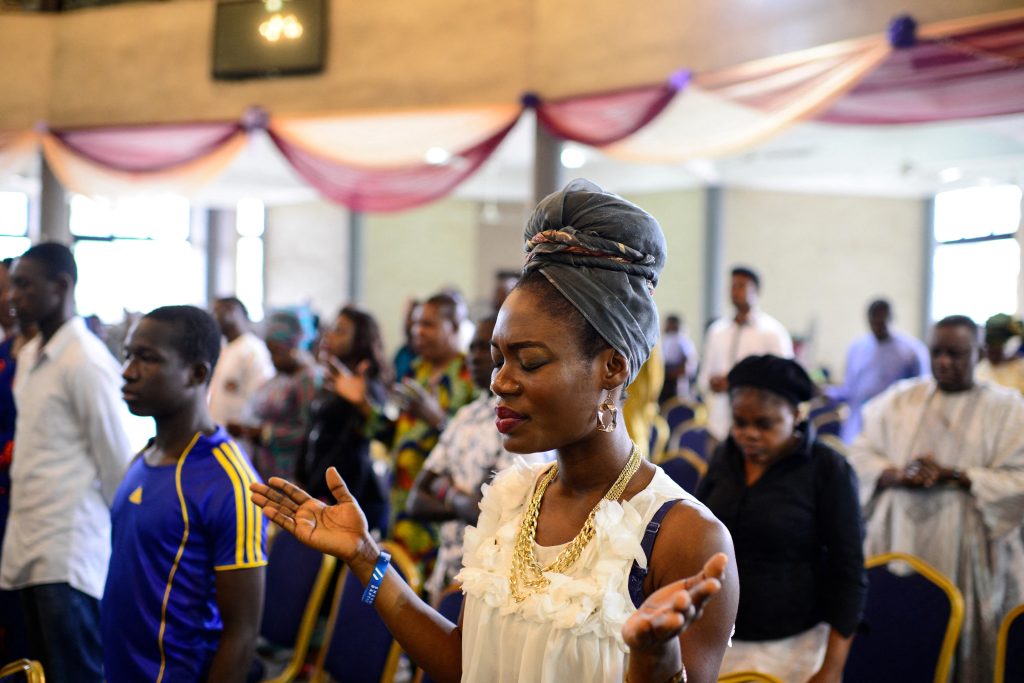
Attacks on Christians in Nigeria on the rise again
Reports from Nigeria indicate that attacks on Christian communities are once again increasing. At least 121 people were reportedly killed in Plateau State between May and 11 July, while further attacks in Plateau and Benue states have been reported in recent days It appears that violence against Christians has once again taken grip in Nigeria. Testimonies are appearing online of a recent spate of attacks against Christians led by Fulani Militias. Reports from Plateau State, in Nigeria’s Middle Belt, are detailing that at least 121 people were killed between May and July 11, 2026. The Berom Youth Moulders Association, who combilled the data said that the state had seen 62 deaths in May, 43 in June and another 16 during the first 11 days of July. The association describes the deaths as being caused by a “fresh wave of coordinated attacks.” Furthermore in Plateau State On July 12, it is believed that 9 members of a single family were killed in Kum village and Jol District was subject to repeated raids between July 14 to 17. In one video circulating online, a Christian missionary explains how 30 people were killed in the Chrisitian village of Kubat, also Plateau State. When he and some other Christians tried to reach the village, there was another attack and multiple other Christian villages were targeted. He describes the incidents as “well-cordinated” with the terrorists having “achieved” their goals. Other videos have circulated showing Fulani militias surrounding the remains of what appears to be Chrisitan houses and shouting “allahu akbar”. In Otukpo-Nobi, Benue State, also on July 12 16 were killed in what local media have described as a “suspected herdsmen attack.” The attack is said to have target the residents of the village whilst they were asleep and most of the victims were women and children. On July 14th, another resident of Otukpo Local Government Area, in the neighbouring village of Ondo-Ugboju was killed. The attacks are thought to be at least in part reprisals for the June 26th murder of Alhaji Ardo Risku Muhammad, the Benue State chairman of the Miyetti Allah Cattle Breeders Association of Nigeria (MACBAN). Risku’s position meant that much of his job was to represent the Fulani cattle breeders in Nigeria. According to Open Doors international, Nigeria is the 7th most dangerous country in the world to be Christian. In northern Nigeria, 12 states have implemented Islamic law which has created a system where Christians live as second-class citizens, and conversion from Islam can be severely punished. Here, groups such as Boko Haram, have launched a regime of terror against Christians living in the region. . In the middle belt of the country the violence is prodomently carried out by Islamic militants among the Fulani people, who disproportionately attack Christian communities with horrific violence. In 2024 Nigeria was the country with the highest number of Christians killed for their faith, with 3,100 Christians killed and 2,830 kidnapped that year.
Jul. 21, 2026
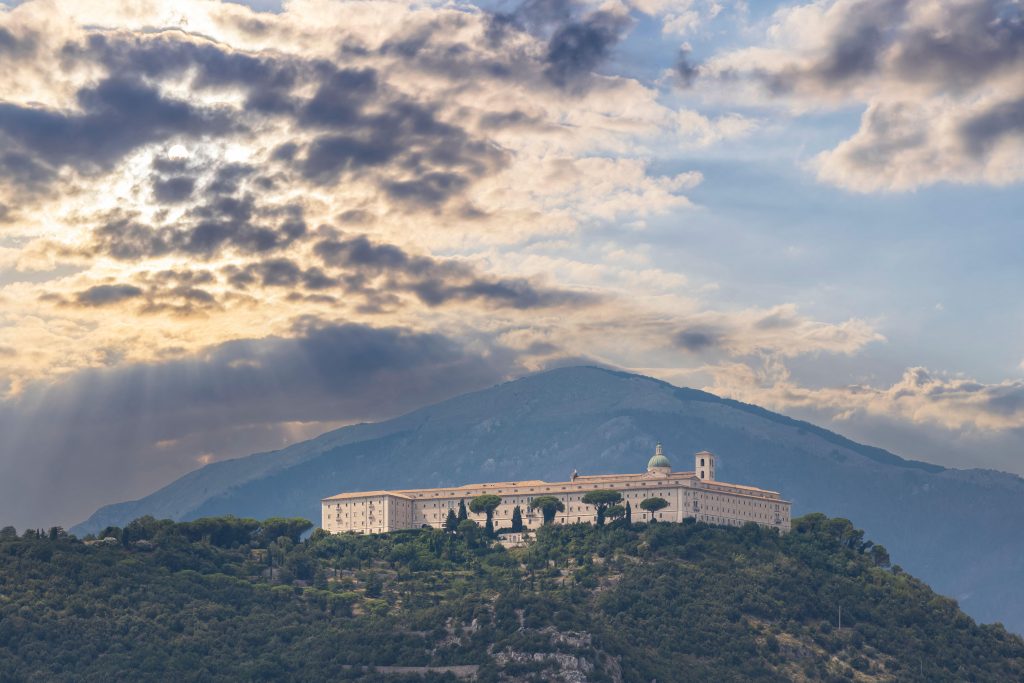
Pope Leo makes private pilgrimage to Monte Cassino
Pope Leo XIV made an unannounced pilgrimage to the Abbey of Monte Cassino to pray at the tomb of St Benedict and join the Benedictine community for Sext and lunch before returning to Castel Gandolfo Pope Leo XIV made an unannounced private pilgrimage to the Abbey of Monte Cassino and spent several hours with the Benedictine community in prayer. The journey was kept confidential until after the Pope had departed. The Holy See later confirmed that the Pontiff had prayed at the tomb of St Benedict, patron saint of Europe and entrusted the Saint with a “plea for peace in those regions of the world marked by bloodshed and conflict”. The visit came while Pope Leo is spending a period of summer rest at Castel Gandolfo, from where Monte Cassino is within easy travelling distance. The Pope joined the monks for prayer and lunch before returning to the papal residence later in the afternoon. According to the Holy See Press Office, the central moment of the visit was the Pope’s prayer before the tomb of St Benedict. In choosing Monte Cassino, the monastery founded by St Benedict in 529 and regarded as the cradle of Western monasticism, Pope Leo returned to one of the most significant spiritual sites in the Catholic Church. The Pope arrived at the monastery shortly before midday and was welcomed by Abbot Dom Luca Fallica, Prior Jordi Augustí Piqué, Archbishop Emeritus of Gaeta Bernardo D’Onorio and members of the Benedictine community. The visit remained deliberately low-profile, with the monastery having been instructed to maintain strict confidentiality until the Pope’s departure. During his time at the abbey, Pope Leo toured several of its most historically significant sites. Passing through the cloisters, he paused on the Loggia del Paradiso to look across the Liri Valley before continuing into the museum, where he spent time in the section recounting the destruction of Monte Cassino during the Second World War. He also visited the abbey archives and library before entering the basilica, where he prayed at the tombs of St Benedict and his sister, St Scholastica. The Pope later joined the monks for the praying of Sext in the Chapter Hall, sharing in the daily rhythm of Benedictine life before remaining for lunch with the community. As a lasting reminder of the visit, Pope Leo presented the monks with a chalice. Although the pilgrimage had been organised in private, word gradually spread among visitors already present at the abbey. Groups gathered to welcome the Pope with applause as he greeted and blessed those assembled before leaving shortly before 3 p.m. “It was an absolutely unexpected gift,” Abbot Fallica said. “The visit was strictly private and therefore we had been asked to maintain the utmost confidentiality. In fact, it was only confirmed yesterday, so I was able to notify the community only a few hours before the Holy Father’s arrival, and so it was truly all marked by great simplicity and familiarity.” The Abbot added, “I believe the Pope was pleased to be able to visit this place, which he had only been to many years ago when, he told me, he was still a student in Rome.” Monte Cassino was founded by St Benedict in the sixth century. The abbey became the mother house of the Benedictine Order. Its most devastating chapter came during the Second World War, when it was almost completely destroyed during the Battle of Monte Cassino in February 1944 after Allied commanders mistakenly believed German forces were using the monastery as a military position. Following the war, the monastery was rebuilt with support from the Italian state before being rededicated by Pope Paul VI in 1964.
Jul. 21, 2026