

Culture
The tale of two JD Vances
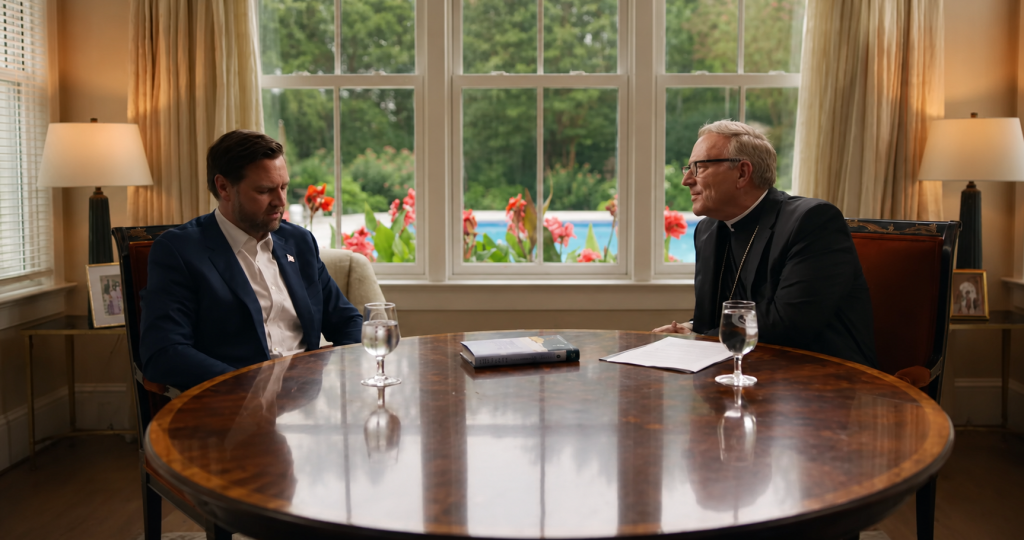
Vice President JD Vance’s interview with Bishop Robert Barron is a study in contrasts. The Catholic convert who speaks thoughtfully about Augustine, René Girard and the spiritual life sits uneasily alongside the Vice President who defends the policies and politics of the Trump administration On Friday, Bishop Robert Barron, founder of Word on Fire and Bishop of the Diocese of Winona–Rochester, sat down with Vice President JD Vance to discuss his new book, Communion: Finding My Way Back to Faith , as well as his political and spiritual journey. The interview is very much a tale of two JD Vances. The first is the man steeped in Augustinian theology whose journey is detailed in his book. The second is the JD Vance of the MAGA movement. This Vance is subservient to an ideology centred around a single man, elevating him above all else. While President Trump is rarely mentioned by name, his presence is felt throughout. At the beginning of the interview, the first Vance is centre stage. Bishop Barron and the Vice President examine the theological influences that have shaped his career, his rejection of the decadence of American elites, and his admiration for René Girard. Together, they tease out a central tenet of Augustinian theology: that right worship of God is the principle from which both successful governments and flourishing individuals flow. It is an interesting discussion, with Vance approaching the subject from the perspective of political philosophy and Bishop Barron drawing upon his pastoral experience. The two then discuss René Girard’s theory of mimetic desire, the idea that human desire is not original but imitative, leading in turn to mimetic rivalry, the hostility that develops as different people come to desire the same thing. Vance eruditely links this to social media and points out that algorithms have spread mimetic desire and therefore mimetic rivalry at a pace not seen before. One of the few occasions on which President Trump is mentioned comes when Bishop Barron asks Vance directly how Trump transformed the Republican Party from the days of Ronald Reagan into what it is today. Vance argues that Trump has brought a “national and community element to economics” and rejected the globalisation associated with the Reagan era. He describes the President’s economic policy as “conventional wisdom”, an assertion that goes unchallenged by Bishop Barron. There is no acknowledgement that this “national and community element to economics” has also been accompanied by higher inflation and military operations in Yemen, Iran, Venezuela, Syria, Iraq, Somalia and Nigeria. An interesting reflection on Vance’s political career comes when the conversation turns to the Munich Security Conference. Bishop Barron reads an extended passage from Communion reflecting on Vance’s attendance at the conference in 2023. Munich has since become a defining feature of his political career. He returned in 2024, sitting on a panel alongside the UK’s David Lammy before either man’s party entered government, and again in 2025 as Vice President, when he delivered a plenary address criticising European leaders for restricting freedom of speech while underestimating the threat posed by Russian totalitarianism. However, his time at the 2023 conference was more contemplative. He writes that those who established the conference in post-war Germany believed they were defending “Western Christian civilization, and the values particular to it”, rather than abstract concepts such as “freedom”, “liberalism” or “democracy”. Vance is right that there was a stronger sense of political Christendom in Europe during this period. However, his assertion in the interview that the “Western alliance was so strong in 1950” is demonstrably false. Leaving aside the Soviet Union, which then encompassed Ukraine, Belarus, Lithuania, Latvia and Estonia, Europe was hardly a model of unity. In 1950, Hungary, Albania, Poland, Romania, Yugoslavia and East Germany were all under communist dictatorships. Munich itself lay in West Germany, which did not regain full sovereignty until 1955. Portugal and Spain were under dictatorships of their own. Europe was in the throes of the Cold War. If there was a unifying factor amongst European nations, it would be communism before Christendom. Interestingly, the conversation then turns to the damaging effect that artificial intelligence is having on young people’s dating lives. Again, the tension between JD Vance the Catholic and JD Vance the member of the Trump administration becomes apparent. The administration has been bullish about AI and resistant of any restrictions on the technology. Speaking at the Paris AI Action Summit in 2025, Vance argued that “to restrict its development now would not only unfairly benefit incumbents in the space, it would mean paralysing one of the most promising technologies we have seen in generations”. In the same speech, he said the Trump administration wanted America to become the AI “gold standard worldwide”. Yet here he laments AI’s damaging effect on real-world relationships. Perhaps the most interesting and coherent section of the interview comes towards the end. Reflecting on his meeting with Pope Francis shortly before the late Pontiff died, Vance says that his subsequent dealings with Cardinal Parolin and Archbishop Paul Gallagher, whom he mistakenly identifies as Irish, left him feeling that “they did not want to move past the diplomatic platitudes”. He continues: “There is an impulse within the Church that is very comfortable in dealing with the highest level of generality, because then it is not challenging to people.” In this, Vance captures much of the generational frustration visible within the Church today. On the one hand is an older clergy that often speaks in abstract terms, hesitant to offer concrete instruction and, in doing so, dilutes the Christian message. On the other is a younger generation seeking clarity and structure, which finds such obsequiousness unappealing and either abandons Christianity altogether or seeks out those rare places where the faith is taught in its fullness. Vance’s analysis also points to Pope Leo XIV, as an American, as a possible antidote to this problem. While the reasons for the ambiguity found in some recent Church teaching cannot be reduced to a single cause, language and culture may well play a role. Pope Francis was steeped in the Romance languages, a native speaker of Spanish and Italian, and never entirely comfortable in English. By contrast, Benedict XVI and John Paul II, both generally associated with a more assertive style of teaching, came from the Germanic and Slavic language traditions respectively and were also fluent English speakers. There is often a greater degree of ambiguity in the Romance languages, whereas the Germanic and Slavic language groups, of which English belongs to the former, generally favour more direct expression. Pope Leo, a native English speaker who also speaks Spanish at a native level, is therefore well placed both to recognise this problem and, perhaps, to address it. The interview closes with a touch of spiritual direction. Vance admits his prayer life is not as he wishes it was and Bishop Baron offers some gentle guidance. He suggests the Vice President carry a sacramental with him in his work life, an encouraging thought for the world. Although the interview contains no major revelations and lacks the memorable moments of Bishop Barron’s interview with Shia LaBeouf, it offers an unusually revealing glimpse into the spiritual life of one of the world’s most influential Catholics. Vance is clearly a man who takes his faith seriously and displays the intellectual curiosity and humility indicative of converts. But he is also limited by being subservient to a president who is neither Catholic nor appears to take Catholicism seriously. Vance approaches politics as a Catholic convert; Trump approaches Catholics as a political constituency. As long as Vance is under Trump, there will always be the tale of two JD Vances. One hopes that, if he is one day rewarded with the higher office, he will be able to shake off the old man and entirely embrace his Catholicism. Having an unencumbered Catholic as leader of the United States could only be a good thing. Image credit: Bishop Robert Barron YouTube
Jul. 20, 2026
In search of lost Prime
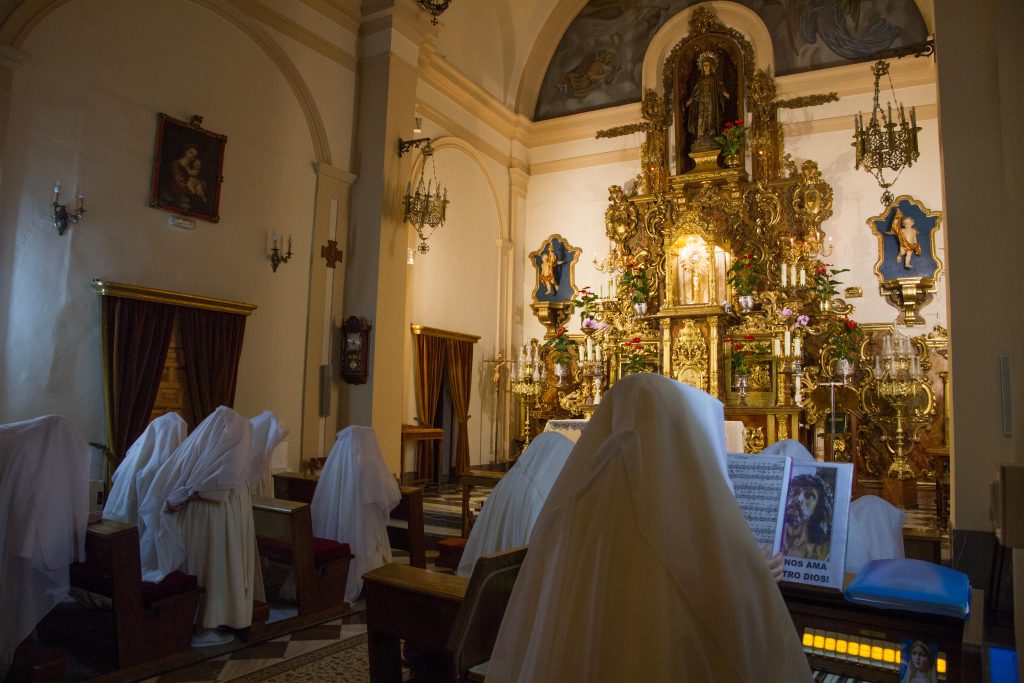
For centuries, Prime sanctified the beginning of the working day. Then, with a single line in Sacrosanctum Concilium, the Church’s first daytime hour disappeared from the Roman Office. Was its suppression really an improvement? Something I never thought I’d write: there may be good reasons to defend Sacrosanctum Concilium (SC), the Second Vatican Council’s constitution on the sacred liturgy. Yes, it is shot through with the rationalism of its age; it is, perhaps, culpably ambiguous, no sooner commending Latin than providing a carte blanche for the extension of the vernacular. But, in arguments with progressives, I have found it personally helpful to refer, if you will, to the “spirit” of the Concilium , since those who see it as a progressive text can only do so by ignoring the sensus Catholicus and sensus fidelium with which all of the Church’s magisterial documents should be interpreted. “I know you despise Gregorian chant, Fr New Man, but can I direct you to Vatican II for a moment?” However, there were certain definite casualties of SC for which it is difficult to find a charitable explanation. “The hour of Prime is to be suppressed,” reads paragraph d of section 89. It does not elaborate. Thus ended a 1,500-year-old liturgical gem. Prime appears to have been instituted in Bethlehem in the late fourth century. At least, this is one of the earliest mentions of it; Cassian notes that monks were creeping back to bed after Lauds. To prevent such an outrage, a new little hour was introduced consisting of an Ambrosian hymn ( Iam lucis orto sidere ), three psalms, a chapter, versicle, Pater Noster , and collect. Since, however, it was born of exigence, and lacked both the antiquity of the other little hours and the solemnity of Lauds and Vespers, the reformers did not think it a viable flower in the new springtime. And yet, by the 1960s Prime had become a favourite of the laity – certainly of Benedictine oblates. Shorter and later than Lauds, and employing psalms that hallowed the toil of ordinary life, it was the perfect office for parents, soldiers, workers, and anyone else who did not have the luxury (ironically) of observing a monastic or clerical schedule. Dorothy Day and her fellow Catholics in the Catholic Worker movement were committed to Prime; and it was not uncommon in this period to identify as a “Prime and Compline Catholic”. As Dom Mark Kirby, founder of Silverstream Priory in Ireland, writes: “I have long been of the opinion that Prime and Compline are the working man’s Hours of the Divine Office. Brief and, for the most part, invariable, they correspond to the natural rhythm of the working man’s day and family life. My dear and venerable friend, artist Adé de Béthune, another Benedictine Oblate, used to pray Prime and Compline, as did many Catholic layfolk prior to the Second Vatican Council.” Compline, too, suffered mutilation at the hands of the Concilium : “Compline is to be drawn up so that it will be a suitable prayer for the end of the day.” The word chutzpah comes to mind. Are we to suppose that Compline was not suitable before Bugnini? That it was insufficient for the likes of St Benedict, or any of the numberless saints who recited its prayers for well over a millennium? I, for one, struggle to think of a more fitting admonishment for those retiring for the night than 1 Peter 5:8: “Brethren, be sober and watch, because your adversary the devil, as a roaring lion, goeth about seeking whom he may devour, whom resist ye, strong in faith” (1 Peter 5:8). This was rendered occasional in the Liturgy of the Hours (which, to its credit, retained the medieval accretion, not to be found in the traditional Benedictine breviary, of the Nunc Dimittis ). Note the Concilium ’s assumption – and this is hardly an original observation on my part – that organic, bottom-up, time-hallowed customs can be improved by sheer force of rational will, and that they should cater to the tastes of an apparently entirely new species (modern man). Had the Concilium actually consulted the laity, it might have found that Prime, an accidental adaptation, had been happily requisitioned. This applies to politics no less than religion. Indeed, it is the great strength of conservative political thought to have made its own the central truth that accidental arrangements can become necessary settlements. To be Catholic is, in part, simply to acknowledge this truth. The Roman Rite itself would be unrecognisable now without the washing of the feet on Maundy Thursday, or the blessing of the fire from which the Paschal candle is lit – both contributions from Celtic and German priests in the Carolingian kingdom, and a lovely real-world instance of mutual enrichment (Romans were evidently much too laconic for those bawdy Franks). At the heart of the Concilium ’s efforts, therefore, lies a fallacy: that a liturgical action, whether in the Missal or the breviary, is unsuitable unless each part has been constructed from first principles for a discrete purpose with an explicable origin; and, furthermore, that repetition – such as the ninefold Kyrie or the priest making the sign of the cross 52 times (as compared to eight times in the Novus Ordo ) – is undesirable because it exceeds the strict criterion of simple validity. The irony is that Prime was never actually suppressed in monasteries. The prohibition applied only to the Roman Breviary. Monks, on the other hand, were perfectly free to carry on praying it. Few Benedictine monasteries now do so. It is, however, the traditional monasteries, which cleave to their holy father Benedict’s original psalter, that draw the greatest numbers of pilgrims and novitiates to their doors. Perhaps, as in Walter M. Miller Jr.’s great sci-fi novel A Canticle for Leibowitz , it will be for future generations to carry the torch through the darkness, and to discover for themselves – in their abbeys and domestic churches – the hour that was.
Jul. 18, 2026

Cardinal Sarah warns Europe against ‘ideological colonisation’ of Africa
Cardinal Robert Sarah has warned that Europe is using aid, trade and diplomacy to export ideological values to Africa, arguing that ambiguous language on issues such as abortion and gender is being used to influence sovereign nations Cardinal Robert Sarah has warned that Europe risks using its economic and diplomatic influence to impose heterodox ideological values on African nations through what he described as “ideological colonization”. Speaking at a conference in the European Parliament in Brussels examining relations between Europe and Africa, Cardinal Sarah centred his address on what he called a growing “crisis of language” in international diplomacy, contending that key political concepts have become so ambiguous that they can be used to advance ideological objectives without transparent public debate. The conference, organised by the European Conservatives and Reformists (ECR) Group in collaboration with Pro Vita & Famiglia at the initiative of MEPs Paolo Inselvini and Nicolas Bay, brought together politicians, diplomats and representatives of civil society. It opened with remarks from the organisers before institutional greetings from Antonella Sberna, Vice-President of the European Parliament, and Archbishop Bernardito Cleopas Auza, the Apostolic Nuncio to the European Union. The meeting also saw the presentation of a Pro Vita & Famiglia dossier entitled Conditional Aid: The European Union and Africa: Financial, Legal, and Commercial Instruments on Abortion, the LGBTQ+ Agenda, and Sexuality Education . The report uses official documents covering the period from 2000 to 2026 to examine international treaties, parliamentary resolutions, funding mechanisms and African governmental responses relating to European engagement with the continent. Building on themes raised in that report, Cardinal Sarah questioned whether Europe and Africa still understood the language that increasingly shapes international negotiations. “Can we still understand each other?” he asked. “Do the words we use – human rights, dignity, development, freedom, health, gender, family – still mean the same thing to those who pronounce them in Brussels, Strasbourg, Kampala, or Conakry?” The cardinal argued that expressions frequently used in international agreements no longer possess universally accepted meanings. Referring specifically to the phrase “sexual and reproductive health”, Cardinal Sarah maintained that the expression is often understood as including abortion, while the language of “gender equality” may be interpreted as promoting “the deconstruction of the sexual difference between man and woman inscribed in the human body”. According to Cardinal Sarah, such ambiguity allows politically contentious policies to become embedded within international cooperation frameworks without governments or citizens fully recognising their wider implications. “A treaty, a resolution, or an action plan that uses imprecise and ambiguous vocabulary is not an instrument of cooperation, but an instrument of perversion and silent power,” Cardinal Sarah said. The Guinean cardinal argued that whoever controls the meaning of political language ultimately determines the direction of negotiations themselves, describing the process as “a form of cultural and economic neocolonialism”. Much of the address focused on the European Union’s cooperation agreements with African states, particularly the Samoa Agreement signed in 2023, alongside wider EU financial programmes supporting development across the continent. Referring to those frameworks, Cardinal Sarah stated: “Here appears in a verifiable way the ideological colonization: the use of trade and finance to intervene in the criminal and family legislation of a sovereign state, directly violating the principle of self-determination of peoples.” Summarising his appeal, Cardinal Sarah declared: “No to ideological colonization of Africa, but genuine subsidiarity.” Throughout the address, the cardinal referenced papal teaching. He cited Pope Leo XIV’s encyclical Magnifica Humanitas , particularly passages warning against manipulative language capable of reducing human beings to statistics. Cardinal Sarah also referred to Pope Leo’s address to the diplomatic corps earlier this year, recalling the pontiff’s appeal that “we need words to once again express certain realities unequivocally. Only in this way can authentic dialogue, free from misunderstandings, resume.” The cardinal also drew upon the teaching of Pope Benedict XVI, questioning whether European legislation presented as neutral in fact advances a particular vision of the human person. “Isn’t European legislation that claims to be neutral toward every anthropological vision but imposes a specific and contestable vision of humanity slipping into the irrationality against which Pope Benedict warned us?” Cardinal Sarah asked. The address likewise echoed Pope Francis’s repeated criticism of what the late pontiff termed “ideological colonization”. Cardinal Sarah recalled Pope Francis’s warning: “Let us be wary of new ideological colonizations that seek to destroy the family.” Developing that argument, Cardinal Sarah criticised funding arrangements and international assistance which he said are increasingly linked to policies concerning abortion and gender ideology. Referring to the Pro Vita & Famiglia report presented during the conference, Cardinal Sarah argued that development partnerships should respect the sovereignty of African nations rather than seek to reshape their domestic legislation through financial incentives. The cardinal also challenged what he described as changing definitions surrounding abortion and sexuality within international discourse. “The lack of access to abortion is defined as ‘violence’,” Cardinal Sarah said, “while the unborn child—the weakest, the most innocent among us—is deprived of any voice, any representation, any rights.” Similarly, Cardinal Sarah argued that programmes promoting sexual education without consultation in receiving countries could themselves constitute a form of external interference rather than genuine international cooperation. As examples of African constitutional traditions, Cardinal Sarah referred to Kenya and Uganda. Kenya’s constitution, he noted, provides that “a person’s life begins at conception”, while Uganda’s constitution states that “no person has the right to end the life of an unborn child, except as authorized by law”. Rather than viewing such constitutional provisions as outdated, Cardinal Sarah described them as “a fragment of legal wisdom… that the West would do well to reconsider rather than correct”. Returning to the broader relationship between Europe and Africa, Cardinal Sarah argued that African societies possess religious and cultural traditions deserving of respect rather than reinterpretation through external political frameworks. “We need respect for Africa’s religious and cultural history, which is not an obstacle to development, as is sometimes insinuated in the corridors of Brussels, but is a fundamental requirement,” Cardinal Sarah said. “A people has the right to live, preserve, and transmit its own religious and family culture, just as every individual has the right to profess their faith.” He concluded by urging Europe to reassess the foundations of its engagement with African nations. “Europe must examine its conscience, listen to Africa, and respect its cultural sovereignty, offering free cooperation unconstrained by ideologies. Africa itself can offer the testimony of a living faith and a sense of family that can help Europe rediscover its own logos .” Speaking afterwards to members of the foreign press on the sidelines of the conference, Cardinal Sarah returned to the principle of self-determination that had underpinned his address. “We must respect the centrality of man, because he is the image of God, just as we must respect peoples in their self-determination,” Cardinal Sarah said. “No one should be forced to accept a law that goes against their nature, against their religious convictions, or against their human convictions. And so we can live together in peace.”
Jul. 16, 2026
The Palmarian Church’s response to the SSPX and the story behind it
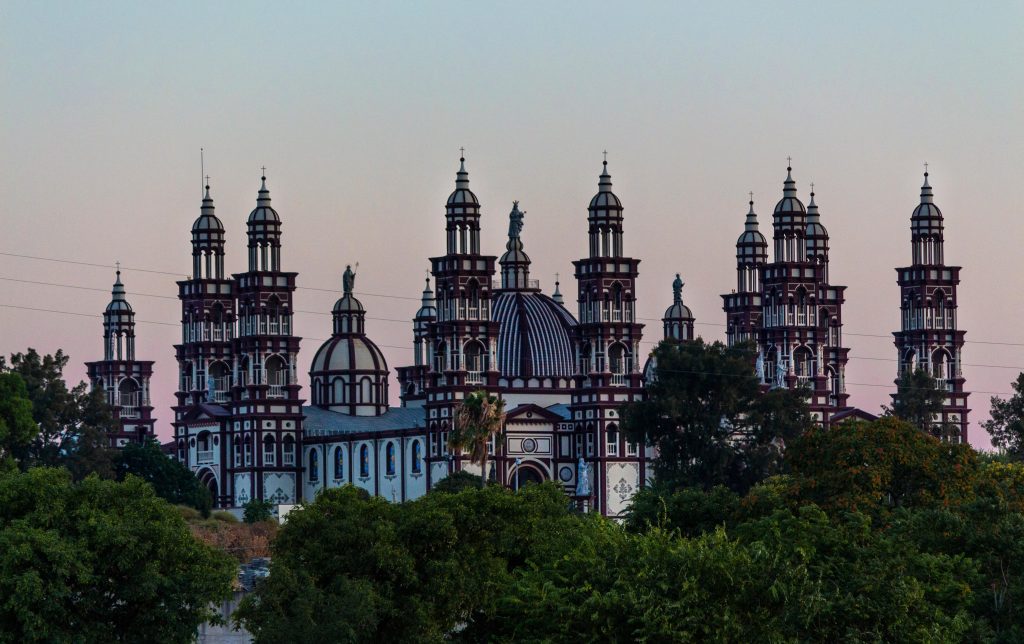
The Palmarian Church has responded to the SSPX excommunications by insisting that the true Catholic Church is not in Rome, but in El Palmar de Troya. Our latest explores the extraordinary history behind one of Catholicism’s most unusual schisms The Palmarian Church, a small sect based in Andalusia, Spain, which believes the true Pope resides among its members, has reacted to the excommunications of the Society of Saint Pius X. In a 14-minute message delivered by “Pope Peter III”, also known as Joseph Odermatt of Switzerland, the church’s position was set out across its various social media channels. Using the papal “We”, Odermatt introduced himself as the “Vicar of Christ and Successor of Saint Peter”, saying he wished to “address all Catholic faithful who are wandering through the spiritual desert after witnessing the collapse and the general excommunication of the followers of Marcel Lefebvre”. He began by claiming that the decree had no validity, since “Pope Gregory XVII”—the church’s founder, Clemente Domínguez y Gómez, who died in 2005—had already excommunicated the group decades earlier. He then turned to Archbishop Ngô Đình Thục, the Vietnamese prelate who illicitly ordained Gómez and his companions to the priesthood and episcopate in 1976. Odermatt claimed that “Archbishop Thục did not act on a whim. He visited the sacred apparition site of El Palmar de Troya and witnessed its mysteries and miracles with his own eyes.” He also described Thục’s later repudiation of the illicit consecrations and his decision to distance himself from the group as a “great falsehood repeated by his critics”. He went on to argue that Thục “recognised the grave crisis of the Church” and that obtaining the proper permission to ordain and consecrate Gómez was “a matter of human law, not divine law”. Odermatt also claimed that Archbishop Marcel Lefebvre, founder of the SSPX, was visited by the Blessed Virgin Mary and instructed to visit El Palmar de Troya, but refused because he “preferred political manoeuvring, pride, comfortable drawing rooms, and the applause of men over the direct intervention of Heaven”. He appears to be referring to Gómez’s request in the mid-1970s for Lefebvre to visit the group and ordain its members as bishops. It is generally understood that Lefebvre declined but recommended Archbishop Thục as a prelate who might be willing to do so. He was equally critical of Lefebvre’s dialogue with Cardinal Joseph Ratzinger before the 1988 episcopal consecrations, during which the two sought an agreement acceptable to both the Vatican and the SSPX. Odermatt claimed that, by signing the May 1988 protocol, Lefebvre “accepted the authority of the apostate Code of Canon Law, and recognised the modern Vatican antipopes as legitimate authorities.” Odermatt argued that the SSPX lives with an internal contradiction by recognising the Pope while telling its followers that they must “disobey him every day in order to save their souls.” His criticism of the SSPX, which extended to sedevacantists, whom he described as holding a “theological absurdity”, served as a segue into his presentation of the Palmarian church as the true Church. He urged Catholics to recognise that the “Holy See remains secure and undefiled at El Palmar de Troya”. He concluded his monologue by declaring that the “true Church—one, holy, catholic, apostolic and Palmarian—is at El Palmar de Troya with the true Pope, Peter III, Supreme Pontiff and Vicar of Christ by the grace of God.” The story of the Palmarian church dates back to 30 May 1968, when four schoolgirls in the small and newly established Andalusian town of El Palmar de Troya went to pick flowers. The girls claimed to see the Virgin Mary, leading to an explosion of reported religious experiences in the area, including stigmatas, solar visions, the Eucharist miraculously materialising on visionaries’ tongues, and pilgrims claiming to feel the Infant Jesus in their arms. People also claimed that Padre Pio appeared, decrying the loss of the traditional Catholic faith. In late 1969, Clemente Domínguez y Gómez emerged on the rapidly growing religious scene in the small town. Having been rejected by the local seminary, the Dominicans and the army, he was working as an office clerk. Gómez quickly established himself as the principal visionary, claiming to have received visions of more than sixty saints and angels, as well as Christ and the Virgin Mary. Under Gómez, the messages shifted from concern about the state of the modern Church to stark criticism of the Second Vatican Council and warnings of the End Times. The Archbishop of Seville, Cardinal José Bueno y Monreal, denounced the site and prohibited any Catholic rites from being celebrated there, making it clear that the movement had no ecclesiastical approval. In the early 1970s, the town became a melting pot for followers of various alleged apparitions and Catholics who took issue with the post-conciliar Church. The circulation and promotion of Gómez’s visions became a rallying point for these disaffected Catholics. A watershed moment came when the Second Baroness of Castillo de Chirel donated 16 million pesetas, enough to purchase the apparition site and send Gómez and his closest followers on missions around the world. The group then established itself as a religious order, the Carmelites of the Holy Face, adopting distinctive brown habits with large scapulars. Whilst harbouring some priests among their ranks, they failed to attract any bishops, and most of their members, including Gómez, remained laymen. Archbishop Ngô Đình Thục then arrived and illicitly ordained Gómez, his right-hand man and several others to the priesthood before consecrating them bishops shortly afterwards. Thục’s motivations are difficult to ascertain. Before arriving in El Palmar de Troya, he had celebrated the Novus Ordo Mass and, during the Second Vatican Council, had spoken in favour of the ordination of women. However, by the early 1980s, Thục declared that the Mass of St Pius V was the only Mass acceptable before God and came to believe that the See of Rome was vacant. Whatever his motivations, it appears that he arrived in part through the mediation of the Society of Saint Pius X. He later repented of his actions and was reconciled with Rome, only to continue illicitly consecrating bishops some years later. All those consecrated at El Palmar were excommunicated. For some time, Gómez had been preaching that Pope Paul VI was being drugged and held against his will by the Roman Curia, whom he claimed were secretly communists and Freemasons, and that one day the Pontiff would escape and arrive in El Palmar de Troya. According to Palmarian doctrine, Paul VI was instead murdered by poison administered by his Secretary of State before he could make the journey. Upon the Pope’s death in August 1978, Gómez declared himself his successor after claiming to have been crowned in a vision by Christ Himself, and that the Holy See had moved from Rome to El Palmar de Troya. Taking the name Gregory XVII, he created 24 cardinals and opted for a formal coronation using the papal tiara, in contrast to Pope John Paul I. This marked the creation of the Santa Iglesia Católica Apostólica y Palmariana (Holy Catholic Apostolic Palmarian Church). Gregory XVII became its supreme leader, exercising absolute authority over a hierarchy of cardinals, bishops, priests, nuns and lay faithful. The comparatively short history of the Palmarian church has been tumultuous. Gómez is said to have lived a playboy lifestyle alongside his closest cardinals, whilst those lower in the hierarchy endured lives of improvised penance. Notable events during his reign included the accusation that he kidnapped a 17-year-old Venezuelan girl in 1979, the registration of the church as a recognised religious entity in Spain in 1987, the canonisation of thousands of new saints including General Francisco Franco and Christopher Columbus, the abolition of the office of cardinal in 1995, and, in 2001, the banning of the Bible in favour of the Palmarian Bible, which includes episodes such as the Nativity and Immaculate Conception of St Joseph. The greatest challenge to his leadership came in 2000, when a group of priests and nuns formed a loose resistance movement against the increasingly severe and erratic rules imposed by Gómez. Robert McCormack, formerly Fr Gido Maria, was a central figure in this resistance. He has described how it grew from concern for younger priests and the Palmarian faithful, many of whom were suffering under Gómez’s dictates and becoming increasingly vulnerable to mental health problems. McCormack secretly introduced non-Palmarian books and ideas to support these members. Ultimately, he and 24 other professed religious were expelled from the church. When Gómez died in 2005, his right-hand man, Manuel Alonso Corral, became the Palmarian Pope without a conclave, as Gómez had already designated him as his successor. Taking the name Peter II, he continued his predecessor’s teachings with remarkable continuity. He proclaimed few new dogmas, seeing his role principally as defending the teaching of his close friend. However, he did dogmatically declare himself to be a descendant of St Ferdinand III of Castile. Corral was also an isolationist, urging members to sever ties with the outside world and, like the Red Hot Chili Peppers before him, encouraging Palmarians to throw away their televisions. If Corral was an isolationist, his successor, Ginés Jesús Hernández Martínez, who took the name Gregory XVIII, was an authoritarian. Formerly the church’s Secretary of State and Corral’s second-in-command, he further isolated the remaining members and ordered the faithful to shun relatives who had “apostasised”. Children over the age of 18 who had left the church were to be expelled from the family home, whilst younger children were to be spoken to as little as possible. Martínez was known for his temper, and members lived in fear of personal attacks. Palmarian Popes Gregory XVII, Gregory XVIII and Peter II In April 2016, he abdicated the Palmarian papacy and left the church with his girlfriend, herself a former Palmarian. Martínez then gave interviews to the Spanish media, prompting widespread coverage, including reports that he and his girlfriend were later tried by the Spanish authorities for armed robbery. Martínez remains a figure disliked by virtually everyone connected with the Palmarian church. Former members remember his harsh rules and merciless treatment of the faithful, whilst current members regard him as the apostate pope who dragged the church into public scandal. Joseph Odermatt, taking the name Peter III, immediately succeeded Martínez. He is presented as a calm and serene figure weighed down by the burden of his office. Odermatt has also done more than any previous Palmarian pope to present the church to the outside world. In 2018, under his leadership, multilingual websites, Instagram accounts and Facebook pages were launched. Today they showcase elaborate papal processions, defences of Palmarian teaching, and brief hagiographies of the church’s numerous saints. Today, the church is dwindling and is believed to have only several thousand members, a fraction of its peak membership. However, the 14-minute address delivered by Odermatt will be well received by Palmarians, who are likely to see any division within the Roman Catholic Church as vindication of their belief that they alone preserve the true faith.
Jul. 15, 2026
Bishop Erik Varden’s theology of longing, beauty and hope
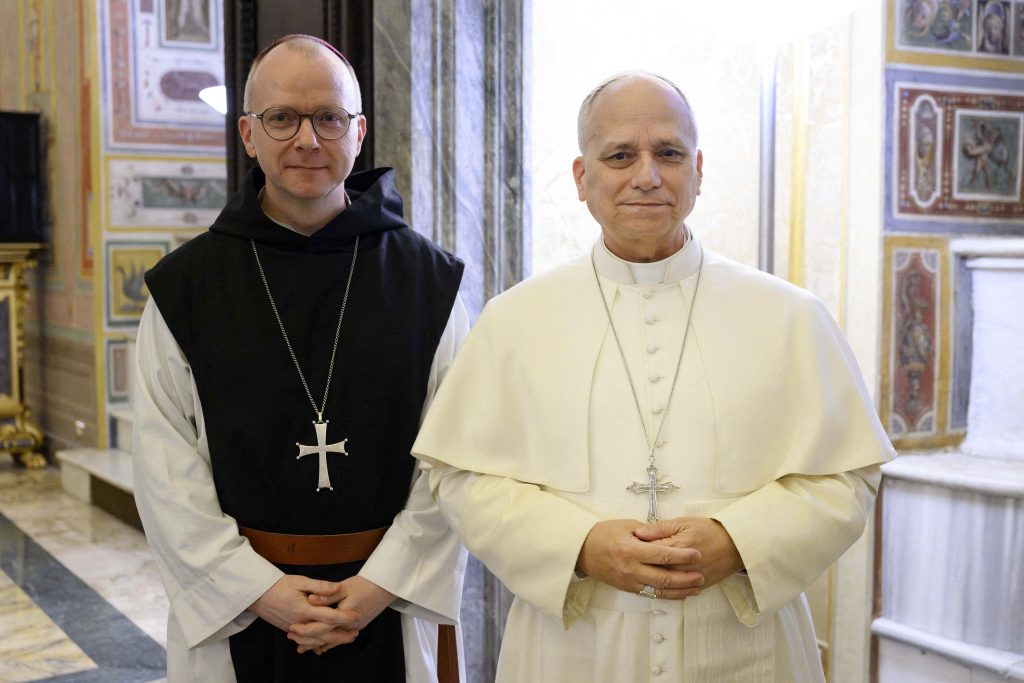
What explains the remarkable rise of Bishop Erik Varden? From an atheist teenager pierced by Mahler to one of the Church’s most influential writers, his theology offers a compelling vision of the human person, the Cross, and the longing for God In recent times, few Catholic voices have attracted as much attention as Bishop Erik Varden. A Trappist monk, a convert to the Catholic faith from atheism, former Abbot of Mount Saint Bernard Abbey, and now Bishop of Trondheim, Varden is one of the Church’s most prominent writers. His theological contribution received papal recognition when Pope Leo XIV personally invited him to preach the annual Lenten retreat to the Roman Curia, later published as Alight with Hidden Glory . Varden’s growing popularity, however, is not only the result of his appointment to the episcopacy or his invitation from the Holy Father. At a time when many are thirsting for spiritual nourishment, his conferences, interviews and retreats have found a wide audience. Drawing upon Scripture, the Fathers of the Church and contemporary culture, Varden synthesises these influences into a fluid, moving and compelling style of preaching, leading people into a deeper communion with Christ. Bishop Varden was born in Norway in 1974 and baptised into a Lutheran family. When reflecting on the “seeds of his vocation” as a young man, Varden recalls that he “was privileged to grow up in a home marked by goodness, and kindness, and generosity… It wasn’t explicitly religious, but it was always respectful” ( The Napa Institute , 2026). He then describes his outlook as a teenager: “I was very skeptical of established religion when I was fourteen… and I relished my own sense of autonomy and independence and declaring myself removed from all that.” He admits that around this time he identified himself, “with a degree of self-satisfied pride… as an agnostic and even an atheist.” There was, however, a decisive change when Varden was fifteen years old. He recounts that listening to Mahler’s Symphony No. 2 “pierced” him. “I listened to that music and it wounded me, or it revealed a wound in me. It revealed to me that I was carrying something within me that was somehow greater than I was.” This became a decisive turning point, not only because it “set” him on the path towards pursuing his education abroad, but also because it confronted him with what Aristotle calls catharsis : the ability to encounter “normally hidden emotion… [and the] depths in him or herself” (Varden, 2023, p. 14). After completing his schooling in Norway, Varden attended Atlantic College in Wales before studying Theology and Religious Studies at Cambridge. During this period, he encountered serious believers, including a Muslim roommate, who “challenged me intellectually… and encouraged me.” He also made his first visit to a Trappist monastery, an experience that both “frightened” and “haunted” him because of its “degree of radicality”. Yet it was precisely this encounter that drew him towards Catholicism, and at the age of nineteen he was received into the Catholic Church. After becoming a Catholic, Varden did not initially intend to become a monk. However, after a confessor told him, “You will be a housemaster in this place for the next 40 years of your life,” he began to reconsider his future. Having completed a doctorate in Historical Theology, he felt drawn to explore a monastic vocation and joined Mount Saint Bernard Abbey in 2002, making his solemn profession a few years later. Following his Licentiate in Sacred Theology in Rome, he was ordained to the priesthood in 2011. In 2015, he was elected Abbot of Mount Saint Bernard, becoming the first abbot born outside Britain or Ireland in the monastery’s history. His abbacy coincided with a period of renewal and growth, including the development of the monastery’s brewery and greater public engagement through retreats, conferences and writing. In 2019, Pope Francis appointed him Bishop-Prelate of Trondheim in Norway. Consecrated a bishop in 2020, Varden has continued to combine pastoral leadership with writing and preaching, becoming one of the Church’s most influential voices. Beauty, however, remained a recurring theme throughout his life. Just as Mahler’s music awakened in him a longing for transcendence, his later writings repeatedly present beauty as the means by which God wounds the heart and draws it towards Himself. At the heart of Varden’s theology lies a deeply Augustinian understanding of the human person. In a time of uncertainty both in the secular world and within the Church, Varden asks a fundamental question: what does it mean to be human? He answers this simply in Chastity : “To be human is to exist with the sense of an absence to be filled. Only in the light of our human substance’s longing for union with the divine do our lesser yearnings make sense” (Varden, 2023, p. 14). For Varden, this longing is not a defect but the mark of our humanity. As a teenager listening to Mahler’s Second Symphony , beauty awakened desire, and that desire became the beginning of faith. Human beings, Varden argues, are not self-sufficient creatures capable of finding fulfilment within themselves. Rather, they are marked by an innate longing for transcendence. If longing is the beginning of Varden’s theology, the Cross stands at its centre. Modern society, he argues, oscillates between two opposite errors: the “fetishization of woundedness” and “an effort to eliminate wounds or to keep them out of sight” (McGrath Institute for Church Life, 2025). Neither approach brings healing. The answer is found in the Crucified Christ. Reflecting on Christ’s Passion, Varden writes that His wounds “open a different dimension”, making genuine compassion possible: the ability to “lament without suffocating in our lamentation, to lament without yielding to rage, being opened instead to that literally, crucially Christian characteristic, a defining mark of the Christian condition, which is compassion.” Christ’s wounds are not erased; they become the place where divine love is revealed and where redemption is accomplished. They remain in His risen body as signs of redeeming love and His victory over death. The Christian, therefore, should not define himself by his wounds but allow them to be transformed through an encounter with the Crucified and Risen Lord. This conviction explains why hope occupies such a central place in Varden’s preaching. Redemption does not remove the suffering of human life but gives it meaning by drawing it into the mystery of Christ’s Passion, Death and Resurrection. If Varden’s theology begins with human nature, its wounds and its longing for God, it culminates in a vision of freedom. This freedom is not understood in the modern sense as the unrestricted ability to do whatever one pleases, but as the capacity to live in accordance with the way God created us. Varden notes that the word “chastity” is linked to the idea of integrity, from the Latin integer , meaning to be “of one piece”. Such integration, however, requires discipline. Varden illustrates this with the image of a dancer in Chastity : “Years of relentless labor are required to gain that seemingly effortless freedom of movement…” Just as a dancer submits to years of discipline in order to move with grace, so the Christian must undergo a process of spiritual formation in order to live according to God’s design. This discipline is not the denial of human flourishing but its necessary condition. The same theme appears in the Beatitudes, where Christ says: “Blessed are the pure in heart, for they shall see God.” Purity of heart is therefore the gradual integration of the human person, making him capable of perceiving God, his neighbour and himself truthfully. Varden draws on Christ’s words in the Gospel of Matthew, noting that if the eye is “sound”, the whole body is full of light. The opposite of purity is not impurity but confusion, for the pure heart is not the heart that has never struggled, but the heart that has become unified in its pursuit of God. The appeal of Bishop Erik Varden lies in his ability to show that Catholic theology is not a collection of abstract ideas but the answer to the deepest longings of the human heart. Beginning with desire and restlessness, moving through the wounds of Christ, and culminating in a freedom born of hope, his theology presents the Christian life as the gradual restoration of the human person. In a time marked by fragmentation, anxiety and instability, it is a vision that is intellectually rigorous, spiritually rich and profoundly beautiful.
Jul. 15, 2026
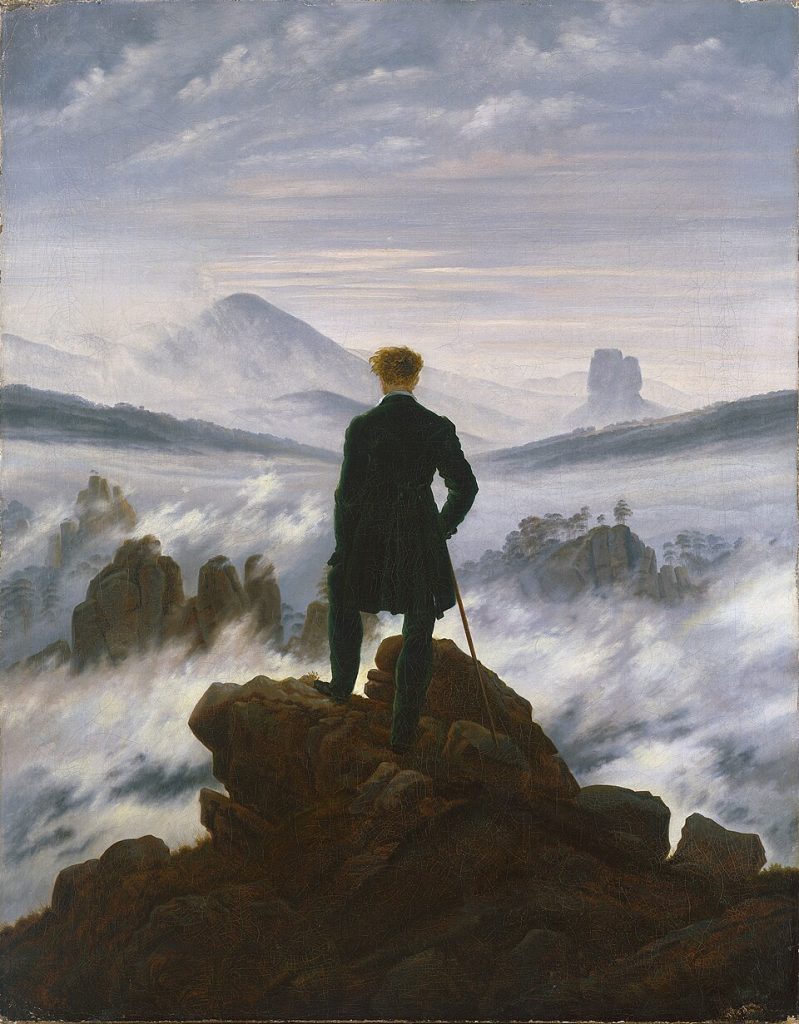
The legacy of the Enlightenment: anthropocentrism
Has humanity replaced God with itself? René Stockman examines the legacy of the Enlightenment and its impact on morality, technology and the modern world Since the advent of the Enlightenment, the world – and humankind as the centre of the world – has undergone a major transformation. We read about it in philosophy, we see it in art, and we also observe a shift taking place in theological thought. It is a process that has been underway for several centuries, with moments that sparked a revolution and others when it continued its course unnoticed, yet steadily, like an underground lava flow. Today, this lava flow has found new openings through which to continue its journey with full force and without restraint, thereby influencing many areas of social life from within. The Enlightenment has not remained a movement that expressed itself solely as a new philosophical approach to humanity and the world, but has become firmly established in society, bringing about a profound cultural shift. Whilst at the outset of this new philosophical trend humanity was given a more central place, without completely pushing God aside, it is now that very same humanity that has entirely taken God’s place. Theocentrism has given way to anthropocentrism, and this in its most radical form. In the West in particular, Christian thought has been successfully relegated to the background, and with it an entirely new history of humanity is being written. On the opening pages of this new historical narrative, we read that humankind created God as an ideology that enslaved humanity for centuries, and from which it is now completely liberated by crowning itself as a god. The consequences of this new conception are enormous, first and foremost for humanity itself, which henceforth regards itself as the absolute master of its own life and that of others. There is no longer any authority above humanity that can prevent it from deciding how to shape its life, nor whether its own life and that of others should continue. Humanity has literally seized all power in this sphere for itself. Absolute self-determination, as an extension of absolute autonomy and, indeed, absolute freedom, has elevated humanity to lord and master over life. Whilst during the French Revolution the demand for liberty and equality was still linked to fraternity, today this third principle is scarcely mentioned and has therefore been sacrificed on the altar of absolute liberty and equality. The logical concern and care for the well-being of one’s fellow human beings, which is called for by fraternity, has, just as with Cain after the murder of his brother Abel, completely disappeared from view. “Am I my brother’s keeper?” (Gen. 4:9) – I heard these words spoken not long ago by someone who was holding a farewell party because he was due to undergo euthanasia the following week. This was, of course, as always, widely publicised in the media and almost celebrated. The question of what this act meant for his family and friends, and the grief it would cause them, was brushed aside by him with the blunt statement that he felt no responsibility for it whatsoever. He did not believe he was his brother’s keeper. This extreme anthropocentrism also leads to moral relativism. When there is no longer any authority above humanity, it is humanity itself that determines what is good and what is evil. Humankind has become its own compass and is, for the most part, guided by its own feelings. In doing so, it has brought the healthy functioning of its conscience to a halt and silenced that voice within itself which was previously regarded as the voice of God. People now listen only to what their feelings tell them and align themselves with what the majority in society says and thinks. Any critical reflection is thereby stifled and regarded as a hindrance to the attempt to conform completely to the masses. People believe they have thereby discovered their own identity, but in fact the exact opposite has happened: they are allowing themselves to be swept along by the crowd. Instead of developing and flourishing as unique persons, people have become trapped in a stifling form of individualism, in which they fixate on their own narrow existence and allow themselves to be guided by what others think of them. Paradoxical as it may sound, the person who, driven by extreme individualism, demands absolute autonomy simultaneously allows himself to be swept along by the crowd and focuses his thoughts and actions on what and how the people around him think and act. The media and advertisers eagerly capitalise on this, as it were intoxicating people with services and goods they feel virtually compelled to buy in order to meet the expectations of the “average person”. The entire consumer culture is geared towards this, from which, of course, industry reaps the benefits. By holding out the illusion of freedom, people ultimately become slaves to this consumer society. Even schoolchildren are already being swept up in this trend and succumb to the social pressure to wear certain trainers and designer clothes, just like everyone else, for fear of being ostracised from the group. Moral relativism, of course, has even greater implications than simply being swept along by others when it comes to lifestyle choices. Increasingly, serious ethical problems are emerging, with the boundaries of what is ethically acceptable shifting ever further. Ever-evolving technology is opening up possibilities that were previously unthinkable and belonged more in the realm of science fiction. With artificial intelligence, we are still only at the beginning of a dizzying evolution, and it is already becoming apparent how difficult it will be to keep it under control, to manage it and to ensure that it does not take on a life of its own. Once again, it sounds like a paradox: drawing on its ever-increasing technical capabilities, humanity believes it can control and bend more and more to its will, whilst at the very same moment it risks becoming both the victim and the slave of that very technology. Humanity is increasingly controlled and manipulated by the very systems it has developed itself. It is becoming ever more difficult to put a stop to this, partly because those who control these systems are among the wealthiest in the world and therefore possess the means to realise their wildest dreams, over which ultimately no one will have any control. Ethics committees across the various disciplines must continually adjust their boundaries in line with the new possibilities that are being created. What was previously deemed ethically unacceptable is now considered acceptable, ostensibly because one does not wish to hinder or block further evolution. These are subtle shifts that become increasingly apparent when one compares reports over the years. Experiments involving nascent human life that are taking place today were technically unfeasible and ethically irresponsible only ten years ago. Ever-advancing technologies, and everything associated with them, have become the new idols. Humanity imagines itself to be the Creator, having surpassed God in His creation. The story of the Tower of Babel (cf. Gen. 11:1–9) is repeating itself, and people live under the delusion that there will be no limits to this endeavour. In their pride, people allow themselves to be swept up in this dizzying progress, and some even dream of a journey to Mars to create a new world there, of which humanity itself will be the creator, as a sign of its supreme power. Instead of channelling energy into improving the lives of people here on Earth, they look away from this and become insensitive to the ever-widening gap between rich and poor. That is someone else’s problem, for the drive for power and prestige has completely consumed them. Despite all this technological progress, we cannot paint a positive picture of the world in which we live today. It is a world dominated by the violence of war, which in so many places has led to a virtually hopeless situation, with billions being spent on armaments and hostility seemingly increasing even further. It is this same drive to be first and best that pits countries against one another and drags entire peoples into destruction and misery. The very bodies created to maintain world peace watch powerlessly as both their appeals and their warnings are ignored. The stories from the opening pages of the Bible are endlessly repeated: that of the first man who wanted to become his own god, and that of Cain who, out of jealousy, killed his brother Abel. In both stories, humanity seeks to sever itself from God and ultimately ends up as God’s rival and, by extension, as the rival of fellow human beings. Homo homini lupus . The shared task of stewarding creation ends in selfishness and the hoarding of what was once given as a gift to be made into something beautiful together, in imitation of the One who created everything in perfect harmony. It seems we find ourselves in a rather sad story, and there is only one path out of this dead end. This is when, as human beings, we once again become who we truly are and let go of all vain pursuits of personal power. We must dare once more to place ourselves under God’s protective and guiding hand and entrust ourselves to Him anew. Then we shall become not less, but more human, because the image that God has placed within us of Himself will be allowed to blossom anew. As long as we banish God from our lives and from the world, and seek to rule over this world as gods ourselves – sometimes even in the name of God, whose name we then grossly abuse – we shall continue to wander like sheep without a shepherd, or follow false shepherds who seek only to enslave us. Fortunately, there is God, who continues to wait patiently until we turn back to Him. It is a comfort to us that He, as our God, will never forsake us, even when we have forsaken Him, for He continues to love His creation despite everything. Just as, after the Flood, He caused a rainbow to appear in the sky as a sign of His covenant with us: “Never again shall there be a flood to destroy the earth… never again shall the waters swell into a flood that destroys everything and everyone” (Gen. 9:12, 15). These are comforting and hopeful words, but it is up to us to leave the first and last word on humanity and the world to God, rather than, blinded by our own abilities and power, presuming to speak for Him ourselves. Otherwise, we may bring about a new flood ourselves.
Jul. 12, 2026