

Latest
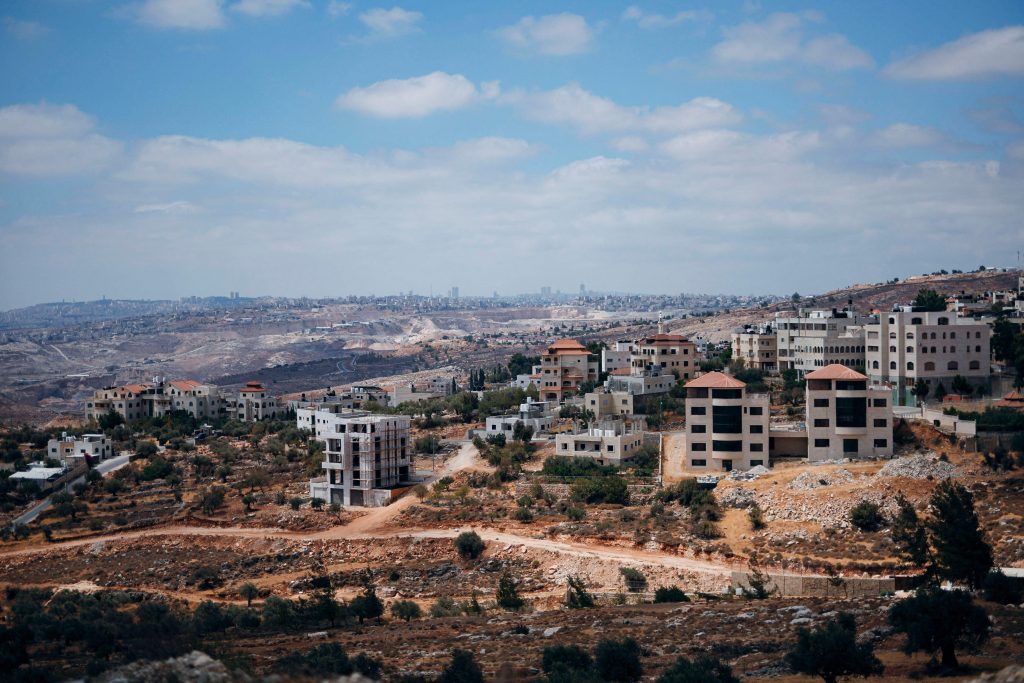
Israeli settlement reported near West Bank’s last Christian town
Taybeh, the West Bank’s last entirely Christian town, is under threat. Speaking exclusively to AdVaticanum, parish priest Fr Bashar Fawadleh warns that “silence today could allow an irreparable reality tomorrow” The Christian leaders of Taybeh have issued an urgent appeal after reports of a new Israeli settlement outpost on land overlooking the West Bank’s last entirely Christian town. According to local verifiable sources in Taybeh and field monitoring cited by the Vulnerable People Project, groups of settlers have been seen repeatedly on Jabal Al-Massis, a hill east of Ramallah that belongs to Taybeh, in what is described as preparations for the establishment of a new outpost immediately adjacent to Palestinian homes. Taybeh’s clergy are now calling for international intervention. Fr Bashar Fawadleh, parish priest of Christ the Redeemer Parish, has asked for diplomats, ambassadors, the United Nations, churches and international organisations to visit the area, monitor developments closely and use diplomatic means to prevent the outpost from becoming established. If gone ahead with, the development would create a permanent settler presence on the edge of the town, bringing with it an increased risk of violence, intimidation and restrictions on residents’ freedom of movement. Speaking exclusively to AdVaticanum, Fr Fawadleh said the issue extended well beyond a dispute over land. “When an outpost is established right on our doorsteps, the issue is no longer just a land dispute, but an attack on people’s right to live in safety and dignity,” he said. “Taybeh is not asking for privileges, but for the protection of children, families, land, and the Christian heritage that has survived in this town for two thousand years. Silence today could allow an irreparable reality tomorrow,” the priest said. This development follows months of warnings from the priests serving Taybeh’s three Christian churches. Fr Fawadleh, together with Fr Jack-Nobel Abed and Greek Orthodox priest Fr Daoud Khoury, has repeatedly argued that the eastern part of the town, which accounts for more than half of Taybeh’s territory, has become increasingly vulnerable to the gradual establishment of settlement outposts. The clergy have maintained that such sites frequently begin as small encampments before expanding over time, with the result that they become permanent features of the landscape and centres for further encroachment onto surrounding land. Jabal Al-Massis has already featured in the news, as the hill was the scene of a recent arson attack in which settlers allegedly set fire to a large area opposite the town’s fuel station. According to the parish, residents attempting to extinguish the blaze were obstructed as they tried to reach the site. In recent days, settlers reportedly established another outpost near Nablus, preventing villagers from accessing their agricultural land, while a Bedouin home east of Taybeh was set on fire. Studies suggest that settlers and soldiers have carried out thousands of attacks across the West Bank since the beginning of 2025, resulting in the destruction of hundreds of homes and the displacement of tens of thousands of Palestinians. Jason Jones, head of the Vulnerable People Project, explained that the reported construction on Jabal Al-Massis will add to the pressure put on the Christian community. “Settlers are now planting an outpost at every side of Taybeh, marking a dangerous new stage in the slow strangulation of the last Christian town in the West Bank,” he said in a statement. “Each new settlement expansion becomes a base for the next attack, the next blocked road, the next family pushed off its land. The world cannot continue to watch – we must stand with Taybeh now.” In separate comments given exclusively to AdVaticanum, Jones reflected on the significance of the town’s Christian heritage and urged greater solidarity from Christians abroad. “I’ve walked through Taybeh – a town that has survived sixteen centuries of empires but may not survive the world’s silence,” he said. “Today it stands surrounded by seven settlements choking the life out of its residents, as settlers have now planted a new outpost on Jabal Al-Massis, within sight of homes where families have kept the Christian faith since the fifth century. Now is the time for Christians around the world to stand with our brothers and sisters in Taybeh as they face their latest challenge, this new settlement.” The Vulnerable People Project says it continues to monitor developments on the ground as it seeks to verify further reports concerning activity on the hill overlooking the town. For Taybeh’s clergy, the concern is not just the appearance of another isolated settlement, but the cumulative effect of successive outposts surrounding the community. They argue that each new presence alters daily life by increasing pressure on residents and creating conditions that become progressively more difficult to reverse. Taybeh is in the Holy Land. Situated north-east of Jerusalem near Ramallah, it is recognised as the last remaining entirely Christian town in the West Bank, with a continuous Christian presence stretching back many centuries. As reports continue to emerge from Jabal Al-Massis, Taybeh’s priests insist that international attention cannot wait until construction is complete. Their message is that immediate engagement is needed if the town’s Christian community, its families and its historic presence are to be safeguarded from what they believe is an increasingly precarious future. Israeli settlements in the West Bank began after the 1967 Six-Day War, when Israel captured the territory from Jordan. Over the following decades, successive Israeli governments authorised or supported the expansion of settlements, while other outposts were established without formal government approval but have often remained in place or later received official recognition. Much of the international community considers the settlements to be illegal under the Fourth Geneva Convention, a position endorsed by the United Nations and the International Court of Justice, although Israel disputes this interpretation. The Christian population of the Holy Land has steadily declined over the past century, with emigration, conflict, economic hardship and political instability all contributing to shrinking communities in both the West Bank and Gaza. Once sizeable Christian populations in cities such as Jerusalem, Bethlehem and Ramallah have diminished significantly, while smaller communities have become increasingly vulnerable as opportunities for younger generations have narrowed.
Jul. 7, 2026
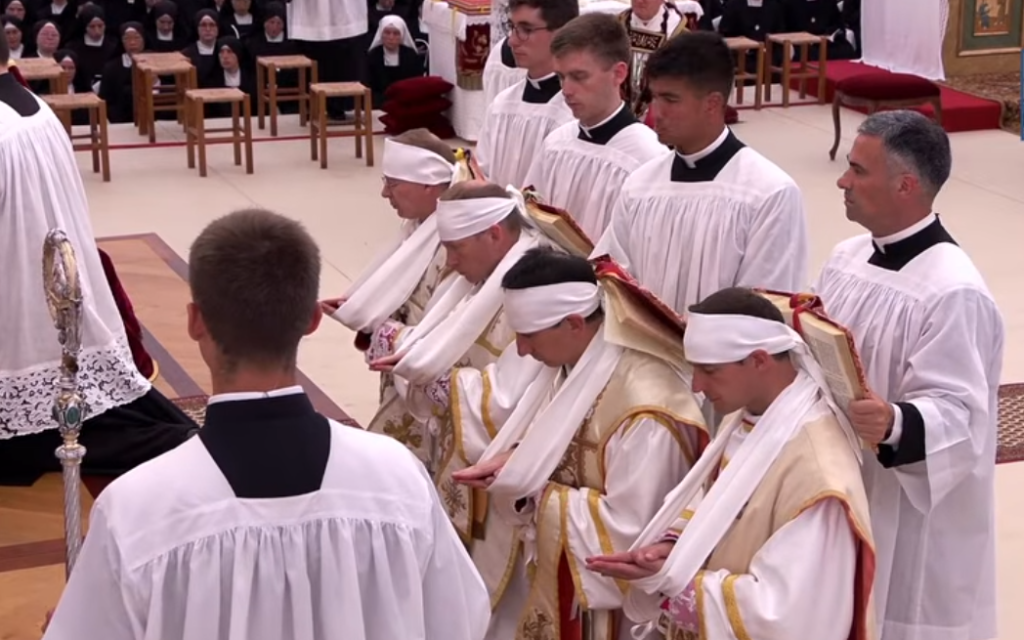
How bishops across the world have responded to the SSPX episcopal consecrations
Following the Vatican’s declaration that the Society of St Pius X has entered into schism, bishops across the US and Europe have begun issuing guidance to clergy and faithful. AdVaticanum has compiled the key statements Following the Society of St Pius X’s episcopal consecrations on 1 July 2026, carried out without papal mandate, the Dicastery for the Doctrine of the Faith issued a decree on 2 July declaring the act a schismatic offence and excommunicating the six bishops. The accompanying explanatory note emphasised that, despite decades of dialogue since the time of Pope Paul VI, the SSPX’s rejection of papal authority and Vatican II teachings had now been aggravated by these unauthorised consecrations, declaring SSPX clergy schismatic, their sacraments (especially Penance and Matrimony) invalid, and warning the faithful against formal adherence under penalty of excommunication. There have been many statements from bishops regarding the SSPX since the decree. AdVaticanum has compiled what the bishops are doing and what they have said so far, with public statements from diocesan leaders across the US and Europe expressing sorrow over the division. Bishop Terry R. LaValley of Ogdensburg, New York, was among the first to issue a pastoral letter. In it, he declared that the Priestly Fraternity of St Pius X was in “final schism with the Roman Catholic Church due to today’s unauthorised episcopal ordinations of four bishops without papal mandate”. He instructed Catholics in his diocese not to participate in SSPX liturgies or receive sacraments from its clergy, directing them instead to approved locations offering the Traditional Latin Mass in full communion. “It is with great sadness that I must share with you that the Society of St Pius X (SSPX) is in final schism,” Bishop LaValley wrote. He noted that the action constituted “a formal separation from the Church’s communion” and made it “illicit and forbidden for Roman Catholics to participate in and receive the Sacraments from bishops and priests associated with the Society of St Pius X, including Baptism, Confirmation, the Holy Eucharist, Penance, Marriage, and Holy Orders”. The only exception, he recalled, citing canons 976 and 1752, was the Sacrament of Penance in danger of death. The bishop urged those attached to the SSPX to seek nourishment at St Mary’s Church in Potsdam or St Mary’s in Evans Mills, while extending an open invitation to any SSPX priests wishing to return to unity. Bishop Douglas J. Lucia of Syracuse, New York, issued one of the earliest statements on 2 July, expressing “much sadness” and forbidding participation in SSPX sacraments or activities except in danger of death. He rescinded permissions for the SSPX to use diocesan property. “I must make it very clear that today’s announcement without a doubt forbids Roman Catholics of good standing to participate in and to receive the Sacraments from bishops and priests associated” with the SSPX, the bishop said, listing the seven sacraments. Continued participation would constitute “formal adherence” to the schismatic state, he warned. In Missouri, where the SSPX has its United States headquarters, Bishop James V. Johnston of Kansas City-St Joseph described the ordinations as “unfortunate and indeed, a source of grief”. In a 2 July statement, he announced he would prepare guidance for clergy and laity, particularly those worshipping at St Vincent de Paul in Kansas City. “Despite the fruitful efforts of past decades from the Holy See and our local Church to move towards a fully restored ecclesial communion, the schism which has occurred will impact those who choose to formally adhere to the Society of St Pius X,” Bishop Johnston wrote. He stressed that valid reception of Matrimony and Penance would no longer be possible within the SSPX, while reassuring SSPX members of his “pastoral concern as a shepherd”. Archbishop McKnight, whose archdiocese includes the largest SSPX-built church in the world, the Immaculata, spoke of “profound sorrow” for the wound to visible unity. He recalled years of reconciliation efforts, including the lifting of excommunications by Pope Benedict XVI and faculties granted by Pope Francis. “The actions taken by the Society’s leadership stand in contrast to our repeated efforts at reconciliation,” Archbishop McKnight said. The canonical penalties were “medicinal measures” ordered towards repentance. He warned the faithful that SSPX sacraments were illicit, with Penance and Matrimony invalid, and that participation expressed separation from the Church’s communion. “Fidelity to Sacred Tradition is never opposed to fidelity to the Successor of Peter,” McKnight added. Bishop Donald J. Hying of Madison, Wisconsin, detailed the canonical violations, in particular canon 1013 on the need for papal mandate and canon 1387 on the penalty of excommunication. “Schism, which is ‘the refusal of submission to the Supreme Pontiff or of communion with the members of the Church subject to him’, also carries the penalty,” he wrote. The Wisconsin bishop urged Catholics to refrain from attending Mass at SSPX chapels, including St Therese in Waunakee, and to seek licit and valid sacraments elsewhere. The SSPX’s actions had “harmed these discussions and wounded the path to unity”, he noted, calling for prayer that all might be one. In Texas, Archbishop Gustavo García-Siller of San Antonio notified the faithful of the “schismatic actions” and announced he would no longer grant delegations for weddings or ministry. “The actions taken by bishops Alfonso de Galarreta and Bernard Fellay of the SSPX in ordaining Fathers Pascal Schreiber, Michael Goldade, Michel Poinsinet de Sivry, and Marc Hanappier to the episcopacy without the necessary papal mandate… have deeply wounded the unity of the Church,” he wrote. The Archbishop instructed Catholics to stop attending St Joseph Chapel and encouraged attendance at approved Traditional Latin Mass locations. Furthermore, the Archdiocese of Denver updated its guidance on “so-called Catholic Masses”, explicitly listing SSPX chapels as illicit. It named St Isidore in Watkins and Annunciation Chapel in Fort Collins, stating that Catholics should not participate in their liturgies or receive Holy Communion there, as such services did not fulfil the Sunday obligation. The statement reiterated the Vatican’s declaration of schism and excommunication for formal adherence. Archbishop Bernard A. Hebda of St Paul and Minneapolis expressed “great sadness” at the SSPX’s rejection of Pope Leo’s pleas. He mentioned the impact on sincere families and noted the availability of the 1962 Missal at six locations in the archdiocese. “I am confident that those who prefer the Traditional Latin Mass could find a home here,” Archbishop Hebda said. He recalled the ancient principle, “Ubi Petrus, ibi ecclesia” — “Where Peter is, there is the Church” — and prayed for those affected to remain united to the Successor of Peter. Bishop Frank J. Caggiano of Bridgeport wrote yesterday with “deep sadness” about the invalidity of SSPX confessions and marriages from that point forward. He acknowledged the devotion of families attached to the SSPX but invited them home to approved traditional liturgies in Norwalk, Bridgeport, and Georgetown. “What the Church now asks is straightforward: knowing the situation as it now stands, the faithful of the Catholic Church can no longer take part in the liturgies of the Society,” Bishop Caggiano stated. In Europe, Bishop Fredrik Hansen of Oslo condemned the schismatic act and urged no participation in SSPX activities. “This is sad, painful, and calls us to prayer and penance,” he said. Addressing traditionalists directly, he acknowledged their attachment to the 1962 Missal and pledged to expand its celebration if beneficial: “If there is a need for it, and if it would be for the good of the Church and of souls, I will also expand this form of Mass celebration in our local Church.” Bishop Fredrik Hansen stood out as the only bishop to announce plans to expand the Traditional Latin Mass in his diocese in response to the crisis. The Bishops’ Conference of France issued a collective statement signed by Cardinal Jean-Marc Aveline, Archbishop of Marseille and its president, along with vice-presidents Archbishop Vincent Jordy and Bishop Benoît Bertrand. “We have received with sadness and sorrow the choice of the Priestly Fraternity of Saint Pius X, and we take note of its canonical consequences,” they wrote. Acknowledging the Fraternity’s presence in France and its impact on families, they expressed paternal solicitude and encouraged a return to full communion. “We invite all the Catholics of France to pray for this intention, and to deploy the charity necessary to welcome those who will make the courageous choice of unity and fidelity to the Successor of Peter.” Bishop Luc Crepy of Versailles associated himself with the conference statement. “I share the sorrow and sadness at this choice of the Priestly Fraternity of Saint Pius X, which gravely wounds ecclesial communion,” he wrote. He invited prayer for unity and expressed goodwill towards local SSPX priests and faithful, assuring them of a welcome in parishes celebrating the ancient liturgy.
Jul. 7, 2026
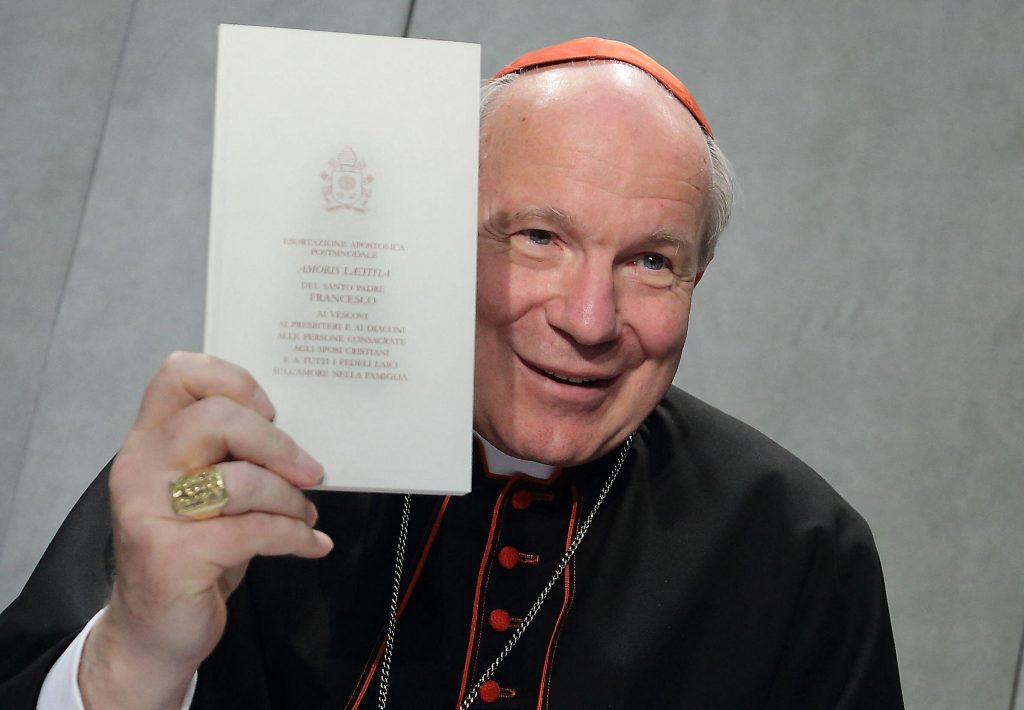
Vatican prepares global family meeting ten years after Amoris Laetitia
The Vatican has released the preparatory document for Pope Leo XIV’s October gathering on family life, where the presidents of bishops’ conferences and the heads of the Eastern Catholic Churches will discuss the future of family ministry ten years after Amoris Laetitia The Vatican has announced the full plan for a major gathering on family life as Amoris Laetitia marks ten years, with discussions expected to include the pastoral accommodation of divorcees and cohabitation. The Synod Office has released a preparatory document and five thematic areas for a significant Vatican meeting scheduled for October 2026. The event will be attended by the heads of the Eastern Catholic Churches and the presidents of bishops’ conferences from around the world. The event intends to be a time of synodal discernment on how the Church can better proclaim the Gospel to families today, building on the legacy of the 2016 apostolic exhortation Amoris Laetitia . Announced initially by the Holy Father in a message marking the tenth anniversary of Amoris Laetitia on 19 March 2026, the meeting will take place in Rome from 7 October, feast of the Holy Rosary, to 14 October. Pope Leo has noted that it is indicative of the “profound changes that continue to affect families.” A thematic framework, published jointly by the Dicastery for the Laity, Family and Life and the General Secretariat of the Synod, has now been sent to Church leaders and made public. It invites reflection both in preparation for and during the gathering, placing families not merely as recipients of pastoral care but as active participants in the Church’s mission. “Their presence is essential,” Pope Leo XIV said at the conclusion of the recent Extraordinary Consistory on 27 June, referring to the inclusion of families who will share their lived experiences. He encouraged all participants to prepare by listening closely to families in their own Churches. The five proposed thematic areas offer a structured yet open path for discernment. The first examines “Families today: reality, beauty and challenges”, urging the Church to discern the signs of the times through the concrete experiences of families and its own pastoral efforts. It calls for attentive listening to both the joys and fragilities of family life, including issues such as precarious employment, housing difficulties, illness, raising children, emotional loneliness, and caring for those with disabilities or the elderly. The second theme, “Young people and the discovery of the vocation to marriage”, focuses on accompanying young people in a world where confidence in stable marital commitments has often weakened because of economic, social and cultural pressures. It asks how the Church can present the beauty of marriage through credible witnesses, educational pathways and support for emotional and relational growth, including for cohabiting couples discerning sacramental marriage. Attention then turns to “Married life. The first years of marriage: a decisive time.” This highlights the critical early phase of married life, when couples navigate new responsibilities such as the birth of children and balancing work and family life. The framework stresses the need for renewed pastoral commitment to help spouses root their love in Christ, fostering mutual responsibility and exploring networks of family support within ecclesial communities. A fourth area addresses “In the difficulties of life: accompanying and supporting”, directing care towards families facing relational, social or spiritual hardships. It emphasises revealing the beauty of the vocation to marriage even amid fragility, supporting those affected by poverty, violence, separation or divorce, and building communities where the merciful face of the Church is evident through proximity and accompaniment. Finally, “Christian families as subjects of the Church’s mission” recognises conjugal and family love as a driving force for evangelisation. Drawing on the words of St Paul VI in Humanae Vitae , it recalls how married couples become apostles to others through their witness of enduring love and the transmission of the faith to new generations. The theme explores how families contribute to personal, ecclesial and social growth in a changing world. This forthcoming meeting is not formally an Assembly of the Synod of Bishops, yet it will proceed in a distinctly synodal style. The preparatory document for the October 2026 meeting continues the pastoral approach characteristic of Amoris Laetitia , placing a strong emphasis on “listening” and “learning”, with particular attention given to families in situations of relational or spiritual difficulty. It speaks of accompanying couples and families who have experienced “separation and divorce”, asking how Christian communities can be built in which those who have suffered abandonment, separation or divorce “may truly feel listened to, involved and co-responsible”. While the text rightly affirms the need for mercy, proximity and hope, the Church has already stressed that any authentic pastoral accompaniment in such cases must uphold the objective indissolubility of sacramental marriage and the call to fidelity as set forth in Scripture and the constant teaching of the Magisterium, including Familiaris Consortio . A similar emphasis appears in the section on young people and marriage, where the framework asks: “What steps of pastoral attentiveness and conversion can help the Church accompany cohabiting couples in discerning their affective and family journey, as they mature in their choice of marriage and openness to welcoming children?” The intention to lead couples towards the sacrament is positive, but the language focusing on ongoing accompaniment and discernment for those living in objectively irregular unions may blur the clear requirement to cease sexual relations outside the bonds of a valid marriage. This approach from the Synod Office is indicative of an emphasis on listening extensively to “lived experience” and addressing “the gap between the ideal and reality”. However, lived experience should not compromise Church teaching. It is right that the Church recognises human weakness and approaches it with compassion, but the pastoral task remains one of leading souls towards objective truth and the grace of conversion, rather than appearing to accommodate persistent irregular situations over time. In preparing for the 2026 meeting, bishops will have the opportunity to reaffirm the Church’s unchanging doctrine on marriage and moral theology while also seeking effective ways to support those wounded by family breakdown or living outside its full demands.
Jul. 6, 2026
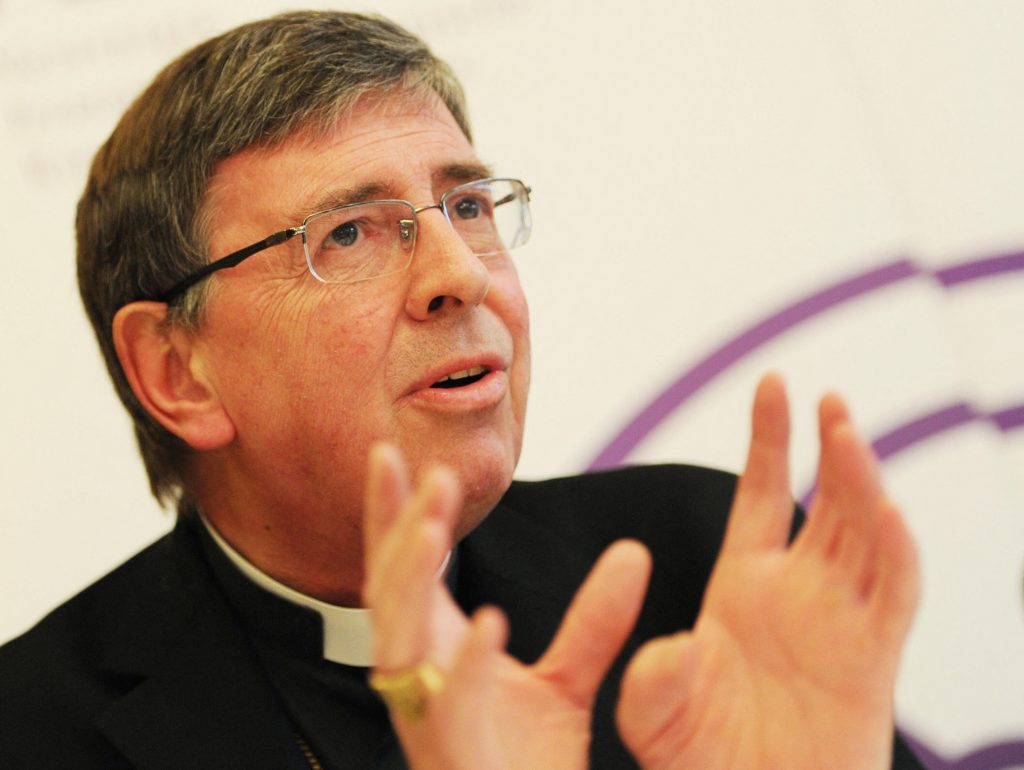
Cardinal Koch says reconciliation with SSPX remains possible
Cardinal Kurt Koch has expressed hope that dialogue between the Holy See and the Society of Saint Pius X can one day resume despite the recent episcopal consecrations. Speaking on the Communion podcast, the Prefect for Promoting Christian Unity also questioned whether the current situation can yet be described as a formal schism. Cardinal Kurt Koch has expressed hope that dialogue between the Holy See and the Society of Saint Pius X (SSPX) can eventually resume despite the Society’s recent episcopal consecrations. Speaking on the Communion podcast, the Swiss cardinal, Prefect of the Dicastery for Promoting Christian Unity, described excommunication as a “medicinal penalty” intended to encourage repentance rather than permanently sever communion with the Church. He insisted that the penalties incurred should not be viewed as the final chapter in relations between Rome and the traditionalist movement. “An excommunication is a medicinal penalty. It is not intended to be definitive; rather, it is meant to invite repentance so that one may find the way back,” Cardinal Koch said. Although the Prefect acknowledged that prospects for renewed discussions appear remote in the immediate aftermath of the consecrations, he nevertheless expressed confidence that reconciliation remains possible over the longer term. “I hope it will be possible in the future to resume new talks, so that they may find their way back into the Catholic Church,” he said, before adding: “At the moment I do not see that happening, but it would also be far too early.” Cardinal Koch suggested that patience would be required, pointing to previous ecclesiastical disputes that took years before meaningful conversations could begin again. Drawing a historical comparison, he noted that meaningful dialogue with the Old Catholics only became possible after several decades. He suggested a similar period of reflection may now be necessary before relations with the Society can progress. The cardinal also questioned whether it is yet accurate to describe the current situation as a formal schism. “I am not entirely convinced that one can already speak of a schism,” he said. Referring to the illicit episcopal consecrations carried out by Archbishop Marcel Lefebvre in 1988, Koch observed that Pope John Paul II had deliberately used the expression “schismatic act” rather than declaring that a completed schism existed. “Even in 1988, Pope John Paul II spoke of a ‘schismatic act.’ That is not necessarily the same thing, because a schismatic act concerns those who carried out the act and those who submitted themselves to it. That is not yet schism in the proper sense.” The distinction suggests that, in Koch’s view, the canonical consequences of the recent consecrations should not automatically be understood as creating a separate ecclesial body. Cardinal Koch also rejected suggestions that the Society has already established a fully fledged parallel Church. While acknowledging that the Society possesses bishops, he argued that it lacks the ordinary hierarchical structures that would normally characterise such a body. According to Koch, the Society has consistently maintained bishops for the sacramental power of orders rather than granting them ordinary jurisdiction. The Prefect noted that the Society continues to be governed by a priest superior rather than by a diocesan-style episcopal hierarchy, making the description of a parallel Church difficult to sustain. Earlier this year, when asked by this publication’s Vatican correspondent about dialogue with the SSPX, Cardinal Koch replied: “I am not involved in the dialogue with the SSPX. It is the responsibility of the Dicastery for the Doctrine of the Faith. Because of that I cannot be disponible for the meetings.” Cardinal Koch devoted considerable attention to what he sees as the deeper theological issues that continue to divide Rome and the Society. The Prefect argued that one of the central contradictions lies in the Society’s attitude towards papal authority. “This amounts to a form of self-authorisation for carrying out episcopal consecrations,” he said. He continued, “…a self-contradiction: on the one hand, they invoke the authority of the Pope in the most beautiful terms, yet on the decisive issues they go their own way.” Furthermore, Cardinal Koch argued that disagreement with particular papal decisions amounts to an incomplete acceptance of the post-conciliar papacy. “To me, this gives the impression of an abstract recognition of the Petrine primacy rather than a concrete recognition of the present Pope and of all the Popes since the Second Vatican Council.” Alongside his criticisms of the Society, however, Koch argued that recent events should also prompt self-examination within the wider Church. “It would be good to take the present dispute with the Society of St. Pius X as an opportunity to beat our own breast and reflect on what needs to be corrected,” the Prefect said. The prefect identified three areas where he believes misunderstandings or distortions have emerged in the decades following the Second Vatican Council. The first concerns the continuing relationship between the traditional Roman liturgy and the post-conciliar form of the Roman Rite, which he described as an unresolved question. Secondly, he criticised what he called ecclesiological pluralism within modern ecumenical thinking, arguing that some approaches wrongly treat all Churches and ecclesial communities as essentially equal, thereby obscuring the Catholic Church’s unique identity. His third concern was religious pluralism, which he described as the widespread belief that all religions provide equally valid paths to God. Koch maintained that these developments should not be confused with the authentic teaching of the Second Vatican Council itself. Instead, he suggested they represent later interpretations that have developed in the years since the Council. Furthermore, Cardinal Koch appeared to acknowledge that some of the concerns long raised by the Society relate to genuine post-conciliar tendencies, even while insisting that these should not be attributed to the Council’s actual texts. Despite the tensions created by the latest consecrations, Cardinal Koch believes that any return to formal discussions will require time, patience and, ultimately, the work of the Holy Spirit. As he put it, while the Church is responsible for what is possible, “the impossible is the realm of the Holy Spirit.”
Jul. 6, 2026
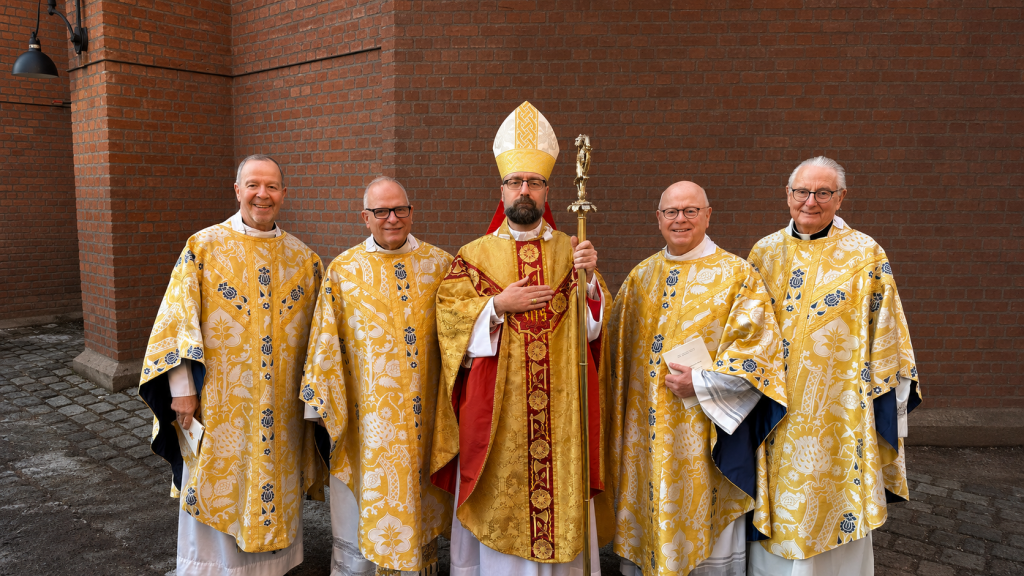
Bishop of Oslo offers more Traditional Latin Masses after SSPX excommunications
Following the excommunications of the SSPX bishops, Bishop Fredrik Hansen of Oslo has appealed to Catholics attached to the Traditional Latin Mass to remain in communion with Rome. He also said he is willing to expand provision for the 1962 Missal in the Diocese of Oslo Bishop Fredrik Hansen, the Bishop of Oslo in Norway, has offered to expand provision for the Traditional Latin Mass in his diocese following the excommunications of the bishops of the Society of Saint Pius X. The 47-year-old prelate, who has served as bishop since July last year, explained that the “four bishops who were ordained removed themselves from ecclesial communion and from unity with the Pope” by taking part in the consecrations without papal mandate. He further said that the bishops had “incurred the most grave ecclesiastical penalty: latae sententiae excommunication”. The bishop also addressed one of the most significant consequences of the consecrations: whether SSPX priests can validly hear confessions and grant absolution. He stated that the “priests belonging to the Society, now marked by the schismatic act and its consequences, can no longer validly grant absolution in the sacrament of confession.” This is a contested point among SSPX priests and faithful, who argue that canon law, which exists for the salvation of souls, still allows them to validly administer absolution. Towards the end of the letter, the bishop turned his attention to “the Catholics of our diocese who feel a draw toward and affection for the pre-conciliar liturgy and its associated spirituality, and who have therefore attended Masses celebrated in our diocese by priests from the Society”. He acknowledged that “these are difficult and distressing days for you” and that “you may find yourselves pulled in different directions.” His first instruction to these Catholics is “to hold fast to unity with our Holy Father, the Bishop of Rome, and with me as Bishop of Oslo.” In response to their attraction to the pre-conciliar liturgy, the bishop wrote: “I understand this,” and advised them that “Masses according to the 1962 Missal are celebrated every Sunday at St. Joseph Church in Oslo”. He further assured them that “if there is a need for it, and if it would be for the good of the Church and of souls, I will also expand this form of Mass celebration in our local Church.” The Society of Saint Pius X currently celebrates two Masses each week in Oslo, both at a Society chapel in the Ullern borough, in the western part of the city. The Society also has a presence in Stavanger, a city in southwestern Norway, and Bergen, also in the southwest of the country. The Masses are generally celebrated by Fr Raivo Kokis, an Estonian priest of the Society, and Fr Håkan Lindström, a Swedish SSPX priest. Just 3 per cent of Norway’s population is estimated to be Catholic. The country has one diocese, the Diocese of Oslo, which Bishop Hansen leads, and two missionary territorial prelatures, both led by Bishop Erik Varden. Both bishops are notably young, are converts to Catholicism, and studied in England. They have also had a noticeable impact across the wider Church, with Bishop Varden being chosen to lead the annual Lenten Spiritual Exercises for Pope Leo XIV and the Roman Curia this year. Bishop Hansen’s letter is reproduced in full below: Announcement from Bishop Fredrik Hansen on the “SSPX” and the Excommunications Diocese of Oslo July 3, 2026 Dear brothers in priestly ministry, Dear faithful, (1) “By unity with the bishop of Rome, in fellowship and in the profession of the true faith, the Church of Christ is one flock under the supreme shepherd. This is the teaching of Catholic truth, and no one can depart from it without endangering his own faith and salvation” (Vatican I, Pastor Æternus, ch. III). (2) Our unity with the bishop of the Roman Church, with the Pope, is a concrete expression of our belonging to the one, holy, catholic and apostolic Church, which Our Lord Jesus Christ founded to “spread the truth” to all people (Vatican II, Lumen Gentium, 8). (3) On July 1st — contrary to Pope Leo XIV’s earnest and fatherly appeal, and without the required pontifical mandate — four priests belonging to the Society of Saint Pius X (also known as the “St. Pius X Fraternity” or the SSPX) were consecrated as bishops at Écône in Switzerland. The consecrating bishop and one co-consecrating bishop also belong to this society. (4) The two consecrating bishops and the four bishops who were ordained removed themselves from ecclesial communion and from unity with the Pope by this act (ipso facto). They thereby incurred the most grave ecclesiastical penalty: latae sententiae excommunication reserved to the Apostolic See (CIC, can. 1387). (5) The Church and her unity have been dealt a serious wound. This is sad, painful, and calls us to prayer and penance. As a concrete expression of this, I urge you all to pray the Rosary for the unity of the Church on the Feast of Saint Sunniva, July 8, 2026. (6) The Apostolic See has defined the episcopal consecration at Écône as a “schismatic act” (Explanatory Note from the Dicastery for the Doctrine of the Faith, July 2, 2026). The same document also points out that the priests belonging to the Society, now marked by the schismatic act and its consequences, can no longer validly grant absolution in the sacrament of confession. (7) In order not to spread and further aggravate the consequences of this schismatic act, the Holy See’s appeal is clear: stand firm and stand secure in unity with the Pope and with the bishops in communion with him. This means that Catholics should refrain from participating in Masses and other activities organized by the Society of Saint Pius X. (8) A word to the Catholics of our diocese who feel a draw toward and affection for the pre-conciliar liturgy and its associated spirituality, and who have therefore attended Masses celebrated in our diocese by priests from the Society: I understand that these are difficult and distressing days for you. You may find yourselves pulled in different directions, and perhaps stand bewildered before all that has now come to pass. Some of you may be experiencing uncertainty about the future. (9) As your shepherd, I therefore offer you an encouragement and some words about what lies ahead. The encouragement is simple: hold fast to unity with our Holy Father, the Bishop of Rome, and with me as Bishop of Oslo. (10) As for the future: You wish to be able to take part in the liturgical celebration according to the 1962 Missal. Many of you also look to a spiritual expression and a spirituality shaped by the pre-conciliar liturgy. I understand this. Masses according to the 1962 Missal are celebrated every Sunday at St. Joseph Church in Oslo. This will continue. If there is a need for it, and if it would be for the good of the Church and of souls, I will also expand this form of Mass celebration in our local Church. (11) In closing: Pray for unity in the Church. Pray for the Pope. And pray that those who have now placed themselves outside ecclesial communion will repent and return.
Jul. 6, 2026
Keep Trad and carry on!
Following the Vatican’s declaration that the SSPX bishops have excommunicated themselves, Dom Alcuin Reid calls for renewed work for Catholic unity + Ad te Domine, clamabo, Deus meus, ne sileas a me; ne quando taceas a me, et assimilabor descendentibus in lacum, the Church sings the Introit of this Holy Mass. “To thee, O Lord, I call; my rock, be not deaf to me, lest, if thou be silent to me, I become like those who go down to the Pit.” With these first words of Psalm 27 the Sacred Liturgy aptly expresses the distress of many souls in the light of ecclesial events of recent days. Whether or not one accepts that conscientious disobedience to positive (i.e. man-made, not divine) law (in respect of the consecration of bishops) is or was justified in current circumstances, and can therefore tolerate material but not formal (i.e. in fact gravely sinful) disobedience to ecclesiastical authority, we now face a new crisis—one of the pastoral order, whereby the faithful whose sole desire is to be faithful to the Church and save their souls and those of their families are menaced by the threat of the sin of schism and of the penalty of excommunication. Their distress is real and it is compounded by commentary that is often far from accurate and is lacking in the necessary pastoral precision. Rightly, they feel that this is all simply too much. With just cause do many cry out this morning: “To thee, O Lord, I call; my rock, be not deaf to me, lest, if thou be silent to me, I become like those who go down to the Pit.” So let us be clear: there is no sin (of schism or of any other sort) in simply seeking the salvation of one’s soul through the traditional liturgical rites of the Church, as the prayers for the Pope and the Diocesan Bishop which they contain attest. These prayers in fact bear witness the exact opposite of schism. They are public manifestations at the very heart of our public worship of Catholic unity and of communion, not of sectarian division. And one is not excommunicated because one’s access to the older liturgical rites is sometimes or usually through a community who, before God, believed that they had no choice other than to engage in conscientious material disobedience to Church law in order to survive and remain faithful to their vocation and mission. Whatever of the culpability of clerics—and this is not the occasion to discuss that—even the official documents cited by the Holy See in recent days make it clear that the lay faithful simply seeking to worship Almighty God and receive the sacraments do not incur the penalty of excommunication thereby. (see: Explanatory Note, Pontifical Council for Legislative Texts, 24 August 1996) In the face of the ongoing brouhaha, one might well say: ‘Keep trad and carry on.’ For it remains true that “what earlier generations held as sacred, remains sacred and great for us too, and it cannot be all of a sudden entirely forbidden or even considered harmful.” (Benedict XVI, Letter to the Bishops, 7 July 2007) Of course, this truth was subjected to an orchestrated attack through that scandalous back-room ideological plot fuelled by the paranoia of ageing ecclesiastical liberals and based on downright lies that shamelessly manipulated the will of world’s bishops that we know only too well: the pastoral, liturgical and ecclesial disaster Traditiones Custodes (16 July 2021) that sought to end the peaceful worship of God according to the older rites that increasing numbers had grown fruitfully to love, driving faithful Catholics underground or away from parishes and dioceses and at times even outside of the visible communion of the Church. That orchestrators of this scandal and the high priests of its heartless implementation remain at the centre of power to this day is a cause of very deep concern. It may also go some way to explain the technocratic severity with which the Vatican has acted in recent days. That Traditiones Custodes has not yet been set aside—quietly or otherwise—and that diocesan bishops continue to use it to forbid the celebration of the older liturgical rites cries out to heaven for justice. Rightly, this morning, do we sing: “To thee, O Lord, I call; my rock, be not deaf to me, lest, if thou be silent to me, I become like those who go down to the Pit.” The matter-of-fact severity with which the Vatican has responded to the events of recent days, and indeed the silence of the Holy Father in their wake, is indeed another source of serious concern. For some time now we have been repeating the words of Pope Benedict XVI—a pope who worked earnestly and fruitfully for ecclesial unity and liturgical peace: “Looking back over the past, to the divisions which in the course of the centuries have rent the Body of Christ, one continually has the impression that, at critical moments when divisions were coming about, not enough was done by the Church’s leaders to maintain or regain reconciliation and unity. One has the impression that omissions on the part of the Church have had their share of blame for the fact that these divisions were able to harden. This glance at the past imposes an obligation on us today: to make every effort to enable for all those who truly desire unity to remain in that unity or to attain it anew.” (Letter to the Bishops, 7 July 2007) This morning, unfortunately, his words, are all the more pertinent. More could and should have been done in recent months, weeks and days. More must be done to build bridges and to open doors. The teaching of the Parable of the Lost Sheep (Mt 18:12-14) applies no matter what one thinks of the sheep concerned or how obstinate one believes it or they to be. In his pursuit of Church unity, in 2008 Pope Benedict XVI lifted the excommunications from the (then) four bishops of the Society of St Pius X. In his own words, “the quiet gesture of extending a hand gave rise to a huge uproar, and thus became exactly the opposite of a gesture of reconciliation.” So much so that the Pope found it necessary to write an unprecedented apologia to the bishops of the world. The questions he raised therein are more than pertinent in these days: “Was it, and is it, truly wrong in this case to meet half-way the brother who ‘has something against you’ (cf. Mt 5:23ff.) and to seek reconciliation? … Can it be completely mistaken to work to break down obstinacy and narrowness, and to make space for what is positive and retrievable for the whole? …Can we be totally indifferent about a community which has 733 priests, 264 seminarians, 5 seminaries, 94 schools, 2 university-level institutes, 144 religious brothers, 250 religious sisters and thousands of lay faithful? Should we casually let them drift farther from the Church? I think for example of the 733 priests…I do not think that they would have chosen the priesthood if…they did not have a love for Christ and a desire to proclaim him and, with him, the living God. Can we simply exclude them, as representatives of a radical fringe, from our pursuit of reconciliation and unity? What would then become of them? [statistics updated to those published in 2025] Certainly, for some time now, and once again on this specific occasion, we have heard from some representatives of that community many unpleasant things – arrogance and presumptuousness, an obsession with one-sided positions, etc… But should not the great Church also allow herself to be generous in the knowledge of her great breadth, in the knowledge of the promise made to her? Should not we, as good educators, also be capable of overlooking various faults and making every effort to open up broader vistas? And should we not admit that some unpleasant things have also emerged in Church circles? …During the days when I first had the idea of writing this letter, by chance, during a visit to the Roman Seminary, I had to interpret and comment on Galatians 5:13-15. I was surprised at the directness with which that passage speaks to us about the present moment: “Do not use your freedom as an opportunity for the flesh, but through love be servants of one another. For the whole law is fulfilled in one word: ‘You shall love your neighbour as yourself’. But if you bite and devour one another, take heed that you are not consumed by one another.” …sad to say, this “biting and devouring” also exists in the Church today, as expression of a poorly understood freedom. Should we be surprised that we too are no better than the Galatians? That at the very least we are threatened by the same temptations? That we must always learn anew the proper use of freedom? And that we must always learn anew the supreme priority, which is love?” (Letter to the Bishops, 10 March 2009) The purpose of these observations is not to declare for or against any group or person, let alone to judge them or to seek to exclude them. Let us not forget that whilst the prodigal son sinned shamelessly, his self-righteous elder brother did so also. (cf. Lk 15:11-32) Both were guilty of grave matter of which they needed to repent. And this is most certainly not an attack on our Holy Father—we do know his motivations or intentions, and even if his silence leaves a significant vacuum, we own him the patience that is part of filial respect. Let us pray earnestly for the Holy Father in these days! The purpose of these observations is solely to recall some fundamental truths and to insist that we are all called to pray and work in whatever way we can for their recognition and for reconciliation and Catholic unity. Even as we may share the distress and fear of the psalmist that all may be lost and that we are descending ever more rapidly into the Pit (or that we have already been cast into it) the Sacred Liturgy now takes us up to the Altar of God, where, by the infinite merits of Christ’s Sacrifice on the Cross, all that seems lost can be found again, and all that was dead can rise to new life (cf. Lk 15:32). Much as our hearts may be heavy, and much as we may feel wounded and distressed and even abandoned, let us never doubt that if we are faithful the Lord shall hear our plea and save us. For the grace of that fidelity and for an increase of the grace of supernatural hope in ourselves and in others, let us pray earnestly in this Holy Mass. +
Jul. 5, 2026