

Latest
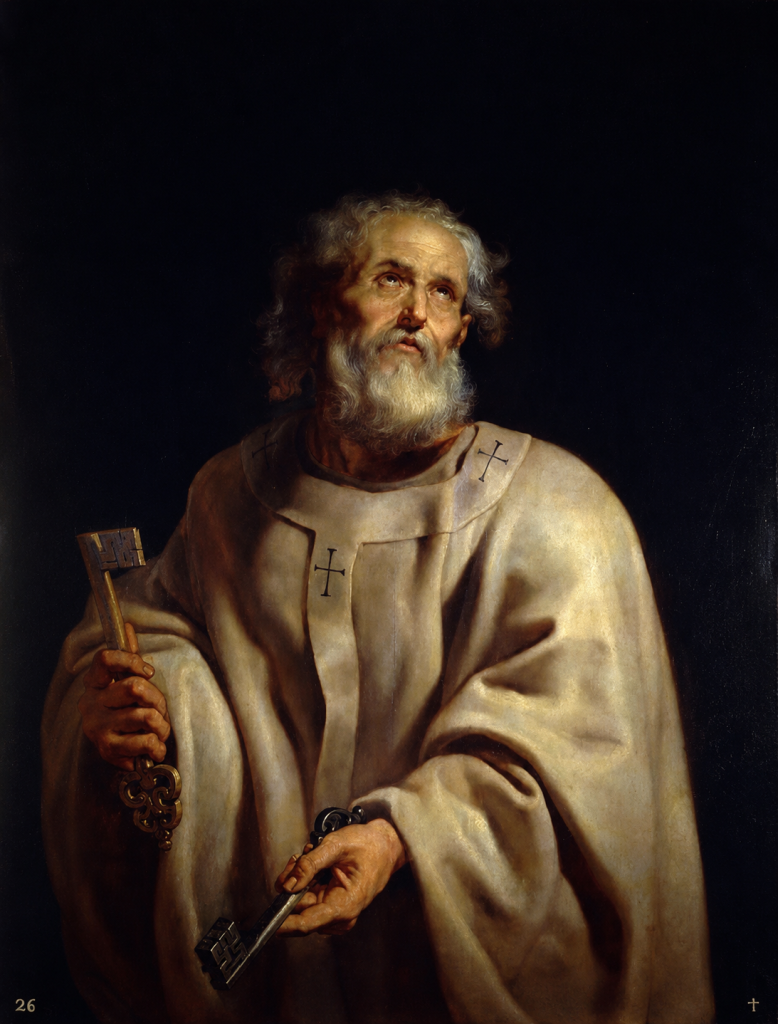
Why communion with Peter matters
“Because it was not flesh and blood that revealed this to you but My Father in heaven.” In 1510 a young friar – an Augustinian like our present Pope – went for the first and only time to Rome. He was a pious priest, who climbed the Holy Stairs on his knees, and tried to […] “Because it was not flesh and blood that revealed this to you but My Father in heaven.” In 1510 a young friar – an Augustinian like our present Pope – went for the first and only time to Rome. He was a pious priest, who climbed the Holy Stairs on his knees, and tried to obtain as many indulgences as he could during his stay, but he was also shocked by the worldliness of the Eternal City, and the speed at which Italian priests said Mass. He returned to Germany disedified by Roman corruption, but also tortured by the war between good and evil within his own self; and all this inner turmoil exploded in 1517 in a rebellion which would shake the foundations of the throne of St Peter. Leo X called the dispute between Martin Luther (for it was he) and his opponents, “a squabble among jealous monks”, but it was to prove much more than that, for one man’s disobedience caused many to sin. In 1533 another young man arrived in Rome, and was to stay there for the rest of his life, until his death in 1595. His name was Philip Neri, and he shows us the proper attitude we ought to have towards the successor of St Peter. When Philip was born, in 1515, two years before Luther published his ninety-five theses in Wittenberg, Leo X, he who so complacently dismissed the monkish squabble, had been on the papal throne for two years. Leo was born Giovanni di Lorenzo de’ Medici, and like St Philip, was born in the Republic of Florence. When elected pope, on 9th December 1513, he had to be ordained priest six days later, and consecrated bishop two days after that. Admittedly, he had been a cardinal since the age of thirteen. Leo X is alleged to have said upon his election, “Since God has given us the papacy, let us enjoy it!” And so he did. A Medici on the throne of Peter effectively united Florence and the Papal States, leading to the abolition of the Florentine republic in 1532 by Clement VII – also a Medici and the cousin of Leo X – and the imposition of Alessandro de’ Medici, Clement’s nephew, as hereditary ruler. If you think that the Church has problems today, think again! Clement VII was the pope who excommunicated Henry VIII, whose reign was so disastrous that he was nearly deposed by the Holy Roman Emperor, and who after the Sack of Rome in 1527 grew a beard in mourning. He set a trend, for all of the next twenty-three popes were bearded, right down to Innocent XII, who died in 1700, after whom no pope has been bearded, since Cardinal Pizzaballa was not elected last year. So the papacy has had a chequered and shaky history, but nevertheless we need a pope; we need Peter. When our Lord chose him, He knew that He was building the Church upon a rock that would often tremble, that would cower before a little maid in the courtyard of Caiaphas, that would become comfortable and complacent in Renaissance Italy, that would compromise with Xi’s China, that would sometimes appear to come close to denying the very Gospel it was commanded to preach. Nevertheless, “Whatever you bind on earth shall be bound in heaven…and the gates of hell shall not prevail against you.” Peter is chosen not for his own sake, but so that he will confirm the faith of his brethren. He has nothing to offer himself that does not come from the Lord, he can fulfil his role only when he continues to teach what has been held by Christians always and everywhere, “Because it was not flesh and blood that revealed this to you but My Father in heaven.” So what is the essential role that the Vicar of Christ has for the Universal Church? Like all bishops, the Bishop of Rome has three tasks: to teach, to govern, and to sanctify. St Peter himself has this to say about the necessity of teaching: “But false prophets also arose among the people just as there will be false teachers among you, who will secretly bring in destructive heresies, even denying the Master who bought them, bringing on themselves swift destruction. And many will follow their licentiousness, and because of them the way of truth will be reviled.” Peter’s role is never to innovate, not to open the door to confused and destructive opinions, but rather to stand firm, to confirm our faith in what has been handed down to us. At the same time, Peter has this to say about how the Church is to be governed: “Tend the flock of God that is in your charge, not by constraint but willingly … not as domineering over those in your charge but by being examples to the flock.” The Bishop of Rome cannot function as a dictator: rather he is to be a servant (Pope St Gregory the Great introduced the title “Servant of the servants of God”), a servant of the Truth, and a servant of the flock. And to sanctify: the Pontiff’s primary role is liturgical, to celebrate the rites of the Church for the Diocese of Rome, and to act as a focus of unity for the Catholic Church. In the sixteenth century, there was corruption, ignorance and complacency at the top of the Church – though not quite to the extent that is sometimes alleged. Starting in Germany, spreading to Switzerland and then elsewhere, the disease of false teaching destroyed the faith of millions. But Paul III succeeded Clement VII, summoned the Council of Trent, and that Council, starting and stopping, at times seeming as though it would achieve nothing, through the ups and downs of five pontificates in three decades, eventually acted as one of the vehicles for reform and renewal. A purified Church was able to preach more clearly and, as an unexpected result, to bring the Gospel to new peoples in new circumstances. Change was painful but creative – and it came because Peter was there to regulate it, though not always through Peter’s own actions. The most important change could not come from above, because that is not how the Church works. But Peter is necessary to regulate change and to ratify authentic development. Paul IV was perhaps the most authoritarian pope in history, and he was a zealous reformer – too zealous. All his attempts failed because he tried to reform the Church by diktat. He restricted the work of St Philip and the Oratory, locked the Jews into the ghetto, wanted to try the English Cardinal Pole for heresy, and was technically at war with Queen Mary I of England at the very time when she was restoring the Faith in this land. At his death, the canons of St Peter’s refused to allow Paul’s body into the basilica until they had been paid. Real reform did not come from him, but from that quiet, prayerful presence at San Girolamo, the third Apostle of Rome, our own St Philip. So, when we look at the Church today, we have a clear lesson from history. There are plenty of false prophets; there are wolves in Germany, and there are wolves in Switzerland, who want to corrupt and subvert. If we wish to live, then we must oppose them in love, we must hold fast to the doctrines that have been handed down to us. We should also remember that it is because he said, “You are the Christ, the Son of the living God”, that Simon Peter became the Rock. Communion with Peter – that is, with Leo XIV – is not a luxury; it is essential. Our Cardinal, St John Henry Newman, became a Catholic because he studied the fourth-century Arian crisis. He realised that, to keep saying the same thing, you have to use new words; the Arians were the ones who refused to use new words, while the Catholics innovated in order to be faithful. The Church cannot be faithful to truth without a living Magisterium, and for that she needs Peter. If your statement of faith only uses the words of one hundred years ago, like the Arians, or, if, like those today who are willing to lose communion with Peter, then you are no longer a Catholic. Reform and renewal take a long time, and the past shows that there are often false starts and backward steps along the way. We need the papacy, but we also have our own part to play: Scripture, tradition, worship, holiness of life. St Philip clung to these even when he was forbidden to function publicly. He didn’t take himself out of communion; he waited faithfully and obediently. If we separate ourselves from the Petrine office, if we start making the rules for ourselves, then we will become those barren branches that wither and are thrown on the fire. The Faith arrived on these shores, and in this City, from Rome. Our own St Wilfrid insisted at Whitby on the keeping of Roman customs and practices. We have been given a light from the Apostolic See to pass on. “Because it was not flesh and blood that revealed this to you but My Father in heaven.”
Jul. 4, 2026
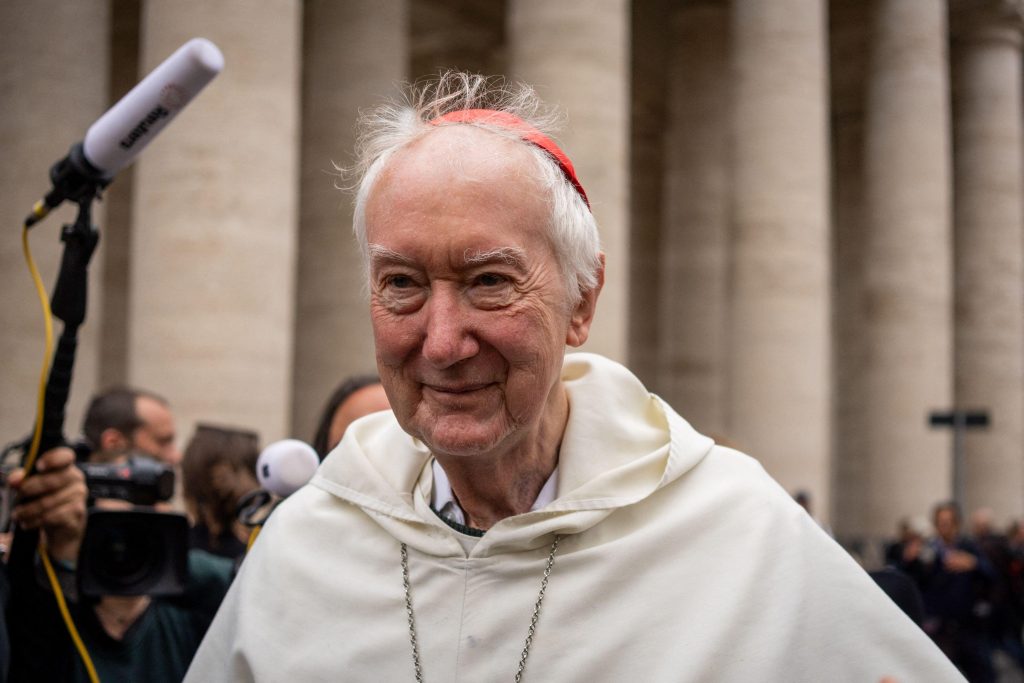
EXCLUSIVE: Cardinal Radcliffe clarifies role in London Mass featuring blessing for same-sex couple
Cardinal Timothy Radcliffe has spoken exclusively to AdVaticanum about the recent London thanksgiving Mass for a same-sex couple Cardinal Timothy Radcliffe has spoken to AdVaticanum to clarify his role in a recent London Mass featuring an “LGBT blessing”. Speaking exclusively AdVaticanum, Cardinal Timothy Radcliffe has offered a measured account of his participation in a thanksgiving Mass held at the Church of the Holy Apostles in London. The event, held on 13 June, marked 50 years of friendship, partnership and commitment to justice between Julian Filochowski and Martin Pendergast, two longstanding figures in pastoral outreach to homosexual Catholics in the Diocese of Westminster. In his remarks, Cardinal Radcliffe firmly distanced himself from any perception that he had participated in a specific blessing of the couple’s relationship. “I gave no blessing to anyone and had not been aware that any blessings would be given,” His Eminence said. The Cardinal emphasised the orthodox nature of his preaching on friendship. “I said that friendship is a participation in the life of God. That is perfectly orthodox. I did not refer specifically to theirs. The Mass was a celebration of all friendship. I mentioned friendship in my own life, I think.” The Cardinal added context to references made during the homily. “When they were referred to, it was in connection with a shared passion for justice, for which they are well known and recognised by the Church.” Questions have arisen over the public nature of the occasion and the blessing imparted by the clergy. The text prayed: “Giving thanks that the Church offers blessing to those who seek it in spirit and in truth, we ask, O God of love, that your grace come down upon Julian and Martin as they mark the 50th anniversary of their relationship. May their love continue to be generous, ever attentive to the needs of others, and deepen all that unites them. May your peace be theirs and your joyful light shine through their lives, and the blessing of God, the Father, and the Son, and the Holy Spirit come upon them and remain with them, now and forever. Amen.” Cardinal Radcliffe reiterated his adherence to existing Church guidance on such matters. “The guidelines given by the Church are that any such occasion should be private so as not to cause misunderstanding. It was agreed that this occasion should be private. Why the privacy was not respected I do not know. So making it more public by writing articles about it would be against the will of the Church as I understand it.” The Cardinal also rejected interpretations that framed the Mass as a celebration of gay relationships. “It was not designed to celebrate gay relationships as such. To promote it as such would be to misrepresent it. To do so for the purposes of exciting scandal would be morally wrong.” The principal celebrant was Fr Jim O’Keefe, with concelebrants including Bishop John Crowley, Emeritus of Middlesbrough, Bishop John Rawsthorne, Emeritus of Hallam, and Canon Chris Vipers of the parish. The event was later highlighted by New Ways Ministry, an organisation focused on LGBT Catholics. Among those participating were figures such as Sr Jeannine Gramick, who read part of the Gospel in dialogue with others, including theologian James Alison. One of the honourees also assisted in the distribution of the Precious Blood during Holy Communion. The 2023 declaration Fiducia supplicans permitted spontaneous blessings for individuals in irregular situations under certain conditions but explicitly ruled out liturgical rites, fixed texts or ceremonies that could resemble the validation of a union. Earlier guidance issued by the Dicastery for the Doctrine of the Faith in 2021 stated that the Church does not have the power to bless unions of persons of the same sex. Julian Filochowski and Martin Pendergast, who entered a civil partnership in 2006 after living together since 1976, have long been active in advocacy and justice work for the LGBT Catholic community. Their earlier 25th anniversary thanksgiving Mass in 2001 reportedly prompted intervention from the then Archbishop of Westminster, Cardinal Cormac Murphy-O’Connor, who instructed the bishop scheduled to preside to withdraw.
Jul. 4, 2026
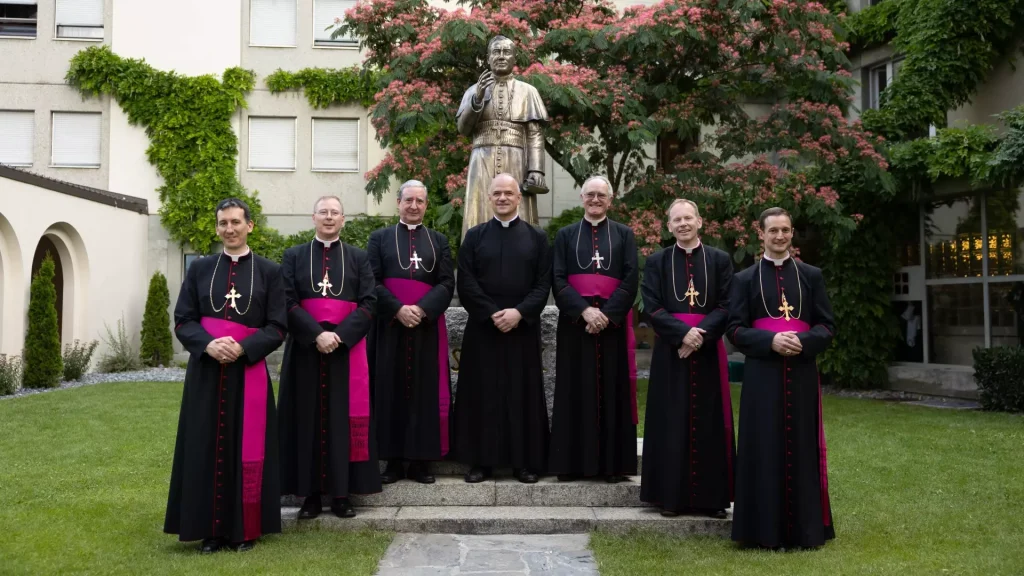
Superior General responds to Pope Leo after excommunication decree
The Superior General of the Society of Saint Pius X has responded to Pope Leo XIV following the decree of excommunication issued by the Dicastery for the Doctrine of the Faith. In a letter sent from Écône on 3 July 2026, Fr Davide Pagliarani responded to the notification signed by the Prefect of the Dicastery, […] The Superior General of the Society of Saint Pius X has responded to Pope Leo XIV following the decree of excommunication issued by the Dicastery for the Doctrine of the Faith. In a letter sent from Écône on 3 July 2026, Fr Davide Pagliarani responded to the notification signed by the Prefect of the Dicastery, Cardinal Víctor Fernández. Fr Pagliarani opens his letter with a pointed reference to St Luke’s Gospel, asking whether a father would give his son a stone instead of bread, a serpent instead of a fish, or a scorpion instead of an egg. He applies this imagery to the Society’s recent appeals to the Holy See. The decision, he suggests, demonstrates the difficult situation facing the universal Church. He goes on to explain that what the SSPX has done, and continues to do, is simply an effort to save souls amid confusion. The Society does not seek to replace the Church but only to remain faithful to her. He writes that, in conscience, the SSPX could not ignore its duty towards souls, a point previously made to the Pope both privately and publicly. The letter continues by explaining that the Society had asked only for “a measure of understanding for a sincere case of conscience”. “We are certain that one day a Pope will wish to employ it for the good of the universal Church,” Fr Pagliarani states. Despite the sanctions, Fr Pagliarani renewed an earlier promise made to the Holy Father. He quotes from his personal letter of 21 November 2025: “The Society promises You […] to devote all its energies to preserving Tradition and placing it at the service of the Church. In doing so, the Society of Saint Pius X does not merely maintain ancient customs; it fosters and preserves priestly vocations, religious vocations, and large, deeply Christian families—in a word, everything that manifests the vitality of the Church, of grace, and of the Catholic faith. Our intention is not to offer the Church a museum of antiquities, but rather the entirety of Tradition: fruitful, a source of spiritual life, embodied and lived out within souls.” The SSPX promises not to receive the new sanctions “with bitterness or revolt”. Instead, Fr Pagliarani writes, the suffering will be offered for the good of souls and of the Church. The sanctions, he says, compel the Society to love the Church more deeply and to provide for her needs with even greater determination. Looking ahead, the Superior General of the SSPX expressed confidence that a future Pope will adopt St Pius X’s programme, Instaurare omnia in Christo (“To restore all things in Christ”). On that day, the Holy Father will find in the SSPX “not a nest of serpents and scorpions, but a small army of loyal sons, ready to do anything to sustain Him in the restoration of all things in Our Lord, and to vindicate before all mankind the imprescriptible rights of Christ the King over all souls and over all nations”. Those souls, he adds, are bound to the Church not upon the “shifting sands of an ambiguous dialogue”, but upon “the rock of the faith of Peter”. Fr Pagliarani asks the Blessed Virgin Mary to hasten that day and prays that Pope Leo XIV may soon experience the joy it will bring. In the meantime, he humbly requests a blessing “as Your sons”, despite the recent decision. “For us, nothing has changed, and nothing ever will change.” The letter closes with an expression of trust in Divine Providence, which sees into every heart, and is signed as the Pope’s “most devoted son in the Lord”. This response comes after the Dicastery for the Doctrine of the Faith (DDF) issued its decree on 2 July. The document declares the excommunications incurred automatically by those involved in the recent consecrations. It refers to earlier admonitions addressed to the Superior General and cites the canonical penalties for the schismatic act. The explanatory note accompanying the decree reviews the history of reconciliation efforts since Pope Paul VI, noting that the latest consecrations without pontifical mandate have worsened the situation. It reaffirms the 1988 judgment that such disobedience constitutes a schismatic act and sets out the implications for ministers and faithful associated with the SSPX, including the illicit administration of the sacraments and the invalidity of marriages assisted by its clergy. The note nevertheless presents the Church as a loving mother, open to those seeking full communion. “Notwithstanding the admonitions addressed to the Superior General of the Priestly Fraternity of Saint Pius X, Bishop Alfonso de Galarreta, having performed a schismatic act by means of the episcopal consecration of four priests, without pontifical mandate and against the will of the Supreme Pontiff, has incurred ipso facto the penalties provided for in can. 1387 and can. 1364 §1 CIC 2021.” Signed by Cardinal Fernández, Prefect of the Dicastery for the Doctrine of the Faith, Mons. Armando Matteo, Secretary for the Doctrinal Section, and Archbishop John J. Kennedy, Secretary for the Disciplinary Section, the decree continues: “It is therefore declared, for all legal effects, that the aforementioned Bishop Alfonso de Galarreta, as well as Pascal Schreiber, Michael Goldade, Michel Poinsinet de Sivry, and Marc Hanappier, have incurred ipso facto the penalty of latae sententiae excommunication reserved to the Apostolic See.” The decree goes further than the excommunications declared in 1988 by stating that “clergy and lay faithful are admonished not to adhere to the schism of the Priestly Fraternity of Saint Pius X, lest they incur ipso facto the penalty of latae sententiae excommunication.” Accordingly, SSPX faithful may also incur the excommunication declared by Rome. Unlike in 1988, when the decree was issued by the Congregation for Bishops, this decree has been issued by the Dicastery for the Doctrine of the Faith. The explanatory note further advises the faithful against formal association with the Society, stating: “Finally, all the faithful are exhorted to remain steadfast in communion with the Roman Pontiff, with the bishops in communion with him, and with the whole Church (cf. Lumen Gentium , 22; can. 751 CIC), and to abstain from participating in the celebrations and activities promoted by the aforementioned Priestly Fraternity of Saint Pius X.” The explanatory note also raises further questions for SSPX faithful by stating: “It is finally noted that the Holy People of God are informed that the sacred ministers of the Priestly Fraternity of Saint Pius X administer the sacraments and the sacrament of Penance illicitly, and that the marriages assisted by them are invalid.” Archbishop Marcel Lefebvre founded the SSPX to preserve traditional priestly formation and liturgy in the years following the Second Vatican Council. The 1988 episcopal consecrations without papal approval led to the original break. Periods of dialogue followed under successive popes, including the lifting of the bishops’ excommunications in 2009 as a gesture intended to facilitate reconciliation. Nevertheless, differences over authority, doctrine, and the role of Tradition have persisted.
Jul. 4, 2026
Pope Leo XIV overhauls Vatican financial watchdog with major governance reform
Pope Leo XIV has approved the biggest restructuring of the Vatican’s financial watchdog since its creation in 2010. The reform abolishes ASIF’s president and governing board, places its leadership under direct papal appointment and introduces a new management structure while expanding the authority’s role in overseeing the Holy See’s financial system Pope Leo XIV has approved the most significant restructuring of the Vatican’s financial watchdog, placing its leadership under direct papal appointment and replacing its long-standing governing board with a streamlined management structure. The reform of the Supervisory and Financial Information Authority (ASIF), promulgated through a chirograph published on 30 June, introduces a new statute for the body responsible for combating money laundering, monitoring suspicious financial activity and supervising the Vatican’s financial system. At the centre of the changes is the abolition of the authority’s president and board of directors, a structure that had existed in various forms since the institution was founded in 2010 as part of a wider effort to bring the Holy See into line with international financial standards. Under the new statute, ASIF will instead be led by a director and deputy director, both appointed by the Pope for renewable five-year terms. They will be assisted by consultors, who will also be appointed by the Pontiff and tasked with providing specialist expertise. The Vatican said the reform was the result of a long process through which the Holy See and Vatican City State have progressively adapted their legislation and institutions to meet evolving international requirements governing anti-money laundering measures, the financing of terrorism and prudential financial supervision. The new statute preserves ASIF’s core responsibilities. It retains exclusive competence for supervising and regulating efforts to prevent money laundering, terrorist financing and the financing of the proliferation of weapons of mass destruction. It also continues to function as the Vatican’s financial intelligence unit, receiving and analysing suspicious transaction reports while cooperating with international counterparts. In addition, ASIF remains responsible for the prudential supervision of entities carrying out professional financial activities within the Vatican’s legal framework. The authority’s internal structure has been reorganised around these three principal functions. Separate offices will oversee anti-money laundering supervision and regulation, financial intelligence activities and prudential supervision. A new legal affairs office has also been created, with responsibility for ensuring legal consistency across the authority’s work and safeguarding fundamental rights within financial intelligence operations. One notable feature of the reform is a strengthened relationship between ASIF and the Council for the Economy, the body established by Pope Francis to oversee the Holy See’s financial affairs. Under the new arrangements, ASIF’s annual report, budget forecasts and final accounts will be submitted directly to the Council for the Economy. The council will also be able to request reports on the authority’s activities. The reform also expands ASIF’s role in resolving disputes involving customers of the Institute for the Works of Religion (IOR), commonly known as the Vatican Bank. Previously limited to matters concerning payment systems, its arbitration competence will now extend across the full range of financial services offered by the institute. The changes come as the Holy See continues a lengthy process of financial reform that began during the pontificate of Benedict XVI and accelerated under Pope Francis. Benedict established the Financial Information Authority, known by its Italian initials AIF, in December 2010 through the motu proprio For the Prevention and Countering of Illegal Activities in the Area of Monetary and Financial Dealings . The move marked a watershed moment in Vatican financial governance as the Holy See sought to improve transparency and strengthen safeguards against financial crime. Further reforms followed in 2013 when Pope Francis expanded the authority’s responsibilities through legislation aimed at preventing money laundering, terrorist financing and the proliferation of weapons of mass destruction. Later that year, he approved a revised statute which affirmed that the authority would carry out its functions “in full autonomy and independence”. In 2020, amid broader reforms of Vatican financial institutions, the body was renamed the Supervisory and Financial Information Authority, reflecting its combined role as both regulator and financial intelligence unit. Its work has become increasingly important as the Holy See has sought recognition from international monitoring bodies and strengthened cooperation with foreign regulators and law enforcement agencies. The Vatican has repeatedly pointed to standards developed by organisations such as the Financial Action Task Force and the Egmont Group of Financial Intelligence Units as benchmarks for its reforms. The latest statute explicitly references developments in international regulations, including the European Union’s Sixth Anti-Money Laundering Directive and revisions adopted by the Egmont Group in 2025. The restructuring nevertheless marks a departure from the governance model traditionally associated with independent financial regulators. Until now, ASIF had been overseen by a president and board, a system comparable to arrangements found in many national supervisory authorities and central banks. The new structure aligns the watchdog more closely with the organisation of Roman Curia departments, which are generally headed by a single senior official appointed directly by the Pope.
Jul. 3, 2026
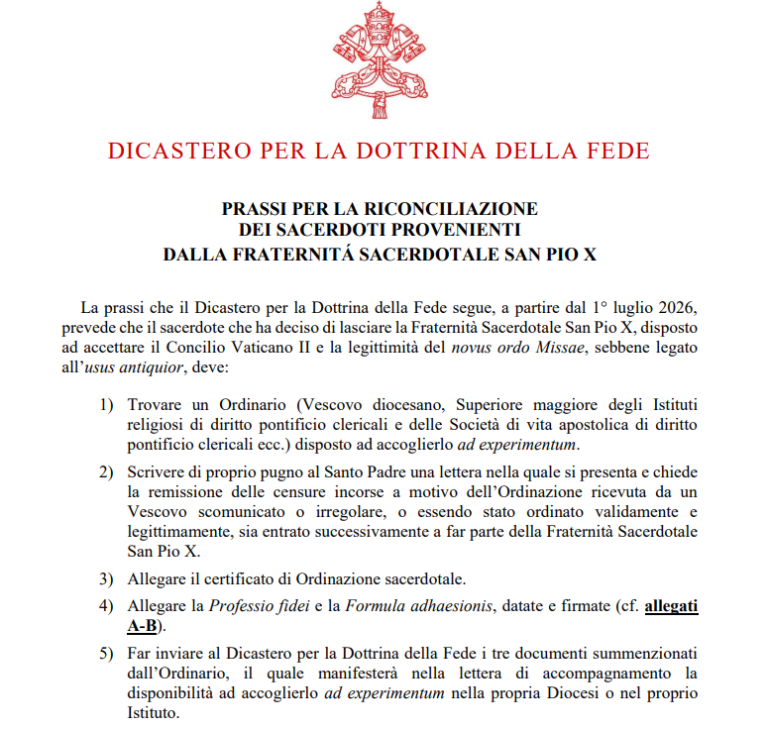
Vatican releases reconciliation procedure for SSPX priests and faithful
After declaring the SSPX bishops excommunicated, the Vatican has published a document outlining how priests and certain lay faithful associated with the Society can be reconciled with the Catholic Church The Dicastery for the Doctrine of the Faith has released a document entitled the “Procedure for the Reconciliation of Priests from the Society of Saint Pius X”, outlining the process of reconciliation for priests attached to the Society of Saint Pius X. The move comes after the consecrations of four new bishops for the Society and a decree which declared that the four bishops, alongside Bishop Alfonso de Galarreta, the principal consecrator, and Bishop Bernard Fellay, had “incurred the ipso facto penalty of latae sententiae excommunication”. The document is intended to help bishops understand what must be done to facilitate a person being fully reconciled with Rome after being aligned with the SSPX. The document states that “a priest who has decided to leave the Priestly Society of Saint Pius X” and is “willing to accept the Second Vatican Council and the legitimacy of the Novus Ordo Missae”, even though he might be “bound by the usus antiquior”, must go through a certain process for reconciliation. For an SSPX priest to be reconciled, he must first find an Ordinary and then write a “handwritten letter to the Holy Father in which he introduces himself and requests the remission of the censures incurred as a result of ordination received from an excommunicated or irregular Bishop, or, having been validly and legitimately ordained, subsequently entered the Priestly Fraternity of Saint Pius X.” He should then attach his certificate of priestly ordination together with a dated and signed copy of a Professio fidei and the Formula Adhaesionis , which is attached to the document and outlines the necessary theological convictions for reconciliation. The documents are then sent to the DDF by the Ordinary, “who will express in the accompanying letter his willingness to accept him ad experimentum in his diocese or his institute.” The Professio fidei document which the priest must sign begins with the Nicene Creed, and continues with a declaration that the priest believes “all those things which are contained in the written or handed-down Word of God and which are proposed by the Church—either by solemn judgment or by the ordinary and universal Magisterium—to be believed as divinely revealed”. The document continues with the priest agreeing that he “firmly embraces and holds all and everything regarding the doctrine of faith or morals that is definitively taught by the same Church”. It concludes with him agreeing that, with “a religious submission of will and intellect”, he adheres “to the teachings which either the Roman Pontiff or the College of Bishops enunciate when they exercise the authentic Magisterium, even if they do not intend to proclaim them by a definitive act.” The final document which the priest must sign, entitled Formula Adhaesionis , asks the priest to agree that he accepts “the doctrine taught in no. 25 of the Dogmatic Constitution Lumen Gentium of the Second Vatican Council regarding the Magisterium of the Church and the adherence due to it.” With regard to “certain doctrines taught by the Second Vatican Council, or regarding subsequent reforms—whether of the Liturgy or of Canon Law—which some find difficult to reconcile with previous declarations of the Magisterium”, he agrees to “follow a positive approach in interpreting the doctrine”. He is further asked to accept “the validity of the Sacrifice of the Mass and of the Sacraments celebrated with the intention of doing what the Church does, and in accordance with the rites found in the typical editions of the Roman Missal as well as the Rituals promulgated by the Supreme Pontiffs Paul VI and John Paul II.” And finally, he must “promise to adhere to the common discipline of the Church and to its laws, especially those contained in the Code of Canon Law promulgated by the Supreme Pontiff John Paul II.” This part of the document is essentially asking the priest to renounce his criticism of the Second Vatican Council and parts of Church teaching which he finds objectionable. This is a requirement which arguably goes further than what is required for priests in normal circumstances to be in good standing with the Catholic Church, with many drawing parallels between the requirements imposed on the Society’s priests and the apparent lack of censure afforded to groups such as the German Synodal Way. The document is understood to have already been in place for priests in similar situations before the 1 July consecrations took place. It is not known at present whether any priests have taken the opportunity for reconciliation. The document also makes provision for “Laypeople who are members of the Third Order of the Priestly Fraternity of St. Pius X; 2. Laypeople who habitually participate in the celebrations of the Priestly Fraternity of St. Pius X, formally sharing its doctrinal positions.” Reconciliation is not needed for those who “have attended the Priestly Fraternity of St. Pius X solely for liturgical or spiritual reasons”, or for faithful who “while aware of the tensions with the Holy See, do not reject the Magisterium or the authority of the Roman Pontiff”. The faithful who are in need of reconciliation must also sign the Professio fidei and the Formula Adhaesionis . They then present themselves to their Ordinary, who should “welcome the lay faithful member in the manner and within the timeframe he deems most appropriate, using, for example, the Rite of Admission to Full Communion with the Catholic Church for Those Who Have Already Been Validly Baptized, duly adapted.” Speaking to the SSPX faithful on the ground, the reaction was defiant. William Waith from Australia stated he “suspected this was not a valid excommunication”, with another pilgrim stating he believed it was a “war against tradition”. When questioned on the possible excommunication of those attending the event at Écône, Abbé Michel Rion, spokesperson for the consecrations, stated that “all the parishioners who are here are certain to be in the Church” and that they are “hurt and so sad that they may be considered that way”.
Jul. 2, 2026
What to make of the SSPX excommunications?
After four months of anticipation and speculation, the Vatican has declared that the bishops of the Society of Saint Pius X have excommunicated themselves. But the decree and its accompanying explanatory note go further, addressing the Society’s priests and the faithful who attend its chapels. Niwa Limbu analyses what the documents mean The Vatican has declared that the bishops of the Society of Saint Pius X have excommunicated themselves. The day after the episcopal consecrations in Écône, which saw Fr Pascal Schreiber, Fr Michel Poinsinet de Sivry, Fr Marc Hanappier and Fr Michael Goldade consecrated as bishops, the Dicastery for the Doctrine of the Faith released a decree stating: “Notwithstanding the admonitions addressed to the Superior General of the Priestly Fraternity of Saint Pius X, Bishop Alfonso de Galarreta, having performed a schismatic act by means of the episcopal consecration of four priests, without pontifical mandate and against the will of the Supreme Pontiff, has incurred ipso facto the penalties provided for in can. 1387 and can. 1364 §1 CIC 2021.” Signed by Cardinal Fernández, Prefect of the Dicastery for the Doctrine of the Faith, Mons. Armando Matteo, Secretary for the Doctrinal Section, and Archbishop John J. Kennedy, Secretary for the Disciplinary Section. The decree goes beyond the excommunications declared in 1988 by stating that “clergy and lay faithful are admonished not to adhere to the schism of the Priestly Fraternity of Saint Pius X, lest they incur ipso facto the penalty of latae sententiae excommunication.” Therefore, SSPX faithful also face the possibility of incurring excommunication declared by Rome. In this instance, the decree has been issued by the Dicastery for the Doctrine of the Faith, whereas in 1988 the document was issued by the Congregation for Bishops. In the explanatory note that follows the decree, further questions are raised for SSPX faithful: “It is finally noted that the Holy People of God are informed that the sacred ministers of the Priestly Fraternity of Saint Pius X administer the sacraments and the sacrament of Penance illicitly, and that the marriages assisted by them are invalid.” The decree and the explanatory note represent the most comprehensive canonical action against the SSPX since Archbishop Marcel Lefebvre’s illicit episcopal consecrations in 1988, and arguably go further than anything issued during the pontificate of Pope John Paul II. The most striking development comes not in the penalties imposed upon the bishops, but in the Vatican’s assessment of the Society’s clergy as a whole. Rather than issuing individual declarations against every SSPX priest, an obvious practical impossibility given the Society has around 800 clergy worldwide, the explanatory note states categorically that “the sacred ministers belonging to the Priestly Fraternity of Saint Pius X are in schism and must therefore be considered schismatics”, adding that they are consequently subject to the excommunication laid down in Canon 1364 §1. It also extends its warning to the laity. Echoing a controversial 1996 explanatory note from the Pontifical Council for Legislative Texts, the Vatican says that those lay faithful who “formally adhere” to the Society under the conditions outlined in that earlier document “are to be considered schismatics and excommunicated”. The Holy See is careful to refer only to formal adherence rather than occasional attendance, but it nonetheless marks the strongest warning issued to the faithful regarding involvement with the SSPX since the Lefebvre affair. More importantly, Rome has yet to clarify what formal adherence means. The 1996 explanatory note of the then Pontifical Council for Legislative Texts addressed when lay Catholics attending SSPX chapels would themselves incur the canonical crime of schism. According to the document, formal adherence involved more than occasional participation; it required a conscious and voluntary identification with the Society’s rejection of submission to the Roman Pontiff or communion with those in union with him. The July 2026 explanatory note explicitly relies upon that 1996 interpretation, stating that it borrows “the conditions established in the Explanatory Note of the Pontifical Council for Legislative Texts of 1996″ by which members of the SSPX “are to be considered schismatics and excommunicated”, thereby reviving one of the most controversial canonical texts ever issued regarding the Society. However, perhaps even more consequential in practical terms is the Vatican’s treatment of the sacraments. The explanatory note declares that SSPX priests “administer the sacraments and the sacrament of Penance illicitly, and that the marriages assisted by them are invalid”. The reference to confession deserves particular attention because it marks an important change in the Society’s position. Unlike the question of schism, the validity of absolution depends upon a priest possessing the necessary faculties. During the Extraordinary Jubilee of Mercy in 2015, Pope Francis granted SSPX priests faculties to hear confessions validly, a concession he later extended indefinitely. Those faculties allowed penitents approaching Society priests to receive valid absolution despite the Society’s irregular canonical status. The explanatory note now states that SSPX confessions are invalid. Although it does not explicitly revoke the faculties granted by Pope Francis, the conclusion is difficult to avoid. If absolutions are now invalid, the faculties previously granted can no longer be regarded as operative. The issue is therefore distinct from the declaration of schism itself. Confessions become invalid not because a priest is necessarily in schism, but because he lacks the canonical faculties required for valid absolution. The same principle applies to marriages. The Society’s marriages have long required special canonical provisions because SSPX clergy ordinarily lack the delegation necessary to assist validly at marriages. The new text leaves little room for ambiguity, stating simply that marriages celebrated by Society priests are invalid. The explanatory note also reveals a marked change in tone from previous Vatican attempts to deal with the SSPX. Even after the 1988 consecrations, Ecclesia Dei adflicta combined firm condemnation with an explicit desire for reconciliation. Successive pontificates maintained that objective. Benedict XVI lifted the bishops’ excommunications in 2009 as a gesture intended to facilitate dialogue, while Pope Francis granted important pastoral concessions regarding confession and marriage despite the Society’s unresolved canonical position. This latest decree contains the customary appeal for reconciliation, insisting that “the Church, as a loving mother, will welcome with sincere affection and lively solicitude all those who desire to return to full communion”. Apostolic Nunciatures are instructed to facilitate the process. Another point of interest will be the relationship between the decree and the explanatory note itself. The decree formally declares excommunications against the named individuals involved in the episcopal consecrations. The explanatory note then extends the consequences far beyond those directly named, effectively providing a juridical explanation for why the Society’s clergy generally should now be regarded as schismatics. It offers a practical solution to an otherwise impossible problem: the Holy See cannot realistically issue hundreds of individual decrees against every SSPX priest, so it instead explains that their canonical status follows automatically from the Society’s position. The explanatory note also raises an interesting canonical question in its treatment of the Society’s priests. It first states that “the sacred ministers belonging to the Priestly Fraternity of Saint Pius X are in schism and must therefore be considered schismatics”, before concluding that they are consequently subject to the latae sententiae excommunication provided for in Canon 1364 §1. The note therefore appears to declare the priests to be schismatics before stating that they are excommunicated. Strictly speaking, the Church does not excommunicate people who are already outside the Church in the sense of never being subject to its jurisdiction. Excommunication is a canonical penalty imposed on those who are still juridically members of the Catholic Church. Nevertheless, the wording is likely to attract scrutiny from canon lawyers because of the order in which those conclusions are presented. Whether that approach will satisfy all canon lawyers is another matter. Canonical penalties have traditionally required careful precision, and some may question whether a general explanatory note can bear the weight of such sweeping conclusions, even if the penalties themselves are understood to arise ipso facto through the law. The decree is ultimately a repeat of 1988. However, it appears intended to close any lingering ambiguity about the SSPX’s ecclesial status following years of pastoral concessions and prolonged negotiations. Whatever the debates that now follow, Thursday’s documents leave little doubt that Rome considers the illicit episcopal consecrations not merely another episode in a long-running dispute, but the decisive point at which the Society crossed a canonical threshold. The explanatory note then sets out the wider consequences for the Society’s priests, its faithful and its sacramental life, making this the most far-reaching Vatican intervention against the SSPX in nearly four decades.
Jul. 2, 2026