

Latest
Cardinal Cupich on synodality
Cardinal Blase Cupich has described synodality as “the Church learning to dance”. Writing in the Vatican newspaper L’Osservatore Romano, the Archbishop of Chicago argued that “both dance and synodality require a shift from individual performance to collective harmony”, transforming individuals into “a single, moving body”. The reflection, published on 7 July under the title Synodality […] Cardinal Blase Cupich has described synodality as “the Church learning to dance”. Writing in the Vatican newspaper L’Osservatore Romano, the Archbishop of Chicago argued that “both dance and synodality require a shift from individual performance to collective harmony”, transforming individuals into “a single, moving body”. The reflection, published on 7 July under the title Synodality is like dancing , sees the cardinal use his childhood experience of learning the Croatian kolo, a Slavic folk dance, in his parish hall to explain one of the central themes of Pope Leo XIV’s pontificate. Rather than presenting synodality as a process centred on meetings or structures, Cardinal Cupich argues that it is fundamentally about listening to the Holy Spirit and to one another while remaining rooted in the Church’s tradition. Reflecting on the kolo, in which dancers join hands and move together in a circle or chain, Cardinal Cupich writes that the dance became “a means of socialising” and helped him understand the meaning of synodality, which derives from the Greek word synodos , meaning “walking together” or “travelling the same path”. Like the dance, the Cardinal writes, synodality “invites the entire community to assume the responsibility of moving forward in unison, attentive to the Holy Spirit and to one another.” The cardinal repeatedly returns to the importance of listening, arguing that just as dancers cannot begin without first listening to the music, so the Church cannot become authentically synodal without listening before speaking. “The fundamental step is not to speak or promulgate policies, but to listen deeply: to the Holy Spirit, Scripture, tradition, but also to listen attentively to one another, especially those on the margins,” he writes. “Just as a dancer who ignores the music becomes disconnected from the group, members of a community who don’t listen cease to act synodally.” He goes on to explain that synodality is not intended to diminish the distinct responsibilities of bishops, clergy, religious and lay faithful. Instead, he argues, each vocation contributes to the Church’s common mission in much the same way that individual dancers perform different movements within a single choreography. “The hierarchy, the laity, religious communities and theologians all have different charisms and roles,” Cardinal Cupich writes. “Synodality doesn’t flatten these differences; rather, like a great choreographer, it intertwines them. The beauty of dance depends on the fact that each dancer’s movement is needed for the entire performance to function.” The article also portrays synodality as a process requiring flexibility and trust rather than rigid planning. Describing it as “inherently a journey into uncharted territory”, the cardinal argues that dialogue inevitably brings moments of tension but that such disagreements should become opportunities for discernment rather than division. “When a community encounters tension or disagreement,” the Archbishop of Chicago writes, “synodality requires it not to abandon the stage, but to use that friction to pivot, adapt, and find a new way forward together.” Another central theme is continuity with the Church’s past. Comparing the dance floor to the foundations laid by previous generations, Cardinal Cupich argues that today’s Catholics inherit a tradition that makes genuine creativity possible rather than restricting it. He warns against what he calls the “tyranny of the present”, insisting that authentic synodality must remain in conversation not only with those living today but also with the saints and earlier generations of believers. “The boundaries set by Scripture, dogma, and historical councils are not restrictive cages,” Cupich writes. “They are the stable parameters that give our current movements context, security, and legitimacy.” The article concludes by returning to the image of dance as a way of expressing the Church’s communion. “Synodality is the Church learning to dance,” Cardinal Cupich writes. “It is a constant practice of listening to the divine melody, honoring each participant’s unique steps, and moving forward in a beautifully coordinated witness to the world.”
Jul. 9, 2026
Archbishop Gänswein says now is the ‘kairos’ to lift Traditionis Custodes restrictions
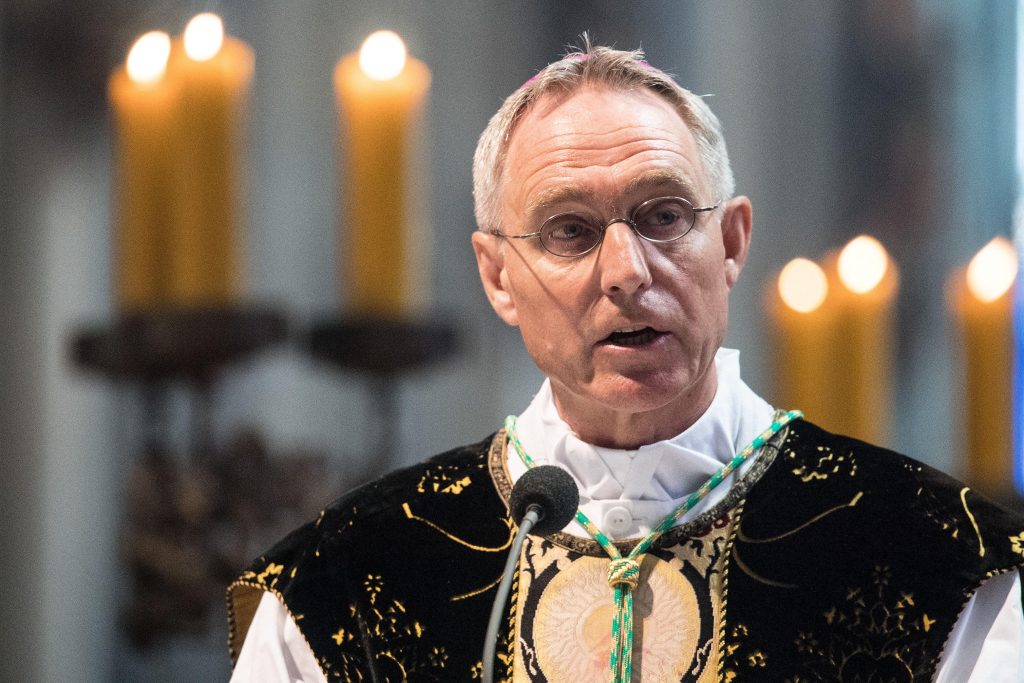
Archbishop Georg Gänswein has said he believes “now is the kairos” to lift the restrictions imposed by Traditionis Custodes. Speaking in an interview with Il Giornale, Pope Benedict XVI’s former personal secretary also reflected on Benedict’s hopes for the older Roman Rite and recalled the pain he witnessed after the 2021 motu proprio Nineteen years after Pope Benedict XVI issued Summorum Pontificum , Archbishop Georg Gänswein, the late pontiff’s longtime personal secretary, expressed hope that the restrictions imposed under Traditionis Custodes could eventually be lifted. Speaking to the Italian newspaper Il Giornale , Vatican correspondent Nico Spuntoni, on the anniversary of Benedict’s 7 July 2007 apostolic letter, Archbishop Gänswein reflected on the origins of Summorum Pontificum , the former Pope’s intentions in liberalising the celebration of the pre-conciliar Roman Rite, and Benedict’s reaction after his successor, Pope Francis, substantially reversed that policy in 2021. Asked about recent calls for the removal of restrictions on the Traditional Latin Mass, Archbishop Gänswein replied: “I read it with interest. I also hope for a decision along these lines.” According to Archbishop Gänswein, Benedict’s principal objective was not only to expand opportunities for celebrating the older liturgy but to restore its place within the life of the Church. “To give full rights to a rite that had never been abolished,” the Archbishop said. “His goal was to restore its full citizenship in the Church and restore peace to the liturgy.” The former papal secretary recalled that Benedict remained undeterred despite opposition from sections of the episcopate. “He was used to receiving criticism,” Archbishop Gänswein said. “But when he was convinced that something was right, he continued towards his goal.” Although Summorum Pontificum was viewed as an important step in Benedict’s efforts to heal divisions with the Society of St Pius X, Archbishop Gänswein suggested that reconciliation with the traditionalist fraternity was not its primary purpose. Archbishop Gänswein said the motu proprio was conceived principally with the Church’s internal liturgical life in mind. Benedict had become convinced, following his experience overseeing matters relating to the implementation of Ecclesia Dei , that changes were needed in the way the older liturgy was regulated. Particular emphasis was placed on the attraction of the older liturgy among younger Catholics. Archbishop Gänswein said Benedict had always believed that a form of worship celebrated for centuries would continue to draw new generations of the faithful. “He had great faith in young people,” he said, adding that Benedict was pleased by the growth of communities established under the former Ecclesia Dei commission, which provided a canonical home for Catholics attached to the older liturgy while remaining fully within the structures of the Church. Asked whether Summorum Pontificum had succeeded, Archbishop Gänswein answered unequivocally: “Yes, it was about to bear fruit.” He pointed to the annual Paris-to-Chartres pilgrimage as evidence of growing interest among younger Catholics, arguing that many participants were drawn by what Gänswein described as “the beauty of the liturgy”. Archbishop Gänswein also rejected the suggestion that Catholics devoted to the Traditional Latin Mass are necessarily opposed to the reforms of the Second Vatican Council. “These young people are nourished by the beauty of the liturgy; they are not at all opposed to the Second Vatican Council,” the Archbishop said. “It is not true that those with a traditional liturgical sensibility who participate in Tridentine Masses are anti-conciliar; those who say so are motivated solely by ideology.” Perhaps the most damning part of the interview concerned Benedict XVI’s response after Pope Francis promulgated Traditionis Custodes , the motu proprio that substantially restricted the provisions of Summorum Pontificum and returned greater authority over celebrations of the older rite to diocesan bishops while introducing significant new limitations. Archbishop Gänswein said he personally read the text of Traditionis Custodes to the Pope Emeritus. “When I read Traditionis Custodes to him,” he recalled, “I saw that there was pain in his heart. That was my impression.” Looking to the future, he added: “Now I believe it is the kairos [the right moment] to remove those prohibitions and overcome the incident represented by that text.” The interview by Nico Spuntoni is in line with previous reporting by AdVaticanum, which cited sources close to both Archbishop Gänswein and Pope Emeritus Benedict XVI as saying that the promulgation of Traditionis Custodes “caused [Benedict] pain”. According to those sources, Benedict never expressed those feelings publicly, remaining faithful to the promise of silence he made following his resignation in 2013. The same report also revisited Archbishop Gänswein’s own position following Benedict’s retirement. Once serving as Prefect of the Papal Household while continuing as Benedict’s personal secretary, Archbishop Gänswein later left the Vatican before eventually being appointed Apostolic Nuncio to the Baltic states. As reported by AdVaticanum, Pope Emeritus Benedict XVI made both formal and informal requests for Archbishop Gänswein to remain in the Vatican after his own retirement. One source claimed, “Sometimes Benedict asked favours of Francis to keep Gänswein in the Vatican and not remove him, both formally and informally.” The report said those requests went unanswered.
Jul. 8, 2026
EXCLUSIVE: Cardinal Bagnasco reflects on the Vetus Ordo, vocations and family life
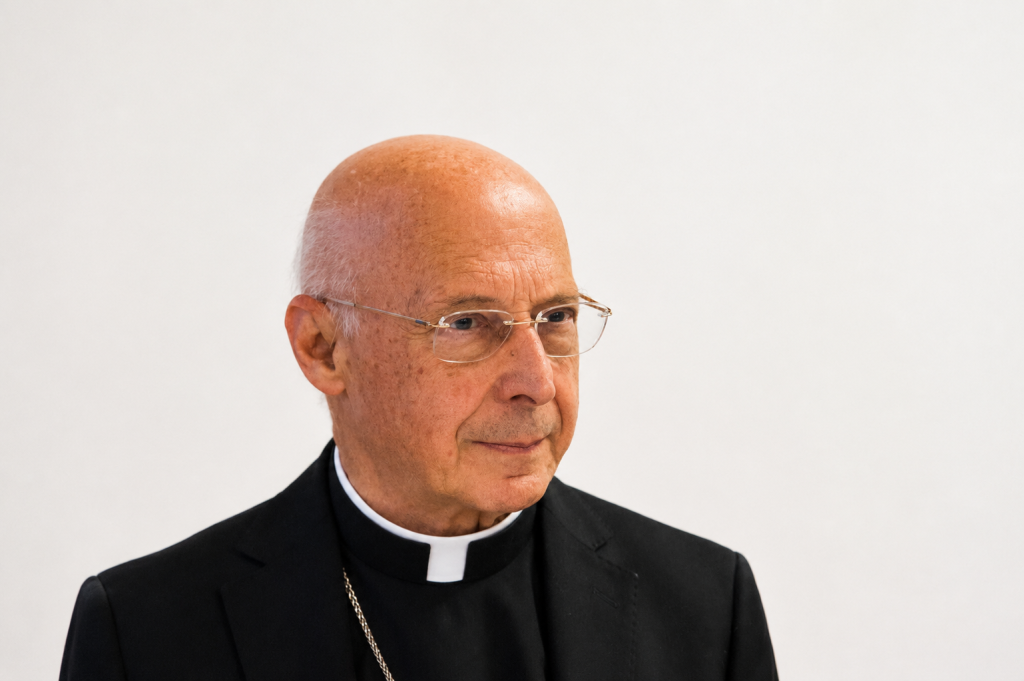
AdVaticanum recently sat down with Cardinal Angelo Bagnasco, Archbishop Emeritus of Genoa. In this short but exclusive interview, the Italian prelate reflects on his years of service as Archbishop of Genoa and on the deeply pastoral approach he developed over decades as a parish priest, seminary formator and diocesan leader. He discusses how best to […] AdVaticanum recently sat down with Cardinal Angelo Bagnasco, Archbishop Emeritus of Genoa. In this short but exclusive interview, the Italian prelate reflects on his years of service as Archbishop of Genoa and on the deeply pastoral approach he developed over decades as a parish priest, seminary formator and diocesan leader. He discusses how best to accompany young people in their search for meaning, the importance of beauty and depth in the Church’s liturgical and sacramental life, the place of both the Ordinary and Extraordinary Forms of the Roman Rite, the challenges facing family life, and the conditions needed to foster priestly vocations in today’s Europe. Cardinal Angelo Bagnasco was ordained a priest in 1966. After serving as a curate working with young people and university students, he held several key diocesan roles, including Director of the Catechetical Office and Director of the Liturgical Office of Genoa. Appointed Archbishop of Genoa in 2006, he led the archdiocese for fourteen years until his retirement in May 2020. Created a cardinal in 2007, he has participated in numerous consistories and continues to offer his wisdom and pastoral experience to the Church as a respected elder statesman. AV: Your Eminence, since your retirement from the office of Archbishop of Genoa in May 2020, how have these years of service as Archbishop Emeritus unfolded for you personally, and in what ways have you continued to accompany the Catholic faithful spiritually? +AB: Prayer has no age. With time it is refined and expands. Sixty years of priesthood, of which 29 have been spent in the episcopate, and the responsibilities I have received — as you recalled — have allowed me to meet people, know situations, receive confidences about their lives, and witness the humble and widespread goodness that is much greater and stronger than noisy and ostentatious evil. Every priest is a sign of Jesus beside souls: he brings the light of the Gospel, the strength of the Sacraments, and the motherhood of the Church. The joys and sorrows, the hopes and concerns of humanity are his home, and in the home of his prayer he brings the world. This is the substance: some forms may change, but the substance does not pass away. AV: Throughout your years of priestly and episcopal ministry, you have been known for your emphasis on pastoral closeness. What does authentic pastoral ministry require of a bishop or priest, and how can shepherds remain close to their people while always leading them to Christ? +AB: One must be among the people, not to blend in and lose one’s identity, but as a shepherd who knows his flock and is known by them. There is a continuous and serene tension: that souls do not stop at us, but through us encounter Him, Christ the Lord. Sometimes it is easier to give conferences on pastoral care than to actually do pastoral care — that is, to be with people as shepherds. Initiatives can be thought out and must be proposed, but without prayer and closeness one gets nowhere, and souls remain lost. AV: Your Eminence, from your very first years as a curate engaged with university students, scouts, and high school students, and later through your leadership of the diocesan catechetical office and the Liturgical Apostolate, you have always placed great emphasis on the formation of new generations. What pastoral efforts have you found most effective in drawing young people closer to God, and how can the Church today respond generously to their search for meaning? +AB: God is truth and love, and the priest must be a sign of both for everyone, particularly for the youngest, who are still at the beginning of life. Love is expressed in a gaze of sympathy and esteem, in closeness and availability, and in patient trust. It is not a matter of inventing new languages or initiatives, but of touching the paths of the heart. In a society of solitude, it is necessary that each person feels seen and recognised as precious. But God is also truth, and every person needs truth; they want to know who they are and what meaning their life has. The priest must draw out from every soul the deep questions, often submerged by the distractions that assail it. These questions open up the religious sense, which is God’s signature in every soul. Here begins, in one way or another, the journey of the spiritual life — that is, the living relationship with Christ, the true and complete answer to the heart of every young person. AV: Your Eminence, for several years you were Director of the Liturgical Office of Genoa and have always shown deep pastoral attention to the celebration of the sacred rites. Many Catholics, especially younger ones, show a strong attachment to the Extraordinary Form of the Roman Rite ( Vetus Ordo ) and find in it a profound source of spiritual nourishment, reverence, and continuity with the Church’s tradition. In your view, how can the Church today best welcome and integrate these legitimate aspirations, so that the liturgy — both in the Ordinary Form and the Extraordinary Form — may truly become a source of unity rather than division? +AB: The need for spirituality is widespread in our time, marked by secularism — living as if God did not exist. The more the prevailing culture denies God, the more He is present in the human heart. Indifference, sooner or later, turns into a need, and this becomes the presence of a “beyond” that has revealed itself in Jesus. In the Catholic Church there are many rites: in Milan, for example, there is the Ambrosian Rite. The document of Benedict XVI, Summorum Pontificum , does not create a new liturgical rite, but recognises, within the one Roman Rite, an ordinary form and an extraordinary form. The latter is linked to certain conditions. The unity of faith is not in question, but rather legitimate personal sensibilities. If, in this area, differences do not become absolutes, banners, or parties, then why not? The good of souls is the mission of the Church. AV: Your Eminence, the family has long been recognised as the first school of faith and the foundation of Christian life, yet today it faces numerous cultural and social challenges. In your opinion, how can the Church best support and strengthen family life, while also helping parents and Catholic communities to transmit the faith effectively to new generations? In particular, what role should Catholic education play, both within the family and in parish life, in forming children in a deep and living spirituality? +AB: Societies shaped by the prevailing culture want the family to become ever more fluid. Common sense recognises the family for what it is: a man and a woman and, if they are blessed with them, children. It is a stable and permanent union, consecrated for believers by the sacrament of marriage. As Cicero wrote, it is “the first form of society.” It is the foundation of society, the natural home of life, the primary educator of children, and a school of virtue and relationships. It guarantees the future. For this reason, the State must commit itself to supporting it economically and defending it culturally. It is therefore an incomparable and indispensable institution. Today, instead, there is a systematic desire to expand and dilute its meaning, as with every point of reference. The goal is to leave the younger generations confused in order to manipulate them for the sake of power and profit. Nihilism preaches the emptiness of the soul, and this emptiness has an unbearable weight: it creates every form of escape, dependency, and violence, and fuels consumerism. The Christian community must pray and emerge from the corner of irrelevance. It must help people become aware of what is being sown and of the deceptions built on appearance and emptiness. To speak the truth with clarity is the first act of love towards one’s neighbour, whatever their age. It must bear witness through its life and through the courage of its voice. I see in Europe a growing expectation. It is the path towards Christ, who is the way, the truth, and the life. AV: Finally, Your Eminence, despite the spiritual challenges affecting Italy and Western Europe, we are also witnessing encouraging signs in the growing number of young men, often from a new generation of Catholics, who are discerning a vocation to the priesthood and entering seminaries with great enthusiasm. What spiritual conditions do you consider most effective today for attracting and forming these young vocations? In your experience, how can the Church encourage more young people to embrace the priesthood through a profound encounter with the richness of the Catholic tradition? +AB: Jesus is the one who gives the vocation to the priesthood; the Church has the task of recognising it and forming the candidates. Both in Italy and across Europe I see encouraging signs of vocations: God continues to call. We have become somewhat deaf, lacking silence and reflection on what truly matters: the will of the Lord, His faithful closeness, and His voice. We must create and offer times and places of prayer and silence — experiences that I see attracting many young people. We adults must trust them and look upon them with sympathy, without flattering them. They seek the lofty truth of life, of faith, and of the Church. Mediocrity does not fascinate them. Many times they have told me: “To stake our lives, we want a true, certain, and lofty goal.” Not only youth ministry but also places of formation, beginning with parents, must reflect on these words.
Jul. 8, 2026
Cardinal Müller contradicts Cardinal Fernández on validity of SSPX confessions
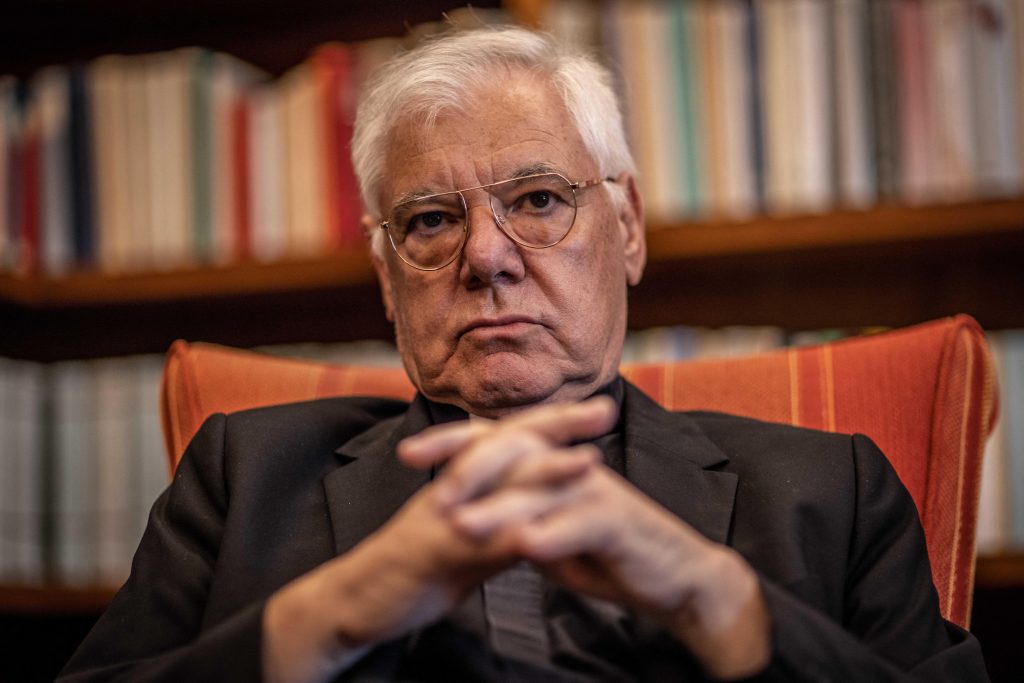
Cardinal Gerhard Müller appears to have contradicted an explanatory note issued by Cardinal Víctor Manuel Fernández on the canonical status of the sacraments administered by the Priestly Society of Saint Pius X. In an interview with K-TV on 6 July, Cardinal Müller was asked whether confessions heard by priests of the Society of Saint Pius […] Cardinal Gerhard Müller appears to have contradicted an explanatory note issued by Cardinal Víctor Manuel Fernández on the canonical status of the sacraments administered by the Priestly Society of Saint Pius X. In an interview with K-TV on 6 July, Cardinal Müller was asked whether confessions heard by priests of the Society of Saint Pius X were valid or invalid. His response differed from the position set out in Cardinal Fernández’s explanatory note, published on 2 July. “The confessions are valid, but illicit,” Cardinal Müller said. “The power to forgive or retain sins is conferred through the sacrament of Holy Orders. Its exercise can only be restricted by the bishop or the Pope, as provided by canon law.” His remarks stand in contrast to the explanatory note issued by Cardinal Fernández, which stated in its third point: “Finally, the holy People of God are hereby warned that the sacred ministers of the Priestly Fraternity of St. Pius X administer the sacraments unlawfully and that the sacrament of penance administered by them and the marriages they officiate are invalid.” The suggestion that faculties for the sacrament of confession and the witnessing of marriages could be removed by means of an explanatory note has led some canonists to question the legal nature of the document. Fr Gerald Murray, a canon lawyer and consultant for EWTN, speaking on Raymond Arroyo’s show, argued that the faculties granted by Pope Francis for hearing confessions and witnessing marriages in SSPX chapels had not been validly withdrawn. As a result, he maintained that those sacraments continue to be administered validly. According to Fr Murray, the Church’s legal order requires precision when imposing canonical penalties. Fr Murray argued that penal laws, especially those concerning the grave offence of schism and the penalty of excommunication, must clearly identify both the offence committed and the doctrine allegedly denied. Without such clarity, he suggested, a canonical penalty cannot be presumed. At the same time, Fr Murray maintained that the Society’s bishops remain under excommunication. Aside from the question of confession, Cardinal Müller’s interview also addressed the relationship between the SSPX and the Catholic Church, and questions on the liturgy, ecclesial unity and the legacy of Pope Benedict XVI’s efforts at reconciliation. Cardinal Müller acknowledged that the implementation of the post-conciliar liturgical reforms had often been marred by serious shortcomings. “The implementation of the liturgical reform was marked by many abuses because many failed to grasp the spirit of the renewed liturgy and neglected its essential elements: the worship of God, the communication of salvation, and reverence before God,” the former Prefect of the Dicastery for the Doctrine of the Faith said. The German cardinal also rejected the suggestion that the Traditional Latin Mass had been abolished, reaffirming Summorum Pontificum and rejecting the viewpoint held by Cardinal Roche: “The so-called old rite is not forbidden. Rather, it is permitted to a certain extent and under certain conditions, and it is, of course, valid.” The cardinal also pointed to Pope Benedict XVI’s decision to allow broader use of the older liturgy, describing it as a prudent attempt to overcome longstanding divisions. “Pope Benedict XVI made the wise decision that the same Latin liturgy could be celebrated in both its ordinary and extraordinary forms,” Cardinal Müller said, adding that “the faithful always have the opportunity to attend the Holy Mass celebrated according to the older form.” Cardinal Müller also recognised that some Catholics are drawn towards the Society because they believe it safeguards Catholic doctrine and traditional liturgical practice. “Many people may have sympathies for the Priestly Fraternity of Saint Pius X because they believe that the Catholic faith and the liturgy are being preserved there against many of the abuses found in modernist circles. But that is not a justification,” he said. While acknowledging those concerns, Müller insisted that ecclesial communion ultimately depends upon union with the Roman Pontiff rather than agreement over liturgical preferences. “There may be some errors in the Church, but there is no Catholic unity apart from the Pope,” he said. He likewise defended the legitimacy of Pope Leo XIV, warning against questioning the authority of the reigning pontiff. “One cannot remedy an abuse by using false means. That Pope Leo exists and is the true, legitimate Pope is something no one can really call into question without calling his own Catholic faith into question.” His comments also revisited Pope Benedict XVI’s efforts to restore full communion with the Society after decades of strained relations. His Eminence said: “Benedict XVI was very generous and hoped that this would remove the deadlock and lead to full reconciliation.” Cardinal Müller added, while emphasising that the enduring guarantees of the Church’s unity belong not to any individual priestly fraternity but to the bishops in communion with the Pope: “Christ did not promise the FSSPX the Church’s indestructibility, and infallibility. These belong to the College of Bishops with the Pope at its head.”
Jul. 8, 2026
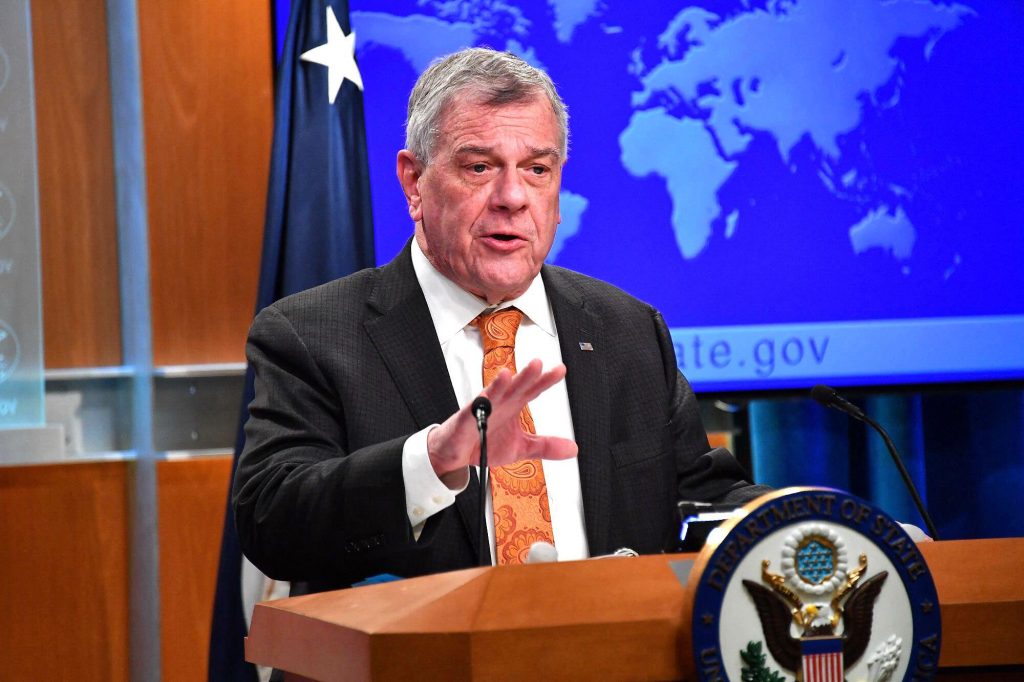
US calls for immediate release of detained Nicaraguan bishop
The United States has called for the immediate release of Bishop Juan Abelardo Mata Guevara after the 80-year-old Nicaraguan prelate was detained by the country’s authorities. The US State Department condemned the detention as arbitrary and accused the Murillo-Ortega government of continuing its persecution of religious leaders The United States has called for the immediate release of Bishop Juan Abelardo Mata Guevara after the 80-year-old Nicaraguan prelate was detained by the country’s authorities. The US State Department’s Bureau of Western Hemisphere Affairs condemned the bishop’s detention, describing it as arbitrary and urging the Nicaraguan authorities to free him without delay. In a statement, the bureau said: “We demand the immediate and unconditional release of Nicaraguan Bishop Abelardo Mata who has been arbitrarily detained by the Murillo-Ortega dictatorship.” It added that “80-year-old Bishop Mata poses no threat to the regime and his health is fragile”, before further condemning what it described as the government’s “continued cruel religious persecution and repression”. The statement concluded: “The attacks on religious freedom must stop.” Bishop Mata, the retired Bishop of Estelí, was detained on 29 June after reportedly celebrating Mass at La Cruz del Calvario Church, where he criticised the treatment of Christian leaders who have been imprisoned, exiled or subjected to house arrest in Nicaragua. According to the United Kingdom-based religious freedom organisation Christian Solidarity Worldwide (CSW), the bishop was taken into custody by the National Police during the afternoon and transferred to a maximum-security prison in Managua, approximately 130 miles from Estelí. He was released later that evening but detained again the following morning before being freed at around 4pm. Although no formal charges have been reported, CSW said a police presence has remained outside Bishop Mata’s residence since his release. Sources cited by the organisation believe remarks made during the bishop’s homily may have been reported to the authorities by individuals attending the Mass who were aligned with the government. The detentions extended beyond the bishop himself. Three other Catholic leaders were also reportedly held by police on 30 June for around 12 hours. They included Deacon Wilfred Aráuz Rodríguez, Father Francisco Morales of La Cruz del Calvario Church, and Father Rigoberto Delgadillo Sánchez of Santuario Divino Niño Parish. CSW reported that Deacon Aráuz Rodríguez was arrested by the local police chief while accompanied by masked men, underscoring concerns among religious freedom advocates about the increasingly intimidating methods allegedly employed against members of the Church. The arrests prompted condemnation from Bishop Silvio José Báez, the exiled auxiliary bishop of Managua, who denounced the treatment of his fellow bishop in a message posted on X. “I deeply condemn the aggression committed by the regime’s police against my brother Mons. Juan Abelardo Mata, emeritus bishop of Estelí,” Bishop Báez wrote. He added: “These cowardly actions only demonstrate the weakness and irrationality of a criminal dictatorship.” The detention of Bishop Mata comes amid what Christian Solidarity Worldwide says is an escalating campaign against Christian communities in Nicaragua. The organisation reported that it documented 12 cases of arbitrary detention involving Protestant and Catholic leaders during June alone. Earlier this year, CSW also published figures recording 309 separate violations of religious freedom against Christians during 2025, suggesting that restrictions affecting churches have continued despite repeated international criticism. A member of the Salesians of Don Bosco, Bishop Mata was born in Managua in June 1946 and entered the congregation after completing studies in El Salvador. Following theological formation in Guatemala, he was ordained to the priesthood in 1976 before undertaking biblical studies at the Pontifical Biblical Institute in Rome. In 1988, he was appointed Bishop of Estelí, a post he held for more than three decades before retiring in 2021 after reaching the customary retirement age established by canon law. His prominence increased significantly during Nicaragua’s political crisis in 2018, when he served as a mediator during the nationwide protests that erupted against President Daniel Ortega’s government. As secretary general of the Nicaraguan Episcopal Conference, he publicly supported dialogue and repeatedly appealed for peace while also defending the rights of those protesting. The Sandinista government accused Church leaders, including Bishop Mata, of assisting opposition groups and participating in what it described as an attempted coup. Relations between the government and much of the Catholic hierarchy deteriorated sharply during that period. That same year, the vehicle carrying Bishop Mata came under gunfire from paramilitary forces, highlighting the risks faced by clergy who had become vocal critics of the authorities during the unrest. Since then, numerous bishops, priests and religious communities have faced increasing pressure, with reports of arrests, exile, surveillance and restrictions on pastoral activity becoming recurring features of the country’s religious landscape.
Jul. 8, 2026
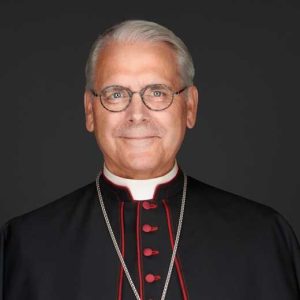
Archbishop Coakley calls for simpler presentation of synodality
The president of the United States Conference of Catholic Bishops has called for a simpler presentation of synodality. Speaking after a Vatican meeting with Pope Leo XIV, Archbishop Paul Coakley said synodality must be explained in a way that is readily understood by Catholics in the pews The president of the United States Conference of Catholic Bishops has called for a simpler presentation of synodality, warning that unfamiliar language risks distancing ordinary Catholics from the process. Archbishop Paul Coakley of Oklahoma City made the appeal while speaking to the Catholic News Service following a meeting at the Vatican with Pope Leo XIV, where participants reviewed progress in implementing the final document of the Synod on Synodality and discussed the challenges facing its reception across the world. Although bishops reported encouraging signs that synodal practices are becoming more firmly established in North America, Archbishop Coakley said one of the principal obstacles remains explaining synodality in a way that is readily understood by Catholics in the pews. The president warned that technical language risks limiting participation rather than broadening it. “Synodality is often presented and perceived by many as a cumbersome and complicated process with language and terminology that is unfamiliar to most Catholics,” the archbishop said. “Unless we can simplify how synodality is presented, it risks becoming the exclusive domain of specialists or ‘the initiated’ rather than a way of simply living our faith together.” The meeting, held in Rome from 23 to 25 June, brought together representatives from Latin America, Africa, Asia, Europe, Oceania, the Middle East and North America, together with the coordinators of the continental synodal teams. Part of the discussions centred on how local Churches have been putting into practice the Synod on Synodality’s final document, issued in October 2024, as preparations continue for the next phase of the worldwide process. The North American delegation included Archbishop Coakley, Auxiliary Bishop Juan Miguel Betancourt of Hartford, who serves as the United States bishops’ liaison for the synod, Bishop Pierre Goudreault, president of the Canadian Conference of Catholic Bishops, and Julia McStravog, senior adviser to the United States synod leadership team. Speaking after the meeting, Archbishop Coakley said a clear conclusion from the discussions was the need for better formation in synodality, not only in understanding its methods but also its spiritual foundations. Rather than creating entirely new structures, the archbishop suggested that the Church should continue developing the consultative bodies that already exist in parish and diocesan life. He noted that the Church in the United States has long encouraged lay participation through parish pastoral councils, diocesan councils, finance committees and advisory bodies. The task now, Coakley said, is to deepen discernment within those existing structures and to foster “an appropriate spirituality based on discernment and rooted in prayer”. Bishop Betancourt said synod leaders from across the United States continue to meet each month to exchange experiences and priorities, with those conversations strengthening cooperation between dioceses and helping local Churches adopt the synodal method of “conversations in the Spirit”. According to the bishop, the process has already influenced pastoral planning in several dioceses, informing decisions on parish consolidation, Mass schedules, the allocation of clergy and the distribution of diocesan resources. The Bishop of Hartford also highlighted the cultural diversity of the Catholic Church in the United States, describing it as an opportunity to broaden participation, encourage co-responsibility and strengthen missionary outreach. At the same time, the bishop acknowledged that two significant challenges remain: the unfamiliar language surrounding synodality and continuing reluctance among some Catholics to become involved in the process. Wider participation by the lay faithful, particularly those who are distant from the life of the Church, is essential if synodality is to become embedded, he said, because every baptised person shares responsibility for the Church’s mission. The bishop said: “Increasing participation by the lay faithful across the global Church, especially among the marginalized or distant, is essential to making the Church’s work more synodal.” Addressing concerns that synodality represents a departure from Catholic tradition, Bishop Betancourt rejected that interpretation. Instead, he described it as a recovery of the Church’s own tradition of communal discernment ordered towards evangelisation rather than institutional change. “Synodality is not parting from Catholic tradition but a deeper return to it,” he said. “It’s about discerning God’s will, not about personal preferences or agendas.” Bishop Goudreault also revealed that, after eight years as bishop, he had invited his diocesan team to evaluate his own ministry, describing accountability as a natural consequence of synodality. The exercise, he said, had allowed him to recognise both strengths and areas requiring improvement. The discussions in Rome also offered further insight into Pope Leo XIV’s priorities as he continues the work begun under Pope Francis. Archbishop Coakley said the Pope “clearly wants to build on the synodal vision outlined and presented by Pope Francis” while developing it in his own way. Bishop Betancourt said Pope Leo has consistently presented synodality as a means of strengthening communion throughout the Church rather than altering Catholic teaching. The Pope, he said, has “repeatedly made clear that synodality is not about changing doctrine or undermining the hierarchical communion of the Church”. Instead, it provides “a foundation for evangelisation, a shared process of listening, discerning, and building relationships”. The meeting came only days after the Vatican published the full programme for an October gathering marking the tenth anniversary of Amoris Laetitia . A preparatory framework issued jointly by the Dicastery for the Laity, Family and Life and the General Secretariat of the Synod invites Church leaders to reflect on five principal themes as they consider how the Gospel can be proclaimed more effectively to families. Attention will now turn to the next stages of the synodal process. Diocesan and eparchial evaluation assemblies are scheduled during the first half of 2027, followed by national and regional gatherings later that year. Continental assemblies will meet in early 2028 before an ecclesial assembly convenes in Rome with Pope Leo XIV in October 2028.
Jul. 7, 2026