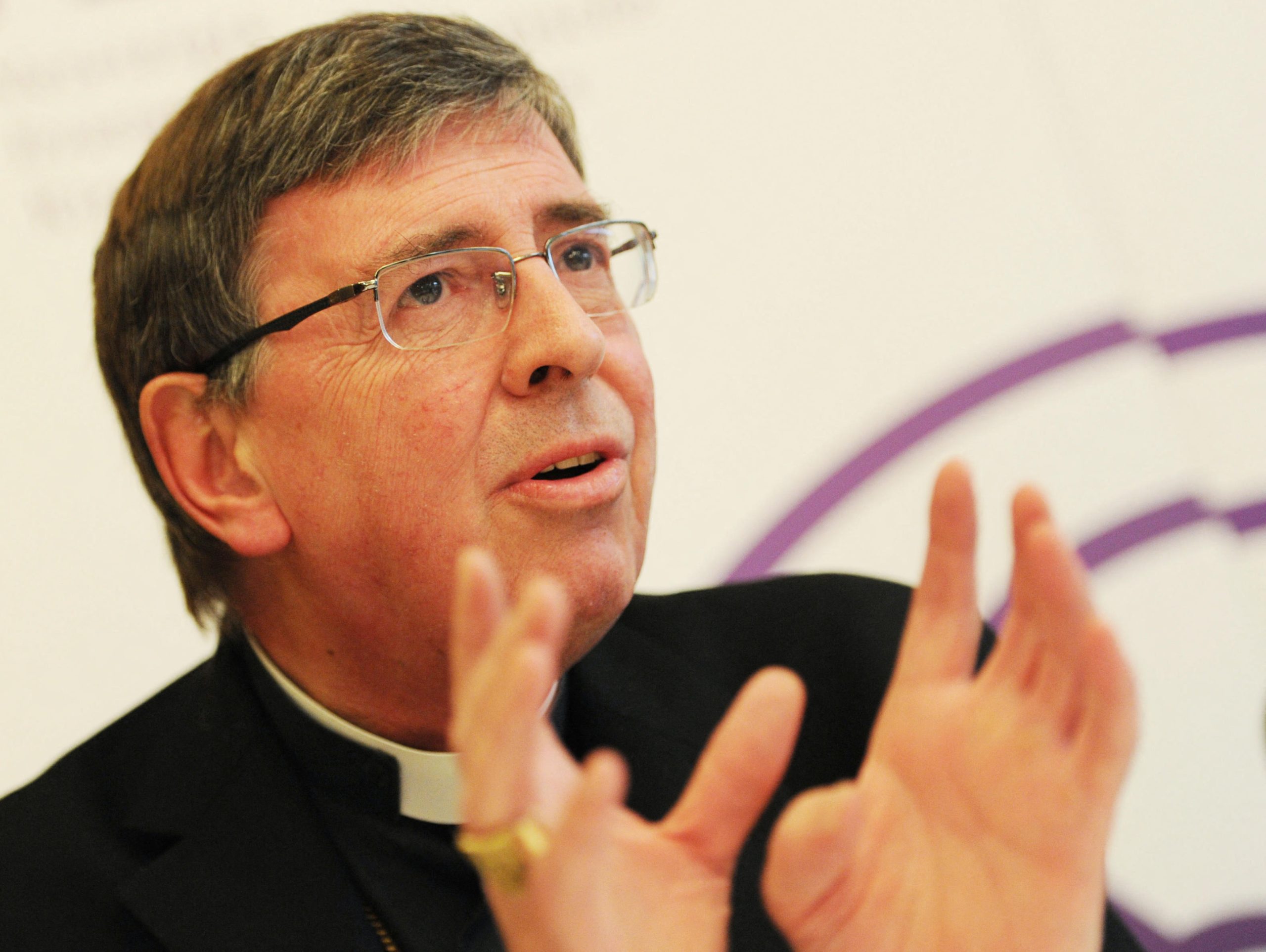
Cardinal Kurt Koch has expressed hope that dialogue between the Holy See and the Society of Saint Pius X (SSPX) can eventually resume despite the Society’s recent episcopal consecrations.
Speaking on the Communion podcast, the Swiss cardinal, Prefect of the Dicastery for Promoting Christian Unity, described excommunication as a “medicinal penalty” intended to encourage repentance rather than permanently sever communion with the Church. He insisted that the penalties incurred should not be viewed as the final chapter in relations between Rome and the traditionalist movement.
“An excommunication is a medicinal penalty. It is not intended to be definitive; rather, it is meant to invite repentance so that one may find the way back,” Cardinal Koch said.
Although the Prefect acknowledged that prospects for renewed discussions appear remote in the immediate aftermath of the consecrations, he nevertheless expressed confidence that reconciliation remains possible over the longer term.
“I hope it will be possible in the future to resume new talks, so that they may find their way back into the Catholic Church,” he said, before adding: “At the moment I do not see that happening, but it would also be far too early.”
Cardinal Koch suggested that patience would be required, pointing to previous ecclesiastical disputes that took years before meaningful conversations could begin again.
Drawing a historical comparison, he noted that meaningful dialogue with the Old Catholics only became possible after several decades. He suggested a similar period of reflection may now be necessary before relations with the Society can progress.
The cardinal also questioned whether it is yet accurate to describe the current situation as a formal schism.
“I am not entirely convinced that one can already speak of a schism,” he said.
Referring to the illicit episcopal consecrations carried out by Archbishop Marcel Lefebvre in 1988, Koch observed that Pope John Paul II had deliberately used the expression “schismatic act” rather than declaring that a completed schism existed.
“Even in 1988, Pope John Paul II spoke of a ‘schismatic act.’ That is not necessarily the same thing, because a schismatic act concerns those who carried out the act and those who submitted themselves to it. That is not yet schism in the proper sense.”
The distinction suggests that, in Koch’s view, the canonical consequences of the recent consecrations should not automatically be understood as creating a separate ecclesial body.
Cardinal Koch also rejected suggestions that the Society has already established a fully fledged parallel Church. While acknowledging that the Society possesses bishops, he argued that it lacks the ordinary hierarchical structures that would normally characterise such a body.
According to Koch, the Society has consistently maintained bishops for the sacramental power of orders rather than granting them ordinary jurisdiction. The Prefect noted that the Society continues to be governed by a priest superior rather than by a diocesan-style episcopal hierarchy, making the description of a parallel Church difficult to sustain.
Earlier this year, when asked by this publication’s Vatican correspondent about dialogue with the SSPX, Cardinal Koch replied: “I am not involved in the dialogue with the SSPX. It is the responsibility of the Dicastery for the Doctrine of the Faith. Because of that I cannot be disponible for the meetings.”
Cardinal Koch devoted considerable attention to what he sees as the deeper theological issues that continue to divide Rome and the Society.
The Prefect argued that one of the central contradictions lies in the Society’s attitude towards papal authority. “This amounts to a form of self-authorisation for carrying out episcopal consecrations,” he said.
He continued, “…a self-contradiction: on the one hand, they invoke the authority of the Pope in the most beautiful terms, yet on the decisive issues they go their own way.”
Furthermore, Cardinal Koch argued that disagreement with particular papal decisions amounts to an incomplete acceptance of the post-conciliar papacy.
“To me, this gives the impression of an abstract recognition of the Petrine primacy rather than a concrete recognition of the present Pope and of all the Popes since the Second Vatican Council.”
Alongside his criticisms of the Society, however, Koch argued that recent events should also prompt self-examination within the wider Church.
“It would be good to take the present dispute with the Society of St. Pius X as an opportunity to beat our own breast and reflect on what needs to be corrected,” the Prefect said.
The prefect identified three areas where he believes misunderstandings or distortions have emerged in the decades following the Second Vatican Council.
The first concerns the continuing relationship between the traditional Roman liturgy and the post-conciliar form of the Roman Rite, which he described as an unresolved question.
Secondly, he criticised what he called ecclesiological pluralism within modern ecumenical thinking, arguing that some approaches wrongly treat all Churches and ecclesial communities as essentially equal, thereby obscuring the Catholic Church’s unique identity.
His third concern was religious pluralism, which he described as the widespread belief that all religions provide equally valid paths to God.
Koch maintained that these developments should not be confused with the authentic teaching of the Second Vatican Council itself. Instead, he suggested they represent later interpretations that have developed in the years since the Council.
Furthermore, Cardinal Koch appeared to acknowledge that some of the concerns long raised by the Society relate to genuine post-conciliar tendencies, even while insisting that these should not be attributed to the Council’s actual texts.
Despite the tensions created by the latest consecrations, Cardinal Koch believes that any return to formal discussions will require time, patience and, ultimately, the work of the Holy Spirit. As he put it, while the Church is responsible for what is possible, “the impossible is the realm of the Holy Spirit.”