

Latest
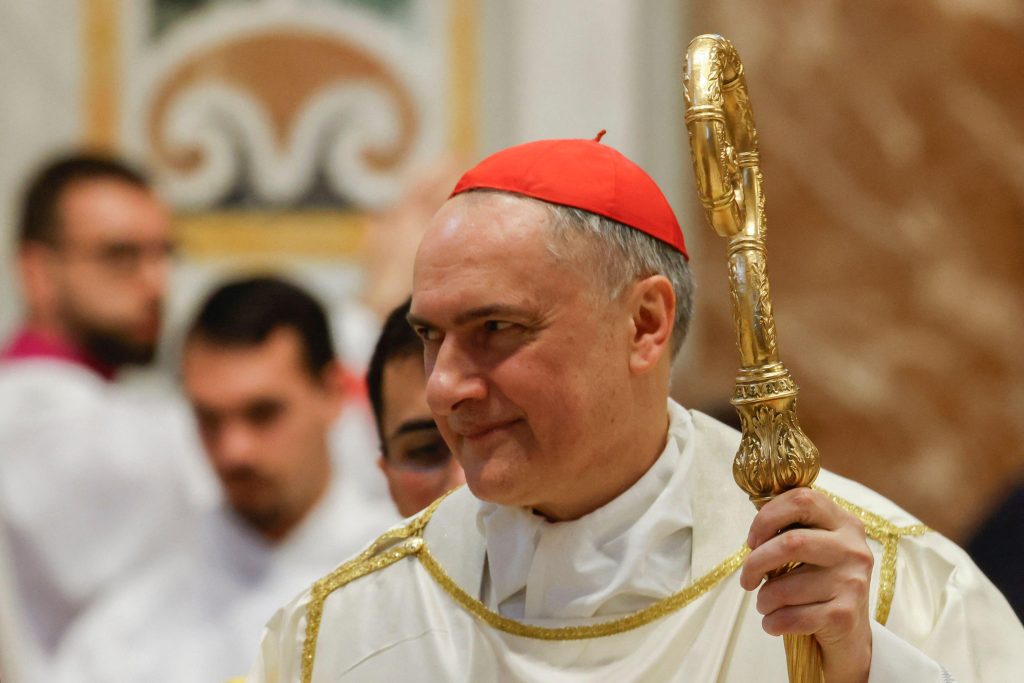
Exclusive: Why Cardinal Gambetti is expected to leave St Peter’s Basilica
EXCLUSIVE: AdVaticanum understands that Cardinal Mauro Gambetti is expected to leave St Peter’s Basilica later this summer. Our investigation examines the circumstances behind the expected move AdVaticanum can confirm that Cardinal Gambetti is expected to leave his position as Archpriest of St Peter’s Basilica later this summer. AdVaticanum sources in the Vatican have confirmed that he is expected to move to the Archdiocese of Chieti. While this will not come as a surprise to many Vatican watchers, as Archbishop Bruno Forte is already beyond the customary retirement age, the move is nonetheless notable. Although Chieti is a metropolitan archdiocese, it has not traditionally been a cardinalatial see and is relatively small. As such, the appointment could reasonably be interpreted as a demotion for Cardinal Gambetti. Sources close to Cardinal Gambetti say he feels burnt out after his time at St Peter’s and that a move away from Rome may suit him. They added: “He doesn’t like the spotlight.” AdVaticanum understands that when Pope Leo initially reconfirmed office holders, Gambetti’s appointment was extended for only six months. AdVaticanum also understands that Cardinal Gambetti’s standing within the Conventional Franciscan General Curia in Rome is no longer regarded as being as strong as it once was, a factor that could make a move away from the Vatican increasingly likely. However, there appears to be more to the story than meets the eye. It seems to be a classic case of Vatican politics, with three principal factors: a loss of confidence following the handling of St Peter’s Basilica, tensions with the canons of St Peter’s, and the initial confidence placed in Fr Enzo Fortunato. Since his appointment in 2021, Cardinal Mauro Gambetti has overseen St Peter’s Basilica during a series of high-profile security breaches and desecrations of its main altar, the Altar of the Confession beneath Bernini’s baldacchino above the tomb of St Peter. Several of these incidents attracted widespread attention and required penitential rites of reparation under canon law for serious profanations of sacred places. Cardinal Gambetti presided over these rites. On 1 June 2023, a Polish man approached the high altar near closing time, stripped naked except for socks and trainers, climbed onto the altar and displayed the words “Save children of Ukraine” written across his back. Security detained him without resistance before handing him over to the Italian authorities, who expelled him. Cardinal Gambetti led a penitential rite on 3 June involving prayers, the Creed, the blessing with holy water and the use of incense, describing the incident within the context of the “structure of sin” in the world. On 7 February 2025, a man, reported in some accounts to be Romanian and suffering from mental health problems, climbed onto the Altar of the Confession, threw six candelabra to the ground, damaging them, and began removing the altar cloth before security intervened. Reports differ as to whether a formal rite of reparation followed immediately. On 10 October 2025, another man climbed onto the Altar of the Confession in front of hundreds of tourists, undressed and either urinated on, or attempted to urinate on, the altar. Cardinal Gambetti presided over a penitential rite on 13 October, including a procession, the sprinkling of holy water, incense and prayers for forgiveness, attended by the Chapter of the Basilica. Additional concerns have included reported Eucharistic profanations, irreverence during Masses and other security failures, all of which have led to questions about oversight and vigilance among staff, including the Sampietrini. However, the issue that appears to have caused the greatest damage was the proposal to expand a small refreshment point on the basilica’s terrace into a larger bistro or catering area. The plans led to petitions signed by thousands of people and addressed to the Secretary of State. The petitions criticised what was regarded as the commercialisation of a sacred space and called for a canonical review of the basilica’s management. The Vatican maintained that the project was simply a modest expansion designed to serve pilgrims and tourists more effectively, offering pre-prepared food heated by microwave rather than a full restaurant, while also creating additional exhibition space on the terrace dedicated to the basilica’s history. Nevertheless, Cardinal Gambetti and the Fabric of St Peter came under sustained criticism in the Italian media over the project and his wider approach to managing the basilica. Ultimately, it was Cardinal Gambetti who bore the political cost. AdVaticanum also notes that questions were raised in some quarters about Cardinal Gambetti’s personal style and public image, which some believed fell short of the dignity expected of his office. A 2023 article published by MessainLatino questioned why Cardinal Gambetti would wear a “Jamaica shirt and vest” when, to quote MessainLatino , he should instead be “a man dressed in the sacred purple”. Beyond Cardinal Gambetti’s own leadership, his position was not helped by divisions within his own team, particularly with the canons of St Peter’s. To understand the present difficulties, it is necessary to understand the longstanding tensions between the two sides. Gambetti’s tenure has been marked by a programme of centralising reform. He brought several associates from his previous role as Custos of the Sacred Convent of Assisi into senior positions. These reforms included financial and operational changes affecting the Chapter of St Peter’s, the college of canons. The tensions appear to stem from structural reforms, including the transfer of financial oversight to the Fabric of St Peter, as well as differing visions for the role of the basilica. Cardinal Gambetti played a central role in reforming the Chapter of St Peter’s Basilica, the body responsible for the basilica’s liturgical life, pastoral ministry and certain historic administrative functions. These reforms, initiated under Pope Francis and later refined, sought to clarify responsibilities, reduce expenditure and improve efficiency. The Chapter of Canons dates back to at least the eleventh century, with origins traditionally traced to 1053 under Pope St Leo IX. Historically, it was responsible not only for prayer and liturgy but also for administering significant patrimony, including real estate and donations. Over time, these responsibilities increasingly overlapped with those of the Fabric of St Peter. The reforms began shortly after Gambetti’s appointment, when Pope Francis issued transitional norms on 28 August 2021, which came into force on 1 October that year while new statutes were being prepared. As Archpriest and President of the Fabric of St Peter, Gambetti oversaw their implementation. The definitive statutes and regulations were approved by Pope Francis through a chirograph dated 29 June 2024, the Solemnity of Saints Peter and Paul. Under the reforms, responsibility for the Treasury Museum and the sale of religious articles passed to the Fabric of St Peter. Employees previously working directly for the Chapter were also transferred to the Fabric. This centralised commercial and administrative responsibilities under Gambetti’s leadership. Canons and coadjutors now receive a single capitular stipend paid by the Fabric, broadly aligned with level VIII of the Roman Curia salary scale. This payment cannot be combined with salaries, pensions or commissions from other Vatican bodies. The reform reduced expenditure and addressed concerns over multiple sources of Vatican income. The Chapter nevertheless retained certain real estate and financial assets to continue its charitable work, including assisting priests and pilgrims in need. In 2025, Pope Leo XIV issued a motu proprio subjecting the Fabric of St Peter and related entities to the standard supervision of the Council for the Economy, abrogating certain previous provisions. This continued the trend towards greater transparency and accountability. The canons now focus principally on liturgical and pastoral ministry, while coadjutors assist in celebrations, pastoral work and duties assigned by the Archpriest and Chapter, with appointments made by the Pope. Existing canons and coadjutors who reach the age of 80 become honorary members. They are exempt from obligations and Chapter sessions, receive no capitular emolument, but retain their titles, vestments, participation in liturgical functions and the right to burial in the Chapter chapel. Those who remain inactive for more than a year, even if under the age of 80, may also be transferred to honorary status. Sources close to the canons told AdVaticanum that they believe the Chapter’s autonomy has been significantly reduced as Cardinal Gambetti has centralised authority, diminished the canons’ influence and funding, and prioritised what one source described as “liberal efficiency”. Some viewed the reforms as sidelining long-serving canons in favour of a more managerial style. While it cannot be denied that Cardinal Gambetti introduced significant changes to the Chapter of St Peter’s, reshaping long-established customs and altering the institution’s traditional character, one well-placed source’s observation that the cardinal had prioritised “liberal efficiency” over tradition encapsulates much of the disquiet that has emerged. Resistance to Cardinal Gambetti’s reforms has gradually coalesced within sections of the Chapter, with some canons becoming increasingly organised in their opposition. According to AdVaticanum’s sources, concerns have been raised with figures outside the Vatican over a series of issues, including matters that might otherwise have appeared relatively minor. One such matter, AdVaticanum can reveal, concerns the replacement of the Basilica’s long-standing metal chairs with transparent plastic chairs. According to sources familiar with the matter, several canons raised formal complaints, arguing that the traditional chairs formed part of the Basilica’s dignity and historic character. Cardinal Gambetti defended the decision to both the canons and the Fabbrica di San Pietro on practical grounds, maintaining that the previous chairs had contributed to damage to the basilica’s marble flooring and that the Fabric had been spending more than $1 million annually replacing worn marble slabs. Sources indicate that the replacement seating cost around $200,000. Nevertheless, the canons have maintained that the change came at the expense of an established aesthetic and liturgical tradition, viewing the original metal chairs as an integral part of the Basilica’s historic identity rather than simply functional furnishings. One defender of Cardinal Gambetti, who is a conservative and close to the matter, told AdVaticanum: “Some of the reality has been that the canons have really exaggerated things about Cardinal Gambetti. All of that mess, combined with the resentment of the canons, hasn’t done Gambetti any favours.” Another source said: “Cardinal Gambetti is more of an engineer than a politician, and he’s not good at managing the internal politics. Whereas all these canons are politicians.” Furthermore, AdVaticanum was told by multiple sources that Pope Francis did not like the bureaucracy of the Chapter of Canons and that his desire to sideline it served a deliberate purpose. Beyond these disputes, AdVaticanum understands that one of the principal sources of tension surrounding Cardinal Gambetti has been his early confidence in Fr Enzo Fortunato, whose prominence within the administration of St Peter’s Basilica proved unpopular with many of the canons and, according to sources, with a significant number within the Fabbrica di San Pietro. Formerly head of communications for the Basilica, Fr Fortunato has since relinquished that position and now serves as Special Project Manager for St Peter’s Basilica. Before moving to the Vatican, the Franciscan friar served at the Sacred Convent of Assisi during Cardinal Gambetti’s tenure as Custos, where the two developed a close working relationship. Sources told AdVaticanum that Cardinal Gambetti’s confidence in Fr Fortunato led to his appointment to a prominent role at St Peter’s. Many within St Peter’s questioned Fr Fortunato’s approach and his handling of major initiatives, including the organisation of World Children’s Day. While the Holy See has never attributed subsequent institutional changes to Fr Fortunato personally, Pope Leo XIV later dissolved the Pontifical Committee for World Children’s Day, transferring its responsibilities to the Dicastery for the Laity, Family and Life as part of a broader reorganisation. According to sources who spoke to AdVaticanum, “a substantial amount of money was wasted due to Fr Fortunato’s running of World Children’s Day.” The financial and organisational issues surrounding World Children’s Day (Giornata Mondiale dei Bambini) primarily concerned questions of fund management, transparency, partner organisations and administrative controls under the Pontifical Committee led by Fr Enzo Fortunato. Donations, sponsorships and funding for the event were reportedly channelled through external Italian associations, including Be Human, which was linked to partners such as the cooperative Auxilium, connected to figures including Angelo Chiorazzo. This arrangement raised questions about financial traceability and why funds for a Vatican initiative were channelled through non-Vatican entities. In one Report exchange, Fr Fortunato was asked about the arrangement and replied that it was the designated implementing body (“soggetto attuatore”), established earlier, with later adjustments including the creation of a dedicated account. One referenced balance from late 2025 reportedly showed approximately €1.2 million in income, around €580,000 in expenditure and approximately €650,000 in liquid assets remaining. After outstanding bills and suppliers had been paid, approximately €260,000 reportedly remained and was transferred into Vatican-managed accounts. As president of the committee, having been appointed by Pope Francis in late 2024, Fr Fortunato oversaw pastoral planning, organisation, invitations and accreditation. In interviews, he publicly deferred detailed accounting questions, saying: “This, ask accounting. I’m not good at it.” Beyond what is already publicly known, AdVaticanum understands that these issues contributed to a growing loss of confidence in Fr Enzo Fortunato. Sources told AdVaticanum that, as confidence in Cardinal Gambetti declined, Fr Fortunato sought to distance himself from the cardinal and, according to those sources, manoeuvred against him internally. Sources close to the situation also alleged that Fr Fortunato engaged in a number of activities that caused considerable frustration among Vatican staff. They said he frequently filmed within Vatican City, despite restrictions on such activity, including live-streaming Pope Francis during illness, and described him as frequently rude to employees. This proved significant because many of the canons closely associated Fr Fortunato with Cardinal Gambetti, further damaging the cardinal’s standing. It has not helped that Fr Fortunato has remained in a senior communications role connected with special projects at St Peter’s Basilica. AdVaticanum understands from multiple sources that Fr Fortunato is also expected to leave his post.
Jul. 19, 2026
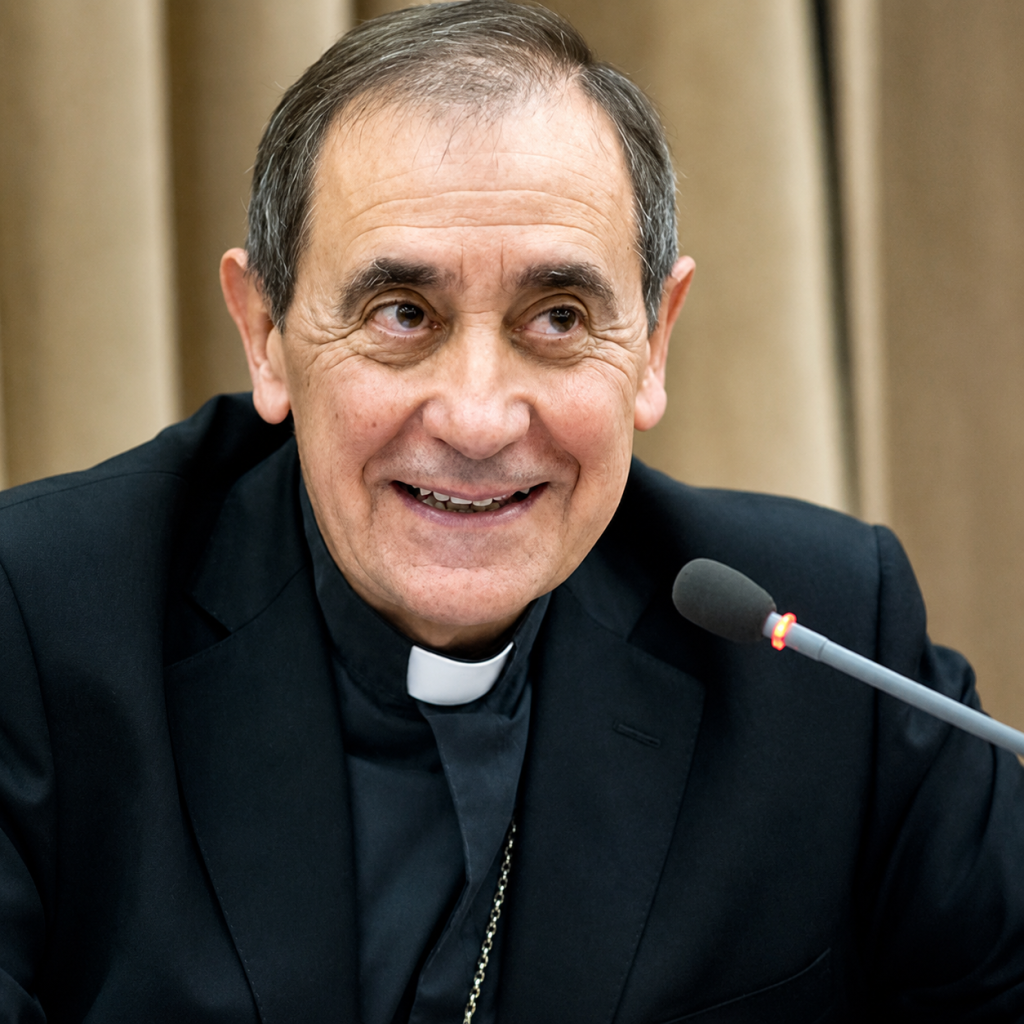
Canonist Archbishop Arrieta breaks down the Vatican’s response to the SSPX bishops
Archbishop Juan Ignacio Arrieta, former Secretary of the Pontifical Council for Legislative Texts and canon lawyer, speaks exclusively to AdVaticanum about the Vatican’s response to the SSPX’s latest episcopal consecrations, explaining what the recent decree means in practice for the Society, its clergy and the faithful, including the validity of SSPX confessions and marriages In an exclusive for AdVaticanum, Archbishop Arrieta, former Secretary of the Dicastery for Legislative Texts, has said that revoking the faculties necessary for the valid administration of the sacrament of Confession for the SSPX requires direct authorisation from the Pope himself. The veteran canon lawyer’s intervention follows the Holy See’s formal response to the Society’s latest illicit episcopal consecrations. The consecrations have led to the Dicastery for the Doctrine of the Faith to issue a decree declaring the bishops involved excommunicated and warning clergy and the faithful against adhering to what it describes as a “schismatic movement”. Arrieta told AdVaticanum that the recent consecrations are “a profound wound to the unity of the Church instituted by Christ”, echoing Pope Leo XIV’s warning issued shortly before the ceremony took place. He dismisses the Society’s longstanding justification that extraordinary circumstances created a “state of necessity” permitting episcopal consecrations without papal approval. “The argument of a ‘state of necessity’ invoked by them does not appear reasonable,” the Archbishop said, arguing that the consecration of bishops “is an extremely sensitive element of the very structure of the Church” and was carried out “in direct disobedience to the successor of the Apostle Peter”. For Archbishop Arrieta, the dispute extends beyond a single canonical offence. Arrieta told AdVaticanum that the latest consecrations reveal a deeper divergence in ecclesiology, saying they demonstrate that the Society’s reasoning “rests on a hierarchy of values and categories quite different from that taught by the Tradition of the Catholic Church”, making future doctrinal dialogue “highly problematic”. His assessment put the latest events within the historical pattern established in 1988, when Archbishop Marcel Lefebvre consecrated four bishops without papal mandate despite months of negotiations with Rome. Archbishop Arrieta recalled that Cardinal Édouard Gagnon had conducted a canonical visitation to the Society’s seminary at Écône while efforts were simultaneously underway to restore communion. He notes that the decisive negotiations were led by the then-Cardinal Joseph Ratzinger, Prefect of the Congregation for the Doctrine of the Faith, culminating in a protocol of agreement reached in early May 1988. According to Arrieta, Lefebvre subsequently withdrew from that agreement and refused to sign it, bringing the reconciliation effort to an end. Beyond the theological discussions, Archbishop Arrieta said Rome had also been examining possible canonical structures that could accommodate the Society within the framework of the 1983 Code of Canon Law should an agreement have been reached. When those negotiations collapsed, attention instead turned towards establishing what became the Pontifical Commission Ecclesia Dei to assist those wishing to remain attached to the older liturgy while staying in full communion with the Holy See. Archbishop Arrieta also pointed out to AdVaticanum that although the Holy See declared Lefebvre, Bishop Antônio de Castro Mayer and the four newly consecrated bishops excommunicated in 1988, it never questioned the validity of their episcopal ordinations, “not least because doing so would have reopened settled ecumenical questions”. The Archbishop also recalled that Pope John Paul II subsequently issued the motu proprio Ecclesia Dei, confirming that the consecrations constituted a schismatic act while establishing the Ecclesia Dei Commission. More than two decades later, in 2009, the Congregation for Bishops lifted the excommunications imposed upon the four surviving bishops consecrated by Archbishop Lefebvre, despite competence over such grave offences having already passed to the Congregation for the Doctrine of the Faith following Sacramentorum Sanctitatis Tutela. That transfer of competence, Arrieta argues, explains why the present case has been handled by the Dicastery for the Doctrine of the Faith rather than another Vatican department. Regarding the recent decree and explanatory note, Archbishop Arrieta first distinguishes carefully between the two documents recently published by the dicastery. The decree declaring the bishops excommunicated, he says, is what canon lawyers describe as “an act owed”. Rather than introducing a new penalty, it formally declares a juridical situation already established by canon law through the offence itself. “The two documents now issued by the Dicastery for the Doctrine of the Faith are of a different nature and scope. The decree now issued represents, on the part of the dicastery, what is usually called ‘an act owed’, in the sense that it was an act the dicastery was bound to perform; it is limited to carrying out what canon 1387 of the Code prescribes, declaring for general notice that the six bishops involved find themselves in a situation of excommunication.” Arrieta also notes that the co-consecrating bishop incurred the same automatic penalty, referring to a 2011 interpretative declaration issued by the Pontifical Council for Legislative Texts concerning illicit episcopal ordinations in China. In that case, questions existed over whether bishops had acted freely under pressure from the civil authorities, raising doubts about whether an automatic penalty had in fact been incurred. No such uncertainty exists in the present circumstances, he argues, making a formal decree necessary. He adds that the decree also contains a formal warning to clergy and the faithful against adherence to the schism. “In fact, unfortunately, even the co-consecrating bishop has incurred the automatic penal sanction of the aforementioned canon… In the present situation no such question arises, and so the dicastery had to issue a formal decree of excommunication… The current decree of the dicastery also contains a formal warning to clergy and the faithful not to adhere to the schism.” In reference to the explanatory doctrinal note, Archbishop Arrieta explains that this second document differs fundamentally in purpose. Rather than declaring penalties, it explores the possible canonical consequences for those who formally identify themselves with the Society following the latest developments. He pointed out that the note draws directly upon a 1996 explanatory document issued by the Pontifical Council for Legislative Texts, which examined the legal position of Catholics associated with the Lefebvrist movement after the 1988 consecrations. That earlier text concluded that the illicit episcopal ordinations had “constituted the culmination of a progressive overall situation of a schismatic nature” and stated that “until there are changes leading to the re-establishment of this necessary communion, the entire Lefebvrian movement is to be considered schismatic”. Arrieta stressed that the 1996 note carefully distinguished between the moral reality of schism and the canonical crime carrying legal penalties. It also established that formal adherence required both interior acceptance of schismatic positions and their external manifestation, criteria which apply differently to clergy and lay faithful. He cautions, however, that determining the legal position of individual members of the faithful remains considerably more complicated than assessing the status of the bishops themselves. Beyond the explanatory note, Archbishop Arrieta stated that many ordinary Catholics attached to the Society’s chapels may have acted in good faith, particularly those who have worshipped there for decades or were raised within those communities. The former Secretary argues that some could fall within the principles articulated by the Second Vatican Council’s decree Unitatis Redintegratio concerning baptised Christians raised within separated ecclesial communities. He also observes that genuine good faith could amount to a “state of necessity” sufficient to prevent the automatic application of canonical penalties under canon 1324. Canon law, he notes, requires grave personal culpability through malice or negligence before penalties can be imposed. At the same time, Archbishop Arrieta insists that this principle cannot be invoked indiscriminately. “Our conscience is not autonomous and must obey the teachings and authority of the Church,” he says, adding that personal responsibility ultimately depends upon each individual’s formation and knowledge. He also points out that, beyond the six bishops identified in the dicastery’s decree, accomplices “without whose assistance the offence would not have been committed” likewise incur the same automatic penalty under canon 1329. Perhaps the most practically significant part of Arrieta’s analysis concerns the validity of the sacraments administered by SSPX clergy following the latest schism. He states that, under present circumstances, the ministry exercised by priests of the Society is unlawful except in danger of death. Nevertheless, validity depends upon the sacrament concerned. Confession and marriage occupy a unique position because both require specific canonical faculties for validity. Regarding confession, Arrieta recalls that Pope Francis granted SSPX priests faculties to hear confessions validly during the Extraordinary Jubilee of Mercy in 2015 through Misericordiae Vultus. When the Jubilee concluded, Francis extended those faculties indefinitely through the apostolic letter Misericordia et Misera in November 2016. Because those faculties were granted directly by the Pope, Arrieta argues that only another papal act could withdraw them. “These priests received the faculty to hear confessions by a pontifical act, and an act of the same nature is required to revoke it,” he says, while observing what he describes as the paradox of priests exercising papally granted faculties while simultaneously acting in disobedience to the Roman Pontiff. AdVaticanum can also disclose that it contacted Archbishop John Joseph Kennedy, Secretary for the Disciplinary Section of the Dicastery for the Doctrine of the Faith, seeking clarification on whether any apostolic letter, pontifical mandate or other papal act had been issued revoking the faculties granted to SSPX priests to hear confessions validly. The dicastery declined to address the question, responding only with the words: “No comment.” Marriage, however, presents a different canonical situation. In 2017, Pope Francis instructed the Ecclesia Dei Commission to permit diocesan bishops to delegate SSPX priests the faculty to assist validly at marriages in individual cases, thereby safeguarding the canonical form required by the Church. Those faculties, Arrieta told this publication, depended upon delegation by local ordinaries rather than a universal faculty directly attached to every priest of the Society. In the aftermath of the latest episcopal consecrations, he considers it unlikely that diocesan bishops could now legitimately grant such faculties. “Present circumstances make it unlikely that a bishop could legitimately grant such a faculty,” he says, concluding that marriages witnessed by SSPX priests would therefore be “canonically null for lack of canonical form”. The six newly excommunicated bishops stand in an even more serious position. Arrieta notes that the declaration of excommunication bars them both from receiving the sacraments and from exercising ecclesiastical ministry, carrying further moral and canonical consequences should those prohibitions be disregarded. On more recent developments, the SSPX has formally challenged the Vatican’s 2 July decree. Archbishop Arrieta was not available to comment further because of his schedule, having filed his answers prior to the Society’s preliminary recourse. However, this publication can reveal that a priest close to the DDF told AdVaticanum that the appeal is unlikely to be granted, since it concerns a latae sententiae penalty based on a well-known offence. The dicastery did not “impose” the penalty, which is automatic, but simply “declared” it in the decree for the public knowledge of the faithful. The only way to lift a latae sententiae excommunication requires, as a starting point, the offender’s repentance for the act committed. Image credit: Pontificia Università della Santa Croce
Jul. 18, 2026
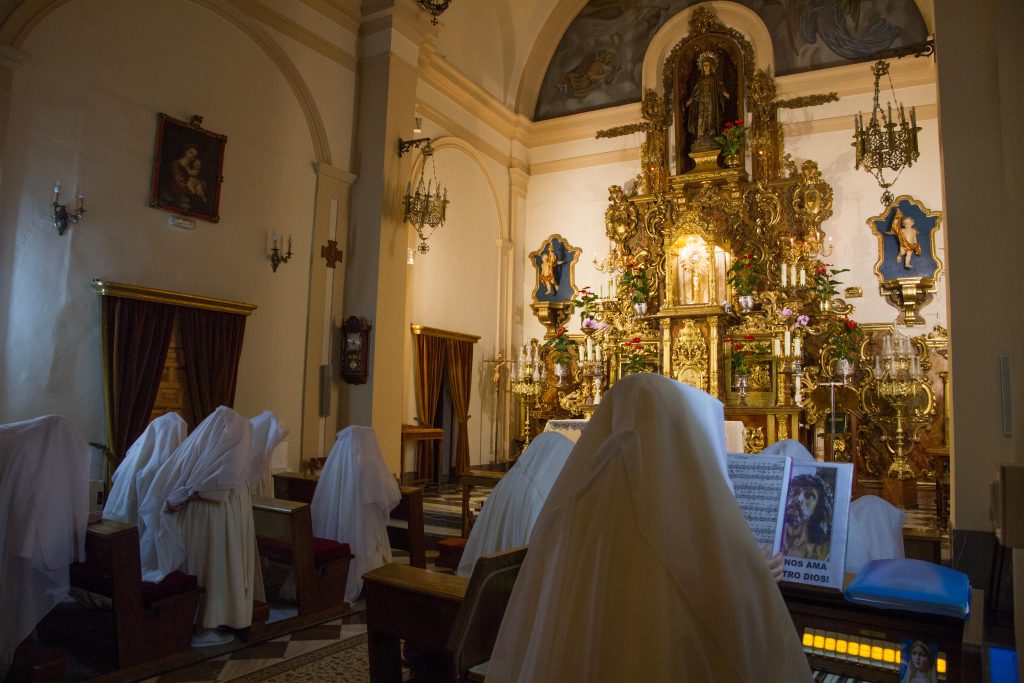
In search of lost Prime
For centuries, Prime sanctified the beginning of the working day. Then, with a single line in Sacrosanctum Concilium, the Church’s first daytime hour disappeared from the Roman Office. Was its suppression really an improvement? Something I never thought I’d write: there may be good reasons to defend Sacrosanctum Concilium (SC), the Second Vatican Council’s constitution on the sacred liturgy. Yes, it is shot through with the rationalism of its age; it is, perhaps, culpably ambiguous, no sooner commending Latin than providing a carte blanche for the extension of the vernacular. But, in arguments with progressives, I have found it personally helpful to refer, if you will, to the “spirit” of the Concilium , since those who see it as a progressive text can only do so by ignoring the sensus Catholicus and sensus fidelium with which all of the Church’s magisterial documents should be interpreted. “I know you despise Gregorian chant, Fr New Man, but can I direct you to Vatican II for a moment?” However, there were certain definite casualties of SC for which it is difficult to find a charitable explanation. “The hour of Prime is to be suppressed,” reads paragraph d of section 89. It does not elaborate. Thus ended a 1,500-year-old liturgical gem. Prime appears to have been instituted in Bethlehem in the late fourth century. At least, this is one of the earliest mentions of it; Cassian notes that monks were creeping back to bed after Lauds. To prevent such an outrage, a new little hour was introduced consisting of an Ambrosian hymn ( Iam lucis orto sidere ), three psalms, a chapter, versicle, Pater Noster , and collect. Since, however, it was born of exigence, and lacked both the antiquity of the other little hours and the solemnity of Lauds and Vespers, the reformers did not think it a viable flower in the new springtime. And yet, by the 1960s Prime had become a favourite of the laity – certainly of Benedictine oblates. Shorter and later than Lauds, and employing psalms that hallowed the toil of ordinary life, it was the perfect office for parents, soldiers, workers, and anyone else who did not have the luxury (ironically) of observing a monastic or clerical schedule. Dorothy Day and her fellow Catholics in the Catholic Worker movement were committed to Prime; and it was not uncommon in this period to identify as a “Prime and Compline Catholic”. As Dom Mark Kirby, founder of Silverstream Priory in Ireland, writes: “I have long been of the opinion that Prime and Compline are the working man’s Hours of the Divine Office. Brief and, for the most part, invariable, they correspond to the natural rhythm of the working man’s day and family life. My dear and venerable friend, artist Adé de Béthune, another Benedictine Oblate, used to pray Prime and Compline, as did many Catholic layfolk prior to the Second Vatican Council.” Compline, too, suffered mutilation at the hands of the Concilium : “Compline is to be drawn up so that it will be a suitable prayer for the end of the day.” The word chutzpah comes to mind. Are we to suppose that Compline was not suitable before Bugnini? That it was insufficient for the likes of St Benedict, or any of the numberless saints who recited its prayers for well over a millennium? I, for one, struggle to think of a more fitting admonishment for those retiring for the night than 1 Peter 5:8: “Brethren, be sober and watch, because your adversary the devil, as a roaring lion, goeth about seeking whom he may devour, whom resist ye, strong in faith” (1 Peter 5:8). This was rendered occasional in the Liturgy of the Hours (which, to its credit, retained the medieval accretion, not to be found in the traditional Benedictine breviary, of the Nunc Dimittis ). Note the Concilium ’s assumption – and this is hardly an original observation on my part – that organic, bottom-up, time-hallowed customs can be improved by sheer force of rational will, and that they should cater to the tastes of an apparently entirely new species (modern man). Had the Concilium actually consulted the laity, it might have found that Prime, an accidental adaptation, had been happily requisitioned. This applies to politics no less than religion. Indeed, it is the great strength of conservative political thought to have made its own the central truth that accidental arrangements can become necessary settlements. To be Catholic is, in part, simply to acknowledge this truth. The Roman Rite itself would be unrecognisable now without the washing of the feet on Maundy Thursday, or the blessing of the fire from which the Paschal candle is lit – both contributions from Celtic and German priests in the Carolingian kingdom, and a lovely real-world instance of mutual enrichment (Romans were evidently much too laconic for those bawdy Franks). At the heart of the Concilium ’s efforts, therefore, lies a fallacy: that a liturgical action, whether in the Missal or the breviary, is unsuitable unless each part has been constructed from first principles for a discrete purpose with an explicable origin; and, furthermore, that repetition – such as the ninefold Kyrie or the priest making the sign of the cross 52 times (as compared to eight times in the Novus Ordo ) – is undesirable because it exceeds the strict criterion of simple validity. The irony is that Prime was never actually suppressed in monasteries. The prohibition applied only to the Roman Breviary. Monks, on the other hand, were perfectly free to carry on praying it. Few Benedictine monasteries now do so. It is, however, the traditional monasteries, which cleave to their holy father Benedict’s original psalter, that draw the greatest numbers of pilgrims and novitiates to their doors. Perhaps, as in Walter M. Miller Jr.’s great sci-fi novel A Canticle for Leibowitz , it will be for future generations to carry the torch through the darkness, and to discover for themselves – in their abbeys and domestic churches – the hour that was.
Jul. 18, 2026
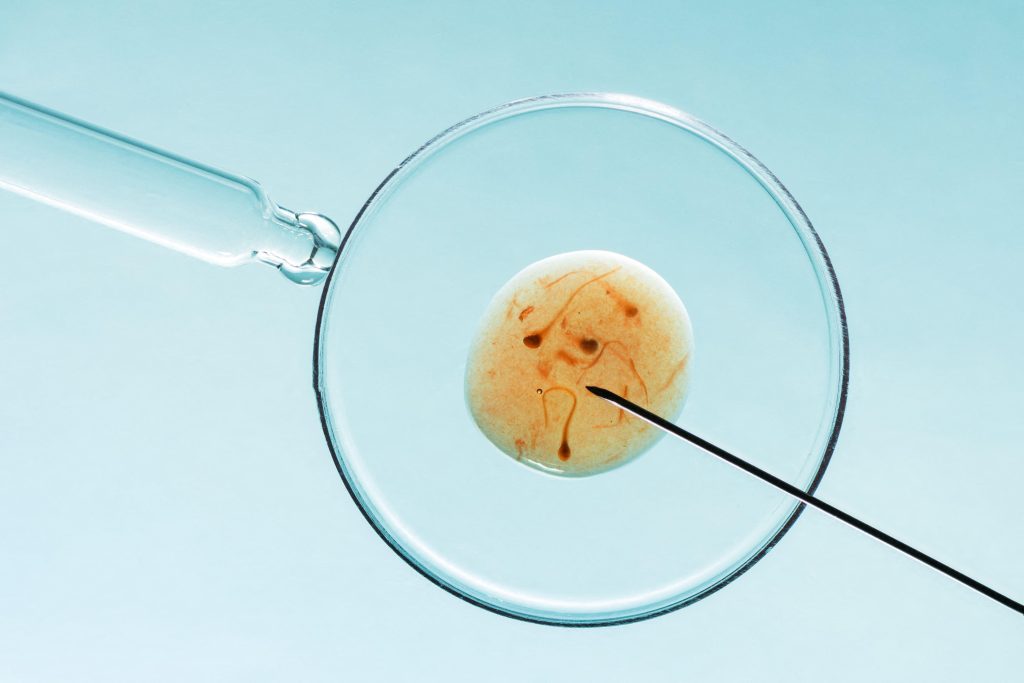
US bishops say Trump administration should remove IVF from fertility benefits rule
The US Conference of Catholic Bishops has submitted a 17-page response to the Trump administration’s proposed fertility benefits rule, arguing that IVF should be removed and that federal policy should instead support treatments that address the underlying causes of infertility The United States Conference of Catholic Bishops has urged the Trump administration to remove in vitro fertilisation (IVF) from a proposed federal rule designed to expand fertility benefits. In a 17-page submission to the Departments of Labour, Health and Human Services, and the Treasury, the bishops welcomed the administration’s recognition that infertility is “a serious matter” and supported efforts to assist couples suffering from it. However, they contended that the proposed regulation should instead prioritise treatments that address the underlying causes of infertility. “We urge the Departments to refocus the rule on therapeutic, restorative treatments, and to abandon its inclusion of IVF, which is profoundly flawed both legally and morally,” wrote William J. Quinn, the USCCB’s general counsel, and Daniel Balserak, associate general counsel, in the closing recommendations of the public comment submitted on 13 July. While President Donald Trump has repeatedly expressed support for expanding access to IVF, the bishops argue that any federal framework should distinguish between restorative medical care and assisted reproductive technologies. At the centre of the bishops’ argument is the claim that infertility should be understood principally as a symptom of underlying medical conditions rather than as a disease in itself. Consequently, they argue that public policy should encourage medical interventions that seek to restore normal reproductive function. “The Church affirms the deep desire of spouses to welcome children and supports medical efforts to address infertility,” the submission states. “At the same time, public policy should not promote practices that undermine the dignity of human life or sever the connection between procreation and the marital act.” The bishops devote considerable attention to restorative reproductive medicine (RRM), describing it as an approach that seeks to identify and treat the causes of infertility rather than circumvent them. They welcomed sections of the proposed rule that would permit employers to offer benefits covering the diagnosis and treatment of infertility-related conditions, including disorders such as endometriosis, polycystic ovary syndrome and hormonal imbalances. They also praised the administration’s acknowledgement that medical treatments addressing the root causes of infertility should be encouraged, arguing that these provisions should be made even more explicit in the final regulation. According to the submission, restorative reproductive medicine “seeks to cooperate with or restore the normal physiology and anatomy of the human reproductive system without the use of methods that are inherently suppressive, circumventive, or destructive to natural human functions.” The bishops proposed several amendments that would strengthen support for restorative care, including clearer references to such treatments in the regulations, greater public awareness of restorative reproductive medicine, and safeguards ensuring that patients are able to access providers even when they are located outside their home states. They also suggested that employers offering fertility benefits should consider requiring restorative treatments before resorting to assisted reproductive technologies. The submission argues that IVF is fundamentally different from restorative medicine because it does not treat infertility but instead bypasses the medical conditions causing it. “In contrast to restorative reproductive medicine, in vitro fertilization does not aim to treat the underlying causes of infertility but seeks to bypass them,” the USCCB wrote. The document goes on to argue that IVF “kills countless children and violates others’ rights and dignity”, asserting that the destruction, freezing and selection of embryos represent a profound violation of human dignity. While acknowledging that couples pursuing IVF often do so with “the most sincere and loving intentions”, the bishops maintain that the procedure itself cannot be morally justified. “It must be said that being conceived by IVF does not make a person have any less dignity than anyone else,” the submission states. “All people bear the image and likeness of God and have equal, infinite dignity as a result. It is precisely for that reason that we advocate protecting them and their dignity in all circumstances and at all stages of life.” Beyond moral objections, the bishops also question whether IVF can properly be regarded as a treatment for infertility. They argue that because the procedure does not cure reproductive disorders, its inclusion within an excepted health benefit stretches the legal meaning of therapeutic care. They further contend that the proposed rule risks moving beyond healthcare into what they describe as a broader “family-formation benefit”, which they argue Congress did not authorise through existing legislation. The submission also criticises the proposal’s suggested lifetime benefit cap of $120,000, arguing that the figure has effectively been determined by the cost of IVF rather than by the cost of genuinely therapeutic medical treatment. Should the administration nevertheless decide to retain IVF within the final rule, the bishops’ conference calls for extensive safeguards. These include limiting the number of embryos created during each treatment cycle, excluding coverage for embryo destruction, selective reduction abortions and genetic screening, requiring fuller informed consent about IVF’s success rates and risks, and ensuring that IVF is used only after a confirmed diagnosis of infertility. Quoting Pope Francis, the submission states that children have “a right to grow up in a family with a father and a mother capable of creating a suitable environment for the child’s growth and emotional development”, arguing that the proposed regulations should define infertility in relation to the inability of a married man and woman to conceive naturally. The document concludes by setting out seven principal recommendations, including limiting fertility benefits to therapeutic treatments, redefining infertility in medical rather than social terms, recalibrating benefit limits around restorative medicine instead of IVF, strengthening religious liberty protections and excluding assisted reproductive technologies that the bishops believe violate human dignity. “The proposed rule represents a valuable opportunity to advance real solutions to infertility that respect the God-given dignity of parents and of children, born and preborn,” Quinn and Balserak conclude. “We urge the Departments to refocus the rule on therapeutic, restorative treatments, and to abandon its inclusion of IVF, which is profoundly flawed both legally and morally.”
Jul. 17, 2026
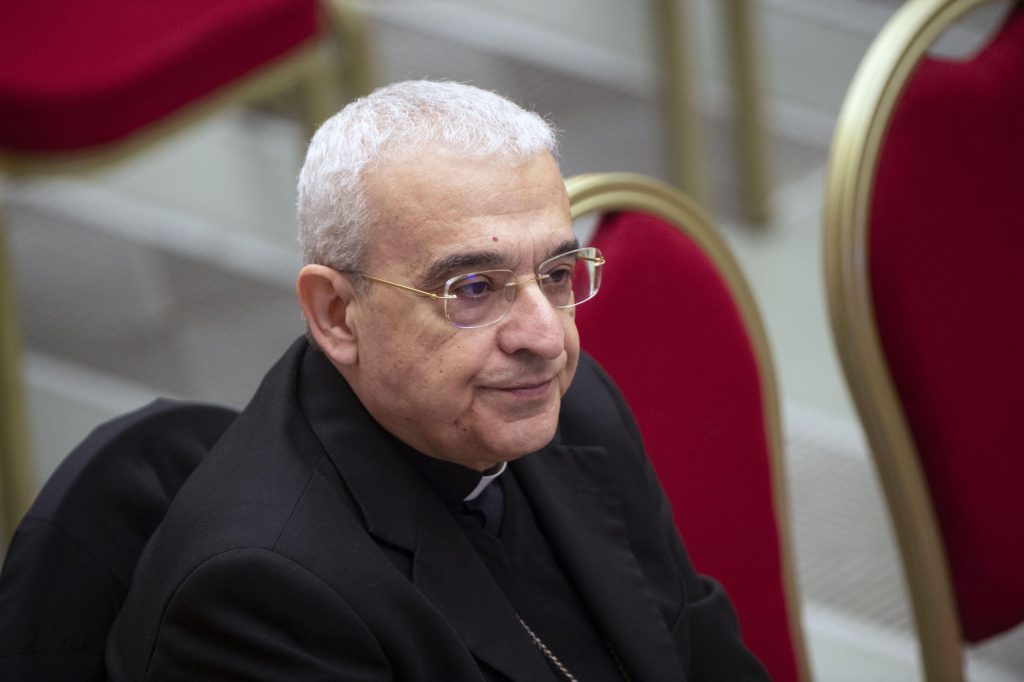
Archbishop Iannone says women bring “different sensitivities” to choosing bishops
Archbishop Filippo Iannone, Prefect of the Dicastery for Bishops, has defended the role of women in identifying episcopal candidates, saying their different approach and sensitivities are a valuable help in choosing future bishops Archbishop Filippo Iannone, Prefect of the Dicastery for Bishops, has said that women bring “different sensitivities” to the process of identifying future bishops. In an interview with the Croatian Catholic weekly Glas Koncila , the Carmelite prelate reflected on the changing demands placed upon bishops, the growing complexity of diocesan life and the work of the Vatican office responsible for recommending episcopal candidates to the Pope. Archbishop Iannone also defended the inclusion of lay people, including women, in the dicastery’s work, describing their contribution as both valuable and practical. Explaining the work of the Dicastery for Bishops, Archbishop Iannone said it is responsible for “all matters pertaining to the establishment, life, and activities of dioceses and the identification of candidates for the episcopate to be presented to the Pope for appointment, as well as the ministry of bishops in the dioceses”. He added that the dicastery works closely with other Vatican departments, noting that one of the defining characteristics of the Roman Curia under Praedicate Evangelium is “interdicasterial collaboration, or collaboration between the dicasteries”. The prefect explained that although “the authority of the Dicastery resides in the Plenary of its members”, its ordinary work is carried out by the prefect and secretary, assisted by officials and informed by the experience of Apostolic Nuncios. “The Dicastery for Bishops, like the others, avails itself of the collaboration of Apostolic Nuncios, who are well acquainted with the reality of the local Churches,” Archbishop Iannone said. Archbishop Iannone also pointed to one of the most significant changes introduced under Pope Francis: the broadening of membership within Vatican dicasteries. He noted that members “are not only bishops, but can also be priests, religious, and lay people”, adding: “And when we say lay people, we make no distinction between men and women.” Asked specifically about the presence of three women serving as members of the Dicastery for Bishops following their confirmation by Pope Leo XIV, Archbishop Iannone said their participation had already demonstrated its value. “I’ve only been presiding over this Dicastery for a few months, but I’ve personally had the opportunity to experience the contribution these women—two religious and one lay—offer to the work of the Dicastery,” Archbishop Iannone said. “It’s a highly appreciated and important contribution, because women also have a different way of approaching situations, of evaluating… they have different sensitivities, and this proves to be a great help for the type of work that must be done, namely, identifying candidates for the episcopate.” The prefect was careful to note that seeking the views of women is not an entirely new development. Long before women became members of the dicastery itself, Apostolic Nuncios were already expected to consult widely while gathering information on potential episcopal candidates. “I would like to emphasise, however, that consulting women is not entirely new,” Archbishop Iannone said. “Even nuncios, when conducting investigations to identify candidates for the office of bishop, do not and must not consult only bishops, but also involve other members of the people of God, obviously always respecting the pontifical secret.” Throughout the interview, Archbishop Iannone repeatedly returned to the responsibilities expected of bishops in the contemporary Church. The prefect described the bishop as a shepherd called to prayer, openness and pastoral leadership. Referring to Pope Leo XIV’s regular meetings with bishops, Archbishop Iannone said the Pontiff continually points to priorities such as evangelisation and care for creation, while also emphasising the spiritual foundations of episcopal ministry. “The figure, the essential model for the bishop, is always and at all times Christ the Good Shepherd,” Archbishop Iannone said. He argued that one of the defining qualities required of a bishop is the ability to foster unity within increasingly diverse diocesan communities. While acknowledging the variety of ecclesial movements and associations now active throughout the Church, Archbishop Iannone warned against groups becoming inward-looking or detached from the wider diocesan family. “The bishop is the father of the entire community,” the archbishop said, describing the capacity to encourage communion among different groups as “certainly one of the most important requirements for a candidate for the episcopal ministry”. The interview also addressed the relationship between the universal Church and the local Churches. Archbishop Iannone pointed to the teaching of the Second Vatican Council, which, he said, established that “the Universal Church is present in the particular Churches and comes from the particular Churches”. A particular Church, he explained, “can say it is a Church to the extent that it is in communion with the other Churches”, warning that “when it separates itself from this communion, it ceases to be the Church of Jesus Christ”. The prefect argued that this understanding allows genuine diversity while safeguarding unity. Referring to the principle traditionally attributed to St Augustine, Archbishop Iannone said: “In essential matters there must be unity; in matters that are debatable, freedom must be allowed; but in everything there must be charity.” He added that episcopal conferences today “have a much broader scope of activity than they enjoyed in previous years”. Archbishop Iannone also rejected attempts to interpret ecclesial governance through political categories. “Applying these categories, which belong to the world of politics, to the Church is misleading,” he said, arguing that “the Church has a different nature”. At the same time, the archbishop acknowledged that today’s faithful have “a greater awareness… of being protagonists in the life of the community”. Rather than presenting participation as a question of competing rights, Archbishop Iannone said the Second Vatican Council had reaffirmed that “every baptised person is responsible for the life of the Church and the apostolate”. He added that those entrusted with leadership through Holy Orders “must allow the faithful to exercise their responsibilities”, pointing to pastoral and finance councils and noting that, under the Code of Canon Law, “every believer has the right, indeed in some cases the duty, to inform the bishops of their own aspirations, to give guidance, and to suggest choices for the life of the community”. That theme returned in his reflections on synodality, which he insisted should never be reduced to claims for influence or power. “Synodality is not a demand, nor should it be understood as a demand,” Archbishop Iannone said. Rather, he argued, synodality requires every member of the Church to recognise responsibility for the life of the local Church rather than expecting the bishop alone to carry every burden. “It is not only the bishop who must bear the burden of the diocese,” he said. “All the faithful must feel burdened by this burden.” The interview also shed light on one of the practical challenges increasingly confronting the Vatican’s appointments process. Archbishop Iannone confirmed that some priests continue to decline episcopal appointments, not principally because of the abuse crisis but because of the growing weight of responsibility attached to the office. “I wouldn’t say it’s solely a consequence of the abuse issue,” Archbishop Iannone said. “I’d rather say that the responsibilities of a bishop have generally increased.” The archbishop pointed to the complexity of diocesan administration, the demands of supporting clergy and declining vocations as contributing factors that leave some priests feeling unprepared for episcopal ministry. “Life has become much more complex,” the Carmelite prelate observed, adding: “The fact that there are priests who don’t accept it is a fact.”
Jul. 17, 2026
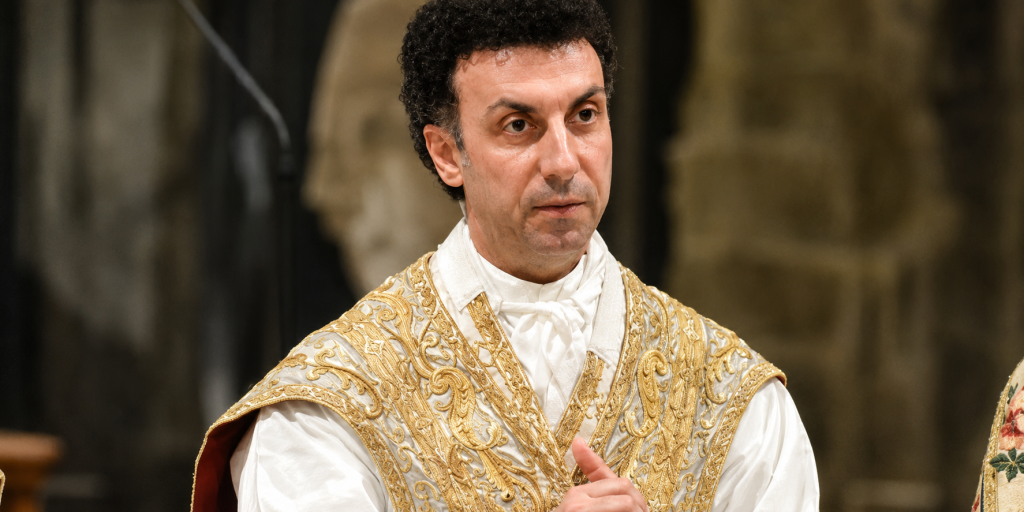
Fr Joachim Heimerl says Vienna Archbishop has imposed a “publication ban”
Fr Joachim Heimerl says Archbishop Josef Grünwidl of Vienna has imposed a “publication ban” on him under threat of suspension. In an interview with Stilum Curiae, the Austrian priest discusses the dispute, his understanding of priestly obedience, and why he believes the measure has no legal basis Fr Joachim Heimerl, a priest of the Archdiocese of Vienna, has said that Archbishop Josef Grünwidl has imposed a “publication ban” on him. In an interview with Marco Tosatti’s blog Stilum Curiae , the priest said the Archbishop sent “some letters that were not very friendly”. He said a recent letter informed him of a “publication ban” and warned that, if he did not comply, there would be “sanctions” that could even extend to “suspension”. Fr Joachim Heimerl is a well-known Austrian priest who was ordained for the Archdiocese of Vienna in 2019. Before his ordination, he was a scholar of German studies and published a variety of works. Upon entering the priesthood, he initially planned to serve in a purely pastoral role. Having experienced serious health problems himself, he believed his vocation was to serve other sick people “as a sick priest”, he explains. However, as his health further deteriorated, he was forced to withdraw from pastoral ministry. Since then, he says, his role as a priest “has been limited to prayer and Holy Mass”, which he celebrates exclusively in private in his home chapel. From this isolation, Fr Heimerl began writing for various Catholic outlets, including Die Tagespost and kath.net . Initially, his articles focused more on cultural commentary, and he cites his tribute to the opera singer Maria Callas as his finest piece. He subsequently turned his attention to the state of the modern Church. Since early 2024, he has written columns for LifeSite that have proved particularly contentious. In November 2024, he published an article entitled Pope Francis leads a ‘magisterium of lies and heresy’ with his ‘Pseudo Synod’ , followed in January 2025 by From the ashes of the ‘Bergoglian church’ the Catholic Church will rise again . Fr Heimerl describes his writing as “my form of pastoral care and preaching”, which remains a “solitary activity”. He believes Archbishop Grünwidl wants to make an example of him because of his “presence in the media”. He said he wrote to the Archbishop to explain that “nowadays it is quite common to impose ‘bans’ on those who profess the faith of the Church, while critics of celibacy and heretics remain undisturbed and can express themselves as they see fit.” He further argues that the Archbishop’s sanction “has no solid foundation and would therefore be legally worthless”, adding that “no one has the right to limit freedom of expression, not even an archbishop”. When questioned about the obedience he promised to his bishop at ordination, Fr Heimerl disputes that understanding of obedience, saying that “the obedience that every priest promises at the moment of ordination is owed solely to Christ and the Church”, which he believes he has “always adhered to”. He also argues that “obedience is never a sort of ‘counterpart’ to fundamental rights” and that, if it were used to limit his “constitutionally guaranteed individual rights”, it could become “what is commonly termed ‘spiritual abuse’.” It is not clear which constitution the priest is referring to. However, the matter may resolve itself naturally, as the priest explains that he has “been thinking about bidding farewell to my readers for some time” because his “health is not improving”. He does, however, say there are still some topics he would like to cover, including a reflection on the Holy Mass and something on the theme of Our Lady as Mediatrix of All Graces.
Jul. 17, 2026