Something I never thought I’d write: there may be good reasons to defend Sacrosanctum Concilium (SC), the Second Vatican Council’s constitution on the sacred liturgy. Yes, it is shot through with the rationalism of its age; it is, perhaps, culpably ambiguous, no sooner commending Latin than providing a carte blanche for the extension of the vernacular. But, in arguments with progressives, I have found it personally helpful to refer, if you will, to the “spirit” of the Concilium, since those who see it as a progressive text can only do so by ignoring the sensus Catholicus and sensus fidelium with which all of the Church’s magisterial documents should be interpreted. “I know you despise Gregorian chant, Fr New Man, but can I direct you to Vatican II for a moment?”
However, there were certain definite casualties of SC for which it is difficult to find a charitable explanation. “The hour of Prime is to be suppressed,” reads paragraph d of section 89. It does not elaborate. Thus ended a 1,500-year-old liturgical gem.
Prime appears to have been instituted in Bethlehem in the late fourth century. At least, this is one of the earliest mentions of it; Cassian notes that monks were creeping back to bed after Lauds. To prevent such an outrage, a new little hour was introduced consisting of an Ambrosian hymn (Iam lucis orto sidere), three psalms, a chapter, versicle, Pater Noster, and collect. Since, however, it was born of exigence, and lacked both the antiquity of the other little hours and the solemnity of Lauds and Vespers, the reformers did not think it a viable flower in the new springtime.
And yet, by the 1960s Prime had become a favourite of the laity – certainly of Benedictine oblates. Shorter and later than Lauds, and employing psalms that hallowed the toil of ordinary life, it was the perfect office for parents, soldiers, workers, and anyone else who did not have the luxury (ironically) of observing a monastic or clerical schedule. Dorothy Day and her fellow Catholics in the Catholic Worker movement were committed to Prime; and it was not uncommon in this period to identify as a “Prime and Compline Catholic”. As Dom Mark Kirby, founder of Silverstream Priory in Ireland, writes:
“I have long been of the opinion that Prime and Compline are the working man’s Hours of the Divine Office. Brief and, for the most part, invariable, they correspond to the natural rhythm of the working man’s day and family life. My dear and venerable friend, artist Adé de Béthune, another Benedictine Oblate, used to pray Prime and Compline, as did many Catholic layfolk prior to the Second Vatican Council.”
Compline, too, suffered mutilation at the hands of the Concilium: “Compline is to be drawn up so that it will be a suitable prayer for the end of the day.” The word chutzpah comes to mind. Are we to suppose that Compline was not suitable before Bugnini? That it was insufficient for the likes of St Benedict, or any of the numberless saints who recited its prayers for well over a millennium? I, for one, struggle to think of a more fitting admonishment for those retiring for the night than 1 Peter 5:8: “Brethren, be sober and watch, because your adversary the devil, as a roaring lion, goeth about seeking whom he may devour, whom resist ye, strong in faith” (1 Peter 5:8). This was rendered occasional in the Liturgy of the Hours (which, to its credit, retained the medieval accretion, not to be found in the traditional Benedictine breviary, of the Nunc Dimittis).
Note the Concilium’s assumption – and this is hardly an original observation on my part – that organic, bottom-up, time-hallowed customs can be improved by sheer force of rational will, and that they should cater to the tastes of an apparently entirely new species (modern man). Had the Concilium actually consulted the laity, it might have found that Prime, an accidental adaptation, had been happily requisitioned.
This applies to politics no less than religion. Indeed, it is the great strength of conservative political thought to have made its own the central truth that accidental arrangements can become necessary settlements. To be Catholic is, in part, simply to acknowledge this truth. The Roman Rite itself would be unrecognisable now without the washing of the feet on Maundy Thursday, or the blessing of the fire from which the Paschal candle is lit – both contributions from Celtic and German priests in the Carolingian kingdom, and a lovely real-world instance of mutual enrichment (Romans were evidently much too laconic for those bawdy Franks).
At the heart of the Concilium’s efforts, therefore, lies a fallacy: that a liturgical action, whether in the Missal or the breviary, is unsuitable unless each part has been constructed from first principles for a discrete purpose with an explicable origin; and, furthermore, that repetition – such as the ninefold Kyrie or the priest making the sign of the cross 52 times (as compared to eight times in the Novus Ordo) – is undesirable because it exceeds the strict criterion of simple validity.
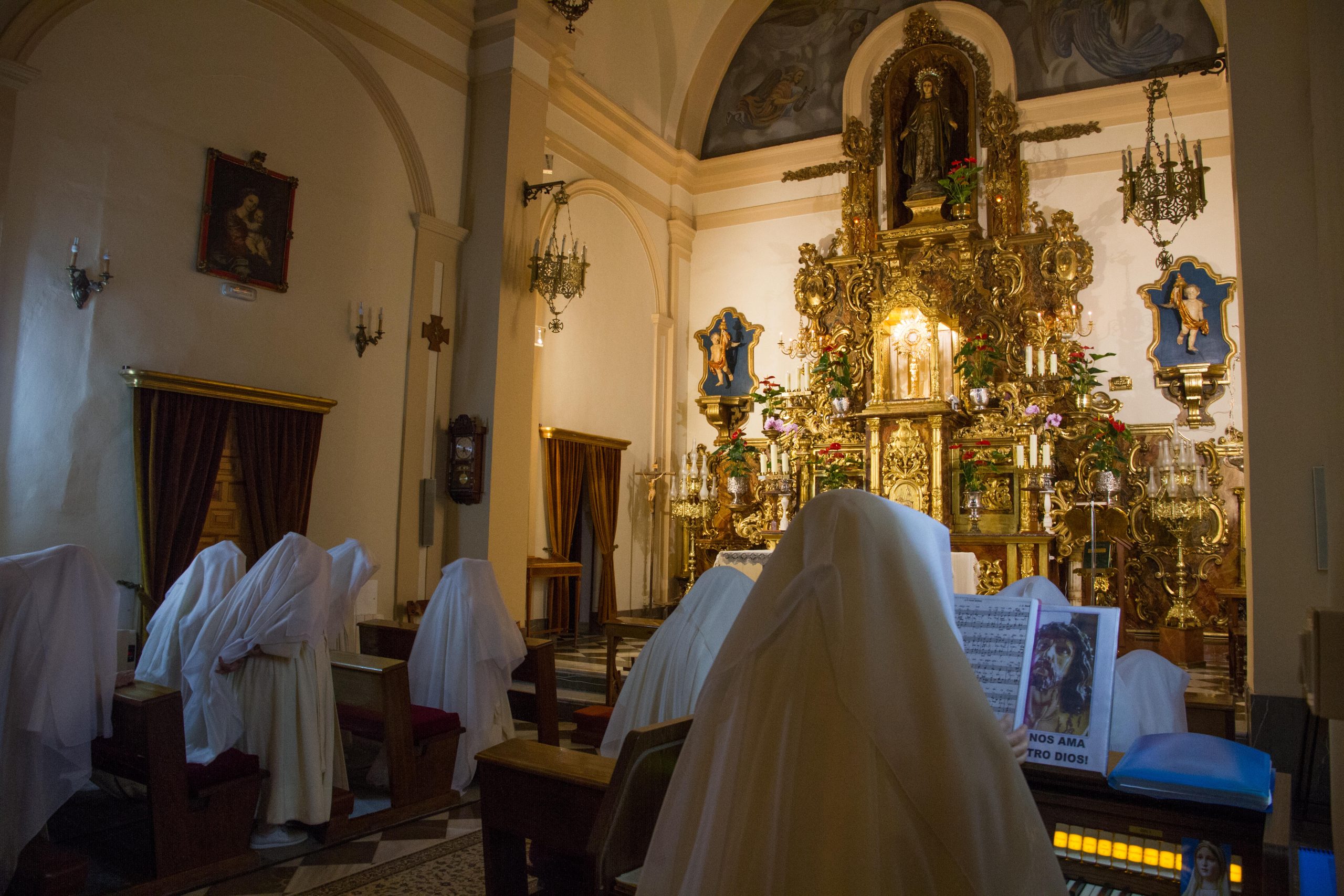
The irony is that Prime was never actually suppressed in monasteries. The prohibition applied only to the Roman Breviary. Monks, on the other hand, were perfectly free to carry on praying it. Few Benedictine monasteries now do so. It is, however, the traditional monasteries, which cleave to their holy father Benedict’s original psalter, that draw the greatest numbers of pilgrims and novitiates to their doors. Perhaps, as in Walter M. Miller Jr.’s great sci-fi novel A Canticle for Leibowitz, it will be for future generations to carry the torch through the darkness, and to discover for themselves – in their abbeys and domestic churches – the hour that was.