

Latest
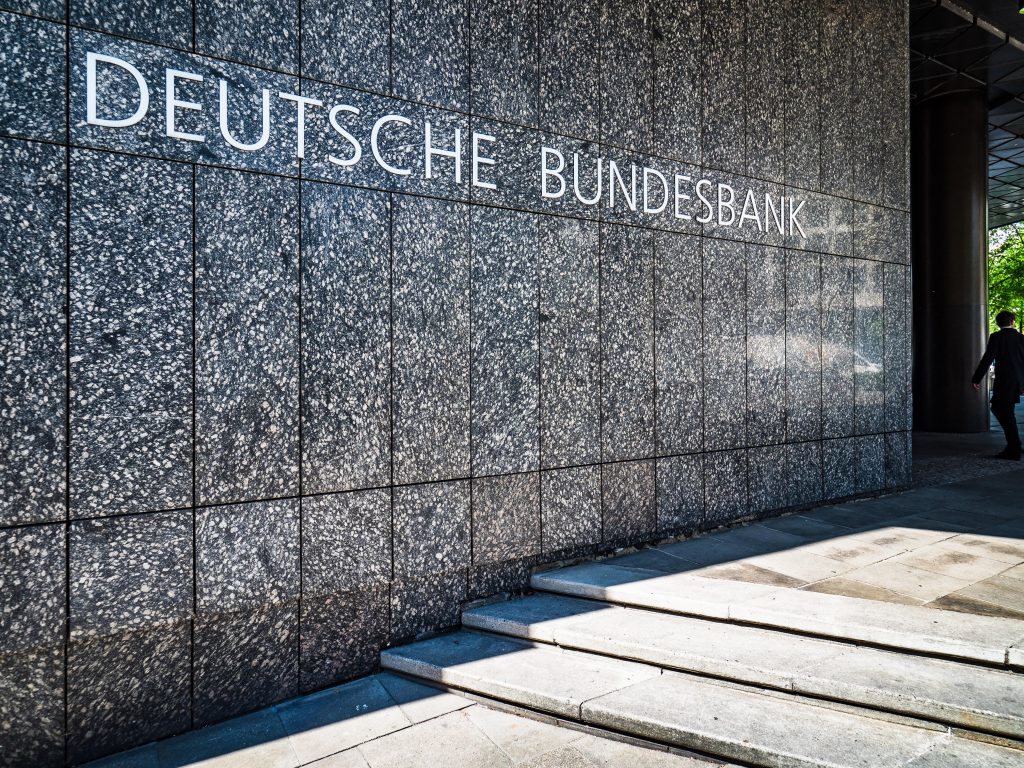
Vatican financial watchdog signs cooperation agreement with Germany’s central bank
The Vatican’s financial watchdog has signed a cooperation agreement with Germany’s central bank following Pope Leo XIV’s recent overhaul of the authority’s governing statutes. The memorandum of understanding was signed on 17 July at Palazzo San Carlo by ASIF Director Federico Antellini Russo and Dr Burkhard Balz, a member of the Executive Board of the […] The Vatican’s financial watchdog has signed a cooperation agreement with Germany’s central bank following Pope Leo XIV’s recent overhaul of the authority’s governing statutes. The memorandum of understanding was signed on 17 July at Palazzo San Carlo by ASIF Director Federico Antellini Russo and Dr Burkhard Balz, a member of the Executive Board of the Deutsche Bundesbank. The agreement establishes technical cooperation between the Vatican’s Supervisory and Financial Information Authority (ASIF) and Germany’s central bank, with both institutions working together on financial supervision through training initiatives and the exchange of expertise and best practice. The signing follows Pope Leo XIV’s promulgation of new statutes for ASIF, the Vatican body responsible for supervising the Holy See’s financial sector and combating money laundering and the financing of terrorism. The revised statutes came into force after the Pope issued a chirograph dated 25 June, replacing the previous norms introduced during the pontificate of Pope Francis. Speaking at the ceremony, Balz said the agreement demonstrated a shared commitment to strengthening cooperation between the two institutions. “By signing this memorandum of understanding, we reaffirm our shared commitment to the principles of integrity, transparency, and international cooperation,” Balz said. “This agreement provides a framework for ongoing exchange and mutual support, reflecting our common aspiration to serve the common good through a stable and fair financial system.” The Vatican said the agreement builds on an established relationship between ASIF and the Bundesbank that has developed over a number of years. It added that closer cooperation had been made possible by the Holy See’s commitment to strengthening its financial framework in accordance with international standards, pointing to greater transparency, accountability and professionalism within its financial institutions. Under the memorandum, the two authorities will cooperate in financial supervision, exchange technical knowledge and develop training opportunities designed to strengthen regulatory practice. According to the Vatican, the objective is to contribute to greater transparency and sustainability across the international financial system. For ASIF, the agreement also coincides with the fifteenth anniversary of the authority’s creation. Antellini Russo said the anniversary, together with Pope Leo XIV’s new statutes, marked an opportunity to assess the body’s development while looking ahead. “The signing of this memorandum of understanding takes place in the year marking the fifteenth anniversary of the establishment of this Authority, and only a few weeks after the entry into force of the new Statute of the Supervisory and Financial Information Authority, promulgated by His Holiness Pope Leo XIV,” Antellini Russo said. “As is often the case with such milestones and anniversaries, this offers us an opportunity to reflect on the path we have travelled, but above all to look to the future with confidence. I hope that the cooperation between our two institutions will continue to grow stronger and become even closer.” The signing ceremony was attended by Monsignor Mihăiţă Blaj, Under-Secretary of the Section for Relations with States and International Organisations at the Secretariat of State, and Dr Christoph Braner, Minister Plenipotentiary at the German Embassy to the Holy See. The agreement follows the evolution of the Vatican’s financial watchdog. Pope Benedict XVI established the Financial Information Authority in 2010 as part of a programme of financial reform. Pope Francis subsequently introduced revised statutes in 2013 before issuing further reforms in 2020, when the body received its current name, the Supervisory and Financial Information Authority. Pope Leo XIV’s revised statutes now provide the framework under which ASIF will continue its supervisory role.
Jul. 21, 2026
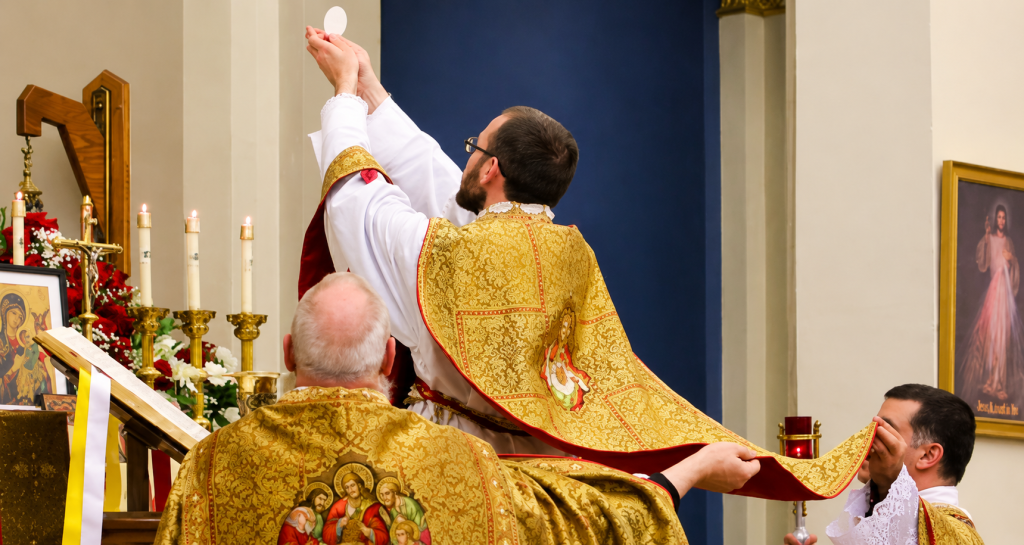
Bishop of Aberdeen expands TLM by appointing former Papa Stronsay priests
Bishop Hugh Gilbert has expanded Sunday provision for the Traditional Latin Mass in the Diocese of Aberdeen by appointing former Papa Stronsay priests to the apostolate, while continuing to oppose the community’s planned episcopal consecration without papal mandate and urging Catholics not to attend Bishop Hugh Gilbert OSB of Aberdeen has expanded provision for the Traditional Latin Mass across his diocese while simultaneously strengthening his opposition to the planned episcopal consecration of the founder of the Sons of the Most Holy Redeemer. The decision means the Traditional Latin Mass will now be celebrated every Sunday at the Church of Our Lady of the Garioch and St John the Evangelist in Fetternear, Aberdeenshire, replacing the previous monthly schedule. The liturgies will be offered by Fr Yousef Marie, F.SS.R., and Fr Peter Mary, F.SS.R., priests of the Sons of the Most Holy Redeemer who have dissociated themselves from the direction taken by the leadership based on Papa Stronsay over the planned episcopal consecration without papal mandate. The Masses had previously been celebrated by members of the Papa Stronsay community. However, after its leadership began issuing statements rejecting recent papal documents and asserting that the popes elected since the Second Vatican Council were illegitimate, Bishop Gilbert removed responsibility for the apostolate from the community, initially asking the diocesan priest Fr Bruno Murphy to continue celebrating the liturgy before approving the new arrangement. The expansion of the Traditional Latin Mass comes less than a week before Fr Michael Mary, F.SS.R., the 72-year-old founder and Superior General of the community, is due to receive episcopal consecration on Papa Stronsay. The ceremony, scheduled for 25 July, is expected to be carried out by three sedevacantist bishops with Canadian sedevacantist bishop Pierre Roy as the principal consecrator. Ahead of the planned consecration, Bishop Gilbert instructed priests throughout the Diocese of Aberdeen to celebrate Masses using the Roman Missal’s prayers “For the Unity of the Church”. In a pastoral letter read in parishes over the weekend of 18–19 July, the bishop said the forthcoming ceremony represented a direct rupture with the Catholic Church. “Recently, the Society of St Pius X chose to ordain four new bishops without the permission (or mandate) of the pope. This constitutes an act of schism,” Bishop Gilbert wrote. “Next Saturday, July 25, something similar is scheduled to occur in Orkney when the Superior of the Sons of the Most Holy Redeemer intends to be ordained bishop by three unauthorised bishops from the Americas. This likewise constitutes an act of schism and will place those engaged in it outside the Catholic Church.” The bishop noted that both developments had particular significance for his own diocese. “Both of these actions, and especially the latter, touch our own Diocese of Aberdeen, and not in a good way,” he wrote. “Objectively, we are dealing with a break from the unity of the Church.” The bishop’s pastoral letter followed an earlier diocesan statement issued after news of the planned consecration emerged. Because the ceremony is expected to take place within the geographical boundaries of the Diocese of Aberdeen, Bishop Gilbert said he was obliged to make the Church’s position unmistakably clear. “This ordination would be celebrated without a papal mandate, by a group of bishops who deny that Our Holy Father Pope Leo XIV is actually the pope,” the bishop said. Bishop Gilbert added: “Since this consecration is due to take place within the geographical boundaries of the Diocese of Aberdeen, I am obliged to make clear to the faithful of the diocese that any such episcopal ordination would be unlawful and a grave act of disobedience, separating those taking part from communion with the Catholic Church.” The bishop also urged Catholics not to attend the ceremony, saying: “No member of the faithful should attend. This action is not ‘for the good of the Catholic Church’ as is falsely claimed.” The Benedictine bishop also launched an erudite defence of the papacy. “It is not by chance that every Catholic Mass throughout the world names the current pope,” the bishop wrote. “It is a sign that every diocese, parish or community is not just a gathering of ‘chums’, but part of something wider and greater.” “The papacy saves us from a Christianity in our own image, a Christianity merely reflecting our own pet ideas or the current cultural ‘take’ on things. The papacy connects our ‘here’ to everywhere the Gospel has taken root and will, and our ‘now’ with the lasting will of Christ for his Church.” The bishop concluded with a warning about the consequences of breaking communion with the Roman Pontiff. “With the papacy we are spared the fate of becoming a merely national Church or a sect, or followers of some self-appointed authority. We are kept open to the fullness of the faith and the full breadth of the call to charity. With Peter the mission flourishes; without him it withers. And to refuse communion with him is spiritual suicide.” The consecration was announced by Bishop Pierre Roy in June. Explaining his decision, the Canadian bishop argued that the community’s growing apostolate required its own bishop, pointing to its houses in Scotland, New Zealand and the United States, and its missionary work elsewhere in Oceania. “The Redemptorists have houses in Scotland, New Zealand, and the United States,” Bishop Roy wrote. “From these houses, they visit Samoa, Australia, and other places.” The sedevacantist bishop argued that it had become increasingly difficult for him to provide episcopal oversight personally and that it was therefore “reasonable and necessary to give the Redemptorists a bishop who could properly care for a flock that already knew the sound of his fatherly voice”. Bishop Roy also acknowledged that the consecration would proceed “in the absence of an apostolic mandate”, maintaining that such authorisation could not be sought because those currently occupying the Holy See were not legitimate popes. The community was founded by Fr Michael Mary in 1988. Distinct from the worldwide Redemptorist congregation founded by St Alphonsus Liguori, the Sons of the Most Holy Redeemer established themselves first in Kent, then on the remote island of Papa Stronsay. The election of Pope Benedict XVI opened a path to reconciliation for several traditionalist communities. The Sons of the Most Holy Redeemer entered into full communion with the Holy See in 2008, and four years later Bishop Gilbert granted the institute canonical recognition as a clerical religious institute of diocesan right. In October 2025, the community issued an open letter declaring: “We repudiate the Synodal Church as distinct from the Divinely constituted Catholic Church.” The break widened further on 26 May 2026 when the community published a declaration describing the popes elected since the Second Vatican Council as “papal pretenders”. The statement also expressed regret over the community’s reconciliation with Rome, arguing that even after returning to full communion it had remained “forced by faith to resist the Conciliar authorities, although in a different manner.”
Jul. 21, 2026
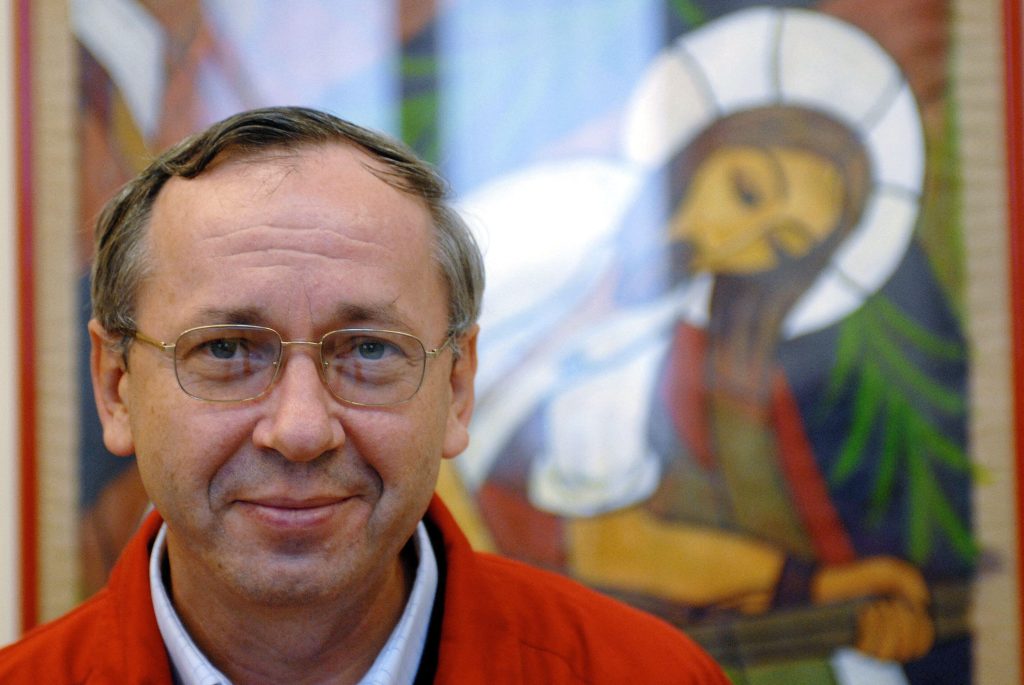
Father Marko Rupnik acquitted in canonical trial, sources say
MessainLatino and AdVaticanum sources indicate that Father Marko Rupnik has been acquitted in the canonical criminal proceedings relating to allegations involving violence. The Holy See has not publicly confirmed the reported ruling or released the sentence MessainLatino has reported that Father Marko Ivan Rupnik has been acquitted in his canonical criminal trial. According to the pulication, after corroborating “persistent and highly authoritative sources”, it concluded that the verdict was in favour of Father Rupnik. While the reported outcome has not been confirmed publicly by the Holy See, AdVaticanum has corroborated MessainLatino’s reporting through its own sources, which have also confirmed the ruling. AdVaticanum has spoken to Vatican sources who would like the Holy See to publish the sentence publicly. Many, however, believe the Vatican will be reluctant to do so. From this publication’s understanding, the trial centred on whether the alleged abuse involved violence. The judges ruled in favour of Father Rupnik, citing insufficient certainty. This publication has also learned that a further case is likely being prepared. The sentence itself has not been released publicly, and no official statement has been issued by the Dicastery for the Doctrine of the Faith. The absence of any formal Vatican announcement has renewed questions about transparency in the handling of high-profile canonical cases. As this publication understands, the reported acquittal concerns only the specific canonical criminal proceedings relating to allegations involving violence. It does not necessarily bring every aspect of the wider Rupnik affair to a conclusion. The formal judicial process has always been conducted under canon law rather than through the secular courts. Unlike civil criminal proceedings, canonical trials before the Dicastery for the Doctrine of the Faith are confidential by their nature, with evidence, witness testimony and judicial deliberations ordinarily remaining sealed unless the Holy See decides otherwise. Consequently, little official information has emerged since the case was reopened. Father Rupnik, born in Slovenia in 1954, rose to international prominence as both a theologian and an artist. His mosaics adorn churches, shrines and chapels across the Catholic world, including the Vatican, Lourdes and Fatima, while his theological reflections on sacred art earned him considerable influence in ecclesiastical circles. The allegations that later emerged fundamentally altered that reputation. Multiple women accused Father Rupnik of sexual, psychological, spiritual and abuse-of-authority offences spanning several decades, with many of the earliest complaints originating from former members of the Loyola Community. Further accusations later involved women connected with Centro Aletti and his wider ministry. Before the current proceedings, Father Rupnik had already faced another canonical process concerning the crime of absolving in confession a woman with whom he had engaged in sexual activity. That offence carries an automatic excommunication under canon law. In 2020, the then Congregation for the Doctrine of the Faith declared that excommunication after external judges unanimously confirmed the offence. The penalty was subsequently lifted in the same month after Father Rupnik admitted the facts, expressed repentance and fulfilled the conditions required by the Holy See. Restrictions on his ministry followed. Attention later shifted to the wider allegations relating to members of the Loyola Community. After further complaints reached both the Society of Jesus and the Vatican, an investigation was conducted and forwarded to the Dicastery for the Doctrine of the Faith with a recommendation that a penal process should begin. The dicastery ultimately concluded in 2022 that the alleged offences were barred by the applicable statute of limitations then in force under canon law. That decision attracted widespread criticism after details of the allegations entered the public domain. In October 2023, Pope Francis waived the canonical statute of limitations, allowing the case to proceed despite the passage of time. The move was interpreted as a sign of the seriousness with which the Holy See intended to address the allegations and followed concerns expressed by the Pontifical Commission for the Protection of Minors regarding aspects of the case’s handling. Meanwhile, Father Rupnik’s relationship with the Society of Jesus deteriorated. The Jesuits ultimately dismissed him, citing a persistent refusal to obey legitimate instructions. The order stated that he had declined opportunities to acknowledge his conduct publicly, seek forgiveness and undertake a process of rehabilitation. Father Rupnik was subsequently incardinated into the Diocese of Koper in his native Slovenia. On 13 October 2025, the Dicastery for the Doctrine of the Faith disclosed that five judges had been appointed to hear the case, explaining that the panel consisted of women and clerics who neither belonged to the dicastery nor held office within the Roman Curia. The Holy See stated that the arrangement was intended to guarantee the tribunal’s autonomy and independence. The Vatican did not publish the identities of the judges, nor did it provide details regarding their backgrounds or expertise. The confidentiality surrounding the process has led to criticism from some representing the alleged victims, who argue that they received little information regarding the tribunal’s progress despite repeated requests for clarification. Those concerns persisted throughout the trial. Lawyer Laura Sgrò, who represents several of the women bringing allegations against Father Rupnik, repeatedly stated publicly that she had sought procedural information from the Dicastery for the Doctrine of the Faith but had received no substantive response. The Society of Jesus has itself publicly acknowledged shortcomings in its handling of the affair. Father Johan Verschueren SJ, acting on behalf of the order in Rome, apologised to those who said they had suffered because of Father Rupnik’s actions and announced efforts aimed at reparation and healing. Jesuit Superior General Father Arturo Sosa later admitted that the order had failed to recognise warning signs and described that failure as a form of institutional blindness.
Jul. 20, 2026
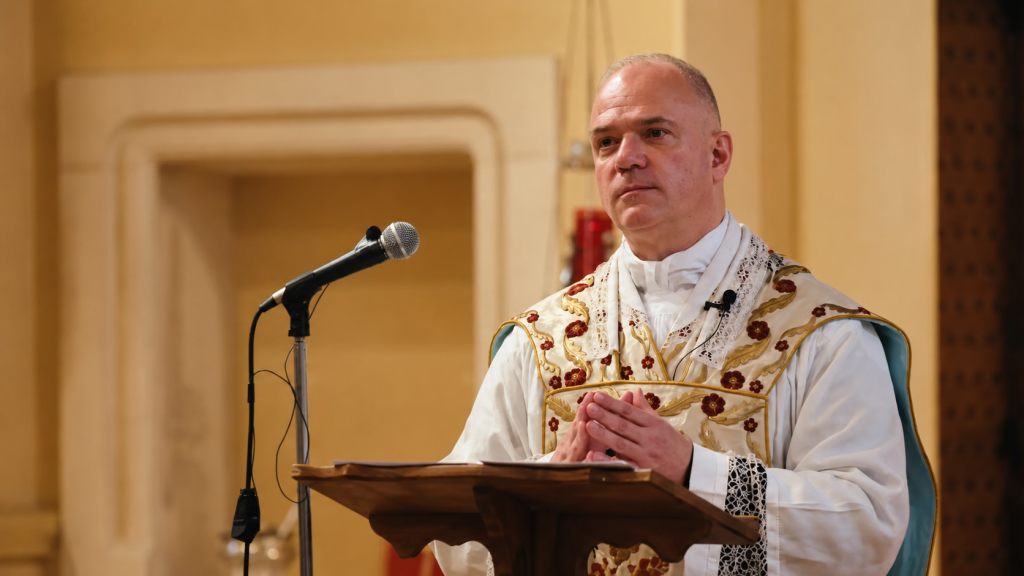
SSPX Superior General urges faithful to stand firm as canonical battle begins
The Superior General of the Society of Saint Pius X has issued his first direct appeal to the laity since the Vatican declared the Society’s bishops excommunicated. In an internal pastoral letter, Fr Davide Pagliarani tells the faithful to remain steadfast as the SSPX prepares for what it expects will be a lengthy canonical dispute with the Holy See The Society of Saint Pius X Superior General has urged the lay faithful attached to the society to remain steadfast as the society prepares for what is expected to be a prolonged canonical battle with the Holy See. In a pastoral letter, Father Davide Pagliarani thanked supporters for their loyalty following the consecration of four bishops at Écône on 1 July. He also portrayed the Vatican’s response as an unjust humiliation borne for the sake of preserving what the Society describes as the Church’s tradition. The letter is the SSPX leadership’s first direct appeal to the laity since the Holy See declared that the bishops involved had incurred automatic excommunication. Addressing the faithful directly, Father Pagliarani recalled the thousands who attended the consecrations at Écône where weather interrupted the liturgy. Quoting Psalm 17, the Superior General described the storm that swept across the ceremony as a moment that deepened rather than diminished his gratitude. “I was the privileged witness to a liturgy of exceptional beauty,” Father Pagliarani wrote, before turning to what he described as an even more moving sight: “a vast crowd of faithful who remained in their places throughout the storm and prayed to Our Lady for the new bishops, for the Church, and for the Pope.” The letter repeatedly returns to the role of the ordinary faithful, presenting them as the principal reason for the consecrations rather than the bishops themselves. “Ultimately, these consecrations were performed for each of you, dear faithful,” Father Pagliarani wrote. “Your souls are the true treasure entrusted to the Society.” Father Pagliarani’s letter leaves little doubt that the Society rejects both the legal and theological basis of the Vatican’s conclusions. “The consecrations have been condemned, and the severity of the sanctions imposed is unprecedented,” he wrote. While acknowledging that the bishops were the principal target of the decree, the Superior General argued that “even the faithful are affected.” Father Pagliarani called the condemnation “utterly unjust”, and said it represented “an immense humiliation for people whose sole aim is to defend the true faith and work for the salvation of souls.” The Superior General also suggested that the sanctions extend beyond individuals to the wider traditionalist cause itself. “Ultimately, it is Tradition itself, which we cherish above all else, that is excommunicated in all those who embody it,” the letter states. “It is obvious that, before God, such a condemnation cannot be valid.” “If Providence allows a crisis such that the teaching of the faith is mysteriously obscured, that same faith must continue to live in souls,” Father Pagliarani wrote. The Superior General added that “the small candle that each of you received on the day of your baptism must remain lit in your heart and mind until the very last day.” “The Fraternity will never abandon you,” Father Pagliarani concluded. “Your souls will never lose their value and worth in the eyes of its priests.” AdVaticanum understands that the message was read to congregations across SSPX chapels on Sunday and had been circulated internally beforehand as part of an embargoed circular letter sent throughout the Society. According to information obtained by the publication, the accompanying internal circular letter by Fr Le Roux, Secretary General, also sought to prepare superiors and members for the next stage of the dispute following the Society’s preliminary canonical recourse against the Vatican decree, outlining the movement’s intentions as it navigates the post-consecration fallout. Following the 1 July consecrations, the Dicastery for the Doctrine of the Faith issued a decree on 2 July declaring that Bishop Alfonso de Galarreta, Bishop Bernard Fellay as co-consecrator, and the four newly consecrated bishops had incurred latae sententiae excommunication under canons 1387 and 1364. The accompanying explanatory note extended well beyond the declaration concerning the bishops. It stated that all sacred ministers of the Society are in schism and subject to the same penalty, described their sacramental ministry as illicit, asserted that confessions heard by SSPX priests and marriages celebrated by them are invalid, and warned clergy and faithful against formal adherence to the movement, citing the criteria established by the Pontifical Council for Legislative Texts in 1996. The publication of the letter follows a series of increasingly detailed SSPX responses to the Vatican decree. In in-house SSPX articles published after the sanctions, including Invalid Punishments, Valid Sacraments , followed by Nuclear Excommunication and Hundreds of Thousands of Catholics Purportedly Excommunicated: How Should We See This? , the Society maintained that the penalties are canonically null because a state of necessity excuses any alleged offence. It further argued that neither bishops, priests nor lay faithful had incurred excommunication and insisted that confessions and marriages remain valid through the Church’s principles governing supplied jurisdiction and matrimonial consent. On 11 July, the SSPX General House lodged a preliminary recourse with the Dicastery for the Doctrine of the Faith. In a communiqué published two days later, the Society stated that the appeal had been submitted under canon 1734 and the following canons, adding that it “has the effect of suspending the execution of the decree, in accordance with canon 1353.” The appeal, the communiqué said, had been presented “in a spirit of respect for ecclesiastical authority and of faithful attachment to justice, truth and the good of the Church.” Whether that legal argument ultimately succeeds appears uncertain. In an interview published by AdVaticanum on 18 July, Archbishop Juan Ignacio Arrieta, the former Secretary of the Dicastery for Legislative Texts, offered a detailed canonical assessment of the Holy See’s position. Archbishop Arrieta described the decree as “an act owed”, arguing that the dicastery merely declared a penalty that had already been incurred automatically under canon 1387. The former Vatican official nevertheless distinguished between the declaration of excommunication and the faculties previously granted by Pope Francis. Regarding confessions, Archbishop Arrieta stated that the faculty had been granted by a pontifical act and therefore “an act of the same nature is required to revoke it.” Revocation, Archbishop Arrieta said, “requires direct authorisation from the Pope himself.” On marriages, however, Archbishop Arrieta concluded that the present circumstances make it improbable that diocesan bishops could lawfully grant the necessary delegation, meaning marriages celebrated by SSPX clergy would be canonically null for lack of canonical form. In the same article, a priest close to the Dicastery for the Doctrine of the Faith told AdVaticanum that the Society’s preliminary recourse was “unlikely to be granted”, arguing that the dicastery had not imposed a penalty but merely declared one already incurred for what was described as a well-known offence. Any lifting of the excommunications, the priest suggested, would require repentance by those involved. With the preliminary recourse now before the Dicastery for the Doctrine of the Faith, and internal correspondence indicating that the Society is preparing for the next phase of the confrontation, the pastoral appeal suggests that the SSPX expects the dispute to continue well beyond the coming months.
Jul. 20, 2026
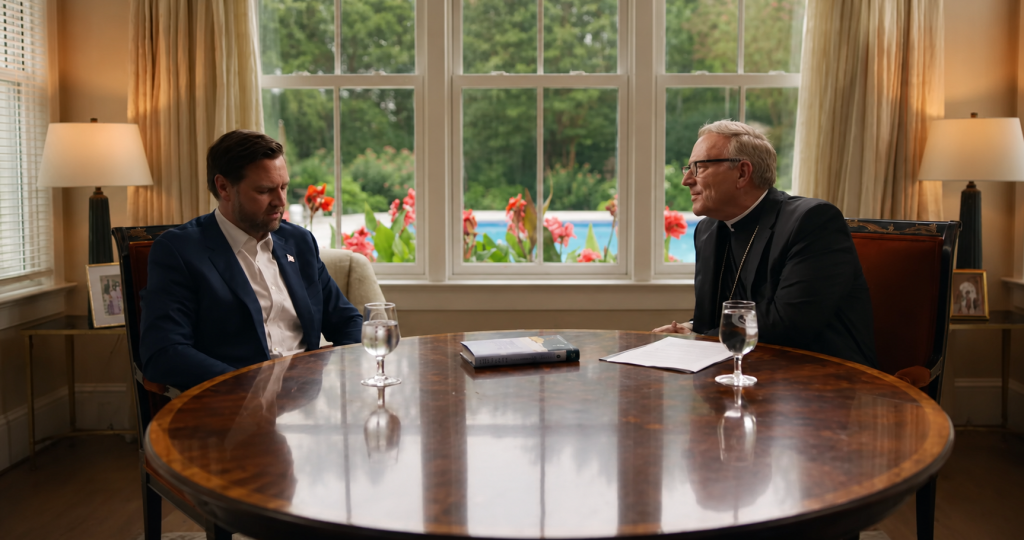
The tale of two JD Vances
Vice President JD Vance’s interview with Bishop Robert Barron is a study in contrasts. The Catholic convert who speaks thoughtfully about Augustine, René Girard and the spiritual life sits uneasily alongside the Vice President who defends the policies and politics of the Trump administration On Friday, Bishop Robert Barron, founder of Word on Fire and Bishop of the Diocese of Winona–Rochester, sat down with Vice President JD Vance to discuss his new book, Communion: Finding My Way Back to Faith , as well as his political and spiritual journey. The interview is very much a tale of two JD Vances. The first is the man steeped in Augustinian theology whose journey is detailed in his book. The second is the JD Vance of the MAGA movement. This Vance is subservient to an ideology centred around a single man, elevating him above all else. While President Trump is rarely mentioned by name, his presence is felt throughout. At the beginning of the interview, the first Vance is centre stage. Bishop Barron and the Vice President examine the theological influences that have shaped his career, his rejection of the decadence of American elites, and his admiration for René Girard. Together, they tease out a central tenet of Augustinian theology: that right worship of God is the principle from which both successful governments and flourishing individuals flow. It is an interesting discussion, with Vance approaching the subject from the perspective of political philosophy and Bishop Barron drawing upon his pastoral experience. The two then discuss René Girard’s theory of mimetic desire, the idea that human desire is not original but imitative, leading in turn to mimetic rivalry, the hostility that develops as different people come to desire the same thing. Vance eruditely links this to social media and points out that algorithms have spread mimetic desire and therefore mimetic rivalry at a pace not seen before. One of the few occasions on which President Trump is mentioned comes when Bishop Barron asks Vance directly how Trump transformed the Republican Party from the days of Ronald Reagan into what it is today. Vance argues that Trump has brought a “national and community element to economics” and rejected the globalisation associated with the Reagan era. He describes the President’s economic policy as “conventional wisdom”, an assertion that goes unchallenged by Bishop Barron. There is no acknowledgement that this “national and community element to economics” has also been accompanied by higher inflation and military operations in Yemen, Iran, Venezuela, Syria, Iraq, Somalia and Nigeria. An interesting reflection on Vance’s political career comes when the conversation turns to the Munich Security Conference. Bishop Barron reads an extended passage from Communion reflecting on Vance’s attendance at the conference in 2023. Munich has since become a defining feature of his political career. He returned in 2024, sitting on a panel alongside the UK’s David Lammy before either man’s party entered government, and again in 2025 as Vice President, when he delivered a plenary address criticising European leaders for restricting freedom of speech while underestimating the threat posed by Russian totalitarianism. However, his time at the 2023 conference was more contemplative. He writes that those who established the conference in post-war Germany believed they were defending “Western Christian civilization, and the values particular to it”, rather than abstract concepts such as “freedom”, “liberalism” or “democracy”. Vance is right that there was a stronger sense of political Christendom in Europe during this period. However, his assertion in the interview that the “Western alliance was so strong in 1950” is demonstrably false. Leaving aside the Soviet Union, which then encompassed Ukraine, Belarus, Lithuania, Latvia and Estonia, Europe was hardly a model of unity. In 1950, Hungary, Albania, Poland, Romania, Yugoslavia and East Germany were all under communist dictatorships. Munich itself lay in West Germany, which did not regain full sovereignty until 1955. Portugal and Spain were under dictatorships of their own. Europe was in the throes of the Cold War. If there was a unifying factor amongst European nations, it would be communism before Christendom. Interestingly, the conversation then turns to the damaging effect that artificial intelligence is having on young people’s dating lives. Again, the tension between JD Vance the Catholic and JD Vance the member of the Trump administration becomes apparent. The administration has been bullish about AI and resistant of any restrictions on the technology. Speaking at the Paris AI Action Summit in 2025, Vance argued that “to restrict its development now would not only unfairly benefit incumbents in the space, it would mean paralysing one of the most promising technologies we have seen in generations”. In the same speech, he said the Trump administration wanted America to become the AI “gold standard worldwide”. Yet here he laments AI’s damaging effect on real-world relationships. Perhaps the most interesting and coherent section of the interview comes towards the end. Reflecting on his meeting with Pope Francis shortly before the late Pontiff died, Vance says that his subsequent dealings with Cardinal Parolin and Archbishop Paul Gallagher, whom he mistakenly identifies as Irish, left him feeling that “they did not want to move past the diplomatic platitudes”. He continues: “There is an impulse within the Church that is very comfortable in dealing with the highest level of generality, because then it is not challenging to people.” In this, Vance captures much of the generational frustration visible within the Church today. On the one hand is an older clergy that often speaks in abstract terms, hesitant to offer concrete instruction and, in doing so, dilutes the Christian message. On the other is a younger generation seeking clarity and structure, which finds such obsequiousness unappealing and either abandons Christianity altogether or seeks out those rare places where the faith is taught in its fullness. Vance’s analysis also points to Pope Leo XIV, as an American, as a possible antidote to this problem. While the reasons for the ambiguity found in some recent Church teaching cannot be reduced to a single cause, language and culture may well play a role. Pope Francis was steeped in the Romance languages, a native speaker of Spanish and Italian, and never entirely comfortable in English. By contrast, Benedict XVI and John Paul II, both generally associated with a more assertive style of teaching, came from the Germanic and Slavic language traditions respectively and were also fluent English speakers. There is often a greater degree of ambiguity in the Romance languages, whereas the Germanic and Slavic language groups, of which English belongs to the former, generally favour more direct expression. Pope Leo, a native English speaker who also speaks Spanish at a native level, is therefore well placed both to recognise this problem and, perhaps, to address it. The interview closes with a touch of spiritual direction. Vance admits his prayer life is not as he wishes it was and Bishop Baron offers some gentle guidance. He suggests the Vice President carry a sacramental with him in his work life, an encouraging thought for the world. Although the interview contains no major revelations and lacks the memorable moments of Bishop Barron’s interview with Shia LaBeouf, it offers an unusually revealing glimpse into the spiritual life of one of the world’s most influential Catholics. Vance is clearly a man who takes his faith seriously and displays the intellectual curiosity and humility indicative of converts. But he is also limited by being subservient to a president who is neither Catholic nor appears to take Catholicism seriously. Vance approaches politics as a Catholic convert; Trump approaches Catholics as a political constituency. As long as Vance is under Trump, there will always be the tale of two JD Vances. One hopes that, if he is one day rewarded with the higher office, he will be able to shake off the old man and entirely embrace his Catholicism. Having an unencumbered Catholic as leader of the United States could only be a good thing. Image credit: Bishop Robert Barron YouTube
Jul. 20, 2026
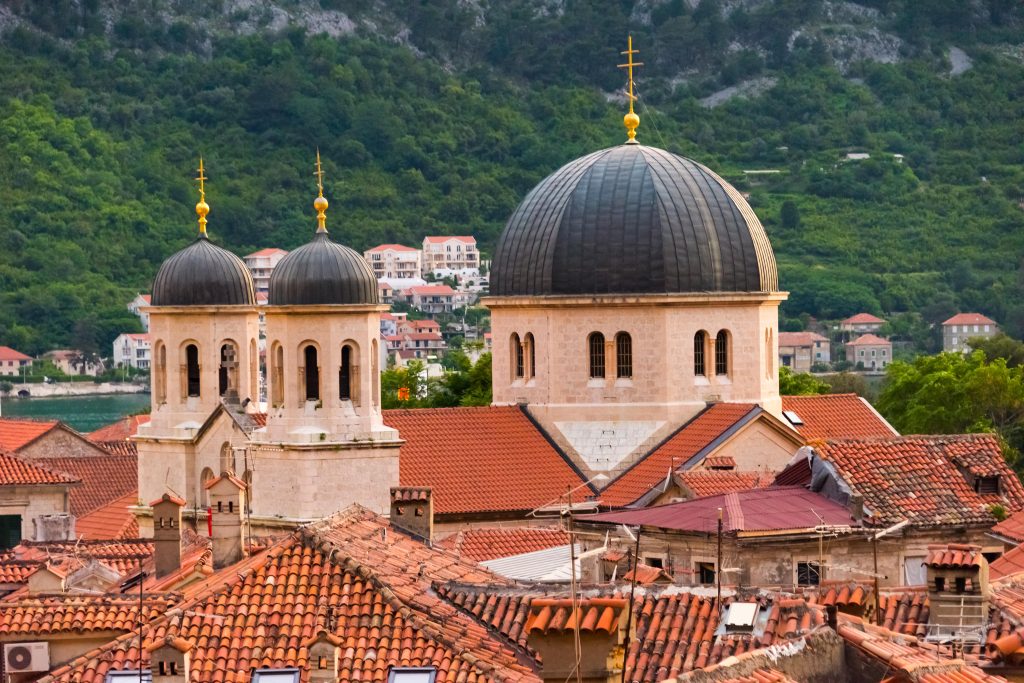
Cardinal Nemet says Catholic-Orthodox relations have entered a new phase
Cardinal Ladislav Nemet says relations between the Catholic Church and the Serbian Orthodox Church have improved markedly in recent years. He also reflects on reconciliation in the Balkans, the dangers of hate speech and why the Church must avoid clericalisation Cardinal Ladislav Nemet has said relations between the Catholic Church and the Serbian Orthodox Church have entered a significantly more positive phase, while warning against clericalisation within the Church. In an interview with the Archdiocese of Belgrade’s internal news service, the Archbishop of Belgrade reflected on political tensions across the Balkans, the responsibilities of religious leaders and the dangers posed by nationalism and hate speech. He also argued that the Church must avoid clericalisation if it is to fulfil its mission faithfully. “I would say that the last five or six years have been good,” Cardinal Nemet said when asked about relations between Catholics and the Serbian Orthodox Church. “The coronavirus pandemic was a boundary that changed people and relationships to some extent. Shared suffering has helped us realise that we are closer to each other than some ideologies want to tell us.” The Cardinal suggested that the shared experience of the pandemic had cut across long-standing political and theological divisions, creating opportunities for cooperation that had previously been difficult to achieve. Rather than allowing religion to become another source of division, Cardinal Nemet argued that faith communities should draw upon what he described as religion’s original purpose: serving the common good. “We must not forget the power that lies in religion,” Cardinal Nemet said. “The original power of every religion is immense.” That influence, he continued, can either contribute to peace or be misused to deepen conflict. “This immense power can be used for good or for evil,” Cardinal Nemet said, adding that those entrusted with leading religious communities therefore bear “a huge responsibility”. The Cardinal argued that Catholics, Orthodox Christians, Protestants and Muslims each possess the capacity to influence society positively when they work together rather than against one another. Religious leaders, Cardinal Nemet said, should understand “how great the positive power of religions is when they unite and how much they can change the thinking of their followers and positively affect society”. The Archbishop also reflected on reconciliation in the Balkans, where the wars of the former Yugoslavia continue to shape political discourse more than three decades after the conflicts ended. Cardinal Nemet expressed concern that public debate remains rooted in hostility, warning that “hate speech is one of the greatest sources of all adversity”. If such language is “repeated enough”, he warned, “it becomes a reality, and this reality can later turn into actions that can be deadly”, recalling that “there has been a lot of bloodshed in this region in recent history”. Although acknowledging that relations between Croatia and Serbia have improved in some respects, Cardinal Nemet said reconciliation was progressing “too slowly”. Pointing to the example of France and Germany after the Second World War, he argued that “with good intentions and political action aimed at the common good, reconciliation is possible”. That common good, Cardinal Nemet added, must “promote not only the good of one’s own nation, but the good of the entire human family in this region”, with “much more” needing to be done “to strengthen friendly ties and bridges, and to reduce tensions that are always present and can very easily flare up again”. Outside of politics, Cardinal Nemet reflected on the wider contribution that religious dialogue can make in societies where different faith communities coexist. Referring to the Mediterranean Theological Meetings, he described the initiative as “an extremely positive” contribution at a time when religion has returned to global affairs with “enormous force”. While acknowledging that faith has not always been used positively, Cardinal Nemet insisted that “all religions can play an extremely important role in promoting a better and more humane life”, even though they can also become instruments for “wars, sowing hatred and excluding anyone who believes or thinks differently”. Participants often arrive at such gatherings with firmly established opinions, Cardinal Nemet acknowledged, observing that “everyone comes here with a certain attitude”. Nevertheless, he argued that “four days of being ‘bombarded’ with the idea of a possible civilisation of love or a civilisation of coexistence certainly changes both the young people and the lecturers”, demonstrating the value of sustained encounter and dialogue. The interview also addressed the relationship between religion and public life, with Cardinal Nemet warning against excessive clericalisation. Religious leaders, he argued, should recognise “areas in which they have no claim”. “If I am called to care for believers, my task is not to control their opinions or guide them at all costs,” Cardinal Nemet said. “I need to help them make independent decisions on their life path and to independently find the path to God.” “For me, clericalisation begins when I decide that my path is the only correct one. And it is not,” Cardinal Nemet continued. While describing religion as “one of the deepest feelings in man” and an important voice of conscience, he insisted that “religions cannot decide about life alone”. Science, politics and other aspects of society all have their legitimate place, while “religion can be the voice of conscience and say that something should be different, but it is not up to us to decide these things”. On episcopal leadership, Cardinal Nemet distinguished between constructive criticism and what he described as “blind criticism”. While some criticism helps identify “something I could have said, done or understood differently”, Cardinal Nemet said there are also attacks that arise “just because someone doesn’t like something, without a real and objective evaluation”. Even so, Cardinal Nemet insisted that the Church cannot retreat from its public mission. “We need to speak up,” he said, “but not to hurt or exclude, but to try to show how it could be different.” He linked that responsibility to the witness of the early Church, observing that “the first three centuries were a time of brave men and martyrs”, whose courage shaped Christianity’s development.
Jul. 20, 2026