

Sspx
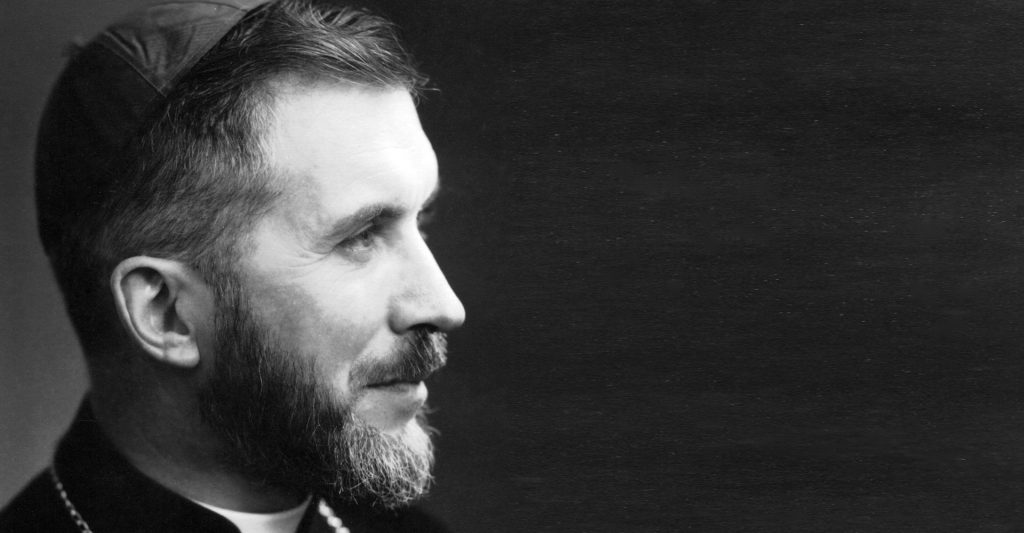
The SSPX, the Magisterium, and the temptation of the hinterland
Drawing on his own journey from Anglican bishop to Catholic convert, Gavin Ashenden argues that however compelling the SSPX may appear, the temptation to step beyond communion with Rome leads into a theological “hinterland” where private judgement takes precedence over the Magisterium I have been surprised at the extent of anxiety and animosity that almost always accompanies any discussion about the relationship between the SSPX and the Vatican. Over time, I have become increasingly grateful for and impressed by the witness and courage of Archbishop Lefebvre — but equally impressed by the flexibility of Benedict XVI and the way in which the dynamic relationship between the SSPX and the Vatican changed and modulated under his leadership. Of course, much of the anger and fear can be traced back to the complex question of the Second Vatican Council, the period of its reception, and the troubling phenomenon of “the spirit of Vatican II”. One of the attractions of the SSPX is that it cuts through the whole complexity like Alexander’s sword through the Gordian knot. Once you have accepted the SSPX and the integrity of its arguments, you no longer have to think or struggle with the difficulties that the Council and its reception throw up. As I have listened to people arguing on both sides, it has become clear that neither possesses a monopoly on unreasonableness, stubbornness, name-calling, vitriol, or misrepresentation. But one of the formative elements in my own becoming a Catholic was the importance of the Magisterium. I was one of those Anglicans who found it easy to persuade himself that, as an Anglican, I had the best of both worlds: Catholic integrity combined with Anglican freedom. I do not normally talk much about my time as an episcopal bishop, but one of the attractions of the invitation to accept consecration — in order to provide a foundation for dissident Anglicans fleeing the collapse of the Church of England but too anxious to convert fully to Rome — was the creation of yet another halfway house: a mixed ecclesial economy with enough that looked Catholic to persuade its adherents that they were Catholic, without requiring them to take the full step of submitting to the authority of the Holy Father and accepting in full the Catechism and the Magisterium. As it happened, the experience of trying to negotiate between different Anglo-Catholic groupings as we sought to construct a coalition of sacramentally minded Anglicans was one of the things that deepened my love and appreciation of the Magisterium. The moment one steps outside the authority of the Catholic Church and the privilege of being in communion with Rome, one enters a hinterland of revolution where the epistemological centre of one’s spirituality shifts from the Petrine river of authenticity to oneself. One might even describe this as the Protestant spirit. And the difficulty is this: it does not matter how Catholic your investments are, how Catholic your liturgy is, or how Catholic your spirituality may appear — if one is outside communion with Rome, one is not Catholic. It does not really matter what kind of heretical or schismatic posture one eventually adopts. It does not matter whether one is slightly to one side of the dotted line on the Anglican side, or slightly to the other side on the ultra-Catholic side. The end result is the same. If you are outside of communion with Rome, you are no longer truly Catholic. It is the Magisterium and communion with Peter that provide the distinctive difference. One of the temptations of supporting the SSPX is, of course, the fact that one no longer has to remain patient with the whole process of infighting and interpretation that the reception of the Council’s documents requires. Particularly within our modern culture, ten years can seem like a millennium. But as it happens, it does take longer for the full implications of a Council to seep into the bloodstream of the Church as the balancing act between past and present is refined and modulated. The relief and joy of abandoning the obscure hinterland where private judgement takes precedence over obedience and submission is something I would never want to exchange for a personalised validation of the faith — attractive though it may seem when the people running the show appear untrustworthy, unattractive theologically, or compromised in ways that place them at odds with authentic magisterial spirituality and identity. I am beginning to think from my conversations with informed individuals that although I had hoped Cardinal Fernández was operating independently from Leo XIV, it may be that the threatened excommunication is not a bluff. It may be that to consecrate bishops without papal approval is one that simply cannot be accepted by the Pope under any circumstances. It is very easy to compare the way in which the German Synodal Path has pushed at the limits of orthodoxy on the left — without being sharply reined in or excommunicated — and compare that unfavourably with the way the SSPX are being treated. But I think this mistakes the notion of symmetry. In political terms, there is no symmetry between those committed to progressive utopianism on the one hand and those committed to conserving and protecting what is good on the other, as though they were merely equal and opposite distortions of the same instinct. Likewise, I do not think that the liberal-progressive abuses of the Catholic faith on the left are equivalent to the proposed refusal to accept the limitations of canon law on the sacramental and traditionalist right. That is not to say I have any sympathy at all with the idiocies and Protestantisation of the faith in which the German Synodal process continues to indulge. But on the left, this generally takes the form of abusing process, stretching boundaries irresponsibly — the behaviour of a recalcitrant teenager not yet fully prepared to leave home forever, but continually testing how far the boundaries can be pushed. On the right, however, what the SSPX is contemplating is a direct and dramatic repudiation of canon law and obedience in a way that strikes at the very heart of Catholic order and Catholic identity. Bishops derive their authority from the Pope himself. Otherwise, in any true conceptual sense, they are not Catholic bishops at all. They become bishops of protest — bishops whose consecration is born out of a determination to protest against Petrine authority. However attracted I may be to the integrity of the Latin Mass, and however deep my mistrust of the inadequacies of the Novus Ordo may at times be, the boundary of canon law and obedient episcopal order becomes impossible to ignore. Schism is rather like pregnancy because one can no more be “a little bit pregnant” than one can be “a little bit schismatic”. I hope very much that Cardinal Fernández is bluffing. I hope very much that Leo XIV may simply have given him room to manoeuvre in order to test what may come of negotiations with the SSPX. However, if I am wrong, and if the SSPX do not back down — which seems the only likely scenario at present — then I would not exchange communion with Peter and the protection of the Magisterium for a quick-fix protest against the spirit of Vatican II. The price is too high.
Jun. 15, 2026
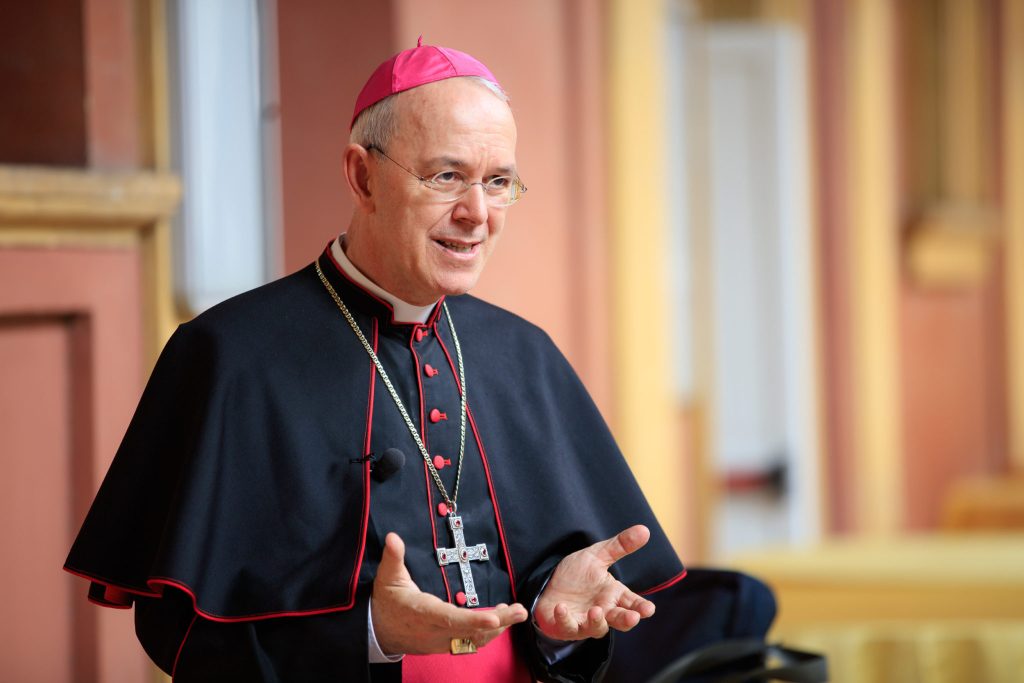
Schneider: Pope Leo “continues” Francis’s reforms
Bishop Athanasius Schneider has said Pope Leo XIV “continues” the course set by Pope Francis, arguing that both pontiffs see recent developments in the Church as a natural consequence of Vatican II. In a recent interview, he also discussed the SSPX, Vatican II and what he described as a doctrinal crisis within the Church. Bishop Athanasius Schneider has said that Pope Leo XIV is continuing the course pursued by Pope Francis. The auxiliary bishop of Astana made the remarks in a lengthy interview published on 8 June on the YouTube channel Veritatis Vox. He discussed Pope Leo’s pontificate, the authority of Vatican II, the doctrinal crisis in the Church and the position of the Society of St Pius X. Reflecting on the new pontificate, Bishop Schneider argued that Pope Francis viewed his reforms as a natural consequence of the council and suggested that Pope Leo shares the same understanding. “Pope Francis, with all his so-called reforms, which were very questionable also doctrinally, was convinced that this is a natural, coherent development of the teaching of Vatican II,” he said, adding: “In this sense, it’s obvious that Pope Leo continues and understands it.” The bishop also delivered a stark assessment of the state of the Church, claiming that some senior clerics had drifted away from the fullness of Catholic teaching. He said a “remarkable number of high-ranking clergy – cardinals and bishops” no longer held “the Catholic faith in its fullness” and had embraced “another church: half Protestant, half worldly, adapted to the spirit of the age”. He argued that attempts to reconcile Catholic teaching with modern secular culture had produced confusion among the faithful. According to Bishop Schneider, some Church leaders had sought to adapt the faith “completely to the world”, resulting in “widespread confusion, obscurity and darkness in doctrine, morals and liturgy”. Much of the interview focused on the continuing debate over Vatican II, a subject that has long divided traditionalist Catholics and Church authorities. Bishop Schneider criticised what he sees as an unwillingness among some Vatican officials to acknowledge difficulties within certain conciliar texts. Referring to comments by Cardinal Víctor Manuel Fernández, prefect of the Dicastery for the Doctrine of the Faith, he said that insisting Vatican II could not be corrected effectively treated “a pastoral, non-definitive council as if it were infallible”. He added that Church authorities had spent decades treating the council as “a de facto untouchable teaching”. The bishop also challenged comments by Cardinal Gerhard Müller, the former prefect of the Congregation for the Doctrine of the Faith, who has argued that the council must be accepted in its entirety. Bishop Schneider said such a position was “not correct”, maintaining that Vatican II and Pope St Paul VI had explicitly stated that the council did not intend to define new dogmas or issue definitive teachings binding on all Catholics. He added that Cardinal Müller “directly contradicts the Council itself and Paul VI”. Addressing broader questions of authority within the Church, Bishop Schneider criticised what he described as demands for unquestioning acceptance of disputed teachings. “To demand acceptance of problematic teachings by ‘switching off our intellect’ is an abuse of authority,” he said, invoking a well-known observation by G.K. Chesterton that Catholics are asked to remove their hats when entering church, “not their heads”. The bishop further argued that elements of Vatican II placed excessive emphasis on human concerns at the expense of the supernatural mission of the Church. He said the council contained “tendencies toward naturalism and anthropocentrism, emphasizing temporal realities at the expense of the supernatural life of grace and eternity”, identifying the pastoral constitution Gaudium et Spes as “the clearest expression of this tendency”. He also referred to the late Belgian Cardinal Léon-Joseph Suenens, one of the most influential figures at the council, who famously described Vatican II as a “French Revolution inside the Catholic Church”. Bishop Schneider said that “in some way, he was correct”, arguing that the council initiated a process that encouraged naturalistic and anthropocentric approaches within ecclesial life. The interview also addressed the Society of St Pius X, whose relationship with Rome remains in limbo as the 1 July episcopal consecrations approach. Bishop Schneider defended Catholics attached to the SSPX and questioned what he described as unequal disciplinary standards within the Church. Referring to the possibility of sanctions against traditionalists, he said it would be unjust to punish those who “recognize the Pope” and wish to “serve the Roman Church” but find themselves facing “a dilemma of conscience”. By contrast, he criticised supporters of Germany’s Synodal Way and other bishops whom he accused of promoting doctrinal error without consequence. “Meanwhile,” he said, “the German Synodal Way and other bishops around the world proclaim openly heresies and commit blasphemies really during liturgies, all unpunished, not admonished.” Photo credit: Voice of the family
Jun. 10, 2026
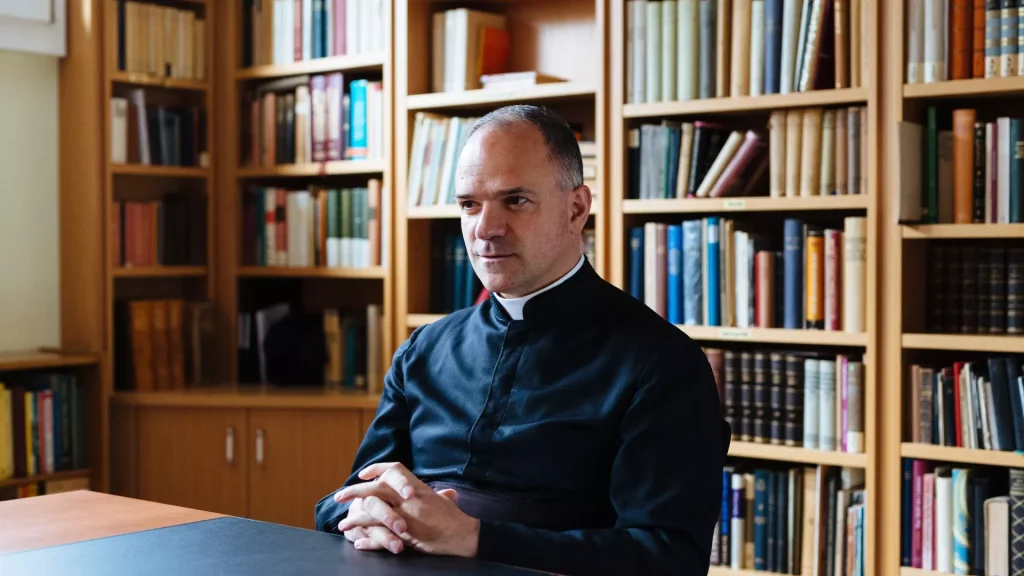
SSPX superior says he is ‘astonished’ by Pope Leo XIV’s silence over bishop consecrations
The Superior General of the SSPX has said he is “astonished” that Pope Leo XIV has not personally responded to the society’s request for talks ahead of planned episcopal consecrations on 1 July. Fr Davide Pagliarani also said he still hopes to meet the Pope before consecrations The Superior General of the Society of Saint Pius X has said he is “astonished” that Pope Leo XIV has yet to respond personally to the group’s request for talks ahead of planned episcopal consecrations next month. In an interview with in-house SSPX News, Fr Davide Pagliarani said he still hoped to meet the Pope before four SSPX priests are consecrated bishops at Écône, Switzerland, on 1 July, but admitted he was struggling to understand the Vatican’s silence on the matter. “Of course, that corresponds to my most sincere desire,” Fr Pagliarani said when asked whether he still hoped for a meeting with the Pontiff. “I am nevertheless astonished that, from the Holy Father, there has been no response or personal reaction up to now.” The remarks come days after the SSPX announced the names of the four priests who will be consecrated bishops. In a communiqué issued from the society’s General House in Menzingen, Fr Pagliarani said the names had been presented to Pope Leo “together with certain explanations necessary for a proper understanding of this step”. The planned consecrations pose a significant challenge to the relatively new pontificate. In February, the Vatican warned that episcopal consecrations carried out without papal approval would constitute “a decisive rupture of ecclesial communion” and urged the SSPX to suspend its plans while theological discussions continued. Despite that warning, Fr Pagliarani indicated that he believed direct engagement from the Pope was still possible. “Before perhaps declaring schismatic a society that counts more than a thousand members, and which constitutes a point of reference for hundreds of thousands of faithful around the world, it might be desirable to personally know those who are to be judged,” he said. “The sanction envisaged does not only affect an institution, which, moreover, does not exist in the eyes of the Holy See; it affects people, and people deeply attached to the Pope and to the Church.” He added: “I confess that I struggle to understand this silence, even as we are often reminded of the need to listen to the cry of the poor, that of the peripheries, and even that of the Earth.” The interview also contained a striking assessment of the late Pope Francis, whose pontificate saw a number of practical concessions granted to the SSPX despite the society’s continued criticism of the post-conciliar Church. “The programme that Pope Francis imposed on the universal Church is sufficiently well known and has been widely commented on by the FSSPX,” Fr Pagliarani said. “I believe that, unfortunately, the word ‘disaster’ is the most appropriate to sum up the legacy he has left.” Yet the SSPX superior also spoke warmly of his personal dealings with Francis, saying the late Pope had recognised the good carried out by the society and had shown him considerable kindness. “Pope Francis knew how to recognise, in his own way, the good that the FSSPX does for souls,” he said. Furthermore, “when I asked to meet him at the Vatican, I obtained an audience with him within twenty-four hours, and he proved particularly affable.” The 26 May communiqué which announced the names of the future bishops said the episcopal consecrations would take place “in a spirit of respect towards the supreme authority of the universal Church” and insisted that the move did not represent “a denial of, refusal of, or challenge to the supreme, full, and immediate power of jurisdiction of the Vicar of Christ over the universal Church”. “The ceremony of 1 July will have no other purpose than to ensure the continued administration of the sacraments of Holy Orders and Confirmation, together with those sacramentals reserved to bishops, according to the traditional rite of the Holy Roman Church and the immemorial Faith,” the communiqué said. The four priests named for consecration are Fr Pascal Schreiber, rector of the SSPX seminary in Zaitzkofen, Germany; Fr Michael Goldade, rector of St Thomas Aquinas Seminary in Dillwyn, Virginia; Fr Michel Poinsinet de Sivry, Superior of the Benelux District; and Fr Marc Hanappier, professor of theology at the society’s American seminary. Photo credit: SSPX.org
Jun. 9, 2026
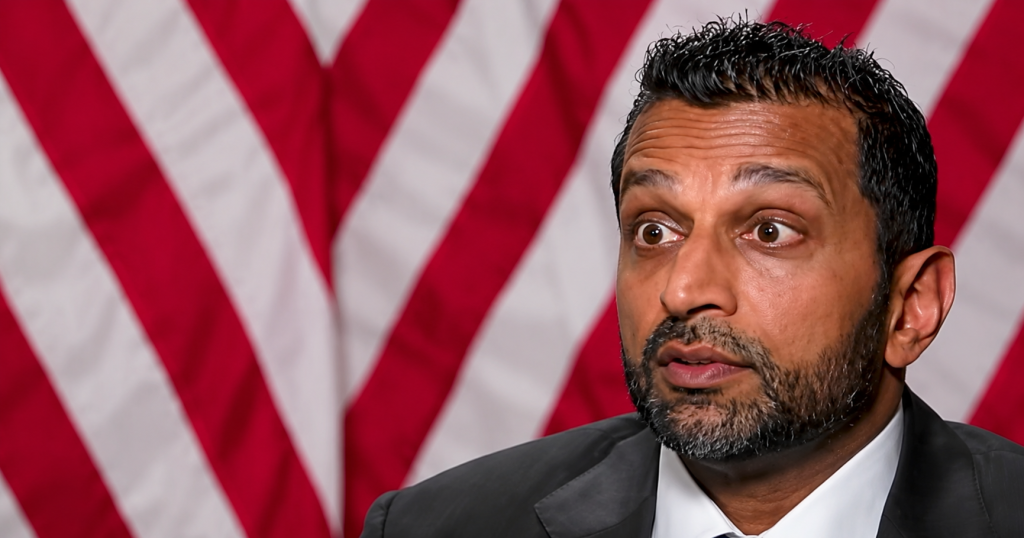
FBI dismisses five employees involved in controversial traditionalist Catholic memo
A controversial FBI memorandum on traditionalist Catholics has claimed more casualties, with five employees now dismissed from the bureau Five FBI employees involved in the production of a controversial memorandum on traditionalist Catholics have been dismissed by the bureau. The employees, reported to include four intelligence analysts and a supervisory analyst, were removed from their positions on 5 June under the leadership of FBI Director Kash Patel. Their lawyer, David Laufman, condemned the dismissals, describing them as “manifestly unjust” and “completely unsupported by the facts”. In a statement, he said: “This action is manifestly unjust, completely unsupported by the facts, and subverts standard FBI policy and procedure.” He added: “These individuals deserved far better for the exceptional and faithful public service they rendered to protect our country.” The firings relate to a January 2023 intelligence memorandum produced by the FBI’s Richmond field office which examined possible links between racially motivated violent extremists and individuals described in the document as “Radical Traditionalist Catholics”. The memorandum emerged from a domestic terrorism investigation involving a Richmond-area individual alleged to have neo-Nazi sympathies who attended traditional Catholic services. The controversy erupted after the memorandum was leaked to the public in February 2023. FBI leadership quickly withdrew the document and distanced itself from its conclusions. Then FBI Director Christopher Wray later told lawmakers he was “aghast” when he learned of the memorandum, while former Attorney General Merrick Garland said he was “appalled” by its contents. The document sought to identify what it described as potential connections between extremist movements and certain fringe traditionalist Catholic circles. It also suggested possible opportunities for intelligence gathering and source development, prompting concerns that practising Catholics could become the subject of inappropriate monitoring. The traditionalist groups referenced included the Society of St Pius X (SSPX) and the Priestly Fraternity of St Peter (FSSP). The memo explicitly noted SSPX-affiliated chapels in the Richmond area of responsibility (AOR) and an FSSP parish there as potential points of contact or locations for monitoring RMVE (Racially Motivated Violent Extremists) activity. Specific cases cited in the memo involved RMVEs attending SSPX-linked churches. One involved a Virginia man, later arrested with Molotov cocktails and other materials, who attended an SSPX chapel for about seven months, described himself as a “radical traditional Catholic clerical fascist”, and expressed neo-Nazi views. Another referenced individuals in California and elsewhere gravitating towards SSPX communities. An internal FBI review subsequently concluded that the memorandum failed to meet required analytical standards. According to findings later provided to Congress, officials involved in the drafting, review and approval of the document failed to provide sufficient evidence to support some of its conclusions and created the appearance that the bureau was conducting investigative activity on the basis of religious affiliation. The review stated: “One of the FBI’s most fundamental principles is that investigative activity may not be based solely on the exercise of rights guaranteed by the First Amendment.” Investigators found shortcomings in the analytical process but did not conclude that those responsible had acted with deliberate misconduct. Particular concern focused on the memorandum’s use of material from outside organisations that had categorised some traditionalist Catholic groups as extremist. At the time, Cardinal Timothy Dolan of New York, speaking on behalf of the United States Conference of Catholic Bishops, described the document as “troubling and offensive” and criticised what he called “religious profiling”. His Eminence also questioned the sources relied upon by the FBI while reaffirming the Church’s opposition to racism, hatred and violence. The fallout from the memorandum continued long after its withdrawal as congressional investigations, whistleblower disclosures and Freedom of Information Act litigation brought further details into the public domain. Subsequent disclosures by the House Judiciary Committee and Senator Chuck Grassley indicated that the document had circulated more widely within the FBI than initially understood. According to records released by congressional investigators, the memorandum was distributed to more than 1,000 FBI personnel before being withdrawn. The same disclosures indicated that officials discussed outreach to Catholic parishes and diocesan leaders as part of efforts to identify potential indicators of extremist activity.
Jun. 8, 2026
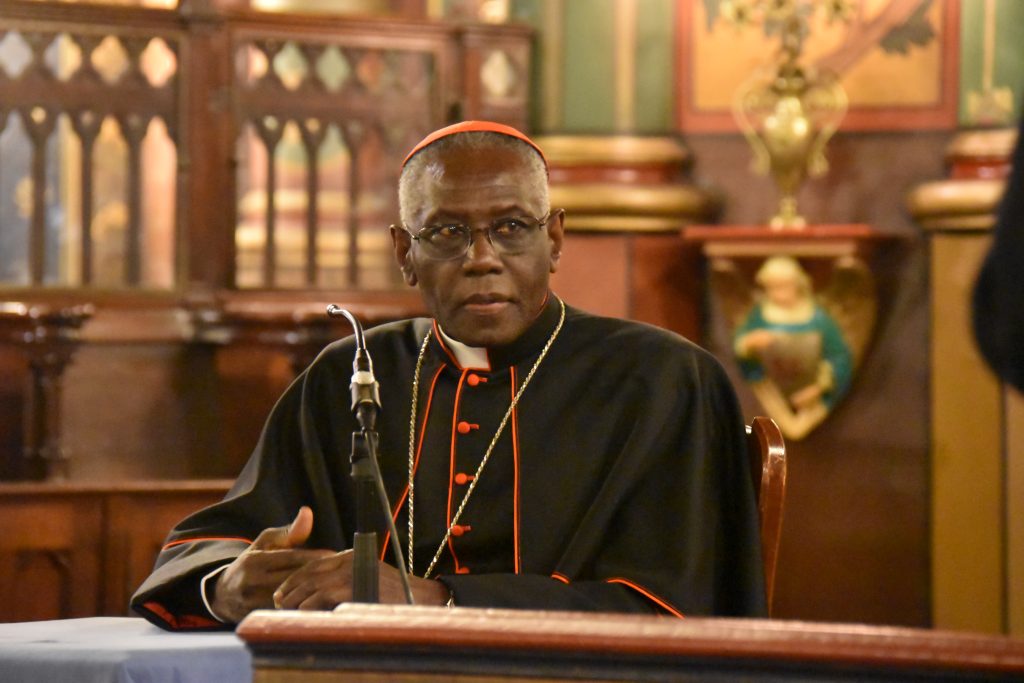
Cardinal Sarah calls SSPX plans a source of “deep grief”
Cardinal Robert Sarah has issued a fresh appeal for unity ahead of the SSPX’s planned episcopal consecrations on 1 July, describing the situation as “objectively serious” and a source of “deep grief” Cardinal Robert Sarah has warned that any episcopal consecrations carried out by the Society of St Pius X (SSPX) without papal approval would further damage the unity of the Church and further separate the traditionalist society from hierarchical communion with Rome. In an interview with the French Catholic publication La Nef , the former prefect of the Congregation for Divine Worship and the Discipline of the Sacraments addressed reports that the SSPX intends to consecrate bishops on 1 July despite objections from the Holy See. Speaking about the prospect of new episcopal consecrations, Cardinal Sarah said the situation remained “objectively serious” and was a source of “deep grief”. “Sources close to the Society have announced new episcopal consecrations for July 1, 2026, and the Holy See has reportedly warned that such an act would constitute a decisive break with ecclesial communion,” Cardinal Sarah said. The Guinean cardinal noted that canon law provides that both a bishop who consecrates another bishop without a papal mandate and the recipient incur automatic excommunication. “Here, the act would be even more serious since it would involve ordaining a bishop against a formal request from the Apostolic See,” he said. The cardinal warned that attachment to Catholic tradition could never be divorced from ecclesial obedience, saying that “fidelity to Tradition cannot be separated from hierarchical communion”. His Eminence stressed that concern for ecclesial unity should not obscure the doctrinal concerns raised by members of the society. “And hierarchical communion, for its part, must never disregard the suffering or the doctrinal questions that have accumulated,” the former prefect said. “Truth and charity must go hand in hand. I believe we need to fast and pray so that the irreparable can be avoided.” Cardinal Sarah has consistently spoken against the SSPX’s planned episcopal consecrations without a papal mandate, scheduled for 1 July 2026. In his public statement, Before It Is Too Late! A Call to Unity , he expressed grave concern over the decision, warning that such disobedience risks an irreversible rupture in the Church. Cardinal Sarah stated: “For this reason, I wish to express my grave concern and my profound sorrow upon learning of the announcement by the Priestly Fraternity of Saint Pius X, founded by Archbishop Lefebvre, of its intention to proceed with episcopal ordinations without pontifical mandate.” His Eminence added: “We are told that this decision to disobey the law of the Church is motivated by the supreme law of the salvation of souls: suprema lex, salus animarum . But salvation is Christ, and He gives Himself only within the Church. How can one claim to lead souls to salvation by paths other than those He Himself has indicated to us?” Beyond the SSPX, Cardinal Sarah made remarks about the state of the Church and Western society, the legacy of Pope Francis, the interpretation of the Second Vatican Council and the challenges facing the pontificate of Pope Leo XIV. Cardinal Sarah also expressed concern about what he described as the return of paganism within the Church. “Paganism is not merely the worship of visible idols; it is also the loss of the meaning of worship itself,” His Eminence said. He warned that when faith is reduced to “sociological language”, liturgy becomes entertainment and morality a matter of perpetual negotiation, meaning that “something of paganism returns”. The cardinal added that the Church must resist adapting herself to the spirit of the age, warning that “permeability to the spirit of the world is the great heresy of our time”. “The world does not expect the Church to repeat its words; it expects it to open Heaven to it,” Cardinal Sarah said. Speaking about the late Pope Francis, Cardinal Sarah said it was legitimate for Church leaders to exercise discernment regarding a previous pontificate, provided it was done with reverence and fidelity. “It is not only permissible, but sometimes necessary, to exercise discernment regarding a period in the life of the Church,” the cardinal said, adding that “a cardinal is not a courtier” but “a servant of truth and a collaborator of the Apostolic See”. “If this pontificate helps the Church to regain more doctrinal clarity, liturgical depth, inner peace and sense of God, then it will render a great service to the faithful,” he said. While rejecting what he described as “worldly assessments” of a papacy, the former prefect acknowledged that pontificates could leave behind “areas of unease or confusion”. The Guinean cardinal argued that “it would be unjust to attribute to a single man a crisis that predates him by a considerable margin”, while also recognising that an era can leave “wounds of confusion”. During the Francis pontificate, Cardinal Sarah emphasised fidelity to the Successor of Peter and rejected any narrative of personal opposition. As prefect of the Congregation for Divine Worship, he met regularly with the Pope as part of his curial responsibilities throughout his seven-year tenure. In a 2021 interview following his resignation as prefect, Cardinal Sarah stated: “Even though some journalists continually repeat the same nonsense, I have never opposed the pope. … Some people insinuate without reason … that we were enemies. It’s not true! Pope Francis likes frankness. We have always worked together with simplicity, despite the fantasies of journalists.” Turning to the Second Vatican Council, Cardinal Sarah argued that some conciliar texts would benefit from greater clarification, while rejecting suggestions that the council itself should be repudiated. “I would speak first of clarifications rather than corrections,” the former prefect said, insisting that “a council must be read within the continuity of the faith as it has always been”. He identified religious liberty, ecumenism, collegiality and the relationship between the Church and the modern world as among the subjects that have generated differing interpretations since the council. “Where certain texts have given rise to divergent, even opposing, interpretations, it is legitimate to call for a deeper examination in order to avoid readings that represent a break with the faith,” Cardinal Sarah said. The cardinal also criticised forms of democracy detached from objective moral truth. While defending democracy as a legitimate political system, he warned that it becomes relativistic when it claims that majorities can determine good and evil. “No procedure can create truth,” Cardinal Sarah said, warning that “a democracy that does not recognize an objective and transcendent limit to its power becomes a dictatorship of relativism”. Despite his concerns about the condition of the Church and wider society, Cardinal Sarah pointed to signs of renewal, including growing interest among young Catholics in Eucharistic adoration, confession and traditional forms of prayer. He also highlighted reports of increasing adult baptisms in parts of Europe as evidence of a renewed search for God amid cultural uncertainty. Looking ahead to the pontificate of Pope Leo XIV, Cardinal Sarah suggested that peace, unity and doctrinal clarity were already emerging as defining priorities. He expressed hope that the new pontificate would help the Church regain “more doctrinal clarity, liturgical depth, inner peace and sense of God”, which would render “a great service to the faithful”.
Jun. 6, 2026
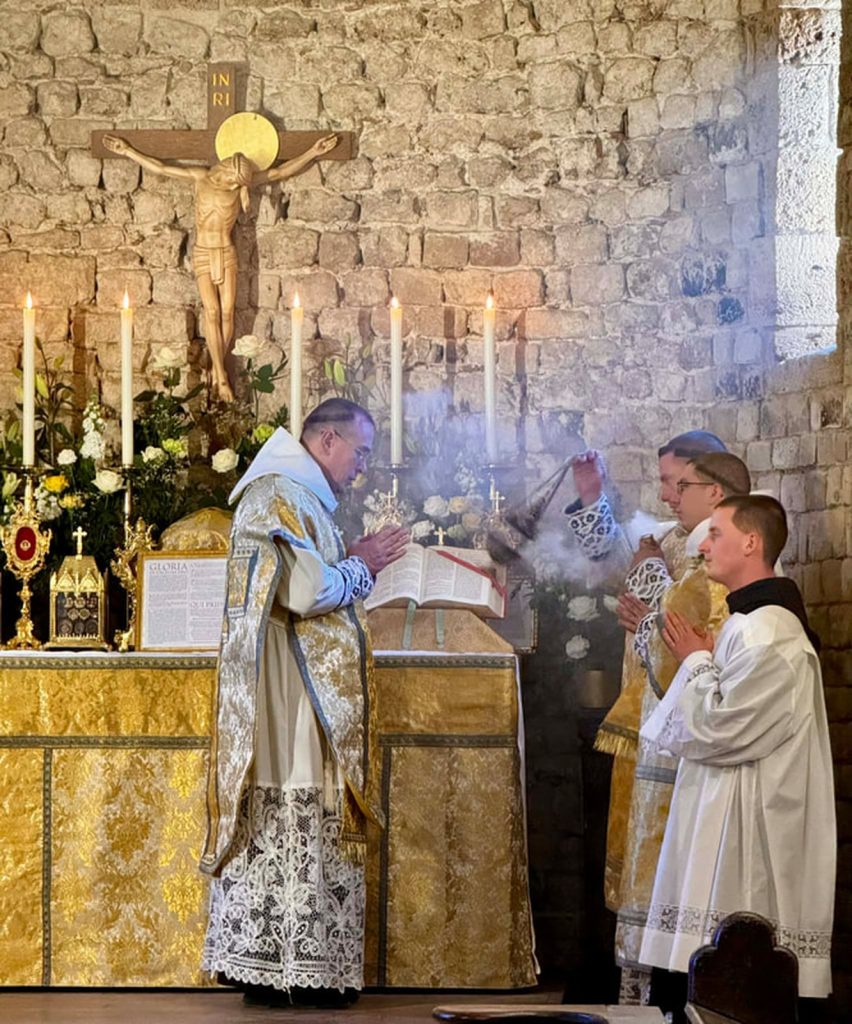
Dom Alcuin Reid calls for month of prayer for the unity of the Church as SSPX consecrations approach
Dom Alcuin Reid, prior of the Monastère Saint-Benoît in France, has called on Catholics to make June a month of prayer and fasting for the unity of the Church ahead of the SSPX’s planned episcopal consecrations on 1 July. He has urged prayers for Pope Leo XIV, his advisers and the Society of St Pius X Monastère Saint-Benoît, an international English-speaking traditional Benedictine monastery in the Diocese of Fréjus-Toulon, France, has called on Catholics to make June a month of prayer for the unity of the Church. The monastery’s prior, Dom Alcuin Reid, explained that “the Church faces the possibility of the hardening of divisions through the positions held by various parties in respect of the episcopal consecrations announced for 1 July by the Society of St Pius X.” The monk also drew on reflections made by Pope Benedict XVI in 2007, in which he stated that, “looking back over the past, to the divisions which in the course of the centuries have rent the Body of Christ, one continually has the impression that, at critical moments when divisions were coming about, not enough was done by the Church’s leaders to maintain or regain reconciliation and unity.” With this in mind, he appealed to Catholics to “make the month of June a time of earnest prayer and fasting for the unity of the Church, praying in particular for the Holy Father and his advisers as well as the leaders of the Society of St Pius X.” For its part, the monastery will offer up one day a week in particular for the intention. Dom Reid stated: “The monastery will observe one day each week as a day of particular prayer and fasting: Wednesdays, June 3, 10 and 17, and Friday, June 26 (respecting the feasts of the Sacred Heart and St John the Baptist). On these days the Conventual Mass will be a votive Mass Pro unitate Ecclesiae, and a Holy Hour of adoration will be offered before the Most Blessed Sacrament from the Office of Sext, concluding with Benediction of the Most Blessed Sacrament.” Dom Alcuin Reid is a renowned liturgical scholar whose 2004 book, The Organic Development of the Liturgy , featured a foreword by the then Cardinal Joseph Ratzinger. In 2011, he went on to found the Monastère Saint-Benoît at the invitation of the then Bishop of Fréjus-Toulon, Bishop Dominique Rey. The monastery seeks to live a classical Benedictine life, celebrating the sacred liturgy in all its fullness according to the older traditional Latin forms of the Roman and monastic rites.
Jun. 1, 2026