I have been surprised at the extent of anxiety and animosity that almost always accompanies any discussion about the relationship between the SSPX and the Vatican.
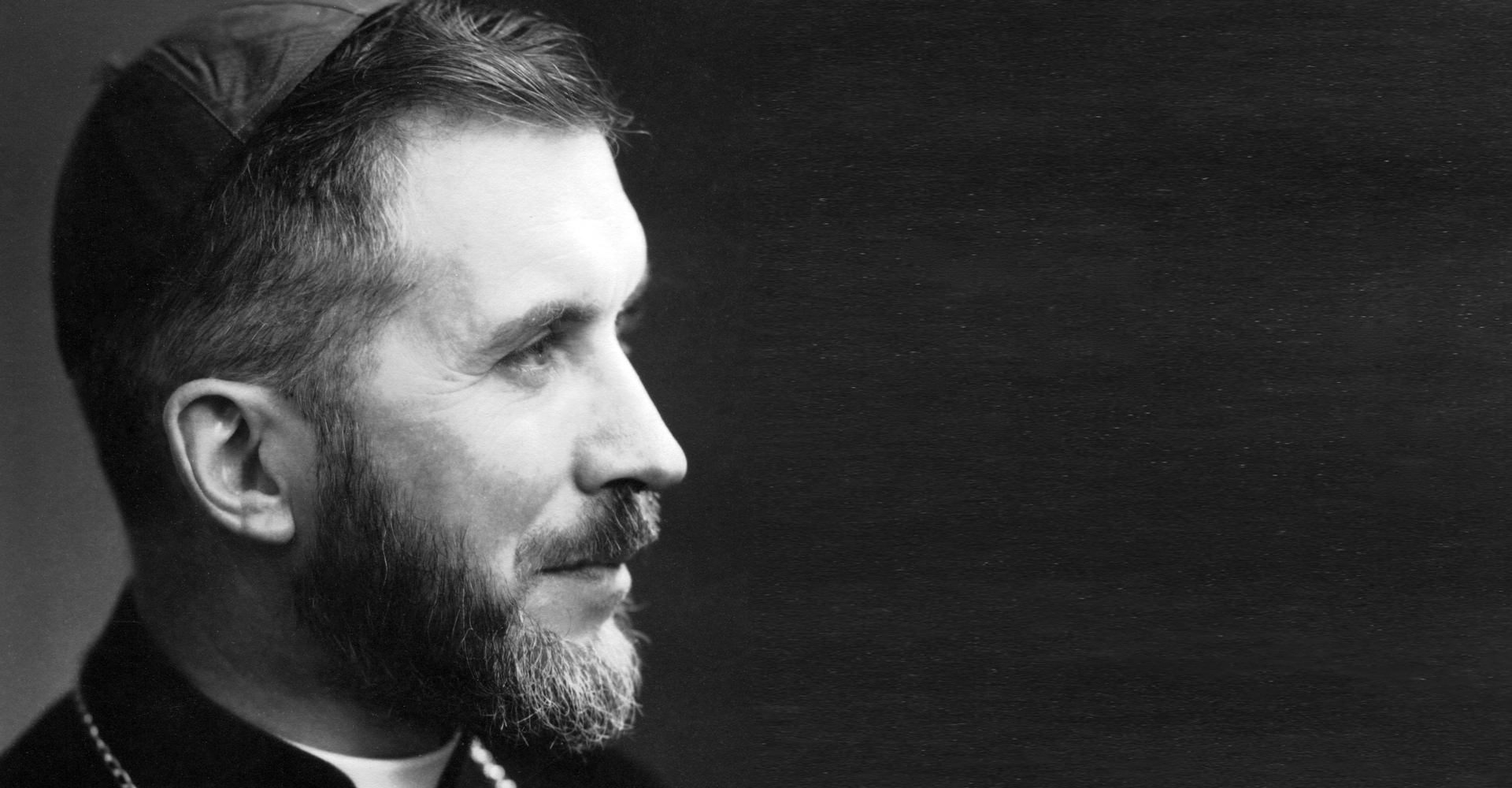
Over time, I have become increasingly grateful for and impressed by the witness and courage of Archbishop Lefebvre — but equally impressed by the flexibility of Benedict XVI and the way in which the dynamic relationship between the SSPX and the Vatican changed and modulated under his leadership.
Of course, much of the anger and fear can be traced back to the complex question of the Second Vatican Council, the period of its reception, and the troubling phenomenon of “the spirit of Vatican II”.
One of the attractions of the SSPX is that it cuts through the whole complexity like Alexander’s sword through the Gordian knot. Once you have accepted the SSPX and the integrity of its arguments, you no longer have to think or struggle with the difficulties that the Council and its reception throw up.
As I have listened to people arguing on both sides, it has become clear that neither possesses a monopoly on unreasonableness, stubbornness, name-calling, vitriol, or misrepresentation. But one of the formative elements in my own becoming a Catholic was the importance of the Magisterium.
I was one of those Anglicans who found it easy to persuade himself that, as an Anglican, I had the best of both worlds: Catholic integrity combined with Anglican freedom. I do not normally talk much about my time as an episcopal bishop, but one of the attractions of the invitation to accept consecration — in order to provide a foundation for dissident Anglicans fleeing the collapse of the Church of England but too anxious to convert fully to Rome — was the creation of yet another halfway house: a mixed ecclesial economy with enough that looked Catholic to persuade its adherents that they were Catholic, without requiring them to take the full step of submitting to the authority of the Holy Father and accepting in full the Catechism and the Magisterium.
As it happened, the experience of trying to negotiate between different Anglo-Catholic groupings as we sought to construct a coalition of sacramentally minded Anglicans was one of the things that deepened my love and appreciation of the Magisterium.
The moment one steps outside the authority of the Catholic Church and the privilege of being in communion with Rome, one enters a hinterland of revolution where the epistemological centre of one’s spirituality shifts from the Petrine river of authenticity to oneself. One might even describe this as the Protestant spirit.
And the difficulty is this: it does not matter how Catholic your investments are, how Catholic your liturgy is, or how Catholic your spirituality may appear — if one is outside communion with Rome, one is not Catholic.
It does not really matter what kind of heretical or schismatic posture one eventually adopts. It does not matter whether one is slightly to one side of the dotted line on the Anglican side, or slightly to the other side on the ultra-Catholic side.
The end result is the same. If you are outside of communion with Rome, you are no longer truly Catholic. It is the Magisterium and communion with Peter that provide the distinctive difference.
One of the temptations of supporting the SSPX is, of course, the fact that one no longer has to remain patient with the whole process of infighting and interpretation that the reception of the Council’s documents requires.
Particularly within our modern culture, ten years can seem like a millennium. But as it happens, it does take longer for the full implications of a Council to seep into the bloodstream of the Church as the balancing act between past and present is refined and modulated.
The relief and joy of abandoning the obscure hinterland where private judgement takes precedence over obedience and submission is something I would never want to exchange for a personalised validation of the faith — attractive though it may seem when the people running the show appear untrustworthy, unattractive theologically, or compromised in ways that place them at odds with authentic magisterial spirituality and identity.
I am beginning to think from my conversations with informed individuals that although I had hoped Cardinal Fernández was operating independently from Leo XIV, it may be that the threatened excommunication is not a bluff. It may be that to consecrate bishops without papal approval is one that simply cannot be accepted by the Pope under any circumstances.
It is very easy to compare the way in which the German Synodal Path has pushed at the limits of orthodoxy on the left — without being sharply reined in or excommunicated — and compare that unfavourably with the way the SSPX are being treated.
But I think this mistakes the notion of symmetry. In political terms, there is no symmetry between those committed to progressive utopianism on the one hand and those committed to conserving and protecting what is good on the other, as though they were merely equal and opposite distortions of the same instinct.
Likewise, I do not think that the liberal-progressive abuses of the Catholic faith on the left are equivalent to the proposed refusal to accept the limitations of canon law on the sacramental and traditionalist right.
That is not to say I have any sympathy at all with the idiocies and Protestantisation of the faith in which the German Synodal process continues to indulge.
But on the left, this generally takes the form of abusing process, stretching boundaries irresponsibly — the behaviour of a recalcitrant teenager not yet fully prepared to leave home forever, but continually testing how far the boundaries can be pushed. On the right, however, what the SSPX is contemplating is a direct and dramatic repudiation of canon law and obedience in a way that strikes at the very heart of Catholic order and Catholic identity.
Bishops derive their authority from the Pope himself. Otherwise, in any true conceptual sense, they are not Catholic bishops at all. They become bishops of protest — bishops whose consecration is born out of a determination to protest against Petrine authority.
However attracted I may be to the integrity of the Latin Mass, and however deep my mistrust of the inadequacies of the Novus Ordo may at times be, the boundary of canon law and obedient episcopal order becomes impossible to ignore.
Schism is rather like pregnancy because one can no more be “a little bit pregnant” than one can be “a little bit schismatic”.
I hope very much that Cardinal Fernández is bluffing. I hope very much that Leo XIV may simply have given him room to manoeuvre in order to test what may come of negotiations with the SSPX. However, if I am wrong, and if the SSPX do not back down — which seems the only likely scenario at present — then I would not exchange communion with Peter and the protection of the Magisterium for a quick-fix protest against the spirit of Vatican II.
The price is too high.