

Sspx
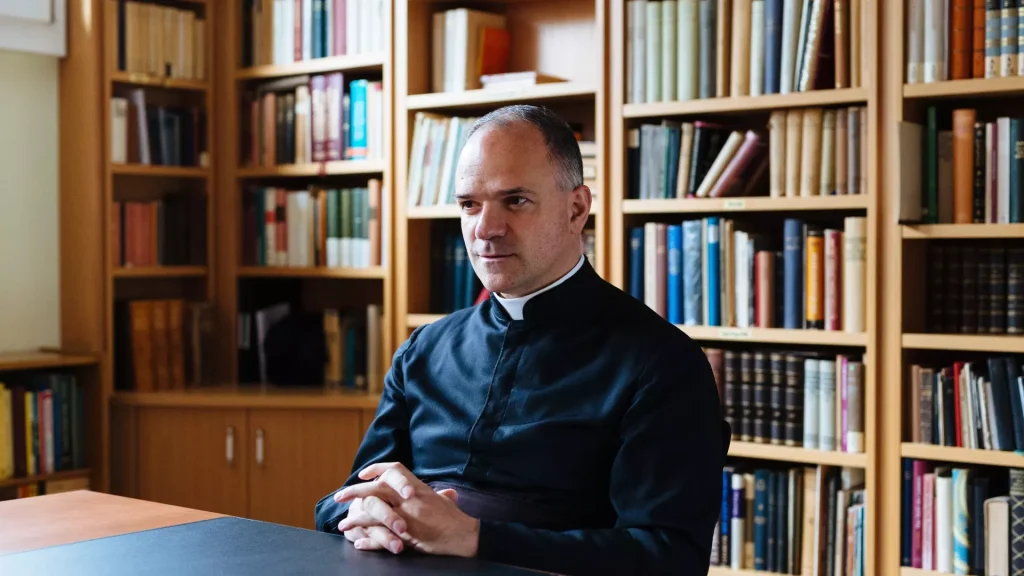
Fr Pagliarani’s letter to Pope Leo XIV over episcopal consecrations
Fr Davide Pagliarani has responded to Pope Leo’s letter regarding the Society of Saint Pius X’s planned episcopal consecrations but stopped short of saying whether the fraternity intends to suspend the ceremony. Responding to the Pope’s personal letter, published by the Vatican on 30 June, the Superior General of the Society thanked the Holy Father […] Fr Davide Pagliarani has responded to Pope Leo’s letter regarding the Society of Saint Pius X’s planned episcopal consecrations but stopped short of saying whether the fraternity intends to suspend the ceremony. Responding to the Pope’s personal letter, published by the Vatican on 30 June, the Superior General of the Society thanked the Holy Father for his “paternal solicitude” before appealing for more time and asking him not to make a final decision concerning the fraternity. “Thank you very much for the letter that Your Holiness so kindly addressed to me. I have been deeply touched by Your paternal solicitude,” Fr Pagliarani wrote. He said he had long hoped to meet Pope Leo personally to explain the Society’s position. “For a long time, I had hoped to have the opportunity of meeting You in person, in order to express to You directly our sincere desire to serve the Church. Unfortunately, that opportunity has not presented itself,” he said. Fr Pagliarani insisted the Society’s intentions towards Rome remained genuine, adding: “I ask only that You consider the sincerity of this intention, which is in no way feigned.” He argued that, in the Society’s view, its actions were aimed at preserving rather than damaging the unity of the Church. “Paradoxically, in the present circumstances, we believe it to be our very duty to do everything possible to mend Christ’s seamless garment, torn by forces and pressures incompatible with a truly Catholic spirit. I ask only that You consider the authenticity of this intention before making a decision concerning the Society of Saint Pius X. It is not yet too late.” The Superior General also rejected any suggestion that the Society wished to break communion with Rome, writing: “Far be it from us to separate ourselves from the Roman Church. We desire, on the contrary, to serve her by means that are extraordinary, as one would assist a mother in distress who requires particular help, even if such help is not understood by everyone. Yet I am certain that the Holy Father could understand it.” Rather than announcing whether the planned episcopal consecrations would proceed, Fr Pagliarani instead urged Pope Leo to delay any judgement, writing: “The Holy See has shown itself capable of understanding very complex situations and of allowing time for discernment. “May I therefore filially ask Your Holiness to take the time necessary for that discernment.” The Society’s Superior General also pointed to the history of relations between the Holy See and the fraternity following the episcopal consecrations carried out by Archbishop Marcel Lefebvre in 1988. “First, in 1988 the Society was already declared schismatic, for reasons and in circumstances entirely analogous to those of today. Yet, after so many years, we are speaking together as a father and his son.” He continued: “Your Holiness is paternally urging me to avoid a schism which, theoretically, has already taken place. Does not Your very attitude—whose paternal concern I deeply appreciate—constitute proof that the Society is neither schismatic nor hostile to the Church?” Fr Pagliarani also referred to the late Bishop Vitus Huonder, the former Bishop of Chur, and Bishop Athanasius Schneider, Auxiliary Bishop of Astana, both of whom he said had engaged with the Society on behalf of the Holy See. Fr Davide Pagliarani also referred to the late Bishop Vitus Huonder, the former Bishop of Chur, and Bishop Athanasius Schneider, Auxiliary Bishop of Astana, both of whom he said had engaged with the Society on behalf of the Holy See. “Both, after taking the necessary time for discernment, recognised the profoundly Catholic spirit of the Society and bore public witness to it.” Appealing on behalf of the Society’s faithful, Fr Pagliarani wrote that “thousands of souls” had rediscovered the Catholic faith through the fraternity’s apostolate. “These souls have but one desire: to attain salvation through this instrument which Divine Providence has placed at their disposal. They have suffered, and they are sincere.” He added that he believed Pope Leo’s “paternal heart as universal Shepherd will be moved by this very particular situation”, expressing confidence that “one day, all the difficulties between the Holy See and the Society will be resolved.” The letter concluded with a direct appeal to the Pope to allow the consecrations to proceed: “A gesture of understanding on Your part, far from harming unity, could only manifest before the world and before all Christians Your concern for unity and Your goodness as a father. “I leave all this to Your consideration. I renew my prayers for Your Holiness.” Fr Pagliarani ended by referring to his prayers to St Rita, writing: “For a long time, even before Your election, I have been praying to Saint Rita for the present situation. I saw in the election of an Augustinian Pope a sign of hope. I am certain that the Saint will intercede. It is never too late.” The Society’s letter came hours after Pope Leo XIV issued an unprecedented public appeal urging the fraternity to abandon its plans to consecrate bishops without a pontifical mandate. Writing “with a paternal heart”, the Pope praised members of the Society for their “devotion to liturgical life, commitment to priestly formation, apostolic zeal and desire for fidelity to Tradition”, adding that these qualities had inspired the “attentive and generous attitude” shown by his predecessors. The Pope nevertheless warned that proceeding with the ceremony would amount to “a schismatic act” and made a personal plea to the Society. He wrote: “In this spirit, and filled with Christian affection, I plead with you and ask you with all my heart: please turn back!” The Pontiff also warned of the consequences for the faithful attached to the Society, writing: “I urge you to consider carefully the spiritual good of the faithful, because the schismatic act you are about to undertake would deprive them of the licit and, in some cases, even valid reception of the Sacraments, which they love and seek for their sanctification.” While reaffirming that “the Church is open to a path of dialogue and understanding that the Holy Spirit can make possible and fruitful”, Pope Leo concluded with a final appeal: “With a sorrowful yet hopeful heart, I feel it is my duty, through the authority received from Christ, to ask you to desist from your intended act.” The Vatican published the Pope’s letter on 30 June, the eve of the consecrations due to take place at the Society’s international seminary at Écône.
Jun. 30, 2026
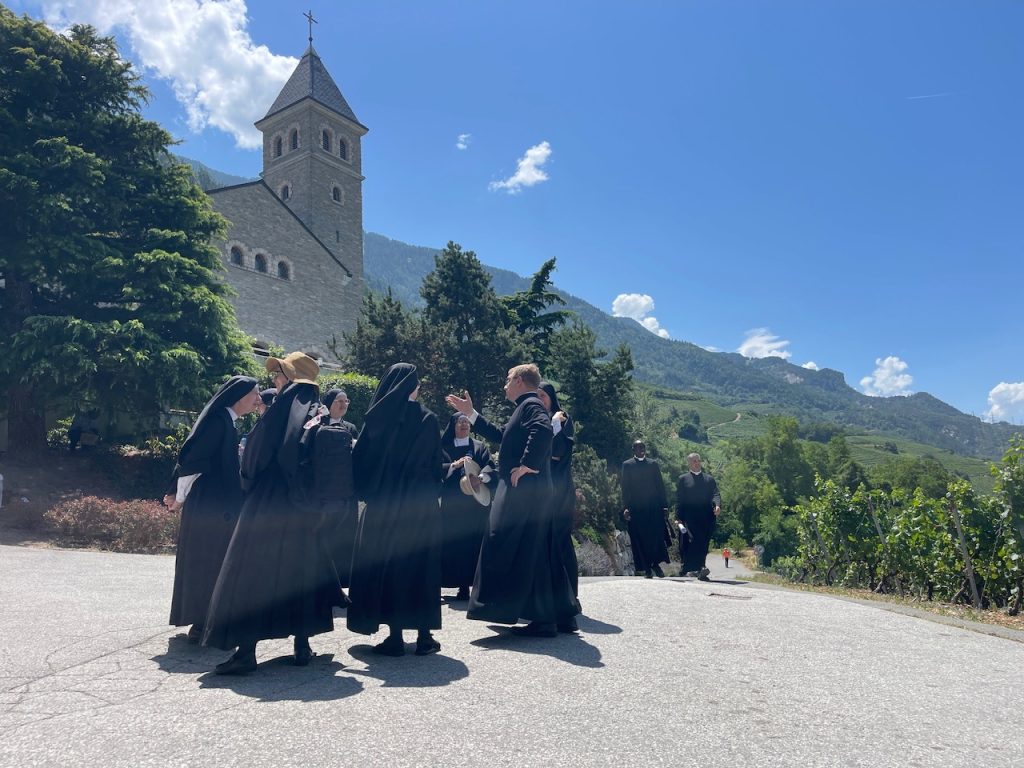
LIVE from Écône: SSPX reacts to Pope Leo XIV’s consecrations plea
The SSPX has reacted to Pope Leo XIV’s final plea not to proceed with tomorrow’s episcopal consecrations at Écône, with priests and faithful telling AdVaticanum the appeal will not change the Society’s plans. Read the full story Pope Leo XIV has made a final appeal, a day before the consecrations, to the Society of Saint Pius X not to proceed with its planned episcopal consecrations. The Pope’s letter, dated 29 June, the Solemnity of Saints Peter and Paul, was published by the Vatican on 30 June, the eve of the consecrations due to take place at Écône, Switzerland. It was addressed to Fr Davide Pagliarani, the Superior General of the SSPX, and, through him, to the society’s bishops, priests, seminarians and faithful. It warned that the ceremony would constitute a “schismatic act” and urged the SSPX to “please turn back”. Writing “with a paternal heart”, Leo acknowledged the qualities he said had characterised many within the society, praising their “devotion to liturgical life, commitment to priestly formation, apostolic zeal and desire for fidelity to Tradition”. He added that these qualities had motivated the “attentive and generous attitude” consistently shown to the fraternity by his predecessors. The Pope nevertheless made a direct plea for the society to abandon its plans. “In this spirit, and filled with Christian affection, I plead with you and ask you with all my heart: please turn back!” His Holiness wrote. “I urge you to consider carefully the spiritual good of the faithful, because the schismatic act you are about to undertake would deprive them of the licit and, in some cases, even valid reception of the sacraments, which they love and seek for their sanctification,” His Holiness continued. Leo also stressed that the Holy See remained willing to continue discussions with the fraternity. “The Church is open to a path of dialogue and understanding that the Holy Spirit can make possible and fruitful,” the Pope wrote. Concluding the letter, the Pope warned of the seriousness of the proposed consecrations, writing: “I pray for you, because to tear the seamless garment of Christ is a sin of extreme gravity. May the Lord enlighten your consciences and awaken your hearts.” He concluded: “With a sorrowful yet hopeful heart, I feel it is my duty, through the authority received from Christ, to ask you to desist from your intended act.” The letter is the latest intervention by the Holy See as it attempts to prevent the society from proceeding with the consecrations without a pontifical mandate. On 13 May, the Vatican warned that the planned consecrations would constitute a schismatic act and said that the bishops carrying out the ceremony, together with those receiving episcopal ordination, would incur automatic excommunication. Pope Leo subsequently confirmed on 16 June, outside Castel Gandolfo, that the Holy See was preparing a final appeal to the SSPX, warning that the proposed consecrations risked creating a new schism within the Church. The situation recalls 30 June 1988, when Archbishop Marcel Lefebvre consecrated four bishops at Écône without the approval of Pope St John Paul II. The Vatican declared the act schismatic, and Lefebvre, Bishop Antônio de Castro Mayer and the four newly consecrated bishops incurred automatic excommunication. Although Pope Benedict XVI lifted the excommunications of the surviving bishops in 2009 as part of efforts to encourage reconciliation, the SSPX has remained without canonical status in the Church. The society had not publicly responded to the Pope’s letter at the time of publication. However, reporting from Écône suggests that many priests and lay faithful have reacted strongly to the letter. Sources within the SSPX, speaking both on and off the record, have highlighted what they perceive as a lack of genuine doctrinal resolution and a continuation of past perceived betrayals. Brother Gabriel of the SSPX in the United States told AdVaticanum that the letter would not change anything, stating: “I don’t agree with that [letter from Leo].” A priest of the Society stationed in Asia, speaking to AdVaticanum strictly off the record, dismissed the papal letter in blunt terms. “This was complete nonsense,” he said. He added that the letter failed to address the core theological and liturgical concerns that have defined the SSPX for decades. Another Society priest said: “Far from offering any meaningful path forward, this letter sidesteps the real issues.” A French priest of the Society offered an even sharper critique, framing the letter as a belated and inadequate gesture. “It is a little too late for reconciliation after the betrayal of the Holy Father,” he remarked. He continued: “After years of ambiguities and a steady erosion of doctrine under the guise of ‘dialogue’, this won’t change anything.” An American priest of the Society described the letter as largely ineffective and expressed a measured note of spiritual concern for the Pope. “It was useless,” he said plainly, “and I pray for the Holy Father.” Jim Piante, a longtime lay supporter of the Society of Saint Pius X from the Charlotte area of North Carolina, offered a direct and unapologetic assessment of Pope Leo’s recent letter urging the Society not to proceed with the 1 July episcopal consecrations. Speaking personally and not on behalf of the Society or his parish of Saint Anthony in Mount Holly, Piante noted that the letter itself acknowledges the Society’s fidelity to Tradition, devotion to the Faith and robust liturgical life. “What is it that makes this a quote-unquote schismatic act?” he asked. “Only that Pope Leo does not grant authorisation.” In his view, the entire controversy would evaporate if the Holy Father simply recognised the worthiness of the men chosen for consecration, who have “proven themselves as genuinely Catholic in every way”. Piante argued that authorisation would resolve the matter instantly, highlighting what he sees as the letter’s failure to address the real pastoral needs of the Church. Regarding the possibility of excommunication extending beyond the bishops and priests to the lay faithful who attend SSPX chapels, Piante remained resolute and unmoved. “I would do the same thing tomorrow that I did today. Nothing different,” he stated firmly. He emphasised that his primary duty as a Catholic layman is not to resolve the institutional problems of the Church but “to save my soul and the souls of my wife and my children, and all those whom I can potentially influence.” Marie Flick, a parishioner at a Society of Saint Pius X church in Kansas City, Missouri, described the atmosphere ahead of the 1 July episcopal consecrations as vibrant and full of hope. When asked about the prolonged negotiations with Rome and Pope Leo’s recent letter urging the Society to reconsider the consecrations, Flick expressed disappointment. She pointed out that talks had dragged on since February with little progress and questioned why the Holy Father had not met personally with the Society’s Superior General. She said: “The Pope could have met with the SSPX, just like he met with the head of the Anglican bishops, the Archbishop of Canterbury. He’s been very open about meeting with other figures as well. Why not be open to meeting with the head of the SSPX? That’s just my opinion.” Despite being released at around 11 a.m. on 30 June, the letter was intentionally dated the Solemnity of Saints Peter and Paul, 29 June. This is understood to signal the authority with which the Pontiff issued his appeal, noting in the text that he has a “paternal” “duty”, as “the Successor of the Apostle Peter”, and possesses “authority received from Christ”. It is understood that this was intended as a signal to the SSPX of the Pope’s willingness to exercise his pontifical authority if the Society proceeds with the consecrations, while also implicitly calling for its obedience to him as Supreme Pontiff. The letter’s opening praise for the Society’s fidelity and apostolic work also appears to express a willingness to pursue reconciliation. It is notable that the text implies that, at present, the Society possesses licit and valid sacraments, which would be jeopardised if the consecrations were to proceed. Despite stating that there remains within the Church a “path of dialogue and understanding”, the letter offers no further indication of how the two parties might be reconciled beyond cancelling the consecrations, which Leo describes as a “sin of extreme gravity”.
Jun. 30, 2026
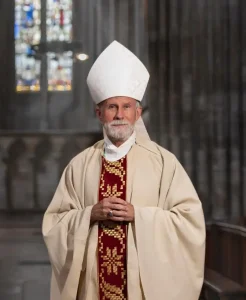
Bishop Strickland gives another reflection on the SSPX
In a new reflection on the Society of St. Pius X, Bishop Joseph Strickland examines the legacy of Archbishop Marcel Lefebvre In the wake of the July 1 consecration of new bishops for the Society of Saint Pius X, Bishop Joseph Strickland has given his view on the SSPX at large. Writing on his website, Pillars of Faith , the former Bishop of Tyler encouraged readers to, as discussions continue regarding the Society of St. Pius X, ask themselves: “What has moved these priests and faithful throughout the past fifty years?” The 67-year-old bishop did not wade into the consecrations themselves, but instead took a step back and examined the life of Archbishop Marcel Lefebvre, the Society’s founder, whose desire to preserve what he believed to be the authentic faith of the Church led to conflict with Rome and ultimately to his excommunication, a penalty he carried until his death in 1991. The bishop said that Archbishop Lefebvre “did not embark upon this path because it was easy, nor because it brought him honor or peace”, but because “he believed that precious treasures entrusted by Christ to His Church – the Holy Sacrifice of the Mass, the reverent celebration of the sacred mysteries, the formation of holy priests, and the perennial teachings of the Catholic Faith – were in danger of being diminished.” Bishop Strickland suggested that this had been a consistent theme throughout the Society’s history, stating that “looking honestly at their history, one sees men and women who have sacrificed greatly because they believed they were preserving the treasures entrusted to the Church by Christ Himself.” Acknowledging that many Catholics would disagree with the Society’s decision not to submit to Rome at various points in its history, the bishop wrote that “whether every decision made along the way was prudent is a question that reasonable Catholics may discuss”, but reaffirmed that its motivation was “to remain close to Our Lord and faithful to the deposit of faith.” Reflecting on the present state of the Church, Bishop Strickland said that “across the world, many public challenges to Catholic doctrine and morality have caused great confusion among the faithful” and asked: “Why do those who openly reject settled teachings of the Church often appear to face little correction, while those whose deepest desire is to preserve the Church’s sacred inheritance are viewed with the gravest penalties?” Entrusting the matter to Divine Providence, he further asked that every Catholic “pray – not only for the faithful of the Society of St. Pius X, but also for the Holy Father, for the bishops, and for all those entrusted with the grave responsibility of shepherding Christ’s flock.” The bishop’s reflection follows a similar pattern to that of a number of Church figures in recent years who have been reluctant to criticise the intentions of Archbishop Lefebvre and the Society itself, but have instead sought to heal the divide between the Society and Rome. His reference to those “who openly reject settled teachings of the Church” and “face little correction”, while there has been talk of the wholesale excommunication of members of the Society, is a point that many have commented upon. Bishop Strickland was likely referring to the German Synodal Way and other Catholic groups that have issued proposals seeking changes to Catholic moral teaching. Many have pointed to what they see as an inconsistency in comparison with the Society. While some might legitimately argue that the Society deviates from Catholic doctrine by questioning the Second Vatican Council and aspects of its teaching, the German Synodal Way has openly and repeatedly questioned Catholic teaching on sexuality and the liturgy, in a way that many believe goes considerably further in the opposite direction than the SSPX. Bishop Strickland himself is no stranger to public disagreement with Church authorities. Particularly critical of Pope Francis’ pontificate, the Diocese of Tyler was subjected to an apostolic visitation in 2023 during his leadership. The visitation ultimately led to his removal from office later that year. While he did express concern over Pope Leo’s election in 2025, telling commentator Glenn Beck, “He was involved in naming bishops that I find very troubling”, he has generally been significantly less critical of the current pontificate. Bishop Strickland’s previous commentary on the Society has followed a similar line. Writing in February this year, he said that “when those who openly contradict the Church’s teaching are tolerated, while those who seek continuity are treated as suspect, something has been inverted.”
Jun. 26, 2026
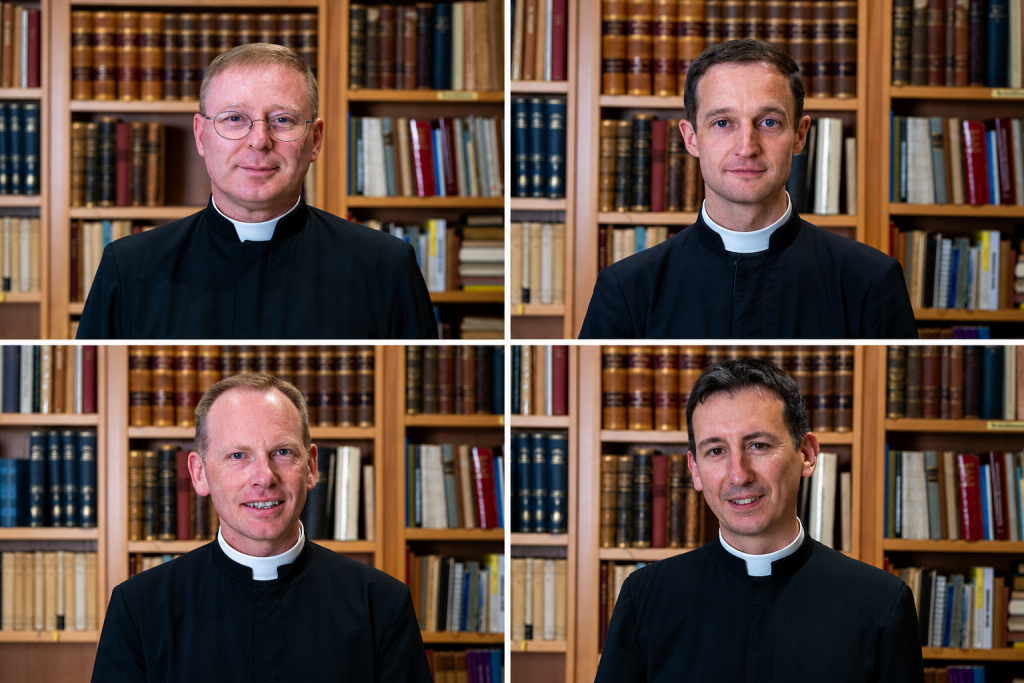
Mottos and Coats of Arms of new SSPX bishops released
The SSPX has released the episcopal mottos and coats of arms of the four priests who will be consecrated bishops at Écône on 1 July Ahead of the 1 July consecrations at Écône, the Society of Saint Pius X has released the coats of arms and episcopal mottos of the four priests who are to be consecrated bishops. With two of the bishops from France, one from Switzerland and one from the United States, the coats of arms incorporate their nationalities and cultural heritage, as well as their spiritual influences and the paths that led them to the priesthood. Tens of thousands are expected to gather at Écône for the consecrations, which will go ahead without a papal mandate, with the Society stating that there is a “grave necessity for the salvation of souls”. At present, only two of the bishops consecrated by Archbishop Marcel Lefebvre in 1988 are still alive: Bishop Bernard Fellay and Bishop Alfonso de Galarreta. The Society has more than 700 priests serving an estimated one million faithful throughout the world. With both remaining bishops now in their late sixties, the Society considers it necessary to provide younger bishops to continue its work and provide for the needs of its priests and faithful. Below are their coats of arms, alongside their official photographs released by the Society. Bishop-elect Schreiber Bishop Pascal Schreiber’s coat of arms is quartered, following a long-standing heraldic tradition in German-speaking countries. The first quarter features the triumphant face of Christ the King as seen in the vision of Saint Nicholas of Flüe, patron saint of Switzerland, whose spirituality the bishop credits with inspiring his vocation to the priesthood. In the saint’s vision, the six rays surrounding Christ’s face symbolise God’s perfect knowledge, wisdom and presence, while also expressing the believer’s journey towards a deeper understanding of the divine through prayer and contemplation. The second and third quarters display the Schreiber family arms: a golden lion holding a quill on a red field. The lion represents courage, strength and kingship, while the quill is a reference to the family name, Schreiber , meaning “scribe” or “writer”, and symbolises literary work. The fourth quarter contains an eight-pointed golden star on a black field. The star recalls both Christ, the “bright morning star”, and the Blessed Virgin Mary under her title Stella Maris (“Star of the Sea”), while also referring to Saint Nicholas of Flüe, who recounted seeing a star that illuminated the world before his birth and later became a recurring feature of his mystical life. The use of black, red and gold throughout the shield also reflects the colours of the German flag, acknowledging the country in which the Society’s seminary at Zaitzkofen is situated. The bishop-elect has chosen the motto Virgo Fidelis (“Virgin Most Faithful”), taken from the Litany of Loreto. The title expresses Mary’s perfect fidelity to God as daughter of the Father, Mother of the Son and Spouse of the Holy Ghost, while asking her intercession that Christians may remain faithful to their own vocation. The motto also holds particular significance within the Society of Saint Pius X. Archbishop Marcel Lefebvre included the invocation Virgo Fidelis in the Society’s statutes, encouraging its members to renew their commitments each year on the Feast of the Immaculate Conception by seeking from the Blessed Virgin “the grace of fidelity”. The bishop-elect also points to the title as a reminder of the virtues of purity and fortitude, concluding with Christ’s words from the Beatitudes: “Blessed are the clean of heart: for they shall see God.” Bishop-elect Michael Goldade Bishop-elect Goldade’s coat of arms is set against a blue field with a decorative border of twelve golden ears of wheat linked by intertwined stalks. At its centre is a golden shield bearing the Vendéen Heart: two intertwined red hearts surmounted by a crown and a cross. The wheat carries both personal and biblical significance. It recalls the bishop’s roots in North Dakota and his upbringing in Kansas, the two leading wheat-producing states in the United States, while the twelve ears also represent the twelve members of his family. The symbolism extends throughout Sacred Scripture. The wheat recalls the patriarch Joseph, one of Jacob’s twelve sons and guardian of Egypt’s grain, who is seen as a foreshadowing of Saint Joseph, foster-father of Christ and protector of the universal Church. It also points to the Blessed Eucharist and the Holy Sacrifice of the Mass, which stand at the heart of the Society of Saint Pius X. The number twelve evokes both the Apostles, the foundations of the Church, and the twelve baskets of fragments gathered after the multiplication of the loaves, symbolising the fullness of God’s providence. The blue background is a tribute to the Blessed Virgin Mary, described as the virginal field from which the Bread of Life came forth, while the gold of the central shield signifies the divinity of Christ and also alludes to the bishop’s family name, Goldade. The crowned intertwined hearts represent the Sacred Hearts of Jesus and Mary, a longstanding devotion of the Goldade family, and also form part of the heraldic tradition of the Society of Saint Pius X. The bishop-elect has chosen the motto *Adeamus Cum Fiducia* (“Let us go therefore with confidence”), taken from the Letter to the Hebrews: “Let us go therefore with confidence to the throne of grace: that we may obtain mercy, and find grace in seasonable aid” (Heb. 4:16). These words also open the Introit of the Mass of the Immaculate Heart of Mary, linking the motto closely to the liturgy. The motto expresses complete confidence in the intercession of the Blessed Virgin Mary as Mediatrix of all graces and “Throne of Grace”, through whom Christ dispenses his gifts. It also recalls the opening prayers of the Mass — “I will go in to the altar of God” — reflected in the ears of wheat surrounding the shield. Through the united Hearts of Jesus and Mary and the graces flowing from the Holy Sacrifice of the Mass, the bishop-elect presents the motto as an expression of hope and trust in God’s providence. Bishop-elect Poinsinet de Sivry Bishop-elect Michel Poinsinet de Sivry’s coat of arms is divided horizontally into two halves. The upper section features a silver sword with a golden hilt crossed by a golden palm branch on a red field, while the lower section depicts a white swan with a golden beak swimming on silver waves against a blue background. Together, the two halves express the themes of combat, victory and fidelity that underpin the bishop’s chosen episcopal motto. The sword represents the spiritual battle waged by the Church to extend the reign of Christ over the world through the fruits of his Redemption. It also symbolises the “sword of the Spirit” described by Saint Paul in the Letter to the Ephesians, identifying the Word of God as the Church’s chief weapon against the errors of the world. Crossing the sword is a palm branch, the traditional emblem of victory and martyrdom, representing the triumph won by the Church through the witness of the saints and martyrs. The lower half of the shield bears a swan taken from the Poinsinet de Sivry family coat of arms. The swan symbolises fidelity through its lifelong pairing with a single mate, while its white plumage represents purity. Together, these qualities are presented as virtues closely associated with the life of faith. The bishop-elect has adopted the motto Fides Vincit Mundum (“Faith Conquers the World”), taken from the First Letter of Saint John: “This is the victory which overcometh the world, our faith” (1 Jn. 5:4). The words recall Christ’s own declaration, “I have overcome the world” (Jn. 16:33), emphasising that Christians share in that victory through faith in him. The motto also reflects the Church’s understanding of the Christian life as a spiritual struggle, echoing both Saint Augustine’s image of the “Two Cities” and Saint Ignatius of Loyola’s meditation on the “Two Standards”. For the bishop-elect, it expresses confidence that, despite the trials facing the Church today, Christ’s victory is certain, while also reflecting the Society of Saint Pius X’s understanding of its own mission and history. Bishop-elect Hanappier Bishop-elect Marc Hanappier’s coat of arms centres on the Paschal Lamb standing on a blue field, surrounded by three silver fleurs-de-lis. The Lamb bears the banner of the Resurrection and pours its blood into a golden chalice at its feet, while a golden halo marked with a red cross identifies it as the victorious Christ. The imagery is drawn from the Book of Revelation, where the Lamb who was slain is worshipped by the saints and angels as worthy of all honour, glory and dominion. The Lamb symbolises Christ’s victory through his sacrifice and points directly to the Holy Sacrifice of the Mass. The blood flowing into the chalice represents the Precious Blood offered for the salvation of the world and given to the faithful in the Eucharist to purify and strengthen them. The image also recalls the Introit of the Mass of Christ the King, which proclaims the triumph of the Lamb who was slain. Surrounding the Lamb are three silver fleurs-de-lis. Traditionally symbols of royalty, they also represent the purity of the Blessed Virgin Mary, recalling the words of the Song of Songs: “As the lily among thorns, so is my love among the daughters.” Set against the blue background, they also evoke France, while their number reflects the arms of the city of Versailles, where the Hanappier family is based. The bishop-elect has chosen the motto Dignus Est Agnus (“Worthy is the Lamb”), taken from the fifth chapter of the Book of Revelation. The phrase recalls Saint John the Baptist’s proclamation, “Behold the Lamb of God”, through which the first disciples were drawn to Christ, and presents the Lamb as the source of priestly vocations. The motto also highlights Christ as both the eternal High Priest and the sacrificial victim whose offering is made present at every Mass. The bishop-elect further links the image of the Lamb receiving the sealed book in Revelation to Christ’s lordship over all of history, affirming that every age and every nation ultimately finds its meaning in his sacrifice. For this reason, the words “Worthy is the Lamb” express both the centrality of the Eucharistic sacrifice and the conviction that salvation is found in Christ alone.
Jun. 26, 2026
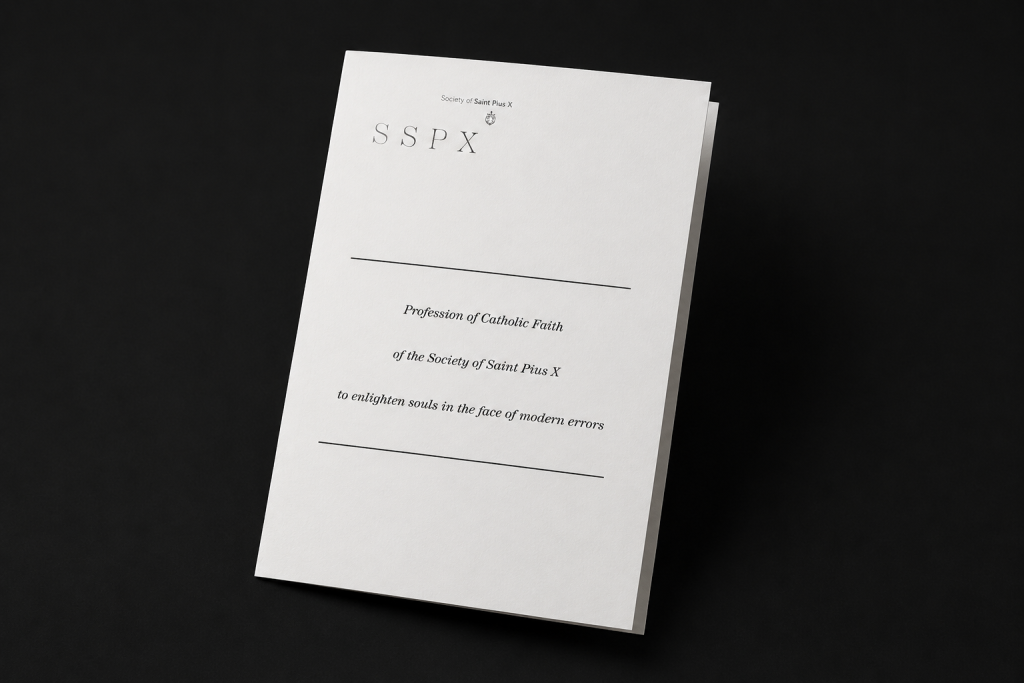
SSPX sends 28-page profession of faith to Pope and cardinals ahead of consistory
The SSPX has sent a 28-page profession of faith and open letter to Pope Leo XIV and the College of Cardinals ahead of the Extraordinary Consistory, just days before its planned episcopal consecrations at Ecône. One senior cardinal tells AdVaticanum the looming consecrations are already on the minds of the princes of the Church as they prepare to gather in Rome The Society of Saint Pius X has issued an open letter to Pope Leo XIV and the College of Cardinals during the week of the Extraordinary Consistory at the Vatican, releasing a 28-page Profession of Faith just days before its planned episcopal consecrations at Ecône on 1 July. The letter, dated 24 June, the Feast of the Nativity of St John the Baptist, is signed by SSPX Superior General Fr Davide Pagliarani, First Assistant Bishop Alfonso de Galarreta, Second Assistant Fr Christian Bouchacourt, former Superior General Bishop Bernard Fellay and former Superior General Fr Franz Schmidberger. The documents were first published in Italian by the traditionalist website Messa in Latino, which said it had received them from “sources at the highest levels”. AdVaticanum later obtained the full text of the Profession of Faith through SSPX sources. Addressing Pope Leo XIV and the cardinals directly, the Society said it believed the time had come to make “an integral profession of the Catholic faith” and place it before the Church’s highest authorities. “On the eve of the Consistory scheduled for the end of this month, and only days before the episcopal consecrations planned for 1 July at Ecône, it seems to us that the time has come for the Priestly Fraternity of Saint Pius X to make an integral profession of the Catholic faith, which we wish to place into the hands of Your Holiness and of each of the Cardinals,” the letter states. The SSPX said the Church was facing grave difficulties and that it could not remain silent. “Today the Church suffers under the pressure of new forces, arising both from within and from without, which are driving her in every possible direction except, so it seems to us, the right one. Faced with such suffering, we cannot remain indifferent.” The Society said the answer to the Church’s present problems was not to be found in new solutions but in fidelity to Tradition. “It does not belong to the Priestly Fraternity of Saint Pius X to indicate the path to be followed, but rather to the Church’s bimillennial Tradition, faithfully preserved and handed down by the Apostolic See throughout the centuries, and which many now regard, in practice, as an outdated reality, subject to continual evolution.” The letter says the accompanying Profession of Faith was written “in the face of the principal errors and the gravest dangers of our time” and argues that Catholic Tradition contains the remedies for the Church’s present crisis. “We are convinced that Tradition contains all the remedies for the deepest evils from which the Church and the world suffer, and for which solutions are sought in vain outside it.” The Society also expressed the hope that the text could become the basis for future discussions with the Holy See. “We hope that one day this doctrinal text may serve as the basis for a frank discussion with the Holy See, in a peaceful, fraternal, and charitable spirit.” Describing the declaration as a positive affirmation of Catholic belief rather than a protest document, the SSPX added: “The text that we present to you is not the sterile litany of a group of nostalgics, but the necessary expression, peaceful yet resolute, of our faith.” The Profession of Faith itself is a detailed restatement of traditional Catholic doctrine and includes explicit rejections of a number of theological and philosophical currents which the Society says have contributed to confusion within the Church. Early in the document, the authors argue that current circumstances require a complete presentation of Catholic teaching. “In the present confusion, it is no longer sufficient to recall a few isolated truths. It has become indispensable to set in full light the entire order of Catholic doctrine, in its supernatural coherence and luminous harmony, omitting no dogma, diminishing no truth.” The text goes on to state: “I consequently reject all errors contrary to this Faith, and in particular those of liberalism, indifferentism, modernism, ecumenism, and laicism, condemned by Popes Pius IX, Leo XIII, Saint Pius X, Pius XI, and Pius XII.” Among the themes addressed are grace, original sin, redemption, the Church, the liturgy and the social kingship of Christ. Rejecting what it describes as modern attempts to redefine faith, the declaration states: “I consequently reject the error of modernism, as it still rages today, which reduces faith to an interior experience, to a sensible aspiration, or to a progressive realisation in the believing community.” On original sin, it says: “In Adam, however, the nature of man was not destroyed, but only wounded,” before adding: “I likewise reject all doctrines which, in a senseless optimism, minimise original sin, naively exalt the native goodness of man.” The document also reaffirms traditional teaching on Christ’s redemptive sacrifice. “I therefore reject every doctrine which would reduce the Redemption to a simple manifestation of God’s love. The Cross is not merely a sign: it is the altar of the redemptive Sacrifice.” The text follows this with a rejection of what it calls “false ecumenism”. “I therefore reject false ecumenism, which rests upon the idea that the Holy Ghost would not refuse to use separated communities as means of salvation.” One of the longest sections concerns the Social Kingship of Christ, a doctrine strongly associated with pre-conciliar Catholic social teaching. “I profess that Our Lord Jesus Christ is King not only of individuals, but also of families, institutions, peoples, and nations.” The declaration adds that Christ’s reign “must extend to the external forum, to laws, morals, education, culture, and public life”. The final section deals with the liturgy and offers a defence of the traditional Roman Mass while criticising the reforms introduced after the Second Vatican Council. “I profess that the traditional Roman Mass expresses with incomparable clarity the Catholic doctrine of Sacrifice.” The text continues: “I observe with sorrow that the contemporary liturgical reforms have departed considerably from the traditional liturgy, and thereby contributed preponderantly to the loss of the sense of the sacred.” The letter concludes with the words of St Paul, “For we can do nothing against the truth, but only for the truth,” before adding: “We too believe; therefore we speak.” As the Extraordinary Consistory convenes this Friday, with the Vatican expected to bring all the cardinals to Rome, including those beyond voting age, one senior cardinal speaking off the record to AdVaticanum earlier this week acknowledged that the impending 1 July SSPX episcopal consecrations remain a “looming topic” among the princes of the Church, even if they will not feature in any public discussion. “We are reminded by the statements from Cardinal Fernández earlier this year and more recently,” the senior cardinal said, “and we are intellectually aware of the episcopal consecrations.” The cardinal added: “As the consistory is only this Friday, we think about it, about the implications for unity and for the Church’s witness in a fractured age.”
Jun. 24, 2026

Pope Leo’s SSPX appeal reveals the real fault line
Pope Leo XIV has urged the SSPX not to proceed with its planned episcopal consecrations on 1 July. Yet his remarks may have revealed something more significant: where Rome believes the real obstacle to reconciliation lies. Analysis by Niwa Limbu Pope Leo XIV has made a fresh appeal to the Society of St Pius X (SSPX) to abandon plans to consecrate four bishops without papal approval. Speaking to journalists outside Villa Barberini in Castel Gandolfo on 16 June, the Pope said he was considering making one final request to the traditionalist society before the planned consecrations on 1 July at the SSPX seminary in Écône, Switzerland. “We have invited them, and I am still considering making another appeal, to say: ‘Do not do this. Let us try to live communion in the Church,’” the Pope said. “But it is their choice. They must understand what it means for them and for the Church.” The remarks represent Pope Leo’s clearest public intervention since the SSPX announced earlier this year that it intended to proceed with the episcopal consecrations despite the absence of a pontifical mandate. The Society has argued that the measure is necessary to ensure the continuation of its sacramental and apostolic work. Its leadership has maintained that an “objective state of grave necessity” exists within the Church, requiring the appointment of new bishops to safeguard the future of the fraternity’s ministry. The Vatican, however, has repeatedly expressed concern that episcopal consecrations carried out against the explicit will of the Roman Pontiff would constitute a grave rupture in ecclesial discipline. The prospect of such a step led to the crisis of 1988, when Archbishop Marcel Lefebvre consecrated four bishops without papal approval, resulting in Rome declaring that a schismatic act had taken place. Pope Leo indicated that the dispute is not merely procedural but touches on deeper theological questions. Referring to the SSPX’s longstanding criticisms of the Second Vatican Council, he said division within the Church remained “a painful matter”, adding that the Society continued to reject “certain fundamental elements of the Church, beginning with various points of the Second Vatican Council”. His Holiness added: “If they make those choices, I am sorry. But we must move forward.” The Pope’s comments come after months of exchanges between the Holy See and the Society. Earlier this year, the SSPX confirmed its intention to proceed with the consecrations, while subsequent contacts between Rome and the fraternity failed to produce an agreement. On 12 February, a meeting took place in Rome between SSPX Superior General Fr Davide Pagliarani and Cardinal Víctor Manuel Fernández, Prefect of the Dicastery for the Doctrine of the Faith. The encounter, described by the Vatican as “cordial and sincere”, saw Cardinal Fernández propose a structured path of theological dialogue aimed at addressing unresolved doctrinal questions, particularly those concerning the Second Vatican Council and the “minimum requirements necessary for full communion”. Cardinal Fernández made clear that any such dialogue could only proceed if the SSPX agreed to suspend the planned 1 July consecrations. He warned that proceeding without a papal mandate would constitute a “decisive rupture of ecclesial communion (schism)” with grave canonical consequences, including automatic excommunication. In a letter dated 18 February and made public the following day, Fr Pagliarani responded that, while the SSPX welcomed the idea of renewed doctrinal discussions in principle, it could not accept the condition of postponing the consecrations. “We both know in advance that we cannot agree doctrinally, particularly regarding the fundamental orientations adopted since the Second Vatican Council,” he wrote, while renewing the Society’s request for a personal audience with Pope Leo XIV. Subsequent exchanges failed to bridge the gap. In May, the Vatican reiterated its warnings, and the SSPX published a “Declaration of Catholic Faith” outlining what it considers the minimum necessary for communion while reiterating its concerns about post-conciliar errors. On 26 May, the Society publicly named the four priests slated for consecration, framing the act as a necessary service to souls amid the ongoing crisis in the Church. As the 1 July date at the Écône seminary approaches, negotiations appear effectively stalled. The SSPX maintains its position that an “objective state of grave necessity” justifies the consecrations to ensure the continuation of its sacramental ministry, while the Vatican insists on canonical obedience and prior doctrinal resolution. Generally speaking, Pope Leo XIV addressed the Society of St Pius X in a manner that was pastoral, regretful yet resolute, characteristic of his style thus far. The delivery was conversational and non-confrontational, yet doctrinally unambiguous. By speaking informally to journalists rather than issuing a formal Vatican statement, the Pope signalled personal investment without escalating the matter into a formal magisterial intervention. This approach is indicative of how Vatican communications have evolved in handling such matters. Most importantly, it marks a change from previous pontificates. It represents the first time a Pope has offered an off-the-cuff public comment on the SSPX situation in the lead-up to planned episcopal consecrations. By contrast, there was no specific public comment by Pope John Paul II on the planned 1988 SSPX episcopal consecrations prior to Archbishop Lefebvre’s announcement and the immediate lead-up in early June 1988. What is really happening remains unclear, with little clarified in the public exchanges between Rome and the Society. The Pope’s remarks reflect this ongoing and opaque reality. For many hoping for a resolution to the SSPX question, the latest developments will bring both frustration and renewed determination. The Pope’s sorrow is evident and more irenic than some had feared. Yet the public emphasis on Vatican II as the fault line confirms long-held suspicions. Rome still views critiques the of post-conciliar Church as the core obstacle, not merely Lefebvrist intransigence. If the SSPX holds to what the Church taught before Vatican II, and Leo indicates that it cannot be accepted because of what Vatican II taught, then there is a perceived mutual exclusivity between what Catholicism was and what Catholicism is. How can continuity be maintained when pre-conciliar teachings appear at odds with the post-conciliar emphases now presented as essential?
Jun. 17, 2026