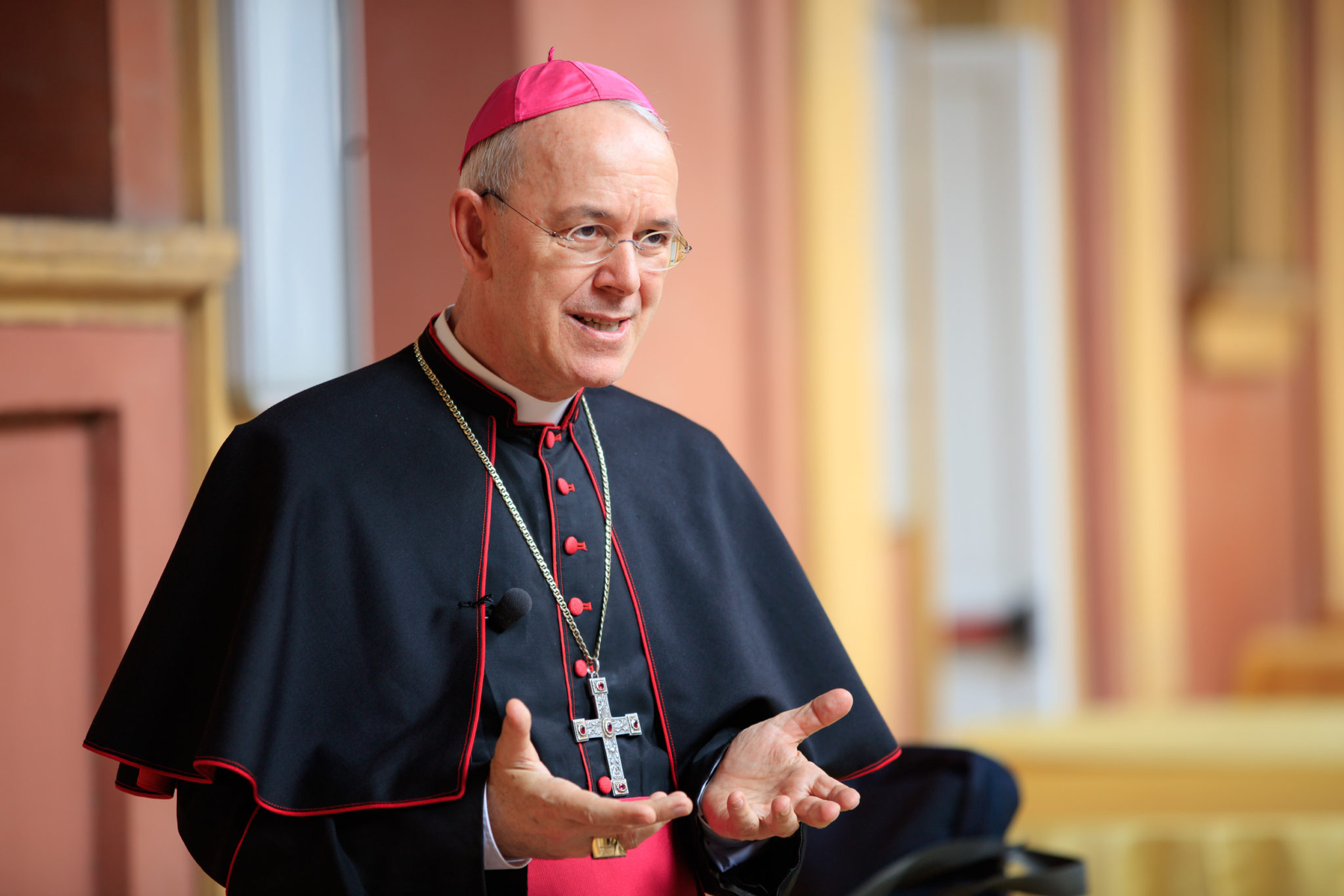
Bishop Athanasius Schneider has said that Pope Leo XIV is continuing the course pursued by Pope Francis.
The auxiliary bishop of Astana made the remarks in a lengthy interview published on 8 June on the YouTube channel Veritatis Vox. He discussed Pope Leo’s pontificate, the authority of Vatican II, the doctrinal crisis in the Church and the position of the Society of St Pius X.
Reflecting on the new pontificate, Bishop Schneider argued that Pope Francis viewed his reforms as a natural consequence of the council and suggested that Pope Leo shares the same understanding.
“Pope Francis, with all his so-called reforms, which were very questionable also doctrinally, was convinced that this is a natural, coherent development of the teaching of Vatican II,” he said, adding: “In this sense, it’s obvious that Pope Leo continues and understands it.”
The bishop also delivered a stark assessment of the state of the Church, claiming that some senior clerics had drifted away from the fullness of Catholic teaching. He said a “remarkable number of high-ranking clergy – cardinals and bishops” no longer held “the Catholic faith in its fullness” and had embraced “another church: half Protestant, half worldly, adapted to the spirit of the age”.
He argued that attempts to reconcile Catholic teaching with modern secular culture had produced confusion among the faithful. According to Bishop Schneider, some Church leaders had sought to adapt the faith “completely to the world”, resulting in “widespread confusion, obscurity and darkness in doctrine, morals and liturgy”.
Much of the interview focused on the continuing debate over Vatican II, a subject that has long divided traditionalist Catholics and Church authorities. Bishop Schneider criticised what he sees as an unwillingness among some Vatican officials to acknowledge difficulties within certain conciliar texts.
Referring to comments by Cardinal Víctor Manuel Fernández, prefect of the Dicastery for the Doctrine of the Faith, he said that insisting Vatican II could not be corrected effectively treated “a pastoral, non-definitive council as if it were infallible”. He added that Church authorities had spent decades treating the council as “a de facto untouchable teaching”.
The bishop also challenged comments by Cardinal Gerhard Müller, the former prefect of the Congregation for the Doctrine of the Faith, who has argued that the council must be accepted in its entirety. Bishop Schneider said such a position was “not correct”, maintaining that Vatican II and Pope St Paul VI had explicitly stated that the council did not intend to define new dogmas or issue definitive teachings binding on all Catholics. He added that Cardinal Müller “directly contradicts the Council itself and Paul VI”.
Addressing broader questions of authority within the Church, Bishop Schneider criticised what he described as demands for unquestioning acceptance of disputed teachings.
“To demand acceptance of problematic teachings by ‘switching off our intellect’ is an abuse of authority,” he said, invoking a well-known observation by G.K. Chesterton that Catholics are asked to remove their hats when entering church, “not their heads”.
The bishop further argued that elements of Vatican II placed excessive emphasis on human concerns at the expense of the supernatural mission of the Church. He said the council contained “tendencies toward naturalism and anthropocentrism, emphasizing temporal realities at the expense of the supernatural life of grace and eternity”, identifying the pastoral constitution Gaudium et Spes as “the clearest expression of this tendency”.
He also referred to the late Belgian Cardinal Léon-Joseph Suenens, one of the most influential figures at the council, who famously described Vatican II as a “French Revolution inside the Catholic Church”. Bishop Schneider said that “in some way, he was correct”, arguing that the council initiated a process that encouraged naturalistic and anthropocentric approaches within ecclesial life.
The interview also addressed the Society of St Pius X, whose relationship with Rome remains in limbo as the 1 July episcopal consecrations approach.
Bishop Schneider defended Catholics attached to the SSPX and questioned what he described as unequal disciplinary standards within the Church. Referring to the possibility of sanctions against traditionalists, he said it would be unjust to punish those who “recognize the Pope” and wish to “serve the Roman Church” but find themselves facing “a dilemma of conscience”.
By contrast, he criticised supporters of Germany’s Synodal Way and other bishops whom he accused of promoting doctrinal error without consequence.
“Meanwhile,” he said, “the German Synodal Way and other bishops around the world proclaim openly heresies and commit blasphemies really during liturgies, all unpunished, not admonished.”
Photo credit: Voice of the family