

Outside the Walls
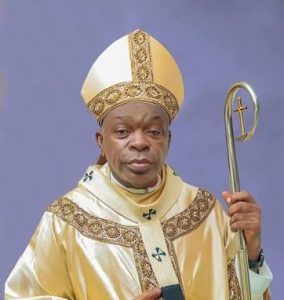
Former Nigerian bishops’ conference president Archbishop Augustine Akubueze dies aged 69
Archbishop Augustine Akubueze, former president of the Catholic Bishops’ Conference of Nigeria and Archbishop of Benin City, has died aged 69. He led the Nigerian bishops during some of the country’s most challenging years as violence against Christians intensified and was widely credited with strengthening two of Nigeria’s most vibrant dioceses Augustine Obiora Akubueze, former president of the Catholic Bishops’ Conference of Nigeria, has died at the age of 69. Born in 1956, he was ordained a priest in 1987 and consecrated as the first Bishop of the Diocese of Uromi in 2006, taking the episcopal motto Ut Testimonium Perhibeam Veritati (“That I may bear witness to the Truth”). He oversaw the growth of the dynamic and youthful diocese and is credited with the strong position it finds itself in today, with 113 diocesan priests serving 45 parishes and 54 men in training for the priesthood. In 2011, his hard work was recognised, and he was appointed Archbishop of Benin City, one of Nigeria’s oldest and most influential Catholic jurisdictions. Under his leadership, the number of priests grew from 104 to 173, while the number of parishes increased from 62 to 94. The number of women religious also almost doubled, from 73 to 135. Archbishop Akubueze served as President of the Catholic Bishops’ Conference of Nigeria from 2020 to 2024. Nigeria has long been in the grip of violent religious conflict. In 2020, at the beginning of his tenure as president, Nigeria was classified by Open Doors as the 12th most dangerous country in the world in which to be a Christian. By 2024, it had risen to sixth due to a sharp increase in Islamist violence against Christian communities, particularly in the country’s Middle Belt. Archbishop Akubueze’s death was announced on Thursday by the Catholic Secretariat of Nigeria in a statement shared on its official Facebook page. The statement reads: “In total surrender to God’s will and sure hope of the Resurrection, the Catholic Secretariat of Nigeria invites all the faithful and people of goodwill to unite in prayer for the eternal repose of the soul of Most Rev. Augustine Obiora Akubeze, Metropolitan Archbishop of Benin City and former President of the Catholic Bishops’ Conference of Nigeria. May the Lord, in His infinite mercy, grant him everlasting rest. And may his soul, together with the souls of all the faithful departed, through the mercy of God, rest in peace. Amen.”
Jul. 10, 2026
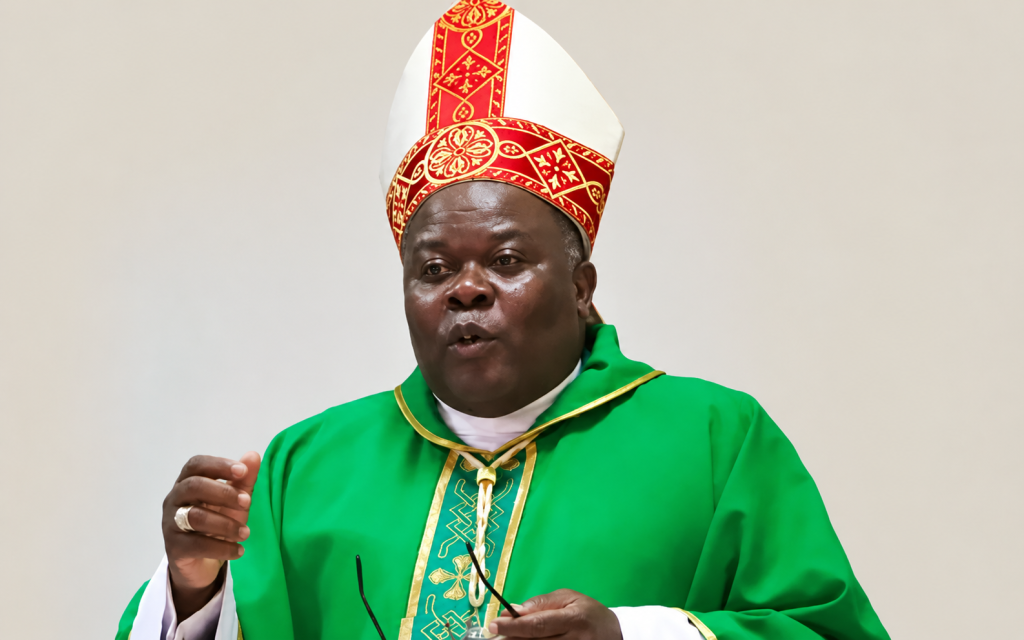
Apostolic administrator asks people not to speculate over murdered bishop
The apostolic administrator of the Diocese of Quelimane has urged people not to speculate about the murder of Bishop Osório Citora Afonso, warning against unverified allegations and calling for the legal process to be allowed to run its course The apostolic administrator of the Diocese of Quelimane has appealed for people not to speculate about the murder of Bishop Osório Citora Afonso. In a statement issued on 4 July, Bishop Estêvão Ângelo Fernando, who was appointed apostolic administrator of Quelimane after Bishop Afonso was shot dead on 6 June, condemned what he described as the publication of unverified allegations and the growing tendency to assign blame before the courts have reached any conclusions. The statement, signed jointly with the diocesan College of Consultors, came after weeks of intense reporting by Mozambican media based on purported details from the ongoing police investigation. “I, Dom Estêvão Ângelo Fernando, apostolic administrator of the Diocese of Quelimane, and the College of Consultors, publicly express our vehement repudiation of the material published by certain media outlets and circulated on social media, which blames individuals for actions, attitudes, and management decisions that at times have absolutely nothing to do with the case concerning the assassination of the Bishop of Quelimane, Dom Osório Citora Afonso,” Bishop Fernando said. “I myself am a target of this.” The bishop also criticised the disclosure of confidential investigative material and said that such leaks violate judicial secrecy, encourage speculation and an atmosphere of suspicion, rather than helping establish the truth. While reaffirming the Church’s support for a free press, he cautioned that “freedom without ethics or respect for the law degenerates into speculation.” Bishop Afonso was killed by a gunshot to the chest at his episcopal residence in Quelimane. Early reports suggested the bishop had been assassinated by attackers who entered the residence from outside after scaling its walls, disabling the security system and using an AKM rifle. The circumstances led to widespread speculation that the killing may have been politically motivated. Within days, however, investigators arrested three individuals connected to the diocese: the diocesan chancellor, Fr Adelino Novais Amado, together with the gardener and security guard employed at the bishop’s residence. Subsequent reports published by the independent newspapers Savana and Canal de Moçambique have cited information they say originates from the police investigation. According to those reports, investigators are examining whether Bishop Afonso’s death may have been linked to disputes over diocesan administration following his appointment in 2025. The reports suggest that, after taking office, Bishop Afonso began reviewing the diocese’s financial administration and decisions made during the prolonged period between the resignation of his predecessor, Bishop Hilário Massinga, in 2023 and his own arrival two years later. They further allege that the bishop intended to introduce significant reforms to diocesan governance. Central to those claims is a decree signed by Bishop Afonso on 31 May, less than a week before his death, reorganising the diocesan curia. Among the changes was the replacement of Fr Amado as chancellor. The new appointments were due to take effect on 6 June, the day Bishop Afonso was killed. Neither Mozambican judicial authorities nor Church officials have publicly confirmed any motive for the murder, and many of the allegations reported in the press remain unverified. Particular controversy has surrounded reports published by Canal de Moçambique alleging financial transfers and communications between Fr Amado and Bishop Fernando. Without addressing those specific allegations individually, the apostolic administrator rejected suggestions that named individuals had been implicated before any judicial findings had been made, saying publications were attributing responsibility to people who, in some cases, had “absolutely nothing to do” with the crime. The wider allegations reported in the Mozambican press have centred on claims that conflicts over diocesan assets predated Bishop Afonso’s arrival. Savana has reported longstanding disputes concerning the management of Church property and legal proceedings initiated under Bishop Massinga involving the alleged misappropriation of diocesan assets by religious sisters. The uncertainty surrounding the investigation has attracted considerable attention both within Mozambique and internationally. The Holy See moved swiftly after the bishop’s death by appointing Bishop Fernando, who leads the neighbouring Diocese of Alto Molócuè, to administer Quelimane temporarily. The appointment suggests that the Vatican had no evident reservations about his suitability to oversee the diocese while the investigation proceeds. The case has also coincided with high-level contact between the Vatican and the Mozambican episcopate. Pope Leo XIV recently received the president and vice-president of the Episcopal Conference of Mozambique, Archbishops Inácio Saure and João Carlos Hatoa Nunes, together with the Archbishop Emeritus of Beira, Claudio Dalla Zuanna. No official account of the audience was released, and the Holy See has not disclosed whether Bishop Afonso’s murder formed part of the discussions. Bishop Osório Citora Afonso was murdered on 6 June. Three individuals connected to the diocese have been arrested, while investigators continue examining multiple lines of inquiry. No court has established responsibility, and no official judicial conclusions have been announced. Bishop Fernando has urged both the media and the public to allow the legal process to run its course.
Jul. 9, 2026
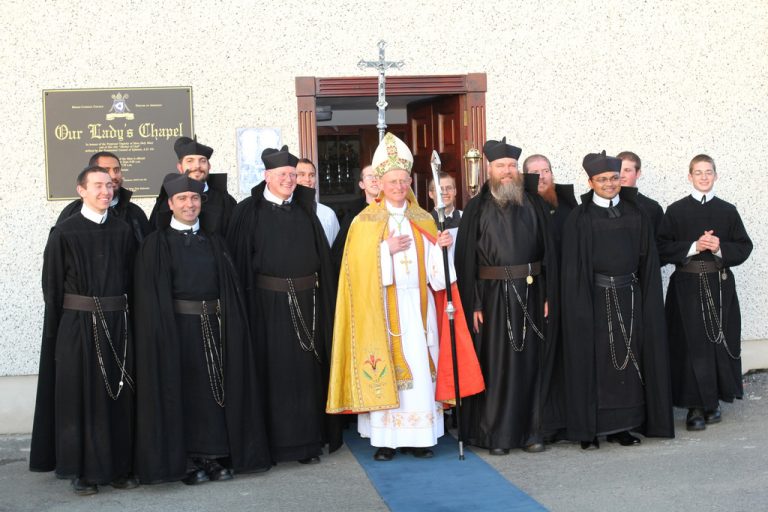
Redemptorists clarify relationship with Papa Stronsay before consecration
The Redemptorists have issued a public statement concerning the Papa Stronsay-based Sons of the Most Holy Redeemer ahead of the community’s planned episcopal consecration later this month The Congregation of the Most Holy Redeemer has issued a public clarification distancing itself from the self-declared sedevacantist Sons of the Most Holy Redeemer (FSSR), based on Papa Stronsay, who will proceed with the episcopal consecration of its founder without papal approval. In a statement released from Rome on 7 July, the congregation’s Superior General, Fr Rogério Gomes CSsR, stressed that the Sons of the Most Holy Redeemer (FSSR) “has never been part of the Congregation of the Most Holy Redeemer (C.Ss.R.), nor has it ever been juridically affiliated with the Redemptorist General Government”. The intervention comes ahead of the scheduled consecration of Fr Michael Mary as a bishop on 25 July by the sedevacantist Bishop Pierre Roy, a ceremony that will take place without a papal mandate. The Superior General of the Redemptorists, Fr Gomes, said inaccurate reports circulating on social media and elsewhere had wrongly associated the worldwide Redemptorist congregation with the community founded by Fr Michael Mary. He said that “false (fake news), inaccurate, and historically uninformed reports” had created confusion by “improperly associating the Congregation of the Most Holy Redeemer (C.Ss.R.) with groups that do not belong to its canonical structure”. The congregation therefore considered it necessary to explain the historical and canonical distinction between the two bodies. Central to the statement is the insistence that the title “Transalpine Redemptorists” has an authentic historical meaning dating back to the expansion of the Redemptorists beyond the Alps by St Clement Mary Hofbauer during the late eighteenth and early nineteenth centuries. Fr Gomes recalled that the saint remained “always faithful to the Congregation and to the Church” and was later canonised in recognition of his contribution to the order’s missionary expansion. By contrast, the community now widely known by that name, he explained, originated only in 1988 after separating from the Redemptorists. Initially associated with the Society of St Pius X, it later adopted the formal title Sons of the Most Holy Redeemer. Although the institute entered into full communion with the Holy See in 2008 and was erected as a diocesan religious institute in the Diocese of Aberdeen in 2012, Fr Gomes emphasised that this did not make it part of the Redemptorist congregation itself. “It has never been part of the Congregation of the Most Holy Redeemer,” he wrote, underlining that the two communities have always been separate juridical entities despite their similar spirituality and historical inspiration. The statement also addressed the deterioration in relations between the FSSR and ecclesiastical authorities in recent years. Without detailing individual disputes, Fr Gomes observed that “new doctrinal and ecclesial tensions have emerged” because of criticisms directed at the Second Vatican Council and the post-conciliar popes. Such views, he said, “do not represent the Congregation of the Most Holy Redeemer and are monitored and evaluated by the competent ecclesiastical authorities”. “It is also necessary to clarify that the Redemptorists present in Scotland who belong to the Congregation of the Most Holy Redeemer are not schismatics,” Fr Gomes said. The Superior General explained that those communities remain “in full communion with the universal Church, the Roman Pontiff, and the General Government of the Congregation”. Their members, he continued, “embrace the authentic Magisterium, recognise the authority of the Second Vatican Council, and carry out their mission” according to both the congregation’s constitutions and canon law. Concluding the statement, Fr Gomes urged Catholics to distinguish clearly between the Redemptorists and the Sons of the Most Holy Redeemer, warning that misunderstanding had been fuelled by “a lack of historical and canonical knowledge” together with the rapid spread of information on social media. He called on readers to verify sources carefully and avoid sharing inaccurate claims that could damage “historical truth, ecclesial communion, the identity of the Redemptorist mission, and the witness of unity that the Church is called to offer to the world”. The clarification comes only weeks before Fr Michael Mary is due to receive episcopal consecration from Bishop Pierre Roy, a former priest of the Society of St Pius X who is now a sedevacantist. The ceremony is scheduled to take place at the community’s monastery on Papa Stronsay in Orkney. In announcing the consecration, Bishop Roy acknowledged that it would proceed “in the absence of an apostolic mandate”. Explaining his decision, he wrote that he believed the geographical spread of the community across Scotland, New Zealand and the United States made it necessary for the congregation to have its own bishop. He said Fr Michael Mary had accepted the appointment “without any solicitation from the Redemptorists and despite some initial reluctance”. Bishop Roy further argued that Christ himself would provide the jurisdiction necessary for episcopal ministry “in the absence of a true Supreme Pontiff”. The FSSR’s present position marks a dramatic reversal from the path it followed under Pope Benedict XVI. Founded in 1988 in the aftermath of Archbishop Marcel Lefebvre’s illicit episcopal consecrations, the community was initially associated with the Society of St Pius X before seeking reconciliation with Rome after the publication of Summorum Pontificum . It entered full communion with the Holy See in 2008 and, four years later, received canonical recognition as a diocesan institute in Aberdeen. Relations with ecclesiastical authorities later deteriorated following controversies surrounding the community’s apostolate in New Zealand and increasing concerns over unity and obedience. After an apostolic visitation, the community was required to leave the Diocese of Christchurch in 2024, while subsequent appeals proved unsuccessful. By October 2025 it had publicly concluded that the post-conciliar Church was incompatible with what it described as the “Traditional Catholic Faith”, before embracing sedevacantism in 2026.
Jul. 9, 2026
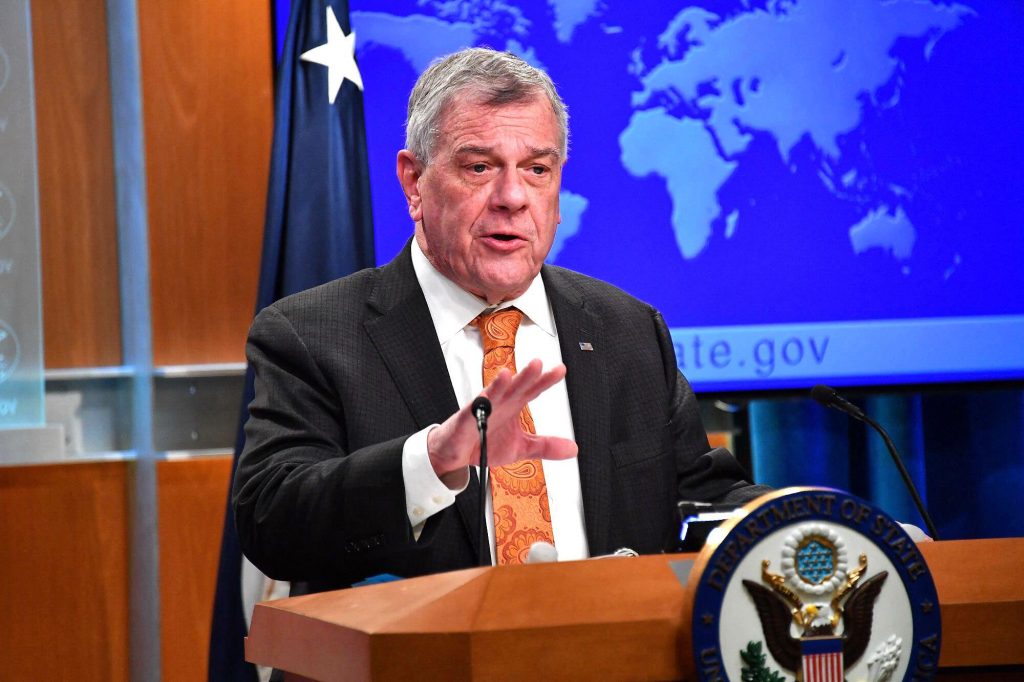
US calls for immediate release of detained Nicaraguan bishop
The United States has called for the immediate release of Bishop Juan Abelardo Mata Guevara after the 80-year-old Nicaraguan prelate was detained by the country’s authorities. The US State Department condemned the detention as arbitrary and accused the Murillo-Ortega government of continuing its persecution of religious leaders The United States has called for the immediate release of Bishop Juan Abelardo Mata Guevara after the 80-year-old Nicaraguan prelate was detained by the country’s authorities. The US State Department’s Bureau of Western Hemisphere Affairs condemned the bishop’s detention, describing it as arbitrary and urging the Nicaraguan authorities to free him without delay. In a statement, the bureau said: “We demand the immediate and unconditional release of Nicaraguan Bishop Abelardo Mata who has been arbitrarily detained by the Murillo-Ortega dictatorship.” It added that “80-year-old Bishop Mata poses no threat to the regime and his health is fragile”, before further condemning what it described as the government’s “continued cruel religious persecution and repression”. The statement concluded: “The attacks on religious freedom must stop.” Bishop Mata, the retired Bishop of Estelí, was detained on 29 June after reportedly celebrating Mass at La Cruz del Calvario Church, where he criticised the treatment of Christian leaders who have been imprisoned, exiled or subjected to house arrest in Nicaragua. According to the United Kingdom-based religious freedom organisation Christian Solidarity Worldwide (CSW), the bishop was taken into custody by the National Police during the afternoon and transferred to a maximum-security prison in Managua, approximately 130 miles from Estelí. He was released later that evening but detained again the following morning before being freed at around 4pm. Although no formal charges have been reported, CSW said a police presence has remained outside Bishop Mata’s residence since his release. Sources cited by the organisation believe remarks made during the bishop’s homily may have been reported to the authorities by individuals attending the Mass who were aligned with the government. The detentions extended beyond the bishop himself. Three other Catholic leaders were also reportedly held by police on 30 June for around 12 hours. They included Deacon Wilfred Aráuz Rodríguez, Father Francisco Morales of La Cruz del Calvario Church, and Father Rigoberto Delgadillo Sánchez of Santuario Divino Niño Parish. CSW reported that Deacon Aráuz Rodríguez was arrested by the local police chief while accompanied by masked men, underscoring concerns among religious freedom advocates about the increasingly intimidating methods allegedly employed against members of the Church. The arrests prompted condemnation from Bishop Silvio José Báez, the exiled auxiliary bishop of Managua, who denounced the treatment of his fellow bishop in a message posted on X. “I deeply condemn the aggression committed by the regime’s police against my brother Mons. Juan Abelardo Mata, emeritus bishop of Estelí,” Bishop Báez wrote. He added: “These cowardly actions only demonstrate the weakness and irrationality of a criminal dictatorship.” The detention of Bishop Mata comes amid what Christian Solidarity Worldwide says is an escalating campaign against Christian communities in Nicaragua. The organisation reported that it documented 12 cases of arbitrary detention involving Protestant and Catholic leaders during June alone. Earlier this year, CSW also published figures recording 309 separate violations of religious freedom against Christians during 2025, suggesting that restrictions affecting churches have continued despite repeated international criticism. A member of the Salesians of Don Bosco, Bishop Mata was born in Managua in June 1946 and entered the congregation after completing studies in El Salvador. Following theological formation in Guatemala, he was ordained to the priesthood in 1976 before undertaking biblical studies at the Pontifical Biblical Institute in Rome. In 1988, he was appointed Bishop of Estelí, a post he held for more than three decades before retiring in 2021 after reaching the customary retirement age established by canon law. His prominence increased significantly during Nicaragua’s political crisis in 2018, when he served as a mediator during the nationwide protests that erupted against President Daniel Ortega’s government. As secretary general of the Nicaraguan Episcopal Conference, he publicly supported dialogue and repeatedly appealed for peace while also defending the rights of those protesting. The Sandinista government accused Church leaders, including Bishop Mata, of assisting opposition groups and participating in what it described as an attempted coup. Relations between the government and much of the Catholic hierarchy deteriorated sharply during that period. That same year, the vehicle carrying Bishop Mata came under gunfire from paramilitary forces, highlighting the risks faced by clergy who had become vocal critics of the authorities during the unrest. Since then, numerous bishops, priests and religious communities have faced increasing pressure, with reports of arrests, exile, surveillance and restrictions on pastoral activity becoming recurring features of the country’s religious landscape.
Jul. 8, 2026
Archbishop Coakley calls for simpler presentation of synodality
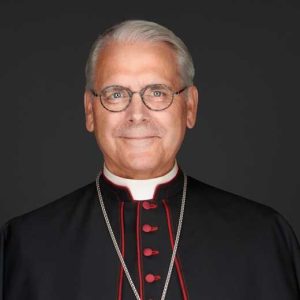
The president of the United States Conference of Catholic Bishops has called for a simpler presentation of synodality. Speaking after a Vatican meeting with Pope Leo XIV, Archbishop Paul Coakley said synodality must be explained in a way that is readily understood by Catholics in the pews The president of the United States Conference of Catholic Bishops has called for a simpler presentation of synodality, warning that unfamiliar language risks distancing ordinary Catholics from the process. Archbishop Paul Coakley of Oklahoma City made the appeal while speaking to the Catholic News Service following a meeting at the Vatican with Pope Leo XIV, where participants reviewed progress in implementing the final document of the Synod on Synodality and discussed the challenges facing its reception across the world. Although bishops reported encouraging signs that synodal practices are becoming more firmly established in North America, Archbishop Coakley said one of the principal obstacles remains explaining synodality in a way that is readily understood by Catholics in the pews. The president warned that technical language risks limiting participation rather than broadening it. “Synodality is often presented and perceived by many as a cumbersome and complicated process with language and terminology that is unfamiliar to most Catholics,” the archbishop said. “Unless we can simplify how synodality is presented, it risks becoming the exclusive domain of specialists or ‘the initiated’ rather than a way of simply living our faith together.” The meeting, held in Rome from 23 to 25 June, brought together representatives from Latin America, Africa, Asia, Europe, Oceania, the Middle East and North America, together with the coordinators of the continental synodal teams. Part of the discussions centred on how local Churches have been putting into practice the Synod on Synodality’s final document, issued in October 2024, as preparations continue for the next phase of the worldwide process. The North American delegation included Archbishop Coakley, Auxiliary Bishop Juan Miguel Betancourt of Hartford, who serves as the United States bishops’ liaison for the synod, Bishop Pierre Goudreault, president of the Canadian Conference of Catholic Bishops, and Julia McStravog, senior adviser to the United States synod leadership team. Speaking after the meeting, Archbishop Coakley said a clear conclusion from the discussions was the need for better formation in synodality, not only in understanding its methods but also its spiritual foundations. Rather than creating entirely new structures, the archbishop suggested that the Church should continue developing the consultative bodies that already exist in parish and diocesan life. He noted that the Church in the United States has long encouraged lay participation through parish pastoral councils, diocesan councils, finance committees and advisory bodies. The task now, Coakley said, is to deepen discernment within those existing structures and to foster “an appropriate spirituality based on discernment and rooted in prayer”. Bishop Betancourt said synod leaders from across the United States continue to meet each month to exchange experiences and priorities, with those conversations strengthening cooperation between dioceses and helping local Churches adopt the synodal method of “conversations in the Spirit”. According to the bishop, the process has already influenced pastoral planning in several dioceses, informing decisions on parish consolidation, Mass schedules, the allocation of clergy and the distribution of diocesan resources. The Bishop of Hartford also highlighted the cultural diversity of the Catholic Church in the United States, describing it as an opportunity to broaden participation, encourage co-responsibility and strengthen missionary outreach. At the same time, the bishop acknowledged that two significant challenges remain: the unfamiliar language surrounding synodality and continuing reluctance among some Catholics to become involved in the process. Wider participation by the lay faithful, particularly those who are distant from the life of the Church, is essential if synodality is to become embedded, he said, because every baptised person shares responsibility for the Church’s mission. The bishop said: “Increasing participation by the lay faithful across the global Church, especially among the marginalized or distant, is essential to making the Church’s work more synodal.” Addressing concerns that synodality represents a departure from Catholic tradition, Bishop Betancourt rejected that interpretation. Instead, he described it as a recovery of the Church’s own tradition of communal discernment ordered towards evangelisation rather than institutional change. “Synodality is not parting from Catholic tradition but a deeper return to it,” he said. “It’s about discerning God’s will, not about personal preferences or agendas.” Bishop Goudreault also revealed that, after eight years as bishop, he had invited his diocesan team to evaluate his own ministry, describing accountability as a natural consequence of synodality. The exercise, he said, had allowed him to recognise both strengths and areas requiring improvement. The discussions in Rome also offered further insight into Pope Leo XIV’s priorities as he continues the work begun under Pope Francis. Archbishop Coakley said the Pope “clearly wants to build on the synodal vision outlined and presented by Pope Francis” while developing it in his own way. Bishop Betancourt said Pope Leo has consistently presented synodality as a means of strengthening communion throughout the Church rather than altering Catholic teaching. The Pope, he said, has “repeatedly made clear that synodality is not about changing doctrine or undermining the hierarchical communion of the Church”. Instead, it provides “a foundation for evangelisation, a shared process of listening, discerning, and building relationships”. The meeting came only days after the Vatican published the full programme for an October gathering marking the tenth anniversary of Amoris Laetitia . A preparatory framework issued jointly by the Dicastery for the Laity, Family and Life and the General Secretariat of the Synod invites Church leaders to reflect on five principal themes as they consider how the Gospel can be proclaimed more effectively to families. Attention will now turn to the next stages of the synodal process. Diocesan and eparchial evaluation assemblies are scheduled during the first half of 2027, followed by national and regional gatherings later that year. Continental assemblies will meet in early 2028 before an ecclesial assembly convenes in Rome with Pope Leo XIV in October 2028.
Jul. 7, 2026
Israeli settlement reported near West Bank’s last Christian town
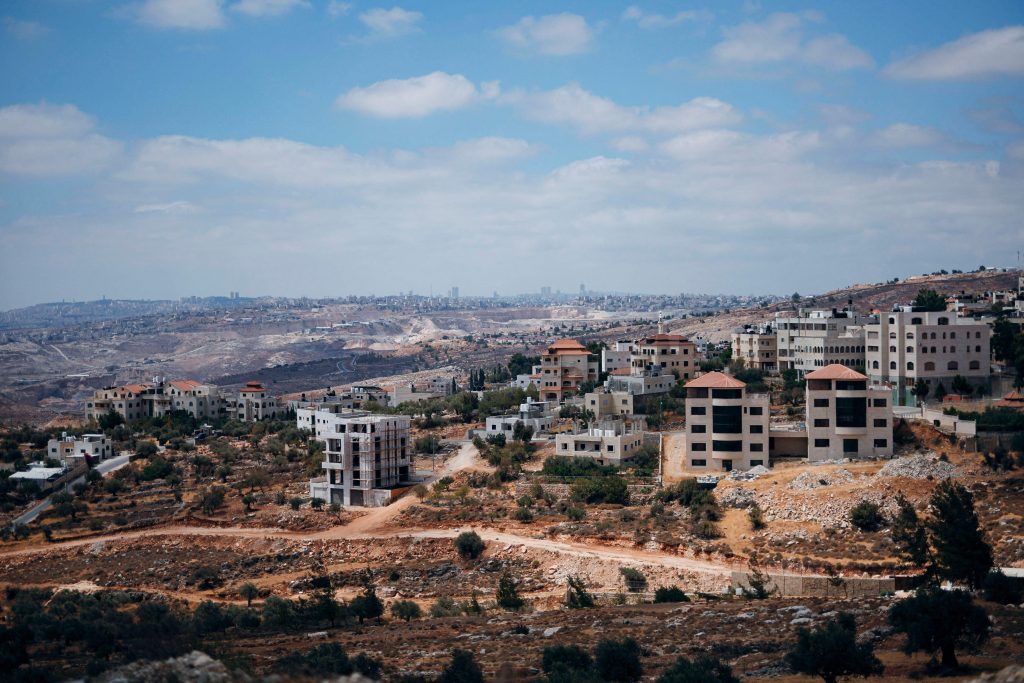
Taybeh, the West Bank’s last entirely Christian town, is under threat. Speaking exclusively to AdVaticanum, parish priest Fr Bashar Fawadleh warns that “silence today could allow an irreparable reality tomorrow” The Christian leaders of Taybeh have issued an urgent appeal after reports of a new Israeli settlement outpost on land overlooking the West Bank’s last entirely Christian town. According to local verifiable sources in Taybeh and field monitoring cited by the Vulnerable People Project, groups of settlers have been seen repeatedly on Jabal Al-Massis, a hill east of Ramallah that belongs to Taybeh, in what is described as preparations for the establishment of a new outpost immediately adjacent to Palestinian homes. Taybeh’s clergy are now calling for international intervention. Fr Bashar Fawadleh, parish priest of Christ the Redeemer Parish, has asked for diplomats, ambassadors, the United Nations, churches and international organisations to visit the area, monitor developments closely and use diplomatic means to prevent the outpost from becoming established. If gone ahead with, the development would create a permanent settler presence on the edge of the town, bringing with it an increased risk of violence, intimidation and restrictions on residents’ freedom of movement. Speaking exclusively to AdVaticanum, Fr Fawadleh said the issue extended well beyond a dispute over land. “When an outpost is established right on our doorsteps, the issue is no longer just a land dispute, but an attack on people’s right to live in safety and dignity,” he said. “Taybeh is not asking for privileges, but for the protection of children, families, land, and the Christian heritage that has survived in this town for two thousand years. Silence today could allow an irreparable reality tomorrow,” the priest said. This development follows months of warnings from the priests serving Taybeh’s three Christian churches. Fr Fawadleh, together with Fr Jack-Nobel Abed and Greek Orthodox priest Fr Daoud Khoury, has repeatedly argued that the eastern part of the town, which accounts for more than half of Taybeh’s territory, has become increasingly vulnerable to the gradual establishment of settlement outposts. The clergy have maintained that such sites frequently begin as small encampments before expanding over time, with the result that they become permanent features of the landscape and centres for further encroachment onto surrounding land. Jabal Al-Massis has already featured in the news, as the hill was the scene of a recent arson attack in which settlers allegedly set fire to a large area opposite the town’s fuel station. According to the parish, residents attempting to extinguish the blaze were obstructed as they tried to reach the site. In recent days, settlers reportedly established another outpost near Nablus, preventing villagers from accessing their agricultural land, while a Bedouin home east of Taybeh was set on fire. Studies suggest that settlers and soldiers have carried out thousands of attacks across the West Bank since the beginning of 2025, resulting in the destruction of hundreds of homes and the displacement of tens of thousands of Palestinians. Jason Jones, head of the Vulnerable People Project, explained that the reported construction on Jabal Al-Massis will add to the pressure put on the Christian community. “Settlers are now planting an outpost at every side of Taybeh, marking a dangerous new stage in the slow strangulation of the last Christian town in the West Bank,” he said in a statement. “Each new settlement expansion becomes a base for the next attack, the next blocked road, the next family pushed off its land. The world cannot continue to watch – we must stand with Taybeh now.” In separate comments given exclusively to AdVaticanum, Jones reflected on the significance of the town’s Christian heritage and urged greater solidarity from Christians abroad. “I’ve walked through Taybeh – a town that has survived sixteen centuries of empires but may not survive the world’s silence,” he said. “Today it stands surrounded by seven settlements choking the life out of its residents, as settlers have now planted a new outpost on Jabal Al-Massis, within sight of homes where families have kept the Christian faith since the fifth century. Now is the time for Christians around the world to stand with our brothers and sisters in Taybeh as they face their latest challenge, this new settlement.” The Vulnerable People Project says it continues to monitor developments on the ground as it seeks to verify further reports concerning activity on the hill overlooking the town. For Taybeh’s clergy, the concern is not just the appearance of another isolated settlement, but the cumulative effect of successive outposts surrounding the community. They argue that each new presence alters daily life by increasing pressure on residents and creating conditions that become progressively more difficult to reverse. Taybeh is in the Holy Land. Situated north-east of Jerusalem near Ramallah, it is recognised as the last remaining entirely Christian town in the West Bank, with a continuous Christian presence stretching back many centuries. As reports continue to emerge from Jabal Al-Massis, Taybeh’s priests insist that international attention cannot wait until construction is complete. Their message is that immediate engagement is needed if the town’s Christian community, its families and its historic presence are to be safeguarded from what they believe is an increasingly precarious future. Israeli settlements in the West Bank began after the 1967 Six-Day War, when Israel captured the territory from Jordan. Over the following decades, successive Israeli governments authorised or supported the expansion of settlements, while other outposts were established without formal government approval but have often remained in place or later received official recognition. Much of the international community considers the settlements to be illegal under the Fourth Geneva Convention, a position endorsed by the United Nations and the International Court of Justice, although Israel disputes this interpretation. The Christian population of the Holy Land has steadily declined over the past century, with emigration, conflict, economic hardship and political instability all contributing to shrinking communities in both the West Bank and Gaza. Once sizeable Christian populations in cities such as Jerusalem, Bethlehem and Ramallah have diminished significantly, while smaller communities have become increasingly vulnerable as opportunities for younger generations have narrowed.
Jul. 7, 2026