

Outside the Walls
Bishop suspends 15% of priests after diocesan reforms
A bishop has suspended six priests, around 15% of his diocesan clergy, as part of a programme of reforms aimed at strengthening discipline, financial oversight and governance within the diocese The Bishop of Maralal, Kenya, has suspended six priests, around 15% of his diocesan clergy, and introduced a comprehensive programme of disciplinary and administrative reforms. Bishop Hieronymus Emusugut Joya, I.M.C., announced the measures during Mass for the Fifteenth Sunday in Ordinary Time at Saints Peter and Paul Parish in Maralal on 12 July, using the occasion to reflect on nearly four years of episcopal ministry in the diocese and the reforms he believes are required to rebuild confidence in its governance. Addressing clergy and faithful, Bishop Joya unveiled what Radio Mchungaji, a Catholic community radio station serving northern Kenya, described as “a comprehensive pastoral and administrative directive”. The bishop said that when he arrived in the Diocese of Maralal in 2022 he encountered deep-rooted difficulties affecting its administration and finances. “It is painful to state that I found the diocese with multiple problems, but no one was willing to tell me the cause of the problems and how to get the solution,” the bishop said, explaining that the situation prompted extensive efforts to stabilise diocesan finances and improve oversight. According to the bishop, one of his first steps was to convene all the priests of the diocese in December 2022, when agreement was reached that parishes and diocesan institutions would contribute towards resolving financial challenges. While support was forthcoming from many quarters, he indicated that the programme had not enjoyed universal cooperation. Responding to criticism that he had repeatedly appealed for financial assistance, Bishop Joya defended the administration’s stewardship of donated funds. He said money received by the diocese had been used to settle outstanding debts, undertake audits, restructure diocesan systems, strengthen administrative procedures and support development projects across parishes and Church institutions. The bishop also announced the suspension of six priests. Those suspended are Fr Paul Maina, Fr Peter Musau, Fr Stephen Lekasuyan, Fr Peter Nderitu, Fr Christopher Letikirich and Fr John Dida. The suspensions relate to allegations of abuse of ecclesiastical authority, negligence in administration and the mismanagement of the temporal goods of the Church. Bishop Joya stressed that the action had not been taken lightly and insisted that canonical procedures had been followed. “I do not accuse any priest without credible evidence,” the Kenyan bishop said, adding that after receiving reliable information concerning misconduct he had acted “in accordance with the Code of Canon Law” in order to “protect the integrity of the priesthood and the proper stewardship of Church property”. Alongside the disciplinary action, Bishop Joya issued a series of binding directives for all priests serving in the Diocese of Maralal, with immediate effect. The measures cover priestly conduct, financial administration, the use of Church property and daily life within parish communities. Among the most striking changes is the requirement that priests return to their presbyteries by 7.00 pm for evening prayers. Priests are no longer permitted to spend the night away from their residence without the bishop’s permission, while no lay person may stay overnight in a priest’s residence or religious convent unless authorisation has first been granted. The bishop also imposed strict rules concerning alcohol. Priests are forbidden from drinking in bars or consuming alcohol within parish and institutional residences, and any priest who is intoxicated or under the influence of alcohol is prohibited from celebrating the liturgy. Priests are also prohibited from owning or operating private businesses unrelated to the Church, while they are also barred from acquiring property in the names of relatives unless they can satisfactorily demonstrate the legitimate source of the funds involved. Bishop Joya also explicitly prohibited priests from cohabiting or engaging in intimate relationships “with persons of either the opposite or the same sex.” Further administrative directives concern diocesan property and financial governance. Vehicles and motorcycles belonging to the diocese are to be driven only by officially designated personnel, with responsibility for maintenance resting with the parish, institution, office or Church group to which they are assigned. The bishop likewise directed that parish and institutional finances be administered transparently, insisting that finance councils and committees must be allowed to carry out their responsibilities effectively. Parish councils and governing boards are expected to prepare annual budgets and ensure regular audits, while Church leaders and accounting officers are required to comply with both ecclesiastical and civil law. The Diocese of Maralal is relatively small by comparison with many African dioceses, comprising 15 parishes served by 39 priests, including 30 diocesan clergy and nine religious priests. The scale of the suspensions therefore affects a notable proportion of its presbyterate, underscoring the significance of the bishop’s intervention. At the same time as announcing the disciplinary measures, Bishop Joya introduced a number of pastoral appointments intended to strengthen parish leadership. The bishop concluded by urging Catholics to pray for the suspended priests as they enter what he described as a period of reflection on their priestly vocation and ministry. He also asked Catholics throughout the Diocese of Maralal to continue praying for the local Church and for its leadership as it seeks to overcome the difficulties he says have confronted the diocese since his arrival. Bishop Joya views reform not as a single event but as an ongoing process aimed at restoring confidence in diocesan governance while safeguarding what the bishop described as “the integrity of the priesthood and the proper stewardship of Church property.”
Jul. 14, 2026
French bishop says Catholic MPs backing assisted suicide should not receive Communion
A French bishop has warned Catholic lawmakers who support assisted suicide legislation should not receive Holy Communion. The intervention was made by Bishop Marc Aillet of Bayonne just days before members of the French National Assembly are expected to vote on the government’s controversial end-of-life bill on 15 July. Speaking to France Catholique on 7 […] A French bishop has warned Catholic lawmakers who support assisted suicide legislation should not receive Holy Communion. The intervention was made by Bishop Marc Aillet of Bayonne just days before members of the French National Assembly are expected to vote on the government’s controversial end-of-life bill on 15 July. Speaking to France Catholique on 7 July, Bishop Aillet argued that support for euthanasia is not simply a matter of differing political judgement but concerns an objective moral principle rooted in both Christian doctrine and natural law. “When a member of parliament declares himself Catholic while supporting legislation that authorises taking a life, he objectively places himself in opposition to a constant teaching of the Church, but also to a fundamental principle of human reason,” Bishop Aillet said. The bishop used Samaritanus Bonus , the 2020 instruction issued by the Congregation for the Doctrine of the Faith, to justify his position. The letter states that it is “an intrinsically evil act, whatever the circumstances”. Referring to Catholic politicians serving in public office, Bishop Aillet said: “A Catholic engaged in public life cannot ignore this.” His comments go beyond a reiteration of Church teaching by directly addressing the sacramental implications for Catholic legislators. Asked whether supporting the legislation carried spiritual consequences, Bishop Aillet replied that it did because “the Christian faith engages one’s entire existence”. While stressing the need for every individual to examine his or her conscience, he argued that public support for legislation fundamentally opposed to Catholic moral teaching created “a real problem of ecclesial coherence”. “The Catholic parliamentarians who voted for this bill must weigh the consequences,” the bishop said. “If they are aware of this inconsistency, they will no longer be able to receive Communion.” Bishop Aillet added that “the Church is justified in reminding them of this, as some bishops have done in the United States”, before inviting Catholic lawmakers to undertake “a sincere examination of conscience”. Bishop Aillet also challenged one of the principal arguments advanced by supporters of the legislation: that euthanasia represents an act of compassion towards those enduring profound suffering. “We must distinguish true compassion from what John Paul II called ‘false mercy’,” the bishop said. “A truly fraternal society does not respond to distress by eliminating the suffering individual, but by developing palliative care, psychological, familial and spiritual support.” He further rejected the suggestion that the legislation represented an expansion of personal freedom. “Authentic freedom is ordered toward the good,” Bishop Aillet argued, warning that public understanding of the issue had become distorted by “the dominant discourse that seriously clouds consciences” and “the media onslaught influenced by powerful lobbies”. Bishop Aillet urged Catholics to educate themselves and to offer practical support to those who are sick, elderly or isolated. The bishop also addressed the pastoral challenges posed by requests for euthanasia. While reiterating that suicide remains “objectively contrary to the will of God”, Bishop Aillet emphasised that the Church continues to recognise the complex personal circumstances that may diminish an individual’s freedom, including suffering, loneliness, depression and social pressure. The bishop said priests should accompany those requesting euthanasia by helping them “rediscover hope, reconcile with God, and renounce their plan”, describing authentic pastoral care as encouraging patients “to choose life until its natural end, never condoning a lethal act”. Particular concern was also expressed for healthcare workers who could find themselves required to implement the law should it ultimately be enacted. Bishop Aillet warned that doctors, nurses and other medical professionals entered their vocation to care for patients rather than intentionally end their lives. “My first thought is the moral dilemmas this law risks creating,” Bishop Aillet said. “Healthcare professionals chose their profession to care for, relieve and support patients. Now they would be asked to participate in the killing of a patient.” For that reason, he insisted that “civil law cannot abolish the demands of moral conscience” and argued that robust legal protection for conscientious objection would be essential, regardless of whether healthcare workers were religious believers. Bishop Aillet also questioned whether France wished to force institutions founded upon respect for human life into closure or exile. “Do we want these establishments to close, when they manage tens of thousands of beds?” Bishop Aillet asked. “Do we want them to go into exile abroad, like the religious orders expelled from France at the beginning of the 20th century? Are we going to imprison the nuns who do not comply with this law?” He concluded that “we must defend the freedom of these institutions with determination.” The bishop also reflected on Pope Leo XIV’s forthcoming visit to France, whose chosen motto is “So that the world may have life”. Although acknowledging that the legislation could be approved before the Pope arrives, Bishop Aillet argued that the Church’s witness would remain unchanged regardless of the parliamentary outcome. “Even if a law is passed, it does not end the duty of Christians to bear witness,” he said. “I expect the Holy Father to forcefully reaffirm the inalienable dignity of all human life.” He also expressed the hope that Pope Leo would encourage families, caregivers, volunteers and all those accompanying the sick and elderly, insisting that “the ultimate issue is spiritual”. “A society weakens when it presents death as a solution,” he said, before concluding that Christ came “so that people may have life, and have it to the full”, a hope which “the Church will continue to proclaim, regardless of legislative developments.” This publication has previously reported that Pope Leo XIV is believed to have held a series of direct telephone conversations with President Emmanuel Macron devoted exclusively to the proposed euthanasia and assisted suicide legislation. The proposed legislation has been championed by President Emmanuel Macron’s government under the language of “aid in dying”, with ministers presenting the measure as a compassionate response for adults suffering from incurable illness accompanied by unbearable and untreatable suffering. Opposition has remained. The bill has already encountered significant resistance in the Senate, where a third vote rejected the legislation by a narrow margin before returning it to the National Assembly for what may become its decisive reading.
Jul. 14, 2026
Analysis: The SSPX’s canonical challenge to Vatican excommunications
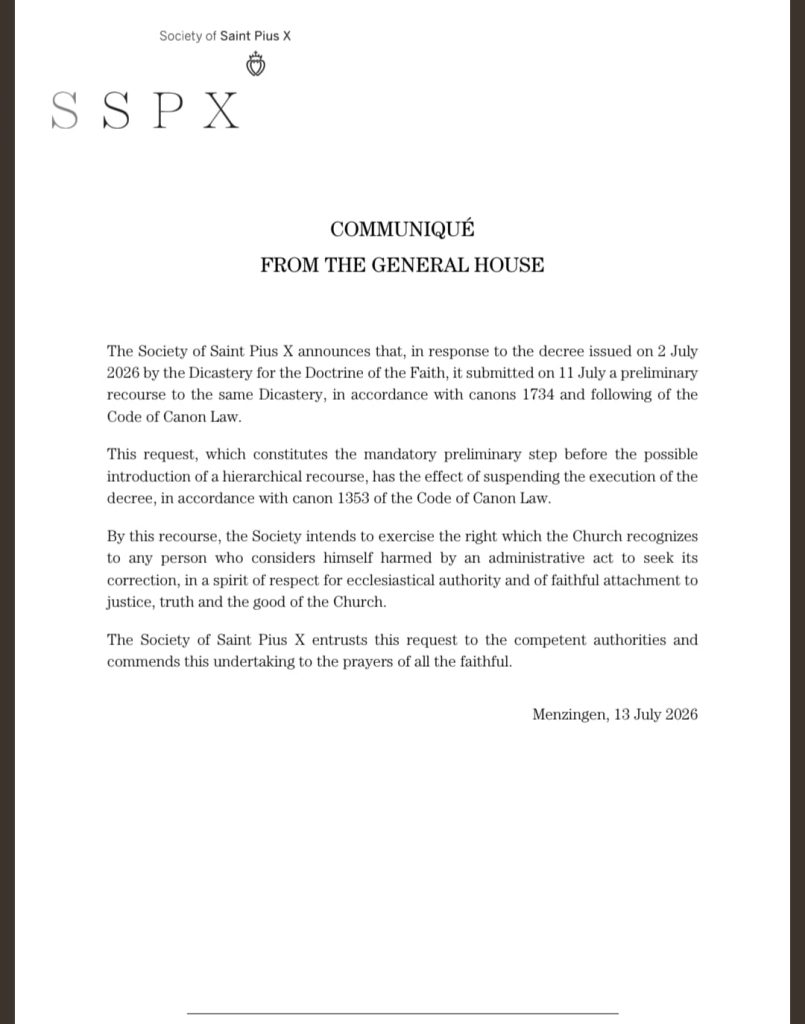
The SSPX has formally challenged the Vatican’s 2 July decree under the 1983 Code of Canon Law. Our analysis examines the Society’s legal arguments, how the recourse process works and what could happen next in its dispute with Rome The Society of Saint Pius X has taken its dispute with the Holy See into a new canonical phase after announcing that it has formally challenged the Dicastery for the Doctrine of the Faith’s decree of 2 July by means of a preliminary recourse under the 1983 Code of Canon Law. In a communiqué issued at 9 pm Central European time from its headquarters in Menzingen on 13 July, the SSPX confirmed that it had submitted the recourse petition on 11 July in accordance with canon 1734, arguing that the measure automatically suspends the penalties of the Vatican decree under canon 1353 while the matter is under review. The communiqué issued from SSPX headquarters in Menzingen on 13 July The move is the first formal procedural response by the SSPX since Rome declared that the episcopal consecration of four priests on 1 July without a pontifical mandate constituted “an act of a schismatic nature”, triggering the most serious confrontation between the Society and the Holy See since the 1988 excommunications. Rather than presenting the filing as an act of defiance, the Society described it as the exercise of a right recognised by the Church. “The Society intends to exercise the right which the Church recognizes to any person who considers himself harmed by an administrative act to seek its correction, in a spirit of respect for ecclesiastical authority and of faithful attachment to justice, truth and the good of the Church,” the communiqué states. The procedural significance of the filing lies in the canons cited by the Society. Canon 1734 requires anyone wishing to challenge an administrative decree first to request in writing that its author revoke or amend it before lodging a higher appeal. The petition must normally be filed within ten useful days of notification. Canon 1353 provides that recourse against decrees which inflict or declare a penalty has a suspensive effect, while canon 1736 confirms that where the law itself suspends execution, the preliminary petition produces the same effect. In practical terms, the SSPX argues that the penalties and declarations contained in the decree cannot be enforced while its request remains pending before the Dicastery for the Doctrine of the Faith. The canonical process does not end with this first submission. Under canon 1735, the Dicastery has thirty days to respond by revoking, correcting or rejecting the request. If it issues a new decree, or if it rejects the petition, the Society may then pursue a hierarchical recourse under canon 1737. That appeal would seek a review by the competent higher authority, with the superior possessing the authority to confirm, revoke or modify the original decree. The legal process creates a temporary pause while preserving the possibility of a fuller examination of the dispute. For the Society, however, the procedural arguments are only one part of a much broader disagreement with Rome over the character of the July consecrations themselves. In an extensive analysis published on 9 July, the SSPX rejected the Dicastery’s central conclusion that the consecrations were schismatic. Referring directly to the decree, the Society argued that “the decree claims that ‘Monsignor Alfonso de Galarreta’ committed ‘an act of a schismatic nature by the episcopal consecration of four priests, without a papal mandate and against the will of the Sovereign Pontiff.’ But such an assertion is hasty and reveals a flawed understanding of schism.” Drawing upon classical canonists and theologians, including Monsignor Raoul Naz and Cardinal Cajetan, the Society sought to distinguish schism from disobedience. It maintained that while the consecrations had taken place contrary to the wishes of Pope Leo XIV, they did not involve a rejection of the Roman Pontiff’s authority. “The Society of Saint Pius X and its Superior General have always affirmed that they recognize Leo XIV as their head. They address him as a subject addresses his superior, as a son addresses his father. … The Society has never claimed to constitute a parallel or autonomous Church.” In its view, schism requires the refusal of submission to the Roman Pontiff or separation from communion with the Church. The SSPX insists that it continues to recognise papal authority while disputing what it considers an unjust administrative act. From its perspective, the dispute concerns the lawfulness and necessity of the episcopal consecrations rather than communion with the Holy See itself. The Society also devoted considerable attention to the penalties declared by the Dicastery. It argued that canon law does not impose penalties automatically without regard to personal culpability, invoking the longstanding principle of nulla poena sine culpa . Citing canons 1323 and 1324, it maintained that a person acting out of necessity or under grave fear may not incur canonical penalties in the ordinary way. The document concludes that “these two canonical considerations are sufficient to affirm with certainty that neither the consecrating bishops nor the bishops consecrated on July 1, 2026, are excommunicated.” According to the SSPX, the necessity in question is not subjective but arises from what it describes as “the grave danger threatening the complete preservation of the faith and the ordinary means of sanctification”. That appeal to a state of necessity has formed the backbone of the Society’s canonical reasoning since Archbishop Marcel Lefebvre justified the 1988 episcopal consecrations on similar grounds. The Society’s decision to pursue a formal recourse also recalls another episode involving traditionalist Catholics. During the early 1990s, six Catholics in Hawaii who had been declared excommunicated by the local bishop because of their association with SSPX sacramental life sought hierarchical recourse to Rome. Following a review by the Congregation for the Doctrine of the Faith under Cardinal Joseph Ratzinger, the decrees were ultimately declared null, with the Vatican concluding that the actions in question did not amount to formal schism. While the factual circumstances differ substantially from the present dispute, the Hawaii case remains one of the clearest examples of the Holy See overturning canonical penalties after the recourse procedure. The comparison with 1988 is unavoidable, yet the present situation differs in one significant respect. Following Archbishop Lefebvre’s consecration of four bishops without papal approval, Rome declared that he and the newly consecrated bishops had incurred excommunication. The Society consistently maintained that those penalties had never been valid because of necessity but did not pursue the structured administrative recourse now available under the current procedural framework. Instead, the dispute evolved through years of theological dialogue until Pope Benedict XVI remitted the excommunications in 2009 without requiring the Society first to acknowledge that they had been validly incurred. The present case therefore combines continuity with a twist. Substantively, the SSPX continues to reject both the accusation of schism and the penalties attached to it. Procedurally, however, it is making full use of the mechanisms provided by the 1983 Code of Canon Law. The SSPX’s reservations concerning the post-conciliar reforms extended to the legal framework established after the Second Vatican Council. Yet by relying explicitly upon canons 1353 and 1734 to 1737, the Society is invoking the authority of the very Code promulgated by Pope John Paul II in 1983. Indeed, recognition of the validity of the 1983 Code appeared as the fifth point in the Memorandum of Understanding signed by Cardinal Joseph Ratzinger and Archbishop Lefebvre on 5 May 1988 before the agreement collapsed the following day. Beyond that, the SSPX readily acknowledges that the Dicastery has issued a decree and that the decree purports to impose canonical consequences. What it does not accept is that those consequences have been validly incurred. Its decision to file recourse therefore seeks simultaneously to suspend the decree’s effects, protect its apostolate and challenge the Vatican’s position using the Church’s own judicial mechanisms. The Dicastery for the Doctrine of the Faith will in theory make the next move. It may revoke or amend its decree, reject the petition outright or simply reaffirm its earlier conclusions. Should that occur, the Society would then be entitled to pursue hierarchical recourse within the Roman Curia under the timetable established by canon law. The competent authority would have the power to uphold, rescind or modify the decree, while the Pope himself could intervene personally at any stage, either by deciding the matter directly or by instructing the Dicastery to adopt a different course. For now, the dispute enters a new but no less consequential phase. The canonical process offers neither side an immediate victory. Instead, it places the latest confrontation between Rome and the Society of Saint Pius X within the legal structures of the Church.
Jul. 13, 2026
Pope Leo XIV personally lobbied Macron over French euthanasia bill, sources say
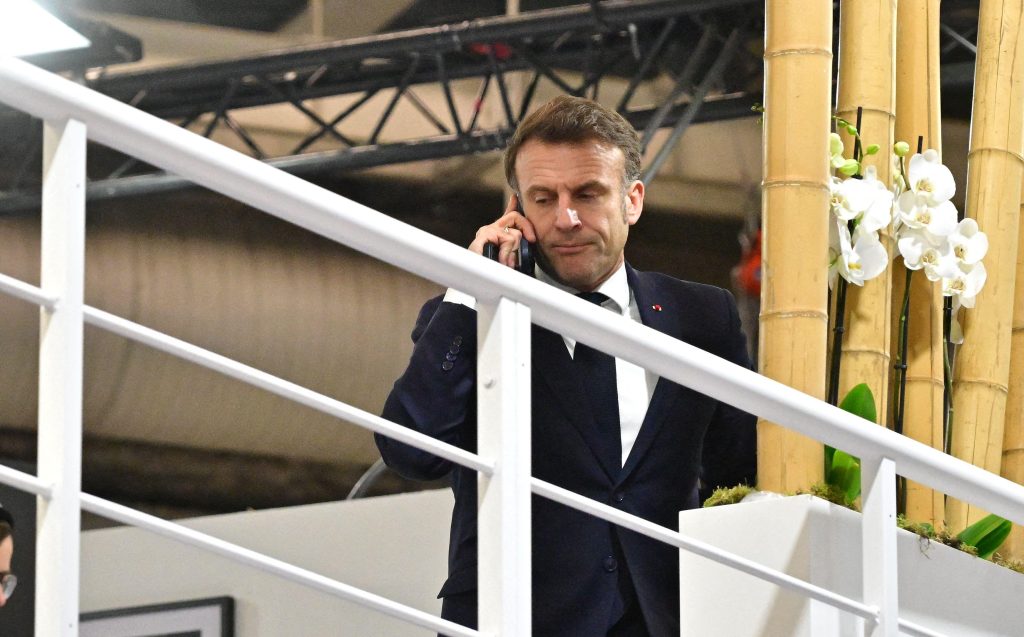
Exclusive: Sources tell AdVaticanum that Pope Leo XIV held regular direct calls with President Emmanuel Macron in an effort to slow France’s euthanasia bill ahead of his forthcoming visit to the country A notable feature of the June Consistory was Pope Leo XIV’s call for frankness in addressing the pressing issues facing the Church. According to sources close to AdVaticanum, this approach has recently been put into practice through the Pope’s personal engagement with the highest levels of the French government on the question of euthanasia. The intervention has taken place through quiet but consistent channels. While sources could not confirm exactly when it began, Pope Leo XIV is said to have initiated a series of direct communications with Emmanuel Macron. According to sources within both the diplomatic sphere and the Vatican, His Holiness has been making regular 15-minute phone calls to the French President focused solely on the euthanasia and assisted suicide bill. These conversations have centred on ways to slow the bill’s progress and prevent France from following paths seen in other nations, such as Canada, where the law is now responsible for more than 5 per cent of deaths. It is understood that His Holiness has been focusing particularly on euthanasia because several European countries, including the United Kingdom, are pursuing similar legislation, and a liberalisation in France may encourage others to follow. The third vote in the Senate on the euthanasia and assisted suicide bill failed, with senators rejecting the measure by a narrow margin. The bill will now return to the National Assembly for what could prove a decisive reading. Sources have also told AdVaticanum that His Holiness’s strengthened focus on life issues is a defining priority of his pontificate. This is reflected in the promotion of Archbishop Renzo Pegoraro, President of the Pontifical Academy for Life, who was elevated from monsignor to the episcopate in under a year. The political dimension of the upcoming papal trip to France is likely another factor behind the Pope’s personal engagement. The overall atmosphere surrounding the visit will be shaped by the country’s policy of laïcité, the strict secular framework separating Church and State. The French legislature will be keen to avoid any appearance of external influence on matters of public policy, particularly on moral questions such as euthanasia. However, the Pope is likely to use the visit to make a firm defence of human life, as seen during his recent apostolic journey to Spain. On that occasion, as the first Pontiff to address the Spanish Parliament, he asked: “Can a community that casts into the shadows the unborn child, the elderly, the sick, those who suffer in silence, or those who depend entirely on the care of others be called fully just?” He went on to insist that “every human life must be recognised and safeguarded from conception to its natural end, in every circumstance of its existence.” President Macron has publicly backed the assisted suicide legislation, describing it as “aid in dying” for adults facing incurable illness and intractable suffering. His government has framed the measure as a compassionate option, avoiding terms such as euthanasia or assisted suicide. His party and its allies in the National Assembly have largely supported the bill, arguing that it protects personal dignity and individual choice in end-of-life decisions. Yet the Senate’s repeated rejections indicate significant resistance to the state facilitating suicide. Pope Leo XIV has met President Macron on several occasions since his election. Their first in-person meeting took place shortly after the conclave in May 2025, when Macron travelled to Rome for a private audience at the Vatican to discuss European affairs, including migration and peacebuilding. If the bill ultimately passes, the Pope’s visit to France will carry clear political sensitivities. He will encounter an environment in which any strong defence of the Church’s teaching on the sanctity of life may prompt accusations of interference in domestic affairs. With the French visit on the horizon, the climate of secular sensitivity means that every word and gesture will carry weight. Macron’s government has continued to advance the legislation despite Senate setbacks, setting the stage for potential tension. Yet the repeated failures in the Senate also suggest that concerns about assisted suicide—particularly its implications for the value of human life and the protection of the vulnerable—remain firmly present within French political life.
Jul. 13, 2026
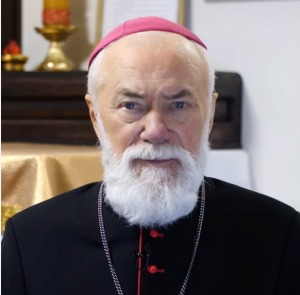
Controversial retired archbishop defends SSPX after excommunications
Controversial retired Archbishop Jan Paweł Lenga has publicly defended the SSPX following the excommunications over its episcopal consecrations The Society of St Pius X has received a public defence from the controversial Archbishop Jan Paweł Lenga, retired Archbishop Emeritus of Karaganda in Kazakhstan, following its 1 July episcopal consecration of four bishops without a papal mandate. In a lengthy statement published in English by SignoftheCross Media, Archbishop Lenga denounced the Holy See’s excommunication decree in uncompromising terms, describing it as evidence that the Vatican had “departed from Christ and from the faith”. His intervention is the first public endorsement of the Society by a bishop since the “maximalist” sanctions imposed on the SSPX following the illicit episcopal consecrations. Opening his statement, the retired archbishop contrasted the Society’s episcopal consecration with what he described as the state of the contemporary Church. “It was worth seeing the consecration of the bishops of the Society of St Pius X: what peace, what joy, what prayerful atmosphere, what solemnity!” the archbishop said. “Nothing like that can be seen in the post-conciliar Church anymore. In contrast, the Vatican is in chaos.” Archbishop Lenga argued that the Society had sought reconciliation with Rome for many years but claimed those efforts had failed because of those now holding senior positions within the Vatican. He went on to accuse senior Church leaders of abandoning their pastoral mission, alleging that they were more concerned with enforcing canon law than safeguarding the faith. “They appeal to canons – which were written to prevent heresies, to prevent schism – yet these cardinals and bishops themselves are in schism. They are the ones who should be excommunicated, because they no longer have anything at all in common with the Church of Christ.” The former Archbishop of Karaganda also rejected suggestions that the Society had broken communion with the Holy See, insisting instead that it remained faithful to the Petrine ministry. “They do not wish to be separated from the See of Peter,” he said. “They are not separating themselves from Peter; rather, the false Peter has separated himself from them.” His criticism extended directly to Pope Leo XIV, whom he referred to by his secular surname. “Prevost’s approval of the excommunication is proof that he no longer represents the Church that follows Jesus and leads people to salvation,” Archbishop Lenga declared. The retired archbishop repeatedly defended the Society’s founder, Archbishop Marcel Lefebvre, portraying him as a bishop who foresaw the dangers facing the Church after the Second Vatican Council. He argued that the Society’s attachment to the Church’s traditional liturgy and doctrine represented fidelity rather than rebellion, while describing the post-conciliar reforms as a departure from the Church’s authentic mission. Referring to the episcopal consecration itself, he praised both the liturgy and the homily delivered during the ceremony. “The homily at the ordination Mass of the new bishops was in the spirit of Cyril of Alexandria and in the spirit of those who suffered at the hands of people during their lives,” he said. “It was in the spirit of Saint Athanasius.” Archbishop Lenga concluded by insisting that the Vatican’s penalties had no spiritual effect on the Society and urged its members to remain steadfast despite the sanctions. “Remain faithful to Christ,” he said. “Some will call into question the sacraments you administer, but remain faithful to Christ, and whoever endures to the end will be saved.” While the archbishop’s statement is likely to be welcomed within SSPX circles, Archbishop Lenga has long occupied a controversial position within the wider Church because of his own disciplinary history. Following his retirement, the Diocese of Włocławek in Poland imposed restrictions on the retired archbishop after a series of public interventions directed against Pope Francis. The disciplinary measures prohibited him from preaching at Mass and speaking to the media, although Archbishop Lenga immediately rejected the sanctions by granting a televised interview in which he said he intended to continue speaking publicly. Fr Artur Niemira, chancellor of the Diocese of Włocławek, said at the time that Bishop Wiesław Mering had imposed the restrictions to prevent scandal among the faithful. According to the Polish Catholic news agency KAI, the sanctions followed Archbishop Lenga’s refusal to mention Pope Francis by name during Mass and were to remain in force pending a judgment by the Holy See. His criticism of Pope Francis had already become well known. The Polish journal Więź reported that he had described Pope Francis as a “usurper and heretic”, quoting him as saying: “Bergoglio preaches untruth, preaches sin, and does not preach a tradition that lasted so many years, 2,000 years… He proclaims the truth of this world and this is the truth of the devil.” The Polish bishops’ conference also distanced itself from his interventions after he appeared on Polish television in 2020. Its spokesman, Fr Paweł Rytel-Andrianik, emphasised that Archbishop Lenga was not a member of the conference and that “the statements of Archbishop Lenga cannot be identified in any way with the Polish episcopal conference. They cannot be treated as positions of Polish bishops.” Born in present-day Ukraine in 1950, he was ordained secretly in 1980 during Soviet persecution of the Church before serving as Apostolic Administrator of Kazakhstan following the collapse of the Soviet Union. He later became Archbishop of Karaganda, remaining in office until Pope Benedict XVI accepted his resignation in 2011.
Jul. 11, 2026

Cardinal McElroy offers new explanation for removing Washington exorcist
Cardinal Robert McElroy has offered a different explanation for his removal of Monsignor Stephen Rossetti as an exorcist for the Archdiocese of Washington, differing from the one given in the archdiocese’s original announcement Cardinal Robert McElroy has offered a new explanation for his decision to remove Monsignor Stephen Rossetti as an exorcist for the Archdiocese of Washington. Speaking to Catholic News Service in an interview conducted on 29 June and released on 8 July, Cardinal McElroy said his decision should not be interpreted as a judgment on unidentified flying objects or extraterrestrial life, but rather reflected his conviction that the ministry of exorcism ought to remain discreet and centred on pastoral care. “It wasn’t touching on the question of UFOs,” the cardinal said. “My major objection is that I think the traditional role of an exorcist is a very private one. It’s a sacred one.” “I think the more traditional approach of an exorcist is a private, within-the-life-of-the-Church ministry to help individuals who are in crisis and seem to be demonically possessed,” Cardinal McElroy told Catholic News Service. “It shouldn’t go beyond that for people who are doing exorcism.” The different explanations in the two statements call into question Cardinal McElroy’s explanation. While the original announcement directly linked the priest’s public comments about UFOs to the action taken against him, the cardinal’s subsequent interview instead focused on the nature of the office itself, arguing that an exorcist’s ministry should remain largely unseen. Msgr. Rossetti had become one of the most prominent Catholic exorcists in the United States through his work with the St. Michael Center for Spiritual Renewal and an extensive online presence. The centre’s YouTube channel has attracted more than 146,000 subscribers, while the priest has also built sizeable followings on other social media platforms by discussing exorcism, spiritual warfare and reports of demonic activity. The controversy intensified after a post published in May in which Msgr. Rossetti wrote that “probably many, if not most, UFO sightings are in fact demons”. When the Archdiocese announced his removal in early June, the statement explicitly cited both the comments linking UFOs with demonic activity and the St. Michael Center’s recent use of social media, saying they undermined the Church’s teaching on demons and exorcism. Cardinal McElroy’s later explanation has therefore shifted attention from the substance of Msgr. Rossetti’s claims to the way exorcism is exercised publicly. In his interview, he described exorcism as a ministry entrusted by a bishop in particularly serious cases and suggested that public commentary extending beyond that pastoral responsibility was inconsistent with its traditional character. The importance of discretion is reflected in existing Church practice. Guidance published by the United States Conference of Catholic Bishops notes that “the preservation of confidentiality is important” in the exercise of exorcism, underscoring the sensitive nature of the ministry and the vulnerability of those who seek its assistance. Following his removal, Msgr. Rossetti expressed sadness at the decision while reaffirming his obedience to the Church. He asked forgiveness “for any ways in which I have failed to remain fully obedient to the Magisterium of the Church” and confirmed that the St. Michael Center for Spiritual Renewal would continue its work independently of the Archdiocese of Washington.
Jul. 10, 2026