

Latest
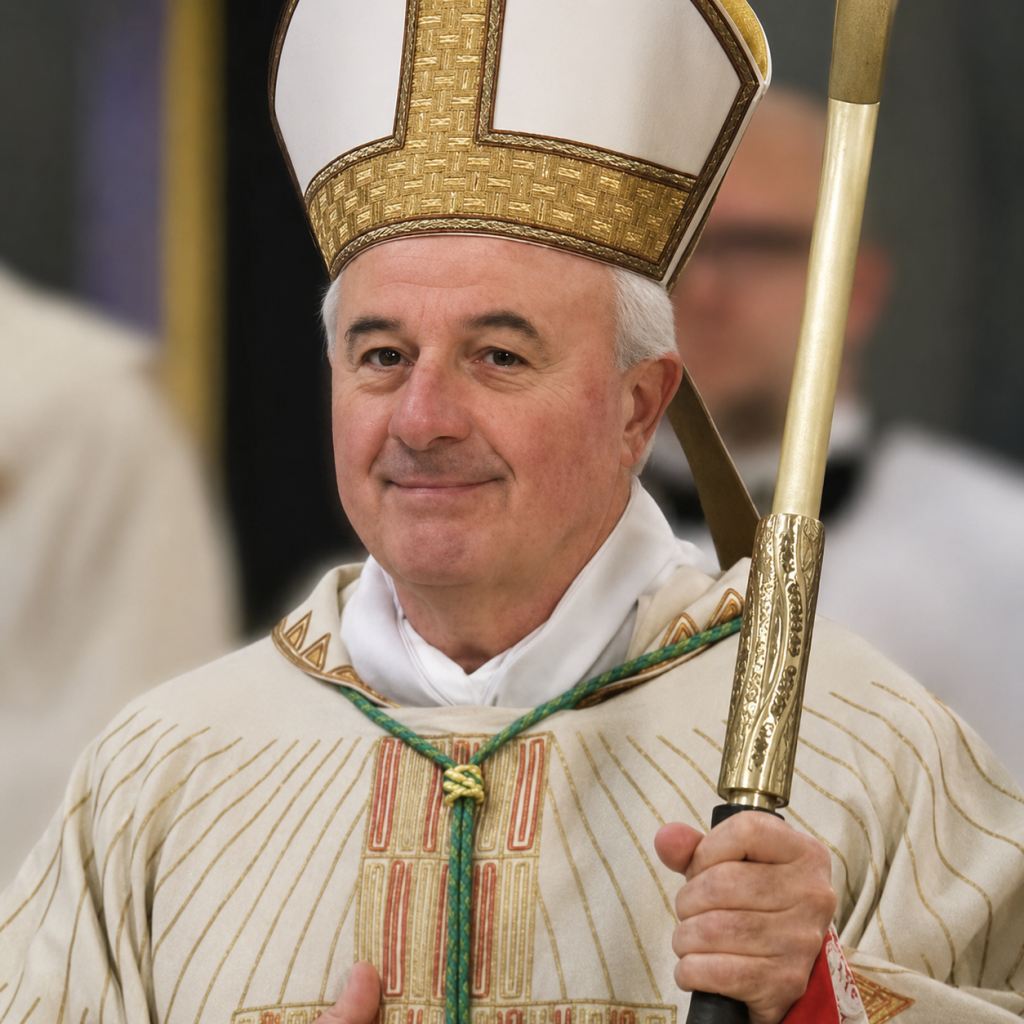
Francis era appointments unroofed from Rome: Di Tolve tipped for Chioggi
Bishop Michele Di Tolve, appointed as an auxiliary bishop of Rome by Pope Francis in 2023, is reportedly set to be transferred to the Diocese of Chioggia. This move is part of the latest Francis-era appointments being unroofed from Rome. An Auxiliary Bishop of the diocese of Rome may move to Chioggia, a seaside town south of Venice. According to an exclusive report by MessainLatino , Bishop Michele Di Tolve, an auxiliary bishop of Rome appointed by Pope Francis and currently serving as rector of the Pontifical Roman Major Seminary, is set to be transferred to the Diocese of Chioggia. According to MessainLatino , sources in the Diocese of Chioggia have indicated that this move is forthcoming, though it has not yet been formally confirmed by the Holy See. Bishop Di Tolve was born in Milan on 19 May 1963 and grew up in the parish of San Francesco d’Assisi in Grancia and Pagliera di Lainate. He completed his priestly formation at the Milanese archiepiscopal seminaries. Ordained deacon on 4 December 1988 in Cesano Maderno by Cardinal Carlo Maria Martini, he was ordained a priest on 10 June 1989 in Milan Cathedral by Cardinal Martini. In 2007, Cardinal Dionigi Tettamanzi appointed him head of the Catholic Religious Education Service and the School Pastoral Service. From 2008 to 2014, he served as the Supreme Moderator’s Delegate at the Higher Institute of Religious Sciences in Milan. In 2014, Cardinal Angelo Scola named him rector of the archiepiscopal seminary of Milan, effective from 2015. Pope Francis appointed him auxiliary bishop of Rome and titular bishop of Orrera on 26 May 2023. On 4 July 2023, he was named rector of the Pontifical Roman Major Seminary with the task of strengthening relationships between priestly formation institutions in the territory of the Diocese of Rome and coordinating their activities. This potential transfer forms part of small but substantial changes to the Francis-era appointments that have rooted themselves within the ecclesiastical personnel of the Vicariate and the Roman Curia, where the Pope has already implemented structural changes, correcting substantial parts of Francis’s reform. Gradual but firm, these adjustments reflect a deliberate approach to diocesan governance in Rome. On 30 June, Pope Leo XIV issued the motu proprio Confirma Fratres Tuos , rolling back key parts of Pope Francis’s 2023 reform of the Diocese of Rome. The document recentres diocesan governance around the Cardinal Vicar as the principal authority in the day-to-day government of the Pope’s diocese. After announcing the consecration of four new auxiliary bishops of Rome on 25 February, Pope Leo established a commission comprising all the auxiliary bishops and the Cardinal Vicar to review the apostolic constitution In Ecclesiarum Communione . Francis’s reform had significantly reduced the power of the Cardinal Vicar and increased the powers of the vicegerent and the episcopal council. Article 10 of In Ecclesiarum Communione described the Cardinal Vicar as “an auxiliary and vicar general” who would exercise episcopal ministry with ordinary vicarious power. The revised text under Pope Leo simplifies this, eliminating the description of the Cardinal Vicar as “an auxiliary and vicar general” and instead affirming that the Cardinal Vicar has “the high and effective direction of the Vicariate”, with only brief mention of the vicegerent at the end. Pope Francis had also dismissed most of his auxiliary bishops in favour of loyalty and abolished the historic centre pastoral sector of the Diocese of Rome. Beyond the structural reforms in the Diocese of Rome, Pope Leo has been slowly unwinding elements of the Curia. Cardinal Michael Czerny, who owed his Curia position to Pope Francis and was made a cardinal by him in 2019, was replaced as prefect of the Dicastery for Promoting Integral Human Development by Sister Alessandra Smerilli, FMA. Sister Smerilli had been an auditor at the 2018 Synod on Youth. Pope Francis appointed her as councillor of the Vatican City State and consultant to the General Secretariat of the Synod of Bishops in 2019. In 2020, she coordinated the economic task force of the Vatican Covid-19 Commission. She became undersecretary of the Faith and Development Section of the dicastery in March 2021, interim secretary in August that year, and permanent secretary in April 2022. Sources close to the dicastery told AdVaticanum she is “relatively popular internally and she is scandal free”. Cardinal Fabio Baggio, CS, was appointed pro-prefect alongside her. The Dicastery for Communication has seen a particularly striking change. The dicastery under Paolo Ruffini as prefect was viewed as entrenched in the Francis way of operating. Paolo Ruffini and his associates, described as the “Palazzo Pio Gang”, were seen as deeply connected to that approach, including Ruffini’s defence of Fr Rupnik. Montserrat Alvarado’s appointment as prefect in June to replace him was therefore incredible, coming as something of an unexpected move from an outsider. Sources told AdVaticanum that she told His Holiness that “she wanted to bring back orthodoxy”. Pope Leo XIV has also replaced Cardinal Konrad Krajewski, a loyalist of Pope Francis, as head of the Vatican’s principal charitable office, appointing the Spanish Augustinian Bishop Luis Marín de San Martín as the new Almoner of His Holiness and Prefect of the Dicastery for the Service of Charity. Cardinal Krajewski had served in the role since 2013 and became the first prefect of the dicastery following the Roman Curia reforms of 2022. The replacement of the cardinal, who is only 62 and well below the usual age for such transitions, raised questions. Nothing has been said about whether the change followed a request from the cardinal himself. Such abrupt transitions are uncommon in the Roman Curia, particularly when they involve a relatively young cardinal whose term has not reached its natural conclusion. Viewed in their entirety, these developments illustrate a slow but steady reorientation. The potential move of Bishop Di Tolve from his prominent roles in Rome to the Diocese of Chioggia would align with this pattern, removing one of the more recent Francis-era appointments from the centre of Roman ecclesiastical life.
Jul. 10, 2026

Cardinal McElroy offers new explanation for removing Washington exorcist
Cardinal Robert McElroy has offered a different explanation for his removal of Monsignor Stephen Rossetti as an exorcist for the Archdiocese of Washington, differing from the one given in the archdiocese’s original announcement Cardinal Robert McElroy has offered a new explanation for his decision to remove Monsignor Stephen Rossetti as an exorcist for the Archdiocese of Washington. Speaking to Catholic News Service in an interview conducted on 29 June and released on 8 July, Cardinal McElroy said his decision should not be interpreted as a judgment on unidentified flying objects or extraterrestrial life, but rather reflected his conviction that the ministry of exorcism ought to remain discreet and centred on pastoral care. “It wasn’t touching on the question of UFOs,” the cardinal said. “My major objection is that I think the traditional role of an exorcist is a very private one. It’s a sacred one.” “I think the more traditional approach of an exorcist is a private, within-the-life-of-the-Church ministry to help individuals who are in crisis and seem to be demonically possessed,” Cardinal McElroy told Catholic News Service. “It shouldn’t go beyond that for people who are doing exorcism.” The different explanations in the two statements call into question Cardinal McElroy’s explanation. While the original announcement directly linked the priest’s public comments about UFOs to the action taken against him, the cardinal’s subsequent interview instead focused on the nature of the office itself, arguing that an exorcist’s ministry should remain largely unseen. Msgr. Rossetti had become one of the most prominent Catholic exorcists in the United States through his work with the St. Michael Center for Spiritual Renewal and an extensive online presence. The centre’s YouTube channel has attracted more than 146,000 subscribers, while the priest has also built sizeable followings on other social media platforms by discussing exorcism, spiritual warfare and reports of demonic activity. The controversy intensified after a post published in May in which Msgr. Rossetti wrote that “probably many, if not most, UFO sightings are in fact demons”. When the Archdiocese announced his removal in early June, the statement explicitly cited both the comments linking UFOs with demonic activity and the St. Michael Center’s recent use of social media, saying they undermined the Church’s teaching on demons and exorcism. Cardinal McElroy’s later explanation has therefore shifted attention from the substance of Msgr. Rossetti’s claims to the way exorcism is exercised publicly. In his interview, he described exorcism as a ministry entrusted by a bishop in particularly serious cases and suggested that public commentary extending beyond that pastoral responsibility was inconsistent with its traditional character. The importance of discretion is reflected in existing Church practice. Guidance published by the United States Conference of Catholic Bishops notes that “the preservation of confidentiality is important” in the exercise of exorcism, underscoring the sensitive nature of the ministry and the vulnerability of those who seek its assistance. Following his removal, Msgr. Rossetti expressed sadness at the decision while reaffirming his obedience to the Church. He asked forgiveness “for any ways in which I have failed to remain fully obedient to the Magisterium of the Church” and confirmed that the St. Michael Center for Spiritual Renewal would continue its work independently of the Archdiocese of Washington.
Jul. 10, 2026
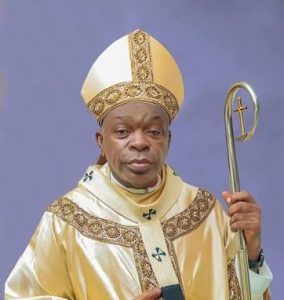
Former Nigerian bishops’ conference president Archbishop Augustine Akubueze dies aged 69
Archbishop Augustine Akubueze, former president of the Catholic Bishops’ Conference of Nigeria and Archbishop of Benin City, has died aged 69. He led the Nigerian bishops during some of the country’s most challenging years as violence against Christians intensified and was widely credited with strengthening two of Nigeria’s most vibrant dioceses Augustine Obiora Akubueze, former president of the Catholic Bishops’ Conference of Nigeria, has died at the age of 69. Born in 1956, he was ordained a priest in 1987 and consecrated as the first Bishop of the Diocese of Uromi in 2006, taking the episcopal motto Ut Testimonium Perhibeam Veritati (“That I may bear witness to the Truth”). He oversaw the growth of the dynamic and youthful diocese and is credited with the strong position it finds itself in today, with 113 diocesan priests serving 45 parishes and 54 men in training for the priesthood. In 2011, his hard work was recognised, and he was appointed Archbishop of Benin City, one of Nigeria’s oldest and most influential Catholic jurisdictions. Under his leadership, the number of priests grew from 104 to 173, while the number of parishes increased from 62 to 94. The number of women religious also almost doubled, from 73 to 135. Archbishop Akubueze served as President of the Catholic Bishops’ Conference of Nigeria from 2020 to 2024. Nigeria has long been in the grip of violent religious conflict. In 2020, at the beginning of his tenure as president, Nigeria was classified by Open Doors as the 12th most dangerous country in the world in which to be a Christian. By 2024, it had risen to sixth due to a sharp increase in Islamist violence against Christian communities, particularly in the country’s Middle Belt. Archbishop Akubueze’s death was announced on Thursday by the Catholic Secretariat of Nigeria in a statement shared on its official Facebook page. The statement reads: “In total surrender to God’s will and sure hope of the Resurrection, the Catholic Secretariat of Nigeria invites all the faithful and people of goodwill to unite in prayer for the eternal repose of the soul of Most Rev. Augustine Obiora Akubeze, Metropolitan Archbishop of Benin City and former President of the Catholic Bishops’ Conference of Nigeria. May the Lord, in His infinite mercy, grant him everlasting rest. And may his soul, together with the souls of all the faithful departed, through the mercy of God, rest in peace. Amen.”
Jul. 10, 2026
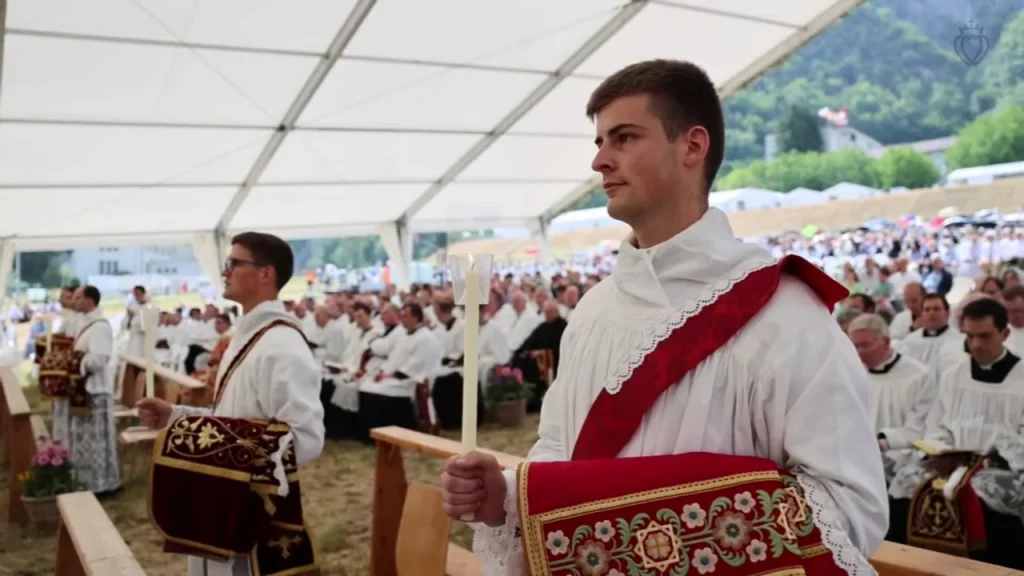
Belgian bishop offers prayers to newly ordained SSPX priest
The Bishop of Liège has offered prayers and encouragement to a newly ordained priest of the Society of Saint Pius X The Bishop of Liège has offered prayers and encouragement to a newly ordained priest of the Society of Saint Pius X (SSPX). In a statement issued after the priestly ordination of Fr Vincent Richter at the SSPX’s International Seminary of Écône in Switzerland on 29 June, the Solemnity of Saints Peter and Paul, Bishop Jean-Pierre Delville of Liège assured the new priest of his prayers and wished him well in the missionary work that now awaits him in Brazil. Fr Richter comes from Steffeshausen, a village within the Diocese of Liège. Although his priestly formation took place within the Society of Saint Pius X rather than under diocesan authority, Bishop Delville chose not to respond with criticism or public condemnation. Instead, his statement expressed personal goodwill towards the new priest, together with a reaffirmation of the Church’s understanding of the origins and present position of the SSPX. The bishop stated that he had been informed of Fr Richter’s ordination in Écône and assured him of his prayers, encouraging him to follow Christ in his future ministry in Brazil. His hope, he said, was that the newly ordained priest would carry out that mission “as an authentic disciple of the Gospel”. While Bishop Delville made no attempt to disguise the reasons for the division, his statement combined pastoral concern for one of his former diocesan faithful with a concise explanation of the theological and ecclesial issues that continue to separate the SSPX from full communion with Rome. The bishop explained that the Society of Saint Pius X brings together Catholics who, following Archbishop Marcel Lefebvre, refused to accept certain decisions of the Second Vatican Council. Importantly, Bishop Delville rejected the suggestion that the council itself abolished the Church’s older liturgical tradition. The declarations of the council, he said, “do not call into question the Latin liturgy in its ancient form”, adding that this was not the cause of the break between Rome and the Society. He also distinguished the SSPX from the Priestly Fraternity of Saint Peter, noting that the latter likewise celebrates the traditional Latin liturgy while fully accepting the teachings of the Second Vatican Council. Bishop Delville observed that Archbishop Lefebvre’s dissent was “not the first in the history of the Church”. Throughout history, he wrote, Catholics have sometimes struggled to understand that fidelity to tradition is not static but living and dynamic. To illustrate that point, the bishop turned to St John Henry Newman, citing the English cardinal’s understanding of the development of doctrine. Newman taught that the Church, “like every living organism, changes in order to remain the same”, while insisting that authentic Christian doctrine does not introduce new revelation but unfolds truths already contained within the deposit of faith. Drawing on Newman’s Essay on the Development of Christian Doctrine , Bishop Delville quoted the saint’s well-known observation that “to live is to change, and to be perfect is to have changed often”. The statement also referred to recent developments within the Society of Saint Pius X itself. Bishop Delville observed that, by ordaining four new bishops on 1 July 2026 without a papal mandate, the fraternity had further deepened what he described as its “dissidence” within the Catholic Church. Yet even in discussing that latest development, the bishop did not advocate isolation. Instead, he insisted that these actions should not prevent Catholics from continuing to seek dialogue with members of the fraternity. “This does not prevent us from seeking dialogue with it,” he wrote, nor from “challenging each other mutually and establishing fraternal relations.”
Jul. 9, 2026
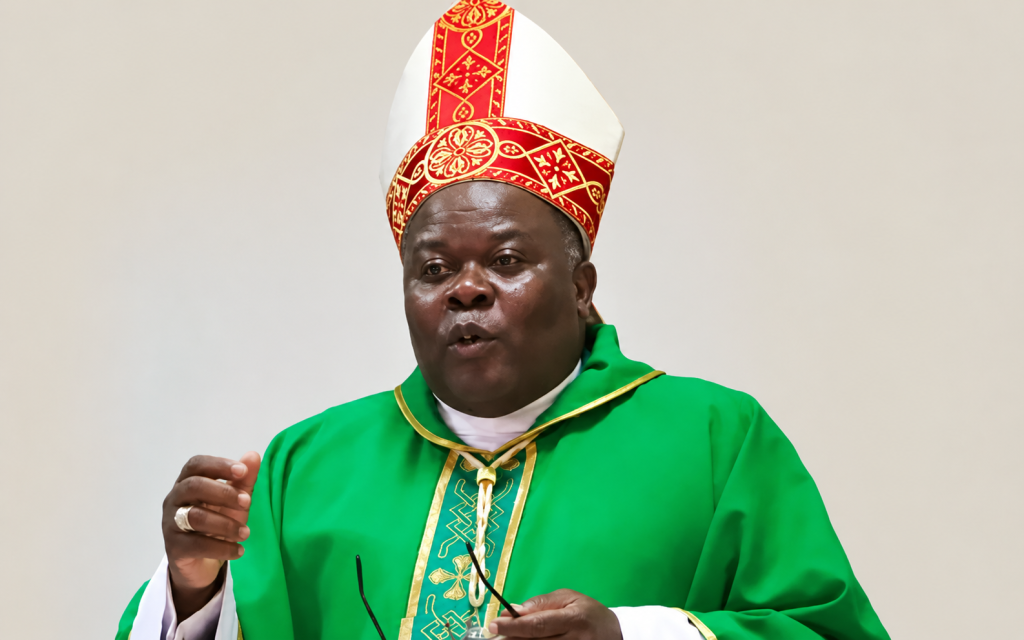
Apostolic administrator asks people not to speculate over murdered bishop
The apostolic administrator of the Diocese of Quelimane has urged people not to speculate about the murder of Bishop Osório Citora Afonso, warning against unverified allegations and calling for the legal process to be allowed to run its course The apostolic administrator of the Diocese of Quelimane has appealed for people not to speculate about the murder of Bishop Osório Citora Afonso. In a statement issued on 4 July, Bishop Estêvão Ângelo Fernando, who was appointed apostolic administrator of Quelimane after Bishop Afonso was shot dead on 6 June, condemned what he described as the publication of unverified allegations and the growing tendency to assign blame before the courts have reached any conclusions. The statement, signed jointly with the diocesan College of Consultors, came after weeks of intense reporting by Mozambican media based on purported details from the ongoing police investigation. “I, Dom Estêvão Ângelo Fernando, apostolic administrator of the Diocese of Quelimane, and the College of Consultors, publicly express our vehement repudiation of the material published by certain media outlets and circulated on social media, which blames individuals for actions, attitudes, and management decisions that at times have absolutely nothing to do with the case concerning the assassination of the Bishop of Quelimane, Dom Osório Citora Afonso,” Bishop Fernando said. “I myself am a target of this.” The bishop also criticised the disclosure of confidential investigative material and said that such leaks violate judicial secrecy, encourage speculation and an atmosphere of suspicion, rather than helping establish the truth. While reaffirming the Church’s support for a free press, he cautioned that “freedom without ethics or respect for the law degenerates into speculation.” Bishop Afonso was killed by a gunshot to the chest at his episcopal residence in Quelimane. Early reports suggested the bishop had been assassinated by attackers who entered the residence from outside after scaling its walls, disabling the security system and using an AKM rifle. The circumstances led to widespread speculation that the killing may have been politically motivated. Within days, however, investigators arrested three individuals connected to the diocese: the diocesan chancellor, Fr Adelino Novais Amado, together with the gardener and security guard employed at the bishop’s residence. Subsequent reports published by the independent newspapers Savana and Canal de Moçambique have cited information they say originates from the police investigation. According to those reports, investigators are examining whether Bishop Afonso’s death may have been linked to disputes over diocesan administration following his appointment in 2025. The reports suggest that, after taking office, Bishop Afonso began reviewing the diocese’s financial administration and decisions made during the prolonged period between the resignation of his predecessor, Bishop Hilário Massinga, in 2023 and his own arrival two years later. They further allege that the bishop intended to introduce significant reforms to diocesan governance. Central to those claims is a decree signed by Bishop Afonso on 31 May, less than a week before his death, reorganising the diocesan curia. Among the changes was the replacement of Fr Amado as chancellor. The new appointments were due to take effect on 6 June, the day Bishop Afonso was killed. Neither Mozambican judicial authorities nor Church officials have publicly confirmed any motive for the murder, and many of the allegations reported in the press remain unverified. Particular controversy has surrounded reports published by Canal de Moçambique alleging financial transfers and communications between Fr Amado and Bishop Fernando. Without addressing those specific allegations individually, the apostolic administrator rejected suggestions that named individuals had been implicated before any judicial findings had been made, saying publications were attributing responsibility to people who, in some cases, had “absolutely nothing to do” with the crime. The wider allegations reported in the Mozambican press have centred on claims that conflicts over diocesan assets predated Bishop Afonso’s arrival. Savana has reported longstanding disputes concerning the management of Church property and legal proceedings initiated under Bishop Massinga involving the alleged misappropriation of diocesan assets by religious sisters. The uncertainty surrounding the investigation has attracted considerable attention both within Mozambique and internationally. The Holy See moved swiftly after the bishop’s death by appointing Bishop Fernando, who leads the neighbouring Diocese of Alto Molócuè, to administer Quelimane temporarily. The appointment suggests that the Vatican had no evident reservations about his suitability to oversee the diocese while the investigation proceeds. The case has also coincided with high-level contact between the Vatican and the Mozambican episcopate. Pope Leo XIV recently received the president and vice-president of the Episcopal Conference of Mozambique, Archbishops Inácio Saure and João Carlos Hatoa Nunes, together with the Archbishop Emeritus of Beira, Claudio Dalla Zuanna. No official account of the audience was released, and the Holy See has not disclosed whether Bishop Afonso’s murder formed part of the discussions. Bishop Osório Citora Afonso was murdered on 6 June. Three individuals connected to the diocese have been arrested, while investigators continue examining multiple lines of inquiry. No court has established responsibility, and no official judicial conclusions have been announced. Bishop Fernando has urged both the media and the public to allow the legal process to run its course.
Jul. 9, 2026
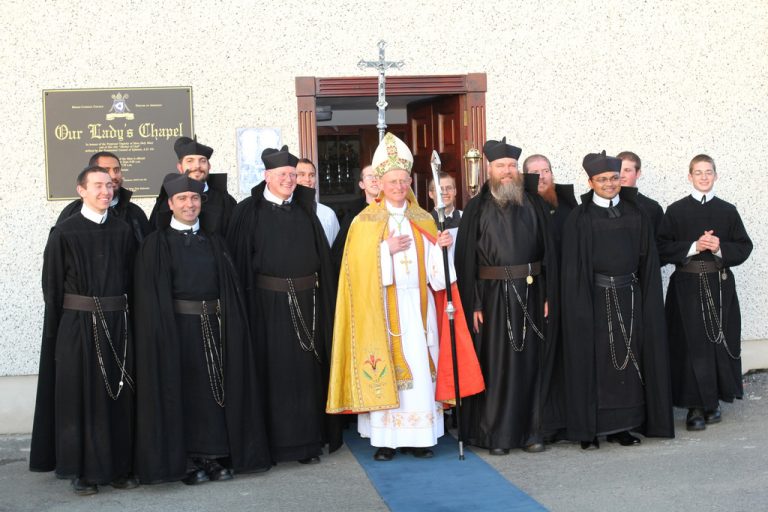
Redemptorists clarify relationship with Papa Stronsay before consecration
The Redemptorists have issued a public statement concerning the Papa Stronsay-based Sons of the Most Holy Redeemer ahead of the community’s planned episcopal consecration later this month The Congregation of the Most Holy Redeemer has issued a public clarification distancing itself from the self-declared sedevacantist Sons of the Most Holy Redeemer (FSSR), based on Papa Stronsay, who will proceed with the episcopal consecration of its founder without papal approval. In a statement released from Rome on 7 July, the congregation’s Superior General, Fr Rogério Gomes CSsR, stressed that the Sons of the Most Holy Redeemer (FSSR) “has never been part of the Congregation of the Most Holy Redeemer (C.Ss.R.), nor has it ever been juridically affiliated with the Redemptorist General Government”. The intervention comes ahead of the scheduled consecration of Fr Michael Mary as a bishop on 25 July by the sedevacantist Bishop Pierre Roy, a ceremony that will take place without a papal mandate. The Superior General of the Redemptorists, Fr Gomes, said inaccurate reports circulating on social media and elsewhere had wrongly associated the worldwide Redemptorist congregation with the community founded by Fr Michael Mary. He said that “false (fake news), inaccurate, and historically uninformed reports” had created confusion by “improperly associating the Congregation of the Most Holy Redeemer (C.Ss.R.) with groups that do not belong to its canonical structure”. The congregation therefore considered it necessary to explain the historical and canonical distinction between the two bodies. Central to the statement is the insistence that the title “Transalpine Redemptorists” has an authentic historical meaning dating back to the expansion of the Redemptorists beyond the Alps by St Clement Mary Hofbauer during the late eighteenth and early nineteenth centuries. Fr Gomes recalled that the saint remained “always faithful to the Congregation and to the Church” and was later canonised in recognition of his contribution to the order’s missionary expansion. By contrast, the community now widely known by that name, he explained, originated only in 1988 after separating from the Redemptorists. Initially associated with the Society of St Pius X, it later adopted the formal title Sons of the Most Holy Redeemer. Although the institute entered into full communion with the Holy See in 2008 and was erected as a diocesan religious institute in the Diocese of Aberdeen in 2012, Fr Gomes emphasised that this did not make it part of the Redemptorist congregation itself. “It has never been part of the Congregation of the Most Holy Redeemer,” he wrote, underlining that the two communities have always been separate juridical entities despite their similar spirituality and historical inspiration. The statement also addressed the deterioration in relations between the FSSR and ecclesiastical authorities in recent years. Without detailing individual disputes, Fr Gomes observed that “new doctrinal and ecclesial tensions have emerged” because of criticisms directed at the Second Vatican Council and the post-conciliar popes. Such views, he said, “do not represent the Congregation of the Most Holy Redeemer and are monitored and evaluated by the competent ecclesiastical authorities”. “It is also necessary to clarify that the Redemptorists present in Scotland who belong to the Congregation of the Most Holy Redeemer are not schismatics,” Fr Gomes said. The Superior General explained that those communities remain “in full communion with the universal Church, the Roman Pontiff, and the General Government of the Congregation”. Their members, he continued, “embrace the authentic Magisterium, recognise the authority of the Second Vatican Council, and carry out their mission” according to both the congregation’s constitutions and canon law. Concluding the statement, Fr Gomes urged Catholics to distinguish clearly between the Redemptorists and the Sons of the Most Holy Redeemer, warning that misunderstanding had been fuelled by “a lack of historical and canonical knowledge” together with the rapid spread of information on social media. He called on readers to verify sources carefully and avoid sharing inaccurate claims that could damage “historical truth, ecclesial communion, the identity of the Redemptorist mission, and the witness of unity that the Church is called to offer to the world”. The clarification comes only weeks before Fr Michael Mary is due to receive episcopal consecration from Bishop Pierre Roy, a former priest of the Society of St Pius X who is now a sedevacantist. The ceremony is scheduled to take place at the community’s monastery on Papa Stronsay in Orkney. In announcing the consecration, Bishop Roy acknowledged that it would proceed “in the absence of an apostolic mandate”. Explaining his decision, he wrote that he believed the geographical spread of the community across Scotland, New Zealand and the United States made it necessary for the congregation to have its own bishop. He said Fr Michael Mary had accepted the appointment “without any solicitation from the Redemptorists and despite some initial reluctance”. Bishop Roy further argued that Christ himself would provide the jurisdiction necessary for episcopal ministry “in the absence of a true Supreme Pontiff”. The FSSR’s present position marks a dramatic reversal from the path it followed under Pope Benedict XVI. Founded in 1988 in the aftermath of Archbishop Marcel Lefebvre’s illicit episcopal consecrations, the community was initially associated with the Society of St Pius X before seeking reconciliation with Rome after the publication of Summorum Pontificum . It entered full communion with the Holy See in 2008 and, four years later, received canonical recognition as a diocesan institute in Aberdeen. Relations with ecclesiastical authorities later deteriorated following controversies surrounding the community’s apostolate in New Zealand and increasing concerns over unity and obedience. After an apostolic visitation, the community was required to leave the Diocese of Christchurch in 2024, while subsequent appeals proved unsuccessful. By October 2025 it had publicly concluded that the post-conciliar Church was incompatible with what it described as the “Traditional Catholic Faith”, before embracing sedevacantism in 2026.
Jul. 9, 2026