An Auxiliary Bishop of the diocese of Rome may move to Chioggia, a seaside town south of Venice.
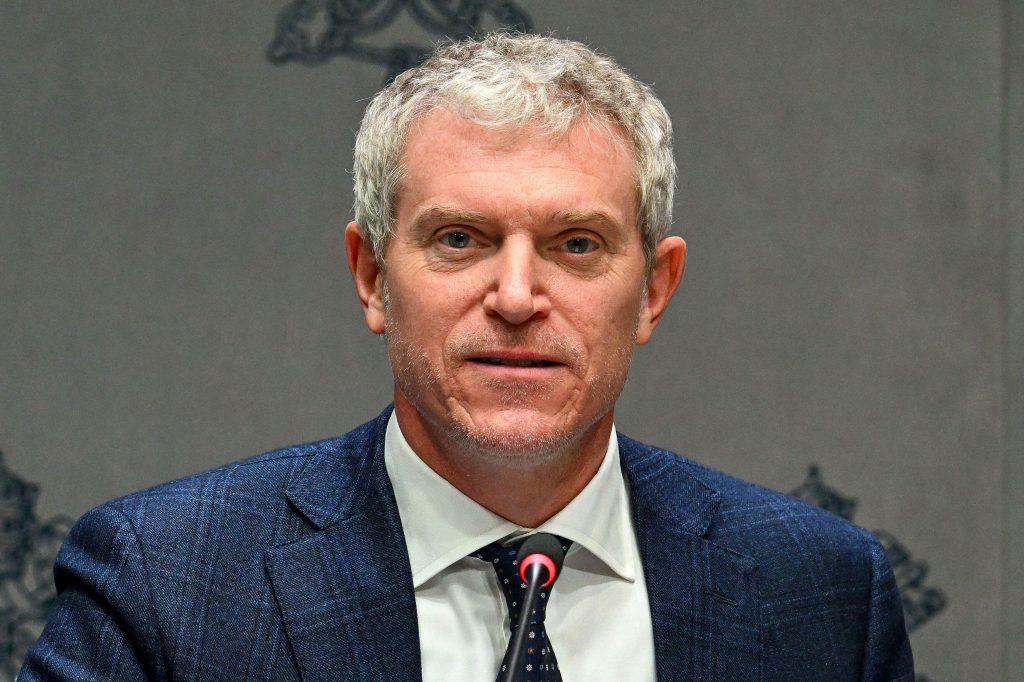
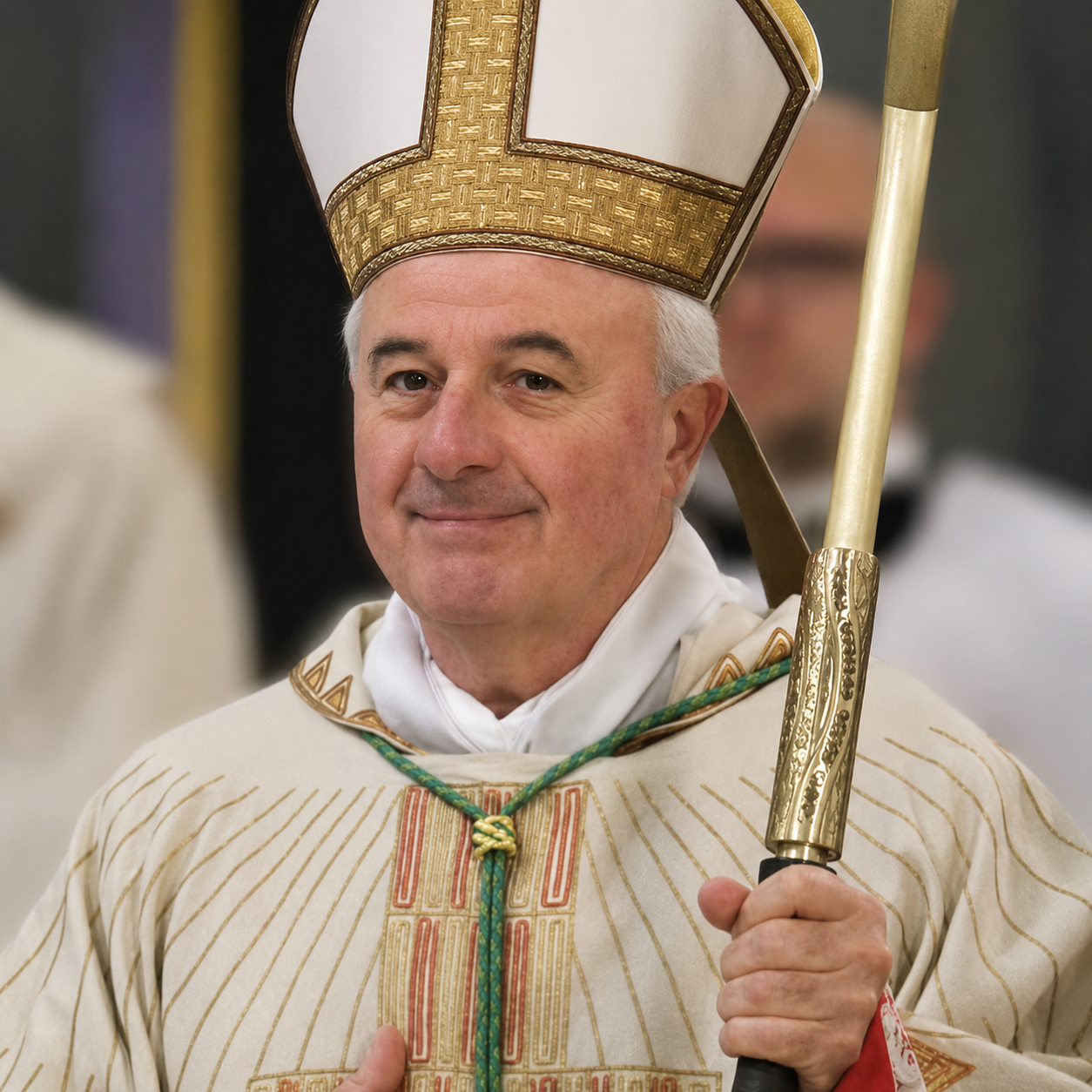
According to an exclusive report by MessainLatino, Bishop Michele Di Tolve, an auxiliary bishop of Rome appointed by Pope Francis and currently serving as rector of the Pontifical Roman Major Seminary, is set to be transferred to the Diocese of Chioggia. According to MessainLatino, sources in the Diocese of Chioggia have indicated that this move is forthcoming, though it has not yet been formally confirmed by the Holy See.
Bishop Di Tolve was born in Milan on 19 May 1963 and grew up in the parish of San Francesco d’Assisi in Grancia and Pagliera di Lainate. He completed his priestly formation at the Milanese archiepiscopal seminaries. Ordained deacon on 4 December 1988 in Cesano Maderno by Cardinal Carlo Maria Martini, he was ordained a priest on 10 June 1989 in Milan Cathedral by Cardinal Martini.
In 2007, Cardinal Dionigi Tettamanzi appointed him head of the Catholic Religious Education Service and the School Pastoral Service. From 2008 to 2014, he served as the Supreme Moderator’s Delegate at the Higher Institute of Religious Sciences in Milan. In 2014, Cardinal Angelo Scola named him rector of the archiepiscopal seminary of Milan, effective from 2015.
Pope Francis appointed him auxiliary bishop of Rome and titular bishop of Orrera on 26 May 2023. On 4 July 2023, he was named rector of the Pontifical Roman Major Seminary with the task of strengthening relationships between priestly formation institutions in the territory of the Diocese of Rome and coordinating their activities.
This potential transfer forms part of small but substantial changes to the Francis-era appointments that have rooted themselves within the ecclesiastical personnel of the Vicariate and the Roman Curia, where the Pope has already implemented structural changes, correcting substantial parts of Francis’s reform. Gradual but firm, these adjustments reflect a deliberate approach to diocesan governance in Rome.
On 30 June, Pope Leo XIV issued the motu proprio Confirma Fratres Tuos, rolling back key parts of Pope Francis’s 2023 reform of the Diocese of Rome.
The document recentres diocesan governance around the Cardinal Vicar as the principal authority in the day-to-day government of the Pope’s diocese. After announcing the consecration of four new auxiliary bishops of Rome on 25 February, Pope Leo established a commission comprising all the auxiliary bishops and the Cardinal Vicar to review the apostolic constitution In Ecclesiarum Communione.
Francis’s reform had significantly reduced the power of the Cardinal Vicar and increased the powers of the vicegerent and the episcopal council. Article 10 of In Ecclesiarum Communione described the Cardinal Vicar as “an auxiliary and vicar general” who would exercise episcopal ministry with ordinary vicarious power.
The revised text under Pope Leo simplifies this, eliminating the description of the Cardinal Vicar as “an auxiliary and vicar general” and instead affirming that the Cardinal Vicar has “the high and effective direction of the Vicariate”, with only brief mention of the vicegerent at the end. Pope Francis had also dismissed most of his auxiliary bishops in favour of loyalty and abolished the historic centre pastoral sector of the Diocese of Rome.
Beyond the structural reforms in the Diocese of Rome, Pope Leo has been slowly unwinding elements of the Curia.
Cardinal Michael Czerny, who owed his Curia position to Pope Francis and was made a cardinal by him in 2019, was replaced as prefect of the Dicastery for Promoting Integral Human Development by Sister Alessandra Smerilli, FMA. Sister Smerilli had been an auditor at the 2018 Synod on Youth.
Pope Francis appointed her as councillor of the Vatican City State and consultant to the General Secretariat of the Synod of Bishops in 2019. In 2020, she coordinated the economic task force of the Vatican Covid-19 Commission. She became undersecretary of the Faith and Development Section of the dicastery in March 2021, interim secretary in August that year, and permanent secretary in April 2022.
Sources close to the dicastery told AdVaticanum she is “relatively popular internally and she is scandal free”. Cardinal Fabio Baggio, CS, was appointed pro-prefect alongside her.
The Dicastery for Communication has seen a particularly striking change. The dicastery under Paolo Ruffini as prefect was viewed as entrenched in the Francis way of operating. Paolo Ruffini and his associates, described as the “Palazzo Pio Gang”, were seen as deeply connected to that approach, including Ruffini’s defence of Fr Rupnik. Montserrat Alvarado’s appointment as prefect in June to replace him was therefore incredible, coming as something of an unexpected move from an outsider. Sources told AdVaticanum that she told His Holiness that “she wanted to bring back orthodoxy”.
Pope Leo XIV has also replaced Cardinal Konrad Krajewski, a loyalist of Pope Francis, as head of the Vatican’s principal charitable office, appointing the Spanish Augustinian Bishop Luis Marín de San Martín as the new Almoner of His Holiness and Prefect of the Dicastery for the Service of Charity.
Cardinal Krajewski had served in the role since 2013 and became the first prefect of the dicastery following the Roman Curia reforms of 2022. The replacement of the cardinal, who is only 62 and well below the usual age for such transitions, raised questions. Nothing has been said about whether the change followed a request from the cardinal himself. Such abrupt transitions are uncommon in the Roman Curia, particularly when they involve a relatively young cardinal whose term has not reached its natural conclusion.
Viewed in their entirety, these developments illustrate a slow but steady reorientation. The potential move of Bishop Di Tolve from his prominent roles in Rome to the Diocese of Chioggia would align with this pattern, removing one of the more recent Francis-era appointments from the centre of Roman ecclesiastical life.