

Latest
Christian harassment in Israel on course for record year
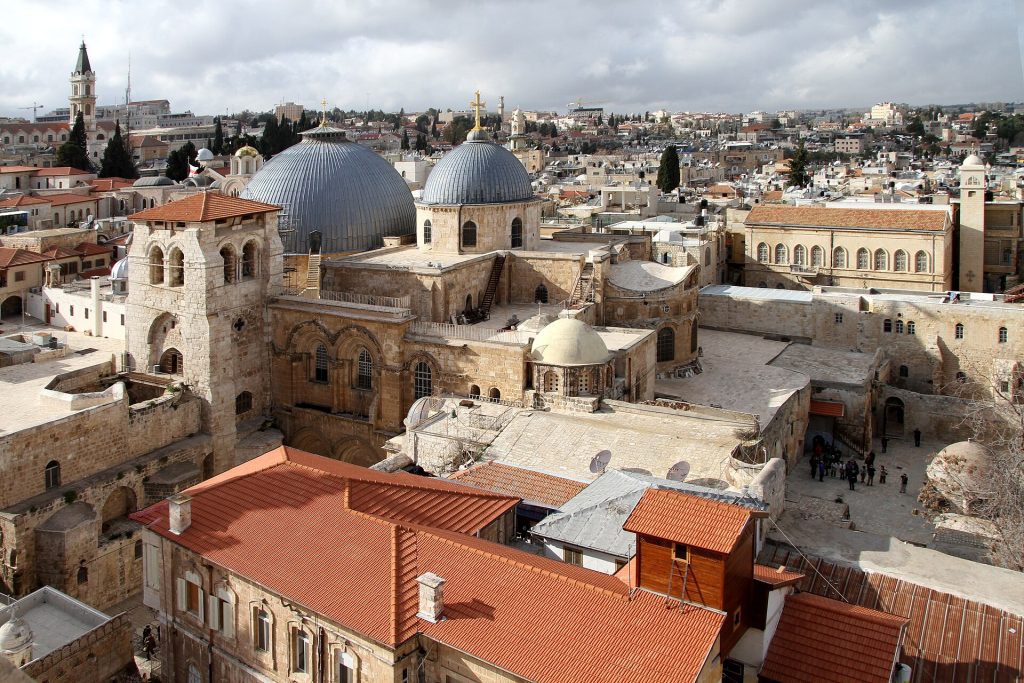
Reports of harassment against Christians in Israel have risen sharply, according to new figures released by the Religious Freedom Data Center. The Jerusalem-based organisation said it had already documented more than 88 incidents during the first half of 2026, including 63 recorded during the second quarter alone. If the trend continues, the total is expected […] Reports of harassment against Christians in Israel have risen sharply, according to new figures released by the Religious Freedom Data Center. The Jerusalem-based organisation said it had already documented more than 88 incidents during the first half of 2026, including 63 recorded during the second quarter alone. If the trend continues, the total is expected to surpass the 181 cases documented during 2025. Yisca Harani, founder of the Religious Freedom Data Center, said the increase had already exceeded expectations before the year had reached its halfway point. “We have surpassed all our numbers, and we haven’t reached the end of June yet,” she said while presenting the findings on 4 June. The documented cases include spitting, verbal insults, vandalism, desecration of graves and religious symbols, graffiti, and damage to church property. Other incidents have been reported beyond Jerusalem, including acts of vandalism and arson directed at Christian holy sites in northern Israel. Christian clergy and religious living in the city have long complained that harassment is a routine feature of daily life, particularly in areas where priests, monks, and nuns are easily identifiable by their religious dress. Harani, a Jewish-Israeli scholar who specialises in Christian-Jewish relations, told OSV news that many officials continued to regard such incidents as isolated acts carried out by a small number of extremists, often young people. She argued that this approach failed to recognise the scale of the problem. “Most of the incidents, which include spitting and verbal insults, vandalism and desecration of graves, tombstones, statues and crosses, and defacement of signs and graffiti, have taken place in Jerusalem’s Old City, on Mount Zion and near the Armenian Patriarchate,” she said. Concerns over the response of law enforcement authorities were also raised during the presentation of the report. According to OSV news, Ori Narov, director of the legal department of the Israel Religious Action Center, said that relatively few complaints resulted in successful investigations. He told participants that, of 25 complaints submitted by his organisation between 2012 and 2021, 19 cases had been closed without further action. According to Narov, authorities frequently cited reasons including the inability to identify suspects, conclusions that no offence had been committed, or decisions that investigations were not warranted. Despite those difficulties, he urged Christian leaders and institutions to continue reporting incidents and seeking legal remedies. “I have no doubt that the road is long,” Narov said. “But as we said, we are not afraid of a long road, and we will also reach a better future.” The latest figures follow similar findings published by the Rossing Center for Education and Dialogue, another Jerusalem-based organisation that monitors relations between religious communities. The Rossing Center recorded 111 incidents targeting Christians during 2024, compared with 94 in the previous year. Its most recent report documented 155 incidents during 2025, representing a substantial increase. Physical assaults, particularly spitting directed at clergy, accounted for the largest category of complaints, followed by attacks on churches and Christian property, verbal harassment, and the defacement of signs. Christians constitute less than two per cent of Israel’s population, numbering approximately 180,000 to 200,000 people. The majority are Arab Christians belonging to a variety of traditions, including the Catholic, Orthodox, and Protestant Churches. While Israel guarantees freedom of religion in law and is not generally grouped alongside countries where Christians face systematic state persecution, Church leaders have repeatedly expressed concern about the atmosphere confronting Christian communities, particularly in Jerusalem. Photo credit: Gerd Eichmann – Own work, CC BY-SA 4.0, https://commons.wikimedia.org/w/index.php?curid=95703949
Jun. 11, 2026
Cardinal Baldassare Reina not under investigation, lawyer says
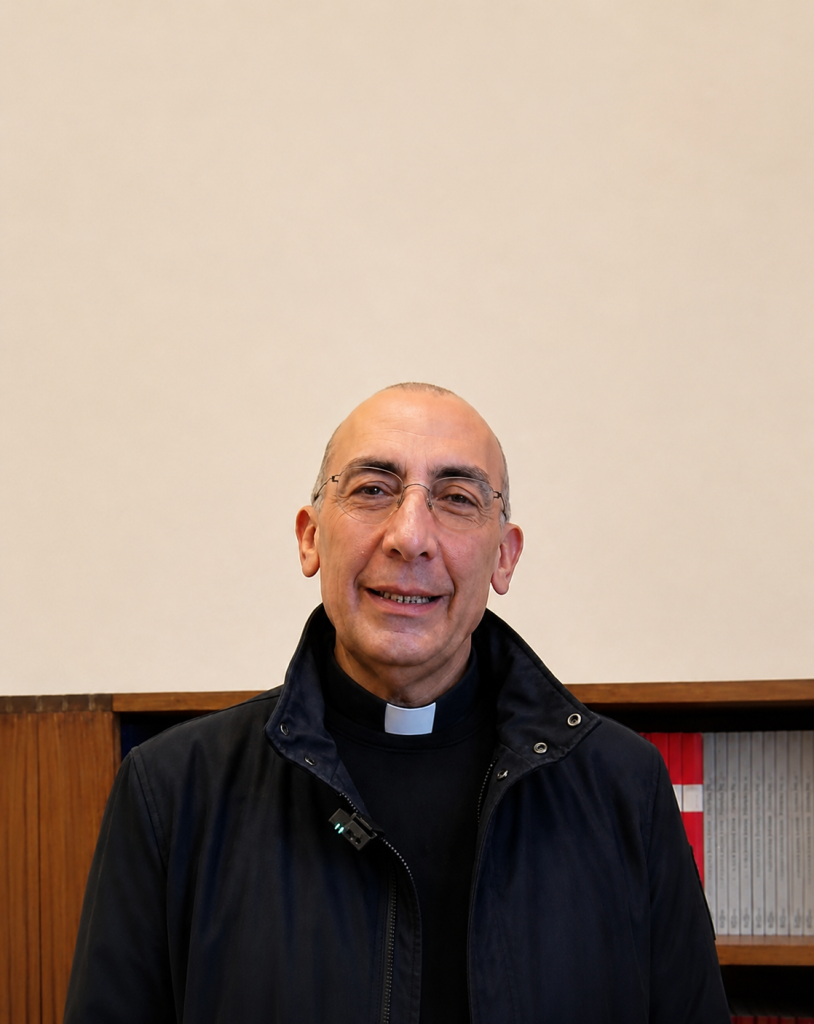
Cardinal Baldassare Reina has moved to clear his name following reports surrounding a Sicilian corruption inquiry. A statement issued through his lawyer says the Cardinal is not a suspect and had no knowledge of the alleged efforts to use his influence The Cardinal Vicar General of Rome has moved to clear his name of any involvement in a corruption and favouritism investigation in Sicily. Cardinal Baldassare Reina, Vicar General of Rome, was allegedly seen by prosecutors as a figure whose family connections could be exploited to win support from Catholic voters. However, a clarification was issued on 8 June through the Cardinal’s lawyer, Pier Luigi Cappello, following media reports surrounding an investigation into Cefpas, the Sicilian regional centre responsible for the training of healthcare personnel. Prosecutors are examining alleged irregularities in the awarding of contracts and appointments at the agency. In a statement released through his lawyer, Cardinal Reina rejected any suggestion that he was involved in the affair. “The Cardinal Baldassare Reina is not under investigation nor formally involved in the criminal proceeding in question; he is completely unrelated to the facts under investigation and is, according to the same accusatory hypothesis, absolutely unaware of his brother’s actions and the intentions of his interlocutors,” the statement said. It continued: “Any possible reference to the Cardinal in the investigation documents pertains exclusively to evaluations or intentions of third parties, not supported by any agreement or pact with him, and does not imply any responsibility, not even moral, on the part of the Cardinal himself.” Among the 12 people under investigation is Domenico Reina, the Cardinal’s brother, who received a direct contract worth €128,000 for the creation of a digital library at Cefpas, according to court documents cited by Italian media. Prosecutors allege the contract formed part of a wider system of patronage and favouritism operating within the agency. According to investigators, those involved hoped to gain favour with Cardinal Reina in order to attract Catholic votes for Margherita La Rocca Ruvolo, a Forza Italia regional deputy who is not herself under investigation. Prosecutors allege that the arrangement was facilitated by Forza Italia deputy Riccardo Gallo Afflitto, who is among those facing requests for precautionary measures. The investigation centres on the activities of Cefpas, a public body run by the Sicilian regional government. Prosecutors allege that a network of officials and associates used the agency to distribute contracts and positions for personal and political purposes. Court documents describe the award of the digital library project to Domenico Reina as part of the conduct under examination. Investigators claim the contract was awarded despite concerns regarding his suitability for the role. In documents cited by ANSA, prosecutors referred to the assignment of the project to “a subject without previous experience” in multimedia documentation networks. The prosecution has sought precautionary measures against eight of the 12 people under investigation. Requests include pre-trial detention for Gallo Afflitto, former Cefpas director Roberto Sanfilippo and Gioacchino Pontillo, while house arrest has been sought for five others connected to the case. The Sicilian regional government has meanwhile replaced the leadership of the agency. Sanfilippo’s mandate was not renewed after it expired earlier this year, and Gianluigi Amico has since been appointed extraordinary commissioner. Cardinal Reina, 55, is one of the most senior churchmen in Italy. A native of the Archdiocese of Agrigento in Sicily, he was appointed Vicar General of the Diocese of Rome by Pope Francis in October 2024 and was created a cardinal two months later. He also serves as Archpriest of the Basilica of St John Lateran, the cathedral church of the Bishop of Rome. While his brother remains among those under investigation, prosecutors have stated that Cardinal Reina is not a suspect and that he had no knowledge of the alleged efforts to use his name or influence in connection with the contract award.
Jun. 11, 2026
In full: Pope Leo XIV’s homily at the Basilica of the Sagrada Família
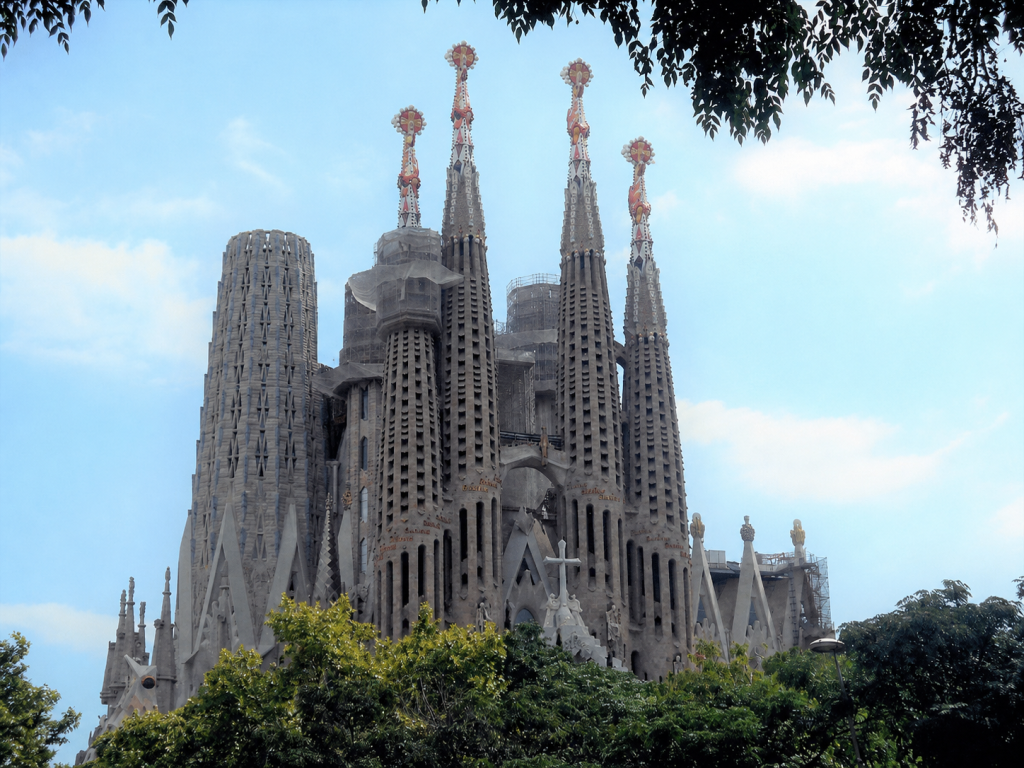
During the Barcelona leg of his Apostolic Journey to Spain, Pope Leo XIV delivered this homily at the Basilica of the Sagrada Família, reflecting on faith, beauty, evangelisation, the witness of Antoni Gaudí, and the Cross of Christ that now crowns the church’s highest tower. Read the full text. O Lord, our Sovereign, how glorious is your name throughout all the earth! (Psalm 8:2,10) With the words of this psalm, so full of joy and wonder, I greet all of you, dear brothers and sisters. I express my gratitude to Their Majesties, and I thank Cardinal Juan José Omella, Archbishop of Barcelona, as well as the other brother bishops and all those who join us in prayer: priests, deacons, religious brothers and sisters. On this festive evening for the whole city of Barcelona and for the Spanish people, particularly the Catalan people, I extend my grateful greeting to the public authorities, as well as to members of other Christian communities and other religions who are taking part in our thanksgiving. Today the Basilica of the Sagrada Família welcomes us in this beautiful city, opening its doors as if they were its arms, inviting each one of us to this altar to hear the Word of God. It is a temple that makes us a family loved by the Lord, nourished by his very life in the Eucharist. Thus, the city of Barcelona and all of Catalonia gather in this temple, which is also a sign of unity and concord for the whole of Spain. They lift up their gaze to encounter the face of God the Father, shining forth in his Son made man, Jesus Christ. As we give thanks to the Lord for his love towards us, we praise him for what he accomplishes in our lives. We give thanks in a particular way for this extraordinary basilica, which Pope Benedict XVI consecrated in 2010, recalling that it is a visible sign of the invisible God, for whose glory its towers rise heavenward (cf. Homily for the Consecration, 7 November 2010). In continuity with the prayer of my predecessor, in a few moments I will bless its highest tower, the Tower of Jesus Christ. This church is a single building, composed of many stones. It is a house that has grown steadily over the years, following one unified plan. All of us are the living stones of this work, which has Christ as its foundation and summit, its beginning and its end. Far more than a monument, the Basilica of the Sagrada Família remains today a work under construction, reminding us that the Christian life is always a journey, because it is a project that God himself carries out. Let us not inhabit, then, an unfinished work, but rather a temple that is still under construction. Its imperfection is not a defect, because it bears witness to a desire. It does not signify a lack; rather, it expresses a promise that we wish to honour with fidelity. Our gratitude thus becomes a commitment, as we cooperate in God’s plan, that is, in the building work to which he himself calls us. Since we are temples of the Holy Spirit (cf. 1 Corinthians 6:15, 19), this work coincides with our own lives, which God conceives as a masterpiece that we are to accomplish together. He calls us to collaborate with him (cf. 1 Corinthians 3:9). In this regard, we keep in our hearts the words that the Lord addressed to King David: “Would you build me a house to dwell in?” (2 Samuel 7:5). On the contrary, “The Lord declares to you that the Lord himself will establish a house for you” (v. 11). Through this announcement, Scripture teaches us that it is not we who provide God with a dwelling place; rather, it is God who gives us a place. And the place he gives us is his own heart: the place of the Son for us who were strangers, the place of the beloved for us who are sinners. His will is fulfilled through Jesus. We can therefore understand the meaning of what we have heard in the Gospel, when the Lord says to the Pharisees: “If you do not believe that I am he, you will die in your sins” (John 8:24). These are strong words, but they are by no means threats or blackmail. They are an invitation to salvation, that is, a call to freedom from Christ, who desires for us the ultimate and eternal good. In the face of the threat of evil, the Lord is always with us, always on our side. “I Am” : this is the most holy name that God entrusted to Moses from the burning bush, revealing his unshakable fidelity. Made man, he becomes for us Emmanuel, the source of grace and forgiveness, of salvation and new life. Dear brothers and sisters, we cannot believe in Jesus and promote war. We cannot believe in Jesus and kill the innocent. We cannot believe in Jesus and abandon those who suffer, those who weep, or those who flee from misery. Tonight, then, the Cross of Christ, which crowns this basilica, is the cross of the last who become first, of sinners who become saints, of the dead who rise again. The three façades of the Sagrada Família bear witness to this: the First became the Last for us at Christmas; through his sacrifice he redeemed us in the Passion; and his death gives us eternal life, making us sharers in divine glory. As we admire the Tower of Jesus Christ, let us raise our eyes to him, to the One who reveals to us the truth about God and the truth about ourselves. Looking at Christ, we can see the world with renewed eyes. The tower of the Cross then becomes a banner of charity, because God loves us in this way, transforming an instrument of death into a sign of hope. In the Cross of Jesus, our faith reaches its summit, as the inscription at the base of the spire proclaims: “Tu solus Sanctus, tu solus Dominus, tu solus Altissimus” (“You alone are Holy, you alone are Lord, you alone are the Most High”). This Cross shines by day, reflecting the light of the sun, and shines by night, illuminating the city like a beacon open to the Mediterranean. Although the light of Christ shines in the darkness, the darkness has not welcomed it (cf. John 1:5, 11). Yet this rejection does not cause God’s love to fail. “When you have lifted up the Son of Man,” the Lord says, “then you will know that I am he, and that I do nothing on my own authority, but speak just as the Father has taught me” (John 8:28). It is necessary to pass through the Passion of the Crucified in order to be illuminated by the glory of the Risen One. From all eternity, the Father teaches the gift of life, and the Son, who receives that life from him, gives it to all through the power of the Holy Spirit. This is why the Cross is the radiant sign of his love. When Christ is lifted up, his magnificent humanity shines forth, and our works give glory to God. These are the works of faith, and among them art holds a special place. It is precisely faith that gives form to the stones and meaning to the building that we inhabit together. In our prayer, therefore, we discover the original bond of all things with God, Creator of heaven and earth. He is the artist who has imprinted his splendour upon the cosmos. Created in his image, man responds to God’s work through his own ingenuity. Thus the artist transforms talent into praise and creativity into a witness to creation itself. As an architect aflame with faith, the Venerable Antoni Gaudí conceived these spaces with the desire to tell the story of the mysteries of the Lord’s life. In this way, he has proposed to us a spiritual pilgrimage that leads to an encounter with Christ, born, dead and risen for us. Together with Gaudí, whose death we commemorate on the centenary of his passing, we remember and give thanks this evening for all the promoters and benefactors, the artists and the workers who have contributed to the construction of an architectural masterpiece that is also an eloquent catechesis made of stone, colour and light. In her wisdom, the Church thus renews the Biblia pauperum of the ancient cathedrals, which are themselves rich messages of evangelisation. In this age of images, it becomes even more evident that art and beauty are outstanding channels of evangelisation. Dear brothers and sisters, the beauty of this temple encourages us to learn ever more from our Master and Lord the art of living according to his Gospel. As we lift our eyes to him, the crucified and risen Lord, let us commit ourselves to raising up the faces of those who lie in the dust (cf. 1 Samuel 2:8). Let us thus show that the Sagrada Família is the tallest church in the world, not in order to stand out in worldly rankings, but to guide the steps of the People of God who journey through this land of Catalonia, with the Cross lighting the way like a lamp kept burning as we await the return of the Bridegroom. May God be blessed forever! Photo credit: Canaan – Own work, CC BY-SA 4.0, https://commons.wikimedia.org/w/index.php?curid=71031111
Jun. 10, 2026
Are Mormons Christians? The uncomfortable truth
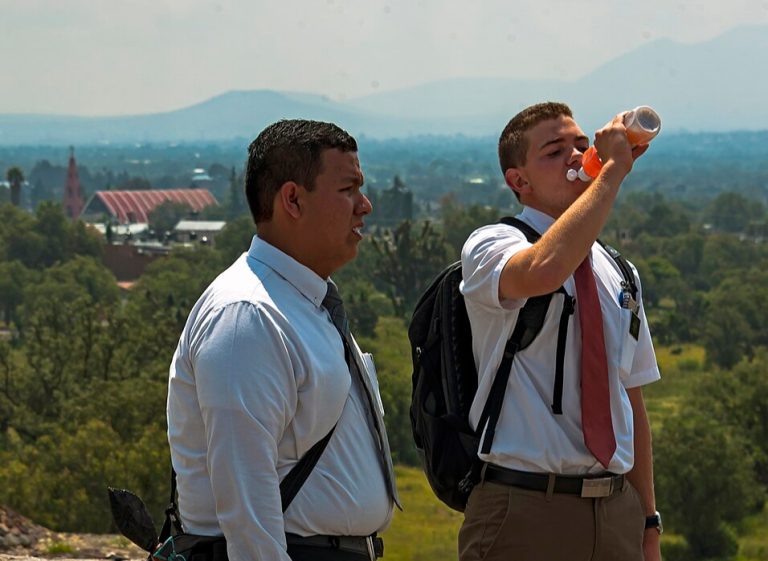
A dispute over how the Pentagon categorised Mormons has reopened one of Christianity’s oldest questions. What makes someone a Christian, and who decides where the boundaries lie? A dispute about religious classification has turned into a far more uncomfortable question: where does Christianity actually begin and end? It began, as these things often do now, with a bureaucratic decision rather than a theological one. Earlier this month, the Pentagon dramatically reduced the number of religious categories available to service personnel. In the first version of the revised list, the Church of Jesus Christ of Latter-day Saints appeared separately but was not included among the groups classified as “Christian”. The backlash was immediate, particularly from LDS politicians and commentators in Utah, who protested that they explicitly worship Jesus Christ and must therefore be regarded as Christians. The Pentagon hastily revised the list and insisted that no theological judgment had been intended.
Jun. 10, 2026
In pictures: Pope Leo XIV’s first day in Barcelona
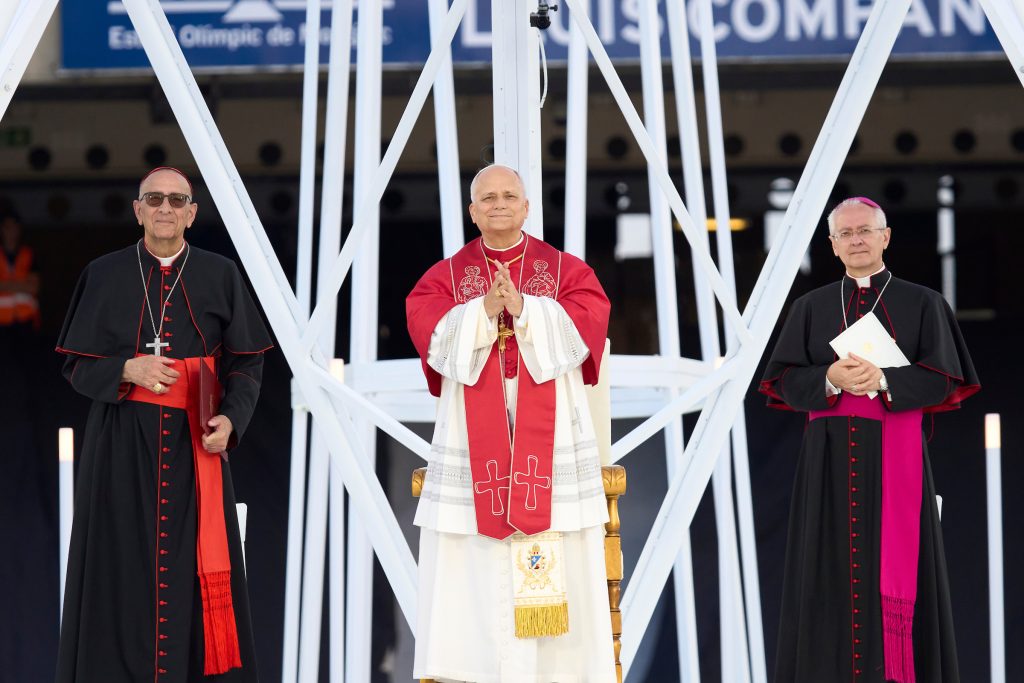
Pope Leo XIV’s first day in Barcelona saw prayer at the city’s cathedral, an appeal for unity and a youth vigil attended by more than 40,000 people. See the day in pictures Pope Leo XIV arrived in Barcelona on the fourth day of his apostolic journey to Spain, beginning the Catalan stage of his visit with prayer at the Cathedral of the Holy Cross and Saint Eulalia before addressing tens of thousands of young people at the Estadi Olímpic Lluís Companys. Throughout the day, the Holy Father emphasised unity, urging Barcelona to be a city where “harmony and communion” overcome polarisation, before later reflecting on suffering, faith and hope during a vigil attended by more than 40,000 people. The images below capture moments from his first day in Barcelona, from encounters with pilgrims and volunteers to a night of prayer marked by Catalan culture, personal testimonies and the Pope’s assurance that, even in life’s darkest moments, “God does not abandon us”. A pilgrim holds a hand-drawn sign reading “Papa León molas mogollón” (“Pope Leo, you’re really cool”) during the volunteer gathering at IFEMA Madrid, where Pope Leo XIV thanked the thousands of volunteers who helped organise his apostolic journey to Spain. (Photo: Gabriel Gonzalez-Andrío) Volunteers wearing the official orange-and-white uniform of Pope Leo XIV’s apostolic journey to Spain gather at IFEMA Madrid ahead of the Holy Father’s final meeting in the capital, marking the conclusion of the Madrid stage of his visit before departing for Barcelona. (Photo: Gabriel Gonzalez-Andrío) Two religious sisters arrive for Pope Leo XIV’s meeting with volunteers at IFEMA Madrid . Spain has the lagest number of monasteries in the world, with a 2022 report putting the number of female religious at more than 27,000 . (Photo: Gabriel Gonzalez-Andrío) Spanish singer and actress Carmen Conesa performs before thousands of volunteers who helped organise Pope Leo XIV’s apostolic journey to Spain. (Photo: Gabriel Gonzalez-Andrío) Pope Leo XIV addresses volunteers during a farewell gathering in Madrid, thanking them for their months of service and encouraging them to remain “firm in faith and generous in service”. (Photo: Gabriel Gonzalez-Andrío) Cardinal José Cobo presents the chalice gifted by Pope Leo XIV to the Archdiocese of Madrid during the volunteers’ celebration. (Photo credit: Luismagan) A pilgrim in Barecelona holds a sign reading “Papa Leo XIV, alço la mirada” (“Pope Leo XIV, I lift my gaze” in Catalan), a phrase taken from the title of the official hymn of the apostolic journey, as thousands gather for the prayer vigil at Barcelona’s Olympic Stadium. (Photo: Kike Rincón / Europa Press) Pilgrims draped in Vatican flags celebrate before the arrival of Pope Leo XIV at Barcelona’s Olympic Stadium, where more than 40,000 people gathered for an evening of prayer, music and testimony. (Photo: Kike Rincón / Europa Press) Pope Leo XIV responds to questions from young people during the vigil at Montjuïc, addressing faith, suffering, depression and forgiveness through the story of Nicodemus, whom he described as a “pilgrim in the night”. (Photo: Pep Daudé)
Jun. 10, 2026
Schneider: Pope Leo “continues” Francis’s reforms
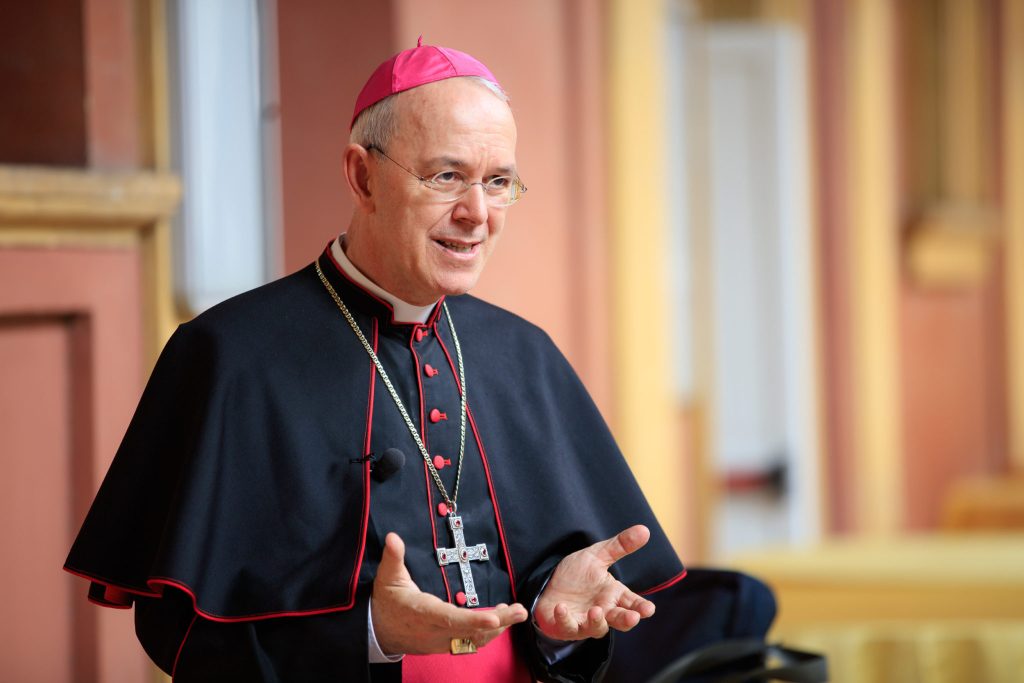
Bishop Athanasius Schneider has said Pope Leo XIV “continues” the course set by Pope Francis, arguing that both pontiffs see recent developments in the Church as a natural consequence of Vatican II. In a recent interview, he also discussed the SSPX, Vatican II and what he described as a doctrinal crisis within the Church. Bishop Athanasius Schneider has said that Pope Leo XIV is continuing the course pursued by Pope Francis. The auxiliary bishop of Astana made the remarks in a lengthy interview published on 8 June on the YouTube channel Veritatis Vox. He discussed Pope Leo’s pontificate, the authority of Vatican II, the doctrinal crisis in the Church and the position of the Society of St Pius X. Reflecting on the new pontificate, Bishop Schneider argued that Pope Francis viewed his reforms as a natural consequence of the council and suggested that Pope Leo shares the same understanding. “Pope Francis, with all his so-called reforms, which were very questionable also doctrinally, was convinced that this is a natural, coherent development of the teaching of Vatican II,” he said, adding: “In this sense, it’s obvious that Pope Leo continues and understands it.” The bishop also delivered a stark assessment of the state of the Church, claiming that some senior clerics had drifted away from the fullness of Catholic teaching. He said a “remarkable number of high-ranking clergy – cardinals and bishops” no longer held “the Catholic faith in its fullness” and had embraced “another church: half Protestant, half worldly, adapted to the spirit of the age”. He argued that attempts to reconcile Catholic teaching with modern secular culture had produced confusion among the faithful. According to Bishop Schneider, some Church leaders had sought to adapt the faith “completely to the world”, resulting in “widespread confusion, obscurity and darkness in doctrine, morals and liturgy”. Much of the interview focused on the continuing debate over Vatican II, a subject that has long divided traditionalist Catholics and Church authorities. Bishop Schneider criticised what he sees as an unwillingness among some Vatican officials to acknowledge difficulties within certain conciliar texts. Referring to comments by Cardinal Víctor Manuel Fernández, prefect of the Dicastery for the Doctrine of the Faith, he said that insisting Vatican II could not be corrected effectively treated “a pastoral, non-definitive council as if it were infallible”. He added that Church authorities had spent decades treating the council as “a de facto untouchable teaching”. The bishop also challenged comments by Cardinal Gerhard Müller, the former prefect of the Congregation for the Doctrine of the Faith, who has argued that the council must be accepted in its entirety. Bishop Schneider said such a position was “not correct”, maintaining that Vatican II and Pope St Paul VI had explicitly stated that the council did not intend to define new dogmas or issue definitive teachings binding on all Catholics. He added that Cardinal Müller “directly contradicts the Council itself and Paul VI”. Addressing broader questions of authority within the Church, Bishop Schneider criticised what he described as demands for unquestioning acceptance of disputed teachings. “To demand acceptance of problematic teachings by ‘switching off our intellect’ is an abuse of authority,” he said, invoking a well-known observation by G.K. Chesterton that Catholics are asked to remove their hats when entering church, “not their heads”. The bishop further argued that elements of Vatican II placed excessive emphasis on human concerns at the expense of the supernatural mission of the Church. He said the council contained “tendencies toward naturalism and anthropocentrism, emphasizing temporal realities at the expense of the supernatural life of grace and eternity”, identifying the pastoral constitution Gaudium et Spes as “the clearest expression of this tendency”. He also referred to the late Belgian Cardinal Léon-Joseph Suenens, one of the most influential figures at the council, who famously described Vatican II as a “French Revolution inside the Catholic Church”. Bishop Schneider said that “in some way, he was correct”, arguing that the council initiated a process that encouraged naturalistic and anthropocentric approaches within ecclesial life. The interview also addressed the Society of St Pius X, whose relationship with Rome remains in limbo as the 1 July episcopal consecrations approach. Bishop Schneider defended Catholics attached to the SSPX and questioned what he described as unequal disciplinary standards within the Church. Referring to the possibility of sanctions against traditionalists, he said it would be unjust to punish those who “recognize the Pope” and wish to “serve the Roman Church” but find themselves facing “a dilemma of conscience”. By contrast, he criticised supporters of Germany’s Synodal Way and other bishops whom he accused of promoting doctrinal error without consequence. “Meanwhile,” he said, “the German Synodal Way and other bishops around the world proclaim openly heresies and commit blasphemies really during liturgies, all unpunished, not admonished.” Photo credit: Voice of the family
Jun. 10, 2026