

Latest
Priest among three detained over murder of Mozambican bishop
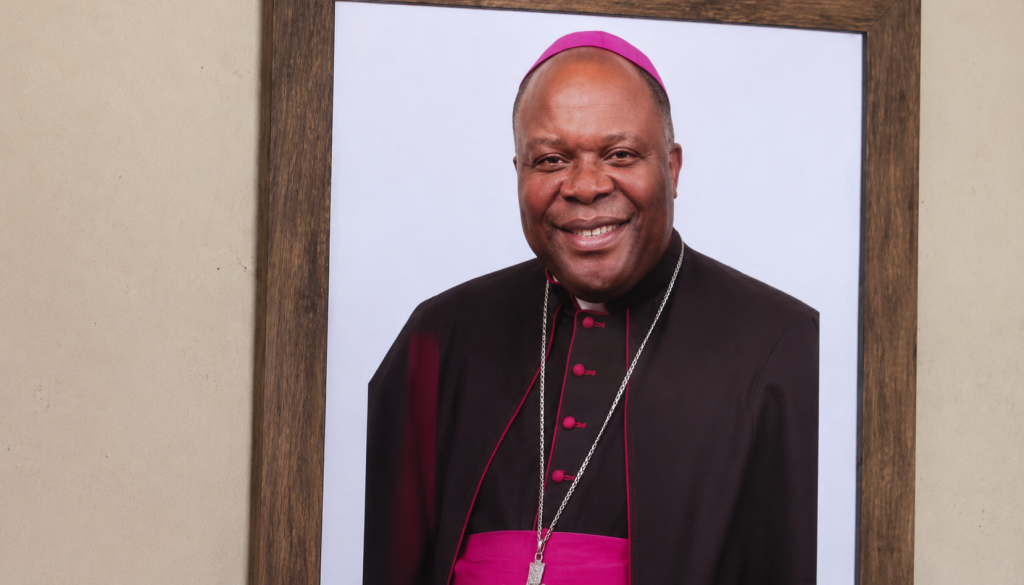
A Catholic priest, a security guard and a gardener have been placed in preventive detention as investigators probe the killing of Bishop Osório Citora Afonso of Quelimane. The bishop was shot dead at his residence on 6 June A Catholic priest has been detained on suspicion of involvement in the murder of Bishop Osório Citora Afonso of Quelimane in a dramatic development in the investigation into the killing of one of Mozambique’s most senior churchmen. The priest, together with a security guard and a gardener employed at the bishop’s residence, has been placed in preventive detention after appearing before an investigating judge in Zambézia Province, where Bishop Afonso was shot dead on 6 June. Mozambican authorities have not released the names of the suspects and have disclosed little about the evidence that led to the arrests. The arrests are a significant turn in a case that has shocked Catholics across Africa. Mozambique’s National Criminal Investigation Service (SERNIC) said Bishop Afonso died a violent death after being shot with a firearm. Investigators have carried out forensic examinations, ballistic tests, DNA analysis and other technical procedures as part of the inquiry. Questions remain, however, over how the killing was carried out and whether others may have been involved. Initial reports following the bishop’s death suggested that attackers entered the episcopal residence from outside the compound before fatally shooting him. Bishop Afonso was reportedly struck in the chest and his body was later found inside the residence. The prospect that a member of the clergy could be implicated in the crime has stunned many Catholics in Mozambique. According to reports from the country, the detained priest belongs to the Diocese of Quelimane. Authorities have not commented publicly on the alleged role played by any of the suspects while investigations continue. Bishop Afonso, a Consolata Missionary, had led the Diocese of Quelimane since August 2025 and was also serving as Apostolic Administrator of Beira. Before returning to Mozambique, he spent several years working in Rome at the Dicastery for Evangelisation. His murder prompted an outpouring of grief from Church leaders in Mozambique and beyond. Archbishop Inácio Saúre, president of the Mozambican bishops’ conference, said shortly after the killing that the bishop had been found “lifeless and in strange circumstances that have yet to be clarified”. The bishops later described the killing as “an attempt to silence the voice of faith, justice and peace” and demanded a thorough investigation into the crime. Pope Leo XIV also expressed his sorrow following the bishop’s death. In a message released by the Holy See, the Pope said he had learned “with sorrow of the grave act of violence” which claimed the life of Bishop Afonso and assured the faithful of his prayers. The Pope said he joined “in prayer with the people of the dioceses and of Mozambique in this hour of distress” and asked the Lord to “stay the hand of the violent”. During the bishop’s funeral in Quelimane, the Apostolic Nuncio to Mozambique, Archbishop Luis Miguel Muñoz Cárdaba, called for the full truth about the killing to emerge. “We must not fear the truth. The truth sets us free,” the Archbishop said. The Nuncio described Bishop Afonso as “a man of peace” and “a man of reconciliation”, adding that the Church must remain steadfast in seeking justice. The killing has been condemned across the continent. The Symposium of Episcopal Conferences of Africa and Madagascar expressed its “profound shock, sorrow, and indignation” at the bishop’s death, while clergy in Mozambique denounced the murder as a “barbaric act” and a “heinous act”.
Jun. 13, 2026
Consecration, canonisation causes and safeguarding votes headline US bishops’ meeting
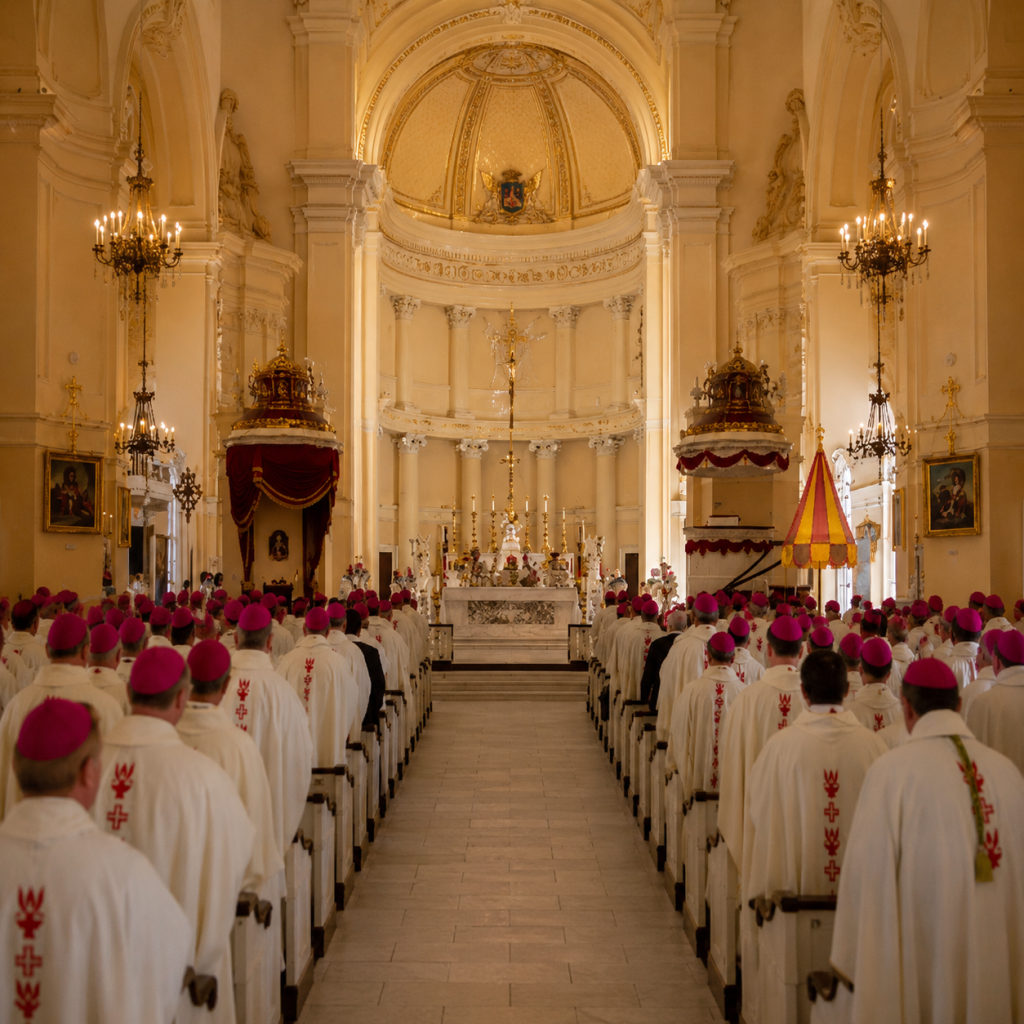
The US bishops have concluded their Spring Plenary Assembly in Orlando after approving revisions to the Dallas Charter, advancing two sainthood causes and carrying out a national consecration of the United States to the Sacred Heart of Jesus The bishops of the United States have concluded their 2026 Spring Plenary Assembly in Orlando, Florida, with a series of votes on liturgy, safeguarding and sainthood causes, culminating in the historic consecration of the nation to the Sacred Heart of Jesus as part of the country’s semiquincentennial celebrations. The three day meeting of the United States Conference of Catholic Bishops (USCCB), held from 10 to 12 June at the Omni Resort in ChampionsGate, was the first spring assembly under the leadership of Archbishop Paul S. Coakley of Oklahoma City since his election as president of the conference last year. Public sessions were held on 10 and 11 June before the bishops moved into private discussions and concluding business. The gathering opened with prayer, the approval of the agenda and minutes from previous meetings, and addresses from Archbishop Coakley and the Apostolic Nuncio to the United States, Archbishop Gabriele Giordano Caccia. Bishops also received reports on synodality, Hispanic ministry, prison outreach and safeguarding, while voting on a number of key measures affecting the life of the Church in the United States. In his presidential address, Archbishop Coakley centred his remarks on the theme of Christian hope, warning that contemporary society faces profound threats to human dignity and increasing social fragmentation. The archbishop said the bishops had a responsibility to restore hope wherever it had been lost, particularly through defending the dignity of every human person. “Society tends to disregard and cast aside what it deems useless,” Archbishop Coakley said. “But life, human life, can never be adequately valued based on it being useful or useless. Or a burden or unworthy of protection.” “To restore hope necessitates preaching exactly that, that life is a gift from God. Every life has value and dignity, and we cannot forfeit that dignity, even when it is besmirched by sin and wickedness. It comes from God.” The USCCB president linked this mission to opposition to abortion, euthanasia, racism, abuse and the neglect of the poor, arguing that the Church must be a visible witness to the value of every human life. Archbishop Coakley also highlighted the problem of political and ecclesial division, describing polarisation as a serious obstacle to the Church’s mission. “Polarisation within our country, and even within our Church, is a scandal that can only be overcome through encounter, through the cultivation of interpersonal relationships and conversations between those who may disagree,” the archbishop said. “We must never give up on those who are different or see things differently. We must continue to proclaim the truth of Christ, and the dignity given to each person by the Lord.” The archbishop said the bishops’ conference was working to promote faithful citizenship by encouraging dialogue and placing faith before politics: “A faith that inspires hope, respect, and the pursuit of the common good.” Archbishop Coakley also referred to a January visit to the White House, describing it as cordial while stressing the importance of continued engagement with political leaders. “[W]e must stay in the conversation,” he said, adding that “now is the time for dialogue and building bridges”. One of the most significant discussions of the assembly concerned Catholic higher education. Bishops heard from educational leaders about the challenges facing Catholic colleges and universities at a time of declining religious identity and increasing secularisation. Among the contributions was a presentation by Dr Jonathan J. Schnell, president of the University of St Thomas in Houston, who urged Catholic institutions to recover a stronger sense of their mission. Dr Schnell argued that Catholic universities should embrace their distinctive religious identity rather than resemble secular institutions or political organisations. He said academic freedom must always be ordered towards truth and warned against reducing higher education to workforce preparation. Instead, he said, Catholic colleges should understand themselves as forming the Church’s future intellectual leaders and potentially future Doctors of the Church. Dr Schnell expressed concern about declining numbers of Catholics among faculty and students, revealing that he had recently declined an offer to lead a Catholic institution where most staff and students were not Catholic. “We have changed the demographic and the composition of the faculty and the student body to the point that it has affected what [John Henry] Newman called the genius loci, the spirit of the place,” he said. Drawing on Newman’s vision of a Catholic university, Dr Schnell said Catholic identity depended not only on liturgies and theology classes but on the culture of campus life itself, including student conversations, traditions and the shared assumptions of the academic community. “This Catholic identity can be formed but not engineered,” he said, arguing that it should influence curricula, appointments and decisions about public honours and speaking invitations. Addressing the bishops directly, Dr Schnell urged them to take a more active role in safeguarding Catholic identity. “You could be more vocal, you could be more pushy, and I think you are being too respectful. You own the word ‘Catholic’. We academic administrators don’t,” he said. The assembly also advanced two causes for canonisation. By voice vote, the bishops authorised the opening of the diocesan cause of Monsignor Joseph Francis Buh, a Slovenian born missionary priest who ministered in Minnesota during the nineteenth century and became known for his pastoral work among immigrant communities. The bishops likewise approved the advancement of the cause of Servant of God John Rick Miller, a Catholic layman, husband, father, businessman and international missionary whose spirituality was marked by devotion to the Sacred Heart, the Immaculate Heart of Mary and Eucharistic adoration. The cause was promoted by Bishop Thomas John Paprocki of Springfield in Illinois and Archbishop Thomas Wenski of Miami. The bishops also approved portions of a new edition of the Lectionary for Mass and voted in favour of the 2025 Roman Missal–Liturgy of the Hours Supplement, continuing a years long process of revising liturgical texts for use in the United States. Safeguarding issues occupied a substantial part of the second day of the assembly, when bishops debated and ultimately approved revisions to the Charter for the Protection of Children and Young People, commonly known as the Dallas Charter. First adopted in 2002 in response to the clerical abuse crisis, the Charter sets national standards for the protection of minors and for responding to allegations of abuse involving clergy. The revised text passed by a vote of 176 to 22, with six abstentions, after an unsuccessful effort to postpone the decision until November. Archbishop Shawn McKnight of Kansas City proposed delaying the vote so bishops could consult diocesan review boards, priest councils and abuse survivors. “We will be morally committing ourselves, and everybody under us in our dioceses, to what we hold out in this statement,” Archbishop McKnight said. Bishop Earl Fernandes of Columbus supported the proposal, saying: “I don’t know that we lose very much by delaying.” “When they aren’t sufficiently consulted, there’s been strong pushback,” the bishop added. Several bishops echoed those concerns. Archbishop Paul Etienne of Seattle said he would welcome additional consultation with diocesan bodies and safeguarding officials. “I think the request that’s being made is very legitimate,” Archbishop Etienne said. Bishop Oscar Cantú of San Jose argued that little would be lost through a delay and that broader consultation would strengthen support for the document in local Churches. “Maybe many of us have become synodality weary, but I would say this is an occasion where, as has been mentioned, very little is lost in delaying and much is to be gained,” Bishop Cantú said. However, Bishop Barry C. Knestout of Richmond, chairman of the Committee on the Protection of Children and Young People, insisted that the revisions had already undergone extensive consultation and were ready for approval. “I’m not quite sure what’s gained through the additional time,” Bishop Knestout said. “There has been quite a bit of consultation already.” Auxiliary Bishop Adam Parker of Baltimore, a member of the drafting committee, likewise argued that several years of consultation had already taken place and that further delays were unlikely to produce substantial changes. The motion to postpone failed by 126 votes to 73, with five abstentions, clearing the way for the final vote. The revised Charter seeks to maintain an exclusive focus on the abuse of minors by clergy while clarifying terminology and balancing support for victims and survivors with due process protections for accused priests. Bishop Knestout indicated that a separate document addressing misconduct involving adults and vulnerable adults is being developed. The most visible moment of the assembly came on the afternoon of 11 June when the bishops travelled to the Basilica of the National Shrine of Mary, Queen of the Universe for the consecration of the United States to the Sacred Heart of Jesus. The act followed a national novena and formed part of the Church’s contribution to the 250th anniversary of the Declaration of Independence. Relics of Saint Margaret Mary Alacoque, whose seventeenth century visions helped spread devotion to the Sacred Heart, were present during the liturgy. Archbishop William E. Lori of Baltimore preached the homily, focusing on reconciliation, mercy and hope. The consecration was livestreamed nationally and received support from President Donald Trump. The ceremony marked the first time the United States had been formally consecrated to the Sacred Heart by the nation’s bishops and followed a devotion promoted by numerous popes, including Pope Leo XIII, who consecrated the world to the Sacred Heart in 1899. As the bishops concluded their meeting, the themes of hope, renewal and evangelisation remained at the forefront. The combination of practical decisions on liturgy and safeguarding, discussions on Catholic identity and synodality, and the unprecedented consecration of the nation to the Sacred Heart gave the Orlando assembly a significance that extended beyond routine conference business.
Jun. 13, 2026
“The future belongs to God”: US bishops consecrate America to the Sacred Heart
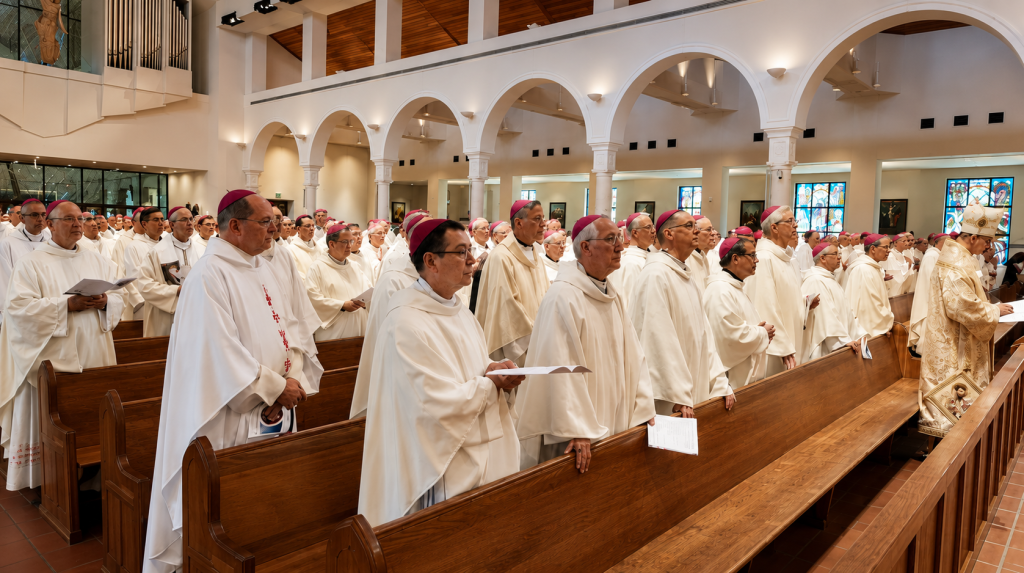
Gathering in Orlando, the Catholic bishops of the United States placed both the Church and the nation under the protection of the Sacred Heart The Catholic bishops of the United States have consecrated the nation to the Sacred Heart of Jesus, marking the 250th anniversary year of American independence. The act of consecration took place on 11 June during the spring plenary assembly of the United States Conference of Catholic Bishops in Orlando, Florida. Bishops from across the country took part in the public act of prayer and devotion that organisers said was intended to place both the Church and the nation under the protection and mercy of Christ. Preaching at the Mass, Archbishop William Lori of Baltimore said the occasion was not primarily a celebration of the nation’s approaching semiquincentennial but an act of faith. “We gather, not first to celebrate ourselves, but to consecrate. To entrust. To place the Church in the United States, and indeed the whole nation, into the Sacred Heart of Jesus Christ,” Archbishop Lori said. He told the congregation that the consecration acknowledged that history is ultimately shaped by God’s providence rather than human achievement alone. “We consecrate our nation, not because it is perfect, but because it is beloved by God,” he said. “We entrust to the Heart of Christ our achievements and failures, our hopes and anxieties, our present challenges and our future aspirations.” The archbishop said the Church approached the moment with gratitude for the blessings received throughout American history while recognising the need for repentance and renewal. “We cannot come to the Heart of Christ while pretending we have no need of His mercy,” he said. Drawing on the Gospel reading in which Christ tells His disciples to remain in His love, Archbishop Lori described the Sacred Heart as “the revelation of God’s love made flesh” and said devotion to it offered an antidote to political and ideological division. “The Sacred Heart does not divide; it reconciles. It does not harden hearts; it transforms them. It does not simply invite us to receive love; it sends us forth to share it,” he said. “The future belongs to God,” Archbishop Lori said. “And so we place into His Heart not only ourselves but generations yet unborn, and all those who will inherit the Church and the nation we leave behind.” The consecration itself was led by Archbishop Paul Coakley of Oklahoma City, president of the bishops’ conference. In the prayer, the bishops entrusted the nation to the Sacred Heart and asked for healing, justice, reconciliation and peace. The prayer gave thanks for the blessings received by the United States, sought forgiveness for sins committed against God and human dignity, and asked that the Church become an ever clearer sign of Christ’s presence in society. Repeated invocations of “Most Sacred Heart of Jesus, have mercy on us” were offered throughout the ceremony. The act of consecration followed a period of reflection by several bishops on the significance of devotion to the Sacred Heart in contemporary society. Archbishop Alexander Sample of Portland argued that devotion to the Sacred Heart offered an answer to what he described as the spiritual anxieties of modern life, including loneliness, insecurity and the search for identity. “The Sacred Heart of Jesus is not merely a symbol,” Archbishop Sample said. “It is the living Heart of the Risen Lord, still beating with love for humanity.” Reflecting on Christ’s sacrificial love, Archbishop Sample said believers could find freedom from the need to base their worth on success or failure. “When we know that we are loved by Christ, we no longer need to build our identity on achievements or failures,” he said. Archbishop Shelton Fabre of Louisville focused on the relationship between devotion to the Sacred Heart and ecclesial unity. He urged bishops to model genuine communion within the Church and resist reducing people to ideological categories. “The Sacred Heart of Jesus never encounters us as categories,” Archbishop Fabre said. “Jesus Christ does not love abstractions. He loves people.” He argued that Christian communion is founded not upon personal preference or political affinity but upon participation in the life of Christ. Archbishop Bernard Hebda of St Paul and Minneapolis spoke about the transforming power of Christ’s love upon wounded hearts. Referring to the motto of St John Henry Newman, Cor ad cor loquitur , or “heart speaks to heart”, he encouraged deeper prayer and a more intimate relationship with Christ. “Drawing near to the heart of Jesus, entering into that intimate dialogue with Jesus, changes everything,” Archbishop Hebda said. Before the Mass, the bishops participated in Eucharistic adoration and venerated relics associated with St Margaret Mary Alacoque, the seventeenth-century French Visitation nun whose visions helped spread devotion to the Sacred Heart throughout the Catholic world. The consecration took place against the backdrop of preparations for the 250th anniversary of the Declaration of Independence in 2026 and formed part of the programme of commemorations taking place across the United States. Devotion to the Sacred Heart occupies a prominent place in Catholic spirituality. Rooted in the Gospel accounts of Christ’s love and sacrifice, it gained renewed prominence through the revelations received by St Margaret Mary between 1673 and 1675. The devotion was subsequently promoted by numerous popes and religious orders and became one of the most widespread expressions of Catholic piety. In 1899, Pope Leo XIII consecrated the entire human race to the Sacred Heart, describing the act as one of the most important of his pontificate.
Jun. 12, 2026
French bishops release itinerary for papal trip
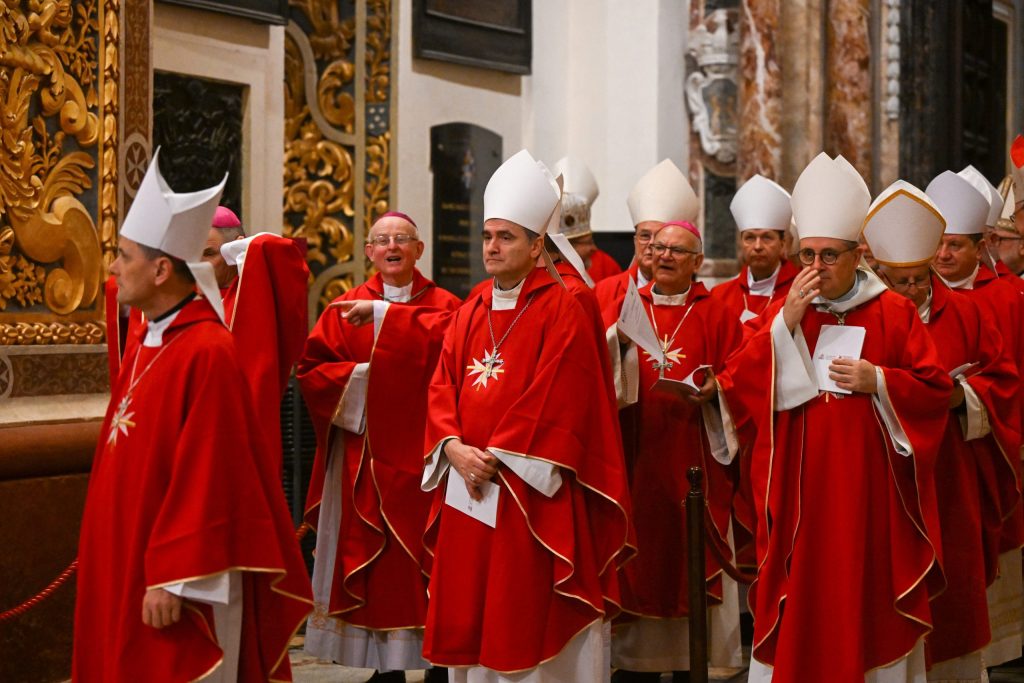
Pope Leo XIV’s visit to France will take him to Paris, Lourdes and Metz from 25 to 28 September. As his apostolic journey to Spain draws to a close, the French bishops have released the first details of the papal itinerary The French bishops have released the first details of Pope Leo XIV’s apostolic journey to France, confirming a programme that will take the Pontiff to Paris, Lourdes and Metz during a visit scheduled from 25 to 28 September. The itinerary, published by the Conference of Bishops of France on 9 June, includes Solemn Vespers at Notre-Dame Cathedral in Paris on the opening day of the visit, a national youth prayer vigil, an open-air Mass in the French capital, a pilgrimage to Lourdes, and a final Mass in Metz. The announcement was made by Cardinal Jean-Marc Aveline, Archbishop of Marseille and president of the bishops’ conference, who said preparations had been under way for several months and that discussions with the Pope had begun shortly after the start of his pontificate. “From the very beginning of his pontificate, I invited Leo XIV to visit us,” Cardinal Aveline wrote. “He was not difficult to convince, so great is his esteem for our country, for its role in the world, for its rich spiritual history, and for its missionary zeal.” The cardinal said he had begun working with the Pope on a draft programme for the visit in April and noted that a steering committee had already been established to coordinate preparations between the bishops’ conference and the dioceses due to receive the Pontiff. According to the schedule released by the bishops, Pope Leo will begin the visit on Friday, 25 September, with Solemn Vespers at Notre-Dame de Paris. Priests, deacons and their wives, consecrated persons, religious brothers and sisters, and seminarians from across France have been invited to attend. Later that evening, the Pope will join young people from throughout the country for a large prayer vigil in Paris. The following afternoon, Saturday 26 September, he will celebrate a solemn open-air Mass in the French capital. On Sunday 27 September, Pope Leo will travel to Lourdes, where he is scheduled to celebrate Mass on the meadow facing the grotto associated with the apparitions of the Blessed Virgin Mary to St Bernadette Soubirous in 1858. The final event announced by the bishops is a Mass at Saint-Étienne Cathedral in Metz on Monday 28 September. The bishops stressed that the Holy See has yet to publish the complete programme and that further practical information regarding participation in the various events will be released in due course. The visit was first announced by the French bishops in May. At the time, they described the prospect of welcoming the new Pope as “a great joy and a great responsibility” and said his presence would be an opportunity for the Church in France to share its experiences with the successor of St Peter while being strengthened by his ministry. In his latest message, Cardinal Aveline urged Catholics to prepare spiritually for the visit. “Above all, we must prepare ourselves to receive the grace that God wishes to bestow upon France and our Church,” he said. “Through our inner openness and our missionary boldness, let us prepare ourselves to cooperate in the work that the Holy Spirit will accomplish in hearts during the visit of the successor of Peter.” Notre-Dame Cathedral is one of the most iconic symbols of French Catholicism, Gothic architecture and national identity. Located on the Île de la Cité in Paris, it is dedicated to the Virgin Mary and has been the site of major historical events, including coronations and Te Deums. It suffered a devastating fire in 2019 but reopened in late 2024. The visit will mark the first papal visit to the cathedral since its reopening. The Mass in Lourdes will take place at one of the world’s most important Marian shrines, associated with St Bernadette’s 1858 apparitions of the Virgin Mary. The shrine attracts millions of pilgrims each year for prayer, healing and the famous torchlight processions. Previous papal visitors have included Pope John Paul II and Pope Benedict XVI. Less attention has been given to the Mass at Saint-Étienne Cathedral in Metz. Nicknamed the “Lantern of the Good Lord” because of its vast stained-glass windows, among the largest collections in the world, the cathedral stands in the Moselle region of Lorraine near the German border. The area has a complex history shaped by shifting frontiers, war and reconciliation. The date of the Mass falls almost exactly 38 years after St John Paul II’s visit to Metz in October 1988, creating a notable historical parallel.
Jun. 12, 2026
“Jesus of Nazareth is passing by”
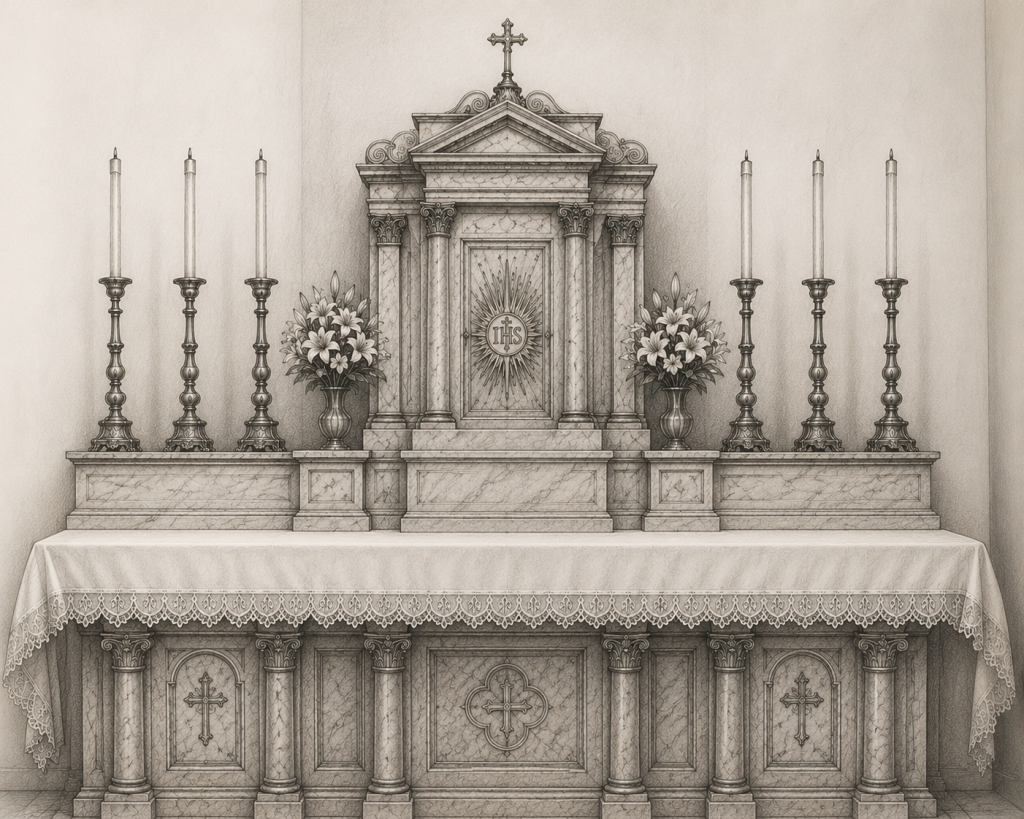
From the Ark of the Covenant to the tabernacle, Fr Daniel Seward explains how the Old Testament points towards the mystery of the Eucharist The very first journey made by the incarnate Son of God was from Nazareth to Ein Karem, enclosed within the womb of His Blessed Mother. Mary walked through the hill country of Judea, following the route of the Ark of the Covenant one thousand years before. We call Mary the Ark of the Covenant because she was the first Eucharistic vessel, carrying Jesus along the road. The Ark of the Covenant contained a piece of the manna that fell upon the Israelites in the wilderness, “Your fathers ate the manna in the desert”; it also housed the tablets of the Law and Aaron’s rod that bloomed. Our Lord is the Bread of Life, the giver of the Law, and the High Priest of our Salvation. So everything that we see about the Ark is a shadow and a prophecy of Jesus Himself. On the day of the dedication of the Tabernacle, two of Aaron’s sons, Nadab and Abihu, brought unholy fire into the sanctuary and were themselves consumed by fire. The Levites carrying the Ark across the River Jordan passed along the riverbed with dry feet, as the Jordan parted before the Ark. Joshua carried the Ark seven times around the city of Jericho, and its walls tumbled down. When the Ark was captured by the Philistines, everywhere that it stayed, the enemies of God were struck down by tumours. Placed in the temple of the Philistine god Dagon, the Ark brought his colossal statue crashing to the ground. The milch cows that pulled the Ark away from the Philistines brought it straight back to the land of Israel, passing their lowing calves without a second glance. When the men of Beth Shemesh presumptuously opened the Ark, seventy of them were struck down by the Lord. When the Ark was being transported to Jerusalem by King David, and reached the threshing floor of Nacon, the oxen stumbled, and Uzzah put out his hand to steady the Ark, and fell down dead. If all these things applied to the type and the shadow, how much more terrible and awe-inspiring is the reality: that Sacrament in which our Lord and Saviour dwells among us bodily, made present in His entirety to each of us. This is what St Paul tells the Corinthians: “Therefore whoever eats this bread or drinks this cup of the Lord in an unworthy manner will be guilty of the body and blood of the Lord. But let a man examine himself, and so let him eat of the bread and drink of the cup. For he who eats and drinks in an unworthy manner eats and drinks judgment to himself, not discerning the Lord’s body. For this reason many are weak and sick among you, and many sleep.” When King David eventually brought the Ark to Jerusalem, he leapt and danced before it, sacrificing to the Lord and distributing food and drink to all the people of Israel. In the Old Covenant the glory of God was concealed: in the gold-overlaid acacia wood box, under the mercy seat and the two cherubim, and in the cloud that covered Moses’ encounters with the Lord, or the dedication of the Tabernacle and the Temple. When Our Lady travelled through the mountains of Judea, she concealed the secret of God’s presence within her womb. Only John the Baptist, within Elizabeth’s womb, recognised the presence of the Christ, and, like David leaping before the Ark, leapt in homage to Jesus. Our Lord would travel again, with His parents, into Egypt. According to legendary traditions preserved by Coptic Christians, as the Holy Family passed through the land, pagan idols and statues fell to the ground, and springs rose from the earth. In a more reliable canonical account, St Mark’s Gospel tells how, when Jesus crossed to the other side of the Sea of Galilee, into the pagan territory of the Gerasenes, and had come out of the boat, immediately there met Him out of the tombs a man with an unclean spirit, filled with a legion of demons, whom the Lord cast into the herd of swine. “Jesus of Nazareth is passing by.” As Our Lord walked towards Jericho, a blind man, Bartimaeus, sitting by the roadside begging, heard these words and cried out, “Son of David, have mercy on me!” The Lord gave him his sight, and Bartimaeus followed Him, glorifying God, and all the people, when they saw it, gave praise to God. Bartimaeus recognised who Jesus is, even though he could not see. The demons on the far side of the Jordan quailed in terror before Him, although He was clothed in His humanity. The idols of Egypt crumbled to dust before a baby. John the Baptist knew Him, even before they were born. And we know Him. We know Him, concealed under the appearances of Bread and Wine. We know that in the Eucharist, there is no bread and wine. We know that here in our Tabernacle, and upon our altar, and given to be present as our very food, is the One whose glory rested upon the Ark in mystery, before whom David leapt and danced, and who gave the manna from heaven. The Eucharist is not only the sign; it is the reality. We too must approach with reverence, with faith, with awe, and also with trust and gratitude, because what Moses glimpsed in shadow, we receive in its fulness: the Body, Blood, Soul, and Divinity of Jesus Christ. Tonight, and again on Sunday, we will take Him on another journey through the streets of York. Many will see Him and will not know Him, but can we not hope that He will cast out evil, touch hearts, turn people from sin, inspire conversion and pour out His mercy on all whom He will pass? We can do our simple part by pouring out all the outward tokens of our love, by pointing to the One whom we carry. If the Blessed Sacrament passes you, and you can kneel, kneel down. Above all, be present. Our Lady didn’t send a letter to Elizabeth; she took Jesus to her. David, when exiled from Jerusalem, longed above all to be able to approach the Lord in His sanctuary: “One thing have I asked of the Lord, that I will seek after; that I may dwell in the house of the Lord all the days of my life, to behold the beauty of the Lord, and to inquire in his temple.” “O God, You are my God; Early will I seek You; My soul thirsts for You; My flesh longs for You In a dry and thirsty land Where there is no water. So I have looked for You in the sanctuary, To see Your power and Your glory.” When David flees before Absalom, he says to Zadok the priest, “If I find favour in the eyes of the Lord, he will bring me back and let me see both [the Ark] and his habitation.” Just as the Lord makes Himself physically present to us, so we have to respond in the same way. It’s no good generally agreeing with the Catholic religion but not coming to Mass. The actual, bodily celebration of the Holy Mass was the reason why our martyrs laid down their lives. It’s no good vaguely approving of processions but not taking part in them. David and John the Baptist leapt, and you can walk, and show to the disordered world that in the Eucharist there is peace, mercy and love. Our Holy Father Pope Leo, in his encyclical published last week, Magnifica Humanitas, presents the Blessed Sacrament as the antidote to the virtual world of loneliness, in which individuals are reduced to algorithms and human relationships are obliterated by artificial intelligence. The Pope says: “The spirituality that we need is a Eucharistic spirituality, that is a spirituality of ecclesial unity in love.” In other words, to receive and to worship the Lord in Holy Communion is never a purely individual act. It must be communion, it must lead us to a shared witness, it must lead us to look outwards and to bring about the Kingdom of God in the world. Pope Leo says: “It is from this communion that Christian solidarity also arises, since, as Pope Benedict XVI said, ‘union with Christ is also union with all those to whom he gives himself’… In the Eucharist we find a visible manifestation of the reality that we ‘are the Church of Christ, his members, his body. We are brothers and sisters in him. And in Christ, though many and diverse, we are one: In Illo uno unum.’ The Eucharist opens us to justice and sharing, with a preferential concern for those who are burdened by poverty or marginalisation. And while new economic and technological networks can generate exclusion, isolation and dependencies, the Church, nourished by the Eucharist, is called to make visible a different paradigm, one that preserves human connections, gives a voice to the invisible and ensures that processes are aimed at respecting people’s dignity.” Isaiah said, “Truly You are God who hides Himself, O God of Israel, the Saviour.” But here, in the Sacrament of Unity, is the God who manifests Himself, who bursts into our world, whom we will carry onto our streets, who breaks the bonds of slavery and estrangement, who has come to bring Life. “Jesus of Nazareth is passing by.” Fr Daniel Seward is Parish Priest at the York Oratory, a thriving Catholic community in the centre of York, served by the Oratorian priests and brothers. For more information about their work, please visit: yorkoratory.com.
Jun. 12, 2026
In pictures: Pope Leo XIV’s fourth day in Spain
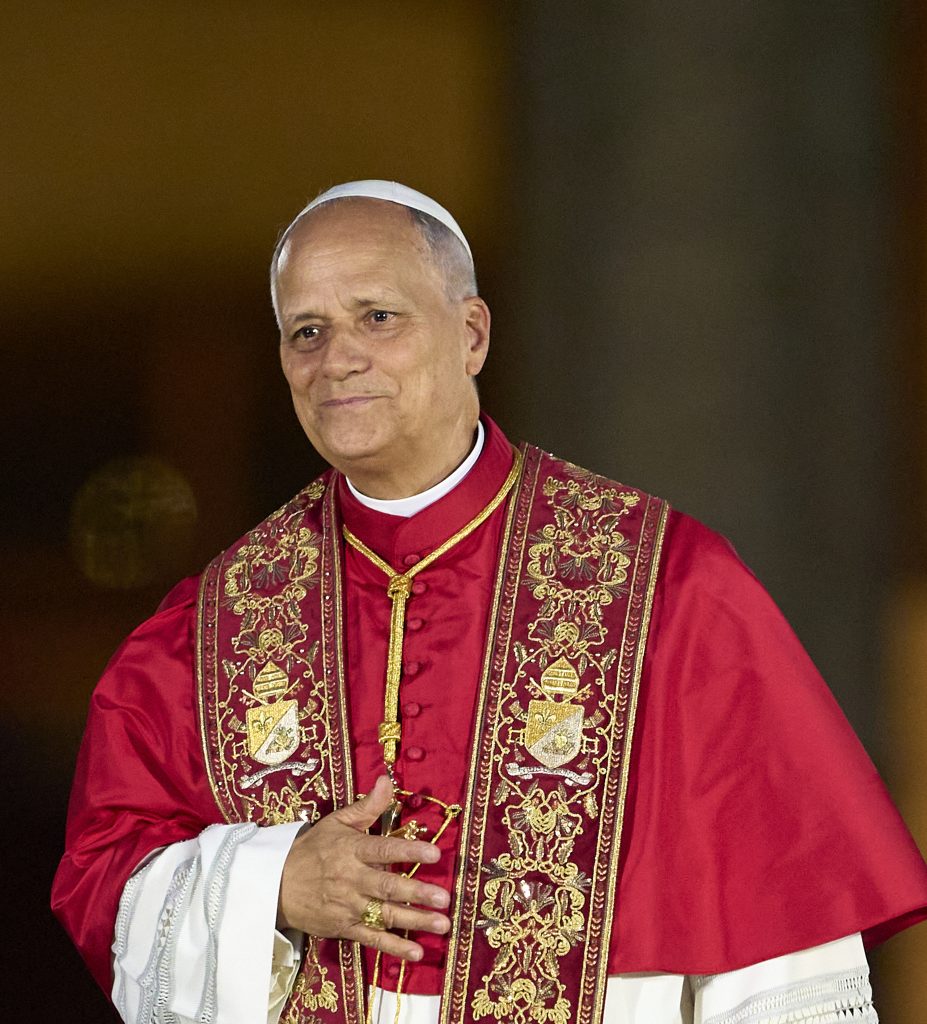
Pope Leo XIV’s fourth day in Spain included a visit to Brians 1 prison, prayers at Montserrat Abbey, a meeting with Catholic charities and a Mass at Barcelona’s Sagrada Família, where he blessed the newly completed Tower of Jesus Christ. Here are the images from a day Pope Leo XIV spent the fourth day of his apostolic journey to Spain in Catalonia, where he visited prisoners, joined celebrations marking the millennium of Montserrat Abbey, met representatives of Catholic charities and social outreach organisations, and celebrated Mass at the Sagrada Família in Barcelona. The day included some of the most significant moments of the visit. At Brians 1 prison, the Pope told inmates that “God loves you as you are, but He dreams of something better for you”. At Montserrat, he encouraged pilgrims to leave at the feet of the Virgin Mary “the armour that has gradually hardened your hearts”. The visit concluded at the Sagrada Família, where he blessed the newly completed Tower of Jesus Christ and declared: “We cannot believe in Jesus and promote war. We cannot believe in Jesus and kill the innocent.” Here is Pope Leo XIV’s fourth day in Spain in pictures. Pope Leo XIV arrives at Brians 1 prison in Sant Esteve Sesrovires (Barcelona) to meet with 80 inmates from various facilities, both men and women. (Photo credit: EFE/Alejandro García) Pope Leo XIV addresses prisoners and prison ministry workers during a meeting at Brians 1 prison near Barcelona on 10 June. “The mistakes of life do not determine a person’s identity,” the Pontiff told inmates as he encouraged them to embrace hope, reconciliation and a new beginning. (Photo: MIGUEL BERROCAL) Bishop Xabier Gómez García of Sant Feliu de Llobregat speaks with Spanish Interior Minister Fernando Grande-Marlaska following Pope Leo XIV’s visit to Brians 1 prison near Barcelona. (Photo: MIGUEL BERROCAL) The Abbey of Montserrat sits beneath the distinctive peaks of Catalonia’s mountains . Pope Leo XIV visits the monastery to mark its millennium. During the pilgrimage, the Pontiff entrusted his ministry to Our Lady of Montserrat. (Photo credit: Abadia de Montserrat) Thousands of pilgrims gather in the square of the Abbey of Montserrat as Pope Leo XIV leads prayer during celebrations marking the monastery’s millennium on 10 June. During the visit, the Pontiff urged the faithful to leave at the feet of the Virgin Mary “the armour that has gradually hardened your hearts”. (Photo: Dr G Simon) Pope Leo XIV prays the Holy Rosary at the Abbey of Our Lady of Montserrat. (Photo credit: EFE/Quique García) Cardinal Pietro Parolin, Vatican Secretary of State, greets families and pilgrims outside the diocesan gathering for charities and social assistance organisations in Barcelona. (Photo: G. Simon) Pope Leo XIV addresses representatives of Catholic charities, religious communities and diocesan assistance organisations during a meeting in Barcelona. (Photo: David Zorrakino / Europa Press) Pope Leo XIV greets members of the Missionaries of Charity. (Photo credit: David Zorrakino/EUROPA PRESS) Spanish Prime Minister Pedro Sánchez and Catalan regional president Salvador Illa speak ahead of Pope Leo XIV’s Mass at the Sagrada Família. The liturgy, attended by civil and Church leaders, formed the culmination of the Pope’s visit to Catalonia. (Photo credit: Kike Rincón/EUROPA PRESS) Pope Leo XIV is welcomed by King Felipe VI and Queen Letizia of Spain on his arrival at the Sagrada Família in Barcelona. The Pontiff later celebrated Mass and blessed the newly completed Tower of Jesus Christ, the highest structure of Antoni Gaudí’s basilica. (Photo credit: Kike Rincón/EUROPA PRESS) Pope Leo XIV processes through the packed nave of the Sagrada Família before celebrating Holy Mass. (Photo credit: Kike Rincón/EUROPA PRESS) Pope Leo XIV celebrates Mass at the Sagrada Família in Barcelona on 10 June, joined by bishops from across Spain beneath the newly completed Tower of Jesus Christ. In his homily, the Pontiff urged the faithful to raise their eyes to Christ and declared: “We cannot believe in Jesus and promote war. We cannot believe in Jesus and kill the innocent.” (Photo credit: Kike Rincón/EUROPA PRESS) Pope Leo XIV blesses the newly completed Tower of Jesus Christ at the Sagrada Família in Barcelona on 10 June. The blessing marked the culmination of the centenary year of Antoni Gaudí’s death and the completion of the tallest church tower in the world. (Photo credit: Kike Rincón/EUROPA PRESS)
Jun. 11, 2026