

Latest
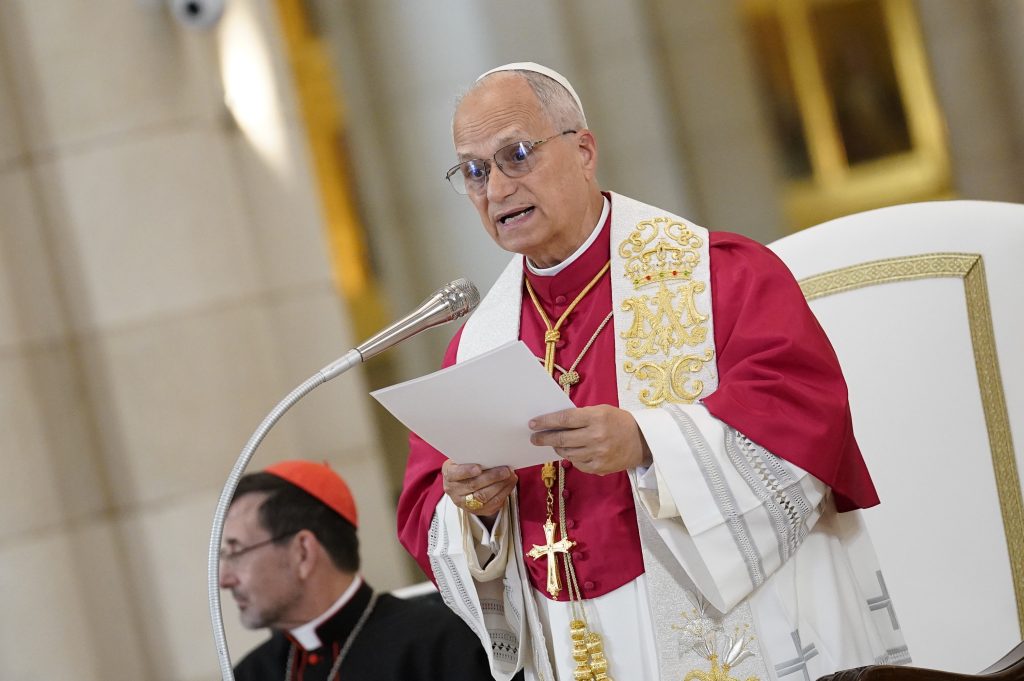
Details of June consistory revealed
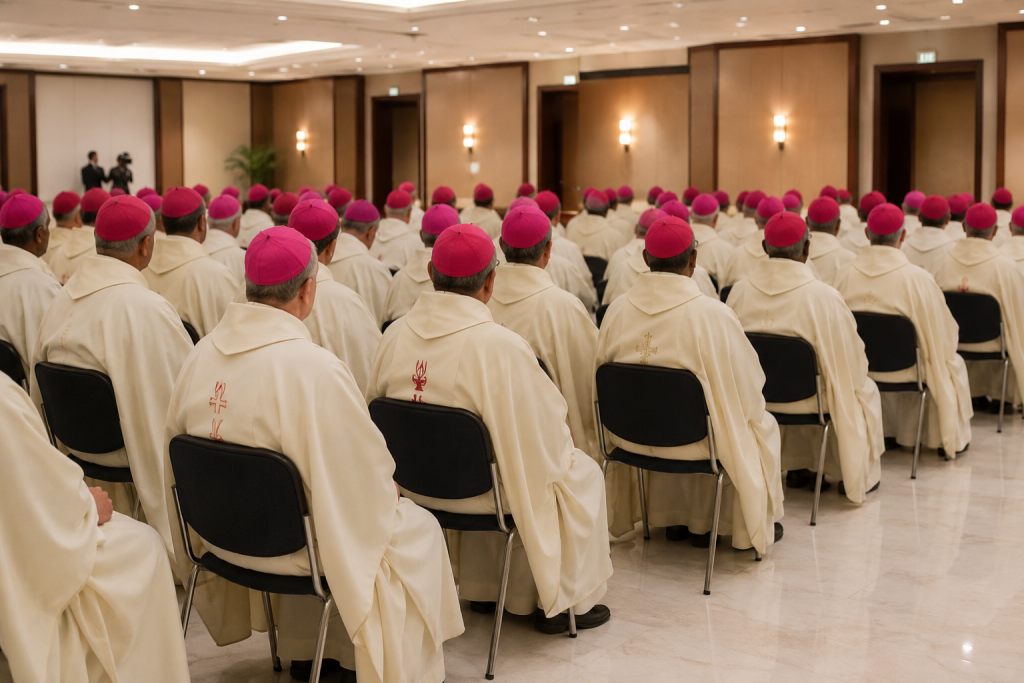
New documents have shed light on Pope Leo XIV’s extraordinary consistory later this month, offering a clearer picture of what cardinals will discuss when they gather in Rome The full calendar for Pope Leo XIV’s Extraordinary Consistory has been revealed. Documents circulated to participants and published by the Italian blog MessainLatino show that the two-day meeting on 26 and 27 June will focus on the implementation of the Synod, the Church’s missionary mission and Pope Leo’s recent encyclical Magnifica Humanitas . While the broad themes had already been disclosed to the press, the additional documents reveal strict rules governing interventions, the drafting of reports and communications with the media. The gathering will begin on the morning of 26 June with Mass in St Peter’s Basilica celebrated by Pope Leo XIV. Cardinals are due to assemble beforehand in the Chapel of St Sebastian before proceeding to the liturgy. Following the Mass, participants will move to the Paul VI Hall, where documentation and identification badges will be distributed before the formal opening of proceedings. The first working session, entitled “In What World Are We Called to Proclaim the Gospel?”, will begin with the singing of the Veni Creator Spiritus , an address by Cardinal Giovanni Battista Re, Dean of the College of Cardinals, and introductory remarks by the Pope. Cardinals will then hear a biblical meditation before breaking into discussion groups. They will be asked to reflect on “what sufferings, tensions and questions” are most urgently affecting the peoples and ecclesial communities entrusted to their care, and to identify signs of hope, fidelity to the Gospel and possibilities for reconciliation. The afternoon session, entitled “The Culture of Power and the Civilisation of Love”, will draw directly upon Chapter Five of Magnifica Humanitas . Cardinals will be invited to consider how global conflicts and divisions affect both local Churches and wider society, while discussing what “languages, attitudes and practices” might contribute to reconciliation and peace. A third session on the morning of 27 June will focus on what organisers describe as “The Construction Sites of Our Time”. Using the introduction and conclusion of Magnifica Humanitas as points of reference, participants will discuss social, cultural and ecclesial fractures that make it more difficult to pursue the common good. They will also examine expectations emerging from ordinary Catholics and wider society and consider what support local Churches may require in responding to contemporary challenges. The final session will be devoted to the implementation of the Synod. Cardinals will receive an update on preparations for the Synodal Assemblies planned for 2027 and 2028 before participating in an open dialogue with Pope Leo XIV. The programme concludes with a final address by the Pope and the singing of the Te Deum , before a dinner with the Holy Father in the Paul VI Hall. The accompanying confidential note sheds considerable light on how Pope Leo intends the discussions to be conducted. According to the document, the Pope wishes to draw upon “the wealth of experience and wisdom present in the College of Cardinals” and regards the meeting as an opportunity for “fraternal discussion” on the principal challenges facing the Church’s life and mission. Participants have been divided into twenty discussion groups. Nine groups consist of cardinal electors serving as diocesan ordinaries, together with apostolic nuncios and retired ordinaries. The remaining eleven groups are composed of members of the Roman Curia and cardinals over the age of eighty. The organisers state that this structure demonstrates the Holy Father’s desire to give particular attention to the experiences of local Churches throughout the world and to ensure that perspectives from different continents and ecclesial contexts are heard. Each group will be led by a chairman responsible for moderating discussions and ensuring that time limits are respected. A secretary will be tasked with collecting contributions and preparing a final report on behalf of the group. The discussions themselves will follow a carefully defined three-stage methodology. In the first phase, each cardinal will be permitted to speak for a maximum of three minutes while responding to the questions assigned to the session. In the second phase, participants will be allowed a further intervention of no more than two minutes. Rather than introducing new proposals, they will be expected to identify the most important themes that emerged during the earlier round of discussion. The third phase will involve the preparation of a report summarising the principal points raised. The secretary will draft the text with assistance from the other members of the group before it is approved and submitted electronically to organisers. The reports will then form the basis of plenary discussions. Groups composed of cardinal ordinaries will present their conclusions to the assembly, while the remaining groups will also be given an opportunity to report on their deliberations. Presentations will be limited to three minutes. The confidential note stresses that Pope Leo attaches particular importance to these plenary exchanges. Time has been reserved at the conclusion of each session for additional personal interventions, while cardinals may also submit written observations of up to two pages. One of the most notable features of the programme is the final open dialogue with the Holy Father. Cardinals will be able to address Pope Leo directly, although contributions are again expected to remain within a three-minute limit. The organisers emphasise that disagreements should not be suppressed. “Tensions and disagreements should not be avoided,” the note states, provided they are addressed “with respect and fraternal affection”. Moderators have nevertheless been instructed to enforce speaking limits strictly in order to ensure broad participation. The documents also impose strict confidentiality requirements on the Vatican press corps. Cardinals have been asked not to issue statements to journalists during the course of the consistory. While a press conference will be held after the meeting concludes, participants are specifically instructed not to reveal the identity of speakers when discussing the proceedings. The note further establishes confidential channels through which cardinals may communicate privately with the Pope. Contributions submitted through these channels will not be included in summaries of the discussions and will be accessible only to the Holy Father. The Extraordinary Consistory will conclude on 29 June when cardinals join Pope Leo for Mass marking the Solemnity of Saints Peter and Paul. Metropolitan archbishops appointed during the past year will receive the pallium during the liturgy. (Photo credit: Á. Pérez Meca/EUROPA PRESS)
Jun. 17, 2026
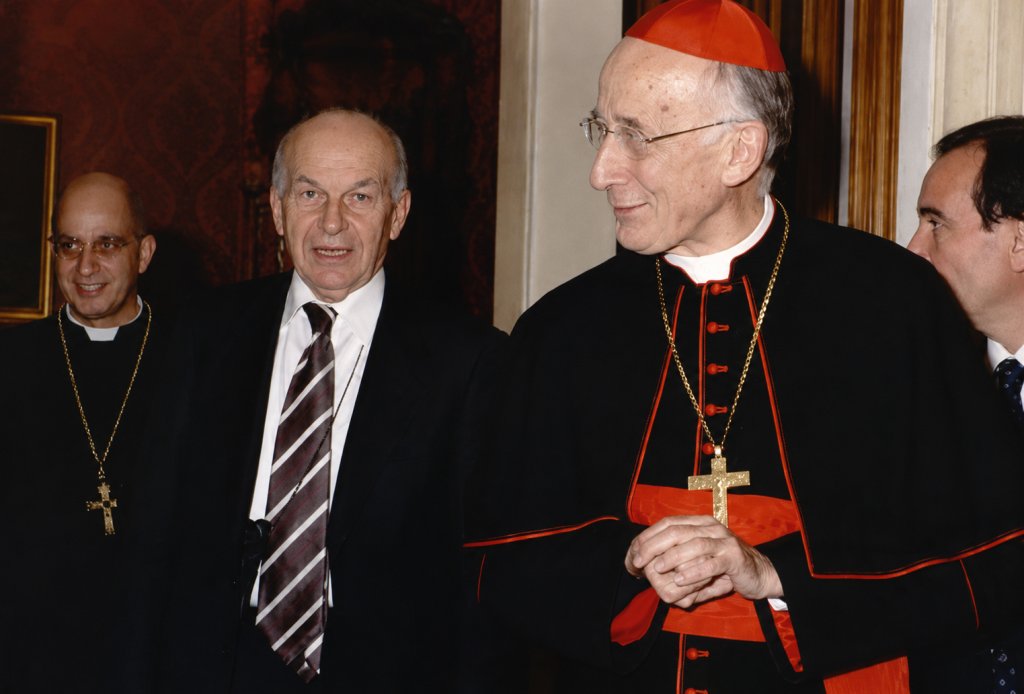
Cardinal Camillo Ruini dies aged 95 ahead of extraordinary consistory
Cardinal Camillo Ruini, one of the most influential figures in modern Italian Catholicism and a close collaborator of Pope John Paul II, has died aged 95. His death comes just days before cardinals gather in Rome for Pope Leo XIV’s extraordinary consistory Cardinal Camillo Ruini, former head of the Italian bishops and one of the most consequential Church leaders of the pontificate of Pope John Paul II, has died aged 95, little more than a week before cardinals from around the world are due to gather in Rome for an extraordinary consistory. The Diocese of Rome announced his death on Tuesday evening. In a statement issued by Cardinal Baldassare Reina, the Pope’s Vicar for Rome, and the diocesan episcopal council, the Church in Rome said: “Grateful for his long and fruitful Christian life and for his service to the Church, we entrust Cardinal Camillo Ruini to the mercy of the Lord.” As president of the Italian Bishops’ Conference from 1991 until 2007 and Vicar General of the Diocese of Rome from 1991 until 2008, he exercised a level of influence rarely achieved by a churchman in post-war Italy. Born in Sassuolo, in the province of Modena, on 19 February 1931, Ruini pursued studies in philosophy and theology in Rome at the Pontifical Gregorian University while residing at the Almo Collegio Capranica. Ordained a priest on 8 December 1954, he returned to his native Emilia-Romagna and spent decades engaged in teaching, formation and pastoral work. He taught philosophy and dogmatic theology in seminaries and theological institutes across the region and became known for his intellectual gifts and organisational abilities. His rise through the Church hierarchy accelerated during the 1980s, particularly after his involvement in preparations for the 1985 National Ecclesial Convention in Loreto, an event that sought to define the Church’s engagement with Italian society after the political and cultural upheavals of the preceding decades. Appointed an auxiliary bishop of Reggio Emilia-Guastalla in 1983, he soon attracted the attention of Rome. In 1986, Pope John Paul II brought him to the capital as secretary-general of the Italian Bishops’ Conference. Five years later, the Polish pontiff elevated him to the College of Cardinals and entrusted him with two of the most important positions in Italian Catholicism. Throughout his leadership, he argued that Catholics should not retreat from public life but should instead engage confidently in the cultural and political debates shaping the nation. His most notable interventions often concerned issues relating to marriage and the family. Cardinal Ruini repeatedly warned against legal measures that he believed would weaken the institution of marriage or undermine the family founded upon it. He emerged as one of the most prominent Catholic opponents of efforts to grant full legal recognition to same-sex relationships, arguing that such measures risked obscuring the unique social role of the family. He also played a decisive role during the 2005 referendum campaign concerning Italy’s laws on artificial insemination and assisted reproduction. Rather than urging Catholics to vote against proposed changes, he encouraged abstention in order to prevent the referendum from reaching the turnout threshold required for validity. The strategy proved successful when participation fell short of the required level, a significant victory for the Church and for Ruini personally. Beyond individual political battles, he frequently reflected on broader cultural trends affecting Europe. He warned against aggressive forms of secularism and argued that Europe risked losing touch with its Christian roots. Tributes poured in from across the political and ecclesiastical spectrum following news of his death. Cardinal Matteo Zuppi, the current president of the Italian Bishops’ Conference, praised his predecessor’s contribution to the Church in Italy. “We gather in prayer and entrust to the mercy of the Father Cardinal Camillo Ruini, whom the Lord has called to Himself. We remember with gratitude his long and fruitful Christian life and his service to the Church,” Cardinal Zuppi said. His Eminence added: “He served the Church with intelligence and pastoral passion. He helped the Church in Italy to think, discern, speak and walk in its own time.” Italian Prime Minister Giorgia Meloni described Ruini as “a great man of the Church, of extraordinary intelligence and profound humanity, who defended with vigour the identity, mission and role of Catholics in Italian society”. She said she had been honoured to know him personally and called him “one of the most lucid minds of Italian society”, expressing hope that his “spiritual, cultural and human legacy” would continue to bear fruit. Deputy Prime Minister Matteo Salvini wrote that Ruini had been “a point of reference for millions of Italian Catholics” who dedicated his life to “the Church, to dialogue, and to the defence of Western values, always with courage and consistency”. Foreign Minister Antonio Tajani also paid tribute, describing him as “an authoritative figure of the Church” and “a strenuous defender of traditional values” who remained “a precious interlocutor for politics and institutions”. His death comes at a notable moment in the life of the Church, arriving shortly before cardinals gather in Rome for Pope Leo XIV’s extraordinary consistory, where Cardinal Ruini would have been a valued participant. The meeting, whose programme was recently outlined by Cardinal Giovanni Battista Re, will draw together members of the College of Cardinals for discussion and consultation. In his letter to the cardinals, Cardinal Re explained that the Holy Father wished to draw upon the experience and counsel of the College while fostering a climate of “listening, freedom and parrhesia” among the participants. The gathering will open with a period of prayer and discussion focused on the international situation, with cardinals invited to share the sufferings, tensions and concerns affecting their local Churches, as well as signs of hope and reconciliation emerging amid conflict and uncertainty. Subsequent sessions will centre on Pope Leo XIV’s encyclical Magnifica humanitas , particularly its reflections on war, peace and the moral responsibilities of nations. Discussions are expected to examine the Holy Father’s call for a renewed commitment to peace and his rejection of attempts to justify armed conflict through appeals to the traditional theory of the “just war”. A further session will consider the encyclical’s broader vision of Christian hope and integral human development in a rapidly changing world. The final day of discussions will focus on the implementation of the Synod process and preparations for the Synodal Assemblies of 2027 and 2028, before concluding with an open dialogue between the cardinals and the Pope.
Jun. 17, 2026
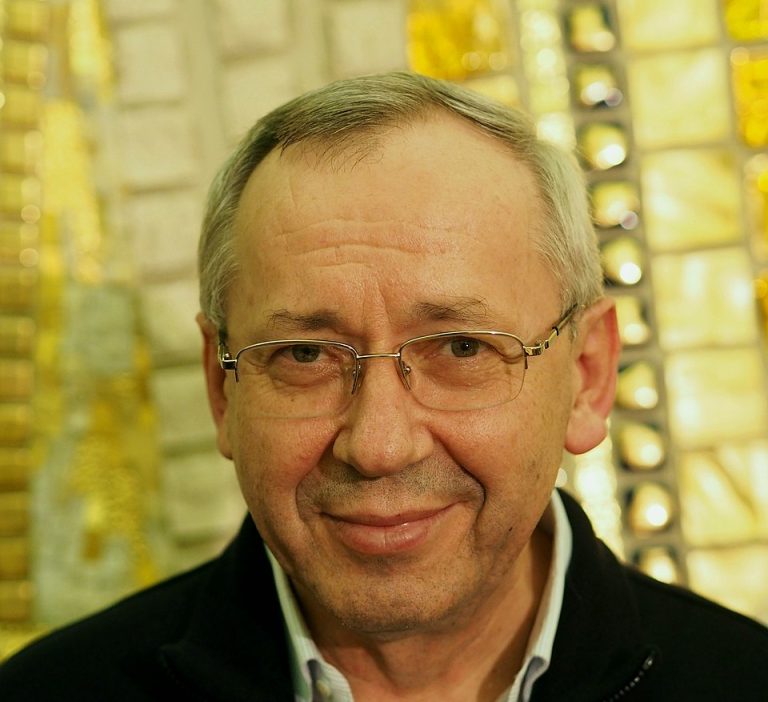
Jesuit priest apologises for celebrating Mass before Rupnik mosaic
A newly ordained Jesuit priest has publicly apologised after celebrating Mass in front of a mosaic by Marko Rupnik, saying he felt “deeply embarrassed” and questioning the continued silence surrounding the disgraced former Jesuit’s abuse allegations A Jesuit priest has apologised after celebrating Holy Mass in front of a mosaic created by the disgraced Slovenian priest Marko Rupnik. In a social media post, Fr Pierre Alexandre Collomb stated that he was “deeply embarrassed to have celebrated a Mass in front of a Rupnik mosaic, a Jesuit sexual abuser”. He continued by explaining that he had “begun the celebration by mentioning the victims of this man and my shame as a Jesuit”. The priest, who was ordained last year, also pointed out that there is “no mention of the victims or of this man’s actions” in the chapel, which he mistakenly identifies as “Bon Secours Chapel” rather than “Bon Conseil”, in the Archdiocese of Paris. He then asks: “How much longer this silence?” Marko Rupnik stands accused of abusing around 20 women, predominantly religious sisters, in one of the most troubling cases of clerical abuse in recent decades. His abuse appears to have been known to parts of the Church leadership before it became public, notably senior Czech and Slovenian prelates in the 1990s, whilst he continued to enjoy a privileged position in ecclesiastical life. In 2018, allegations of abuse were reported to Jesuit Father Juan Antonio Guerrero Alves, Rupnik’s superior, and in 2019 the Vatican deemed the accusations credible. Also in 2019, Rupnik was convicted and sanctioned by the Holy See for the ecclesiastical crime of absolution of an accomplice, which carries the penalty of excommunication. The excommunication was later lifted by Pope Francis after Rupnik repented of his crime. In 2020, Rupnik preached a Lenten meditation for priests working in the Roman Curia, attended by Pope Francis and Cardinal Luis Ladaria Ferrer, then Prefect of the Dicastery for the Doctrine of the Faith. In 2021, the Dicastery for the Doctrine of the Faith received a complaint alleging abuse of nuns in 1995 but ultimately dismissed the case because, under canon law at the time, the statute of limitations expired after 20 years, whereas the allegations related to events that had occurred almost 30 years earlier. Despite this, Rupnik designed the logo for the 2022 World Meeting of Families and is known to have met privately with Pope Francis in January 2022. In 2023, he was expelled by the Jesuits for a “stubborn refusal to observe the vow of obedience” but was then incardinated as a priest in the Diocese of Koper in Slovenia. Later that year, Pope Francis lifted the statute of limitations to allow the case against Rupnik to be reopened and, in March 2025, the Dicastery for the Doctrine of the Faith began selecting judges for a canonical trial. There has been significant delay in the process, and the trial has yet to begin. Rupnik’s art appears in a number of prominent churches around the world, including the Saint John Paul II National Shrine in Washington and the façade of the Basilica of Our Lady of the Rosary in Lourdes, France. Many institutions have either removed or covered the artwork of the disgraced priest. In 2024, Bishop Joseph Strickland called for his work to be “jettisoned from anything Catholic”. Despite this, the Centro Aletti, an international centre for art, theology and spirituality in Rome founded by Rupnik, continues to promote his work. It has also been reported that Rupnik is living in a monastery about an hour outside Rome and continues to travel internationally. In March 2025, he was confronted by a journalist at Rome’s airport.
Jun. 17, 2026
Pope Leo strengthens safeguarding commission with new Vatican statute
Pope Leo XIV has approved a new statute for the Pontifical Commission for the Protection of Minors, strengthening the Vatican body’s role in promoting safeguarding standards across the Church. The revised statute, approved ad experimentum for three years, was promulgated through a rescript signed by Cardinal Pietro Parolin, the Vatican Secretary of State, following an […] Pope Leo XIV has approved a new statute for the Pontifical Commission for the Protection of Minors, strengthening the Vatican body’s role in promoting safeguarding standards across the Church. The revised statute, approved ad experimentum for three years, was promulgated through a rescript signed by Cardinal Pietro Parolin, the Vatican Secretary of State, following an audience with the Pope on 20 May. It replaces the commission’s previous governing norms issued in 2015 and aligns its work with the reforms of the Roman Curia introduced under the apostolic constitution Praedicate Evangelium . Among the most significant changes is the formal requirement that the commission prepare an annual report on safeguarding policies and initiatives throughout the Church. The report will be submitted directly to the Pope and may be published with his consent. The commission said the annual review is intended to provide “a reliable account of the Church’s policies and initiatives for protection” while also identifying shortcomings and proposing improvements. Drawing on information supplied by Vatican departments, bishops’ conferences, religious institutes and other ecclesiastical bodies, it is expected to become one of the principal instruments through which safeguarding practices are monitored at a global level. The new statute also gives the commission a more clearly defined role in helping dioceses, episcopal conferences, Eastern Catholic Churches and religious congregations develop and update safeguarding guidelines. It emphasises the need for accessible reporting mechanisms and support structures for victims and survivors of abuse. Under the revised norms, the commission is tasked with encouraging the establishment of stable and easily accessible systems through which allegations of abuse can be reported. It is also instructed to promote centres where victims can receive support, spiritual assistance, and medical, therapeutic and psychological care. The statute further provides for intervention when safeguarding systems are judged to be inadequate. Article 6 states that in cases involving “repeated violations” of safeguarding norms or “serious deficiencies” in local reporting structures, the commission may submit assessments and recommendations to the competent dicasteries of the Holy See so that they can exercise their responsibilities. While the commission remains an advisory body rather than a governing authority, the provision establishes a clearer pathway through which concerns about safeguarding failures can be communicated to Vatican departments with disciplinary or supervisory powers. The revised text also envisages a role for the commission during bishops’ ad limina visits to Rome. These regular visits, during which bishops meet the Pope and Vatican officials to discuss the state of their dioceses, may now include discussions concerning safeguarding conditions and the implementation of protection measures. Archbishop Thibault Verny, president of the Pontifical Commission for the Protection of Minors, welcomed the publication of the new statute and said it demonstrated a growing commitment to safeguarding throughout the life of the Church. “The Statutes mark an important step in deepening our shared responsibility to protect and care for the most vulnerable,” the Archbishop said. He continued: “They reflect listening to victims and survivors, to safeguarding experts, and to the experience of local Churches, and reaffirm that safeguarding remains a central priority.” The commission said the revised statute strengthens its operational effectiveness while maintaining an emphasis on approaches informed by the experience of victims and survivors. It added that the new framework reinforces its role in promoting “accountability, transparency and good safeguarding practices globally”. The document also clarifies the commission’s relationship with the Dicastery for the Doctrine of the Faith, the Vatican department responsible for handling allegations of clerical sexual abuse. The commission is formally established within the dicastery while retaining its own distinct mandate. The two bodies will exchange information, collaborate on safeguarding methodologies and training programmes, and work together in preparing the annual safeguarding report. To facilitate cooperation, either the president or secretary of the commission will serve as a member of the Dicastery for the Doctrine of the Faith for the duration of his mandate, while the dicastery may appoint observers to the commission’s plenary assemblies. The commission itself may consist of up to 23 members appointed by the Pope for renewable five-year terms. Members may be clerics, religious or lay people and are chosen from different countries on the basis of their expertise, professional competence and experience in safeguarding. The publication of the statute comes more than a decade after Pope Francis established the Pontifical Commission for the Protection of Minors in 2014. The commission was originally created to advise the Pope on safeguarding policies and to help develop a culture of prevention throughout the Church. Its work has included producing safeguarding guidelines, promoting training initiatives and supporting local Churches in developing procedures for handling allegations of abuse. Its history has not been without difficulties. Over the years, some members expressed frustration at limitations on its authority and the pace of reform. Questions were also raised about how effectively recommendations were being implemented in different parts of the world. Nevertheless, the commission has gradually become more closely integrated into the structures of the Roman Curia. In 2022, under Praedicate Evangelium , it was formally placed within the Dicastery for the Doctrine of the Faith while retaining direct access to the Pope. Although the revised norms do not create new judicial powers, they establish a more structured framework for gathering information, identifying weaknesses and promoting best practice across the Catholic world.
Jun. 16, 2026
Italian bishops clash over calls to exclude Israeli novelist from literary festival
A public dispute between senior Italian bishops has erupted over calls to exclude Israeli novelist Eshkol Nevo from a literary festival in southern Italy, with one archbishop backing a petition against his appearance while others defend dialogue and condemn attempts to silence him A row over the appearance of an Israeli novelist at a literary festival in southern Italy has exposed divisions within the Italian Catholic hierarchy, with senior bishops publicly disagreeing with one another. Archbishop Franco Moscone of Manfredonia-Vieste-San Giovanni Rotondo has been criticised after signing a petition calling on organisers of the Il Libro Possibile festival to reconsider hosting the Israeli writer Eshkol Nevo at an event due to take place in Vieste next month. The petition, addressed to regional authorities and festival organisers, argues that Nevo has not taken a sufficiently clear public stance against the actions of the Israeli government in Gaza. Among its signatories are politicians, activists, academics and clergy, including Archbishop Moscone, whose archdiocese includes one of the festival venues. Speaking to Italian media, the archbishop defended his decision to support the initiative and rejected accusations that it amounted to censorship. “The issue is not that Nevo is Israeli,” His Grace said, arguing instead that intellectuals have a responsibility to speak clearly in the face of injustice. He said the novelist had not shown sufficient “criticism and clarity” regarding the actions of the Israeli government and described the situation in Gaza as a matter that could not be ignored by public figures with influence and visibility. The intervention quickly resulted in backlash from other Church leaders. Archbishop Giuseppe Baturi, Archbishop of Cagliari and Secretary General of the Italian Bishops’ Conference, sought to distance the bishops’ conference from the controversy while defending the principle of open dialogue. In an interview with Corriere della Sera, Archbishop Baturi said: “Peace is not built by preventing those who think differently from speaking, but by creating the conditions for them to be heard.” He stressed that the Italian Bishops’ Conference had “not intervened on the merits of the matter” and said Archbishop Moscone’s decision to sign the appeal was “a personal choice and the exercise of freedom of thought and expression”. “In the Church, personal conscience is not erased, but rather placed within a path of communion,” His Grace said. Addressing the conflict in the Holy Land, Archbishop Baturi echoed recent appeals by Cardinal Pierbattista Pizzaballa, the Latin Patriarch of Jerusalem, warning against language that strips people of their humanity. “Violence also stems from language that dehumanises others, and the Church must fight it: denounce violence and terrorism, but not fuel words that make others unrecognisable as human beings,” he said. More critical comments came from Archbishop Carmelo Pennisi of Monreale, who told the Italian daily, La Stampa, that the campaign against the writer was “an act of antisemitism”. The comments have brought into the open disagreements among Italian bishops over how Catholics should respond to the conflict in the Holy Land, which has generated strong reactions across Italy since the Hamas attacks of 7 October 2023 and the subsequent Israeli military campaign in Gaza. Festival organisers have refused to alter their programme and confirmed that Nevo will participate as scheduled. Rosella Santoro, the artistic director of Il Libro Possibile, said the festival would continue to provide a platform for a wide range of voices and rejected suggestions that writers should be judged according to the policies of their governments. Organisers noted that Nevo has repeatedly spoken publicly in favour of peace and dialogue and has expressed criticism of elements within Israeli politics. They also pointed out that the festival programme includes Palestinian voices and journalists covering the conflict, alongside Catholic representatives involved in interreligious dialogue and peace initiatives. The petition was promoted by activists and public figures in Puglia, including members of left-wing political movements and campaign groups opposed to the war in Gaza. While supporters argue that public figures should take stronger positions against the conflict, critics have questioned why Nevo was singled out given his record of supporting negotiations and criticising aspects of Israeli government policy. Nevo is one of Israel’s most prominent contemporary authors. His novels, translated into numerous languages, have earned an international readership. His best-known works include The Symmetry of Desires, Neuland and Three Floors, the latter adapted for cinema by Nanni Moretti. In recent years he has been associated with demonstrations against the government of Benjamin Netanyahu and has publicly criticised far-right figures within Israeli politics. The disagreement surrounding Nevo’s participation in Il Libro Possibile has become one of the clearest examples of those tensions within the Italian Church. Despite calls for his exclusion, the novelist remains on the programme and is expected to appear in Vieste on 21 July.
Jun. 16, 2026
Vatican nuncio says Israeli military activity forced aid convoy to divert in southern Lebanon
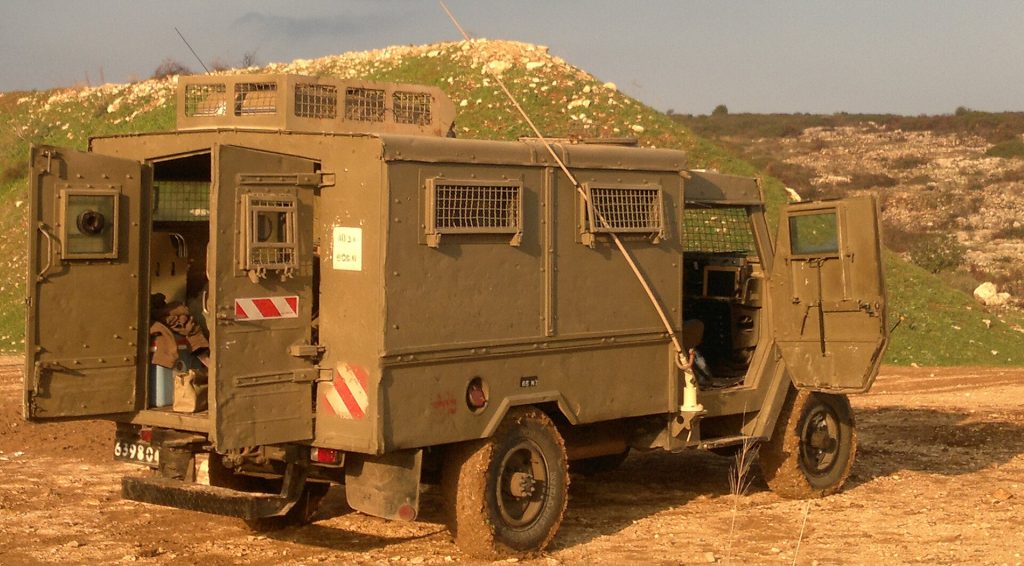
Archbishop Paolo Borgia, the Apostolic Nuncio to Lebanon, has described how a humanitarian convoy carrying food, medicine and fuel to isolated Christian communities in southern Lebanon was forced to divert after encountering Israeli military activity near the border The Apostolic Nuncio in Lebanon has described how a humanitarian convoy carrying aid to isolated Christian communities in the country’s south was forced to divert by the IDF. Archbishop Paolo Borgia, the Apostolic Nuncio to Lebanon, was leading a convoy of dozens of trucks laden with food, medicine and fuel when security concerns forced it to divert on 11 June while travelling towards the predominantly Christian village of Debel, close to the Israeli border. The convoy, organised with the support of Caritas and other Catholic agencies, had left Beirut early in the morning and was intended to reach Debel, as well as the neighbouring Christian villages of Ain Ebel and Rmeich. The mission also included displaced residents seeking to return temporarily to their homes after weeks of conflict and instability. Speaking to Vatican Media, Archbishop Borgia said the convoy had been unable to continue along its planned route after violence erupted in the area. “It was not possible to continue along the route” that had previously been coordinated with the relevant authorities, His Grace said, explaining that an alternative route had to be found after the security situation deteriorated. According to reports from those travelling with the convoy, Israeli military vehicles were present in the area and gunfire could be heard nearby. One individual quoted by AFP said: “We came face to face with several IDF tanks. We heard some gunfire directed at targets behind us. It wasn’t clear whether they were trying to intimidate us or targeting Hezbollah bases. There were moments of panic.” The convoy was delayed and ultimately forced to retrace part of its journey before obtaining fresh authorisations and proceeding by a different route. Archbishop Borgia said the aid mission eventually reached Debel after a journey lasting about 10 hours. The Archbishop stressed that the vehicles were carrying humanitarian assistance urgently needed by communities that have become increasingly cut off from the rest of Lebanon because of continuing military operations in the south. “We were all in our vehicles, in a long convoy carrying various kinds of humanitarian aid, especially food supplies, fruit, vegetables, water, as well as medicines and fuel,” the nuncio said. The aid was intended not only for households but also for local businesses and agricultural producers struggling to maintain daily life amid the conflict. Archbishop Borgia explained that supplies had been brought for village shops facing shortages, as well as for farmers and livestock breeders whose livelihoods have been severely disrupted. Although the convoy encountered danger, the nuncio said those involved had attempted to remain calm. “These are frightening situations, but one tries to deal with them calmly and keep a cool head in the moment,” the Archbishop said. There has been concern among Lebanon’s Christian communities over the security situation in the south of the country. In recent days, Israeli evacuation orders have reportedly been extended to areas containing Christian neighbourhoods that had previously not been directly affected by such measures. The city of Tyre, home to a significant Christian minority alongside its larger Muslim population, was among the areas affected by recent evacuation instructions. Residents were told to move north of the Zahrani River as Israeli military operations continued against Hezbollah positions. Israel and Hezbollah have remained locked in a cycle of confrontation despite ongoing diplomatic efforts aimed at reducing tensions across the region. The conflict along the Lebanese border has continued to produce civilian displacement and widespread disruption to normal life, particularly in villages situated close to the frontier. Archbishop Borgia indicated that the Church had no intention of abandoning the affected communities despite the dangers involved. “We are in a situation of war, but we will continue our commitment to helping the people,” Archbishop Borgia said. “I believe there will already be another convoy next week.” According to Archbishop Borgia, the June convoy marked his twentieth visit to southern Lebanon since the conflict began, comprising 17 humanitarian convoys and three pastoral visits. “It is important to be present,” His Grace said, “because this gives people the possibility of remaining in their communities and surviving.” The nuncio emphasised that the Church’s role extends beyond the delivery of material assistance. The presence of Church representatives in conflict zones also serves as a sign of solidarity with communities facing uncertainty and hardship. “With our presence, we bring the presence of the Pope, of the universal Church, and of the Lebanese Church, together with closeness and solidarity,” he said, adding that people needed “to feel understood and accompanied, embraced by the love of the Church itself”. The Church has played a significant humanitarian role throughout Lebanon’s recent crises, from the country’s economic collapse and the Beirut port explosion to repeated outbreaks of regional conflict. Catholic charities, religious orders and diocesan structures have often provided support in areas where state services have struggled to operate effectively. Southern Lebanon has long been home to some of the country’s oldest Christian communities, particularly among Maronite Catholics and Melkite Greek Catholics. Villages such as Debel, Ain Ebel and Rmeich have endured periods of conflict stretching back decades, including the Israeli occupation of southern Lebanon, the 2006 Lebanon war and subsequent border tensions. The Holy See has repeatedly called for peace in the region and for the protection of civilians regardless of religion or nationality. (photo credit: קרלוס הגדול – Own work, CC BY-SA 3.0, https://commons.wikimedia.org/w/index.php?curid=18059264 )
Jun. 16, 2026