

Latest
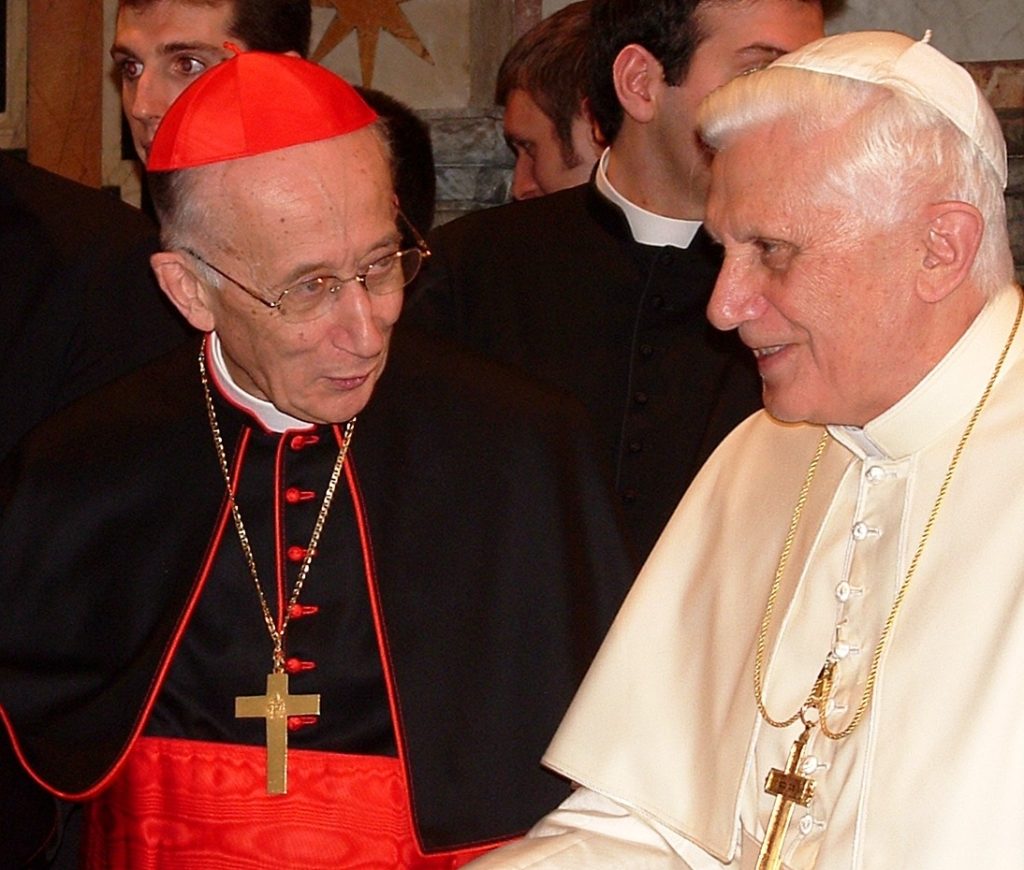
Cardinal Ruini’s testament reveals final thoughts on Pope Francis
The full testament of Cardinal Camillo Ruini has been published, including passages on Pope Francis and the post-conciliar Church that this publication can reveal some close to the late cardinal feared might never be made public. Read more. The full testament of Cardinal Camillo Ruini has been published after people close to the late cardinal expressed concern that parts of the document might never be made public. The disclosure followed the late cardinal’s death and Pope Leo XIV’s citation of the testament during his homily at Ruini’s Requiem Mass. The testament was exclusively published by Messa in Latino , which released the complete spiritual text and stated that it was doing so to prevent the document from being “cut” or amended. The revelation has taken on additional significance as AdVaticanum can reveal that there were concerns the testament would not be published in its entirety. To date, neither the Holy See Press Office nor the Vatican has done so. On good authority, this publication can reveal that people close to the late cardinal wanted the complete testament published, particularly those sections dealing with the post-Second Vatican Council Church and Pope Francis. Reflecting on the last pontificate, Cardinal Ruini expressed gratitude for what he described as the late Pope’s “extraordinary evangelising drive”, but also acknowledged a struggle with some of the directions taken by the Church in recent years. “When Pope Francis was elected, I rejoiced and, to the extent I could, immediately supported him,” the late cardinal wrote. “Even today, I rejoice and thank him for his extraordinary evangelising drive.” Yet the cardinal continued with a note of candour unusual in a spiritual testament: “I must confess, however, that I find myself in a state of unease, certainly not for personal reasons, but because I struggle to understand certain orientations that seem to reopen wounds that have barely healed since the Council. I humbly ask the Lord to convince me inwardly that the Church is His and that He Himself cares for it, beyond our human views.” Long regarded as one of the most influential churchmen of the post-war Italian Church, Cardinal Ruini was a steadfast supporter of the Second Vatican Council while also becoming one of the most prominent critics of what he viewed as distortions in its implementation. That dual concern is visible throughout the testament. Reflecting on his years as a priest in Reggio Emilia, Cardinal Ruini gave thanks for the Council itself, writing that he was grateful “for the Second Vatican Council, for having experienced it and helped others experience it joyfully in Reggio Emilia, and also for having given me the clarity and strength to oppose the post-conciliar excesses”. The cardinal presented himself as a defender of the Council who believed that some developments undertaken in its name had gone beyond the intentions of the Fathers who gathered in Rome between 1962 and 1965. The testament also sheds fresh light on Ruini’s relationship with the last three pontificates. He described St John Paul II as “a very special grace”, recalling more than two decades of close collaboration after becoming one of the Polish Pope’s most trusted advisers. “In John Paul II, I experienced your presence, Lord,” Cardinal Ruini wrote. “I was able to touch firsthand the union in prayer, the inseparability of prayer, life and apostolate, the courage of faith that guides history, and the capacity to love and forgive.” His words concerning Pope Benedict XVI were similarly affectionate. “After John Paul II, I collaborated for three years with Benedict XVI, and I thank him wholeheartedly, also for the affection he continues to show me,” the late cardinal wrote. Yet despite his immense ecclesiastical influence, the testament is notable for its intensely personal and penitential tone. Cardinal Ruini repeatedly asks forgiveness for failures, weaknesses and sins, presenting himself not as a prince of the Church but as a Christian preparing for judgement. “I confess first of all the weakness of my faith,” the former Cardinal Archpriest of St John Lateran wrote. “Despite all this, however, in the depths of my heart I have always been sustained by faith, even though, by the grace of God, I believe I have never succumbed to temptation.” The testament also reveals a recurring theme of gratitude. Cardinal Ruini meticulously recalled family members, friends, priests, collaborators and colleagues who shaped his life, from his childhood in Sassuolo to his years at the Gregorian University and the Almo Collegio Capranica, and later his service as President of the Italian Bishops’ Conference and Cardinal Vicar of Rome. At the same time, he acknowledged that the authority he exercised could sometimes be accompanied by severity. “I recognise and confess, however, that I have at times acted with substantial harshness,” he wrote, before asking forgiveness from those whom he had caused pain. In the end, however, the testament is less a political statement than a spiritual examination of conscience. Its final pages are occupied not by ecclesiastical disputes but by an appeal for mercy and perseverance. “Lord, faithful God, never tire of loving me, calling me, and converting me,” Cardinal Ruini wrote. “Father, rich in mercy, grant me and all my brothers and sisters in humanity the grace of final perseverance.”
Jun. 18, 2026
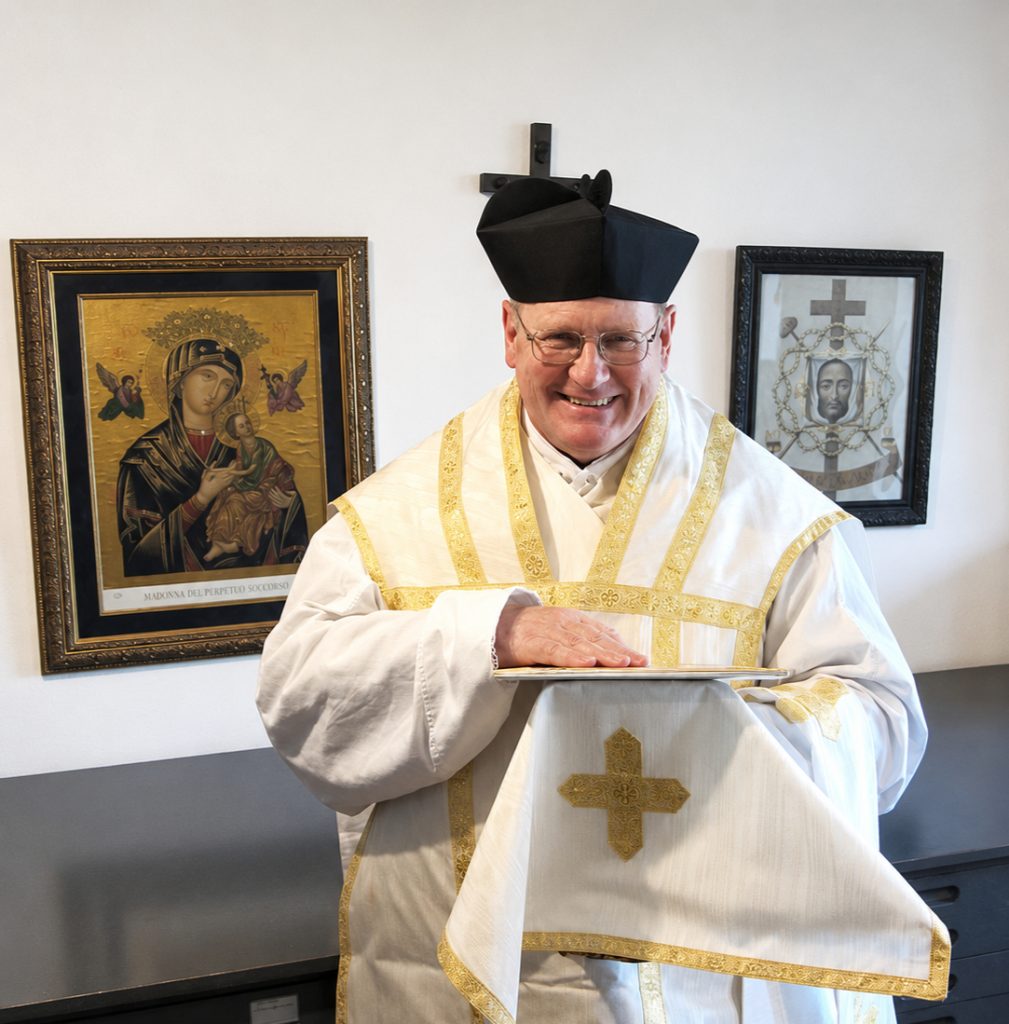
Founder of Papa Stronsay community to be consecrated bishop by sedevacantists
The founder of the Papa Stronsay-based Sons of the Most Holy Redeemer is set to be consecrated a bishop next month by sedevacantist bishops in Orkney. The ceremony will take place without a papal mandate and follows the community’s embrace of sedevacantism after years in full communion with Rome The founder of the Sons of the Most Holy Redeemer is to be consecrated a bishop next month in a dramatic escalation of the community’s break with Rome. Sedevacantist Bishop Pierre Roy announced on 18 June that Fr Michael Mary, founder and Rector Major of the Sons of the Most Holy Redeemer (FSSR), will receive episcopal consecration on 25 July at the order’s monastery in Orkney. The ceremony will take place without a papal mandate and will be attended by fellow sedevacantist bishops Bishop Rodrigo Ribeiro da Silva and Bishop Fernando Altamira as co-consecrators. Sedevacantists maintain that the papal throne (the See of Peter) has been vacant since the death or invalid election of the last legitimate pope, usually identified as Pope Pius XII, though in the case of the community of the Sons of the Most Holy Redeemer it appears to be John XXIII. They argue that subsequent popes have fallen into heresy or invalidly assumed office, rendering their elections null. As a result, sedevacantists do not believe there is currently a valid pope. They therefore reject any papal mandate or authority issued by Pope Leo XIV, viewing such directives as lacking legitimacy because the Chair of Peter is, in their view, vacant. In a lengthy letter explaining his decision, Bishop Roy said he had asked Fr Michael Mary to accept consecration “without any solicitation from the Redemptorists and despite some initial reluctance”. The announcement comes less than a year after the Transalpine Redemptorists publicly repudiated major developments in the post-conciliar Church and effectively embraced sedevacantism. Bishop Roy said he had maintained close contact with the community since June 2025 and had developed what he described as “a true communion of faith and a sincere friendship”. He argued that the geographical spread of the congregation made episcopal oversight from Canada increasingly impractical. “The Redemptorists have houses in Scotland, New Zealand, and the United States,” he wrote. “From these houses, they visit Samoa, Australia, and other places. Fulfilling my episcopal duties with the Redemptorists would require me to travel practically the entire world.” He added that shortages of clergy in his own Canadian missions meant his frequent absences were becoming difficult to sustain and that “it seemed reasonable and necessary to give the Redemptorists a bishop who could properly care for a flock that already knew the sound of his fatherly voice”. The most controversial passages of the letter concern the nature of the consecration itself. Bishop Roy explicitly acknowledged that it would take place “in the absence of an apostolic mandate”, asserting that “the See of Rome is clearly occupied by the enemies of God”. He continued: “His role will be to teach, govern, and sanctify in all fortitude and humility the flock that will gather around him.” Addressing the question of jurisdiction, Bishop Roy wrote: “I cannot grant him jurisdiction, and I fully acknowledge this. But Christ, the invisible head of the Church and source of all jurisdiction, can, and He certainly will in the limits of the present necessities of the Church, in the absence of a true Supreme Pontiff, so that he may shepherd the scattered flock that will recognise him as a Catholic bishop.” The bishop also indicated that Fr Michael Mary would be based principally in New Zealand, arguing that Oceania lacked what he regards as a traditional Catholic bishop. “Father Michael Mary will live primarily in New Zealand, where there is no traditional bishop,” he wrote. “It will therefore not be a luxury for Oceania and its 50 million souls to be able to count on the presence of a Catholic bishop.” Acknowledging that some would question the prudence of elevating a priest who had led his community into full communion with Rome in 2008 and had only recently separated from it, Bishop Roy argued that the experience had ultimately contributed to the community’s present convictions. “They could have returned to their old errors,” he wrote, “but instead chose to undertake a serious study of the Church’s situation.” He said that study had led them to “recognise the current vacancy of the Apostolic See” and to embrace what he described as “the only attitude compatible with the Catholic Faith in the face of conciliar apostasy”. Founded in 1988 by Fr Michael Mary as a traditionalist Redemptorist congregation, the community initially operated within the orbit of the Society of St Pius X following Archbishop Marcel Lefebvre’s illicit episcopal consecrations that same year. After periods in England and France, the community established itself on the island of Papa Stronsay in the Orkney archipelago, where it restored monastic life on a site associated with Christian settlement stretching back many centuries. The election of Pope Benedict XVI and his efforts to reconcile traditionalist groups proved decisive for the congregation’s future. Following the publication of Summorum Pontificum in 2007, the community sought reconciliation with the Holy See and was received into full canonical communion in 2008. The move was widely regarded at the time as one of the most significant successes of Benedict XVI’s attempt to heal divisions within the traditionalist movement. In 2012, the community received formal recognition as a diocesan institute from Bishop Hugh Gilbert of Aberdeen, apparently securing its place within the life of the Church. Questions surrounding alleged exorcisms attracted media scrutiny and diocesan concern. Reports published in New Zealand alleged that exorcisms had taken place without proper authorisation and included claims involving vulnerable individuals. Members of the community strongly disputed aspects of those allegations and rejected accusations that they had conducted major exorcisms involving minors. The controversy led to increased diocesan oversight and eventually a Vatican apostolic visitation. Although the findings of that investigation were never made public, events reached a climax in July 2024 when Bishop Michael Gielen ordered the community to leave the Diocese of Christchurch and withdrew its faculties. The bishop cited concerns relating to unity and obedience within the local Church. The congregation appealed against the decision, but the Holy See ultimately upheld the expulsion. It was during this period that relations between the community and ecclesiastical authorities deteriorated sharply. In October 2025, the Transalpine Redemptorists published an open letter explaining that they had reached the conclusion that “the Traditional Catholic Faith” was incompatible with what they described as “the new, modern Church, the fruit of the Second Vatican Council”. Referring to ecclesiastical authority, the Redemptorists stated: “When a superior departs from his own obedience to Christ the King, his command is no longer the arm of Christ but the gesture of a man.” They added: “We must obey God before man.” The declaration drew a swift response from Bishop Hugh Gilbert, whose Diocese of Aberdeen includes Papa Stronsay. The bishop said the diocese “deeply regrets the tone, direction and key elements of this Letter” and stated that it was “incompatible with the Catholic sense of the Church’s unity”.
Jun. 18, 2026
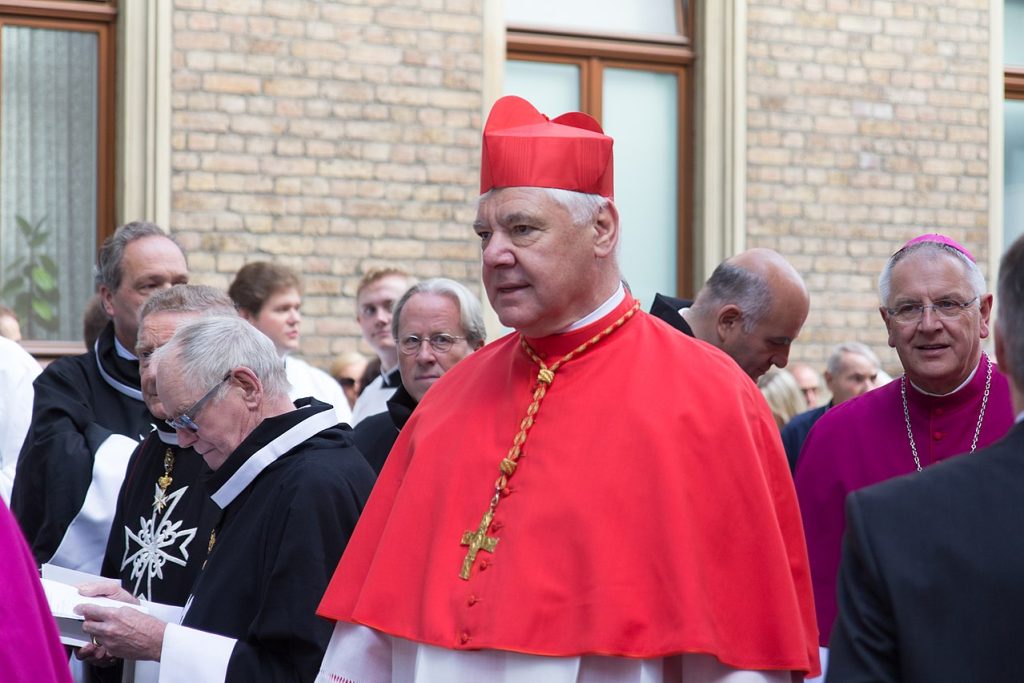
Cardinal Müller’s warning to Europe: recover your Christian roots or face decline
Cardinal Gerhard Müller used a Rome conference organised by I RadicaTi dal diritto naturale alla legge to deliver a warning about the EU and the future of Europe Cardinal Gerhard Müller has warned that Europe risks losing its identity and even its future unless it rediscovers the Christian foundations upon which it was built. The former Prefect of the Congregation for the Doctrine of the Faith was the principal speaker at a conference in Rome on 17 June entitled “Eurogender Diktat: Christian Roots, Religious & Educational Freedom at Risk in the EU”, organised by the newly established Catholic association I RadicaTi dal diritto naturale alla legge and hosted at the Chamber of Deputies by Massimo Milani, a member of the governing Brothers of Italy party. The event offered a sweeping critique of secularism, gender ideology, globalism and the growing ideological conformity within the European Union. The conference took place less than 24 hours after the death of Cardinal Camillo Ruini, the influential former president of the Italian bishops’ conference. His passing cast a shadow over the proceedings and was referenced repeatedly by speakers, who presented his legacy as an example of Catholic engagement in public life. Opening the conference, the association’s president, Luigi Trisolino, recalled Cardinal Ruini’s call for Catholics to remain active in politics despite their increasingly minority status in Europe. “Ruini told Catholics: even if you are now a minority in Europe, at least be a creative minority,” he said. “And that is what we will try to do together this evening.” The conference was convened to discuss the implications of recent European legislation and broader cultural developments within the EU. Speakers argued that contemporary interpretations of anti-discrimination measures risk undermining religious liberty and freedom of expression. Trisolino claimed that European institutions had increasingly embraced gender ideology, describing it as hostile to Christianity and traditional understandings of the family and human identity. He argued that recent European measures created an unequal system of protection based on identity categories and warned that criticism of progressive social policies could increasingly be treated as a form of discrimination. “Sacred religious and educational freedoms are put at risk by this illiberal EU measure,” he said, adding that those who defended Europe’s Christian roots were frequently portrayed as opponents of progress. Massimo Milani, the host of the event, whose party forms part of Prime Minister Giorgia Meloni’s governing coalition, likewise argued that many of the liberties celebrated by modern European societies were rooted in Christianity. “If today we in Europe and in the West in general can talk about human rights, of personal liberties, we must remember that if this is possible it is because we live in a society, in a free culture that owes this freedom precisely to the religious principles that have informed our culture for centuries,” he said. The strongest intervention of the evening, however, came from Cardinal Müller, who delivered an extensive address examining Europe’s religious, cultural and political trajectory since the Second World War. Drawing on the thought of figures including Konrad Adenauer, Alcide De Gasperi, Robert Schuman, Joseph Ratzinger and Benedetto Croce, he argued that Europe’s future could not be separated from its Christian inheritance. The German cardinal argued that the architects of European integration envisaged a Europe deeply conscious of its Christian foundations. Christianity, he said, had not merely influenced European culture but had provided the moral basis upon which concepts such as human dignity, conscience, freedom and equality had developed. Europe, he argued, was not simply a political or geographical project but a civilisation shaped by Christianity. Referring to the continent’s gradual Christianisation and the formation of a common Christian culture, he said Europe had become a historical unity through a shared understanding of the human person rooted in the Gospel. “On this foundation stands today the EU,” he said, warning that without the Gospel Europe would “suicidally give itself over to its downfall”. The cardinal repeatedly returned to the theme of Christian identity, arguing that Europe’s present crisis stemmed from a deliberate attempt to sever the continent from its religious roots. Among his sharpest criticisms was the state of the family. Cardinal Müller said Europe was experiencing “the dissolution of marriage and the family and of personal identity”, presenting this as one of the defining features of the continent’s cultural crisis. He also criticised gender ideology and attempts to redefine human nature itself. Warning against transhumanist and post-human philosophies, he criticised what he called a “Jacobin-like gender transformation contra to the natural family and personal identity”. He also accused European institutions and some national governments of promoting what he termed a “gender-totalitarianism”, warning that democratic societies risked drifting towards what the nineteenth-century French thinker Alexis de Tocqueville described as a “soft despotism”. Rather than relying on overt repression, Cardinal Müller argued, such systems sought to shape public behaviour through bureaucracy, regulation and cultural pressure. He claimed this process could already be seen in parts of Europe through policies promoting gender ideology and restricting dissent from progressive orthodoxies. His Eminence’s criticism of the European Union became increasingly direct as the address progressed. He singled out the Digital Services Act and broader regulatory structures as examples of excessive bureaucratic intervention. Referring to what he called the “Orwellian fantasy” of surveillance and content regulation, he warned against allowing political institutions to assume responsibility for determining truth and falsehood in public discourse. Governments, he argued, should pursue the common good rather than claim authority over truth itself. The cardinal’s criticisms extended beyond the EU and governments to international organisations and networks that he associated with globalist thinking. Cardinal Müller referred to the “globalists of the New World Order” and criticised the influence of organisations such as the World Economic Forum and the Club of Rome. The Prefect Emeritus argued that such elites were advancing an ideological programme that marginalised Christianity while promoting secular and technocratic approaches to society. He claimed Europe was increasingly being transformed into “an experimental field for atheistic woke ideology”, in which religious belief was gradually pushed from public life and reduced to a private matter. The cardinal further expressed concern about migration, arguing that Europe faced significant cultural and demographic challenges. He claimed that large-scale immigration had been encouraged by political leaders without adequate consideration of integration or social cohesion. Throughout the address, Cardinal Müller drew heavily on the Catholic intellectual tradition, citing figures including Benedict XVI, Joseph Ratzinger, Marcello Pera, Benedetto Croce and Reinhold Niebuhr. He argued that faith and reason must work together if societies were to address the ethical challenges posed by technological developments, including artificial intelligence. Cardinal Müller also pointed to Pope Leo XIV’s encyclical Magnifica Humanitas and Benedict XVI’s Regensburg Lecture as guides for addressing the moral questions raised by emerging technologies. Echoing themes found in both texts, he warned that technological progress must remain subject to moral truth and the dignity of the human person. “We must not become dogs to the masters of AI,” he said, arguing that faith and reason together offered the only adequate framework for ensuring that humanity remained master of its inventions rather than their servant. Quoting Benedict XVI’s reflections on reason and faith, Cardinal Müller maintained that Europe needed a broader understanding of reason capable of engaging questions of morality, truth and human dignity rather than reducing human knowledge solely to what could be scientifically verified. He concluded by urging Europeans to recover confidence in their Christian heritage rather than abandon it. The continent’s future, he argued, depended upon recognition of natural moral law and universal human rights rooted in the dignity of every person.
Jun. 18, 2026
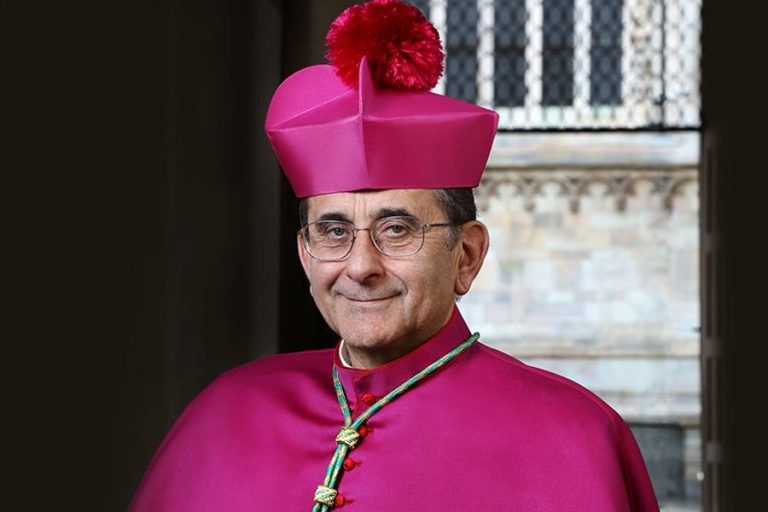
Archbishop of Milan criticised after LGBT Mass attendee receives Communion in ‘Ah Men’ T-shirt
A Mass celebrated by the Archbishop of Milan for an LGBT Catholic group has attracted criticism after images emerged of a participant wearing a rainbow-themed “Ah Men” T-shirt, a play on the word “Amen”, and later claiming he repeated the phrase while receiving Holy Communion The Archbishop of Milan has faced criticism after celebrating a Mass for an LGBT Catholic group on the Solemnity of the Sacred Heart of Jesus. Archbishop Mario Delpini presided at the Mass on 27 June at the Church of San Carlo al Lazzaretto in Milan, a church that has hosted gatherings of Catholics who experience same-sex attraction for several years. The event took place a week after the archbishop cancelled the annual Corpus Christi celebration, stating that “overtourism” and “heavy traffic” had made the prayerful nature of the event impossible. The liturgy was organised by Gruppo del Guado, an association founded in the 1980s for homosexual Catholics. Promotional material for the event featured a church rendered in rainbow colours and highlighted the participation of the Archbishop of Milan. According to reports in the Italian Catholic press, the Mass took place during Milan’s Pride celebrations and attracted around 50 participants. Local media reported that those present expressed appreciation for the archbishop’s attendance. During his homily for the feast of the Sacred Heart, Archbishop Delpini reflected on God’s love and election of His people. Quoting Scripture, he told those gathered: “The Lord has bound himself to you and chosen you not because you are the most numerous people; you are the smallest, but because he loves you.” The archbishop’s presence at the celebration quickly became the subject of criticism in parts of the Italian Catholic media, where questions were raised about the timing of the event and its association with a group dedicated to ministry among Catholics who identify as homosexual. The controversy intensified after images circulated on social media showing a participant wearing a T-shirt featuring a rainbow-coloured image of Jesus and the phrase “Ah Men”, a play on the liturgical response “Amen” and a reference to attraction between men. The individual later stated on Instagram that he had repeated the phrase while receiving Holy Communion from Archbishop Delpini. The incident drew particular criticism because it occurred during the Eucharistic celebration and on the Solemnity of the Sacred Heart of Jesus, one of the principal feasts of the Church’s liturgical year. The Church of San Carlo al Lazzaretto, where the Mass was celebrated, is situated in the Porta Venezia district of Milan, an area known for its association with the city’s LGBT community. The church has become a regular meeting place for Catholics with same-sex attraction, who gather there for prayer and Mass throughout the year. The latest controversy is not the first time Archbishop Delpini and the Archdiocese of Milan have faced scrutiny over questions relating to homosexuality and pastoral outreach. In a pastoral proposal for 2023–24, the archbishop called for particular attention to be given to “accompanying and understanding the experience of love and the different nuances of attraction, both to people of different genders and to people of the same gender”. The document stressed the importance of accompaniment and listening, while encouraging the Christian community to “assume responsibility for teaching about love” in all its dimensions. The guidance was criticised by some Catholic commentators, who argued that the language risked creating confusion about the Church’s teaching on homosexuality. Riccardo Cascioli, editor of the Italian Catholic newspaper La Nuova Bussola Quotidiana, wrote at the time that the Archdiocese of Milan had “fully embraced the line drawn by the gay lobby that has now taken command of the Catholic Church”. Referring to the pastoral emphasis on accompaniment, he questioned where such accompaniment was intended to lead. “Certainly, everyone must discover ‘his or her own vocation of love’, but this love is such a vague concept that anything can be put into it,” he wrote. The Archdiocese of Milan also attracted criticism in 2023 after a prayer vigil against “homo-transphobia” was held in one of its churches during Pride events in the city. Antonio Brandi, president of the pro-life organisation Pro Vita & Famiglia, questioned the decision and accused the event of promoting ideas contrary to Catholic teaching. “How can a Catholic church host an event that, while understandably praying against all discrimination, endorses theories that the Church rejects and that have no scientific basis?” he asked. Brandi also criticised material distributed during the vigil and objected to the inclusion of incidents that organisers cited as examples of “homo-transphobia”. The archdiocese defended its approach and rejected accusations that it had departed from Catholic teaching. Archbishop Delpini has also recently defended initiatives aimed at fostering dialogue with people of other faiths. Earlier this year, he responded to criticism after Muslim children attending summer activities at a parish oratory were given an opportunity to pray. The archbishop said the aim had been “to pay attention to non-Christian children” and ensure they were not present “only to play”, but were also able to pray. “There are also those who would like to teach me how to be a bishop,” he said. Appointed Archbishop of Milan by Pope Francis in 2017, Delpini leads the largest diocese in Italy and one of the largest in Europe. The see has historically been among the most prominent in the Catholic Church and was once occupied by Giovanni Battista Montini before his election as Pope Paul VI. The Archdiocese of Milan, which follows the distinctive Ambrosian Rite, has long been regarded as one of the most influential dioceses in the Catholic world. Its archbishops have frequently played a leading role in the life of the Church in both Italy and internationally. The archdiocese has not issued a public statement addressing the controversy.
Jun. 18, 2026
Father João Silveira denied permission to celebrate Mass in Ávila
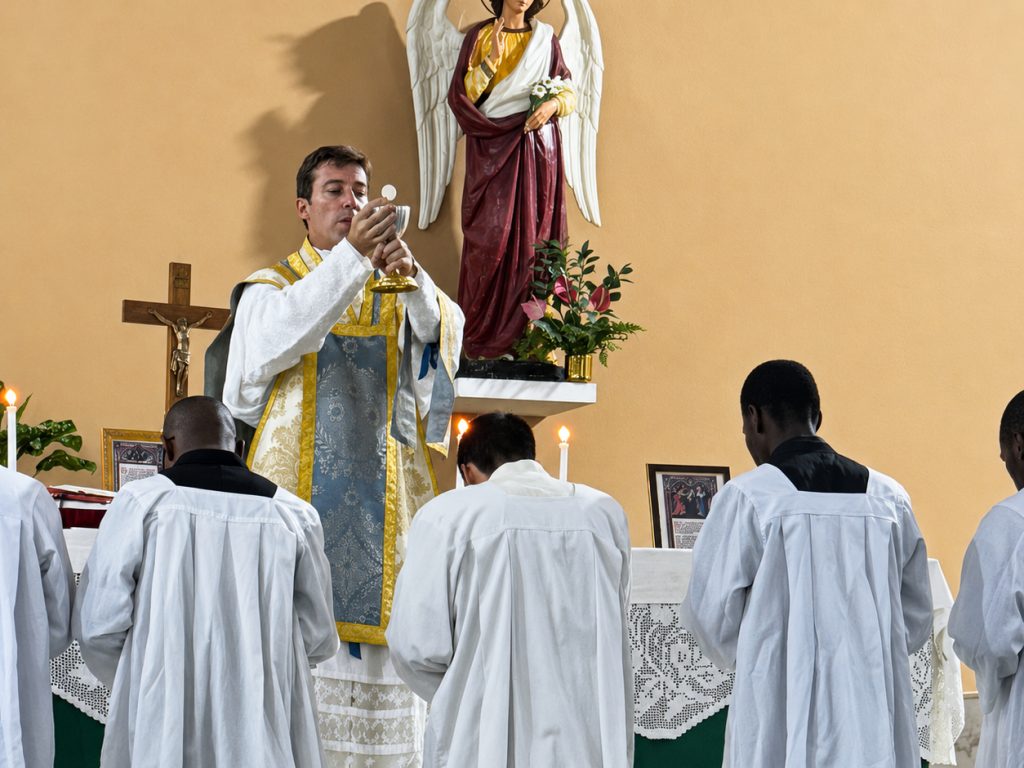
Father João Silveira was denied permission to celebrate Holy Mass in Ávila after diocesan officials told him the local bishop had said: “That Mass is prohibited in this diocese” Father João Silveira, a Portuguese missionary priest, has been denied permission to celebrate Holy Mass at a chapel in Ávila, Spain. On 15 June, Fr Silveira was leading a group of pilgrims from the United States who had specifically requested his accompaniment because he exclusively celebrates the older form of the Roman Rite. When they arrived in Ávila, a Spanish city north-west of Madrid, the priest arranged to use a chapel to celebrate Holy Mass. He was then informed that, in order to do so, he would need authorisation from the local bishop, Bishop Jesús Rico García. As the Mass was private, Fr Silveira did not require permission. However, out of respect for the community allowing him to use the church, he agreed to seek it. When Fr Silveira arrived at the bishop’s residence with his celebret to demonstrate that he was a Catholic priest in good standing, he was received by the Vicar General of the diocese. After waiting for some time, he was informed by a diocesan employee that he did not have permission to celebrate the Mass and that the bishop had said: “That Mass is prohibited in this diocese.” Fr Silveira was then left to show himself out. Ordained a priest by Pope Saint John Paul II in 1979 and appointed bishop by Pope Francis in 2023, Bishop Jesús Rico García has held a variety of positions across the Spanish-speaking Church, including Spiritual Director of the Pontifical Spanish College of St Joseph and Rector of the Mosén Sol de México Seminary. He made local headlines when he used his episcopal consecration to call for a “Church open to all”. Responding to the situation, Fr Silveira asked on X: “What harm could possibly come to the world?” He also pointed out that the rite is “exactly the same one used in the convents of the Discalced Carmelites, stemming from the reform of Saint Teresa of Ávila and Saint John of the Cross”, and asked how it could have been “good for those great saints, but now it is bad for us?” The priest also pointed to Canon 932 §1, which states: “The Eucharistic celebration must be carried out in a sacred place unless, in a particular case, necessity requires otherwise; in that case, it must be celebrated in a decent place.” He argued that, in this case, the bishop had created a “necessity”, resulting in Holy Mass being celebrated in a hotel room rather than a church. Fr Silveira said this was not the first time he had been subject to such a ruling and stated that “Pope Leo must act quickly to put an end to these abuses of authority”. Fr Silveira is well known and respected among Catholics who attend the Traditional Latin Mass. As a missionary priest, he travels throughout the world to offer the Traditional Latin Mass, particularly in places where it is not readily available. His work regularly takes him to remote parts of Africa and Asia, where the Church is growing rapidly. At the time of writing, the priest’s post had been viewed more than 200,000 times. The Diocese of Ávila has not responded to AdVaticanum’s request for comment. However, speaking to the Spanish publication Religión Confidencial, the bishopric cited Pope Francis’s motu proprio Traditionis Custodes, explaining that “it clearly specifies that ‘the liturgical books promulgated by the Holy Pontiffs Paul VI and John Paul II, in conformity with the decrees of the Second Vatican Council, are the sole expression of the lex orandi of the Roman Rite’ (Article 1) and that ‘the diocesan bishop, as moderator, promoter, and custodian of all liturgical life in the particular Church entrusted to him, is responsible for regulating liturgical celebrations in his own diocese. Therefore, it is within his exclusive competence to authorise the use of the 1962 Missale Romanum in the diocese, following the guidelines of the Apostolic See’ (Article 2).” Commenting further on the situation, Fr Silveira wrote: “Of course, the bishop is the moderator of the liturgy in his diocese. However, among these powers of moderation, or organisation, the power to prohibit the Traditional Mass at his own discretion is not included. To do so is an abuse of authority, as can be understood from the arguments given earlier.” The priest quoted Pope Benedict XVI’s well-known assessment that “what was sacred for previous generations remains sacred and great for us as well, and cannot all of a sudden be entirely forbidden or even considered harmful”. He also noted that the same conclusion had been reached by the commission of nine cardinals convened in 1986 by Pope Saint John Paul II. He further argued that, because this was a private Mass, there was even less justification for prohibiting it. Fr Silveira asked: “It is not strange that ‘foreign’ priests pass through there: it is something that happens continuously. Would a priest of the Byzantine Rite also have been prohibited from celebrating?”
Jun. 18, 2026
Pope Leo’s SSPX appeal reveals the real fault line
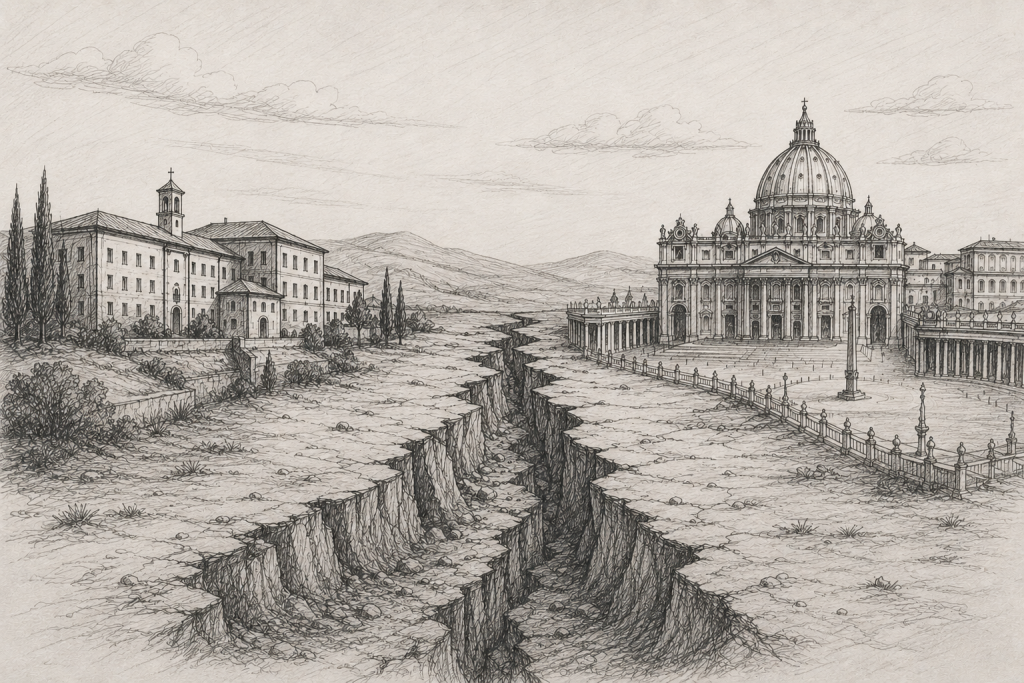
Pope Leo XIV has urged the SSPX not to proceed with its planned episcopal consecrations on 1 July. Yet his remarks may have revealed something more significant: where Rome believes the real obstacle to reconciliation lies. Analysis by Niwa Limbu Pope Leo XIV has made a fresh appeal to the Society of St Pius X (SSPX) to abandon plans to consecrate four bishops without papal approval. Speaking to journalists outside Villa Barberini in Castel Gandolfo on 16 June, the Pope said he was considering making one final request to the traditionalist society before the planned consecrations on 1 July at the SSPX seminary in Écône, Switzerland. “We have invited them, and I am still considering making another appeal, to say: ‘Do not do this. Let us try to live communion in the Church,’” the Pope said. “But it is their choice. They must understand what it means for them and for the Church.” The remarks represent Pope Leo’s clearest public intervention since the SSPX announced earlier this year that it intended to proceed with the episcopal consecrations despite the absence of a pontifical mandate. The Society has argued that the measure is necessary to ensure the continuation of its sacramental and apostolic work. Its leadership has maintained that an “objective state of grave necessity” exists within the Church, requiring the appointment of new bishops to safeguard the future of the fraternity’s ministry. The Vatican, however, has repeatedly expressed concern that episcopal consecrations carried out against the explicit will of the Roman Pontiff would constitute a grave rupture in ecclesial discipline. The prospect of such a step led to the crisis of 1988, when Archbishop Marcel Lefebvre consecrated four bishops without papal approval, resulting in Rome declaring that a schismatic act had taken place. Pope Leo indicated that the dispute is not merely procedural but touches on deeper theological questions. Referring to the SSPX’s longstanding criticisms of the Second Vatican Council, he said division within the Church remained “a painful matter”, adding that the Society continued to reject “certain fundamental elements of the Church, beginning with various points of the Second Vatican Council”. His Holiness added: “If they make those choices, I am sorry. But we must move forward.” The Pope’s comments come after months of exchanges between the Holy See and the Society. Earlier this year, the SSPX confirmed its intention to proceed with the consecrations, while subsequent contacts between Rome and the fraternity failed to produce an agreement. On 12 February, a meeting took place in Rome between SSPX Superior General Fr Davide Pagliarani and Cardinal Víctor Manuel Fernández, Prefect of the Dicastery for the Doctrine of the Faith. The encounter, described by the Vatican as “cordial and sincere”, saw Cardinal Fernández propose a structured path of theological dialogue aimed at addressing unresolved doctrinal questions, particularly those concerning the Second Vatican Council and the “minimum requirements necessary for full communion”. Cardinal Fernández made clear that any such dialogue could only proceed if the SSPX agreed to suspend the planned 1 July consecrations. He warned that proceeding without a papal mandate would constitute a “decisive rupture of ecclesial communion (schism)” with grave canonical consequences, including automatic excommunication. In a letter dated 18 February and made public the following day, Fr Pagliarani responded that, while the SSPX welcomed the idea of renewed doctrinal discussions in principle, it could not accept the condition of postponing the consecrations. “We both know in advance that we cannot agree doctrinally, particularly regarding the fundamental orientations adopted since the Second Vatican Council,” he wrote, while renewing the Society’s request for a personal audience with Pope Leo XIV. Subsequent exchanges failed to bridge the gap. In May, the Vatican reiterated its warnings, and the SSPX published a “Declaration of Catholic Faith” outlining what it considers the minimum necessary for communion while reiterating its concerns about post-conciliar errors. On 26 May, the Society publicly named the four priests slated for consecration, framing the act as a necessary service to souls amid the ongoing crisis in the Church. As the 1 July date at the Écône seminary approaches, negotiations appear effectively stalled. The SSPX maintains its position that an “objective state of grave necessity” justifies the consecrations to ensure the continuation of its sacramental ministry, while the Vatican insists on canonical obedience and prior doctrinal resolution. Generally speaking, Pope Leo XIV addressed the Society of St Pius X in a manner that was pastoral, regretful yet resolute, characteristic of his style thus far. The delivery was conversational and non-confrontational, yet doctrinally unambiguous. By speaking informally to journalists rather than issuing a formal Vatican statement, the Pope signalled personal investment without escalating the matter into a formal magisterial intervention. This approach is indicative of how Vatican communications have evolved in handling such matters. Most importantly, it marks a change from previous pontificates. It represents the first time a Pope has offered an off-the-cuff public comment on the SSPX situation in the lead-up to planned episcopal consecrations. By contrast, there was no specific public comment by Pope John Paul II on the planned 1988 SSPX episcopal consecrations prior to Archbishop Lefebvre’s announcement and the immediate lead-up in early June 1988. What is really happening remains unclear, with little clarified in the public exchanges between Rome and the Society. The Pope’s remarks reflect this ongoing and opaque reality. For many hoping for a resolution to the SSPX question, the latest developments will bring both frustration and renewed determination. The Pope’s sorrow is evident and more irenic than some had feared. Yet the public emphasis on Vatican II as the fault line confirms long-held suspicions. Rome still views critiques the of post-conciliar Church as the core obstacle, not merely Lefebvrist intransigence. If the SSPX holds to what the Church taught before Vatican II, and Leo indicates that it cannot be accepted because of what Vatican II taught, then there is a perceived mutual exclusivity between what Catholicism was and what Catholicism is. How can continuity be maintained when pre-conciliar teachings appear at odds with the post-conciliar emphases now presented as essential?
Jun. 17, 2026