Pope Leo XIV has approved a new statute for the Pontifical Commission for the Protection of Minors, strengthening the Vatican body’s role in promoting safeguarding standards across the Church.
The revised statute, approved ad experimentum for three years, was promulgated through a rescript signed by Cardinal Pietro Parolin, the Vatican Secretary of State, following an audience with the Pope on 20 May. It replaces the commission’s previous governing norms issued in 2015 and aligns its work with the reforms of the Roman Curia introduced under the apostolic constitution Praedicate Evangelium.
Among the most significant changes is the formal requirement that the commission prepare an annual report on safeguarding policies and initiatives throughout the Church. The report will be submitted directly to the Pope and may be published with his consent.
The commission said the annual review is intended to provide “a reliable account of the Church’s policies and initiatives for protection” while also identifying shortcomings and proposing improvements. Drawing on information supplied by Vatican departments, bishops’ conferences, religious institutes and other ecclesiastical bodies, it is expected to become one of the principal instruments through which safeguarding practices are monitored at a global level.
The new statute also gives the commission a more clearly defined role in helping dioceses, episcopal conferences, Eastern Catholic Churches and religious congregations develop and update safeguarding guidelines. It emphasises the need for accessible reporting mechanisms and support structures for victims and survivors of abuse.
Under the revised norms, the commission is tasked with encouraging the establishment of stable and easily accessible systems through which allegations of abuse can be reported. It is also instructed to promote centres where victims can receive support, spiritual assistance, and medical, therapeutic and psychological care.
The statute further provides for intervention when safeguarding systems are judged to be inadequate. Article 6 states that in cases involving “repeated violations” of safeguarding norms or “serious deficiencies” in local reporting structures, the commission may submit assessments and recommendations to the competent dicasteries of the Holy See so that they can exercise their responsibilities.
While the commission remains an advisory body rather than a governing authority, the provision establishes a clearer pathway through which concerns about safeguarding failures can be communicated to Vatican departments with disciplinary or supervisory powers.
The revised text also envisages a role for the commission during bishops’ ad limina visits to Rome. These regular visits, during which bishops meet the Pope and Vatican officials to discuss the state of their dioceses, may now include discussions concerning safeguarding conditions and the implementation of protection measures.
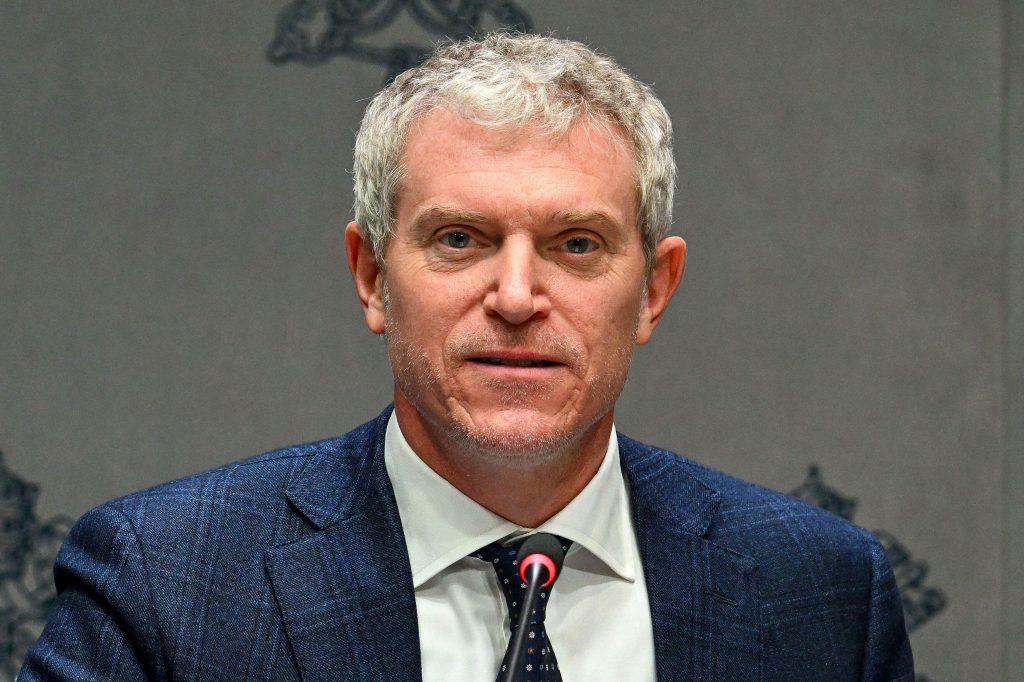
Archbishop Thibault Verny, president of the Pontifical Commission for the Protection of Minors, welcomed the publication of the new statute and said it demonstrated a growing commitment to safeguarding throughout the life of the Church.
“The Statutes mark an important step in deepening our shared responsibility to protect and care for the most vulnerable,” the Archbishop said.
He continued: “They reflect listening to victims and survivors, to safeguarding experts, and to the experience of local Churches, and reaffirm that safeguarding remains a central priority.”
The commission said the revised statute strengthens its operational effectiveness while maintaining an emphasis on approaches informed by the experience of victims and survivors. It added that the new framework reinforces its role in promoting “accountability, transparency and good safeguarding practices globally”.
The document also clarifies the commission’s relationship with the Dicastery for the Doctrine of the Faith, the Vatican department responsible for handling allegations of clerical sexual abuse.
The commission is formally established within the dicastery while retaining its own distinct mandate. The two bodies will exchange information, collaborate on safeguarding methodologies and training programmes, and work together in preparing the annual safeguarding report.
To facilitate cooperation, either the president or secretary of the commission will serve as a member of the Dicastery for the Doctrine of the Faith for the duration of his mandate, while the dicastery may appoint observers to the commission’s plenary assemblies.
The commission itself may consist of up to 23 members appointed by the Pope for renewable five-year terms. Members may be clerics, religious or lay people and are chosen from different countries on the basis of their expertise, professional competence and experience in safeguarding.
The publication of the statute comes more than a decade after Pope Francis established the Pontifical Commission for the Protection of Minors in 2014. The commission was originally created to advise the Pope on safeguarding policies and to help develop a culture of prevention throughout the Church. Its work has included producing safeguarding guidelines, promoting training initiatives and supporting local Churches in developing procedures for handling allegations of abuse.
Its history has not been without difficulties. Over the years, some members expressed frustration at limitations on its authority and the pace of reform. Questions were also raised about how effectively recommendations were being implemented in different parts of the world.
Nevertheless, the commission has gradually become more closely integrated into the structures of the Roman Curia. In 2022, under Praedicate Evangelium, it was formally placed within the Dicastery for the Doctrine of the Faith while retaining direct access to the Pope.
Although the revised norms do not create new judicial powers, they establish a more structured framework for gathering information, identifying weaknesses and promoting best practice across the Catholic world.