The full calendar for Pope Leo XIV’s Extraordinary Consistory has been revealed.
Documents circulated to participants and published by the Italian blog MessainLatino show that the two-day meeting on 26 and 27 June will focus on the implementation of the Synod, the Church’s missionary mission and Pope Leo’s recent encyclical Magnifica Humanitas.
While the broad themes had already been disclosed to the press, the additional documents reveal strict rules governing interventions, the drafting of reports and communications with the media.
The gathering will begin on the morning of 26 June with Mass in St Peter’s Basilica celebrated by Pope Leo XIV. Cardinals are due to assemble beforehand in the Chapel of St Sebastian before proceeding to the liturgy. Following the Mass, participants will move to the Paul VI Hall, where documentation and identification badges will be distributed before the formal opening of proceedings.
The first working session, entitled “In What World Are We Called to Proclaim the Gospel?”, will begin with the singing of the Veni Creator Spiritus, an address by Cardinal Giovanni Battista Re, Dean of the College of Cardinals, and introductory remarks by the Pope.
Cardinals will then hear a biblical meditation before breaking into discussion groups. They will be asked to reflect on “what sufferings, tensions and questions” are most urgently affecting the peoples and ecclesial communities entrusted to their care, and to identify signs of hope, fidelity to the Gospel and possibilities for reconciliation.
The afternoon session, entitled “The Culture of Power and the Civilisation of Love”, will draw directly upon Chapter Five of Magnifica Humanitas. Cardinals will be invited to consider how global conflicts and divisions affect both local Churches and wider society, while discussing what “languages, attitudes and practices” might contribute to reconciliation and peace.
A third session on the morning of 27 June will focus on what organisers describe as “The Construction Sites of Our Time”. Using the introduction and conclusion of Magnifica Humanitas as points of reference, participants will discuss social, cultural and ecclesial fractures that make it more difficult to pursue the common good. They will also examine expectations emerging from ordinary Catholics and wider society and consider what support local Churches may require in responding to contemporary challenges.
The final session will be devoted to the implementation of the Synod. Cardinals will receive an update on preparations for the Synodal Assemblies planned for 2027 and 2028 before participating in an open dialogue with Pope Leo XIV. The programme concludes with a final address by the Pope and the singing of the Te Deum, before a dinner with the Holy Father in the Paul VI Hall.
The accompanying confidential note sheds considerable light on how Pope Leo intends the discussions to be conducted.
According to the document, the Pope wishes to draw upon “the wealth of experience and wisdom present in the College of Cardinals” and regards the meeting as an opportunity for “fraternal discussion” on the principal challenges facing the Church’s life and mission.
Participants have been divided into twenty discussion groups. Nine groups consist of cardinal electors serving as diocesan ordinaries, together with apostolic nuncios and retired ordinaries. The remaining eleven groups are composed of members of the Roman Curia and cardinals over the age of eighty.
The organisers state that this structure demonstrates the Holy Father’s desire to give particular attention to the experiences of local Churches throughout the world and to ensure that perspectives from different continents and ecclesial contexts are heard.
Each group will be led by a chairman responsible for moderating discussions and ensuring that time limits are respected. A secretary will be tasked with collecting contributions and preparing a final report on behalf of the group.
The discussions themselves will follow a carefully defined three-stage methodology.
In the first phase, each cardinal will be permitted to speak for a maximum of three minutes while responding to the questions assigned to the session.
In the second phase, participants will be allowed a further intervention of no more than two minutes. Rather than introducing new proposals, they will be expected to identify the most important themes that emerged during the earlier round of discussion.
The third phase will involve the preparation of a report summarising the principal points raised. The secretary will draft the text with assistance from the other members of the group before it is approved and submitted electronically to organisers.
The reports will then form the basis of plenary discussions. Groups composed of cardinal ordinaries will present their conclusions to the assembly, while the remaining groups will also be given an opportunity to report on their deliberations. Presentations will be limited to three minutes.
The confidential note stresses that Pope Leo attaches particular importance to these plenary exchanges. Time has been reserved at the conclusion of each session for additional personal interventions, while cardinals may also submit written observations of up to two pages.
One of the most notable features of the programme is the final open dialogue with the Holy Father. Cardinals will be able to address Pope Leo directly, although contributions are again expected to remain within a three-minute limit.
The organisers emphasise that disagreements should not be suppressed. “Tensions and disagreements should not be avoided,” the note states, provided they are addressed “with respect and fraternal affection”. Moderators have nevertheless been instructed to enforce speaking limits strictly in order to ensure broad participation.
The documents also impose strict confidentiality requirements on the Vatican press corps.
Cardinals have been asked not to issue statements to journalists during the course of the consistory. While a press conference will be held after the meeting concludes, participants are specifically instructed not to reveal the identity of speakers when discussing the proceedings.
The note further establishes confidential channels through which cardinals may communicate privately with the Pope. Contributions submitted through these channels will not be included in summaries of the discussions and will be accessible only to the Holy Father.
The Extraordinary Consistory will conclude on 29 June when cardinals join Pope Leo for Mass marking the Solemnity of Saints Peter and Paul. Metropolitan archbishops appointed during the past year will receive the pallium during the liturgy.
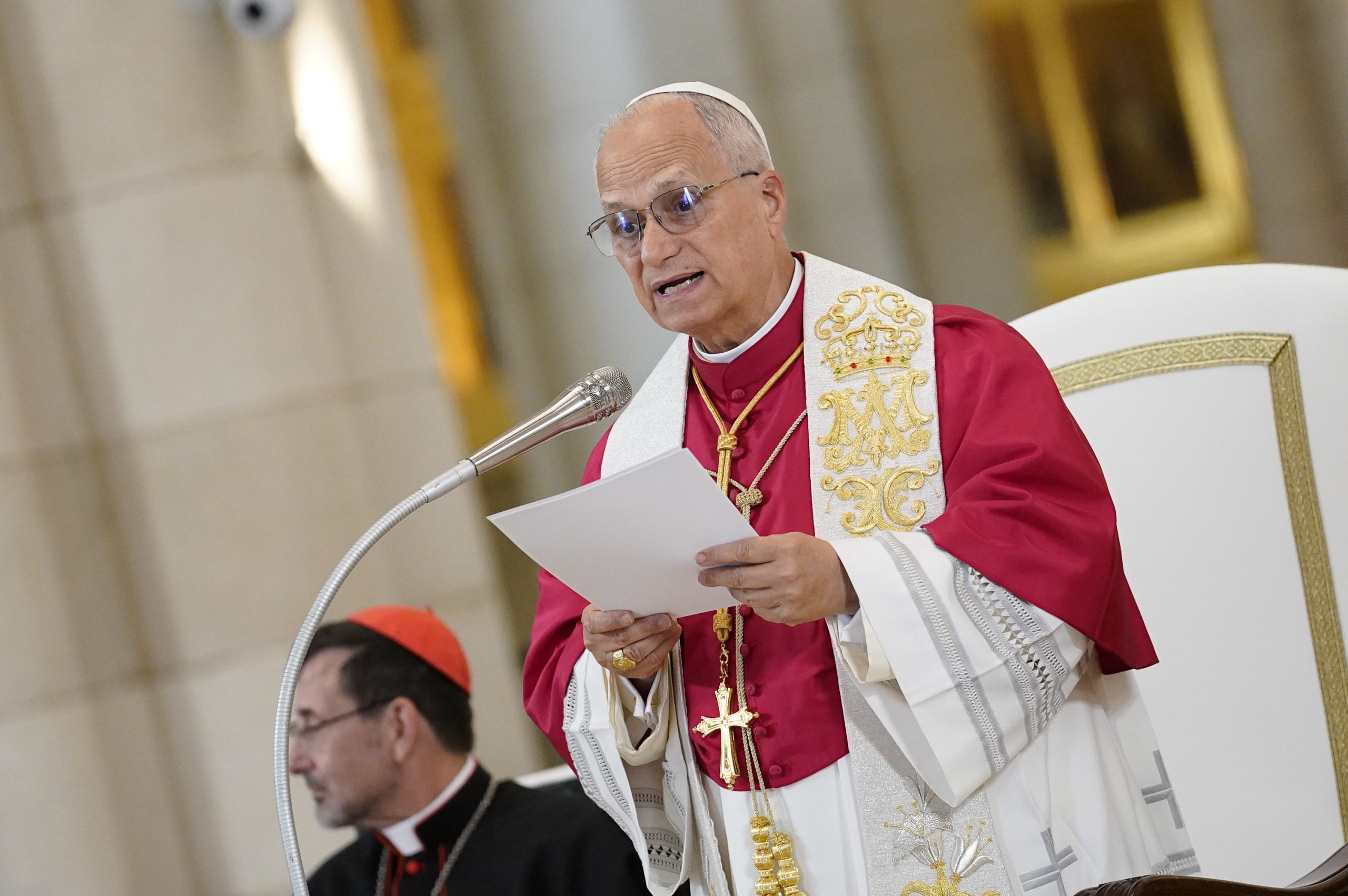
(Photo credit: Á. Pérez Meca/EUROPA PRESS)