

Latest
The enduring sin of pride
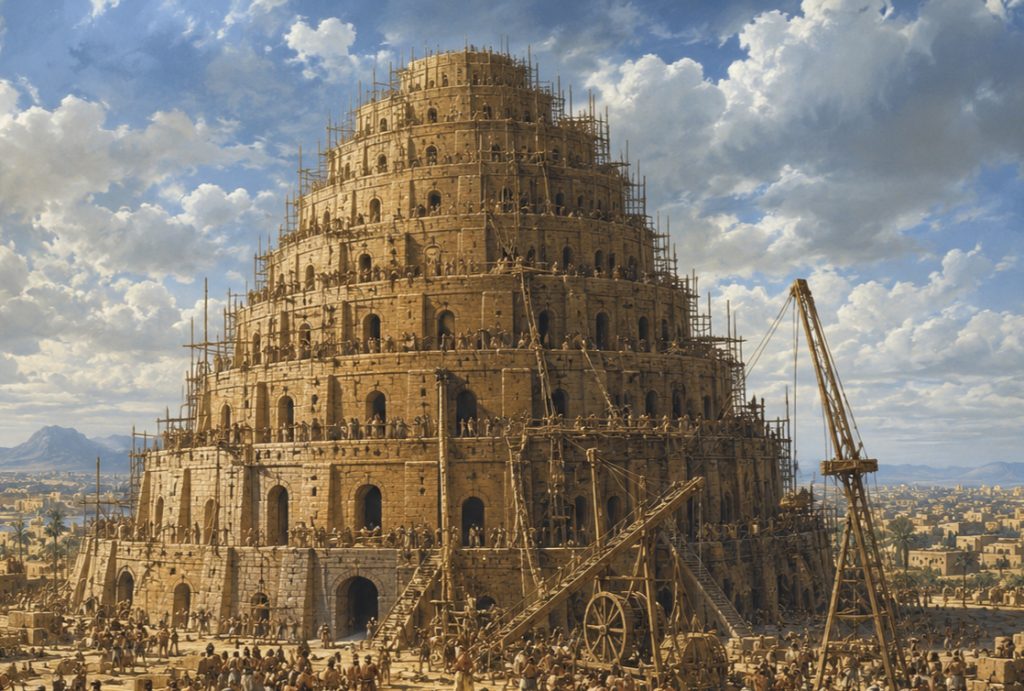
Brother René Stockman, former Superior General of the Congregation of the Brothers of Charity, explores pride as the root of humanity’s oldest temptations Pride is often described as the greatest sin and the cause of all sins. Reference is made to the Book of Genesis in the Bible, where the story of the first humans vividly reveals how evil conquered the human heart by tempting them to become their own gods. “Your eyes will be opened as soon as you eat of it, and then you will be like gods and have knowledge of good and evil” (Gen. 3:5). Their eyes were indeed opened after eating the forbidden fruit, and they saw that they were naked and not at all the gods they had dreamed of being. A little further on, we read another story, this time of people deciding to build a tower that would reach up to heaven in order to affirm their own power and divine status (cf. Gen. 11:1–9). But this too ended in utter failure, leaving an unfinished structure and a confusion of tongues in total chaos. Once again, it was pride that drove them to challenge God and seek to become his equals. Ancient stories that say something, indeed a great deal, about the human tendency, out of pride, to seize power for themselves. Anyone who believes that the age of forbidden fruit and Towers of Babel is behind us need only look at the world around them. Today, people are racing to Mars in the hope of building new empires. When I recently heard that President Trump had placed a 22-foot golden statue of himself on his Miami golf course and described it as “beautiful”, I concluded that there is indeed nothing new under the sun, that history repeats itself endlessly and that people struggle to learn from it. That last point is particularly perilous. It is the blinding force hidden within hubris that drives us to grasp for power and leads us into a pernicious myopia in which we have only our own interests in mind and are ultimately concerned with how we can further expand our power. The manner in which this occurs becomes entirely subordinate to the result that has been set as the goal and dreamt of. Elbowing one’s way through, bribery, corruption and, if necessary, eliminating opponents: it is all in the recipe book for growing in power and prestige. Trump is not alone in the grip of hubris. The temptation to crown ourselves as gods lies within each of us, and the serpent of temptation still slithers about, seeking to ensnare us. Most of us will never erect a golden statue of ourselves, nor build a tower bearing our name. Yet we will often consider ourselves better and greater than others, and we will want this to be confirmed. If we do not immediately receive the recognition we hope for, we will simply leaf through our recipe book to find the right method for rising above others, for humiliating others, for “he must decrease and I must increase”, to paraphrase the words of John the Baptist in reverse (John 3:30). For many, the virtue of humility has been struck from their vocabulary because it has come to be seen as a sign of weakness. There is nothing wrong with wanting to get ahead in life, but if it can only be achieved by humiliating and belittling others and, if necessary, eliminating them, then we are crossing an ethical line that should not be overstepped. Everyone bears a mutual responsibility for respecting, promoting and, where necessary, restoring one another’s human dignity. This, then, is the criterion by which a society can measure itself ethically. Whenever this is compromised because some, out of their arrogance, seek to seize power for themselves at the expense of others, we will have to draw the regrettable conclusion that we have failed to learn the lessons of history.
Jun. 15, 2026
The SSPX, the Magisterium, and the temptation of the hinterland
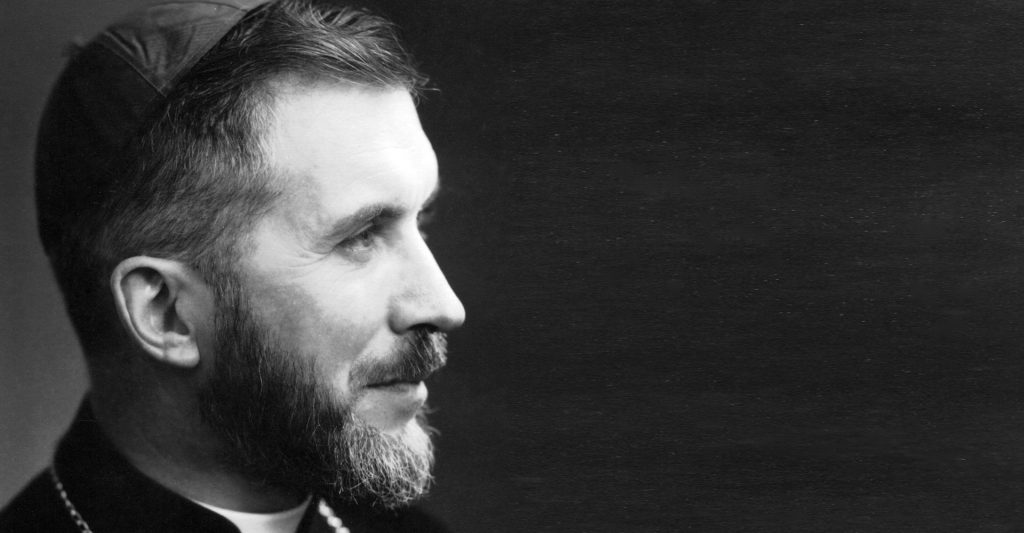
Drawing on his own journey from Anglican bishop to Catholic convert, Gavin Ashenden argues that however compelling the SSPX may appear, the temptation to step beyond communion with Rome leads into a theological “hinterland” where private judgement takes precedence over the Magisterium I have been surprised at the extent of anxiety and animosity that almost always accompanies any discussion about the relationship between the SSPX and the Vatican. Over time, I have become increasingly grateful for and impressed by the witness and courage of Archbishop Lefebvre — but equally impressed by the flexibility of Benedict XVI and the way in which the dynamic relationship between the SSPX and the Vatican changed and modulated under his leadership. Of course, much of the anger and fear can be traced back to the complex question of the Second Vatican Council, the period of its reception, and the troubling phenomenon of “the spirit of Vatican II”. One of the attractions of the SSPX is that it cuts through the whole complexity like Alexander’s sword through the Gordian knot. Once you have accepted the SSPX and the integrity of its arguments, you no longer have to think or struggle with the difficulties that the Council and its reception throw up. As I have listened to people arguing on both sides, it has become clear that neither possesses a monopoly on unreasonableness, stubbornness, name-calling, vitriol, or misrepresentation. But one of the formative elements in my own becoming a Catholic was the importance of the Magisterium. I was one of those Anglicans who found it easy to persuade himself that, as an Anglican, I had the best of both worlds: Catholic integrity combined with Anglican freedom. I do not normally talk much about my time as an episcopal bishop, but one of the attractions of the invitation to accept consecration — in order to provide a foundation for dissident Anglicans fleeing the collapse of the Church of England but too anxious to convert fully to Rome — was the creation of yet another halfway house: a mixed ecclesial economy with enough that looked Catholic to persuade its adherents that they were Catholic, without requiring them to take the full step of submitting to the authority of the Holy Father and accepting in full the Catechism and the Magisterium. As it happened, the experience of trying to negotiate between different Anglo-Catholic groupings as we sought to construct a coalition of sacramentally minded Anglicans was one of the things that deepened my love and appreciation of the Magisterium. The moment one steps outside the authority of the Catholic Church and the privilege of being in communion with Rome, one enters a hinterland of revolution where the epistemological centre of one’s spirituality shifts from the Petrine river of authenticity to oneself. One might even describe this as the Protestant spirit. And the difficulty is this: it does not matter how Catholic your investments are, how Catholic your liturgy is, or how Catholic your spirituality may appear — if one is outside communion with Rome, one is not Catholic. It does not really matter what kind of heretical or schismatic posture one eventually adopts. It does not matter whether one is slightly to one side of the dotted line on the Anglican side, or slightly to the other side on the ultra-Catholic side. The end result is the same. If you are outside of communion with Rome, you are no longer truly Catholic. It is the Magisterium and communion with Peter that provide the distinctive difference. One of the temptations of supporting the SSPX is, of course, the fact that one no longer has to remain patient with the whole process of infighting and interpretation that the reception of the Council’s documents requires. Particularly within our modern culture, ten years can seem like a millennium. But as it happens, it does take longer for the full implications of a Council to seep into the bloodstream of the Church as the balancing act between past and present is refined and modulated. The relief and joy of abandoning the obscure hinterland where private judgement takes precedence over obedience and submission is something I would never want to exchange for a personalised validation of the faith — attractive though it may seem when the people running the show appear untrustworthy, unattractive theologically, or compromised in ways that place them at odds with authentic magisterial spirituality and identity. I am beginning to think from my conversations with informed individuals that although I had hoped Cardinal Fernández was operating independently from Leo XIV, it may be that the threatened excommunication is not a bluff. It may be that to consecrate bishops without papal approval is one that simply cannot be accepted by the Pope under any circumstances. It is very easy to compare the way in which the German Synodal Path has pushed at the limits of orthodoxy on the left — without being sharply reined in or excommunicated — and compare that unfavourably with the way the SSPX are being treated. But I think this mistakes the notion of symmetry. In political terms, there is no symmetry between those committed to progressive utopianism on the one hand and those committed to conserving and protecting what is good on the other, as though they were merely equal and opposite distortions of the same instinct. Likewise, I do not think that the liberal-progressive abuses of the Catholic faith on the left are equivalent to the proposed refusal to accept the limitations of canon law on the sacramental and traditionalist right. That is not to say I have any sympathy at all with the idiocies and Protestantisation of the faith in which the German Synodal process continues to indulge. But on the left, this generally takes the form of abusing process, stretching boundaries irresponsibly — the behaviour of a recalcitrant teenager not yet fully prepared to leave home forever, but continually testing how far the boundaries can be pushed. On the right, however, what the SSPX is contemplating is a direct and dramatic repudiation of canon law and obedience in a way that strikes at the very heart of Catholic order and Catholic identity. Bishops derive their authority from the Pope himself. Otherwise, in any true conceptual sense, they are not Catholic bishops at all. They become bishops of protest — bishops whose consecration is born out of a determination to protest against Petrine authority. However attracted I may be to the integrity of the Latin Mass, and however deep my mistrust of the inadequacies of the Novus Ordo may at times be, the boundary of canon law and obedient episcopal order becomes impossible to ignore. Schism is rather like pregnancy because one can no more be “a little bit pregnant” than one can be “a little bit schismatic”. I hope very much that Cardinal Fernández is bluffing. I hope very much that Leo XIV may simply have given him room to manoeuvre in order to test what may come of negotiations with the SSPX. However, if I am wrong, and if the SSPX do not back down — which seems the only likely scenario at present — then I would not exchange communion with Peter and the protection of the Magisterium for a quick-fix protest against the spirit of Vatican II. The price is too high.
Jun. 15, 2026
Cardinal McElroy reportedly gives verdict on altar rails in Washington
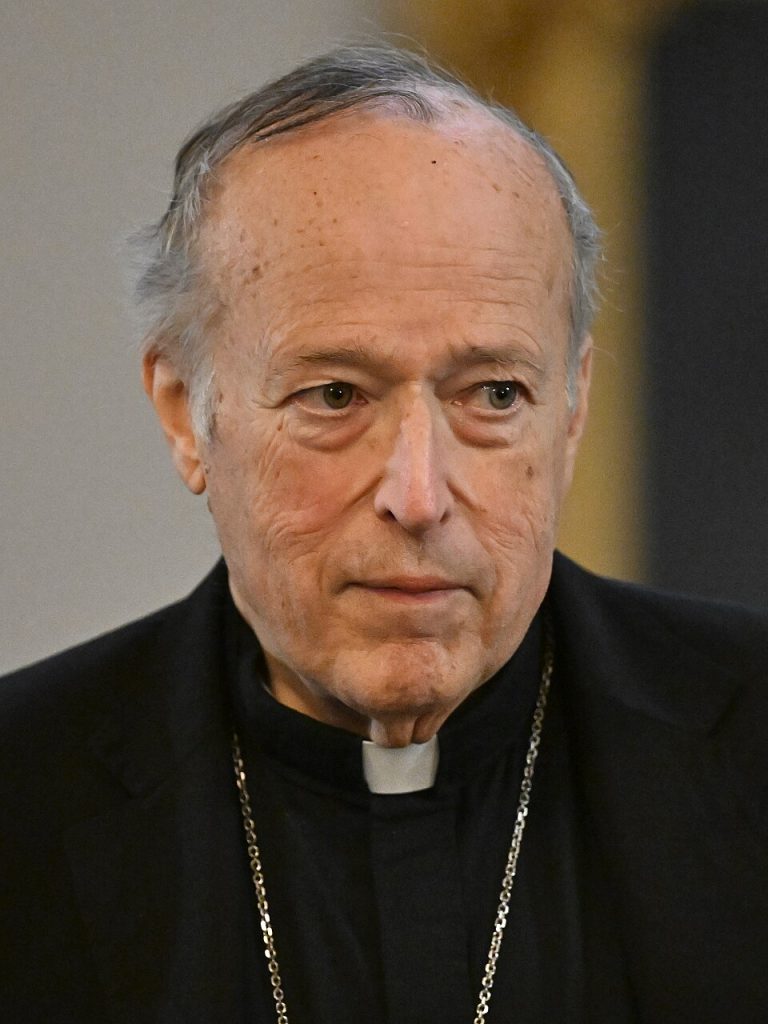
A reported directive from Cardinal Robert McElroy sets out policy on altar rails and kneelers in the Archdiocese of Washington Cardinal Robert McElroy of Washington has reportedly directed that altar rails are not to be installed or reinstalled in churches across the Archdiocese of Washington. The reported directive, first highlighted by journalist Christine Niles of Stella Maris Media, notes from a recent meeting with priests that discouraged the use of temporary kneelers for the reception of Holy Communion. According to Niles, concerns raised during the discussion included the potential disruption of Communion processions and the possibility that the use of kneelers could transform what Church law regards as an individual option into a more widespread practice. The Archdiocese of Washington has not publicly issued a statement on the reported policy, and no formal decree has yet appeared among official archdiocesan communications. The issue centres on the manner in which Catholics receive Holy Communion. In the United States, the norm approved by the bishops and confirmed by the Holy See is for communicants to receive standing after making a gesture of reverence. At the same time, universal Church law makes clear that Catholics who choose to kneel for Communion are not to be denied the sacrament on that account. The reported Washington policy comes after discussions in several American dioceses over altar rails, kneelers and other traditional liturgical furnishings. In recent months, the Diocese of Charlotte, North Carolina, became the focus of Vatican attention after Bishop Michael Martin ordered that altar rails, kneelers and prie-dieus were not to be used for the reception of Communion in public celebrations. The move caused more than 30 diocesan priests to submit formal dubia to the Vatican regarding the scope of episcopal authority over such practices. Bishop Martin wrote in a pastoral letter issued last December that the norms approved by the United States Conference of Catholic Bishops “do not envision the use of altar rails, kneelers, or prie-dieus for the reception of Communion”, arguing that their use contradicts the normative posture established by the conference. Supporters of altar rails and kneeling during Communion argue that such practices visibly express belief in the Real Presence of Christ in the Eucharist and foster a spirit of reverence. Among the most prominent advocates has been Bishop Athanasius Schneider, Auxiliary Bishop of Astana in Kazakhstan, who has repeatedly encouraged the faithful to receive Communion kneeling and on the tongue. In his book Dominus Est – It is the Lord! , Bishop Schneider wrote: “Would it not be more liturgically proper if, at the moment of Holy Communion … they would greet Him and receive Him on their knees?” He argued that kneeling before the Blessed Sacrament provides a visible witness to the Church’s faith in the Eucharistic mystery. Cardinal Raymond Burke has likewise spoken in favour of the practice, pointing to the example set by Pope Benedict XVI during his pontificate. Reflecting on Benedict’s decision to distribute Communion to kneeling communicants, Cardinal Burke said: “The Holy Father is giving a very clear lesson by his own insistence that the faithful receive Communion kneeling and on the tongue.” Similar views have been expressed by Cardinal Antonio Cañizares Llovera, the former prefect of the Congregation for Divine Worship and the Discipline of the Sacraments. He has urged Catholics to receive Communion on the tongue while kneeling, saying: “It is to simply know that we are before God himself and that He came to us and that we are undeserving.” Other bishops have emphasised the importance of maintaining the posture established by episcopal conferences for the sake of unity during the Communion procession. Cardinal Blase Cupich of Chicago has similarly stressed that the faithful process together as an expression of their identity as the Body of Christ and receive Holy Communion standing in accordance with the norm approved for the United States. He has described the practice as a “powerful symbolic expression” of ecclesial unity. The reported Washington directive has attracted particular attention because it concerns one of the largest and most influential dioceses in the United States. Cardinal McElroy, who was installed as Archbishop of Washington in March 2025 after serving for a decade as Bishop of San Diego, has become one of the most prominent voices among the American hierarchy. The controversy also follows another recent decision by the cardinal that generated headlines. Earlier this month, he removed Monsignor Stephen Rossetti as an exorcist of the Archdiocese of Washington and ended the archdiocese’s affiliation with the St Michael Center for Spiritual Renewal after comments linking UFO phenomena to demonic activity. Cardinal McElroy said the statements “gravely undermine the Church’s very precise teaching on the devil, demons and exorcism”.
Jun. 15, 2026
Bishop Dominique Rey breaks ranks over Paris church arts festival controversy
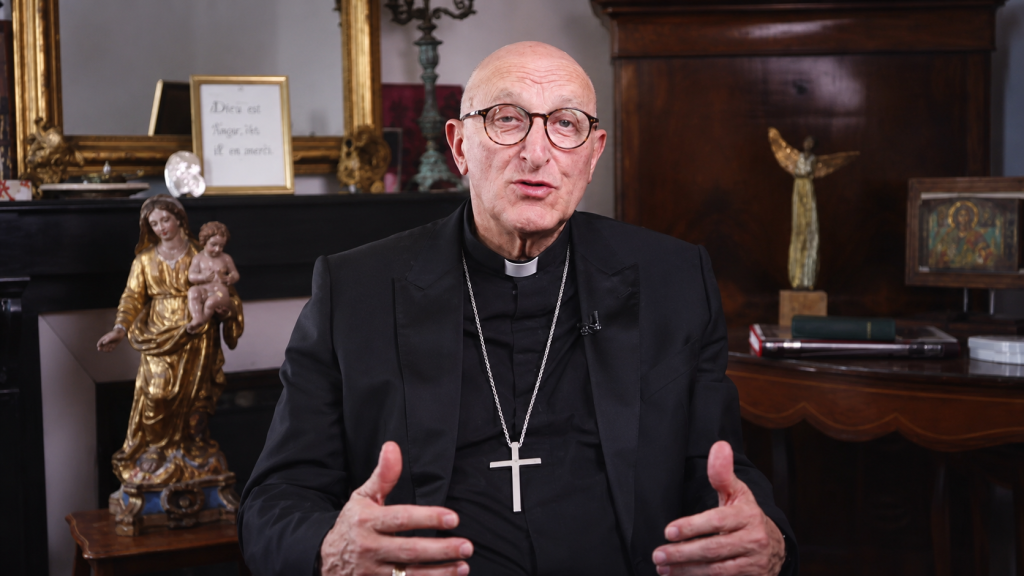
Bishop Dominique Rey has become among the first members of the hierarchy to address the controversy surrounding this year’s Nuit Blanche arts festival A French bishop has become one of the first members of the country’s hierarchy to speak publicly about the controversy surrounding the use of Paris churches during this year’s Nuit Blanche arts festival. Bishop Dominique Rey, the former Bishop of Fréjus-Toulon, intervened after days of criticism from Catholics over installations staged in several churches during the annual overnight cultural event in the French capital. Speaking to the French Catholic outlet Tribune Chrétienne, Bishop Rey said the dispute should be understood within the broader pattern of attacks on Christian places of worship. “We are currently witnessing an increase in the number of sacrilegious acts, vandalism and offensive insults that undermine the integrity of places of worship, which scandalise and outrage the faithful,” His Grace said. Bishop Rey continued: “Because these places are dedicated to liturgical life, prayer, contemplation and silence.” The bishop went on to question the appropriateness of using churches for events that bear no relation to their spiritual mission. “The Church cannot be the receptacle for events and demonstrations that are not related to the spiritual identity and religious purpose of these sacred places: churches, chapels, oratories and shrines,” Bishop Rey said. Across France there has been criticism over the installations hosted in churches as part of the 25th edition of Nuit Blanche, Paris’s annual all-night arts festival. The 2026 event was organised under the artistic direction of Barbara Butch, the French DJ and activist who became internationally known following her appearance during the opening ceremony of the Paris Olympic Games in 2024. Particular controversy surrounded the Church of Saint-Laurent in the 10th arrondissement, where visitors were invited to experience an installation entitled Sous la peau du ciel (“Under the Skin of the Sky”) by the artist Marie-Luce Nadal. The work consisted of an immersive sound installation incorporating anonymous recorded messages submitted by members of the public. The recordings were mixed with atmospheric data linked to lightning activity and played throughout the church. The event led to protests from groups of Catholics who argued that the event was incompatible with the sacred character of a consecrated church. Some gathered outside Saint-Laurent to pray the Rosary and sing hymns in reparation, while others attempted to prevent access to the building before police intervened. Six people were arrested during the disturbance and held in custody after allegations that elected officials had been jostled during the confrontation. The City of Paris subsequently announced that it would file a complaint against those involved and condemned what it described as attempts by religious extremists to disrupt a cultural event. However, the Paris public prosecutor later closed the case without bringing charges after investigators concluded that no offence could be sufficiently established and that individual responsibility for the alleged incidents could not be proven. Many have focused not only on the events themselves but also on what they regard as the silence of the Archdiocese of Paris. One of the most outspoken clerical critics has been Fr Christophe Buirette of the Diocese of Blois, who publicly criticised the decision to host the installation at Saint-Laurent. Speaking to Tribune Chrétienne, he described the episode as a serious affront to the sacred character of the church and declared: “Ce confrère, curé de Saint-Laurent, est une honte!” (“This fellow priest, the parish priest of Saint-Laurent, is a disgrace!”). The parish priest of Saint-Laurent, Fr Paul Dollié, has rejected accusations that the church was profaned. In a statement explaining his decision to host the installation, he said he had accepted the proposal after being assured that it contained no elements contrary to the Catholic faith and respected the character of the building. “I saw that this work was respectful of the place and that there were no elements contrary to the faith,” he said. Fr Dollié explained that the proposal had been presented through Art, Culture et Foi, an organisation that serves as a link between the City of Paris and the diocese on cultural projects. He said the installation possessed a spiritual and meditative dimension that offered an opportunity for dialogue with people distant from the Church. Under the country’s system of laïcité , many church buildings remain the property of local authorities while continuing to function as places of Catholic worship. That arrangement has periodically produced disputes over concerts, exhibitions and artistic performances staged within churches. Similar controversies have emerged in France over the past several decades whenever churches have hosted exhibitions or performances perceived by some Catholics as inappropriate. A notable example occurred in 2021 when Swedish musician Anna von Hausswolff was due to perform at the Church of Notre-Dame de Bon-Port in Nantes and later at the Church of Saint-Eustache in Paris. Both concerts were abandoned after Catholic protesters gathered outside the venues, praying the Rosary, singing hymns and blocking access for ticket holders. Critics argued that her lyrics, including lines from songs such as “Pills” (“Oh I, I made love with the devil”), and the overall aesthetic of her performances were incompatible with a Catholic church. Organisers, however, maintained that the events had received ecclesiastical approval and formed part of legitimate cultural programming.
Jun. 15, 2026
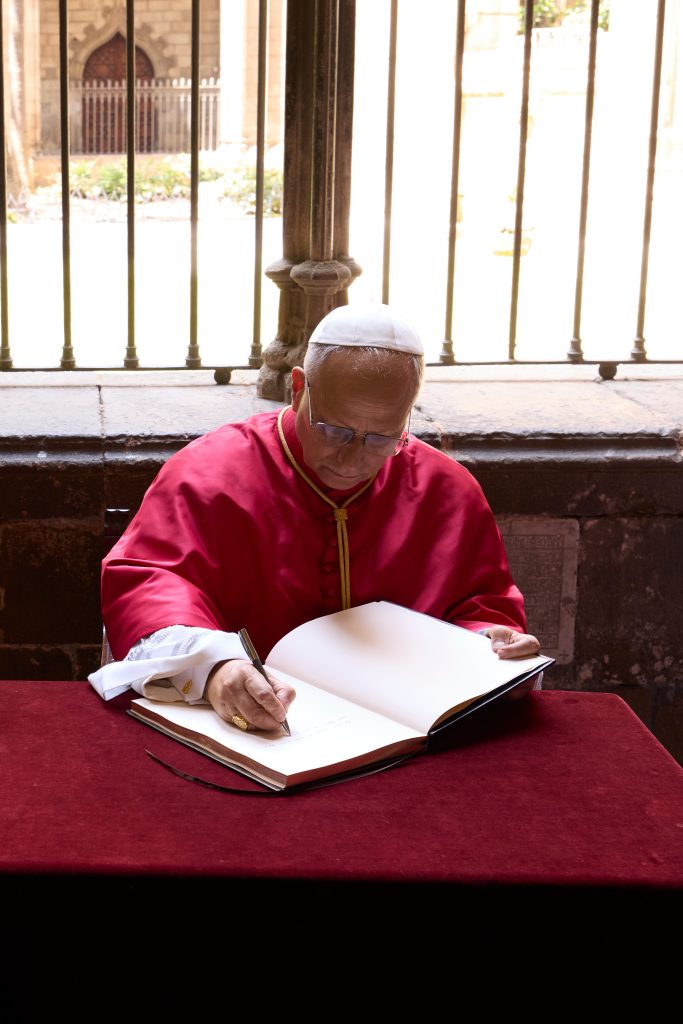
Pope Leo XIV addresses more than 400,000 priests in Feast of the Sacred Heart letter
Pope Leo XIV has addressed more than 400,000 priests worldwide in a letter for the Feast of the Sacred Heart of Jesus and the Day for the Sanctification of Priests The Holy Father, Pope Leo XIV, wrote to all priests around the world on the Day for the Sanctification of Priests, which is celebrated each year on the Feast of the Sacred Heart of Jesus. There are more than 400,000 priests worldwide, 5,525 of whom are bishops. Some 67 per cent are based either in Europe or the Americas, although Asia and Africa are experiencing significant growth in their priestly populations. The total number of African ordinations surpassed Europe for the first time in 2019. Although Africa currently has only 14 per cent of the world’s priests, it is training 34,000 priests in its major seminaries, constituting about 31 per cent of seminarians globally. Devotion to the Sacred Heart is a medieval Christian practice of popular piety, finding supporters in the great religious houses and among the saints, notably St Bernard of Clairvaux. However, it is St Margaret Mary Alacoque, a 17th-century French Visitation nun, who is best known for her promotion of the devotion. A vision she received in 1675 led to the incorporation of the Solemnity of the Sacred Heart into the Church’s liturgical calendar. In the vision, Our Lord asked “that the first Friday after the octave of the Blessed Sacrament [Corpus Christi] be dedicated to a particular feast to honour my heart, by receiving communion on that day and making reparation to it by honourable amends”. At the request of Queen Marie Leszczyńska of France, the French episcopate approved the celebration of the feast in 1765. In 1856, Pope Pius IX extended the Feast of the Sacred Heart to the Latin Church under the rite of double major. Pope Leo XIII then raised it to a first-class feast in 1889 and, in 1928, Pope Pius XI raised it to a double first-class feast and added an octave, which was removed during the 1955 reforms of the General Roman Calendar. With the simplification of feasts in 1969, it was made a solemnity, the Church’s highest rank of celebration. Long associated with the priesthood, the devotion was given a further priestly connection when Pope Saint John Paul II established the World Day of Prayer for the Sanctification of Priests in 1995 and set it on the Solemnity of the Sacred Heart. Similarly, the Year for Priests, 2009 to 2010, was inaugurated by Pope Benedict XVI on the Feast of the Sacred Heart. His letter is reproduced below: Dear brother priests, On the day when the Church ponders her Lord’s pierced Heart, from which gushes forth an inexhaustible fountain of peace and unity for all humanity, I first address to myself and to all of you the words that God spoke to the people of Israel: “Be holy, for I the Lord your God am holy” (Lev 19:2; cf. 1 Pt 1:16). This divine call echoes down the ages. Even today it resonates strongly with every believer and, in a particular way, with us priests. Holiness is neither one option among many nor an abstract ideal, for it involves the very identity of every person who wishes to share in the life of the risen One. Holiness is sharing in Christ’s mystery God invites us to share in his own holiness. When he calls us to be holy as he is holy, he indicates that the path we must follow involves being fashioned after his own Heart. And for us, dear brothers, this call is particularly radical. The Lord has promised: “And I will give you shepherds after my own heart, who will feed you with knowledge and understanding” (Jer 3:15). The holiness he asks of us is a trustful abandonment, allowing ourselves to be transformed by the Holy Spirit. Yet it is precisely here that the great paradox of our priestly life emerges. We are called to share in God’s own holiness, but we carry this treasure in earthen vessels (cf. 2 Cor 4:7). We are limited and imperfect, often weak and weary, and at times wounded. How can such a vulnerable human heart respond to such a high calling? The priest lives this tension. Yet at the same time, he must recognize that he finds peace in the open side of the Lord Jesus. A journey toward union The union of our heart with Christ’s Heart is not an experience reserved for a select few; rather, it is a sacramental, Eucharistic journey that unfolds each day of our lives. Dear brothers, by our ordination we have been configured to Christ, yet we must always renew within ourselves the gift of grace through our daily celebration of the Eucharist, prayer, meditation on the word of God and humble service to our brothers and sisters. Let us remain united to Christ in everything — in all that we do and in all that happens to us every day. Then the holiness that we have sought in vain through isolated efforts will reveal itself for what it is: a response to the grace that precedes, sustains and transforms us. Indeed, our humanity is not compartmentalized. Prayer, ministry, relationships, weariness, joys and failures — even time or love that apparently seems wasted — all become privileged places where God reveals himself and his infinite love. The priest who has an upright, simple and pure heart can be contemplative in the midst of action, merciful and faithful in times of trial, and joyful in the gift of himself. The world greatly needs pastors who offer more than simply words or programs; it needs the living witness of a reconciled heart that exudes the sweet fragrance of Christ’s holiness. A priestly life that is steady and configured to Jesus’ Heart is a credible sign of unity, peace and mercy. Thus, in an age marked by division and fear, we must be builders of peace and witnesses of the tenderness of the Good Shepherd who knows how to gather the scattered and heal the wounded. Our zeal is not restlessness, but the overflowing of a love that is “‘ecstasy,’ openness, gift and encounter” (Francis, Encyclical Letter Dilexit Nos, 28). The Heart of Christ is the heart of the saints The response to the call to holiness lies not so much in works of asceticism or striving for perfection –– though these are necessary –– but in trusting adherence to the love revealed in Jesus’ pierced Heart. The Apostle John invites us to contemplate the open side of the crucified One (cf. Jn 19:34), in which God definitively shows us what holiness is: not an inaccessibly distant or detached perfection, but a love that gives itself even to the point of being wounded and so can become a source of mercy and life. The Sacred Heart of Jesus is an exemplary image of the surpassing love of God. It is an all-powerful love precisely because it is capable of being vulnerable and of transforming sorrow into grace and suffering into hope. The Sacred Heart, therefore, is the “place” where holiness is manifested as closeness and tenderness. The priest’s holiness, then, is embodied in humble and courageous nearness, in being all things to all people, and in keeping the gate of the sheepfold open so that many can enter and find pasture and rest (cf. Jn 10:9). For this reason, we are called to a relationship with God that does not distance us from others but brings us closer to everyone — shaping patient and tender hearts, capable of closeness, compassion and listening. Thus, through the union of our imperfect hearts with Jesus’ pierced Heart, our journey toward holiness is fulfilled. It is no longer we who live, but Christ who lives in us (cf. Gal 2:20). Such holiness cannot be lived in isolation. Cherish your priestly fraternity: seek one another, listen to one another and support one another. The priest who isolates himself slowly fades away; the priest who walks alongside his brothers grows. Saint Augustine reminds us of this when he says: “How shall we avoid finding ourselves in darkness? By loving our brothers. What is the proof that we love our brothers? This: that we do not fracture unity and that we practice charity” (In Epist. Io. ad Parthos II, 3).
Jun. 14, 2026
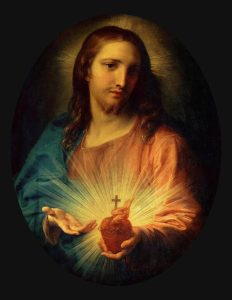
The healing power of the Sacred Heart
In a reflection for the month of the Sacred Heart, Brother René Stockman considers the writings of Saint Claude La Colombière, the reality of suffering, and the healing that comes through trust in God’s mercy “My God, I am so firmly convinced that You watch over those who have placed their hope in You, and that one will lack nothing when one expects everything from You, that I have resolved to live without worry from now on and to entrust to You everything that troubles me: ‘Lord, You let me dwell in safety. I need not be afraid; I can sleep in peace’ (Psalm 4:9). People may take everything from me: my possessions, my honour; illness may sap my strength so that I can no longer even serve You; I may even lose Your grace through my sins: but never shall I lose the hope that I shall keep until the last day of my life. Nothing and no one will be able to take this hope from me”. These words are those of Saint Claude La Colombière, a 17th-century Jesuit who was the spiritual director of Saint Marguerite-Marie Alacoque in Paray-le-Monial. The latter is perhaps better known to us because of the devotion to the Sacred Heart of Jesus, which gained a special place within the Church through her. Saint Claude La Colombière is less known. I first discovered him during a chance visit to Paray-le-Monial and was struck by the words he wrote about his trust in God’s mercy. For that faith in God’s mercy is the very heart of the Sacred Heart devotion to which we are especially invited during the month of June. God’s mercy is the absolute expression of his love for each and every one of us and is therefore truly unconditional. If we become truly convinced of this, then we will be able to identify with the words of Claude de Colombière. He takes as his starting point the line from Psalm 4: “Lord, you let me dwell in safety. I need not be afraid; I can sleep in peace.” We all know moments when we are anything but sleeping peacefully, because all sorts of problems disturb our sleep. These may be the conflicts we had the previous day with someone close to our hearts, or a disappointment suffered at the hands of a person from whom we certainly did not expect it. As Claude points out, our honour can be wounded and we can be portrayed in a completely false light. We may be falsely accused, causing everything we have built up as good to vanish into thin air, as it were, and be overshadowed by negativity. We may fall victim to gossip that drags our name through the mud, and we know the proportions this can take today when it finds its way onto the internet. And yes, illness too can completely derail our plans and push us into an unwanted passivity, leaving us lacking even the strength to pray. It is a list that could be added to. But the intention here is not to list everything that can disturb our sleep and our inner peace, tranquillity and serenity. The question is how we deal with all this, and whether, if we wish to maintain the illusion of having the strength to process it all ourselves, we will actually succeed in doing so. Claude de Colombière does not run away from the problems that befall him or the disappointments he faces; he faces them squarely. But he knows how to hand them over and entrust them to God’s mercy. It is thanks to his growing realisation that he is truly loved by God that he becomes convinced that nothing is too much to entrust to God’s mercy. God’s loving and merciful heart is so much greater than his own heart, troubled by the many worries that surround and afflict him, that it has the power to fully compensate for and heal the loss of his inner peace, and to bestow upon him, as it were, a new heart. The unconditional love and mercy that God radiates towards him, and towards us, causes an equally unconditional hope to grow within him and within us, a hope that no one and nothing can take away from us. Here we need no artificial means to regain our peace of mind, but will be healed from within and our wounds will be completely healed, so that not even a painful scar will remain. At a time when everything is expected of medical technology, including the healing of psychological and existential ailments and wounds, the therapy offered to us here may sound rather unscientific. We have become accustomed to a different language. There is a grain of truth in the observation that the confessional has been replaced by the psychologist’s chair and penance for the prescription for a psychotropic drug. In saying this, we do not detract from the merits of the ever-advancing field of medicine, through which so many people can be helped more effectively; yet we do ask ourselves whether, by losing faith in God’s mercy, we have not closed off a path to deeper healing and restoration. It is from this same conviction that we can look up to the image of Jesus, who showed Saint Faustina his open heart, from which a stream of blood and water flowed, and in which Jesus inspired Sister Faustina to utter the words: “Jesus, I trust in You.” It is through the blood and water flowing to us from the opened heart of Jesus that we can be purified and healed of everything that troubles us. It is this grace that we may receive in the sacrament of Confession, from which many have completely turned away through ignorance or growing indifference. When we ignore sin, the conviction that we do not need forgiveness grows. It is enough to forgive ourselves, or, from a position of moral relativism, to decide for ourselves what is good and bad, so that ultimately we regard everything we do as good. But in the sacrament of reconciliation we are able to experience that healing power of God’s mercy, and moral relativism will slip away. As Claude de Colombière points out, we are called to entrust everything that weighs us down to God’s mercy and never lose hope again. That is why devotion to the Sacred Heart is not merely a relic of a distant past, but an invitation to open ourselves directly to God’s unconditional love and mercy and to allow Him to heal us from within. Sacred Heart of Jesus, have mercy on us.
Jun. 14, 2026