

Latest
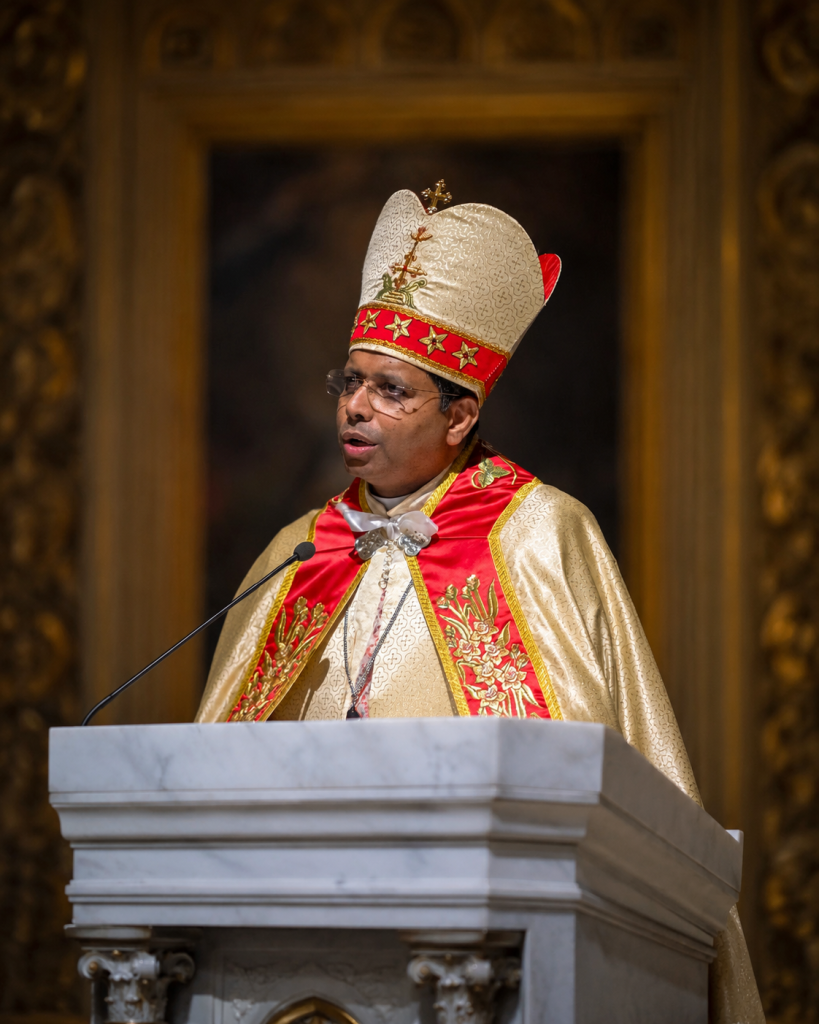
Cardinal Koovakad on dialogue with Patriarch Kirill and Pope Leo’s visit to a mosque
Cardinal Koovakad has spoken to AdVaticanum about the Church’s approach to interreligious dialogue, why he met Patriarch Kirill and what Pope Leo’s visit to a mosque meant. Cardinal George Jacob Koovakad is the Prefect of the Dicastery for Interreligious Dialogue, the Vatican department responsible for promoting understanding, cooperation and engagement between the Catholic Church and followers of other religious traditions. After joining the Holy See’s diplomatic service in 2006, following studies at the Pontifical Ecclesiastical Academy, he held posts in Algeria, South Korea, Iran, Costa Rica and Venezuela. His experience later led to his being entrusted with the organisation of papal trips, including high-risk journeys such as Pope Francis’s 2021 visit to Iraq, earning him the reputation of being the Francis pontificate’s “travel agent” as he arranged the complex itinerary of one of the most travelled popes in history. Created a cardinal in 2024 and appointed Prefect of the Dicastery for Interreligious Dialogue in 2025, his career has marked a series of firsts. He is the first member of the Syro-Malabar Catholic Church to head a curial department. He was also the first Indian priest to be created cardinal before being appointed a bishop, and, at the age of 51, the youngest cardinal in the history of the Syro-Malabar Church. In this exclusive interview with AdVaticanum, he discusses the work of his department, the justification for his 2025 meeting with the Patriarch of Moscow, and Pope Leo’s visit to the Great Mosque of Algiers. AV: Can interreligious dialogue and evangelisation coexist without tension, or is there an inherent conflict between them? +JK: The document Dialogue and Proclamation argues that interreligious dialogue and evangelisation can coexist because both are essential dimensions of the Church’s evangelising mission. It clearly states that dialogue and evangelisation are “interrelated yet not interchangeable” (§77). Dialogue does not replace proclamation, and proclamation must be carried out in a spirit of dialogue. Theologically, this document sees no inherent conflict between the two. Dialogue is part of the “dialogue of salvation” initiated by God (§80), while proclamation seeks to lead people to explicit faith in Jesus Christ (§81). The Church therefore recognises the presence of “seeds of the Word” in other religions (§82) while still affirming the uniqueness of Christ as Lord and Saviour. At the practical level, however, tensions can arise. Proclamation may sometimes be perceived as disrespectful or as hidden proselytism, while excessive emphasis on dialogue can weaken the call to proclaim the Good News. For this reason, the document stresses discernment, sensitivity to context, respect for freedom, and guidance by the Holy Spirit. To overcome this tension, Dialogue and Proclamation proposes a spirituality of dialogue rooted in humility, love, and authentic witness. Christians are called to engage sincerely with followers of other religions while also sharing, when appropriate, the joy and hope they have found in Christ (§83). Jesus himself is presented as the model who united openness to others with faithful proclamation (§85). Thus, dialogue and evangelisation are not opposing activities but complementary expressions of the Church’s one mission. AV: The Church often engages with religious actors and states whose records on human rights are contested. How do you balance dialogue with moral clarity? +JK: The Church is open to engaging in dialogue with everyone, based on her conviction that every human person is created in the image of God and remains the object of God’s salvific concern. Interreligious dialogue is not mere diplomacy or pragmatic coexistence, but part of the Church’s evangelising and salvific mission. Therefore, dialogue cannot mean moral relativism, silence in the face of injustice, or the dilution of truth claims. At the same time, moral clarity should not lead to hostility, exclusion, or a refusal of encounter. A “positive evaluation” of other religious traditions involves recognising in them “rays of truth”, “seeds of the Word”, and the action of the Holy Spirit. This theological openness obliges the Church to approach religious actors, even those situated within imperfect political or social systems, with “presence, respect and love”. Dialogue is thus maintained because the Church believes that God’s grace can operate within every human and religious context, and because genuine engagement may foster a change of mind and heart, purification, and a deeper commitment to truth and justice. At the same time, discernment is necessary. Not everything in religious traditions or their social expressions is good. Because sin affects all human institutions and cultures, the Church must be capable of recognising contradictions between certain practices and the demands of the Gospel. Thus, engagement with religious actors or states whose human rights records are problematic does not imply endorsement of all their actions. The Church distinguishes between respect for persons and approval of policies. The Church enters dialogue not by abandoning moral principles, but by witnessing to truth within relationship. Hence, moral clarity is exercised through prophetic witness, defence of human dignity, advocacy for peace and justice, and fidelity to conscience, while dialogue remains the preferred method because it mirrors God’s own “dialogue of salvation” with humanity. Therefore, the Church’s engagement with contested religious or political actors can be understood through a dual fidelity: fidelity to truth, justice, and the dignity of the human person; and fidelity to dialogue as a means of peace, mutual understanding, and cooperation with the action of the Holy Spirit in history. In practice, this means the Church neither withdraws from engagement nor compromises essential moral principles. Rather, she seeks a form of dialogue that is truthful, respectful, discerning, and transformative. AV: In regions marked by distrust or even persecution, what does meaningful “dialogue” actually look like in practice? +JK: In these contexts, meaningful dialogue does not primarily begin with formal theological discussions. According to Dialogue and Mission , dialogue first takes the form of an attitude: one of respect, patience, presence, and shared humanity (§29). In difficult contexts, dialogue often becomes a “dialogue of life”, where Christians and followers of other religions learn to live together with mutual dignity despite tensions and differences. Distrust and persecution often exist because of a lack of dialogue. In that context, dialogue can become one of the most powerful antidotes to misunderstanding and conflict. Practically, this may involve simple but significant acts: defending one another’s human rights, cooperating for peace and justice, helping the poor together, sharing daily life, or maintaining relationships of hospitality and solidarity (§31–32). In situations of persecution, dialogue may even consist in refusing hatred and revenge, and instead witnessing to forgiveness and reconciliation. Authentic dialogue requires learning “to forgive” and “to understand the heart of others” even amid disagreement and historical wounds. Dialogue is inseparable from respect for freedom of conscience. Therefore, meaningful dialogue cannot involve coercion, manipulation, or proselytism. Rather, Christians are called to give witness to their faith “with courtesy and respect”, while remaining open to listening and learning from others. In such fragile contexts, dialogue may not produce immediate visible results. Christians are invited to trust the work of the Holy Spirit, who acts silently within peoples and cultures. Thus, meaningful dialogue in hostile environments is often quiet, gradual, and relational rather than institutional or doctrinal. It is ultimately a witness to the Gospel through love, endurance, humility, and the commitment to remain open to the other even in times of fear and division. AV: In 2025 you met privately with Patriarch Kirill, who has lent theological legitimacy to the war in Ukraine, and described the encounter as “deeply meaningful.” Do you believe private diplomacy can exert any real moral pressure on religious leaders who have aligned themselves with political violence? +JK: The Dicastery for Interreligious Dialogue is entrusted with the mission of fostering encounter, communication, and mutual understanding among peoples of all faiths, religious traditions, and cultural backgrounds. Through its various initiatives and engagements, the Dicastery seeks to promote peace, justice, the common good, and the spirit of human fraternity that unites the members of the one human family. Pope Francis consistently maintained that dialogue should remain open even in moments of serious conflict and moral disagreement. While he criticised religious language used to justify war, he also believed that breaking communication entirely would not help the cause of peace. Authentic dialogue can only flourish when it is carried out with openness of heart and freedom from prejudice towards the persons one encounters. Conversations shaped by preconceived judgements or narrow assumptions seldom bear meaningful fruit. True dialogue, instead, calls for attentive listening, mutual respect, intellectual honesty, and a sincere appreciation of the dignity of every human person. Every encounter thus becomes more than a simple exchange of ideas; it is a hopeful and constructive effort to contribute to the harmony of society and to the advancement of humanity. In a world often marked by division and misunderstanding, dialogue remains an indispensable path towards reconciliation, solidarity, and peaceful coexistence among peoples and nations. AV: You accompanied Pope Leo on his visit to Africa in April, including his encounter with a mosque. What moments stood out to you as revealing the true potential, or limits, of interreligious dialogue? And what is the theological significance of a Pope entering and praying in a non-Catholic religious site? +JK: Theologically, a Pope entering and praying in non-Christian spaces is understood not as an act of religious relativism or syncretism, but as a gesture of respect, dialogue, peace, and shared human solidarity. The document Dialogue in Truth and Charity makes a careful distinction between “praying together” and “being together for prayer” (§83). Catholics believe that authentic Christian prayer is always through Christ and in the Holy Spirit (§81); therefore, common interreligious prayer implying a shared understanding of God is generally avoided. When a Pope visits a mosque, synagogue, temple, or other non-Christian sacred space, such gestures should be interpreted primarily as expressions of openness, mutual respect, and the Church’s commitment to interreligious dialogue. They witness to the dignity of the religious search present in humanity and encourage peace and fraternity among peoples. Pope John Paul II explained after the Assisi meeting that while believers of different religions cannot ordinarily “pray together” in the strict sense, they can remain present while others pray, showing reverence for the sincere search for God by others. Thus, Catholics should understand papal gestures in non-Christian spaces as symbolic acts of encounter and dialogue, not as a denial of the uniqueness of Christ or as approval of all religious beliefs equally. The document insists that such occasions require prudence and must avoid any appearance of relativism or syncretism (§83). The Pope’s presence in such places therefore has a pastoral and diplomatic significance: it reflects the Church’s mission to foster peace, mutual understanding, and respectful coexistence while remaining faithful to Christian doctrine.
Jun. 22, 2026
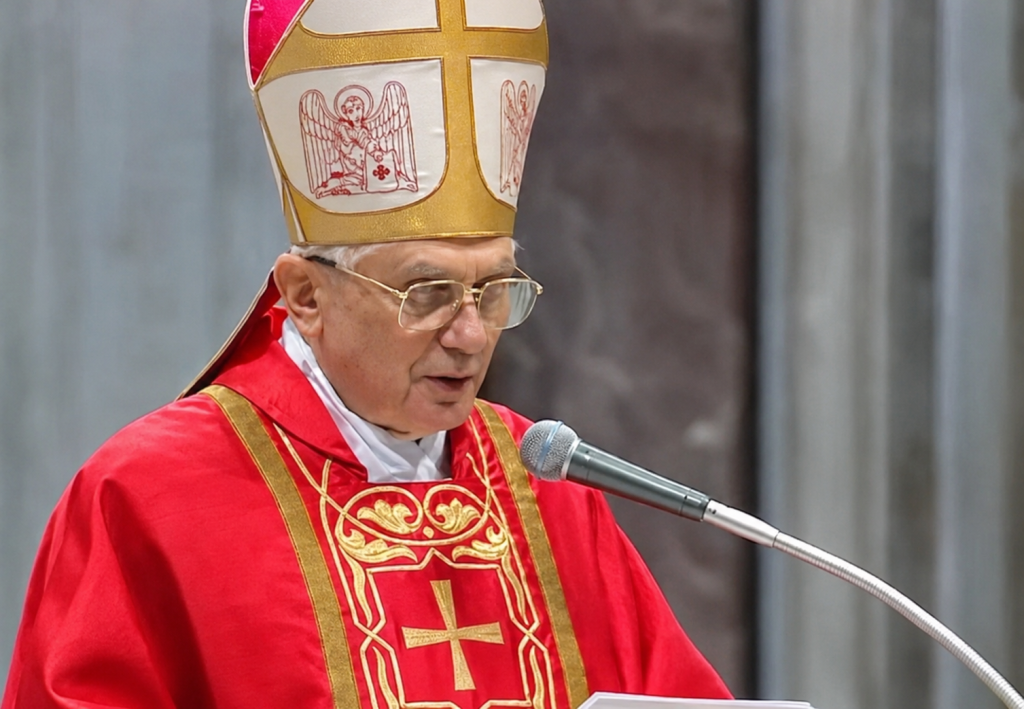
A novena of Benedict XVI’s greatest homilies and addresses, day 1: Pro Eligendo Romano Pontifice
To mark the 75th anniversary of Pope Benedict XVI’s priestly ordination on 29 June, AdVaticanum is publishing a nine-day series of some of the most important homilies and addresses of his public life. Day one begins with the homily Cardinal Joseph Ratzinger delivered at the Mass Pro Eligendo Romano Pontifice on 18 April 2005, the day before he was elected Pope To mark the 75th anniversary of Pope Benedict XVI’s priestly ordination on 29 June this year, AdVaticanum is publishing a nine-day novena of some of the most important homilies and addresses of his public life. Potentially the greatest churchman of his generation, even before he was elected Pope, Pope Benedict’s pontificate was in perfect continuity with that of his predecessor, Pope Saint John Paul II. It did, however, bring to the Chair of St Peter a serious academic depth and a humility rare in someone of such high office. Ordained a priest on 29 June 1951 in Freising alongside his brother Georg, to whom, together with their sister Maria, he remained deeply close throughout his life, Benedict’s priestly ministry was the defining feature of his life. He had a deep understanding of the sacramental nature of the priesthood and was a renowned preacher. After serving as a theology professor at Bonn, Münster, Tübingen and Regensburg, he was appointed Archbishop of Munich and Freising in 1977 and created a cardinal just a few months later, a meteoric rise. In 1981 he was appointed Prefect of the Congregation for the Doctrine of the Faith, a significant office in a pontificate known for its orthodoxy. Nicknamed “God’s Rottweiler”, he acquired a reputation for defending Catholic doctrine and for steering the Church through an age in which many Christian denominations were adapting to secular currents. The following decades established him as one of the principal theological voices of the modern Church. The day before he was elected Pope, Cardinal Ratzinger delivered a homily at the Mass Pro Eligendo Romano Pontifice on 18 April 2005. It was a text that would come to be read as both a diagnosis of the modern West and, in some respects, a manifesto for the pontificate that followed. Published here in full, it is the natural place to begin a novena of Benedict XVI’s greatest homilies and addresses. At this moment of great responsibility, let us listen with special attention to what the Lord says to us in his own words. I would like to examine just a few passages from the three readings that concern us directly at this time. The first one offers us a prophetic portrait of the person of the Messiah – a portrait that receives its full meaning from the moment when Jesus reads the text in the synagogue at Nazareth and says, “Today this Scripture passage is fulfilled in your hearing” (Lk 4: 21). At the core of the prophetic text we find a word which seems contradictory, at least at first sight. The Messiah, speaking of himself, says that he was sent “to announce a year of favour from the Lord and a day of vindication by our God” (Is 61: 2). We hear with joy the news of a year of favour: divine mercy puts a limit on evil, as the Holy Father told us. Jesus Christ is divine mercy in person: encountering Christ means encountering God’s mercy. Christ’s mandate has become our mandate through the priestly anointing. We are called to proclaim, not only with our words but also with our lives and with the valuable signs of the sacraments, “the year of favour from the Lord”. But what does the prophet Isaiah mean when he announces “the day of vindication by our God”? At Nazareth, Jesus omitted these words in his reading of the prophet’s text; he concluded by announcing the year of favour. Might this have been the reason for the outburst of scandal after his preaching? We do not know. In any case, the Lord offered a genuine commentary on these words by being put to death on the cross. St Peter says: “In his own body he brought your sins to the cross” (I Pt 2: 24). And St Paul writes in his Letter to the Galatians: “Christ has delivered us from the power of the law’s curse by himself becoming a curse for us, as it is written, “Accursed is anyone who is hanged on a tree’. This happened so that through Christ Jesus the blessing bestowed on Abraham might descend on the Gentiles in Christ Jesus, thereby making it possible for us to receive the promised Spirit through faith” (Gal 3: 13f.). Christ’s mercy is not a grace that comes cheap, nor does it imply the trivialisation of evil. Christ carries the full weight of evil and all its destructive force in his body and in his soul. He burns and transforms evil in suffering, in the fire of his suffering love. The day of vindication and the year of favour converge in the Paschal Mystery, in the dead and Risen Christ. This is the vengeance of God: he himself suffers for us, in the person of his Son. The more deeply stirred we are by the Lord’s mercy, the greater the solidarity we feel with his suffering – and we become willing to complete in our own flesh “what is lacking in the afflictions of Christ” (Col 1: 24). Let us move on to the second reading, the letter to the Ephesians. Here we see essentially three aspects: first of all, the ministries and charisms in the Church as gifts of the Lord who rose and ascended into heaven; then, the maturing of faith and the knowledge of the Son of God as the condition and content of unity in the Body of Christ; and lastly, our common participation in the growth of the Body of Christ, that is, the transformation of the world into communion with the Lord. Let us dwell on only two points. The first is the journey towards “the maturity of Christ”, as the Italian text says, simplifying it slightly. More precisely, in accordance with the Greek text, we should speak of the “measure of the fullness of Christ” that we are called to attain if we are to be true adults in the faith. We must not remain children in faith, in the condition of minors. And what does it mean to be children in faith? St Paul answers: it means being “tossed here and there, carried about by every wind of doctrine” (Eph 4: 14). This description is very timely! How many winds of doctrine have we known in recent decades, how many ideological currents, how many ways of thinking. The small boat of the thought of many Christians has often been tossed about by these waves – flung from one extreme to another: from Marxism to liberalism, even to libertinism; from collectivism to radical individualism; from atheism to a vague religious mysticism; from agnosticism to syncretism and so forth. Every day new sects spring up, and what St Paul says about human deception and the trickery that strives to entice people into error (cf. Eph 4: 14) comes true. Today, having a clear faith based on the Creed of the Church is often labeled as fundamentalism. Whereas relativism, that is, letting oneself be “tossed here and there, carried about by every wind of doctrine”, seems the only attitude that can cope with modern times. We are building a dictatorship of relativism that does not recognise anything as definitive and whose ultimate goal consists solely of one’s own ego and desires. We, however, have a different goal: the Son of God, the true man. He is the measure of true humanism. An “adult” faith is not a faith that follows the trends of fashion and the latest novelty; a mature adult faith is deeply rooted in friendship with Christ. It is this friendship that opens us up to all that is good and gives us a criterion by which to distinguish the true from the false, and deceit from truth. We must develop this adult faith; we must guide the flock of Christ to this faith. And it is this faith – only faith – that creates unity and is fulfilled in love. On this theme, St Paul offers us as a fundamental formula for Christian existence some beautiful words, in contrast to the continual vicissitudes of those who, like children, are tossed about by the waves: make truth in love. Truth and love coincide in Christ. To the extent that we draw close to Christ, in our own lives too, truth and love are blended. Love without truth would be blind; truth without love would be like “a clanging cymbal” (I Cor 13: 1). Let us now look at the Gospel, from whose riches I would like to draw only two small observations. The Lord addresses these wonderful words to us: “I no longer speak of you as slaves…. Instead, I call you friends” (Jn 15: 15). We so often feel, and it is true, that we are only useless servants (cf. Lk 17: 10). Yet, in spite of this, the Lord calls us friends, he makes us his friends, he gives us his friendship. The Lord gives friendship a dual definition. There are no secrets between friends: Christ tells us all that he hears from the Father; he gives us his full trust and with trust, also knowledge. He reveals his face and his heart to us. He shows us the tenderness he feels for us, his passionate love that goes even as far as the folly of the Cross. He entrusts himself to us, he gives us the power to speak in his name: “this is my body…”, “I forgive you…”. He entrusts his Body, the Church, to us. To our weak minds, to our weak hands, he entrusts his truth – the mystery of God the Father, the Son and the Holy Spirit; the mystery of God who “so loved the world that he gave his only Son” (Jn 3: 16). He made us his friends – and how do we respond? The second element Jesus uses to define friendship is the communion of wills. For the Romans “Idem velle – idem nolle” [same desires, same dislikes] was also the definition of friendship. “You are my friends if you do what I command you” (Jn 15: 14). Friendship with Christ coincides with the third request of the Our Father: “Thy will be done on earth as it is in heaven”. At his hour in the Garden of Gethsemane, Jesus transformed our rebellious human will into a will conformed and united with the divine will. He suffered the whole drama of our autonomy – and precisely by placing our will in God’s hands, he gives us true freedom: “Not as I will, but as you will” (Mt 26: 39). Our redemption is brought about in this communion of wills: being friends of Jesus, to become friends of God. The more we love Jesus, the more we know him, the more our true freedom develops and our joy in being redeemed flourishes. Thank you, Jesus, for your friendship! The other element of the Gospel to which I wanted to refer is Jesus’ teaching on bearing fruit: “It was I who chose you to go forth and bear fruit. Your fruit must endure” (Jn 15: 16). It is here that appears the dynamism of the life of a Christian, an apostle: I chose you to go forth. We must be enlivened by a holy restlessness: a restlessness to bring to everyone the gift of faith, of friendship with Christ. Truly, the love and friendship of God was given to us so that it might also be shared with others. We have received the faith to give it to others – we are priests in order to serve others. And we must bear fruit that will endure. All people desire to leave a lasting mark. But what endures? Money does not. Even buildings do not, nor books. After a certain time, longer or shorter, all these things disappear. The only thing that lasts forever is the human soul, the human person created by God for eternity. The fruit that endures is therefore all that we have sown in human souls: love, knowledge, a gesture capable of touching hearts, words that open the soul to joy in the Lord. So let us go and pray to the Lord to help us bear fruit that endures. Only in this way will the earth be changed from a valley of tears to a garden of God. To conclude, let us return once again to the Letter to the Ephesians. The Letter says, with words from Psalm 68, that Christ, ascending into heaven, “gave gifts to men” (Eph 4: 8). The victor offers gifts. And these gifts are apostles, prophets, evangelists, pastors and teachers. Our ministry is a gift of Christ to humankind, to build up his body – the new world. We live out our ministry in this way, as a gift of Christ to humanity! At this time, however, let us above all pray insistently to the Lord that after his great gift of Pope John Paul II, he will once again give us a Pastor according to his own heart, a Pastor who will guide us to knowledge of Christ, to his love and to true joy. Amen.
Jun. 21, 2026
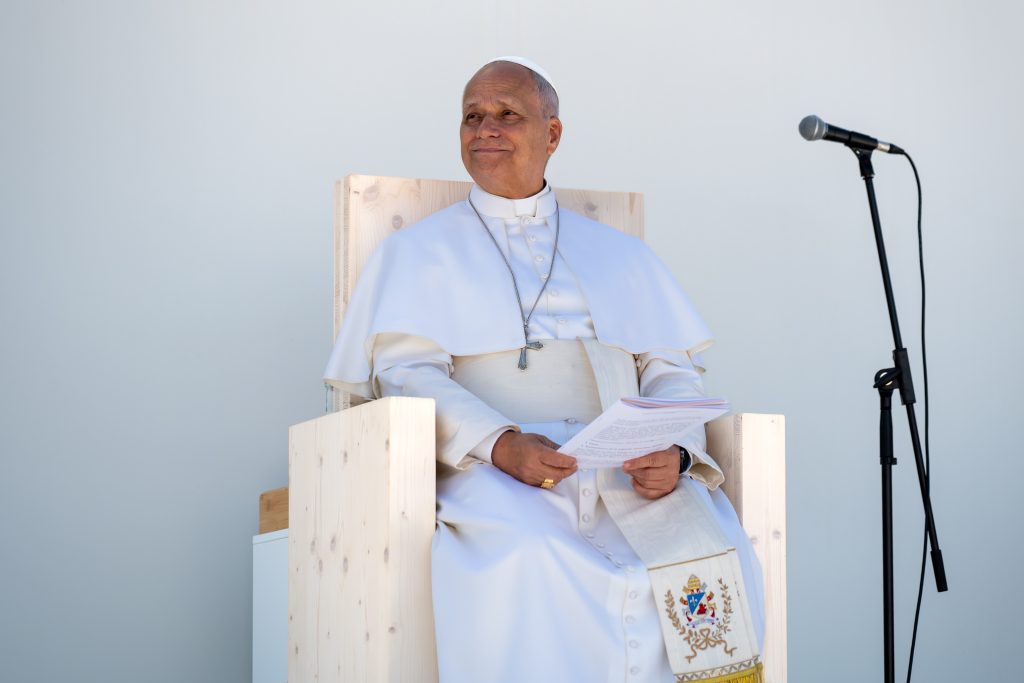
A week later: what Pope Leo’s Spain trip tells us
More than 1.5 million people attended Pope Leo XIV’s Corpus Christi Mass in Madrid. Yet the lasting significance of the trip may lie in what it revealed about Spain’s culture, politics and religious identity A week on from the first apostolic visit to Spain in more than a decade, a great deal has happened in the life of the Church. Cardinal Camillo Ruini, one of the most respected churchmen of his generation, has died. The Holy Father has addressed the situation with the Society of Saint Pius X in off-the-cuff remarks. Details of the June consistory have been leaked. But despite the unusually busy week, the aftermath of the trip can still be felt. The Holy Father used his Wednesday General Audience to reflect on the “warmth” of the reception he received, and the themes he brought to Spain are still being discussed across the country. The trip, and the reaction that followed, offered several insights into both Pope Leo’s pontificate and the state of the Church in Spain. The first is that Pope Leo has the ability to speak with clarity on matters of faith and morals without sitting comfortably in any political camp. Spain is currently under a particularly strong strain of progressivism, with Pedro Sánchez’s socialist government aggressively separating the country from its Catholic past and attacking the sanctity of life, notably through the introduction of assisted suicide. Pope Leo appeared entirely at ease using his speech to the Spanish Parliament, the first by a pontiff, to address politicians’ treatment of the vulnerable. He asked: “Can a community that casts into the shadows the unborn child, the elderly, the sick, those who suffer in silence, or those who depend entirely on the care of others be called fully just?” In case the point was not clear enough, the pontiff also told the politicians that “every human life must be recognised and safeguarded from conception to its natural end, in every circumstance of its existence.” It made for uncomfortable listening in a country which, less than a month earlier, had been scandalised that the government’s commitment to assisted suicide had resulted in the death of Noelia Castillo, a 25 year old disabled survivor of sexual abuse. When the pontiff turned to migration, he adopted a tone that neither the PP and Vox on the right nor Sánchez’s Spanish Socialist Workers’ Party could fully embrace. The Pope called for compassion towards those who have experienced the “tragic drama of migration”, which “challenges the conscience of nations and the ethical foundation of the international order today”. He also stated that wherever there is discrimination based on “national, ethnic, religious or linguistic origin”, human dignity is “seriously violated”. Such sentiments stand in contrast to Vox’s calls for mass deportations and restrictions on citizenship and residence permits for those from what it describes as an “Islamic culture”. At the same time, the Pope was equally keen to defend the right of people to remain in their homelands, a point rarely addressed in contemporary European debates on migration. He said that the matter “goes beyond any purely demographic or economic analysis”, a point which seemed to point to Sánchez’s disproportionate emphasis on the supposed economic benefits of migration. He also stated that the situation “goes beyond the mere management of migration flows”, words that seemed particularly pertinent given the Spanish government’s recent decision to regularise hundreds of thousands of illegal immigrants. Another lesson is that the pain caused by clerical sexual abuse is far from over. As the Pope himself told journalists during the outbound flight to Madrid, sexual abuse remains an “open wound”. He told Spain’s bishops that “one of the most painful encounters is with those who have been wounded precisely by those who were supposed to care for them”. He urged the ecclesial community to respond through “listening, truth, justice, reparations and an even more determined commitment to prevention and a culture of care”. Spain has been comparatively slow in confronting the legacy of clerical sexual abuse, and it was only this year that the country’s bishops’ conference reached an agreement with the government to establish a process for support and reparations for survivors. The theme followed the Holy Father as he left Madrid and travelled to Barcelona. On the second day of the Catalan leg of the trip, he visited the Benedictine Abbey of Montserrat, a symbol of Catalan identity. Yet the abbey has also made headlines in recent years because of revelations concerning abuse committed by former monks. In 2019, it emerged that Andreu Soler, a monk who died in 2008, had abused at least twelve minors over several decades at the institution. During the same year, another monk abused a 17 year old. Jaume Soler Villegas, known as Brother Gabriel, was sentenced to two years in prison, while the monastery was ordered to pay €20,000 in compensation. Miguel Hurtado, the first person to report abuse at Montserrat, sent a letter to the Apostolic Nunciature in Madrid requesting that the papal visit to the Abbey be cancelled. While thousands gathered outside to welcome the Pope, local and international media focused on the abuse scandals and questioned whether an abbey so recently associated with such cases should receive a papal visit. The third lesson, and perhaps the most significant, is that the Catholic character of Spain remains far stronger than many assume. Before the visit, establishing precisely what that meant was remarkably difficult. The Vatican’s pre-visit statistics painted an exceptionally positive picture, listing 45 million Catholics in a population of 49 million, suggesting that 93.25 per cent of Spaniards are Catholic. Based largely on baptismal records, the figures appeared impossibly high. Pew Research put the figure at around 70 per cent in 2020, while the Spanish Centre for Sociological Research (CIS) found that 54.3 per cent of Spaniards identify as Catholic today. At the same time, a poll conducted by Fundación SM found that 45 per cent of Spaniards aged between 15 and 29 identify as Catholic, compared with 31.6 per cent in 2020. The figures are inconsistent and difficult to interpret, but that ambiguity mirrors the reality of the Spanish Church itself. Millions attend Holy Week processions every year, and religious festivals remain a central feature of Spanish life. A man from Málaga once told me that, despite never having been baptised, he always visits his favourite statue of Christ during Holy Week. Six of Spain’s ten national public holidays are religious in origin, including the Assumption and the Immaculate Conception. Even many secular celebrations retain a religious dimension. Spain’s National Day falls on the feast of Our Lady of the Pillar, while New Year’s Day is, for many, the Solemnity of Mary, Mother of God. Alongside this visible Catholic culture, however, there is also widespread religious indifference. While the hermandades , or brotherhoods, continue to attract many young people, Sunday Mass in the average Spanish town will often have few under fifty. Spain has the largest number of monasteries in the world and more than 1,000 men preparing for the priesthood, yet almost 150 religious houses closed between 2012 and 2022. A history of anti-clericalism and the long association of the Church with Francoism have left the Church’s place in society less secure than in neighbouring Italy, where Catholic identity remains more closely intertwined with national identity, or in Malta, a former Spanish possession where legal protections for unborn children remained in place until very recently. Yet Pope Leo’s visit represented a major vote of confidence in the Church. Around 1.5 million people attended the Corpus Christi Mass celebrated by the Holy Father. By comparison, Madrid’s population is approximately 3.5 million, making the scale of attendance proportionally huge. It was one of the largest gatherings of Catholics in Europe outside World Youth Day and represented a 50 per cent increase on attendance during Pope Saint John Paul II’s visit to the city in 2003. Much of the press enjoyed pointing out that the Pope was competing with Bad Bunny, who was touring Spain at the same time. In reality, there was little competition. Despite the remarkable success of the Puerto Rican singer, whose residency broke records for ticket sales by a single artist in Spain, his three-week tour attracted fewer than a quarter of the people who attended events during the Holy Father’s one-week visit. The apostolic visit to Spain was always going to be a significant test. Spain is a religiously complex country, marked by both anti-clerical sentiment and intense religious devotion. In the end, it proved a remarkable personal success for the Holy Father and for the Church more broadly. Yet the pace of the modern papacy allows little time for reflection. Attention will soon turn to the next major challenge. If there is a country capable of matching Spain’s combination of deep Catholic roots and anti-clerical tradition, it is the Church’s eldest daughter, France, which Pope Leo is due to visit in September.
Jun. 20, 2026
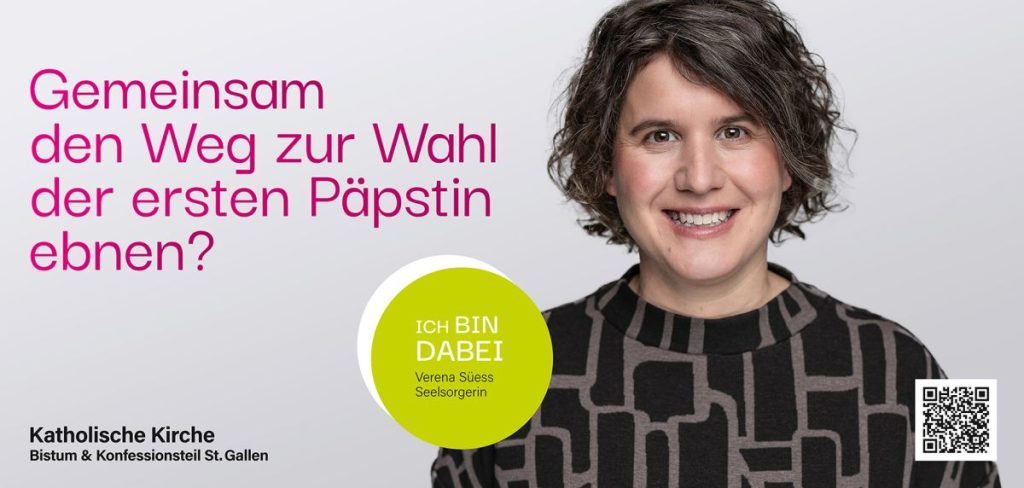
Diocese of St Gallen campaign asks: ‘Shall we pave the way for the first female pope?’
The Diocese of St Gallen says its new “I’m In” campaign is intended to encourage participation in the Church. One poster has attracted particular attention for a question about the possibility of a female pope The Diocese of St Gallen has launched a public campaign that includes a call to “pave the way” for the election of the first female pope. The Swiss diocese unveiled its “I’m In” (Ich bin dabei) campaign in early May across around 25 towns and villages. Promoted through billboards, social media and a dedicated website, the project seeks to highlight the Church’s charitable, pastoral and educational work while encouraging greater public engagement. Among the posters is one featuring a pastoral worker posing the question: “Shall we pave the way for the election of the first female Pope?” The slogan is followed by the campaign’s recurring response: “I’m in.” The Church teaches that it lacks the authority to ordain women to the priesthood, a position reaffirmed by successive pontiffs and most notably set out by Pope St John Paul II in the 1994 apostolic letter Ordinatio Sacerdotalis. Since the papacy is intrinsically linked to the episcopate and priesthood, the prospect of a female pope is regarded by Catholic doctrine as impossible under the Church’s present understanding of Holy Orders. The campaign intends to present the Church as a place of participation and dialogue. Other advertisements focus on youth work, care for the elderly, prison and hospital chaplaincy, assistance for the poor, intercultural ministry, abuse prevention and Christian education. Clergy, employees and volunteers are shown asking a variety of questions intended to stimulate discussion before concluding with the phrase “I’m in”. The campaign has also drawn renewed attention to the leadership of the diocese under Bishop Beat Grögli, who was appointed by Pope Leo XIV in May 2025 following his election by the cathedral chapter of St Gallen. Bishop Grögli has long been associated with reform-minded positions within the Swiss Church and has publicly expressed support for the possibility of women being admitted to ordained ministry in the future. Speaking after his election as bishop, he stated: “Women’s priesthood will come.” In earlier comments, he argued that the theological case against the ordination of women was unconvincing. “I find the theological argumentation against the ordination of women to be weak,” the bishop said, adding that the prospect of women exercising priestly ministry did not trouble him should Rome one day permit it. Bishop Grögli has also argued that “the ordained ministry can no longer be solely a man’s affair”. While emphasising communion with Rome and the universal Church, he has likewise spoken favourably of synodality, describing it as a means of sharing responsibility across the Church and ensuring that the voices of clergy and laity are heard more fully. The bishop has also attracted attention for comments on the pastoral care of homosexual Catholics. In an interview discussing blessings for same-sex couples, he said: “I am a pastor. A blessing ceremony is not a church-political manifestation.” Bishop Grögli has also been critical of the Traditional Latin Mass and of communities attached to it. “Often the Old Mass is linked with certain theological ideas, worldviews and political opinions that are not mine at all,” the bishop said. He continued: “What is difficult about these groups is that they have withdrawn from the larger community. The liturgy they celebrate does not develop further.” These comments have contributed to the perception of Bishop Grögli as one of the more progressive figures within the Swiss episcopate. The controversy surrounding the “I’m In” campaign is likely to be received favourably in St Gallen itself. The diocese became internationally known during the pontificate of St John Paul II because of informal meetings held by a group of senior churchmen who gathered periodically in the Swiss city to discuss the future direction of the Church. The group, which included several prominent European cardinals and bishops, later became known as the “St Gallen Group”. Although its members rejected suggestions that it functioned as an organised political faction, it came to symbolise a reformist current within Catholicism that favoured greater collegiality, decentralisation and discussion of issues such as clerical celibacy and the role of women. Interest in the city intensified following the publication of authorised biographies of the late Cardinal Godfried Danneels of Belgium, who acknowledged participation in the meetings. The latest campaign is therefore likely to reinforce perceptions among many Catholics that St Gallen remains one of the most progressive dioceses in Europe. Its organisers, however, have presented the initiative primarily as an exercise in evangelisation and public engagement. Through posters, online videos and personal testimonies, the campaign seeks to showcase the work undertaken daily by clergy and volunteers and to encourage people to take part in parish and diocesan life. Bishop Grögli himself appears in campaign material explaining why he remains committed to the Church. “I’m in the Church because faith is important to me, because I want to live this faith with other people, and because I want to help shape the Church with my talents and joy,” the bishop says.
Jun. 19, 2026
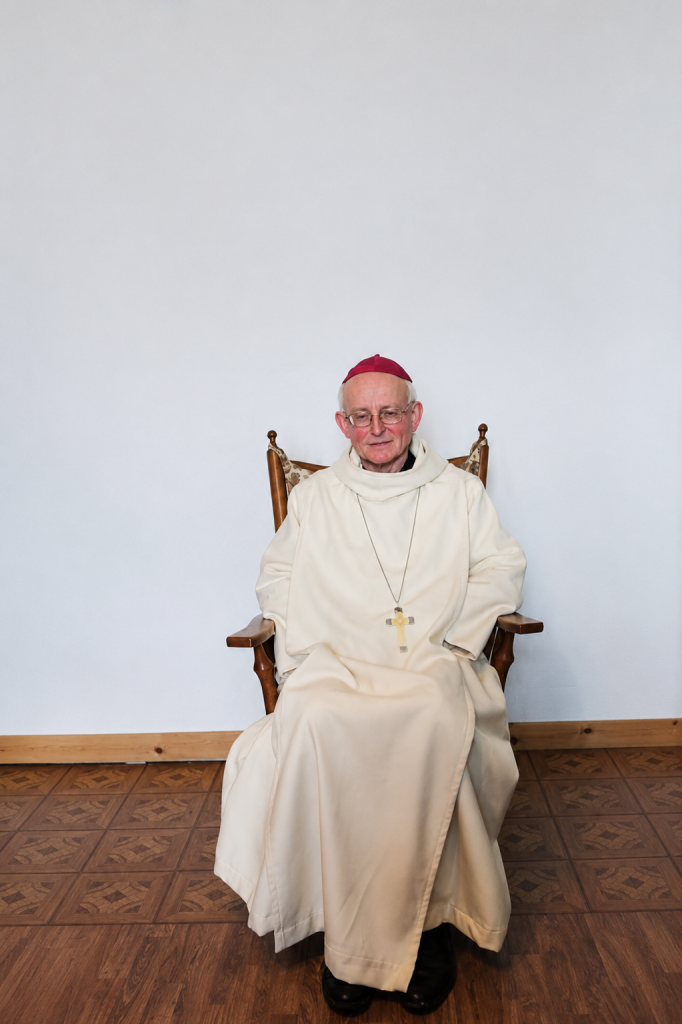
Aberdeen bishop says Catholics should not attend planned Papa Stronsay consecration
The Bishop of Aberdeen has warned Catholics not to attend the planned episcopal consecration of Fr Michael Mary on Papa Stronsay, saying any such ordination would be unlawful and a grave act of disobedience The Bishop of Aberdeen has warned Catholics not to attend the planned episcopal consecration of the founder of the Sons of the Most Holy Redeemer by a sedevacantist bishop. The statement by Bishop Hugh Gilbert OSB follows the announcement that Fr Michael Mary, the founder and Rector Major of the congregation based on the island of Papa Stronsay in Orkney, is due to be consecrated a bishop on 25 July by bishops associated with the sedevacantist movement. In a statement issued after news of the planned ceremony reached the Diocese of Aberdeen, Bishop Gilbert said he was obliged to clarify the Church’s position because the consecration is expected to take place within the geographical boundaries of his diocese. “Any such episcopal ordination would be unlawful and a grave act of disobedience, separating those taking part from communion with the Catholic Church,” the bishop said. “No member of the faithful should attend. This action is not ‘for the good of the Catholic Church’ as is falsely claimed.” The statement added: “This ordination would be celebrated without a papal mandate, by a group of bishops who deny that Our Holy Father Pope Leo XIV is actually the pope.” His Grace concluded: “This development is greatly to be regretted, and we can only pray that those concerned have a change of heart.” The statement marks the latest chapter in a dramatic rupture between the community and Rome that has unfolded over the past two years and culminated in plans for an episcopal consecration without papal approval. The announcement was made earlier on 18 June by Bishop Pierre Roy, a Canadian sedevacantist bishop, who said that Fr Michael Mary would receive episcopal consecration at the monastery on Papa Stronsay with the assistance of Bishops Rodrigo Ribeiro da Silva and Fernando Altamira. In a lengthy explanation of his decision, Bishop Roy argued that the congregation’s growing international presence required a resident bishop. He said the order now has a presence in Scotland, New Zealand and the United States, and undertakes apostolic work elsewhere in Oceania. “The Redemptorists have houses in Scotland, New Zealand, and the United States,” he wrote. “From these houses, they visit Samoa, Australia, and other places.” Bishop Roy argued that it had become increasingly difficult for him to provide oversight personally and said it was “reasonable and necessary to give the Redemptorists a bishop who could properly care for a flock that already knew the sound of his fatherly voice”. Bishop Roy openly acknowledged that the consecration would take place “in the absence of an apostolic mandate”, arguing that the Holy See is occupied by illegitimate authorities and therefore incapable of granting one. That position is the central claim of sedevacantism, a movement which maintains that there is currently no valid pope. Although different groups identify different points at which the papacy supposedly became vacant, they generally argue that the reforms and teachings associated with the Second Vatican Council demonstrate that recent pontiffs could not have been legitimate successors of St Peter. Founded in 1988 by Fr Michael Mary, during a period of intense turmoil following the episcopal consecrations carried out by Archbishop Marcel Lefebvre that same year, the congregation eventually established itself on Papa Stronsay, a remote island in the Orkney archipelago. The election of Pope Benedict XVI appeared to heal divisions with some traditionalist communities, and the congregation sought reconciliation with Rome, entering into full communion with the Holy See in 2008. That reconciliation appeared to be firmly consolidated in 2012 when the community received formal canonical recognition from Bishop Gilbert as a diocesan institute within the Diocese of Aberdeen. For a period, the congregation seemed to have secured a stable future within the life of the Church. However, tensions later emerged, particularly following controversies connected with the community’s activities in New Zealand. Disputes concerning alleged exorcisms and wider questions of governance and ecclesial obedience led to increasing scrutiny from Church authorities. Matters eventually reached a turning point when Bishop Michael Gielen of Christchurch withdrew the community’s faculties and ordered its departure from the diocese. Appeals failed, and relations between the congregation and ecclesiastical authorities deteriorated rapidly. The decisive break came when the community publicly rejected key developments in the post-conciliar Church and concluded that the Catholic faith could not be reconciled with what it described as the modern Church that emerged after the Second Vatican Council. That declaration prompted a strongly worded response from Bishop Gilbert, who said the diocese “deeply regrets the tone, direction and key elements” of the community’s position and warned that it was incompatible with the Catholic understanding of ecclesial unity.
Jun. 19, 2026
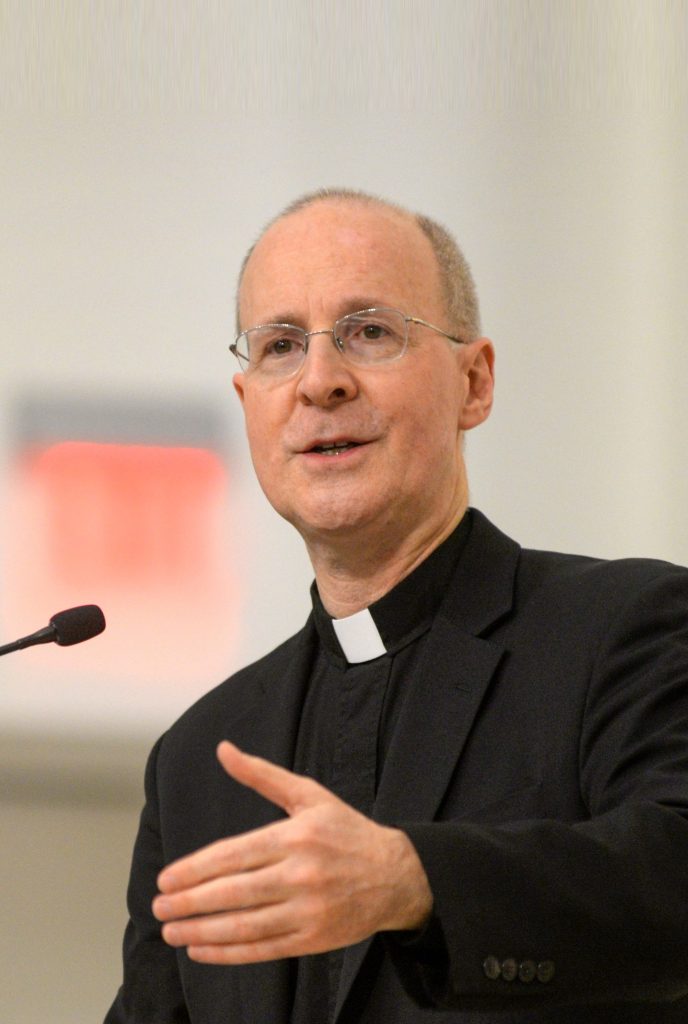
Two US cardinals back Fr James Martin’s LGBT outreach conference
Two US cardinals have sent messages of support to Outreach 2026, Fr James Martin’s annual LGBT Catholic conference. Both cardinals linked the gathering to the Synod on Synodality and the Church’s mission of accompaniment and evangelisation. Read more Two of the most influential cardinals in the Church in the United States have sent messages of support to Fr James Martin’s annual LGBT outreach conference. The messages were issued for Outreach 2026, a conference marking five years of Outreach, the LGBT Catholic resource organisation founded by Fr Martin in conjunction with America Media. The event, titled Walking Side by Side: Celebrating Five Years of Outreach Ministries , is taking place at Georgetown University in Washington, DC, from 19 to 21 June. In a letter dated 19 June, Cardinal McElroy, Archbishop of Washington, welcomed participants to the gathering and linked the conference to developments following both the Synod on Synodality and the pontificate of Pope Francis. “I am delighted to welcome you to the 2026 Outreach Conference here in Washington,” His Eminence wrote. “For I know that the Holy Spirit will be profoundly present in our meetings and discussions at this key time in the history of our Church and our nation.” The cardinal said the conference was being held at a moment when “the pastoral foundations laid by Pope Francis for authentic ministry to and with the LGBT community are being deepened and refined by Pope Leo”. Cardinal McElroy also mentioned the report of Study Group 9, one of the working groups established during the Synod on Synodality process. “And the conference comes directly after the release of Study Group 9 of the Synod on Synodality, which places LGBT ministry within a new paradigm that integrates powerfully the experience of faith-filled and diverse disciples as a basis for understanding the call to holiness in all of its concreteness,” Cardinal McElroy wrote. “This new paradigm points to the true pathway for establishing Todos, Todos, Todos in our Church, ever ancient and ever new.” The cardinal concluded by telling delegates that they would gather in Washington “for prayer, thanksgiving and dialogue”. Cardinal Blase Cupich, Archbishop of Chicago, also sent a message to conference participants, praising efforts to expand ministry and outreach to LGBT Catholics in parishes. “Greetings and best wishes as you gather for your conference, ‘Walking Side by Side: Celebrating Five Years of Outreach Ministries’,” the Cardinal Archbishop of Chicago wrote. “Listening to and accompanying each other are essential to ensuring a thriving Church.” The cardinal noted that the conference included leaders from parishes as well as representatives of the Archdiocese of Chicago’s Gay and Lesbian Outreach ministry. “I am pleased to note that this conference features leaders from some of our most vibrant parishes and our Archdiocesan Gay and Lesbian Outreach (AGLO), who will share their insights on fostering outreach to LGBTQ Catholics and a culture of welcome, hospitality and proclaiming the Gospel in our parishes and ministries,” His Eminence said. Cardinal Cupich said the theme of the conference reflected the priorities of a synodal Church and what he described as the “current new missionary age”. “The conference theme resonates well in our synodal Church and in the current new missionary age,” the cardinal wrote. He added that Christians should look to the example of the early Church: “It is helpful to look to the early Christians who were determined that no one felt left out or was left behind.” The Chicago cardinal said that listening to people’s experiences of faith and recognising evangelisation as a process enabled individuals to grow in their relationship with Christ and with fellow Catholics. “Making a greater effort to listen to people’s faith journeys by recognising evangelisation as a process enables people to grow in their relationship with Jesus Christ and in solidarity with other members of the Body of Christ,” Cardinal Cupich wrote. He added: “These efforts strengthen individuals and parishes in witnessing to the transforming power of Christ’s love, mercy and hope, a message desperately needed in our polarised culture and world.” Cardinal Cupich concluded by thanking those involved in the ministry and invoking the episcopal motto of Pope Leo XIV. “With gratitude for your commitment to outreach, I join my prayers to yours that the conference enriches you, encourages you to walk with others in faith and embodies, as Pope Leo XIV’s motto beautifully expresses, ‘In the One, we are one’ ( In illo uno unum ).” The conference programme includes liturgies, keynote addresses, panel discussions and workshops focused on LGBT ministry in the Catholic Church. Topics scheduled for discussion include theology and LGBT Catholics, parish outreach, mental health, Scripture, women in the Church and the experiences of transgender Catholics. Among the keynote speakers are Kerry Robinson, president and chief executive of Catholic Charities USA, and the Jesuit moral theologian Fr James Keenan. The gathering began on 19 June with a welcome Mass celebrated by Fr Martin and will conclude on 21 June with a commissioning service. Outreach traces its origins to Fr Martin’s wider ministry to Catholics who identify as LGBT and their families. The initiative emerged from work that followed publication of his 2017 book Building a Bridge , which called for greater dialogue between the Church and LGBT Catholics. Outreach launched formally in 2022 and has since organised conferences, published articles and hosted discussions focused on pastoral accompaniment and inclusion within the life of the Church. Previous Outreach events received messages of support from Pope Francis, who repeatedly encouraged pastoral outreach and accompaniment for LGBT Catholics and their families. In one message to participants, Pope Francis wrote: “I am glad that Cardinal Gregory will celebrate the Mass; I will be spiritually with him and with all of you, united in prayer.” Pope Francis also told Outreach that God “does not disown any of his children”, while encouraging ministry to LGBT Catholics and their families.
Jun. 19, 2026