

Second Vatican Council
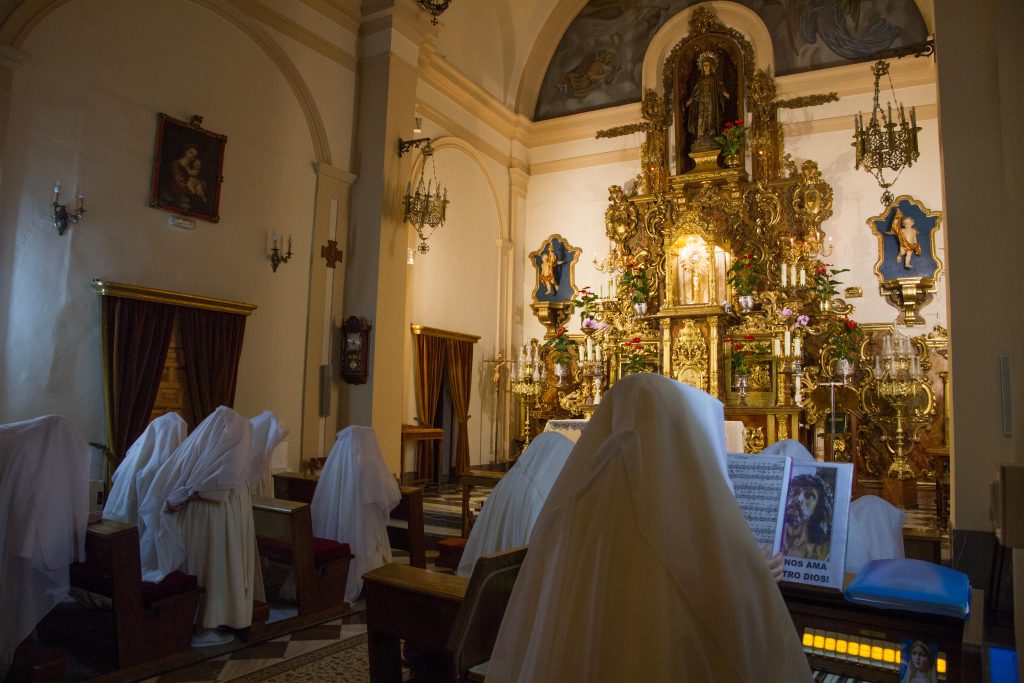
In search of lost Prime
For centuries, Prime sanctified the beginning of the working day. Then, with a single line in Sacrosanctum Concilium, the Church’s first daytime hour disappeared from the Roman Office. Was its suppression really an improvement? Something I never thought I’d write: there may be good reasons to defend Sacrosanctum Concilium (SC), the Second Vatican Council’s constitution on the sacred liturgy. Yes, it is shot through with the rationalism of its age; it is, perhaps, culpably ambiguous, no sooner commending Latin than providing a carte blanche for the extension of the vernacular. But, in arguments with progressives, I have found it personally helpful to refer, if you will, to the “spirit” of the Concilium , since those who see it as a progressive text can only do so by ignoring the sensus Catholicus and sensus fidelium with which all of the Church’s magisterial documents should be interpreted. “I know you despise Gregorian chant, Fr New Man, but can I direct you to Vatican II for a moment?” However, there were certain definite casualties of SC for which it is difficult to find a charitable explanation. “The hour of Prime is to be suppressed,” reads paragraph d of section 89. It does not elaborate. Thus ended a 1,500-year-old liturgical gem. Prime appears to have been instituted in Bethlehem in the late fourth century. At least, this is one of the earliest mentions of it; Cassian notes that monks were creeping back to bed after Lauds. To prevent such an outrage, a new little hour was introduced consisting of an Ambrosian hymn ( Iam lucis orto sidere ), three psalms, a chapter, versicle, Pater Noster , and collect. Since, however, it was born of exigence, and lacked both the antiquity of the other little hours and the solemnity of Lauds and Vespers, the reformers did not think it a viable flower in the new springtime. And yet, by the 1960s Prime had become a favourite of the laity – certainly of Benedictine oblates. Shorter and later than Lauds, and employing psalms that hallowed the toil of ordinary life, it was the perfect office for parents, soldiers, workers, and anyone else who did not have the luxury (ironically) of observing a monastic or clerical schedule. Dorothy Day and her fellow Catholics in the Catholic Worker movement were committed to Prime; and it was not uncommon in this period to identify as a “Prime and Compline Catholic”. As Dom Mark Kirby, founder of Silverstream Priory in Ireland, writes: “I have long been of the opinion that Prime and Compline are the working man’s Hours of the Divine Office. Brief and, for the most part, invariable, they correspond to the natural rhythm of the working man’s day and family life. My dear and venerable friend, artist Adé de Béthune, another Benedictine Oblate, used to pray Prime and Compline, as did many Catholic layfolk prior to the Second Vatican Council.” Compline, too, suffered mutilation at the hands of the Concilium : “Compline is to be drawn up so that it will be a suitable prayer for the end of the day.” The word chutzpah comes to mind. Are we to suppose that Compline was not suitable before Bugnini? That it was insufficient for the likes of St Benedict, or any of the numberless saints who recited its prayers for well over a millennium? I, for one, struggle to think of a more fitting admonishment for those retiring for the night than 1 Peter 5:8: “Brethren, be sober and watch, because your adversary the devil, as a roaring lion, goeth about seeking whom he may devour, whom resist ye, strong in faith” (1 Peter 5:8). This was rendered occasional in the Liturgy of the Hours (which, to its credit, retained the medieval accretion, not to be found in the traditional Benedictine breviary, of the Nunc Dimittis ). Note the Concilium ’s assumption – and this is hardly an original observation on my part – that organic, bottom-up, time-hallowed customs can be improved by sheer force of rational will, and that they should cater to the tastes of an apparently entirely new species (modern man). Had the Concilium actually consulted the laity, it might have found that Prime, an accidental adaptation, had been happily requisitioned. This applies to politics no less than religion. Indeed, it is the great strength of conservative political thought to have made its own the central truth that accidental arrangements can become necessary settlements. To be Catholic is, in part, simply to acknowledge this truth. The Roman Rite itself would be unrecognisable now without the washing of the feet on Maundy Thursday, or the blessing of the fire from which the Paschal candle is lit – both contributions from Celtic and German priests in the Carolingian kingdom, and a lovely real-world instance of mutual enrichment (Romans were evidently much too laconic for those bawdy Franks). At the heart of the Concilium ’s efforts, therefore, lies a fallacy: that a liturgical action, whether in the Missal or the breviary, is unsuitable unless each part has been constructed from first principles for a discrete purpose with an explicable origin; and, furthermore, that repetition – such as the ninefold Kyrie or the priest making the sign of the cross 52 times (as compared to eight times in the Novus Ordo ) – is undesirable because it exceeds the strict criterion of simple validity. The irony is that Prime was never actually suppressed in monasteries. The prohibition applied only to the Roman Breviary. Monks, on the other hand, were perfectly free to carry on praying it. Few Benedictine monasteries now do so. It is, however, the traditional monasteries, which cleave to their holy father Benedict’s original psalter, that draw the greatest numbers of pilgrims and novitiates to their doors. Perhaps, as in Walter M. Miller Jr.’s great sci-fi novel A Canticle for Leibowitz , it will be for future generations to carry the torch through the darkness, and to discover for themselves – in their abbeys and domestic churches – the hour that was.
Jul. 18, 2026
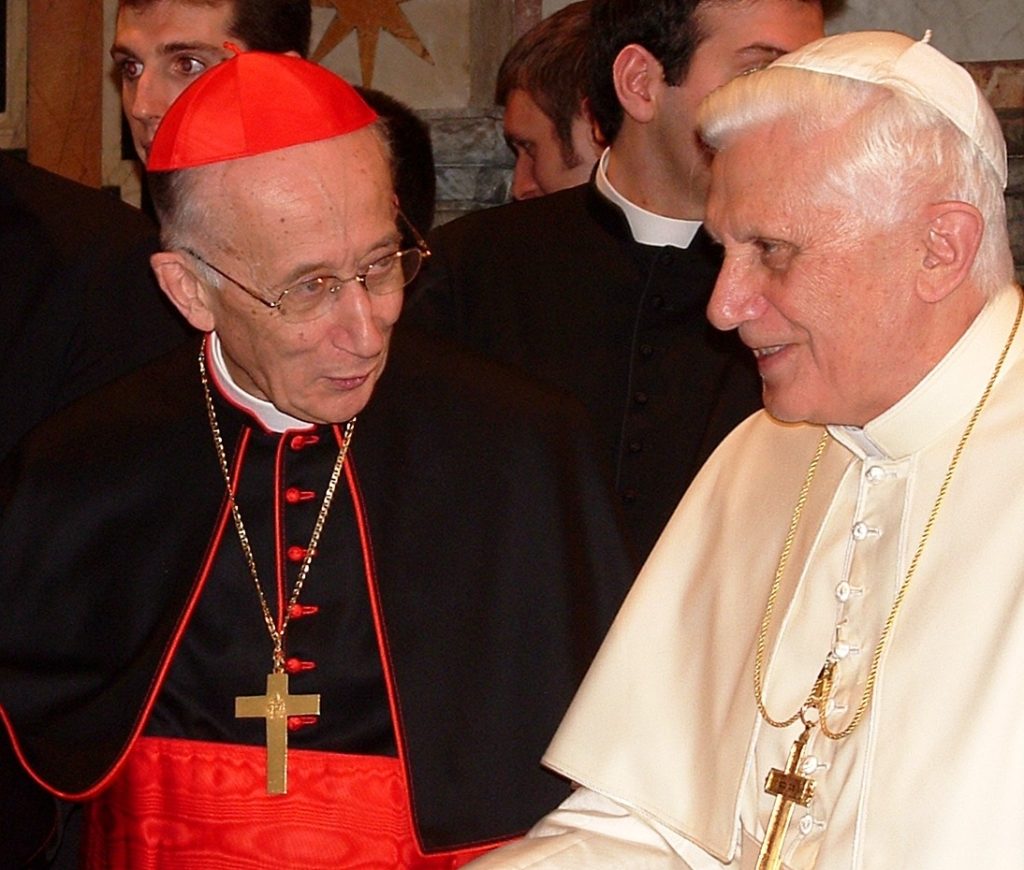
Cardinal Ruini’s testament reveals final thoughts on Pope Francis
The full testament of Cardinal Camillo Ruini has been published, including passages on Pope Francis and the post-conciliar Church that this publication can reveal some close to the late cardinal feared might never be made public. Read more. The full testament of Cardinal Camillo Ruini has been published after people close to the late cardinal expressed concern that parts of the document might never be made public. The disclosure followed the late cardinal’s death and Pope Leo XIV’s citation of the testament during his homily at Ruini’s Requiem Mass. The testament was exclusively published by Messa in Latino , which released the complete spiritual text and stated that it was doing so to prevent the document from being “cut” or amended. The revelation has taken on additional significance as AdVaticanum can reveal that there were concerns the testament would not be published in its entirety. To date, neither the Holy See Press Office nor the Vatican has done so. On good authority, this publication can reveal that people close to the late cardinal wanted the complete testament published, particularly those sections dealing with the post-Second Vatican Council Church and Pope Francis. Reflecting on the last pontificate, Cardinal Ruini expressed gratitude for what he described as the late Pope’s “extraordinary evangelising drive”, but also acknowledged a struggle with some of the directions taken by the Church in recent years. “When Pope Francis was elected, I rejoiced and, to the extent I could, immediately supported him,” the late cardinal wrote. “Even today, I rejoice and thank him for his extraordinary evangelising drive.” Yet the cardinal continued with a note of candour unusual in a spiritual testament: “I must confess, however, that I find myself in a state of unease, certainly not for personal reasons, but because I struggle to understand certain orientations that seem to reopen wounds that have barely healed since the Council. I humbly ask the Lord to convince me inwardly that the Church is His and that He Himself cares for it, beyond our human views.” Long regarded as one of the most influential churchmen of the post-war Italian Church, Cardinal Ruini was a steadfast supporter of the Second Vatican Council while also becoming one of the most prominent critics of what he viewed as distortions in its implementation. That dual concern is visible throughout the testament. Reflecting on his years as a priest in Reggio Emilia, Cardinal Ruini gave thanks for the Council itself, writing that he was grateful “for the Second Vatican Council, for having experienced it and helped others experience it joyfully in Reggio Emilia, and also for having given me the clarity and strength to oppose the post-conciliar excesses”. The cardinal presented himself as a defender of the Council who believed that some developments undertaken in its name had gone beyond the intentions of the Fathers who gathered in Rome between 1962 and 1965. The testament also sheds fresh light on Ruini’s relationship with the last three pontificates. He described St John Paul II as “a very special grace”, recalling more than two decades of close collaboration after becoming one of the Polish Pope’s most trusted advisers. “In John Paul II, I experienced your presence, Lord,” Cardinal Ruini wrote. “I was able to touch firsthand the union in prayer, the inseparability of prayer, life and apostolate, the courage of faith that guides history, and the capacity to love and forgive.” His words concerning Pope Benedict XVI were similarly affectionate. “After John Paul II, I collaborated for three years with Benedict XVI, and I thank him wholeheartedly, also for the affection he continues to show me,” the late cardinal wrote. Yet despite his immense ecclesiastical influence, the testament is notable for its intensely personal and penitential tone. Cardinal Ruini repeatedly asks forgiveness for failures, weaknesses and sins, presenting himself not as a prince of the Church but as a Christian preparing for judgement. “I confess first of all the weakness of my faith,” the former Cardinal Archpriest of St John Lateran wrote. “Despite all this, however, in the depths of my heart I have always been sustained by faith, even though, by the grace of God, I believe I have never succumbed to temptation.” The testament also reveals a recurring theme of gratitude. Cardinal Ruini meticulously recalled family members, friends, priests, collaborators and colleagues who shaped his life, from his childhood in Sassuolo to his years at the Gregorian University and the Almo Collegio Capranica, and later his service as President of the Italian Bishops’ Conference and Cardinal Vicar of Rome. At the same time, he acknowledged that the authority he exercised could sometimes be accompanied by severity. “I recognise and confess, however, that I have at times acted with substantial harshness,” he wrote, before asking forgiveness from those whom he had caused pain. In the end, however, the testament is less a political statement than a spiritual examination of conscience. Its final pages are occupied not by ecclesiastical disputes but by an appeal for mercy and perseverance. “Lord, faithful God, never tire of loving me, calling me, and converting me,” Cardinal Ruini wrote. “Father, rich in mercy, grant me and all my brothers and sisters in humanity the grace of final perseverance.”
Jun. 18, 2026
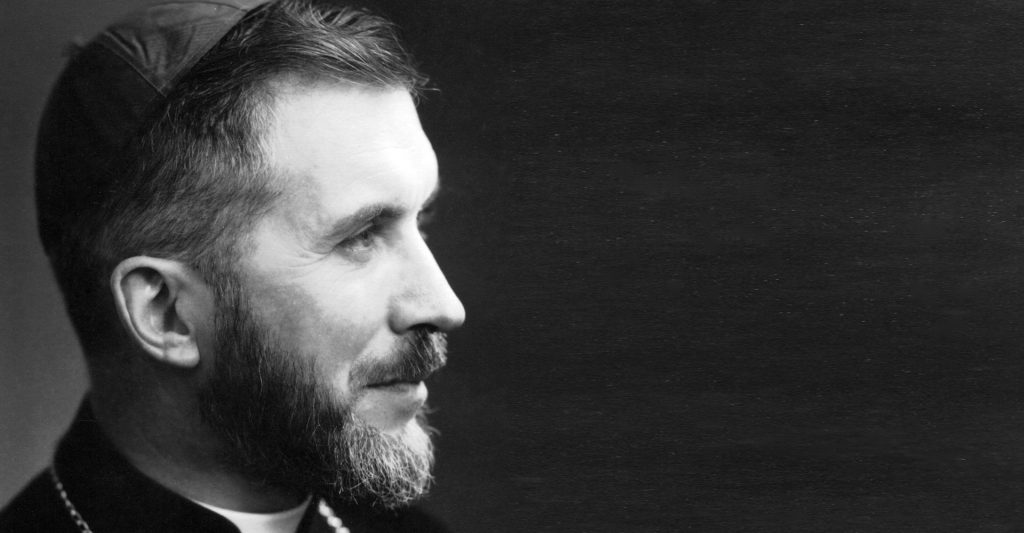
The SSPX, the Magisterium, and the temptation of the hinterland
Drawing on his own journey from Anglican bishop to Catholic convert, Gavin Ashenden argues that however compelling the SSPX may appear, the temptation to step beyond communion with Rome leads into a theological “hinterland” where private judgement takes precedence over the Magisterium I have been surprised at the extent of anxiety and animosity that almost always accompanies any discussion about the relationship between the SSPX and the Vatican. Over time, I have become increasingly grateful for and impressed by the witness and courage of Archbishop Lefebvre — but equally impressed by the flexibility of Benedict XVI and the way in which the dynamic relationship between the SSPX and the Vatican changed and modulated under his leadership. Of course, much of the anger and fear can be traced back to the complex question of the Second Vatican Council, the period of its reception, and the troubling phenomenon of “the spirit of Vatican II”. One of the attractions of the SSPX is that it cuts through the whole complexity like Alexander’s sword through the Gordian knot. Once you have accepted the SSPX and the integrity of its arguments, you no longer have to think or struggle with the difficulties that the Council and its reception throw up. As I have listened to people arguing on both sides, it has become clear that neither possesses a monopoly on unreasonableness, stubbornness, name-calling, vitriol, or misrepresentation. But one of the formative elements in my own becoming a Catholic was the importance of the Magisterium. I was one of those Anglicans who found it easy to persuade himself that, as an Anglican, I had the best of both worlds: Catholic integrity combined with Anglican freedom. I do not normally talk much about my time as an episcopal bishop, but one of the attractions of the invitation to accept consecration — in order to provide a foundation for dissident Anglicans fleeing the collapse of the Church of England but too anxious to convert fully to Rome — was the creation of yet another halfway house: a mixed ecclesial economy with enough that looked Catholic to persuade its adherents that they were Catholic, without requiring them to take the full step of submitting to the authority of the Holy Father and accepting in full the Catechism and the Magisterium. As it happened, the experience of trying to negotiate between different Anglo-Catholic groupings as we sought to construct a coalition of sacramentally minded Anglicans was one of the things that deepened my love and appreciation of the Magisterium. The moment one steps outside the authority of the Catholic Church and the privilege of being in communion with Rome, one enters a hinterland of revolution where the epistemological centre of one’s spirituality shifts from the Petrine river of authenticity to oneself. One might even describe this as the Protestant spirit. And the difficulty is this: it does not matter how Catholic your investments are, how Catholic your liturgy is, or how Catholic your spirituality may appear — if one is outside communion with Rome, one is not Catholic. It does not really matter what kind of heretical or schismatic posture one eventually adopts. It does not matter whether one is slightly to one side of the dotted line on the Anglican side, or slightly to the other side on the ultra-Catholic side. The end result is the same. If you are outside of communion with Rome, you are no longer truly Catholic. It is the Magisterium and communion with Peter that provide the distinctive difference. One of the temptations of supporting the SSPX is, of course, the fact that one no longer has to remain patient with the whole process of infighting and interpretation that the reception of the Council’s documents requires. Particularly within our modern culture, ten years can seem like a millennium. But as it happens, it does take longer for the full implications of a Council to seep into the bloodstream of the Church as the balancing act between past and present is refined and modulated. The relief and joy of abandoning the obscure hinterland where private judgement takes precedence over obedience and submission is something I would never want to exchange for a personalised validation of the faith — attractive though it may seem when the people running the show appear untrustworthy, unattractive theologically, or compromised in ways that place them at odds with authentic magisterial spirituality and identity. I am beginning to think from my conversations with informed individuals that although I had hoped Cardinal Fernández was operating independently from Leo XIV, it may be that the threatened excommunication is not a bluff. It may be that to consecrate bishops without papal approval is one that simply cannot be accepted by the Pope under any circumstances. It is very easy to compare the way in which the German Synodal Path has pushed at the limits of orthodoxy on the left — without being sharply reined in or excommunicated — and compare that unfavourably with the way the SSPX are being treated. But I think this mistakes the notion of symmetry. In political terms, there is no symmetry between those committed to progressive utopianism on the one hand and those committed to conserving and protecting what is good on the other, as though they were merely equal and opposite distortions of the same instinct. Likewise, I do not think that the liberal-progressive abuses of the Catholic faith on the left are equivalent to the proposed refusal to accept the limitations of canon law on the sacramental and traditionalist right. That is not to say I have any sympathy at all with the idiocies and Protestantisation of the faith in which the German Synodal process continues to indulge. But on the left, this generally takes the form of abusing process, stretching boundaries irresponsibly — the behaviour of a recalcitrant teenager not yet fully prepared to leave home forever, but continually testing how far the boundaries can be pushed. On the right, however, what the SSPX is contemplating is a direct and dramatic repudiation of canon law and obedience in a way that strikes at the very heart of Catholic order and Catholic identity. Bishops derive their authority from the Pope himself. Otherwise, in any true conceptual sense, they are not Catholic bishops at all. They become bishops of protest — bishops whose consecration is born out of a determination to protest against Petrine authority. However attracted I may be to the integrity of the Latin Mass, and however deep my mistrust of the inadequacies of the Novus Ordo may at times be, the boundary of canon law and obedient episcopal order becomes impossible to ignore. Schism is rather like pregnancy because one can no more be “a little bit pregnant” than one can be “a little bit schismatic”. I hope very much that Cardinal Fernández is bluffing. I hope very much that Leo XIV may simply have given him room to manoeuvre in order to test what may come of negotiations with the SSPX. However, if I am wrong, and if the SSPX do not back down — which seems the only likely scenario at present — then I would not exchange communion with Peter and the protection of the Magisterium for a quick-fix protest against the spirit of Vatican II. The price is too high.
Jun. 15, 2026