

Magisterium
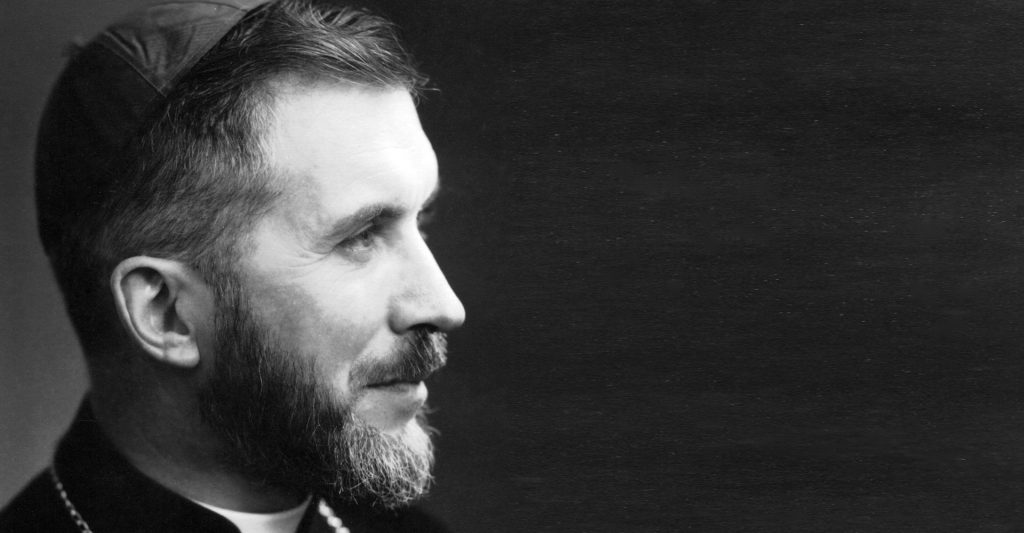
The SSPX, the Magisterium, and the temptation of the hinterland
Drawing on his own journey from Anglican bishop to Catholic convert, Gavin Ashenden argues that however compelling the SSPX may appear, the temptation to step beyond communion with Rome leads into a theological “hinterland” where private judgement takes precedence over the Magisterium I have been surprised at the extent of anxiety and animosity that almost always accompanies any discussion about the relationship between the SSPX and the Vatican. Over time, I have become increasingly grateful for and impressed by the witness and courage of Archbishop Lefebvre — but equally impressed by the flexibility of Benedict XVI and the way in which the dynamic relationship between the SSPX and the Vatican changed and modulated under his leadership. Of course, much of the anger and fear can be traced back to the complex question of the Second Vatican Council, the period of its reception, and the troubling phenomenon of “the spirit of Vatican II”. One of the attractions of the SSPX is that it cuts through the whole complexity like Alexander’s sword through the Gordian knot. Once you have accepted the SSPX and the integrity of its arguments, you no longer have to think or struggle with the difficulties that the Council and its reception throw up. As I have listened to people arguing on both sides, it has become clear that neither possesses a monopoly on unreasonableness, stubbornness, name-calling, vitriol, or misrepresentation. But one of the formative elements in my own becoming a Catholic was the importance of the Magisterium. I was one of those Anglicans who found it easy to persuade himself that, as an Anglican, I had the best of both worlds: Catholic integrity combined with Anglican freedom. I do not normally talk much about my time as an episcopal bishop, but one of the attractions of the invitation to accept consecration — in order to provide a foundation for dissident Anglicans fleeing the collapse of the Church of England but too anxious to convert fully to Rome — was the creation of yet another halfway house: a mixed ecclesial economy with enough that looked Catholic to persuade its adherents that they were Catholic, without requiring them to take the full step of submitting to the authority of the Holy Father and accepting in full the Catechism and the Magisterium. As it happened, the experience of trying to negotiate between different Anglo-Catholic groupings as we sought to construct a coalition of sacramentally minded Anglicans was one of the things that deepened my love and appreciation of the Magisterium. The moment one steps outside the authority of the Catholic Church and the privilege of being in communion with Rome, one enters a hinterland of revolution where the epistemological centre of one’s spirituality shifts from the Petrine river of authenticity to oneself. One might even describe this as the Protestant spirit. And the difficulty is this: it does not matter how Catholic your investments are, how Catholic your liturgy is, or how Catholic your spirituality may appear — if one is outside communion with Rome, one is not Catholic. It does not really matter what kind of heretical or schismatic posture one eventually adopts. It does not matter whether one is slightly to one side of the dotted line on the Anglican side, or slightly to the other side on the ultra-Catholic side. The end result is the same. If you are outside of communion with Rome, you are no longer truly Catholic. It is the Magisterium and communion with Peter that provide the distinctive difference. One of the temptations of supporting the SSPX is, of course, the fact that one no longer has to remain patient with the whole process of infighting and interpretation that the reception of the Council’s documents requires. Particularly within our modern culture, ten years can seem like a millennium. But as it happens, it does take longer for the full implications of a Council to seep into the bloodstream of the Church as the balancing act between past and present is refined and modulated. The relief and joy of abandoning the obscure hinterland where private judgement takes precedence over obedience and submission is something I would never want to exchange for a personalised validation of the faith — attractive though it may seem when the people running the show appear untrustworthy, unattractive theologically, or compromised in ways that place them at odds with authentic magisterial spirituality and identity. I am beginning to think from my conversations with informed individuals that although I had hoped Cardinal Fernández was operating independently from Leo XIV, it may be that the threatened excommunication is not a bluff. It may be that to consecrate bishops without papal approval is one that simply cannot be accepted by the Pope under any circumstances. It is very easy to compare the way in which the German Synodal Path has pushed at the limits of orthodoxy on the left — without being sharply reined in or excommunicated — and compare that unfavourably with the way the SSPX are being treated. But I think this mistakes the notion of symmetry. In political terms, there is no symmetry between those committed to progressive utopianism on the one hand and those committed to conserving and protecting what is good on the other, as though they were merely equal and opposite distortions of the same instinct. Likewise, I do not think that the liberal-progressive abuses of the Catholic faith on the left are equivalent to the proposed refusal to accept the limitations of canon law on the sacramental and traditionalist right. That is not to say I have any sympathy at all with the idiocies and Protestantisation of the faith in which the German Synodal process continues to indulge. But on the left, this generally takes the form of abusing process, stretching boundaries irresponsibly — the behaviour of a recalcitrant teenager not yet fully prepared to leave home forever, but continually testing how far the boundaries can be pushed. On the right, however, what the SSPX is contemplating is a direct and dramatic repudiation of canon law and obedience in a way that strikes at the very heart of Catholic order and Catholic identity. Bishops derive their authority from the Pope himself. Otherwise, in any true conceptual sense, they are not Catholic bishops at all. They become bishops of protest — bishops whose consecration is born out of a determination to protest against Petrine authority. However attracted I may be to the integrity of the Latin Mass, and however deep my mistrust of the inadequacies of the Novus Ordo may at times be, the boundary of canon law and obedient episcopal order becomes impossible to ignore. Schism is rather like pregnancy because one can no more be “a little bit pregnant” than one can be “a little bit schismatic”. I hope very much that Cardinal Fernández is bluffing. I hope very much that Leo XIV may simply have given him room to manoeuvre in order to test what may come of negotiations with the SSPX. However, if I am wrong, and if the SSPX do not back down — which seems the only likely scenario at present — then I would not exchange communion with Peter and the protection of the Magisterium for a quick-fix protest against the spirit of Vatican II. The price is too high.
Jun. 15, 2026
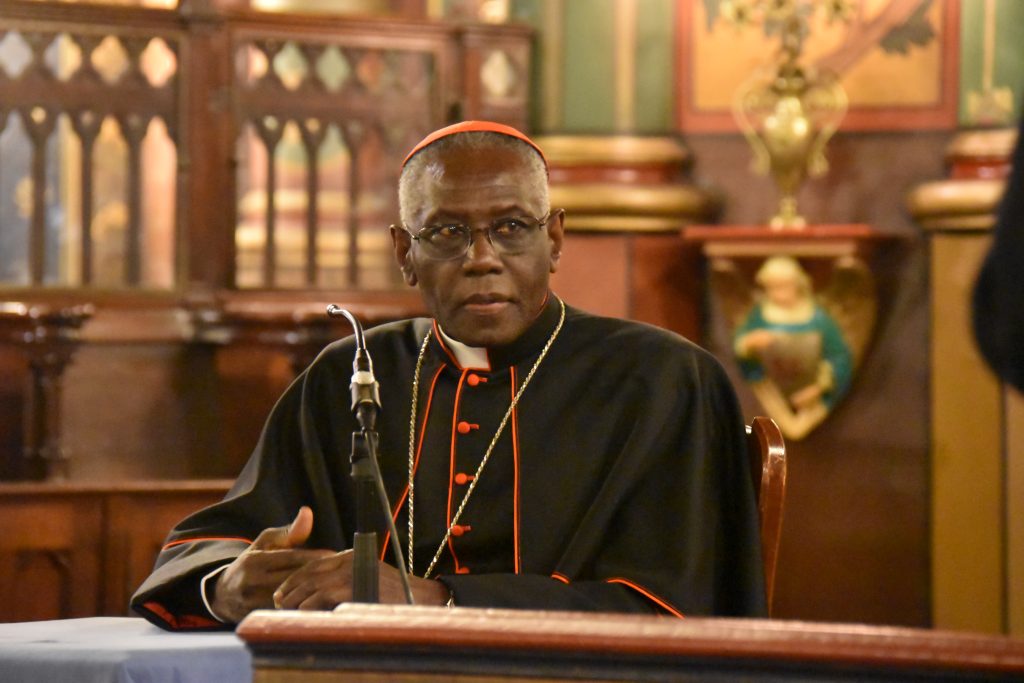
Cardinal Sarah says liturgy has been reduced to ‘mere entertainment’
Cardinal Robert Sarah has called for “clarifications” to parts of the interpretation of Vatican II in order to prevent readings that represent “a break with the faith”. The former prefect of the Congregation for Divine Worship and the Discipline of the Sacraments also warned against liturgy becoming “mere entertainment” and said the Church must resist pressure to conform to the modern world Cardinal Robert Sarah has said that parts of the interpretation of the Second Vatican Council require “clarifications” in order to prevent readings that represent “a break with the faith”. In a lengthy interview published by the French Catholic magazine La Nef on May 4, the former prefect of the Congregation for Divine Worship and the Discipline of the Sacraments said certain conciliar texts had produced “divergent, even opposing, interpretations”, particularly concerning religious freedom, ecumenism, collegiality and the relationship between the Church and the modern world. “A council must be read within the continuity of the faith as it has always been,” Cardinal Sarah said. “Where certain texts have given rise to divergent, even opposing, interpretations, it is legitimate to call for a deeper examination in order to avoid readings that represent a break with the faith.” His Eminence added: “The Church has nothing to fear from clarity.” The Guinean cardinal said he favoured “clarifications rather than corrections”, arguing that the interpretation of the Council belonged to the Magisterium and had already been “largely initiated” by Pope St John Paul II and Pope Benedict XVI. He also warned against treating the Council “as one judges a political programme”. Speaking about Pope Francis, Cardinal Sarah said it was “sometimes necessary” for cardinals to exercise “discernment regarding a period in the life of the Church”, while insisting that criticism of a pontificate must always be carried out “with fear of God, with love for the Church, and without ever falling into irreverence”. “A cardinal is not a courtier,” His Eminence said. “Before God, he is a servant of truth and a collaborator of the Apostolic See.” Without directly criticising Francis personally, Cardinal Sarah suggested that aspects of the previous pontificate had generated uncertainty among Catholics. “A pontificate always leaves a mixed legacy: pastoral insights, spiritual emphases, but also sometimes areas of unease or confusion,” he said, adding that he had spoken privately to Francis to express concerns “that practical ambiguity might obscure doctrinal clarity”. The cardinal said that “an era can leave wounds of confusion” and argued that the duty of pastors was “to help restore to the Church a clearer, more peaceful and more theological message”. Cardinal Sarah repeatedly returned to the theme of secularisation within the Church itself, describing the spread of what he called a “modern form of paganism”. “When faith is reduced to sociological language, liturgy to mere entertainment, morality to perpetual negotiation, and the Church to an institution that must adapt to the desires of the times, then something of paganism returns,” His Eminence said. Cardinal Sarah identified “the effacement of the sense of sin”, “discomfort with the affirmation of revealed truth” and “the trivialisation of the liturgy” as signs of an internal spiritual crisis. “When God is no longer primary, even in the Church, everything else is corrupted,” he said. Cardinal Sarah also warned against what he described as the Church’s growing “fear of displeasing the world”, saying that ambiguity was increasingly preferred “to clarity” and “communication to contemplation”. He added: “The world does not expect the Church to repeat its words; it expects it to open Heaven to it.” On the question of the liturgy, Cardinal Sarah rejected what he described as a “war of sensibilities”, insisting that the issue could not be reduced to factions competing for victory within the Church. “The liturgy belongs to the Church, not to political parties,” he said. “The real question is: how can we restore to the entire Catholic liturgy its sacred dignity, its continuity, its orientation towards God?” The 80 year old cardinal has long been associated with the traditional wing of the Church, so his comments should be read in the light of the restrictions imposed on the Traditional Latin Mass and the impending episcopal consecrations of the Society of Saint Pius X. He described the Society’s planned July 1 episcopal consecrations as “objectively serious”, warning that they would further damage ecclesial unity. “Fidelity to Tradition cannot be separated from hierarchical communion,” he said. However, the cardinal has acknowledged that “doctrinal questions” and tensions had accumulated over decades, adding that “truth and charity must go hand in hand”. Cardinal Sarah also reflected on the wider crisis facing western civilisation, describing Europe as “deeply wounded” and increasingly detached from Christianity and even “the most fundamental anthropological truths”. Yet he argued that the collapse of cultural certainties was leading some people back towards religion. “In Europe, we are seeing an increase in adult baptisms and returns to the faith,” the cardinal said. “When cultural securities crumble, some souls rediscover that God alone remains.” Asked about the priorities of Leo XIV, Cardinal Sarah declined to speak directly for the Pope, but said the new pontificate appeared focused on “peace, unity, mission” and “the Church’s doctrinal responsibility”. Having turned 80 shortly after the 2025 conclave, Cardinal Sarah is no longer a cardinal elector and it is now extremely unlikely that he could ever become Pope. However, as has perhaps been seen most clearly in recent years through Hong Kong’s Cardinal Zen, who is 94, cardinals can continue to exert influence long after the age of 80. Cardinal Zen flew to Rome before the conclave that elected Pope Leo to participate in the General Congregations, the pre-conclave meetings of cardinals in which views on the direction of the Church are expressed, where he warned against reforms he considered damaging. If Cardinal Sarah remains in good health, he is likely to continue using his voice to advocate for the traditionalist wing of the Church for years to come.
May 10, 2026