

Pope Leo Xiv
The leading contenders for Pope Leo XIV’s first cardinals
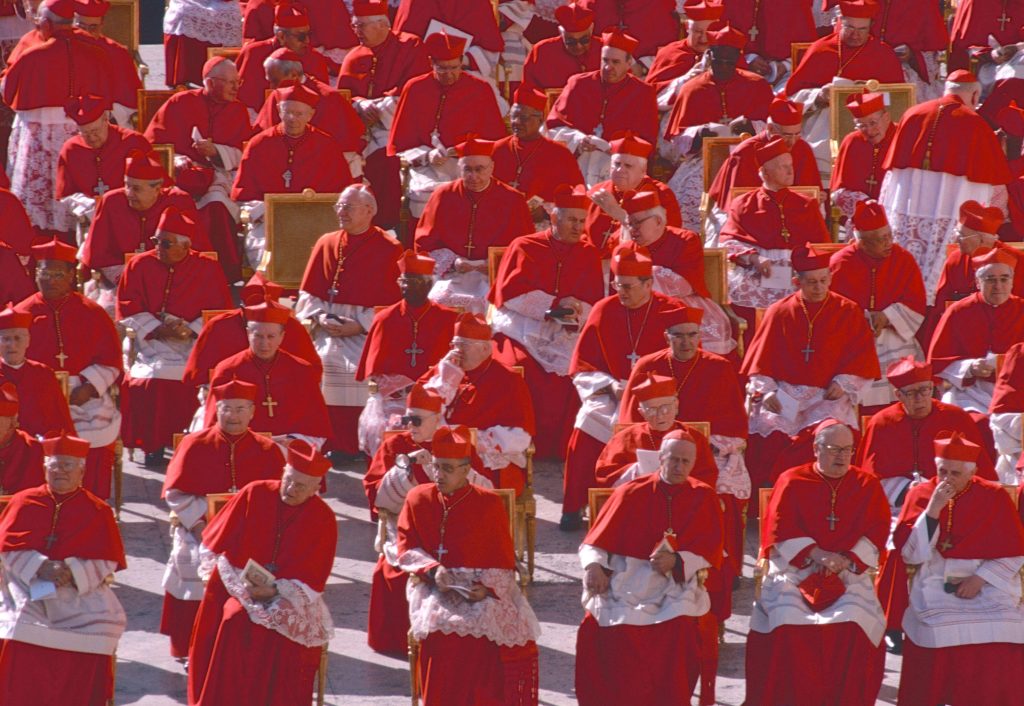
With the number of voting cardinals continuing to fall, rumours of a consistory are gathering pace. Who is most likely to receive the red hat? Niwa Limbu assesses the strongest candidates Cardinal Michael Czerny, the former Prefect of the Dicastery for Promoting Integral Human Development, turned 80 on Saturday 18 July, celebrating his birthday in Africa. With that milestone, he is no longer a cardinal elector, reducing the number of voting cardinals to 116. At the time of the 2025 conclave, there were 136 cardinal electors, of whom 133 cast votes. The number of cardinal electors is set out in Paul VI’s Romano Pontifici Eligendo (1975). The apostolic constitution states that the number of cardinal electors “must not exceed 120”, and Pope John Paul II retained this provision in Universi Dominici Gregis (1996). In practice, however, Popes John Paul II, Benedict XVI and Francis all exceeded the stipulated number, allowing the number of voting cardinals to rise above 120. With the reduced number of cardinal electors, recent weeks have seen a steady stream of rumours that a consistory for the creation of new cardinals will be held later this year. Additional speculation suggests that such a consistory could be announced after the Pope’s summer stay at Castel Gandolfo, which is due to end on Monday 27 July, or scheduled between a papal visit to either France or South America. If Pope Leo chooses to create new cardinals simply to replace those reaching retirement age over the coming year, the consistory would most likely be a relatively small one, perhaps involving fewer than ten new cardinals. If, however, his intention is to shape the College of Cardinals well into the future, the consistory could be considerably larger. By comparison, at his final consistory in December 2024, Pope Francis created 21 new cardinals. But if a consistory does take place this year, who is most likely to receive the red hat? The easiest place to start is the Curia. Archbishop Filippo Iannone, currently serving as Prefect of the Dicastery for Bishops, is expected to receive a red hat. After being passed over by Pope Francis when appointed Prefect of the Dicastery for Legislative Texts, the prefecture of the Dicastery for Bishops has traditionally been accompanied by the cardinalate. Pope Leo himself served as prefect from January 2023 until his election to the papacy and was created a cardinal in September of the same year. Archbishop Luis Marín de San Martín, the papal almoner and head of the Dicastery for the Service of Charity, is another name frequently mentioned. Although the office of papal almoner is not automatically tied to the cardinalate, his long-standing Augustinian friendship with Pope Leo XIV makes the prospect realistic. The two worked closely in Rome while the future pope was Prior General of the Order of Saint Augustine and have known one another for three decades. There is also a parallel with the elevation of the previous almoner, Cardinal Konrad Krajewski, who was closely associated with Pope Francis. Several senior curial posts are occupied by prefects already past the usual retirement age, among them Cardinal Kurt Koch, Cardinal Arthur Roche and Cardinal Marcello Semeraro. This raises the possibility that Pope Leo could appoint a new prefect to one of these dicasteries before announcing his first group of cardinals, with the newly appointed official then appearing on the consistory list. Cardinal Koch’s successor as Prefect of the Dicastery for Promoting Christian Unity is the subject of particular interest. Vatican sources have indicated to AdVaticanum that Bishop Erik Varden, Bishop of Trondheim in Norway and former Abbot of Mount St Bernard Abbey in the United Kingdom, stands a strong chance of being chosen. He made a notable impression when he preached the annual Lenten Spiritual Exercises for Pope Leo XIV and the Roman Curia. Bishop Varden also has considerable experience in the field of Christian unity, particularly with the Oriental Churches, making him a natural fit for the dicastery’s mission. Turning to the more realistic, yet harder-to-predict, category are the traditional cardinalatial sees. It is worth noting that when a cardinal retires from a diocesan see but remains of voting age, his successor is not customarily created a cardinal until the predecessor turns eighty. In the English speaking world, Archbishop Charles Philip Richard Moth, Archbishop of Westminster, appointed in December 2025 and installed in February 2026, is likely to recieve the red hat. There is, however, one important caveat. Cardinal Vincent Nichols, who held the see from 2009 until 2025, turned eighty in November 2025 and is now an emeritus, non-voting cardinal. Every Archbishop of Westminster since the restoration of the hierarchy has been created a cardinal. Basil Hume, appointed on 9 February 1976, received the red hat from Paul VI on 24 May 1976, roughly three and a half months later, at the very next consistory. Similarly, Cardinal Cormac Murphy-O’Connor, appointed on 15 February 2000 and installed the following month, was elevated by John Paul II on 21 February 2001, almost exactly a year after his appointment and at the first consistory held after he took office. Cardinal Vincent Nichols himself, however, waited nearly five years. Appointed in April 2009, he was passed over in Benedict XVI’s consistories of 2010 and 2012 before Pope Francis created him a cardinal in February 2014. In short, Hume was elevated almost immediately, Murphy-O’Connor at the next available consistory, and Nichols only after a noticeably longer interval that spanned two intervening consistories. Whether Nichols’ delay reflected a particular circumstance or a temporary shift in attitude towards the see is unclear. What history does show is that the Archbishop of Westminster has, without exception since the restoration of the hierarchy, eventually been made a cardinal, with the traditional pattern being elevation at the first or second consistory following appointment. Whether Archbishop Moth follows that quicker timetable is, of course, entirely for Pope Leo to decide. The historical record simply suggests that the next consistory is the point at which such an elevation would normally be expected. The next name is likely to surprise many readers and represents something of a curveball. Yet, as the Church continues to grow and its centre of gravity shifts towards Asia, the case for Archbishop Peter Chung Soon-taick, OCD, becomes increasingly persuasive. He succeeded Cardinal Andrew Yeom Soo-jung as Archbishop of Seoul in 2021 but was passed over at the 2024 consistory. The archbishop is already well connected in Rome, having previously served as Definitor General of the Order of Discalced Carmelites. More decisive still are his personal ties to the Holy Father and the fact that he is the principal organiser of World Youth Day 2027 in Seoul. He has been heavily involved in preparations for the event, which will effectively be “his” World Youth Day. With South Korea once again hosting a major international gathering, it would be natural for the Pope to restore Seoul to the College of Cardinals and see its archbishop wearing red. Another straightforward candidate is Archbishop Josef Grünwidl, who succeeded Cardinal Christoph Schönborn as Archbishop of Vienna. He presents another classic example of a traditional European cardinalatial see awaiting its next red hat. Appointed by Pope Leo XIV on 17 October 2025 and installed on 24 January 2026, Grünwidl had already been leading the archdiocese as apostolic administrator since Schönborn’s retirement in January 2025. A product of the Viennese Church, he was ordained by Cardinal Franz König, served as Schönborn’s personal secretary in the mid-1990s, later held several important pastoral posts, chaired the priests’ council and became episcopal vicar for the southern vicariate. What makes his candidacy particularly interesting is the combination of deep local roots and a deliberately understated style. Grünwidl repeatedly hesitated before accepting the appointment, explaining that he believed God desired availability rather than perfection. Whether he receives the red hat at the next consistory will depend on how strongly Pope Leo wishes to reaffirm Vienna’s place in the College of Cardinals. Historically, the archbishops of Vienna have been elevated relatively quickly after their appointment. Many therefore regard him as one of the more straightforward European names likely to appear on an early list of new cardinals. One significant factor, however, is the number of Italian cardinal electors, which fell sharply during Francis’s pontificate. Twenty-eight Italians entered the conclave that elected him in 2013, representing almost a quarter of the entire electorate. Even after that rebalancing, however, Italy remains the country with the largest number of cardinal electors. Two Italian sees that have traditionally carried the red hat are currently unrepresented in the College of Cardinals: Genoa, where Archbishop Marco Tasca, OFM Conv., succeeded Cardinal Angelo Bagnasco, and Florence, where Archbishop Gherardo Gambelli succeeded Cardinal Giuseppe Betori. Another intriguing possibility is Archbishop Mario Delpini of Milan. Born in 1951, he reached the retirement age of seventy-five on 29 July this year. He has confirmed to the Italian press, however, that Pope Leo has indicated he will not immediately accept his resignation, and Delpini therefore expects to remain in office for at least the coming pastoral year. Creating him a cardinal would be a clear gesture of goodwill towards one of Italy’s most important sees. In that scenario, conventionally, his successor would not be appointed until Delpini eventually lost his voting rights at the age of eighty. Whether one, two or even three of these Italians appear on an early consistory list will depend on how far Pope Leo intends to depart from the internationalising pattern established by his predecessor. With the number of cardinal electors already standing at 116, and many other cardinalatial sees pressing their claims, it seems unlikely that every major Italian vacancy will be filled immediately. As a modest sign of continuity and unity with the Italian Church, however, the creation of at least one new Italian cardinal elector would not be surprising. All that being said, the custom of waiting until a retired cardinal reaches the age of eighty before elevating his successor is not an absolute rule and has been set aside before. Pope John Paul II created Archbishop Péter Erdő a cardinal on 21 October 2003 even though his immediate predecessor as Archbishop of Esztergom-Budapest, Cardinal László Paskai, OFM, had retired only the previous year and was still just seventy-six, meaning he remained a cardinal elector. Paskai retained voting rights until May 2007, and both men participated in the 2005 conclave. This was, however, a clear exception to the usual practice of avoiding two voting-age cardinals associated with the same residential see. For now, an ordinary consistory where Cardinals are created remains speculative. However, as the number of voting Cardinals continues to drop, the likelihood of one increases. Whilst Pope Francis was somewhat unpredictable in his choice of Cardinal’s, Pope Leo has generally been more conventional in his papal decisions thus far, indicting that his choice of Cardinals may in turn be more calculable.
Jul. 22, 2026
Pope Leo XIV accepts resignation of Peruvian bishop accused of sexual abuse
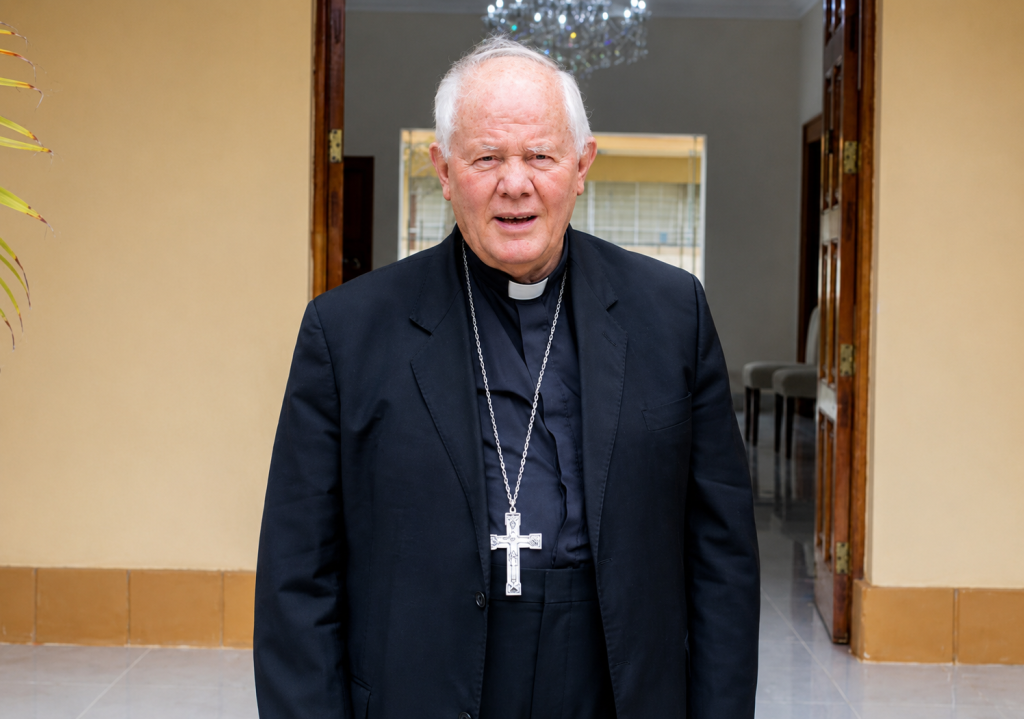
Pope Leo XIV has accepted the resignation of Bishop Antonio Santarsiero Rosa of Huacho, Peru. The bishop stands accused of sexual abuse and leaves office after reaching the canonical retirement age of 75 Pope Leo XIV has accepted the resignation of a Peruvian bishop as attention begins to turn towards the Pontiff’s expected journey to Latin America in November. The Holy See Press Office announced on 15 July that the Pope had accepted the resignation of Bishop Antonio Santarsiero Rosa, O.S.J., from the Diocese of Huacho after he reached the canonical retirement age of 75. No successor has yet been appointed, leaving the diocese temporarily without a bishop as the Vatican considers its next appointment. Bishop Santarsiero, who turned 75 on 13 June, was required under Canon 401 §1 of the Code of Canon Law to submit his resignation upon reaching the customary retirement age for bishops. Allegations have been made against the bishop, although the Vatican’s announcement made no reference to the accusations. A priest in 2024 submitted a dossier to the Apostolic Nunciature in Lima and to the Dicastery for Bishops alleging that Bishop Santarsiero had sexually abused both a former seminarian and the priest himself. According to the allegations, the former seminarian claimed that the bishop subjected him to unwanted sexual contact over a period of years beginning while he was still a minor. The complaint further alleged that promises of scholarships, employment and opportunities within the diocese were used to exert influence over him. The same dossier also contained allegations from a priest who had previously served as Bishop Santarsiero’s secretary. According to the documentation, the priest claimed he had been subjected to unwanted physical contact and psychological pressure. The complaint further alleged that, after rejecting the bishop’s alleged advances, attempts were made to undermine his credibility by circulating claims about his sexual orientation. When the allegations became public earlier this year, Bishop Santarsiero rejected them in their entirety. As the accusations attracted increasing attention, the bishop stepped aside from his responsibilities as Secretary General of the Peruvian Episcopal Conference, stating that he wished to “clarify the truth”, according to the conference’s statement. He has continued to categorically deny every allegation made against him. According to the material submitted by the complainant, documentation detailing the accusations was first presented to Cardinal Robert Prevost, then Prefect of the Dicastery for Bishops, in November 2024 before being personally delivered in Rome the following month. The Vatican has not publicly confirmed receipt of those submissions or indicated whether a canonical investigation was opened in response. The case has attracted attention because of the relationship between the then Cardinal Prevost, now Pope Leo XIV, and Bishop Santarsiero within the Peruvian episcopate. Both men served together in the leadership of the Peruvian Episcopal Conference for several years. Bishop Santarsiero became president of the conference’s Economic Council in 2017, while then Bishop Robert Prevost was elected Second Vice-President in 2018. Both were re-elected to those positions in 2022 for the 2022–2025 term and worked alongside one another until Pope Francis appointed Archbishop Prevost Prefect of the Dicastery for Bishops in January 2023. Their association did not end with Archbishop Prevost’s move to Rome. The two bishops continued to appear together at ecclesiastical events, including a Mass celebrated by Cardinal Prevost in Chiclayo in November 2023, which Bishop Santarsiero attended. There is no evidence or suggestion that either as Bishop or Pope that Pope Leo XIV had any reason to suspect that Bishop Santarsiero was behaving improperly. Their association is normal and expected with their ecclesiastical positions. Born in Avigliano, Italy, in 1951, Bishop Santarsiero entered the Oblates of St Joseph in 1973 after qualifying in typography. He pursued philosophical and theological studies at the Pontifical and Civil Theological Faculty of Lima before being ordained to the priesthood on 14 June 1980. His episcopal ministry began in 2001 when Pope St John Paul II appointed him Prelate of Huari. Following his episcopal ordination later that year, he led the territorial prelature until 2004, when the same Pope transferred him to the Diocese of Huacho. Bishop Santarsiero formally took possession of the diocese on 25 April 2004 and remained there for more than 21 years. The timing of the resignation is also notable given Pope Leo XIV’s expected apostolic journey to Latin America later this year. As AdVaticanum has previously reported, unlike the Pope’s recent visit to Spain, which centred on a single country, the November trip is expected to encompass several countries. AdVaticanum understands that the Holy See is preparing an itinerary that will include Peru, Uruguay and Argentina, with elements of the Peruvian programme already beginning to emerge ahead of an official announcement expected later this month. The acceptance of Bishop Santarsiero’s resignation removes one unresolved leadership issue in the Peruvian Church before the Pope’s anticipated arrival. The Holy See has offered no explanation beyond accepting the resignation submitted in accordance with canon law, but the decision leaves the Diocese of Huacho vacant as preparations continue for the Pontiff’s expected visit to the region. AdVaticanum understands that Peru is expected to present the greatest challenges during the visit, primarily because of continuing tensions surrounding the Archdiocese of Lima. Local reporting has pointed to ongoing internal disputes and power struggles linked to a series of decisions taken by Cardinal Carlos Castillo. AdVaticanum further understands that planned public appearances involving Pope Leo XIV and Cardinal Castillo have been kept to a minimum, effectively sidelining the Archbishop of Lima during the anticipated visit.
Jul. 16, 2026
“The process has to be stopped” Cardinal Burke on synodality
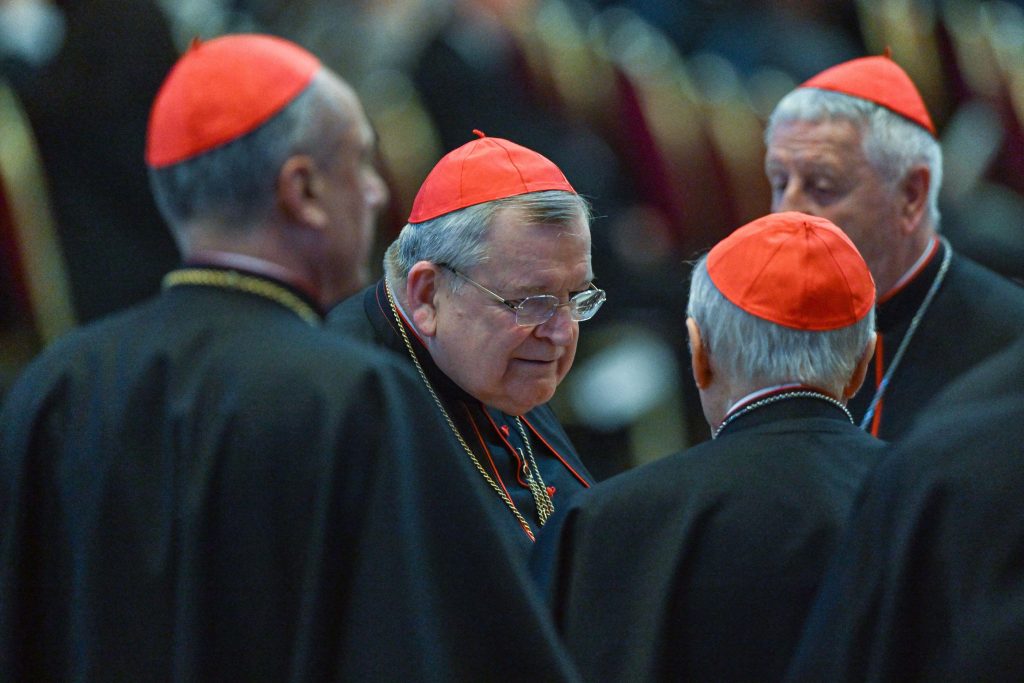
In an interview with The College of Cardinals Report, Cardinal Raymond Burke calls for the Synod on Synodality to be stopped and completely reoriented. He also comments on Study Group 9, the SSPX and the future of the Traditional Latin Mass Cardinal Raymond Burke has called for synodality to be stopped. Speaking in an interview with The College of Cardinals Report on 28 June, the day after the close of the Extraordinary Consistory, the 78-year-old Cardinal said that there “is no history of synodality” in the Church. He further insisted that “this whole synodality business be stopped” and that “a very serious study be done on the whole matter” because “we are talking about the salvation of souls.” When asked about a Cardinal who had spoken out against synodality, Cardinal Burke said there was “more than one”. He said the crux of the criticism was that “in all the documents that come out, there is no definition of synodality”. In response to these criticisms, Cardinal Burke said that one Cardinal at the consistory remarked, “You know it by doing it”, which he described as “irrational” and “not the Catholic Faith”. He also warned that synodality carried the danger of “conforming to the world”. He said that those arguing in favour of the approach consistently spoke of a “change in paradigm”, to which the Cardinal responded that the Church does not undergo paradigm shifts because it is “one, holy, Catholic and apostolic”. He acknowledged that, whilst synodality may have good motives in its desire to address the problems of the world, “it is fundamentally flawed” because it neglects the Church’s tradition by failing to give proper emphasis to how “the Church in the past has addressed the world and the situation of the world”. When asked about his own participation at the consistory, Cardinal Burke said he had used his intervention to address the controversy surrounding Synod Study Group 9, one of the ten study groups established by Pope Francis in March 2024 as part of the implementation phase of the Synod on Synodality. The group was tasked with listening to controversial doctrinal, pastoral and ethical questions, but was criticised for appearing to air views that deviated from Church teaching, particularly through testimonies criticising Courage International, an apostolate for Catholics who experience same-sex attraction and seek to live chaste lives. Cardinal Burke said the group had “calumniated Courage, this great apostolate founded by Cardinal Cooke”. He continued: “I’ve known Courage since the 1980s,” adding that the report “accuses Courage of something that I know is false”. He further defended the apostolate, saying: “Courage is a… wonderful apostolate that helps people who suffer from these attractions to live a chaste life.” He described the decision to send Study Group 9’s report to dioceses as “iniquitous”. Recalling his intervention at the consistory, he said he had told the Cardinals that the “process must be stopped” and “completely reoriented”. Cardinal Burke also addressed Cardinal Mario Grech’s use of the final session of the consistory to tell Cardinals that the implementation of synodality represents “a new stage in the reception of the Second Vatican Council”. He said that whilst “some spoke enthusiastically about what he was saying”, others raised “very serious questions”. His Eminence also questioned the omission of the Sacred Liturgy from the agenda of the consistory when “we had this whole crisis brewing” with the Society of Saint Pius X. Referring to the Pontifical Commission Ecclesia Dei , founded in the wake of the 1988 Écône consecrations, he said there was a need for a modern-day equivalent to help those “who do not want to be associated with a schismatic act” to be received into full communion with the Church while continuing to attend the older form of the Roman Rite. He said such a commission would assure the faithful that this form of worship is “guaranteed” to them. Cardinal Burke’s comments are not unexpected, as he is one of the most forthright conservative voices within the Church. What is perhaps surprising, however, is the directness and openness with which they are expressed. The American prelate has openly called for a process that has received a great deal of the Vatican’s time and energy in recent years to be halted. He has also called for a pragmatic approach to the question of the Society of Saint Pius X and suggested a way forward linked to the Traditional Latin Mass. This pithy and realistic manifesto for traditionalist aspirations stands in contrast to the more open-ended proposals of the liberal wing. That approach often speaks in broad terms about listening and adapting or, as in the case of the German Synodal Way, seeks to advance policies that the Church could never promulgate without risking large-scale schism. Whether Cardinal Burke’s comments will result in concrete action remains to be seen, but they provide an erudite and clear explanation of the changes the conservative wing of the Church would like to see.
Jul. 16, 2026
Pope Leo XIV expected to begin first Latin America tour in Uruguay this November
Pope Leo XIV is expected to make his first visit to Latin America this November, with Uruguay likely to be the first stop on a tour that AdVaticanum understands will also include Argentina and Peru. Preparations are already underway and Vatican officials are visiting key sites ahead of the expected announcement later this month Pope Leo XIV is expected to make his first visit to Latin America in November, with Uruguay set to become one of the destinations on a tour that is also expected to include Argentina and Peru. Although the Holy See Press Office has yet to publish the official itinerary, Cardinal Daniel Sturla, Archbishop of Montevideo, has said preparations are already underway and expressed confidence that the visit will take place. He described the visit as a moment of great significance for the Church in Uruguay after decades without a papal visit. Speaking at a press conference at the headquarters of the Uruguayan Episcopal Conference, Cardinal Sturla announced that Vatican officials had arrived in the country to continue preparations for the anticipated journey. Although the Cardinal stressed that the final dates and programme remain subject to confirmation by the Holy See, with an announcement expected at the end of July, he said the visit would be in November as part of what will be Leo XIV’s first visit to the Americas since his election in May 2025. The Cardinal revealed that he had personally extended an invitation to the newly elected Pope only days after the beginning of his pontificate. Recalling their first meeting, Cardinal Sturla said he told Leo: “Holy Father, we are waiting for you. We come from Uruguay. Remember that Francis did not visit Uruguay or Argentina, so we are waiting for you.” Those remarks alluded to the long-standing disappointment felt by many Catholics in both Uruguay and neighbouring Argentina that Pope Francis never returned to either country during his pontificate, despite repeated speculation that such a journey would eventually take place. Leo XIV’s anticipated visit would represent the first papal visit to Uruguay since St John Paul II travelled there in 1988. Although no official programme has yet been released, Cardinal Sturla indicated that Montevideo is expected to feature prominently on the itinerary, while a possible visit to Paysandú, in the north of the country, remains under consideration. “Our desire is to be the first ones visited,” His Eminence said, adding that “there are many signs” suggesting Uruguay will open the South American tour. Nevertheless, the Cardinal cautioned against assuming details that have not yet been formally confirmed. “The idea is for him to go to a department in the north; it might be Paysandú, but since it’s not confirmed, we shouldn’t raise false expectations.” Among the principal events under discussion is a Mass at the National Shrine of the Virgin of the Thirty-Three in Florida on 8 November, coinciding with the feast of Uruguay’s patroness. Cardinal Sturla expressed the hope that Pope Leo would preside over the celebration, describing such a possibility as “a tremendous gift for the Virgin and for all of us who can celebrate Holy Mass with the Pope there.” Preparatory work has already extended beyond logistical planning. According to the Cardinal, Vatican representatives have visited Montevideo, Florida and Paysandú to assess venues and organise the practical arrangements required for the papal visit. Particular attention has also been given to Casavalle, one of the most disadvantaged areas of Montevideo, where the Catholic Church has long been involved in extensive charitable and pastoral work. Cardinal Sturla said it was important that the Holy Father should witness those initiatives first-hand and have the opportunity to meet those who benefit from them. Alongside the pastoral programme, Pope Leo is also expected to meet President Yamandú Orsi, who personally presented the invitation to visit Uruguay during a meeting at the Vatican. However, Cardinal Sturla indicated that no address to the Uruguayan Parliament is expected as the Vatican generally avoids institutional events that could become politically contentious. “The Pope is a unifying factor, and if something provokes controversy, he will surely not speak in Parliament,” he said. . Also participating in the press conference was communications consultant Yago de la Cierva, who coordinated Pope Leo XIV’s recent visit to Spain. He urged those beginning preparations to prepare well in advance. “What I am here to tell you is that you have no idea what is coming your way,” he warned those who will prepare the Uruguay papal visit. Unlike the Pope’s recent visit to Spain, which focused on a single country, the forthcoming apostolic journey is expected to mirror the structure of his African tour by encompassing several nations in one regional visit. While attention has understandably centred on Uruguay following Cardinal Daniel Sturla’s announcement, AdVaticanum understands that the November journey has been conceived as a wider South American tour that will also include Peru and Argentina. Elements of the Peruvian itinerary have already begun to emerge, while preparations are advancing across all three countries ahead of the Holy See’s formal announcement, expected later this month.
Jul. 15, 2026
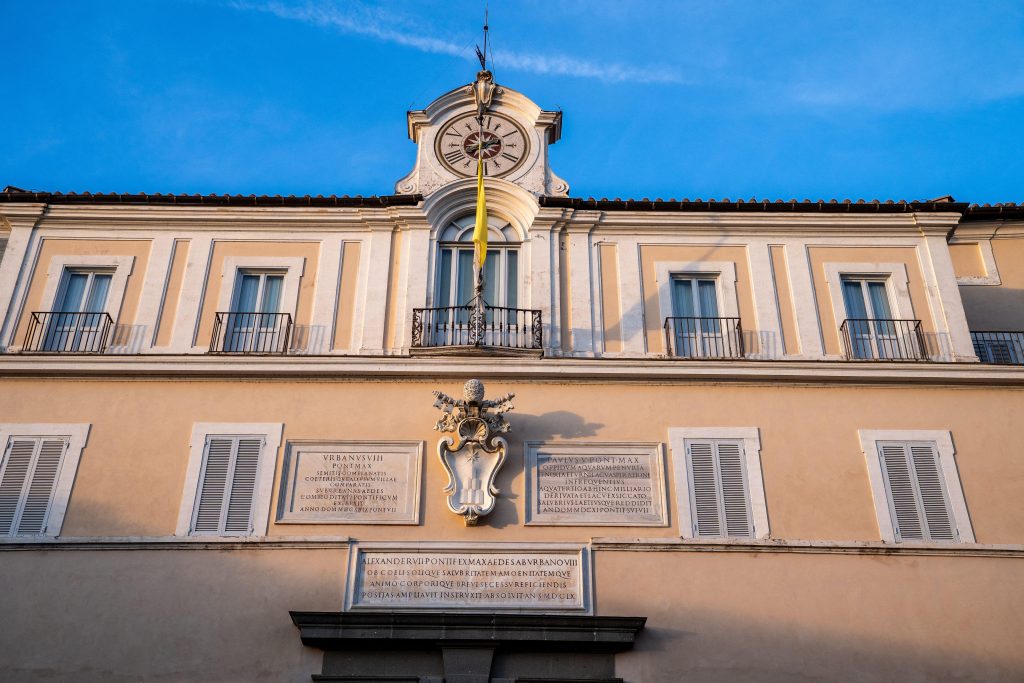
At Castel Gandolfo, Pope Leo XIV says Church must remain open to all
Pope Leo XIV has said the Catholic Church must remain open to everyone, especially those living on society’s margins, during a lunch with 200 poor and vulnerable people at Castel Gandolfo Pope Leo XIV used a lunch with 200 poor and vulnerable people at Castel Gandolfo on Saturday to outline his vision of a Church rooted in hospitality, justice and reconciliation, telling those gathered that the Catholic Church must remain open to all, particularly those living on society’s margins. Hosting the gathering in the Pontifical Gardens on 11 July, the Pope set aside prepared remarks in favour of an impromptu reflection centred on solidarity with those living on the margins of society. “I came without a prepared speech,” he told his guests, “but I did come with hunger—hunger for justice, hunger for genuine charity, hunger for a Church that truly knows how to open its doors, to welcome everyone; where there is love for all, and no one is an enemy, where all of us know how to live reconciliation, forgiveness, and peace.” The event brought together around 200 people from the Diocese of Rome living in situations of hardship, including nearly 40 children. Refugees, single mothers with children, people with disabilities and others supported by diocesan charities spent the day at Borgo Laudato Si’ in Castel Gandolfo, a section of the papal estate that has been transformed into a centre dedicated to the principles of Pope Francis’s 2015 encyclical Laudato si’ . The day began with Holy Mass before touring the papal estate and sharing lunch with the Pontiff. Guests were served traditional Italian dishes, including pasta all’amatriciana and roast veal, followed by strawberries with whipped cream. During his remarks, Pope Leo told those gathered: “As you know well, one of the Pope’s titles is Pontiff—a builder of bridges. And today we too want to build a bridge with all of you, with your families, and with the society in which we want to live—a society marked by justice, where the causes of poverty and the injustices that still exist in our world can be overcome.” “This is the Church we want to be,” His Holiness added. Returning repeatedly to the image of a shared table, the Pope suggested that such encounters offer a model for overcoming social divisions. “Whenever we come together, whenever we share this spirit of encounter around the same table—the one table where Jesus is also present among us—we are truly building a different world, a world of hope, a world that is a light in the midst of our own.” The initiative formed part of the Pope’s stay in Castel Gandolfo, where Borgo Laudato Si’ has become an increasingly prominent setting for projects linking ecological stewardship with social outreach. The programme combines care for creation with practical support for vulnerable communities through education, training and community initiatives. Ahead of the lunch, Donatella Parisi, Communications Coordinator of the Laudato Si’ Higher Education Centre, described the gathering as a visible expression of a Church open to those most often overlooked. She noted that the papal estate, long inaccessible to the public, has undergone a symbolic transformation in recent years. “This place is especially precious because it was closed to the world for 400 years, then opened by Pope Francis and today is thrown wide open by Pope Leo,” she said. “It is now welcoming these people, who for us are the guests of honour.” “The message is that the Church should always be open to everyone, especially those living on the existential peripheries,” she said, adding that Pope Leo “repeats this often”. She also linked the initiative to the Pope’s recent visit to Lampedusa, saying the event reaffirmed that “the Church is open to everyone and is a family, a community, and a safe harbour for those who need it most.” Rather than seeing those invited merely as recipients of charity, Parisi suggested they offer an important witness to the wider Church. “In reality, what we experience every day here at the Laudato Si’ Village is that these very people are the ones who give. They give their all and they enrich the Village and, I would even say, the whole Church through their presence and their call for a different way of looking at society—a perspective that points to fragility as a new source of strength for our communities.” The organisers hope the initiative will continue annually, welcoming participants from different dioceses each year. Last year’s gathering involved people from the Diocese of Albano, while this year’s guests came from Rome through diocesan charities and affiliated organisations. Holy Mass was celebrated by Cardinal Fabio Baggio, Director General of the Laudato Si’ Centre for Higher Education, and concelebrated by Archbishop Luis Marín de San Martín, Prefect of the Dicastery for the Service of Charity.
Jul. 14, 2026
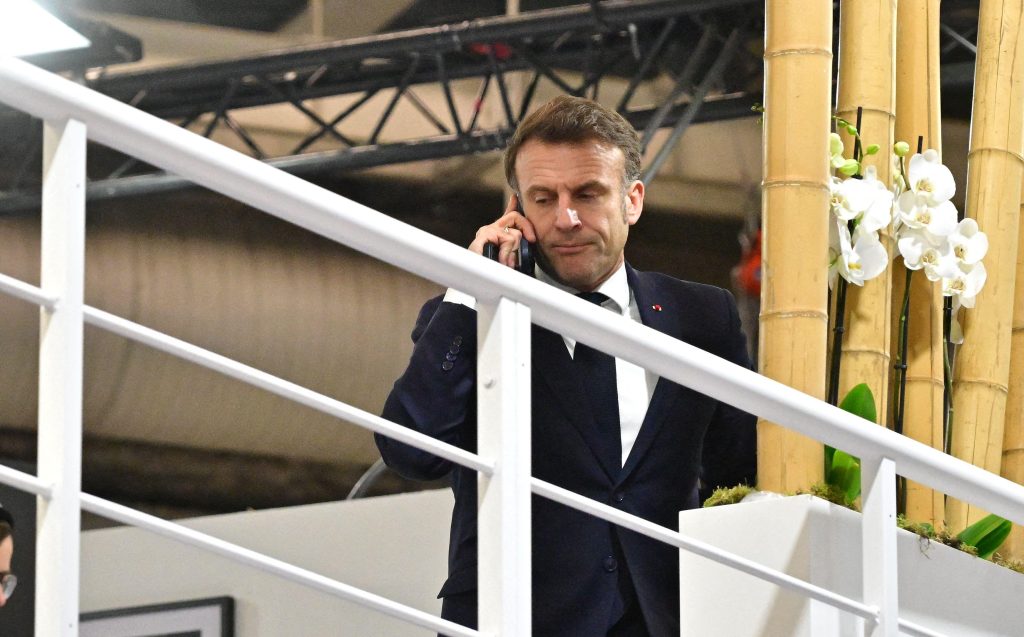
Pope Leo XIV personally lobbied Macron over French euthanasia bill, sources say
Exclusive: Sources tell AdVaticanum that Pope Leo XIV held regular direct calls with President Emmanuel Macron in an effort to slow France’s euthanasia bill ahead of his forthcoming visit to the country A notable feature of the June Consistory was Pope Leo XIV’s call for frankness in addressing the pressing issues facing the Church. According to sources close to AdVaticanum, this approach has recently been put into practice through the Pope’s personal engagement with the highest levels of the French government on the question of euthanasia. The intervention has taken place through quiet but consistent channels. While sources could not confirm exactly when it began, Pope Leo XIV is said to have initiated a series of direct communications with Emmanuel Macron. According to sources within both the diplomatic sphere and the Vatican, His Holiness has been making regular 15-minute phone calls to the French President focused solely on the euthanasia and assisted suicide bill. These conversations have centred on ways to slow the bill’s progress and prevent France from following paths seen in other nations, such as Canada, where the law is now responsible for more than 5 per cent of deaths. It is understood that His Holiness has been focusing particularly on euthanasia because several European countries, including the United Kingdom, are pursuing similar legislation, and a liberalisation in France may encourage others to follow. The third vote in the Senate on the euthanasia and assisted suicide bill failed, with senators rejecting the measure by a narrow margin. The bill will now return to the National Assembly for what could prove a decisive reading. Sources have also told AdVaticanum that His Holiness’s strengthened focus on life issues is a defining priority of his pontificate. This is reflected in the promotion of Archbishop Renzo Pegoraro, President of the Pontifical Academy for Life, who was elevated from monsignor to the episcopate in under a year. The political dimension of the upcoming papal trip to France is likely another factor behind the Pope’s personal engagement. The overall atmosphere surrounding the visit will be shaped by the country’s policy of laïcité, the strict secular framework separating Church and State. The French legislature will be keen to avoid any appearance of external influence on matters of public policy, particularly on moral questions such as euthanasia. However, the Pope is likely to use the visit to make a firm defence of human life, as seen during his recent apostolic journey to Spain. On that occasion, as the first Pontiff to address the Spanish Parliament, he asked: “Can a community that casts into the shadows the unborn child, the elderly, the sick, those who suffer in silence, or those who depend entirely on the care of others be called fully just?” He went on to insist that “every human life must be recognised and safeguarded from conception to its natural end, in every circumstance of its existence.” President Macron has publicly backed the assisted suicide legislation, describing it as “aid in dying” for adults facing incurable illness and intractable suffering. His government has framed the measure as a compassionate option, avoiding terms such as euthanasia or assisted suicide. His party and its allies in the National Assembly have largely supported the bill, arguing that it protects personal dignity and individual choice in end-of-life decisions. Yet the Senate’s repeated rejections indicate significant resistance to the state facilitating suicide. Pope Leo XIV has met President Macron on several occasions since his election. Their first in-person meeting took place shortly after the conclave in May 2025, when Macron travelled to Rome for a private audience at the Vatican to discuss European affairs, including migration and peacebuilding. If the bill ultimately passes, the Pope’s visit to France will carry clear political sensitivities. He will encounter an environment in which any strong defence of the Church’s teaching on the sanctity of life may prompt accusations of interference in domestic affairs. With the French visit on the horizon, the climate of secular sensitivity means that every word and gesture will carry weight. Macron’s government has continued to advance the legislation despite Senate setbacks, setting the stage for potential tension. Yet the repeated failures in the Senate also suggest that concerns about assisted suicide—particularly its implications for the value of human life and the protection of the vulnerable—remain firmly present within French political life.
Jul. 13, 2026