

June Consistory
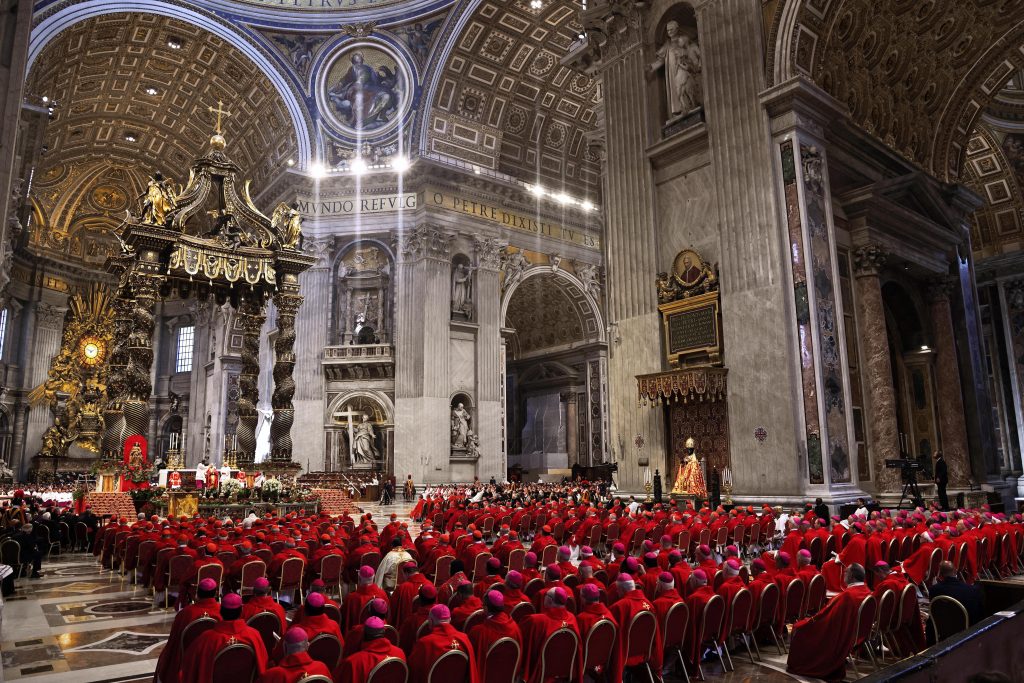
Inside the Consistory: What cardinals made of Leo XIV’s second gathering
What did the cardinals make of Pope Leo XIV’s second Extraordinary Consistory? Over the past week, AdVaticanum has spoken to members of the College of Cardinals, both before and after the gathering, on and off the record. This exclusive report brings together those conversations, offering a rare insight into what was really discussed behind closed doors. As Pope Leo XIV hands the Metropolitan Archbishops their palliums today, Monday 29 June, in St Peter’s Basilica, this exclusive feature presents the behind-the-scenes, unfiltered reflections of the Church’s Princes regarding the debates that took place during the Extraordinary Consistory on Friday 26 and Saturday 27 June. Over the past week, AdVaticanum has engaged in in-depth conversations with several members of the College of Cardinals, some speaking on the record and others preferring to speak off the record, both before and after the Consistory. These senior voices offer a rare glimpse into what actually went on and what may yet unfold in the Church. Compared to Pope Leo XIV’s inaugural Extraordinary Consistory in January, the atmosphere of this Consistory felt distinctly different from the very beginning. The January Consistory began with afternoon sessions. This time, however, the schedule was quietly revised in favour of intensive morning sessions. This change, which meant the first day began with Holy Mass at 7 a.m., required earlier arrivals and a tighter format that limited the usual interactions which had characterised the first Consistory. Furthermore, the deliberate move away from the more open media engagement of January was immediately noticeable. During the first Consistory, daily press briefings and the occasional comment from a cardinal followed each day’s sessions. This time, however, journalists received only an official summary from the Holy See Press Office, creating the feeling of a media blackout. This should not have come as a surprise, as Cardinal Giovanni Battista Re’s pre-Consistory letter had already set the tone for the entire gathering. In the letter sent to the College of Cardinals, the Dean, Cardinal Giovanni Battista Re, laid out clear expectations regarding the tone and conduct of the meeting. Under the heading “Confidentiality”, the document stated: “You are asked to maintain confidentiality regarding the proceedings and not to release any statements to the press during the Consistory. A press conference will be held at the end. It is recommended that you do not reveal the attribution of the speakers.” Multiple cardinals, when contacted privately by several Vatican correspondents, sent almost identical cautious replies even before the Consistory: “We will wait… we can’t comment even after the Consistory… we’ll wait for the press conference.” Inadvertently, this media blackout created an atmosphere of mild tension in which journalists relied on behind-the-scenes conversations and anonymous reflections. Those conversations often carried more weight than the official meditations and statements issued by the Holy See Press Office, precisely because official Vatican channels had been so deliberately constrained. Beyond the general atmosphere of the June Consistory, attendance was also noteworthy. Of the roughly 241 current members of the College of Cardinals, 178 participated. This marked a modest increase from the approximately 170 cardinals who attended the first Extraordinary Consistory in January. However, overshadowing this was reporting by Il Giornale Vatican correspondent Nico Spuntoni, who revealed that several prominent conservative voices were absent, including Cardinal Joseph Zen of Hong Kong, Cardinal Willem Jacobus Eijk of Utrecht, and Cardinal Péter Erdő of Esztergom-Budapest. AdVaticanum also has been informed that certain Rome-based cardinals were not in attendance due to advanced age. For example, prominent figures such as Cardinal Stanisław Dziwisz, the longtime secretary to Pope John Paul II, did not attend the Consistory. While some cardinals who had missed the first Consistory did attend the second, including Cardinal Christoph Schönborn, the Archbishop Emeritus of Vienna, after recovering from a health scare, other prelates, particularly those from regions further from the Vatican, were absent from both Consistories. Examples include Cardinal Leopoldo Brenes of Managua and Cardinal Ignatius Suharyo Hardjoatmodjo of Indonesia. Prior to the Consistory, many cardinals offered measured and largely positive comments when speaking to AdVaticanum. Italian Cardinal Angelo Bagnasco, for instance, stated: “I am deeply grateful to Pope Leo for the Consistory in January and the one scheduled for June. Convening cardinals from around the world is an expression of the Pope’s pastoral concern.” The Cardinal Emeritus of Genoa went on to say: “The cardinals’ specialty is to assist the Supreme Pontiff in his lofty task of governance. The Consistory is always an experience of ecclesial communion and a great enrichment: 200 men come from all over the world to pray and reflect with the Pope on selected themes. My hope is that the Holy Father will increasingly sense our fraternal closeness and filial support, both from us and, through us, from the entire Church.” Papabile Cardinal Maung Bo said he was “really happy to be here” and that he “loved the Pope”, adding that he was thankful the Holy Father had invited them to Rome again “to discuss the real issues”. Cardinal Jean-Claude Hollerich similarly commented that the cardinals, united as the College of the Church, must “protect and represent the Church well in this Consistory.” Yet this public-facing tone contrasted sharply with the private conversations AdVaticanum had with several cardinals in the days before the sessions began. Before even discussing this Consistory, many of the cardinals who wished to speak first reflected on the January gathering. A few praised it; however, the majority of those I spoke to did not. Speaking about the voting process used to determine the discussion topics, one conservative cardinal said: “There was this votation, but now we have a very wide program, no? This is not only one point, but one theme. And I don’t know how, at the end, it will work.” However, a few cardinals begged to differ. Cardinal Napier told AdVaticanum that he was quite surprised by the complaints about the synodal-style voting at the discussion tables. “I went there with an open mind, and I thought, I accept—I accepted or expected, maybe even accepted, that everyone was doing the same. “Pope Leo offered us an opportunity to deal with topics which we had been advised about beforehand, and we had time to prepare which ones we would like to deal with, and just put them in the order of priority that we’d want to deal with them.” Similarly, a liberal cardinal from South America thought that the topics themselves were not necessarily rooted in the needs of every region: “Yeah, it’s just a question about the main needs for the Church today, but it’s not—it’s not, uh, absolutely strange. We have the great challenges in the world of today. Countries are different.” Similarly, the conservative cardinal who spoke to AdVaticanum about the voting system later told us: “In Europe, we have these wrong ideas, ideologies, wrong ideas of human existence and essence, and the goal of human existence, the wrong anthropology, LGBT, and the destruction of the family, or of one’s own identity, of the importance of the body.” Turning to the June Consistory itself, one issue some cardinals believed had been overlooked was the question of the liturgy. “No, but it’s not forbidden to speak about all these questions about the liturgy, because liturgy is in the Catholic faith, and life is the main mission of the Church, the veneration of God, the transmission of grace in the seven sacraments, in the prayers, and in the worship of God.” However, a liberal cardinal told AdVaticanum: “I don’t think too many of us would have been overcome. Not all of us are upset about those not getting liturgy to the fore.” Similarly, there was also concern among moderate and conservative cardinals regarding Cardinal Grech’s emphasis on synodality. A European moderate cardinal said: “Until now, he has not been able to give a definition of what synodality is. What can we implement? Synodality is not a revealed reality.” A former Curial cardinal went further, saying: “It’s only a form of working together of everybody in the Church, but has nothing to do with the Synod of Bishops.” Cardinal Müller told AdVaticanum before the Consistory: “The Synod of Bishops is a realisation of the collegiality of the bishops, but now when it is opened to laypeople and other priests, it has nothing to do with the synod in the classical sense. There’s no ecclesiastical basis, no?” He continued: “Like in this working group, I think nine, where they introduced homosexuality as the same form of living together, like a sex matrimony of man and woman, no? And in another working group, they really devised the sacramentality of priesthood, no? And this is a very vile way to change the doctrine, the revealed doctrine of the Church, no? This is manipulation, no?” However, it is important to note that this Consistory was not viewed by many as a litmus test of Pope Leo. As one conservative cardinal from Africa put it: “He has still not appointed cardinals, but some bishops, but it’s not at the highest level.” He continued: “But in his homilies, and what he said in Spain, in the Parliament, for example, or the encyclical, it’s a higher level, no? Intellectual level, no? I think he understands it.” More colourfully, a non-voting cardinal, who insisted that his remarks remain firmly off the record, remarked: “For the stupid people, it’s an invitation to present their stupidities. The past few years it’s been a little bit dangerous to speak out the Catholic truth, which was not wanted, no?” As these pre-Consistory questions began to be answered, the Consistory itself commenced. AdVaticanum reported extensively on the official proceedings in previous coverage. However, what was said behind closed doors was another story. Unsurprisingly, the first day was calm and largely uneventful, focusing on the meditative reflections delivered by Cardinal Ryś. One conservative cardinal commented simply: “I think they addressed the subject in a very thoughtful way.” Another moderate cardinal added: “I think it was a good meditation.” Then came the bombshell intervention from Cardinal Müller. Nico Spuntoni of Il Giornale reported that Cardinal Gerhard Müller used his free intervention to address the SSPX directly. The cardinal called for a clear doctrinal response to the Fraternity’s recent open letter to the Pope and the College of Cardinals, while proposing the establishment of a new Pontifical Commission modelled on the former Ecclesia Dei to facilitate the return to full communion of those affected by the upcoming episcopal consecrations which have no papal mandate. Prior to Cardinal Müller’s intervention, the German cardinal spoke exclusively to AdVaticanum about what he described as the grave danger of schism posed by the SSPX and the Church’s duty to address it. “Cardinals cannot neglect this theme, because it’s a system. There’s a great number of, of course, faithful souls. Faithful, and they are going the wrong way,” His Eminence warned. Cardinal Müller continued: “And the schism is always very bad for the Church. Saint Augustine had all his life questions with the Donatists, and this separation and these divisions was responsible.” Drawing on historical examples, Müller added: “And later the Church was not able to resist Islam, no? And the Jansenists and the Old Catholics, these schisms, it’s all the type of wound of the Body of Jesus Christ, no?” Cardinals who defended Cardinal Müller told AdVaticanum that, “Cardinals are not absolutely bound to the thematic.” After the Consistory, Cardinal Müller simply told AdVaticanum that “the best kings were always those who had the best counselors.” AdVaticanum was also told that there was “no verbal resonance” and “no pushback” and that the Pope did not react and remained stoic throughout the intervention. A former Curial conservative cardinal defended Cardinal Müller, saying: “They were called for interventions, and I mean, at least I and a number of my brother cardinals were, were very concerned that this crisis is going on with regard to the SSPX, and we never addressed it. So I was happy that Cardinal Müller made his intervention.” However, this isn’t the full story, as many moderate and liberal cardinals also had their grievances. A liberal cardinal told AdVaticanum : “My first thought when I heard him launching out on that was, ‘Here’s a man who’s not actually respecting the agenda, and the Pope has drawn up the agenda, or the other cardinals who’ve come here to discuss the agenda.'” Even a conservative cardinal said: “He’s going off on a tangent. But I know Müller quite well, so I’m not terribly surprised that he took that angle.” A moderate added: “I must say I’m disappointed that, even at this stage, he was blaming Francis for everything that was going wrong in the Church. Now, already in these early days, it seems he’s pointing to Leo.” AdVaticanum spoke to a table of cardinals, and one of them told us: “I must honestly say, at our table, most of us said, ‘Oh, there he goes again.’ That would have been the reaction because it’s not on the agenda.” After this bombshell, there were a few discussions about the liturgy, albeit briefly. From what AdVaticanum understands, concerns were raised about liturgical reverence. One internal conversation between cardinals touched on liturgical abuse, with one saying: “There’s too many—too much freedom in people doing what they feel is right, but not necessarily following what the Church understands of that particular aspect of the liturgy.” On the second day, things heated up following Cardinal Brislin’s meditation, which was generally praised. However, it was Cardinal Grech’s presentation on synodality that proved most divisive. Speaking during the final sessions of Pope Leo XIV’s Extraordinary Consistory, Cardinal Grech argued that the Church had reached the point where synodality could no longer be regarded as a temporary initiative or isolated ecclesial project, but as a permanent dimension of Catholic life. Presenting his report on the implementation of the Synod, Cardinal Grech told the assembly that the Church was entering “a new stage in the reception of the Second Vatican Council”, moving beyond the Synod on Synodality itself towards the practical application of its conclusions in dioceses throughout the world. Rather than presenting synodality as a programme with a defined end, he proposed it as a lasting way of exercising ecclesial responsibility through listening, discernment and shared participation. A conservative cardinal did not hold back, saying: “It was not acceptable. I don’t accept it. That final document is a document of the ordinary magisterium; that is not true. The Pope can only declare the ordinary magisterium on the basis of the doctrine of the deposit of the faith.” Other interventions included that of Cardinal Rouco, Archbishop Emeritus of Madrid. He explained what synodality was and was not, criticising it by appealing to the ecclesiology of the Second Vatican Council. Summarising his speech, one cardinal said: “He pointed out that there is nothing in the tradition of canon law regarding synodality; yes, there is on synods, but synods were viewed as extraordinary events to seek consultation from the faithful, from the bishops, whoever it may be. But it certainly was never conceived as an essential mark of the Church, or as a way for the Church to conduct her life.” This paved the way for the free interventions on the final day, when the Consistory reached its most intense point as Cardinal Burke decided to intervene against synodality. In an exclusive account compiled by AdVaticanum from multiple cardinals who listened attentively to his remarks, Cardinal Raymond Leo Burke delivered a substantive free intervention. In particular, addressing the Final Report of Study Group No. 9 concerning theological and methodological criteria for shared discernment on emerging doctrinal, pastoral and ethical questions, Burke focused significant attention on its section dealing with the “experiences of believing homosexual persons”. Numerous cardinals reported that he described the publication as manifesting “the very grave difficulty with the current direction and functioning of the Synod”. Arguing that, even though it was presented as the work of a study group, its integration into the broader synodal direction gives it weight as part of the official “theological and methodological synodal criteria”. Numerous sources told us that Cardinal Burke warned that the report, by invoking a so-called “paradigm shift”, takes a path divergent from the Church’s perennial moral teaching on the homosexual condition and corresponding acts. He defended the Courage apostolate, long supported by faithful Catholics seeking to live chastely, as a model pastoral response developed under a holy priest, while criticising the document for slandering such efforts and appearing to validate agendas in “open opposition to the traditional moral doctrine of the Church”. His Eminence called for restoring the Synod’s proper integrity under the Successor of St Peter, ensuring authentic dialogue remained rooted in divine truth, the objective moral order and the inspirations of the Holy Spirit rather than individual inclinations or worldly ideologies. He concluded by invoking St John Paul II’s Veritatis Splendor in defence of immutable moral norms as a service to true freedom. According to those familiar with the closed-door proceedings, Cardinal Burke’s intervention resonated strongly and garnered notable support even from several moderate cardinals. While a number of more progressive and Curial cardinals appeared visibly disgruntled, some reacting almost as if inebriated by discomfort at the direct challenge to prevailing synodal directions. However, there were less contentious interventions as well. Cardinal Wilton Gregory spoke movingly about his forefathers being brought in chains as slaves to the United States, describing it as the “worst memory in the life of mankind that was possible.” Furthermore, it was confirmed to AdVaticanum by a cardinal that the Traditional Latin Mass (TLM) was raised during a free intervention. The cardinal said: “I do believe that one or two of the cardinals, I think from North America in particular, have commented on how the numbers of young Catholics are coming back to the Eucharist, but coming precisely to those churches where the old liturgy is being celebrated.” A liberal cardinal corroborated this, saying: “Now, whether it’s the language, I don’t know if it’s in Latin or whether it’s in English, but whether it’s also because the priests are observing the instructions more closely, they are talking about the old liturgy.” Furthermore, Cardinal Goh of Singapore also spoke publicly in defence of the Latin Mass during his intervention, AdVaticanum can reveal. Looking ahead, attention is already turning to the next Consistory, which is expected to take place next year. After two Extraordinary Consistories, several cardinals indicated that liturgical questions are likely to be the next major subject for discussion, although plans could yet change. While there appeared to be broad appreciation among the cardinals for Pope Leo XIV’s leadership and willingness to foster open discussion, the synodal format remained a point of unease for some participants. Yet the overriding impression was that the atmosphere within the College of Cardinals had shifted. As one cardinal remarked: “I think with a new Pope, everybody feels free, and that’s absolutely clear.”
Jun. 29, 2026
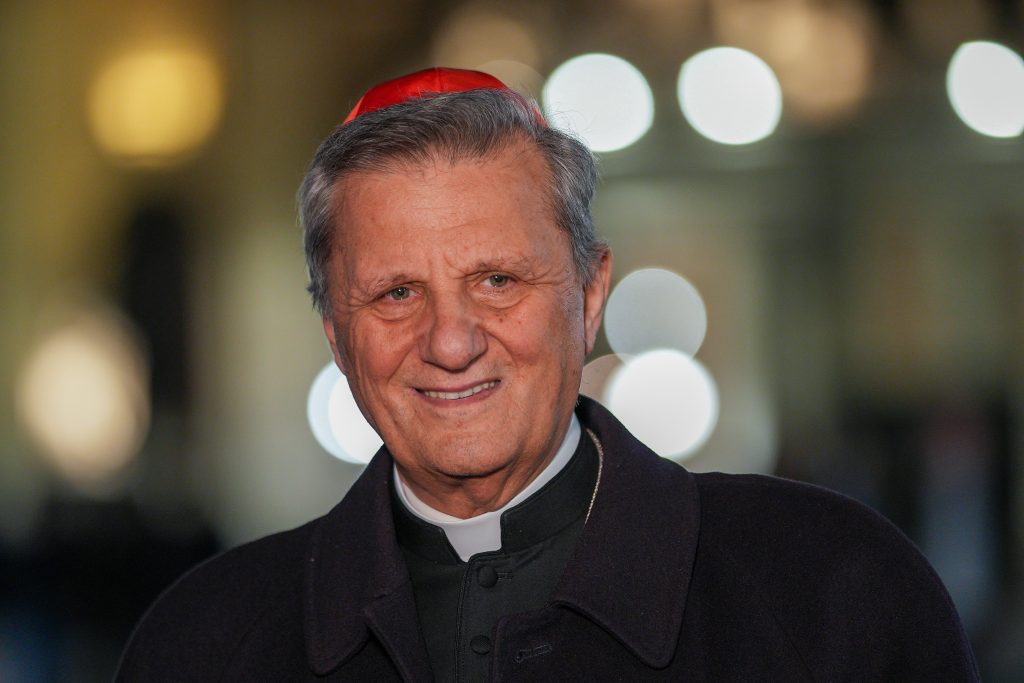
Report from Day 2 of the Consistory: Cardinal Grech sets out synodality’s next phase
The final session of Pope Leo XIV’s Extraordinary Consistory focused on the future of synodality, as Cardinal Mario Grech told the College of Cardinals that the Church was entering a new stage in implementing the Synod’s conclusions Cardinal Mario Grech has declared that the Church’s synodal process is entering a permanent new phase, insisting that synodality must become embedded in the ordinary life and governance of the Catholic Church. In an address to the Extraordinary Consistory, the Secretary General of the Synod described the implementation of synodality as “a new stage in the reception of the Second Vatican Council”. Speaking during the final sessions of Pope Leo XIV’s Extraordinary Consistory, Cardinal Grech argued that the Church had reached the point where synodality could no longer be regarded as a temporary initiative or isolated ecclesial project, but as a permanent dimension of Catholic life. Presenting his report on the implementation of the Synod, Cardinal Grech told the assembly that the Church was entering “a new stage in the reception of the Second Vatican Council”, moving beyond the Synod on Synodality itself towards the practical application of its conclusions in dioceses throughout the world. Rather than presenting synodality as a programme with a defined end, he proposed it as a lasting way of exercising ecclesial responsibility through listening, discernment, and shared participation. The Maltese cardinal’s intervention was the centrepiece of the Consistory’s fourth and final working session, held in the Synod Hall on Friday afternoon under the moderation of Cardinal Joseph Tobi. Cardinals subsequently reflected on the report, agreeing that further work was needed to deepen both the historical and ascetical dimensions of synodality, while ensuring that its implementation strengthened, rather than distracted from, the Church’s evangelical mission. Several speakers also emphasised the need to present “a beautiful, creative, evangelical, yet non-clerical image of the priesthood”, according to the Holy See Press Office, while cautioning against allowing consultation processes to become so complex that they burden the Church’s witness. The discussion also reaffirmed that “the hierarchical Church and the People of God both participate, in different ways, in discerning what the Spirit is saying to the Church”, while recognising the contribution that the Eastern Catholic Churches could make through their long-established synodal traditions. Cardinal Grech’s intervention followed a morning devoted to Pope Leo XIV’s new social encyclical, Magnifica Humanitas , with cardinals considering how the Church should respond to the social, political, and technological challenges shaping the modern world. The day’s principal meditation was delivered by Cardinal Stephen Brislin, who reflected on the encyclical under the title Building for the Common Good: the Building Sites of Our Time . The Cardinal focused on the biblical contrast between Babel and Jerusalem and argued that both cities represented collective human endeavour, yet embodied radically different understandings of progress. Babel, he said, demonstrated that “unity sought without God ultimately leads to the confusion of tongues – that is, to fragmentation and disintegration”, whereas Jerusalem symbolised human intelligence placed at the service of God and directed towards “promoting the dignity of every person”. The cardinal said the encyclical asked a fundamental question extending far beyond technological innovation: “What form does human endeavour take when it has access to ever more effective tools?” While artificial intelligence formed part of that discussion, the deeper issue was whether technological progress was accompanied by a corresponding sense of moral responsibility or whether it risked exposing humanity to “new forms of exclusion and reductionism”. Cardinal Brislin argued that the answer lay not in rejecting technology but in ensuring that human progress remained rooted in Christian anthropology. He pointed to four principles identified in the encyclical’s introduction — desire, limitation, shared responsibility, and discernment — describing them as the “grammar of building” needed if society was to pursue the common good rather than technological progress for its own sake. Human desire for happiness, he said, should not be dismissed but purified. “When happiness is reduced to performance or control, it impoverishes the person; when it is shaped by faith, it rediscovers its proper measure in our relationship with God, with others, and with our common home.” Equally important was recovering an appreciation of human limitation. Rather than viewing fragility as a defect to be eliminated, Cardinal Brislin said recognising limits reminded humanity that life was “a gift to be received and safeguarded”, enabling society to recognise the dignity of those marked by illness, disability, or old age. The cardinal also linked the principle of shared responsibility directly to Catholic social teaching, saying that “the common good flourishes when every individual can contribute their part and be supported in doing so”. No individual possessed the whole project, he observed, and “no one builds alone”. The conclusion of the encyclical, Cardinal Brislin continued, showed how these themes were fulfilled through the theological virtues of faith, charity, and hope. Faith revealed history as sustained by God’s saving plan through the Incarnation, charity found its source in the Eucharist, and hope enabled Christians to continue building what the document called the “civilisation of love”. Cardinal Brislin concluded by returning to the encyclical’s opening contrast between Babel and Jerusalem, arguing that Magnifica Humanitas ultimately entrusted the Church with the responsibility “to engage with the struggles of history in its own distinctive way, adopting a synodal approach”. The themes identified by Cardinal Brislin echoed repeatedly during the cardinals’ discussions. Reports from the eleven working groups highlighted what participants described as the profound fractures affecting contemporary society, including divisions between nations, communities, and families. Many of the groups warned that the erosion of identity and meaningful relationships had encouraged tribalism and exaggerated individualism, creating the illusion that others existed merely for personal success. The Holy See Press Office said that the cardinals viewed artificial intelligence not simply as a technological issue but as an anthropological challenge requiring careful ethical discernment. They stressed the importance of identifying shared human values, defending the dignity of work, and resisting the temptation to reduce human beings “to numbers and statistics”. Furthermore, synodality emerged repeatedly throughout these discussions as both a practical method of listening and a sign of ecclesial responsibility. Many groups described it as a path capable of strengthening communion while enabling the Church to respond more effectively to the cultural and political challenges confronting contemporary society.
Jun. 28, 2026
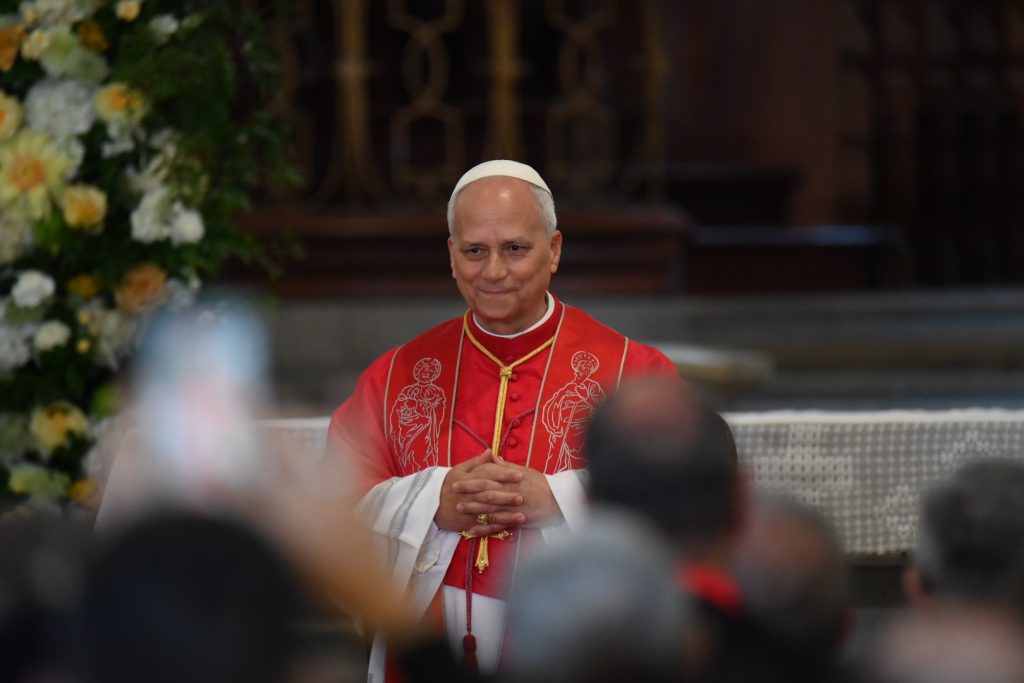
Report from Day 1 of the Consistory: The opening session
Report from Day 1 of the Consistory: During the opening session, Pope Leo XIV and the College of Cardinals examined the wounds of today’s world The College of Cardinals opened the Extraordinary Consistory by reflecting on the wounds of the modern world, with Pope Leo XIV urging the Church’s senior prelates to discern how to proclaim the Gospel at a time marked by war, loneliness, secularisation and growing social fragmentation. Following Mass in St Peter’s Basilica on the morning of 26 June, 178 cardinals gathered in the Paul VI Hall for the first working session of the two-day meeting. After the singing of the Veni Creator , Cardinal Luis José Rueda Aparicio opened proceedings before Cardinal Giovanni Battista Re, Dean of the College of Cardinals, welcomed the assembly. Pope Leo XIV then delivered an introductory address before Cardinal Rueda Aparicio introduced the day’s theme, “In What World Are We Called to Proclaim the Gospel?”, reminding the cardinals of the Holy Father’s request for their assistance and assuring him of “their support, with faith, joy, and availability”. The principal reflection was delivered by Cardinal Grzegorz Ryś of Łódź, who framed the discussions around Christ’s parable of the Good Samaritan. Rather than approaching the modern world through political or sociological analysis, the Polish cardinal argued that the Church should begin with the individual person. “The old story of the Samaritan,” he said, recalling St Paul VI’s closing address to the Second Vatican Council, should remain the Church’s exemplum atque norma , its “model” and “paradigm”, for understanding the contemporary world. “The old story of the Samaritan does not speak about ‘the world’; its subject is a single person – ‘a certain man’,” Cardinal Ryś said. “Instead of talking about an abstract and sociological concept of ‘the world’, let us think about concrete MAN and WOMAN,” because each person is both a “co-creator of the world” and “a primary and fundamental way for the Church”. Reflecting on the wounded traveller, Cardinal Ryś said modern humanity increasingly resembles the victim left on the roadside. “Violence has nearly become a name of today’s world,” he observed, pointing to “32 wars” currently taking place while noting that children and young people frequently encounter “drastic violence at school”. Such violence, he warned, “starts with aggressive language, and it ends with murder and suicide”. The traveller’s robbery, he continued, was also symbolic of modern society. Having been stripped of everything, the man is deprived not only of his possessions but also of his dignity. Nakedness, the cardinal noted, was a biblical sign of slavery, adding that contemporary forms of slavery range from the exploitation of migrants to addictions “caused by drugs, pornography, all kinds of addictions, and even modern technologies”. He described today’s men and women as increasingly “beaten and injured”, explaining that humanity is now in need of “a field hospital”. While some wounds are visible, he said, others remain “deeply hidden and never exposed, yet determine a person’s behaviour and actions”, leaving countless people scarred physically, psychologically and spiritually. Cardinal Ryś devoted particular attention to loneliness, describing the Gospel’s image of the traveller abandoned by passers-by as one of the defining characteristics of contemporary life. The wounded man, he said, is “left behind”, forced to face his suffering alone while others deliberately pass him by. “This is another sort of violence that today’s men and women face: indifference,” he said, recalling Cardinal Timothy Radcliffe’s description of modern society as suffering a “tsunami of loneliness”. Despite possessing “the best, most sophisticated means of communication”, modern men and women remain relictus – abandoned. The cardinal also reflected on the traveller being “half-dead”, asking, “How many people today live on such an edge or margin of life?” He suggested the root of many contemporary problems lies in humanity’s movement away from God, observing that the wounded traveller was descending “from Jerusalem to Jericho”, away from the Temple. That image, he argued, reflects societies that have become “secularised, seeking greatness in freedom from religion”, or which misuse religion “to promote ideas and actions absolutely foreign to it”. Turning to the Samaritan himself, Cardinal Ryś argued that Christians should not only seek to teach the modern world but also be willing to learn from it. Although regarded as “a foreigner, an alien, even an enemy”, the Samaritan becomes Christ’s example of authentic charity. “What does today’s Samaritan teach?” the cardinal asked. His first answer was simple: “compassion.” Referring to the Latin phrase misericordia motus , he said mercy should not become the object of rivalry between the Church and the world. “There are so many charitable activities and works in the world we can admire and follow, or simply take part in,” he said. “Instead of stupid jealousy and pretence, it is much better to learn and to encounter. Mercy and charity may be a meeting place of the Church and the world, the place of true dialogue and healing unity.” Following a prolonged period of silent prayer, the cardinals divided into working groups before returning to the Paul VI Hall for reports from the secretaries of the various groups. According to the Holy See Press Office, the discussions displayed remarkable agreement across the College of Cardinals. Summarising the discussions, the Press Office said: “All groups emphasised in deeply conscious terms the suffering experienced by men and women in this time of profound social transformation.” Among the principal concerns raised were “growing polarisation within societies and communities”, which the cardinals said generates “political tensions and violence” while being fuelled by “social divisions, the use of false information, and widespread communication that fails to foster understanding”. The reports warned that such polarisation “hinders governance and coexistence” and contributes to increasing violence at every level of society. Several groups also raised “a lack of respect for religious and ethnic minorities” that “undermines religious freedom and leads to hostility, or even violence, particularly against the Church”. Some also referred specifically to “the rise of anti-Semitism”. The cardinals repeatedly returned to the weakening of family life and growing individualism. According to the Press Office summary, many linked “the crisis of the family, especially loneliness, among both the elderly and the young” to “the rise in suicides and drug use”. Discussions also focused extensively on young people facing economic uncertainty, unemployment and financial instability. Other reports highlighted “a general sense of distrust, fatalism, and impotence towards institutions, democracy, and the future”, together with declining birth rates, criminal gangs, juvenile delinquency and drug trafficking. Several groups also pointed to “the role of secularism, the loss of transcendent and spiritual values, and the meaning of life”, warning that “the spreading sense of weariness and the absence of a perspective of truth mark the inability to recognise otherness and to build relationships”. Migration likewise featured prominently. The cardinals agreed on “the need to address the phenomenon of migration in a humane and Christian manner”, recognising that migration “is changing the face of peoples, societies, and communities”, while making “effective integration policies” increasingly urgent. Despite the sombre diagnosis, the reports also identified numerous signs of hope. According to the Holy See, every group stressed “the need for the Church to show herself as a mother, a welcoming place”, even if this requires “restructuring parishes”, while remaining capable of “acknowledging her own mistakes and making suffering a moment of growth”. The summary added that “a strong awareness of the responsibility entrusted to the Church in the current historical moment also emerged”. While “many institutions are experiencing a crisis of credibility”, the cardinals believed “the Church feels called to speak with authority for the dignity of the person, for peace, reconciliation, and the common good”. Pope Leo returned for the closing plenary session before thanking the cardinals for their participation. Recalling Cardinal Ryś’s meditation, the Holy Father reflected on “the image of the victim, almost dead”, adding: “If we are not blind, it is true that there is so much suffering.” Loneliness and suffering, he said, are products of contemporary society, and the Church’s response is to invite people into communion “not only by opening churches and celebrating the sacraments, but by creating opportunities and experiences of encounter”. The format of the Extraordinary Consistory itself reflects the increasingly synodal style that has become established in Vatican consultation. As in January’s consistory, the cardinals were divided into small working groups led by presidents and secretaries before moving through three stages consisting of personal interventions, shared listening, and the drafting of a common report. Those reports were then presented to the wider assembly before participants were invited to make brief interventions or submit written observations. The methodology mirrors the process employed during the Synod on Synodality and indicates that the consultative approach developed under the previous pontificate continues to shape the work of the College of Cardinals under Pope Leo XIV. Photo credit: Eros R. Santana/ACFI/EUROPA PRESS
Jun. 27, 2026
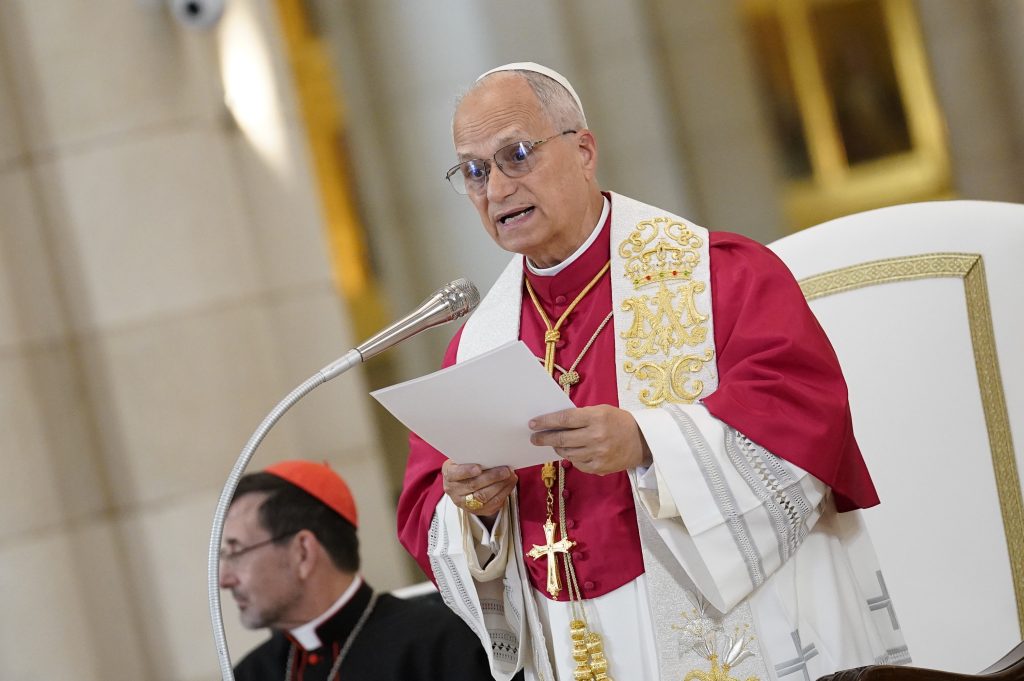
Details of June consistory revealed
New documents have shed light on Pope Leo XIV’s extraordinary consistory later this month, offering a clearer picture of what cardinals will discuss when they gather in Rome The full calendar for Pope Leo XIV’s Extraordinary Consistory has been revealed. Documents circulated to participants and published by the Italian blog MessainLatino show that the two-day meeting on 26 and 27 June will focus on the implementation of the Synod, the Church’s missionary mission and Pope Leo’s recent encyclical Magnifica Humanitas . While the broad themes had already been disclosed to the press, the additional documents reveal strict rules governing interventions, the drafting of reports and communications with the media. The gathering will begin on the morning of 26 June with Mass in St Peter’s Basilica celebrated by Pope Leo XIV. Cardinals are due to assemble beforehand in the Chapel of St Sebastian before proceeding to the liturgy. Following the Mass, participants will move to the Paul VI Hall, where documentation and identification badges will be distributed before the formal opening of proceedings. The first working session, entitled “In What World Are We Called to Proclaim the Gospel?”, will begin with the singing of the Veni Creator Spiritus , an address by Cardinal Giovanni Battista Re, Dean of the College of Cardinals, and introductory remarks by the Pope. Cardinals will then hear a biblical meditation before breaking into discussion groups. They will be asked to reflect on “what sufferings, tensions and questions” are most urgently affecting the peoples and ecclesial communities entrusted to their care, and to identify signs of hope, fidelity to the Gospel and possibilities for reconciliation. The afternoon session, entitled “The Culture of Power and the Civilisation of Love”, will draw directly upon Chapter Five of Magnifica Humanitas . Cardinals will be invited to consider how global conflicts and divisions affect both local Churches and wider society, while discussing what “languages, attitudes and practices” might contribute to reconciliation and peace. A third session on the morning of 27 June will focus on what organisers describe as “The Construction Sites of Our Time”. Using the introduction and conclusion of Magnifica Humanitas as points of reference, participants will discuss social, cultural and ecclesial fractures that make it more difficult to pursue the common good. They will also examine expectations emerging from ordinary Catholics and wider society and consider what support local Churches may require in responding to contemporary challenges. The final session will be devoted to the implementation of the Synod. Cardinals will receive an update on preparations for the Synodal Assemblies planned for 2027 and 2028 before participating in an open dialogue with Pope Leo XIV. The programme concludes with a final address by the Pope and the singing of the Te Deum , before a dinner with the Holy Father in the Paul VI Hall. The accompanying confidential note sheds considerable light on how Pope Leo intends the discussions to be conducted. According to the document, the Pope wishes to draw upon “the wealth of experience and wisdom present in the College of Cardinals” and regards the meeting as an opportunity for “fraternal discussion” on the principal challenges facing the Church’s life and mission. Participants have been divided into twenty discussion groups. Nine groups consist of cardinal electors serving as diocesan ordinaries, together with apostolic nuncios and retired ordinaries. The remaining eleven groups are composed of members of the Roman Curia and cardinals over the age of eighty. The organisers state that this structure demonstrates the Holy Father’s desire to give particular attention to the experiences of local Churches throughout the world and to ensure that perspectives from different continents and ecclesial contexts are heard. Each group will be led by a chairman responsible for moderating discussions and ensuring that time limits are respected. A secretary will be tasked with collecting contributions and preparing a final report on behalf of the group. The discussions themselves will follow a carefully defined three-stage methodology. In the first phase, each cardinal will be permitted to speak for a maximum of three minutes while responding to the questions assigned to the session. In the second phase, participants will be allowed a further intervention of no more than two minutes. Rather than introducing new proposals, they will be expected to identify the most important themes that emerged during the earlier round of discussion. The third phase will involve the preparation of a report summarising the principal points raised. The secretary will draft the text with assistance from the other members of the group before it is approved and submitted electronically to organisers. The reports will then form the basis of plenary discussions. Groups composed of cardinal ordinaries will present their conclusions to the assembly, while the remaining groups will also be given an opportunity to report on their deliberations. Presentations will be limited to three minutes. The confidential note stresses that Pope Leo attaches particular importance to these plenary exchanges. Time has been reserved at the conclusion of each session for additional personal interventions, while cardinals may also submit written observations of up to two pages. One of the most notable features of the programme is the final open dialogue with the Holy Father. Cardinals will be able to address Pope Leo directly, although contributions are again expected to remain within a three-minute limit. The organisers emphasise that disagreements should not be suppressed. “Tensions and disagreements should not be avoided,” the note states, provided they are addressed “with respect and fraternal affection”. Moderators have nevertheless been instructed to enforce speaking limits strictly in order to ensure broad participation. The documents also impose strict confidentiality requirements on the Vatican press corps. Cardinals have been asked not to issue statements to journalists during the course of the consistory. While a press conference will be held after the meeting concludes, participants are specifically instructed not to reveal the identity of speakers when discussing the proceedings. The note further establishes confidential channels through which cardinals may communicate privately with the Pope. Contributions submitted through these channels will not be included in summaries of the discussions and will be accessible only to the Holy Father. The Extraordinary Consistory will conclude on 29 June when cardinals join Pope Leo for Mass marking the Solemnity of Saints Peter and Paul. Metropolitan archbishops appointed during the past year will receive the pallium during the liturgy. (Photo credit: Á. Pérez Meca/EUROPA PRESS)
Jun. 17, 2026
Pope Leo leaves liturgy off agenda for June consistory
Pope Leo XIV will ask the world’s cardinals to discuss war, peace and the future of the Synod on Synodality at an Extraordinary Consistory on 26 and 27 June. The agenda includes the international situation and Magnifica Humanitas, but makes no provision for discussion of the liturgy Pope Leo has decided not to include the liturgy in the agenda for the upcoming June consistory. The pontiff will instead ask the world’s cardinals to discuss war, peace and the future of the Synod on Synodality when they gather in Rome later this month for an Extraordinary Consistory. Details of the agenda emerged after a letter sent to cardinals by Cardinal Giovanni Battista Re, Dean of the College of Cardinals, was published by the Italian blog Messa in Latino. According to Diane Montagna, the meeting, which will take place on 26 and 27 June, will focus on the international situation, Pope Leo’s encyclical Magnifica Humanitas and the implementation of the Synod on Synodality. Cardinal Re said the gathering was intended to provide “a space for mutual listening, discernment, and shared reflection on certain matters of importance for the life and mission of the Church at the present time”. He wrote that Pope Leo wished “to draw upon the experience and counsel of the members of the College of Cardinals” and to count on “the active assistance and support of each one in the various places and responsibilities in which he serves the Church”. The first session will be dedicated to the situation facing the Church and the world. Cardinals will be invited to reflect on “what sufferings, tensions, and questions are today affecting with greatest force the peoples and ecclesial communities entrusted to your care” and to identify “signs of hope, fidelity to the Gospel and possible reconciliation” that should be brought before the College and the Pope. Two sessions will then be devoted to Magnifica Humanitas , Pope Leo’s first encyclical. One discussion will centre on Chapter Five of the document, titled The Culture of Power and the Civilisation of Love , with particular attention given to questions of war and peace. Cardinal Re noted that the encyclical teaches that “peace is not simply one issue among others, but a prerequisite for the universal common good and a test of the moral maturity of peoples”. The cardinals will be asked to consider how best to reaffirm the encyclical’s assertion “that the ‘just war’ theory, which has all too often been used to justify any kind of war, is now outdated”, and to discuss “what concrete paths might help peoples and Christian communities to safeguard and build peace”. A further session will examine the encyclical’s call to interpret contemporary social and cultural changes in the light of the Gospel and to direct the search for happiness and fulfilment towards what the document describes as integral human development. The final working session will focus on the next stage of the Synod on Synodality, the worldwide consultation process launched under Pope Francis. Cardinals will receive an update on preparations for the assemblies planned for 2027 and 2028 following the publication of the document Toward the Assemblies 2027–2028: Stages, Criteria, and Tools for Preparation . The update will be followed by a period of open discussion with Pope Leo. According to Cardinal Re’s letter, interventions from members of the College will be limited to three minutes each. The consistory will conclude on 29 June, the Solemnity of Saints Peter and Paul, when Pope Leo celebrates Mass in St Peter’s Basilica and imposes the pallium on newly appointed metropolitan archbishops.
Jun. 4, 2026