

Magnifica Humanitas
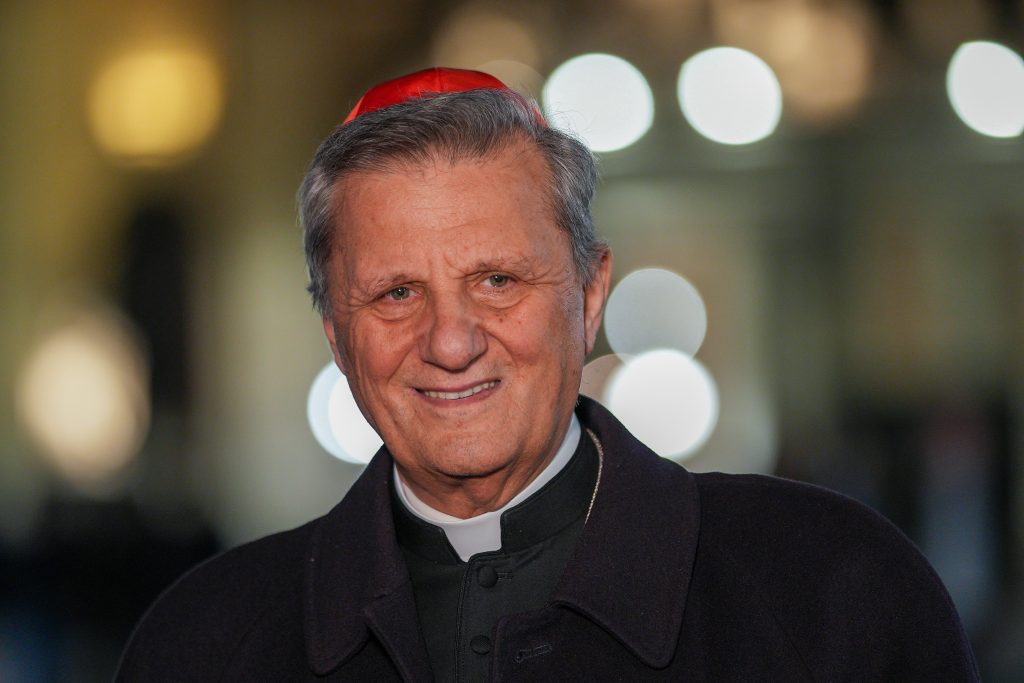
Report from Day 2 of the Consistory: Cardinal Grech sets out synodality’s next phase
The final session of Pope Leo XIV’s Extraordinary Consistory focused on the future of synodality, as Cardinal Mario Grech told the College of Cardinals that the Church was entering a new stage in implementing the Synod’s conclusions Cardinal Mario Grech has declared that the Church’s synodal process is entering a permanent new phase, insisting that synodality must become embedded in the ordinary life and governance of the Catholic Church. In an address to the Extraordinary Consistory, the Secretary General of the Synod described the implementation of synodality as “a new stage in the reception of the Second Vatican Council”. Speaking during the final sessions of Pope Leo XIV’s Extraordinary Consistory, Cardinal Grech argued that the Church had reached the point where synodality could no longer be regarded as a temporary initiative or isolated ecclesial project, but as a permanent dimension of Catholic life. Presenting his report on the implementation of the Synod, Cardinal Grech told the assembly that the Church was entering “a new stage in the reception of the Second Vatican Council”, moving beyond the Synod on Synodality itself towards the practical application of its conclusions in dioceses throughout the world. Rather than presenting synodality as a programme with a defined end, he proposed it as a lasting way of exercising ecclesial responsibility through listening, discernment, and shared participation. The Maltese cardinal’s intervention was the centrepiece of the Consistory’s fourth and final working session, held in the Synod Hall on Friday afternoon under the moderation of Cardinal Joseph Tobi. Cardinals subsequently reflected on the report, agreeing that further work was needed to deepen both the historical and ascetical dimensions of synodality, while ensuring that its implementation strengthened, rather than distracted from, the Church’s evangelical mission. Several speakers also emphasised the need to present “a beautiful, creative, evangelical, yet non-clerical image of the priesthood”, according to the Holy See Press Office, while cautioning against allowing consultation processes to become so complex that they burden the Church’s witness. The discussion also reaffirmed that “the hierarchical Church and the People of God both participate, in different ways, in discerning what the Spirit is saying to the Church”, while recognising the contribution that the Eastern Catholic Churches could make through their long-established synodal traditions. Cardinal Grech’s intervention followed a morning devoted to Pope Leo XIV’s new social encyclical, Magnifica Humanitas , with cardinals considering how the Church should respond to the social, political, and technological challenges shaping the modern world. The day’s principal meditation was delivered by Cardinal Stephen Brislin, who reflected on the encyclical under the title Building for the Common Good: the Building Sites of Our Time . The Cardinal focused on the biblical contrast between Babel and Jerusalem and argued that both cities represented collective human endeavour, yet embodied radically different understandings of progress. Babel, he said, demonstrated that “unity sought without God ultimately leads to the confusion of tongues – that is, to fragmentation and disintegration”, whereas Jerusalem symbolised human intelligence placed at the service of God and directed towards “promoting the dignity of every person”. The cardinal said the encyclical asked a fundamental question extending far beyond technological innovation: “What form does human endeavour take when it has access to ever more effective tools?” While artificial intelligence formed part of that discussion, the deeper issue was whether technological progress was accompanied by a corresponding sense of moral responsibility or whether it risked exposing humanity to “new forms of exclusion and reductionism”. Cardinal Brislin argued that the answer lay not in rejecting technology but in ensuring that human progress remained rooted in Christian anthropology. He pointed to four principles identified in the encyclical’s introduction — desire, limitation, shared responsibility, and discernment — describing them as the “grammar of building” needed if society was to pursue the common good rather than technological progress for its own sake. Human desire for happiness, he said, should not be dismissed but purified. “When happiness is reduced to performance or control, it impoverishes the person; when it is shaped by faith, it rediscovers its proper measure in our relationship with God, with others, and with our common home.” Equally important was recovering an appreciation of human limitation. Rather than viewing fragility as a defect to be eliminated, Cardinal Brislin said recognising limits reminded humanity that life was “a gift to be received and safeguarded”, enabling society to recognise the dignity of those marked by illness, disability, or old age. The cardinal also linked the principle of shared responsibility directly to Catholic social teaching, saying that “the common good flourishes when every individual can contribute their part and be supported in doing so”. No individual possessed the whole project, he observed, and “no one builds alone”. The conclusion of the encyclical, Cardinal Brislin continued, showed how these themes were fulfilled through the theological virtues of faith, charity, and hope. Faith revealed history as sustained by God’s saving plan through the Incarnation, charity found its source in the Eucharist, and hope enabled Christians to continue building what the document called the “civilisation of love”. Cardinal Brislin concluded by returning to the encyclical’s opening contrast between Babel and Jerusalem, arguing that Magnifica Humanitas ultimately entrusted the Church with the responsibility “to engage with the struggles of history in its own distinctive way, adopting a synodal approach”. The themes identified by Cardinal Brislin echoed repeatedly during the cardinals’ discussions. Reports from the eleven working groups highlighted what participants described as the profound fractures affecting contemporary society, including divisions between nations, communities, and families. Many of the groups warned that the erosion of identity and meaningful relationships had encouraged tribalism and exaggerated individualism, creating the illusion that others existed merely for personal success. The Holy See Press Office said that the cardinals viewed artificial intelligence not simply as a technological issue but as an anthropological challenge requiring careful ethical discernment. They stressed the importance of identifying shared human values, defending the dignity of work, and resisting the temptation to reduce human beings “to numbers and statistics”. Furthermore, synodality emerged repeatedly throughout these discussions as both a practical method of listening and a sign of ecclesial responsibility. Many groups described it as a path capable of strengthening communion while enabling the Church to respond more effectively to the cultural and political challenges confronting contemporary society.
Jun. 28, 2026
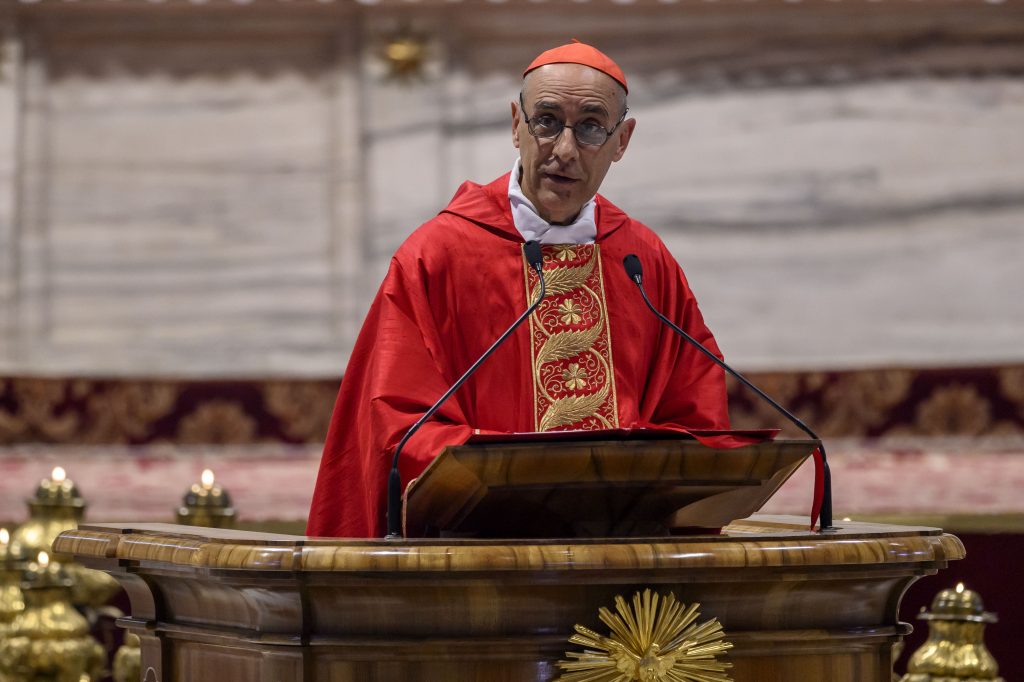
Report from Day 1 of the Consistory: The second session
Cardinal Víctor Manuel Fernández delivered the principal theological meditation during the second session of the first day of Pope Leo XIV’s Extraordinary Consistory The College of Cardinals concluded the first day of Pope Leo XIV’s Extraordinary Consistory with Cardinal Víctor Manuel Fernández clarifying the Pope’s call for the Catholic Church to move beyond the traditional just war theory. Following presentations by the working groups, the remainder of the afternoon was devoted to open interventions from cardinals, who returned repeatedly to the themes of the Pope’s landmark encyclical. According to the Holy See Press Office, the interventions centred on the need for Christians to transform society through the witness of their lives, while many cardinals expressed gratitude for what they described as the spirit of communion fostered during the Consistory. The Holy See said the discussions stressed Christian witness as the means by which “mentalities and cultures” could be changed, with cardinals reflecting that authentic evangelisation depended not simply on words but on lives capable of demonstrating the Gospel before an increasingly sceptical world. The interventions also returned to one of the most striking passages of Magnifica Humanitas , in which Pope Leo acknowledged that the Church had been too slow in unequivocally condemning slavery. According to the Holy See, cardinals said the Pope’s forthright admission had “opened the hearts of millions to the Gospel”, bringing “light and hope to the Church”. Rather than weakening the Church’s witness, they suggested that the Pope’s willingness to confront painful chapters of history had strengthened its credibility in the modern world. Cardinals also described the encyclical as a personal appeal directed not only to Catholics generally but particularly to members of the College of Cardinals, calling them to assume responsibility for building peace in a world marked by conflict and instability. They noted the continuing importance of symbolic acts of reconciliation, recalling St John Paul II’s Prayer Meeting for Peace in Assisi in 1986 as an example of the Church exercising moral leadership beyond political divisions. The session concluded shortly before 7.30 pm with Pope Leo leading the cardinals in prayer. Earlier in the day, Cardinal Víctor Manuel Fernández, Prefect of the Dicastery for the Doctrine of the Faith, delivered the principal theological meditation on the fifth chapter of Magnifica Humanitas , offering what amounted to the clearest exposition yet of Pope Leo’s teaching on war and legitimate defence. Cardinal Fernández argued that the encyclical’s originality lay not simply in its treatment of armed conflict but in its diagnosis of what it calls the “culture” of power, a global mentality that enables wars to emerge and continue with diminishing resistance from societies increasingly shaped by modern communications and artificial intelligence. He said the encyclical’s most significant doctrinal development was its assertion that “the ‘just war’ theory […] is outdated”, explaining that Pope Leo was not abandoning the Church’s concern for legitimate defence but warning that the traditional doctrine had “all too often been used to justify any kind of war”. “The Church’s Social Doctrine is manipulated to provide a theoretical foundation for the most unjust wars,” Cardinal Fernández said. “Instead of stopping wars, it helps to justify them.” He insisted that legitimate self-defence remained part of Catholic teaching, but only when understood “in the strictest sense”, rejecting broad interpretations that had been used to justify so-called pre-emptive wars. Recalling the Catechism’s traditional conditions governing legitimate defence, Cardinal Fernández stressed that military action could only be justified where grave and certain aggression had occurred, all peaceful means had failed, success remained realistically possible, and military action would not inflict greater harm than the evil being resisted. He argued that these principles had become increasingly difficult to satisfy given the destructive capacity of modern weapons. “The destruction of entire cities cannot be considered a proportionate defensive action,” he said, before citing Gaza and southern Lebanon as examples where the scale of military intervention had become impossible to reconcile with classical Catholic teaching on proportionality. “The enormous disproportion of the military interventions in Gaza and southern Lebanon, for example, is evident,” he said. Referring to civilian casualties and widespread destruction, he added that “the percentage of civilian deaths relative to the total population, the enormous number of children killed… and the number of homes bombed allow us to speak of total destruction.” He argued that appeals to self-defence had become increasingly elastic, not only in the Middle East but also in Ukraine and elsewhere, asking: “What remains of the conditions that sought to limit wars?” Cardinal Fernández suggested that contemporary conflicts reflected a broader cultural shift identified by the encyclical as the “normalisation of war” and a “troubling revival of war as an instrument of international politics”, accompanied by what Pope Leo describes as a “loss of historical memory”. The Argentine cardinal warned that this culture was sustained through systematic misinformation, the discrediting of political opponents, and the cultivation of fear. Quoting directly from the encyclical, he said modern politics increasingly relied upon “misinformation and ridiculing opponents, and systematically cultivating fears and resentments”, creating “an environment in which new conflicts can develop almost imperceptibly”. He also criticised what he described as a false political realism that dismissed peace as naïve. “This so-called realism,” he said, “dismisses peace and dialogue as utopian or irrational positions that ignore the risks at stake.” He warned that even bishops could become trapped by such thinking through fear of appearing unrealistic. Cardinal Fernández also criticised what he called selective moral consistency in international affairs, pointing to differing responses to conflicts depending on political alliances. He argued that countries often condemned abuses committed by adversaries while overlooking similar violations committed by allies, concluding that geopolitical interests frequently displaced objective moral principles. The cardinal’s meditation concluded on a more hopeful note, presenting Catholic social teaching as offering a coherent alternative to ideological polarisation. He said the Church remained distinctive because it consistently defended unborn life while simultaneously protecting migrants, opposing war, defending vulnerable populations, and rejecting abortion, all without becoming captive to electoral politics or ideological factions. “It always proclaims the saving love of Christ,” he said, “but never separates it from the constant defence of human dignity in every circumstance, since such a defence lies at the heart of the Gospel.” He ended by turning the challenge back upon the bishops themselves, asking whether local Churches reflected the same integrity found in papal teaching or whether they too had succumbed to the culture of power that the encyclical seeks to overcome.
Jun. 27, 2026
Details of June consistory revealed
New documents have shed light on Pope Leo XIV’s extraordinary consistory later this month, offering a clearer picture of what cardinals will discuss when they gather in Rome The full calendar for Pope Leo XIV’s Extraordinary Consistory has been revealed. Documents circulated to participants and published by the Italian blog MessainLatino show that the two-day meeting on 26 and 27 June will focus on the implementation of the Synod, the Church’s missionary mission and Pope Leo’s recent encyclical Magnifica Humanitas . While the broad themes had already been disclosed to the press, the additional documents reveal strict rules governing interventions, the drafting of reports and communications with the media. The gathering will begin on the morning of 26 June with Mass in St Peter’s Basilica celebrated by Pope Leo XIV. Cardinals are due to assemble beforehand in the Chapel of St Sebastian before proceeding to the liturgy. Following the Mass, participants will move to the Paul VI Hall, where documentation and identification badges will be distributed before the formal opening of proceedings. The first working session, entitled “In What World Are We Called to Proclaim the Gospel?”, will begin with the singing of the Veni Creator Spiritus , an address by Cardinal Giovanni Battista Re, Dean of the College of Cardinals, and introductory remarks by the Pope. Cardinals will then hear a biblical meditation before breaking into discussion groups. They will be asked to reflect on “what sufferings, tensions and questions” are most urgently affecting the peoples and ecclesial communities entrusted to their care, and to identify signs of hope, fidelity to the Gospel and possibilities for reconciliation. The afternoon session, entitled “The Culture of Power and the Civilisation of Love”, will draw directly upon Chapter Five of Magnifica Humanitas . Cardinals will be invited to consider how global conflicts and divisions affect both local Churches and wider society, while discussing what “languages, attitudes and practices” might contribute to reconciliation and peace. A third session on the morning of 27 June will focus on what organisers describe as “The Construction Sites of Our Time”. Using the introduction and conclusion of Magnifica Humanitas as points of reference, participants will discuss social, cultural and ecclesial fractures that make it more difficult to pursue the common good. They will also examine expectations emerging from ordinary Catholics and wider society and consider what support local Churches may require in responding to contemporary challenges. The final session will be devoted to the implementation of the Synod. Cardinals will receive an update on preparations for the Synodal Assemblies planned for 2027 and 2028 before participating in an open dialogue with Pope Leo XIV. The programme concludes with a final address by the Pope and the singing of the Te Deum , before a dinner with the Holy Father in the Paul VI Hall. The accompanying confidential note sheds considerable light on how Pope Leo intends the discussions to be conducted. According to the document, the Pope wishes to draw upon “the wealth of experience and wisdom present in the College of Cardinals” and regards the meeting as an opportunity for “fraternal discussion” on the principal challenges facing the Church’s life and mission. Participants have been divided into twenty discussion groups. Nine groups consist of cardinal electors serving as diocesan ordinaries, together with apostolic nuncios and retired ordinaries. The remaining eleven groups are composed of members of the Roman Curia and cardinals over the age of eighty. The organisers state that this structure demonstrates the Holy Father’s desire to give particular attention to the experiences of local Churches throughout the world and to ensure that perspectives from different continents and ecclesial contexts are heard. Each group will be led by a chairman responsible for moderating discussions and ensuring that time limits are respected. A secretary will be tasked with collecting contributions and preparing a final report on behalf of the group. The discussions themselves will follow a carefully defined three-stage methodology. In the first phase, each cardinal will be permitted to speak for a maximum of three minutes while responding to the questions assigned to the session. In the second phase, participants will be allowed a further intervention of no more than two minutes. Rather than introducing new proposals, they will be expected to identify the most important themes that emerged during the earlier round of discussion. The third phase will involve the preparation of a report summarising the principal points raised. The secretary will draft the text with assistance from the other members of the group before it is approved and submitted electronically to organisers. The reports will then form the basis of plenary discussions. Groups composed of cardinal ordinaries will present their conclusions to the assembly, while the remaining groups will also be given an opportunity to report on their deliberations. Presentations will be limited to three minutes. The confidential note stresses that Pope Leo attaches particular importance to these plenary exchanges. Time has been reserved at the conclusion of each session for additional personal interventions, while cardinals may also submit written observations of up to two pages. One of the most notable features of the programme is the final open dialogue with the Holy Father. Cardinals will be able to address Pope Leo directly, although contributions are again expected to remain within a three-minute limit. The organisers emphasise that disagreements should not be suppressed. “Tensions and disagreements should not be avoided,” the note states, provided they are addressed “with respect and fraternal affection”. Moderators have nevertheless been instructed to enforce speaking limits strictly in order to ensure broad participation. The documents also impose strict confidentiality requirements on the Vatican press corps. Cardinals have been asked not to issue statements to journalists during the course of the consistory. While a press conference will be held after the meeting concludes, participants are specifically instructed not to reveal the identity of speakers when discussing the proceedings. The note further establishes confidential channels through which cardinals may communicate privately with the Pope. Contributions submitted through these channels will not be included in summaries of the discussions and will be accessible only to the Holy Father. The Extraordinary Consistory will conclude on 29 June when cardinals join Pope Leo for Mass marking the Solemnity of Saints Peter and Paul. Metropolitan archbishops appointed during the past year will receive the pallium during the liturgy. (Photo credit: Á. Pérez Meca/EUROPA PRESS)
Jun. 17, 2026
Pope Leo leaves liturgy off agenda for June consistory
Pope Leo XIV will ask the world’s cardinals to discuss war, peace and the future of the Synod on Synodality at an Extraordinary Consistory on 26 and 27 June. The agenda includes the international situation and Magnifica Humanitas, but makes no provision for discussion of the liturgy Pope Leo has decided not to include the liturgy in the agenda for the upcoming June consistory. The pontiff will instead ask the world’s cardinals to discuss war, peace and the future of the Synod on Synodality when they gather in Rome later this month for an Extraordinary Consistory. Details of the agenda emerged after a letter sent to cardinals by Cardinal Giovanni Battista Re, Dean of the College of Cardinals, was published by the Italian blog Messa in Latino. According to Diane Montagna, the meeting, which will take place on 26 and 27 June, will focus on the international situation, Pope Leo’s encyclical Magnifica Humanitas and the implementation of the Synod on Synodality. Cardinal Re said the gathering was intended to provide “a space for mutual listening, discernment, and shared reflection on certain matters of importance for the life and mission of the Church at the present time”. He wrote that Pope Leo wished “to draw upon the experience and counsel of the members of the College of Cardinals” and to count on “the active assistance and support of each one in the various places and responsibilities in which he serves the Church”. The first session will be dedicated to the situation facing the Church and the world. Cardinals will be invited to reflect on “what sufferings, tensions, and questions are today affecting with greatest force the peoples and ecclesial communities entrusted to your care” and to identify “signs of hope, fidelity to the Gospel and possible reconciliation” that should be brought before the College and the Pope. Two sessions will then be devoted to Magnifica Humanitas , Pope Leo’s first encyclical. One discussion will centre on Chapter Five of the document, titled The Culture of Power and the Civilisation of Love , with particular attention given to questions of war and peace. Cardinal Re noted that the encyclical teaches that “peace is not simply one issue among others, but a prerequisite for the universal common good and a test of the moral maturity of peoples”. The cardinals will be asked to consider how best to reaffirm the encyclical’s assertion “that the ‘just war’ theory, which has all too often been used to justify any kind of war, is now outdated”, and to discuss “what concrete paths might help peoples and Christian communities to safeguard and build peace”. A further session will examine the encyclical’s call to interpret contemporary social and cultural changes in the light of the Gospel and to direct the search for happiness and fulfilment towards what the document describes as integral human development. The final working session will focus on the next stage of the Synod on Synodality, the worldwide consultation process launched under Pope Francis. Cardinals will receive an update on preparations for the assemblies planned for 2027 and 2028 following the publication of the document Toward the Assemblies 2027–2028: Stages, Criteria, and Tools for Preparation . The update will be followed by a period of open discussion with Pope Leo. According to Cardinal Re’s letter, interventions from members of the College will be limited to three minutes each. The consistory will conclude on 29 June, the Solemnity of Saints Peter and Paul, when Pope Leo celebrates Mass in St Peter’s Basilica and imposes the pallium on newly appointed metropolitan archbishops.
Jun. 4, 2026

Creator of Magisterium AI speaks to AdVaticanum about Magnifica Humanitas
Matthew Harvey Sanders, founder of Magisterium AI, tells AdVaticanum that Pope Leo XIV’s Magnifica Humanitas has set a new benchmark for how Catholics should approach artificial intelligence, warning against treating AI as if it possesses conscience or moral interiority The founder of the Catholic artificial intelligence platform Magisterium AI has said that Pope Leo XIV’s first encyclical on artificial intelligence has set a new benchmark for how Catholic institutions should approach emerging technologies, while warning against treating AI systems as if they possess conscience or moral interiority. Matthew Harvey Sanders, founder and chief executive of the Canadian technology company Longbeard, spoke exclusively to AdVaticanum following the publication of Magnifica Humanitas , the Pope’s inaugural encyclical, which was formally presented at the Vatican this week on AI. Matthew Sanders described the atmosphere surrounding the launch as unlike anything he had experienced in the technology sector, saying the event brought together Vatican officials, clergy, engineers, investors and researchers in a setting marked by “a particular solemnity”. “I have attended a great many events in the technology sector,” he said. “The hall where Leo XIV presented Magnifica Humanitas did not feel like any of them.” He said Pope Leo approached the subject of artificial intelligence without either fear or fashionable enthusiasm, adding that the Pontiff appeared entirely comfortable discussing the implications of rapidly developing technologies. “He spoke without the defensive caution you often find from institutional leaders engaging with technical topics, and without the performative enthusiasm of someone trying to signal relevance,” Sanders said. “He was simply present to the conversation.” Sanders argued that the most significant aspect of the papal intervention was not a condemnation of artificial intelligence itself, but what he described as an “invitation” by the Pope to technology developers and researchers to engage seriously with questions concerning the human person. “What he extended that day was an invitation to every laboratory and every developer in the field: not a verdict on the technology, but an ongoing engagement about what it means for the human person,” he said. “That invitation, in my view, is the most consequential thing that could have come out of the day.” Sanders also disclosed that he spent time during the Vatican gathering speaking with two senior researchers from the American artificial intelligence company Anthropic, including Chris Olah, whose work has focused on mechanistic interpretability, and Amanda Askell, who leads research into the behavioural character of the Claude AI model. “Chris Olah has spent years on mechanistic interpretability: the painstaking effort to reverse-engineer a trained neural network and understand, at a granular level, what is actually occurring when the model processes language,” Sanders said. Referring to Askell, he added: “Amanda Askell leads the work on Claude’s character; she has conducted more careful, sustained inquiry into how a large language model behaves under pressure, across context and at the edges of its training than arguably anyone working today.” Sanders said that while both conversations were “genuinely interesting”, he nevertheless believed the Pope was correct to reject attempts to describe artificial intelligence systems as possessing conscience or moral interiority. “There is an openness in parts of the research community to describing current models as possessing something resembling conscience or moral interiority,” he said. “The encyclical addresses this head-on, and I think the Pope is right to resist it. “Attributing moral subjecthood to a statistical system is a category error with consequences that go well beyond the lab.” Sanders said the presence in the same room of leading AI researchers alongside the Bishop of Rome reflected the scale of the questions now confronting both the Church and the technology industry. “The fact that the conversation in that room included both of them and the Bishop of Rome struck me as exactly the kind of encounter this moment requires,” he said. According to Sanders, Pope Leo’s principal concern is not simply what legal or regulatory restraints should govern artificial intelligence, but what understanding of the human person should precede and shape those rules. He connected the encyclical’s arguments to themes he explored earlier this year in an essay entitled “The Church as the Ark for a Post-Work World”, in which he argued that the greatest disruption caused by artificial intelligence would not ultimately be economic but existential. “My argument there was that the coming crisis of AI is not fundamentally economic: it is existential,” Sanders said. Referring to the Austrian psychiatrist Viktor Frankl, he added: “Viktor Frankl described what happens when a civilisation’s anchor for human identity is removed: an ‘existential vacuum’, a suffocating meaninglessness that no material provision can address.” “Silicon Valley’s answer to the disruption of labour is what I called the ‘hollow utopia’: income to fund the body, and infinite digital distraction to occupy the mind,” Sanders said. He contrasted this with the vision presented in Magnifica Humanitas , arguing that the Pope had rejected the idea that efficiency or economic productivity alone can define human flourishing. “When he cites John Paul II in §129, asking whether AI makes human life on earth ‘more human’ in every aspect of that life and more worthy of man, he is insisting the criterion is not comfort or efficiency,” Sanders said. He also pointed to another section of the encyclical which states that “no computational system, however sophisticated, can create a heart that gives itself, or a conscience that discerns good from evil”. “The GDP era told us human value was about output,” Sanders said. “The encyclical says it never was.” Speaking about the implications of Magnifica Humanitas for Magisterium AI, Sanders said he wanted “to be careful not to appropriate it for our own promotional purposes”, but argued that the encyclical nevertheless addressed “something much larger than any single company”. He highlighted the line: “A more moral AI is not enough if that morality is determined by a few”, adding: “That sentence captures the structural reason Magisterium AI was built the way it was built.” Sanders insisted that “a general-purpose AI platform cannot be made Catholic simply by pointing its outputs at Catholic content”, because “the moral architecture of a system, who controls its training data, what its reward functions are optimised for, what the company that built it needs commercially, shapes every response it generates”. He added that Magisterium AI was built around what the company calls the “off-ramp”, explaining: “Catholic AI should answer a question and then send the person back into prayer, real relationships and the sacramental life of the Church. It should be designed to be finished with.” He also cited another line from the encyclical stating that “technology is never neutral, because it takes on the characteristics of those who devise, finance, regulate and use it”. Referring to the encyclical’s treatment of subsidiarity, he warned that many Church institutions presently rely on technologies controlled by corporations whose priorities may change without notice. “They are using tools built and governed by a handful of companies, running on infrastructure they neither own nor fully understand,” he said. Sanders recalled advice once given to him by the former Archbishop of Toronto, Cardinal Thomas Collins. “My former boss, Cardinal Thomas Collins, used to say: ‘If you know where you’re going, you’ll be more likely to get there.’” Near the conclusion, Sanders said: “The encyclical has sharpened the question of where Catholic institutions should be going with this technology. It has not done the building for us. “The work of constructing digital infrastructure that actually embodies these principles is still largely ahead of us. But the standard has been set.”
May 27, 2026
Global reactions pour in after Pope Leo XIV’s AI encyclical
Politicians, bishops and technology leaders across the United States, Britain and Canada have begun responding to Pope Leo XIV’s first encyclical, Magnifica Humanitas The first international reactions to Pope Leo XIV’s inaugural encyclical have begun to emerge less than 24 hours after its publication, with bishops, politicians and technology figures across the United States, Britain and Canada welcoming the document’s warnings about the dangers posed by artificial intelligence. The encyclical, Magnifica Humanitas, was released by the Vatican on 25 May and is already being compared to Pope Leo XIII’s landmark 1891 social encyclical Rerum Novarum, which addressed the upheavals of the Industrial Revolution. Pope Leo XIV deliberately dated the text 15 May to coincide with the 135th anniversary of the earlier document. One of the strongest official political reactions came from the United States ambassador to the Holy See, Brian Burch, who praised the Vatican’s intervention in the growing global debate surrounding AI. “We welcome the Holy See’s important contribution to the subject of artificial intelligence,” Burch said. “The Vatican’s moral leadership on technology and human dignity contributes meaningfully to the global conversation on AI.” Burch said the United States shared the Holy See’s commitment to ensuring that artificial intelligence “serves humanity and upholds fundamental values”, while also defending the Trump administration’s emphasis on innovation and American leadership in the sector. “The United States is likewise committed to exporting American AI technologies built on principles of transparency, security and human flourishing, ensuring the world benefits from AI systems that reflect democratic values rather than authoritarian control,” he said. David Sacks, the technology investor and former White House AI adviser, also responded publicly to the encyclical, agreeing with the Pope’s argument that AI should remain a tool at the service of humanity rather than become an instrument of “domination or exclusion”. Writing on X, however, Sacks questioned how governments could be trusted with increased regulatory authority over artificial intelligence. “If we hand governments sweeping power over AI development in the name of safety, how do we prevent it from being used to censor, surveil and control citizens, as Orwell foretold in 1984?” he wrote. “This is the real alignment problem. The oldest questions of human nature and authority don’t disappear in the AI age. They become newly relevant.” The encyclical also drew praise from Democratic Senator Chris Murphy of Connecticut, who said Pope Leo XIV had articulated growing concerns about the social and moral effects of artificial intelligence. “AI threatens to undermine the basic building blocks of humanity as it seeks to replace our most basic functions, like creativity, friendship and critical thinking,” Murphy wrote, describing the Pope’s warning against monopolisation of AI technologies by powerful corporations as “really important”. Catholic bishops throughout the English-speaking world moved quickly to welcome the document, presenting it as a major contribution to Catholic social teaching at a moment of rapid technological change. Archbishop Paul S. Coakley of Oklahoma City, president of the United States Conference of Catholic Bishops, said the Church in the United States received the encyclical “with gratitude and praise”. “It is a powerful reminder that no technology can replace a child of God, and all technology should be placed at the service of helping humanity thrive,” he said. Drawing parallels with Rerum Novarum, Archbishop Coakley said Pope Leo XIV had shone “the light of the Gospel and the tradition of the Church” on the opportunities and dangers created by artificial intelligence. “The Pope calls us to never lose sight of the inherent dignity of all human life and the moral imperative for technology to support peace and the common good rather than the limited interests of a few,” he said. The Archbishop also revealed that the US bishops’ conference had already tasked its doctrine committee with coordinating the Church’s response to developments in artificial intelligence. In England and Wales, Archbishop Richard Moth, president of the bishops’ conference, and the Archbishop of Westminster described the encyclical as “an important contribution to integral human development during a time of considerable change”. “One of the first interventions of Pope Leo since he was elected Pope was to draw attention to the profound challenges AI will bring to humanity,” Archbishop Moth said. The Archbishop of Westminster noted that the Church’s social teaching tradition since Rerum Novarum offered substantial guidance for navigating technological and economic upheaval. “We must respond to these, placing the centrality of humanity above all else, most especially the solidarity that is needed if we are to seek peace among peoples,” he said. “Pope Leo reminds us that ‘more powerful does not necessarily mean better.’” Archbishop Moth warned that technology “must not be used to embed unjust economic systems and abuses of power, but must always be at the service of human development”. He also disclosed that the Bishops’ Conference of England and Wales had established a working group to study the encyclical and examine the ethical issues generated by artificial intelligence. Other American bishops issued similar statements within hours of publication. Bishop Michael Burbidge of Arlington said the encyclical was especially welcome “in this time of tremendous social and technological change”. “I encourage all to join me over the coming days in reading Magnifica Humanitas in its entirety and prayerfully considering all that the Holy Father shares,” Bishop Burbidge said. Archbishop Richard Henning of Boston described the document as “timely and important”, while Archbishop Nelson Pérez of Philadelphia encouraged Catholics to reflect on its “vital message” concerning the protection of human dignity during rapid technological development. Bishop William Koenig of Wilmington, Delaware, said the encyclical drew upon the wisdom of Catholic social teaching to ensure that technological progress remained directed towards “human flourishing”. The Canadian Conference of Catholic Bishops also welcomed the document, saying it offered guidance for protecting the human person during “a profound epochal shift”. The bishops highlighted the encyclical’s call for “a civilization of love founded on justice, dialogue and shared responsibility” as an alternative to what the Vatican described as “the culture of power and war”. However, a more critical reaction came from the Bishop Emeritus of Tyler, Bishop Joseph Strickland, who published a lengthy critique arguing that Magnifica Humanitas risked placing excessive emphasis on social structures and human flourishing at the expense of sin, repentance and salvation. While acknowledging the encyclical’s “strong and important” rejection of transhumanism and its warnings about “AI warfare, exploitation, digital manipulation and technological domination”, Bishop Strickland said the document devoted comparatively little attention to “original sin, concupiscence, personal repentance, moral culpability, judgment, hell, penance, or the eternal destiny of the soul”. Bishop Strickland argued that “the roots of evil begin to appear primarily structural rather than spiritual” and warned that the encyclical’s repeated calls for a “civilization of love” risked sounding “less like the fruit of conversion to Christ and more like a global humanitarian project centred on fraternity, solidarity, inclusion and peace”. The former Bishop of Tyler said many Catholics would find the document “deeply unsettling” because “the entire framework is subtly shifting: from God-centredness to man-centredness, from salvation to human flourishing, from sin to systems”. He concluded by warning against “religious humanism” and insisting that “the answer remains what it has always been: Jesus Christ, King of kings and Lord of lords.”
May 26, 2026