Pope Leo XIV has made a final appeal, a day before the consecrations, to the Society of Saint Pius X not to proceed with its planned episcopal consecrations.
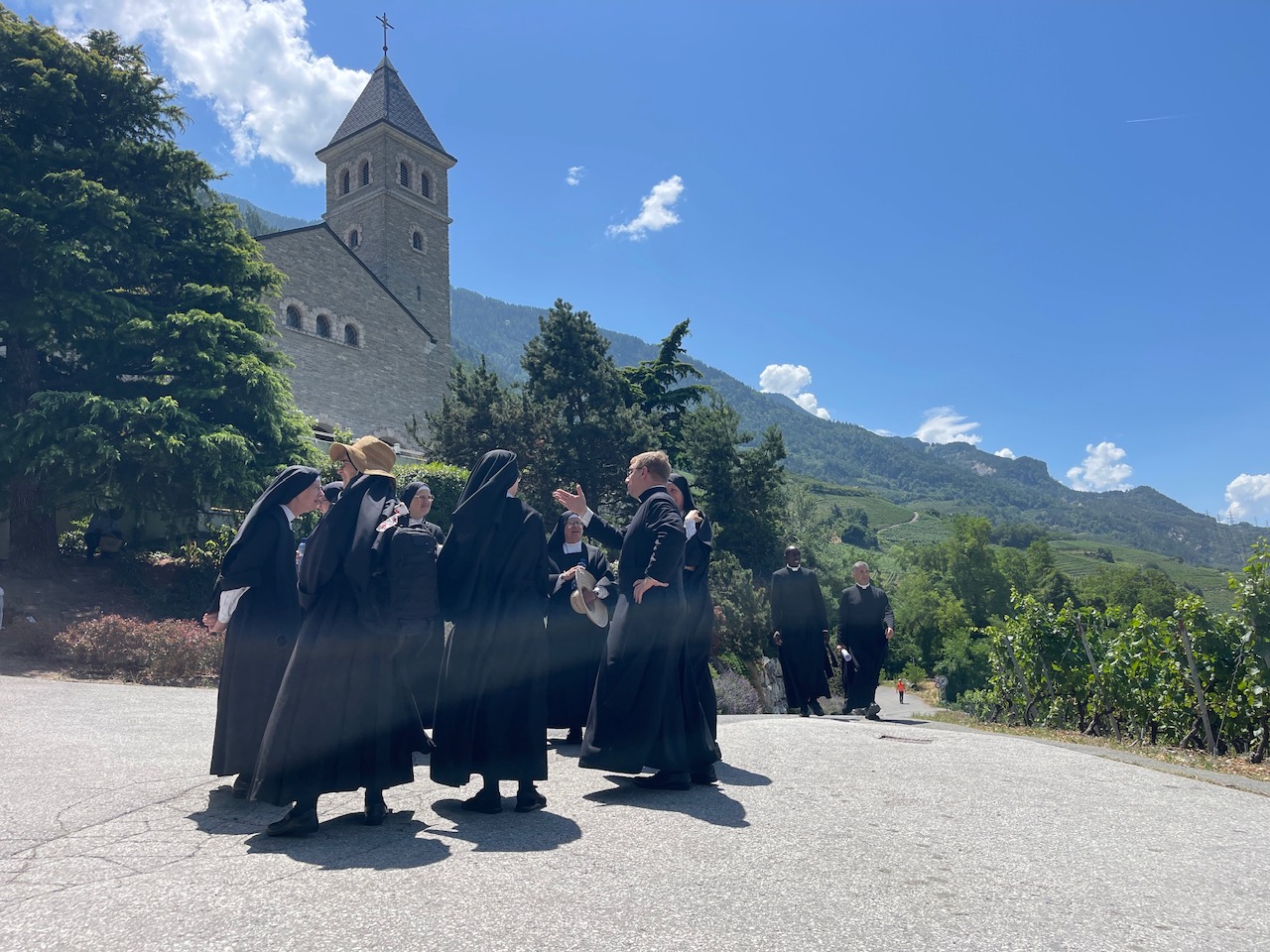
The Pope’s letter, dated 29 June, the Solemnity of Saints Peter and Paul, was published by the Vatican on 30 June, the eve of the consecrations due to take place at Écône, Switzerland. It was addressed to Fr Davide Pagliarani, the Superior General of the SSPX, and, through him, to the society’s bishops, priests, seminarians and faithful. It warned that the ceremony would constitute a “schismatic act” and urged the SSPX to “please turn back”.
Writing “with a paternal heart”, Leo acknowledged the qualities he said had characterised many within the society, praising their “devotion to liturgical life, commitment to priestly formation, apostolic zeal and desire for fidelity to Tradition”. He added that these qualities had motivated the “attentive and generous attitude” consistently shown to the fraternity by his predecessors.
The Pope nevertheless made a direct plea for the society to abandon its plans. “In this spirit, and filled with Christian affection, I plead with you and ask you with all my heart: please turn back!” His Holiness wrote. “I urge you to consider carefully the spiritual good of the faithful, because the schismatic act you are about to undertake would deprive them of the licit and, in some cases, even valid reception of the sacraments, which they love and seek for their sanctification,” His Holiness continued.
Leo also stressed that the Holy See remained willing to continue discussions with the fraternity. “The Church is open to a path of dialogue and understanding that the Holy Spirit can make possible and fruitful,” the Pope wrote.
Concluding the letter, the Pope warned of the seriousness of the proposed consecrations, writing: “I pray for you, because to tear the seamless garment of Christ is a sin of extreme gravity. May the Lord enlighten your consciences and awaken your hearts.” He concluded: “With a sorrowful yet hopeful heart, I feel it is my duty, through the authority received from Christ, to ask you to desist from your intended act.”
The letter is the latest intervention by the Holy See as it attempts to prevent the society from proceeding with the consecrations without a pontifical mandate. On 13 May, the Vatican warned that the planned consecrations would constitute a schismatic act and said that the bishops carrying out the ceremony, together with those receiving episcopal ordination, would incur automatic excommunication.
Pope Leo subsequently confirmed on 16 June, outside Castel Gandolfo, that the Holy See was preparing a final appeal to the SSPX, warning that the proposed consecrations risked creating a new schism within the Church.
The situation recalls 30 June 1988, when Archbishop Marcel Lefebvre consecrated four bishops at Écône without the approval of Pope St John Paul II. The Vatican declared the act schismatic, and Lefebvre, Bishop Antônio de Castro Mayer and the four newly consecrated bishops incurred automatic excommunication.
Although Pope Benedict XVI lifted the excommunications of the surviving bishops in 2009 as part of efforts to encourage reconciliation, the SSPX has remained without canonical status in the Church.
The society had not publicly responded to the Pope’s letter at the time of publication. However, reporting from Écône suggests that many priests and lay faithful have reacted strongly to the letter.
Sources within the SSPX, speaking both on and off the record, have highlighted what they perceive as a lack of genuine doctrinal resolution and a continuation of past perceived betrayals. Brother Gabriel of the SSPX in the United States told AdVaticanum that the letter would not change anything, stating: “I don’t agree with that [letter from Leo].”
A priest of the Society stationed in Asia, speaking to AdVaticanum strictly off the record, dismissed the papal letter in blunt terms. “This was complete nonsense,” he said. He added that the letter failed to address the core theological and liturgical concerns that have defined the SSPX for decades. Another Society priest said: “Far from offering any meaningful path forward, this letter sidesteps the real issues.”
A French priest of the Society offered an even sharper critique, framing the letter as a belated and inadequate gesture. “It is a little too late for reconciliation after the betrayal of the Holy Father,” he remarked. He continued: “After years of ambiguities and a steady erosion of doctrine under the guise of ‘dialogue’, this won’t change anything.”
An American priest of the Society described the letter as largely ineffective and expressed a measured note of spiritual concern for the Pope. “It was useless,” he said plainly, “and I pray for the Holy Father.”
Jim Piante, a longtime lay supporter of the Society of Saint Pius X from the Charlotte area of North Carolina, offered a direct and unapologetic assessment of Pope Leo’s recent letter urging the Society not to proceed with the 1 July episcopal consecrations.
Speaking personally and not on behalf of the Society or his parish of Saint Anthony in Mount Holly, Piante noted that the letter itself acknowledges the Society’s fidelity to Tradition, devotion to the Faith and robust liturgical life. “What is it that makes this a quote-unquote schismatic act?” he asked. “Only that Pope Leo does not grant authorisation.” In his view, the entire controversy would evaporate if the Holy Father simply recognised the worthiness of the men chosen for consecration, who have “proven themselves as genuinely Catholic in every way”. Piante argued that authorisation would resolve the matter instantly, highlighting what he sees as the letter’s failure to address the real pastoral needs of the Church.
Regarding the possibility of excommunication extending beyond the bishops and priests to the lay faithful who attend SSPX chapels, Piante remained resolute and unmoved. “I would do the same thing tomorrow that I did today. Nothing different,” he stated firmly. He emphasised that his primary duty as a Catholic layman is not to resolve the institutional problems of the Church but “to save my soul and the souls of my wife and my children, and all those whom I can potentially influence.”
Marie Flick, a parishioner at a Society of Saint Pius X church in Kansas City, Missouri, described the atmosphere ahead of the 1 July episcopal consecrations as vibrant and full of hope.
When asked about the prolonged negotiations with Rome and Pope Leo’s recent letter urging the Society to reconsider the consecrations, Flick expressed disappointment. She pointed out that talks had dragged on since February with little progress and questioned why the Holy Father had not met personally with the Society’s Superior General. She said: “The Pope could have met with the SSPX, just like he met with the head of the Anglican bishops, the Archbishop of Canterbury. He’s been very open about meeting with other figures as well. Why not be open to meeting with the head of the SSPX? That’s just my opinion.”
Despite being released at around 11 a.m. on 30 June, the letter was intentionally dated the Solemnity of Saints Peter and Paul, 29 June.
This is understood to signal the authority with which the Pontiff issued his appeal, noting in the text that he has a “paternal” “duty”, as “the Successor of the Apostle Peter”, and possesses “authority received from Christ”.
It is understood that this was intended as a signal to the SSPX of the Pope’s willingness to exercise his pontifical authority if the Society proceeds with the consecrations, while also implicitly calling for its obedience to him as Supreme Pontiff. The letter’s opening praise for the Society’s fidelity and apostolic work also appears to express a willingness to pursue reconciliation. It is notable that the text implies that, at present, the Society possesses licit and valid sacraments, which would be jeopardised if the consecrations were to proceed.
Despite stating that there remains within the Church a “path of dialogue and understanding”, the letter offers no further indication of how the two parties might be reconciled beyond cancelling the consecrations, which Leo describes as a “sin of extreme gravity”.