

Pope Leo Xiv
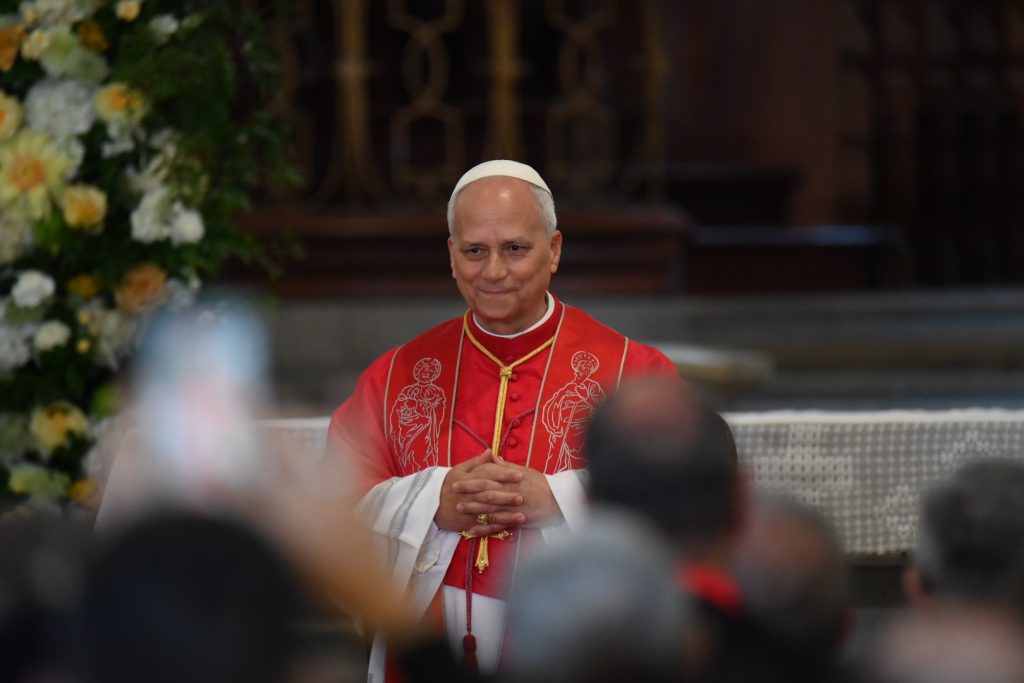
Report from Day 1 of the Consistory: The opening session
Report from Day 1 of the Consistory: During the opening session, Pope Leo XIV and the College of Cardinals examined the wounds of today’s world The College of Cardinals opened the Extraordinary Consistory by reflecting on the wounds of the modern world, with Pope Leo XIV urging the Church’s senior prelates to discern how to proclaim the Gospel at a time marked by war, loneliness, secularisation and growing social fragmentation. Following Mass in St Peter’s Basilica on the morning of 26 June, 178 cardinals gathered in the Paul VI Hall for the first working session of the two-day meeting. After the singing of the Veni Creator , Cardinal Luis José Rueda Aparicio opened proceedings before Cardinal Giovanni Battista Re, Dean of the College of Cardinals, welcomed the assembly. Pope Leo XIV then delivered an introductory address before Cardinal Rueda Aparicio introduced the day’s theme, “In What World Are We Called to Proclaim the Gospel?”, reminding the cardinals of the Holy Father’s request for their assistance and assuring him of “their support, with faith, joy, and availability”. The principal reflection was delivered by Cardinal Grzegorz Ryś of Łódź, who framed the discussions around Christ’s parable of the Good Samaritan. Rather than approaching the modern world through political or sociological analysis, the Polish cardinal argued that the Church should begin with the individual person. “The old story of the Samaritan,” he said, recalling St Paul VI’s closing address to the Second Vatican Council, should remain the Church’s exemplum atque norma , its “model” and “paradigm”, for understanding the contemporary world. “The old story of the Samaritan does not speak about ‘the world’; its subject is a single person – ‘a certain man’,” Cardinal Ryś said. “Instead of talking about an abstract and sociological concept of ‘the world’, let us think about concrete MAN and WOMAN,” because each person is both a “co-creator of the world” and “a primary and fundamental way for the Church”. Reflecting on the wounded traveller, Cardinal Ryś said modern humanity increasingly resembles the victim left on the roadside. “Violence has nearly become a name of today’s world,” he observed, pointing to “32 wars” currently taking place while noting that children and young people frequently encounter “drastic violence at school”. Such violence, he warned, “starts with aggressive language, and it ends with murder and suicide”. The traveller’s robbery, he continued, was also symbolic of modern society. Having been stripped of everything, the man is deprived not only of his possessions but also of his dignity. Nakedness, the cardinal noted, was a biblical sign of slavery, adding that contemporary forms of slavery range from the exploitation of migrants to addictions “caused by drugs, pornography, all kinds of addictions, and even modern technologies”. He described today’s men and women as increasingly “beaten and injured”, explaining that humanity is now in need of “a field hospital”. While some wounds are visible, he said, others remain “deeply hidden and never exposed, yet determine a person’s behaviour and actions”, leaving countless people scarred physically, psychologically and spiritually. Cardinal Ryś devoted particular attention to loneliness, describing the Gospel’s image of the traveller abandoned by passers-by as one of the defining characteristics of contemporary life. The wounded man, he said, is “left behind”, forced to face his suffering alone while others deliberately pass him by. “This is another sort of violence that today’s men and women face: indifference,” he said, recalling Cardinal Timothy Radcliffe’s description of modern society as suffering a “tsunami of loneliness”. Despite possessing “the best, most sophisticated means of communication”, modern men and women remain relictus – abandoned. The cardinal also reflected on the traveller being “half-dead”, asking, “How many people today live on such an edge or margin of life?” He suggested the root of many contemporary problems lies in humanity’s movement away from God, observing that the wounded traveller was descending “from Jerusalem to Jericho”, away from the Temple. That image, he argued, reflects societies that have become “secularised, seeking greatness in freedom from religion”, or which misuse religion “to promote ideas and actions absolutely foreign to it”. Turning to the Samaritan himself, Cardinal Ryś argued that Christians should not only seek to teach the modern world but also be willing to learn from it. Although regarded as “a foreigner, an alien, even an enemy”, the Samaritan becomes Christ’s example of authentic charity. “What does today’s Samaritan teach?” the cardinal asked. His first answer was simple: “compassion.” Referring to the Latin phrase misericordia motus , he said mercy should not become the object of rivalry between the Church and the world. “There are so many charitable activities and works in the world we can admire and follow, or simply take part in,” he said. “Instead of stupid jealousy and pretence, it is much better to learn and to encounter. Mercy and charity may be a meeting place of the Church and the world, the place of true dialogue and healing unity.” Following a prolonged period of silent prayer, the cardinals divided into working groups before returning to the Paul VI Hall for reports from the secretaries of the various groups. According to the Holy See Press Office, the discussions displayed remarkable agreement across the College of Cardinals. Summarising the discussions, the Press Office said: “All groups emphasised in deeply conscious terms the suffering experienced by men and women in this time of profound social transformation.” Among the principal concerns raised were “growing polarisation within societies and communities”, which the cardinals said generates “political tensions and violence” while being fuelled by “social divisions, the use of false information, and widespread communication that fails to foster understanding”. The reports warned that such polarisation “hinders governance and coexistence” and contributes to increasing violence at every level of society. Several groups also raised “a lack of respect for religious and ethnic minorities” that “undermines religious freedom and leads to hostility, or even violence, particularly against the Church”. Some also referred specifically to “the rise of anti-Semitism”. The cardinals repeatedly returned to the weakening of family life and growing individualism. According to the Press Office summary, many linked “the crisis of the family, especially loneliness, among both the elderly and the young” to “the rise in suicides and drug use”. Discussions also focused extensively on young people facing economic uncertainty, unemployment and financial instability. Other reports highlighted “a general sense of distrust, fatalism, and impotence towards institutions, democracy, and the future”, together with declining birth rates, criminal gangs, juvenile delinquency and drug trafficking. Several groups also pointed to “the role of secularism, the loss of transcendent and spiritual values, and the meaning of life”, warning that “the spreading sense of weariness and the absence of a perspective of truth mark the inability to recognise otherness and to build relationships”. Migration likewise featured prominently. The cardinals agreed on “the need to address the phenomenon of migration in a humane and Christian manner”, recognising that migration “is changing the face of peoples, societies, and communities”, while making “effective integration policies” increasingly urgent. Despite the sombre diagnosis, the reports also identified numerous signs of hope. According to the Holy See, every group stressed “the need for the Church to show herself as a mother, a welcoming place”, even if this requires “restructuring parishes”, while remaining capable of “acknowledging her own mistakes and making suffering a moment of growth”. The summary added that “a strong awareness of the responsibility entrusted to the Church in the current historical moment also emerged”. While “many institutions are experiencing a crisis of credibility”, the cardinals believed “the Church feels called to speak with authority for the dignity of the person, for peace, reconciliation, and the common good”. Pope Leo returned for the closing plenary session before thanking the cardinals for their participation. Recalling Cardinal Ryś’s meditation, the Holy Father reflected on “the image of the victim, almost dead”, adding: “If we are not blind, it is true that there is so much suffering.” Loneliness and suffering, he said, are products of contemporary society, and the Church’s response is to invite people into communion “not only by opening churches and celebrating the sacraments, but by creating opportunities and experiences of encounter”. The format of the Extraordinary Consistory itself reflects the increasingly synodal style that has become established in Vatican consultation. As in January’s consistory, the cardinals were divided into small working groups led by presidents and secretaries before moving through three stages consisting of personal interventions, shared listening, and the drafting of a common report. Those reports were then presented to the wider assembly before participants were invited to make brief interventions or submit written observations. The methodology mirrors the process employed during the Synod on Synodality and indicates that the consultative approach developed under the previous pontificate continues to shape the work of the College of Cardinals under Pope Leo XIV. Photo credit: Eros R. Santana/ACFI/EUROPA PRESS
Jun. 27, 2026
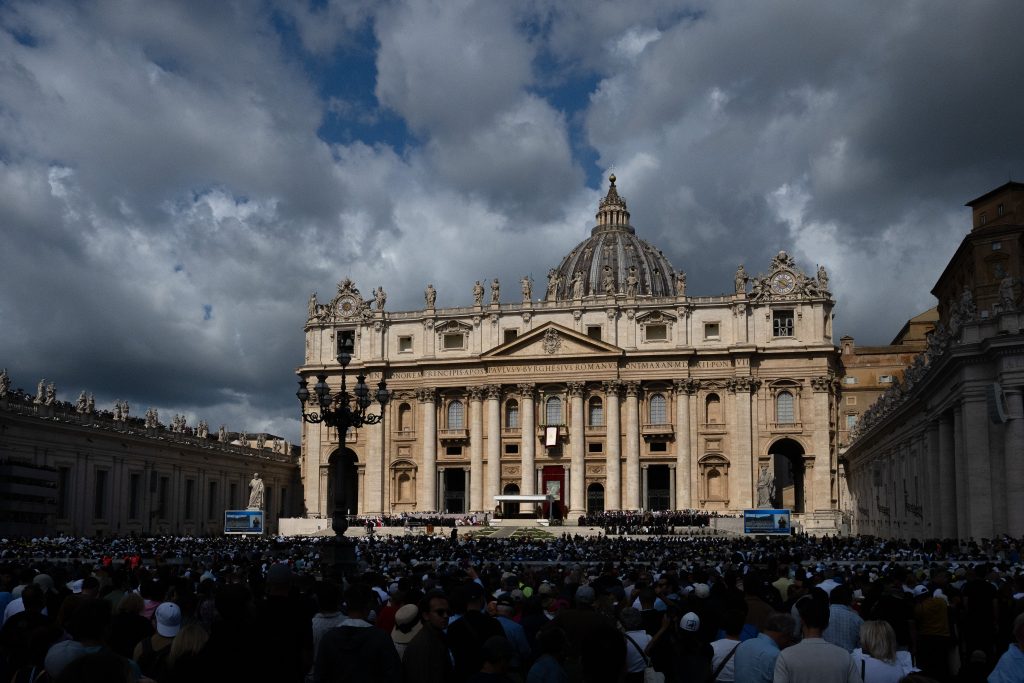
Read in full: Pope Leo XIV’s Extraordinary Consistory homily
Read Pope Leo XIV’s homily to the Cardinals at the opening Mass of the Extraordinary Consistory in full At 7:30 this morning, in Saint Peter’s Basilica, the Holy Father Leo XIV presided over Holy Mass with the Cardinals gathered in the Extraordinary Consistory from 26 to 27 June 2026. AdVaticanum gives the English translation to the Homily given today: Dearest brothers, We have gathered around the altar of the Lord, near the tomb of Saint Peter, to begin the Consistory. We come to celebrate this Eucharist from every part of the world: together with our lives, we therefore offer to God the communities and peoples we carry in our hearts, as well as our pastoral projects and experiences, both joyful and challenging. This variety of affections and thoughts now concentrates: that is, it finds that luminous center, which is Christ. He himself, in person, addresses us, saying: “I am the true vine” (Jn 15:1). Through Jesus, grace and truth flow into our lives (cf. Jn 1:17), renewing us intimately: these divine gifts are also the fertile sap of the Consistory we inaugurate today. It is the Gospel itself that prepares the conditions for it to be fruitful: “Abide in me, and I in you” (Jn 15:4). On the one hand, the Master warns us that “without me you can do nothing” (v. 5), on the other, he wants his disciples to bear “much fruit” (v. 8). Yes, much: the grace of God does not produce stunted growth in those who welcome it, but rather a thriving development. The eternal Word, in fact, became man so that all “may have life, and have it abundantly” (Jn 10:10). Begun in faith, this life is even strengthened by the test of pruning, because it is cultivated by the Father’s care. As we ask God to grant us strength and wisdom, it is significant that our Consistory takes place on the eve of the solemnity of the Holy Apostles Peter and Paul. Let us pause together in this memory, which recalls the pillars of the Catholic and Roman Church, the two missionary martyrs whose preaching became so integral to their lives that it became part of Sacred Scripture. Listening today to St. Paul’s words to the Corinthians, we can note their happy consonance with those of the Gospel. The different charisms, ministries, and ecclesial activities are like branches of the one vine, that is, of the one Lord (cf. 1 Cor 12:4–6) who infuses the Holy Spirit into his Church. This organic unity corresponds to the criterion that makes all those ecclesial services good and enjoyable: the criterion of the common good (cf. v. 7). Dearest ones, from the Word of God that we have heard, I would like to draw some indications for our discernment in these days. First, the example of Saints Peter and Paul encourages us to share true freedom in faith. Indeed, it is precisely our relationship with the Lord Jesus that frees us from sin and fear: while he calls us to follow him, he himself sends us into the world as successors of the Apostles. Proclaiming the Gospel, celebrating the Sacraments, and dedicating ourselves to the Lord’s flock is accomplished and bears fruit to the extent of our belief in him, the Good Shepherd. Faith is that virtue, never to be taken for granted, that gives life to the Church, because it corresponds to the grace that nourishes the branches of the one vine. The living Church is the Church that believes, through the gift of the Holy Spirit poured into our hearts: this Church bears much fruit. Just as divine grace precedes human freedom, so the Church’s faith precedes ours and demands to be witnessed to with ardour. This mission has Christ as its beginning and end: in the words of the psalmist, “Proclaim his salvation day after day; declare his glory among the nations” (Ps 96:2–3). Second, we ask for the gift of peace in unity. While we invite all peoples to faith, in which we are truly free, international tensions and conflicts gravely wound the human family. However, initiatives and experiences are not lacking; indeed, they are multiplying in the Church and throughout the world that call for respect for human dignity, justice, law, and simply for humanity. This is a reason for hope, because it attests to the beauty of the work of God, who created us in his image and likeness, as a sign of his glory in the world. When this sign is wounded, we are all wounded. When it is corrupted, we all suffer. When it is killed, we all feel torn apart. Therefore, war is never worthy of man, and is never blessed by God, because the Creator has endowed us with the intelligence and will to resolve conflicts as human beings and not as beasts, perhaps equipped with hyper-technological weapons. The unity of the human family precedes individual peoples and states. This is not just a biological fact: it is an ethical principle. Peace is a duty of justice because we are one human family, a magnificent humanitas that finds in Christ its Head and Redeemer. Reflecting on the Encyclical I promulgated on May 15, we must therefore continue on the path traced by Saint Paul VI: when he “introduced the expression ‘civilization of love,’ the world was marked by the Cold War, the arms race, and serious economic imbalances. In that context, the Church pointed to an alternative path to the ideological opposition between systems, imagining a social order in which justice and charity are intertwined” (Encyclical Letter Magnifica Humanitas, 186. Cf. Saint Paul VI, Regina Caeli, May 17, 1970). This is how Christian witness becomes the prophecy of a new world, evangelization and service, a cultural and social project that integrally promotes human development. While proclaiming the Gospel, amid joys and persecutions, the Church is never partisan: she is for everyone, and to each she addresses the same word of conversion and salvation. Third, today and always, let us enjoy harmony in obedience, that is, in the listening that recognizes the gift of the Word, made flesh for us. Through this exercise, the Holy Spirit guides us, himself pointing out pastoral problems and opportunities, purifying intentions and correcting what deviates from the common path. The implementation of the Synod, to which we are committed, invites everyone to proceed in the unity of faith, in the promotion of peace, in obedience to the living Word, who is Jesus. In this light, “the enormous and rapid cultural changes demand that we constantly seek to express the truths of all time in a language that allows us to recognize their enduring newness” (Francis, Apostolic Exhortation Evangelii Gaudium, 41). The one Word, made man, is indeed expressed in all languages: the dead and risen Christ is the true vine, who bears fruit through all the cultures that Christians transform from within. Thus, while the ideologies of the world wither, the Holy Spirit makes fraternal understanding, charity, and missionary zeal flourish in the Church. Working together, our collegiality epitomizes the synodality in which all the baptized participate, in the unity of the People of God. Synodality and collegiality are, in fact, forms of Christian fraternity, which binds us as baptized persons and as bishops. Therefore, the help you can give me in the exercise of the Petrine ministry finds in me the one who asks, not the one who commands. The authority of the primacy, in fact, belongs to one who listens and only therefore leads, to one who learns and only therefore teaches, always following the one Master. May the intercession of the Holy Apostles Peter and Paul accompany us on this exciting journey.
Jun. 26, 2026
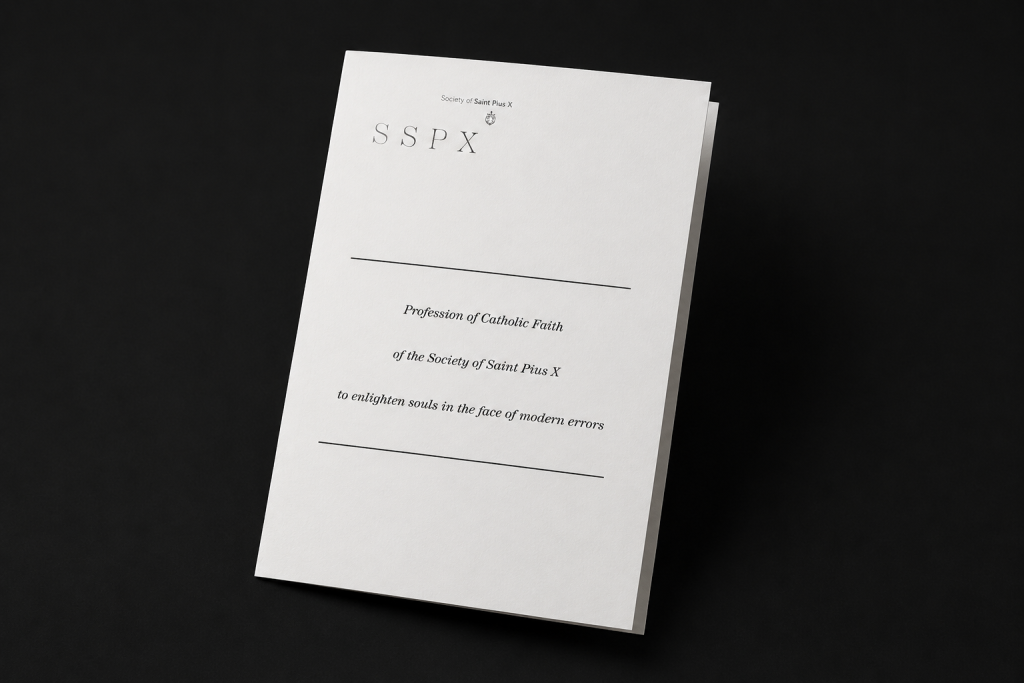
SSPX sends 28-page profession of faith to Pope and cardinals ahead of consistory
The SSPX has sent a 28-page profession of faith and open letter to Pope Leo XIV and the College of Cardinals ahead of the Extraordinary Consistory, just days before its planned episcopal consecrations at Ecône. One senior cardinal tells AdVaticanum the looming consecrations are already on the minds of the princes of the Church as they prepare to gather in Rome The Society of Saint Pius X has issued an open letter to Pope Leo XIV and the College of Cardinals during the week of the Extraordinary Consistory at the Vatican, releasing a 28-page Profession of Faith just days before its planned episcopal consecrations at Ecône on 1 July. The letter, dated 24 June, the Feast of the Nativity of St John the Baptist, is signed by SSPX Superior General Fr Davide Pagliarani, First Assistant Bishop Alfonso de Galarreta, Second Assistant Fr Christian Bouchacourt, former Superior General Bishop Bernard Fellay and former Superior General Fr Franz Schmidberger. The documents were first published in Italian by the traditionalist website Messa in Latino, which said it had received them from “sources at the highest levels”. AdVaticanum later obtained the full text of the Profession of Faith through SSPX sources. Addressing Pope Leo XIV and the cardinals directly, the Society said it believed the time had come to make “an integral profession of the Catholic faith” and place it before the Church’s highest authorities. “On the eve of the Consistory scheduled for the end of this month, and only days before the episcopal consecrations planned for 1 July at Ecône, it seems to us that the time has come for the Priestly Fraternity of Saint Pius X to make an integral profession of the Catholic faith, which we wish to place into the hands of Your Holiness and of each of the Cardinals,” the letter states. The SSPX said the Church was facing grave difficulties and that it could not remain silent. “Today the Church suffers under the pressure of new forces, arising both from within and from without, which are driving her in every possible direction except, so it seems to us, the right one. Faced with such suffering, we cannot remain indifferent.” The Society said the answer to the Church’s present problems was not to be found in new solutions but in fidelity to Tradition. “It does not belong to the Priestly Fraternity of Saint Pius X to indicate the path to be followed, but rather to the Church’s bimillennial Tradition, faithfully preserved and handed down by the Apostolic See throughout the centuries, and which many now regard, in practice, as an outdated reality, subject to continual evolution.” The letter says the accompanying Profession of Faith was written “in the face of the principal errors and the gravest dangers of our time” and argues that Catholic Tradition contains the remedies for the Church’s present crisis. “We are convinced that Tradition contains all the remedies for the deepest evils from which the Church and the world suffer, and for which solutions are sought in vain outside it.” The Society also expressed the hope that the text could become the basis for future discussions with the Holy See. “We hope that one day this doctrinal text may serve as the basis for a frank discussion with the Holy See, in a peaceful, fraternal, and charitable spirit.” Describing the declaration as a positive affirmation of Catholic belief rather than a protest document, the SSPX added: “The text that we present to you is not the sterile litany of a group of nostalgics, but the necessary expression, peaceful yet resolute, of our faith.” The Profession of Faith itself is a detailed restatement of traditional Catholic doctrine and includes explicit rejections of a number of theological and philosophical currents which the Society says have contributed to confusion within the Church. Early in the document, the authors argue that current circumstances require a complete presentation of Catholic teaching. “In the present confusion, it is no longer sufficient to recall a few isolated truths. It has become indispensable to set in full light the entire order of Catholic doctrine, in its supernatural coherence and luminous harmony, omitting no dogma, diminishing no truth.” The text goes on to state: “I consequently reject all errors contrary to this Faith, and in particular those of liberalism, indifferentism, modernism, ecumenism, and laicism, condemned by Popes Pius IX, Leo XIII, Saint Pius X, Pius XI, and Pius XII.” Among the themes addressed are grace, original sin, redemption, the Church, the liturgy and the social kingship of Christ. Rejecting what it describes as modern attempts to redefine faith, the declaration states: “I consequently reject the error of modernism, as it still rages today, which reduces faith to an interior experience, to a sensible aspiration, or to a progressive realisation in the believing community.” On original sin, it says: “In Adam, however, the nature of man was not destroyed, but only wounded,” before adding: “I likewise reject all doctrines which, in a senseless optimism, minimise original sin, naively exalt the native goodness of man.” The document also reaffirms traditional teaching on Christ’s redemptive sacrifice. “I therefore reject every doctrine which would reduce the Redemption to a simple manifestation of God’s love. The Cross is not merely a sign: it is the altar of the redemptive Sacrifice.” The text follows this with a rejection of what it calls “false ecumenism”. “I therefore reject false ecumenism, which rests upon the idea that the Holy Ghost would not refuse to use separated communities as means of salvation.” One of the longest sections concerns the Social Kingship of Christ, a doctrine strongly associated with pre-conciliar Catholic social teaching. “I profess that Our Lord Jesus Christ is King not only of individuals, but also of families, institutions, peoples, and nations.” The declaration adds that Christ’s reign “must extend to the external forum, to laws, morals, education, culture, and public life”. The final section deals with the liturgy and offers a defence of the traditional Roman Mass while criticising the reforms introduced after the Second Vatican Council. “I profess that the traditional Roman Mass expresses with incomparable clarity the Catholic doctrine of Sacrifice.” The text continues: “I observe with sorrow that the contemporary liturgical reforms have departed considerably from the traditional liturgy, and thereby contributed preponderantly to the loss of the sense of the sacred.” The letter concludes with the words of St Paul, “For we can do nothing against the truth, but only for the truth,” before adding: “We too believe; therefore we speak.” As the Extraordinary Consistory convenes this Friday, with the Vatican expected to bring all the cardinals to Rome, including those beyond voting age, one senior cardinal speaking off the record to AdVaticanum earlier this week acknowledged that the impending 1 July SSPX episcopal consecrations remain a “looming topic” among the princes of the Church, even if they will not feature in any public discussion. “We are reminded by the statements from Cardinal Fernández earlier this year and more recently,” the senior cardinal said, “and we are intellectually aware of the episcopal consecrations.” The cardinal added: “As the consistory is only this Friday, we think about it, about the implications for unity and for the Church’s witness in a fractured age.”
Jun. 24, 2026
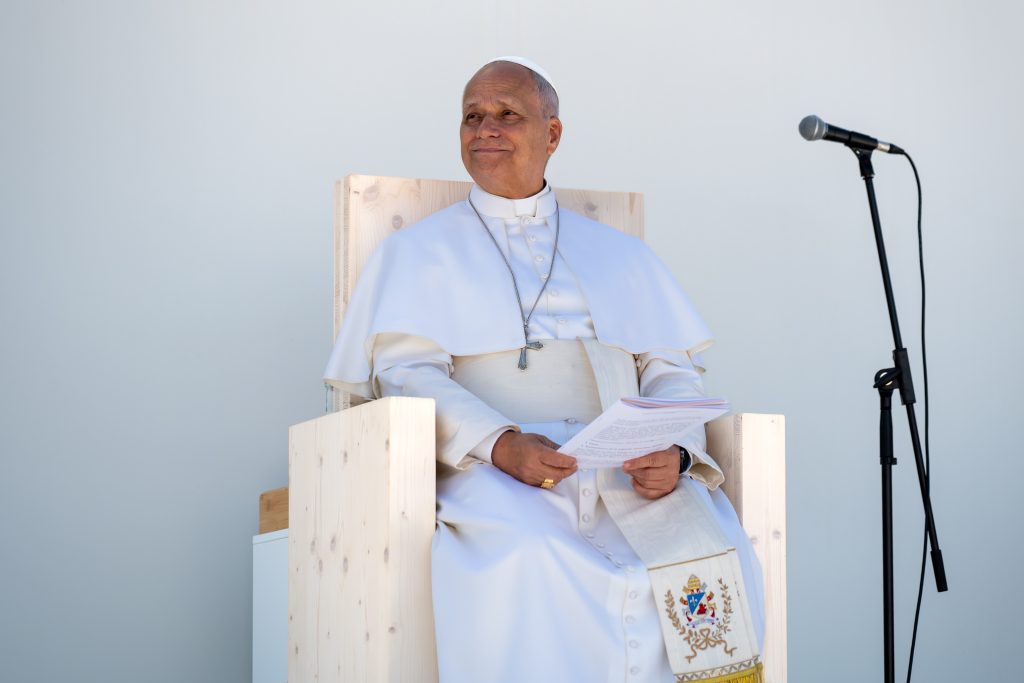
A week later: what Pope Leo’s Spain trip tells us
More than 1.5 million people attended Pope Leo XIV’s Corpus Christi Mass in Madrid. Yet the lasting significance of the trip may lie in what it revealed about Spain’s culture, politics and religious identity A week on from the first apostolic visit to Spain in more than a decade, a great deal has happened in the life of the Church. Cardinal Camillo Ruini, one of the most respected churchmen of his generation, has died. The Holy Father has addressed the situation with the Society of Saint Pius X in off-the-cuff remarks. Details of the June consistory have been leaked. But despite the unusually busy week, the aftermath of the trip can still be felt. The Holy Father used his Wednesday General Audience to reflect on the “warmth” of the reception he received, and the themes he brought to Spain are still being discussed across the country. The trip, and the reaction that followed, offered several insights into both Pope Leo’s pontificate and the state of the Church in Spain. The first is that Pope Leo has the ability to speak with clarity on matters of faith and morals without sitting comfortably in any political camp. Spain is currently under a particularly strong strain of progressivism, with Pedro Sánchez’s socialist government aggressively separating the country from its Catholic past and attacking the sanctity of life, notably through the introduction of assisted suicide. Pope Leo appeared entirely at ease using his speech to the Spanish Parliament, the first by a pontiff, to address politicians’ treatment of the vulnerable. He asked: “Can a community that casts into the shadows the unborn child, the elderly, the sick, those who suffer in silence, or those who depend entirely on the care of others be called fully just?” In case the point was not clear enough, the pontiff also told the politicians that “every human life must be recognised and safeguarded from conception to its natural end, in every circumstance of its existence.” It made for uncomfortable listening in a country which, less than a month earlier, had been scandalised that the government’s commitment to assisted suicide had resulted in the death of Noelia Castillo, a 25 year old disabled survivor of sexual abuse. When the pontiff turned to migration, he adopted a tone that neither the PP and Vox on the right nor Sánchez’s Spanish Socialist Workers’ Party could fully embrace. The Pope called for compassion towards those who have experienced the “tragic drama of migration”, which “challenges the conscience of nations and the ethical foundation of the international order today”. He also stated that wherever there is discrimination based on “national, ethnic, religious or linguistic origin”, human dignity is “seriously violated”. Such sentiments stand in contrast to Vox’s calls for mass deportations and restrictions on citizenship and residence permits for those from what it describes as an “Islamic culture”. At the same time, the Pope was equally keen to defend the right of people to remain in their homelands, a point rarely addressed in contemporary European debates on migration. He said that the matter “goes beyond any purely demographic or economic analysis”, a point which seemed to point to Sánchez’s disproportionate emphasis on the supposed economic benefits of migration. He also stated that the situation “goes beyond the mere management of migration flows”, words that seemed particularly pertinent given the Spanish government’s recent decision to regularise hundreds of thousands of illegal immigrants. Another lesson is that the pain caused by clerical sexual abuse is far from over. As the Pope himself told journalists during the outbound flight to Madrid, sexual abuse remains an “open wound”. He told Spain’s bishops that “one of the most painful encounters is with those who have been wounded precisely by those who were supposed to care for them”. He urged the ecclesial community to respond through “listening, truth, justice, reparations and an even more determined commitment to prevention and a culture of care”. Spain has been comparatively slow in confronting the legacy of clerical sexual abuse, and it was only this year that the country’s bishops’ conference reached an agreement with the government to establish a process for support and reparations for survivors. The theme followed the Holy Father as he left Madrid and travelled to Barcelona. On the second day of the Catalan leg of the trip, he visited the Benedictine Abbey of Montserrat, a symbol of Catalan identity. Yet the abbey has also made headlines in recent years because of revelations concerning abuse committed by former monks. In 2019, it emerged that Andreu Soler, a monk who died in 2008, had abused at least twelve minors over several decades at the institution. During the same year, another monk abused a 17 year old. Jaume Soler Villegas, known as Brother Gabriel, was sentenced to two years in prison, while the monastery was ordered to pay €20,000 in compensation. Miguel Hurtado, the first person to report abuse at Montserrat, sent a letter to the Apostolic Nunciature in Madrid requesting that the papal visit to the Abbey be cancelled. While thousands gathered outside to welcome the Pope, local and international media focused on the abuse scandals and questioned whether an abbey so recently associated with such cases should receive a papal visit. The third lesson, and perhaps the most significant, is that the Catholic character of Spain remains far stronger than many assume. Before the visit, establishing precisely what that meant was remarkably difficult. The Vatican’s pre-visit statistics painted an exceptionally positive picture, listing 45 million Catholics in a population of 49 million, suggesting that 93.25 per cent of Spaniards are Catholic. Based largely on baptismal records, the figures appeared impossibly high. Pew Research put the figure at around 70 per cent in 2020, while the Spanish Centre for Sociological Research (CIS) found that 54.3 per cent of Spaniards identify as Catholic today. At the same time, a poll conducted by Fundación SM found that 45 per cent of Spaniards aged between 15 and 29 identify as Catholic, compared with 31.6 per cent in 2020. The figures are inconsistent and difficult to interpret, but that ambiguity mirrors the reality of the Spanish Church itself. Millions attend Holy Week processions every year, and religious festivals remain a central feature of Spanish life. A man from Málaga once told me that, despite never having been baptised, he always visits his favourite statue of Christ during Holy Week. Six of Spain’s ten national public holidays are religious in origin, including the Assumption and the Immaculate Conception. Even many secular celebrations retain a religious dimension. Spain’s National Day falls on the feast of Our Lady of the Pillar, while New Year’s Day is, for many, the Solemnity of Mary, Mother of God. Alongside this visible Catholic culture, however, there is also widespread religious indifference. While the hermandades , or brotherhoods, continue to attract many young people, Sunday Mass in the average Spanish town will often have few under fifty. Spain has the largest number of monasteries in the world and more than 1,000 men preparing for the priesthood, yet almost 150 religious houses closed between 2012 and 2022. A history of anti-clericalism and the long association of the Church with Francoism have left the Church’s place in society less secure than in neighbouring Italy, where Catholic identity remains more closely intertwined with national identity, or in Malta, a former Spanish possession where legal protections for unborn children remained in place until very recently. Yet Pope Leo’s visit represented a major vote of confidence in the Church. Around 1.5 million people attended the Corpus Christi Mass celebrated by the Holy Father. By comparison, Madrid’s population is approximately 3.5 million, making the scale of attendance proportionally huge. It was one of the largest gatherings of Catholics in Europe outside World Youth Day and represented a 50 per cent increase on attendance during Pope Saint John Paul II’s visit to the city in 2003. Much of the press enjoyed pointing out that the Pope was competing with Bad Bunny, who was touring Spain at the same time. In reality, there was little competition. Despite the remarkable success of the Puerto Rican singer, whose residency broke records for ticket sales by a single artist in Spain, his three-week tour attracted fewer than a quarter of the people who attended events during the Holy Father’s one-week visit. The apostolic visit to Spain was always going to be a significant test. Spain is a religiously complex country, marked by both anti-clerical sentiment and intense religious devotion. In the end, it proved a remarkable personal success for the Holy Father and for the Church more broadly. Yet the pace of the modern papacy allows little time for reflection. Attention will soon turn to the next major challenge. If there is a country capable of matching Spain’s combination of deep Catholic roots and anti-clerical tradition, it is the Church’s eldest daughter, France, which Pope Leo is due to visit in September.
Jun. 20, 2026
Pope Leo’s SSPX appeal reveals the real fault line
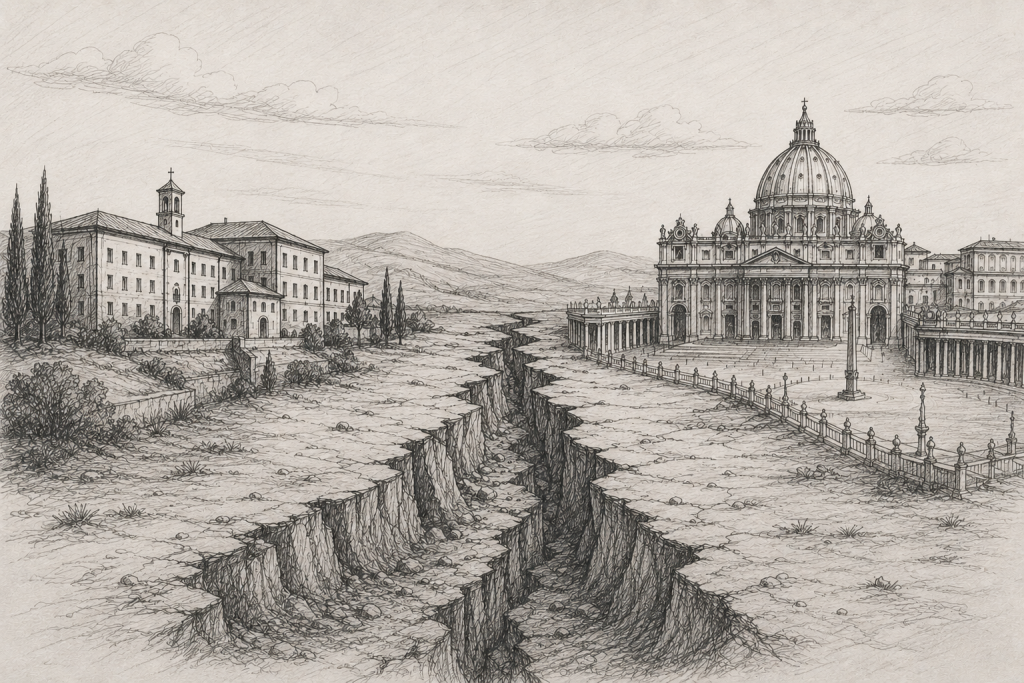
Pope Leo XIV has urged the SSPX not to proceed with its planned episcopal consecrations on 1 July. Yet his remarks may have revealed something more significant: where Rome believes the real obstacle to reconciliation lies. Analysis by Niwa Limbu Pope Leo XIV has made a fresh appeal to the Society of St Pius X (SSPX) to abandon plans to consecrate four bishops without papal approval. Speaking to journalists outside Villa Barberini in Castel Gandolfo on 16 June, the Pope said he was considering making one final request to the traditionalist society before the planned consecrations on 1 July at the SSPX seminary in Écône, Switzerland. “We have invited them, and I am still considering making another appeal, to say: ‘Do not do this. Let us try to live communion in the Church,’” the Pope said. “But it is their choice. They must understand what it means for them and for the Church.” The remarks represent Pope Leo’s clearest public intervention since the SSPX announced earlier this year that it intended to proceed with the episcopal consecrations despite the absence of a pontifical mandate. The Society has argued that the measure is necessary to ensure the continuation of its sacramental and apostolic work. Its leadership has maintained that an “objective state of grave necessity” exists within the Church, requiring the appointment of new bishops to safeguard the future of the fraternity’s ministry. The Vatican, however, has repeatedly expressed concern that episcopal consecrations carried out against the explicit will of the Roman Pontiff would constitute a grave rupture in ecclesial discipline. The prospect of such a step led to the crisis of 1988, when Archbishop Marcel Lefebvre consecrated four bishops without papal approval, resulting in Rome declaring that a schismatic act had taken place. Pope Leo indicated that the dispute is not merely procedural but touches on deeper theological questions. Referring to the SSPX’s longstanding criticisms of the Second Vatican Council, he said division within the Church remained “a painful matter”, adding that the Society continued to reject “certain fundamental elements of the Church, beginning with various points of the Second Vatican Council”. His Holiness added: “If they make those choices, I am sorry. But we must move forward.” The Pope’s comments come after months of exchanges between the Holy See and the Society. Earlier this year, the SSPX confirmed its intention to proceed with the consecrations, while subsequent contacts between Rome and the fraternity failed to produce an agreement. On 12 February, a meeting took place in Rome between SSPX Superior General Fr Davide Pagliarani and Cardinal Víctor Manuel Fernández, Prefect of the Dicastery for the Doctrine of the Faith. The encounter, described by the Vatican as “cordial and sincere”, saw Cardinal Fernández propose a structured path of theological dialogue aimed at addressing unresolved doctrinal questions, particularly those concerning the Second Vatican Council and the “minimum requirements necessary for full communion”. Cardinal Fernández made clear that any such dialogue could only proceed if the SSPX agreed to suspend the planned 1 July consecrations. He warned that proceeding without a papal mandate would constitute a “decisive rupture of ecclesial communion (schism)” with grave canonical consequences, including automatic excommunication. In a letter dated 18 February and made public the following day, Fr Pagliarani responded that, while the SSPX welcomed the idea of renewed doctrinal discussions in principle, it could not accept the condition of postponing the consecrations. “We both know in advance that we cannot agree doctrinally, particularly regarding the fundamental orientations adopted since the Second Vatican Council,” he wrote, while renewing the Society’s request for a personal audience with Pope Leo XIV. Subsequent exchanges failed to bridge the gap. In May, the Vatican reiterated its warnings, and the SSPX published a “Declaration of Catholic Faith” outlining what it considers the minimum necessary for communion while reiterating its concerns about post-conciliar errors. On 26 May, the Society publicly named the four priests slated for consecration, framing the act as a necessary service to souls amid the ongoing crisis in the Church. As the 1 July date at the Écône seminary approaches, negotiations appear effectively stalled. The SSPX maintains its position that an “objective state of grave necessity” justifies the consecrations to ensure the continuation of its sacramental ministry, while the Vatican insists on canonical obedience and prior doctrinal resolution. Generally speaking, Pope Leo XIV addressed the Society of St Pius X in a manner that was pastoral, regretful yet resolute, characteristic of his style thus far. The delivery was conversational and non-confrontational, yet doctrinally unambiguous. By speaking informally to journalists rather than issuing a formal Vatican statement, the Pope signalled personal investment without escalating the matter into a formal magisterial intervention. This approach is indicative of how Vatican communications have evolved in handling such matters. Most importantly, it marks a change from previous pontificates. It represents the first time a Pope has offered an off-the-cuff public comment on the SSPX situation in the lead-up to planned episcopal consecrations. By contrast, there was no specific public comment by Pope John Paul II on the planned 1988 SSPX episcopal consecrations prior to Archbishop Lefebvre’s announcement and the immediate lead-up in early June 1988. What is really happening remains unclear, with little clarified in the public exchanges between Rome and the Society. The Pope’s remarks reflect this ongoing and opaque reality. For many hoping for a resolution to the SSPX question, the latest developments will bring both frustration and renewed determination. The Pope’s sorrow is evident and more irenic than some had feared. Yet the public emphasis on Vatican II as the fault line confirms long-held suspicions. Rome still views critiques the of post-conciliar Church as the core obstacle, not merely Lefebvrist intransigence. If the SSPX holds to what the Church taught before Vatican II, and Leo indicates that it cannot be accepted because of what Vatican II taught, then there is a perceived mutual exclusivity between what Catholicism was and what Catholicism is. How can continuity be maintained when pre-conciliar teachings appear at odds with the post-conciliar emphases now presented as essential?
Jun. 17, 2026
Details of June consistory revealed
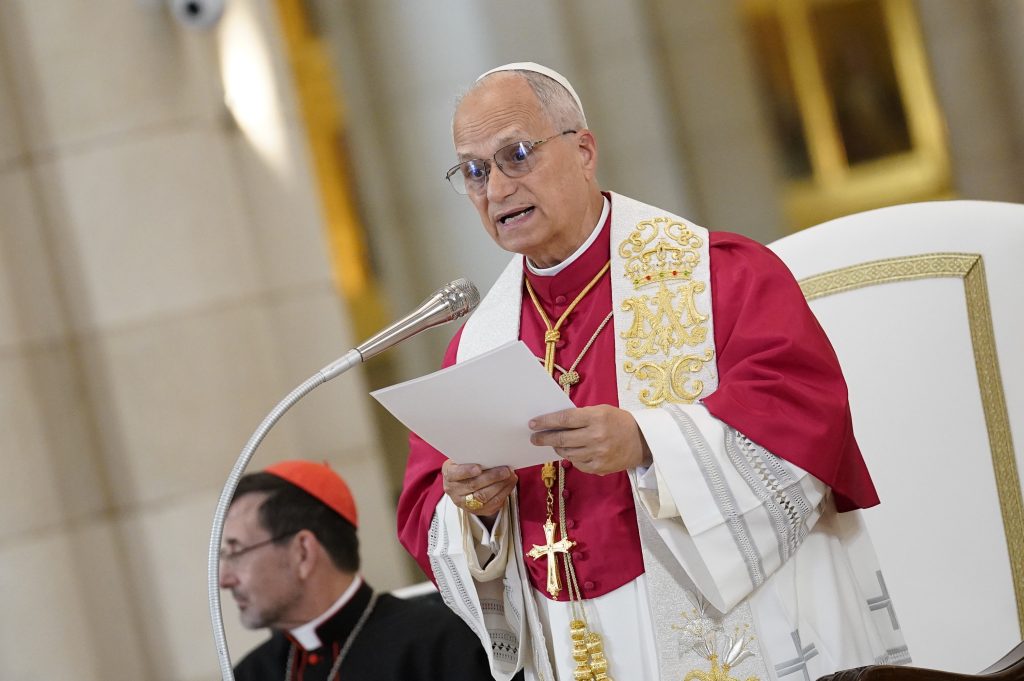
New documents have shed light on Pope Leo XIV’s extraordinary consistory later this month, offering a clearer picture of what cardinals will discuss when they gather in Rome The full calendar for Pope Leo XIV’s Extraordinary Consistory has been revealed. Documents circulated to participants and published by the Italian blog MessainLatino show that the two-day meeting on 26 and 27 June will focus on the implementation of the Synod, the Church’s missionary mission and Pope Leo’s recent encyclical Magnifica Humanitas . While the broad themes had already been disclosed to the press, the additional documents reveal strict rules governing interventions, the drafting of reports and communications with the media. The gathering will begin on the morning of 26 June with Mass in St Peter’s Basilica celebrated by Pope Leo XIV. Cardinals are due to assemble beforehand in the Chapel of St Sebastian before proceeding to the liturgy. Following the Mass, participants will move to the Paul VI Hall, where documentation and identification badges will be distributed before the formal opening of proceedings. The first working session, entitled “In What World Are We Called to Proclaim the Gospel?”, will begin with the singing of the Veni Creator Spiritus , an address by Cardinal Giovanni Battista Re, Dean of the College of Cardinals, and introductory remarks by the Pope. Cardinals will then hear a biblical meditation before breaking into discussion groups. They will be asked to reflect on “what sufferings, tensions and questions” are most urgently affecting the peoples and ecclesial communities entrusted to their care, and to identify signs of hope, fidelity to the Gospel and possibilities for reconciliation. The afternoon session, entitled “The Culture of Power and the Civilisation of Love”, will draw directly upon Chapter Five of Magnifica Humanitas . Cardinals will be invited to consider how global conflicts and divisions affect both local Churches and wider society, while discussing what “languages, attitudes and practices” might contribute to reconciliation and peace. A third session on the morning of 27 June will focus on what organisers describe as “The Construction Sites of Our Time”. Using the introduction and conclusion of Magnifica Humanitas as points of reference, participants will discuss social, cultural and ecclesial fractures that make it more difficult to pursue the common good. They will also examine expectations emerging from ordinary Catholics and wider society and consider what support local Churches may require in responding to contemporary challenges. The final session will be devoted to the implementation of the Synod. Cardinals will receive an update on preparations for the Synodal Assemblies planned for 2027 and 2028 before participating in an open dialogue with Pope Leo XIV. The programme concludes with a final address by the Pope and the singing of the Te Deum , before a dinner with the Holy Father in the Paul VI Hall. The accompanying confidential note sheds considerable light on how Pope Leo intends the discussions to be conducted. According to the document, the Pope wishes to draw upon “the wealth of experience and wisdom present in the College of Cardinals” and regards the meeting as an opportunity for “fraternal discussion” on the principal challenges facing the Church’s life and mission. Participants have been divided into twenty discussion groups. Nine groups consist of cardinal electors serving as diocesan ordinaries, together with apostolic nuncios and retired ordinaries. The remaining eleven groups are composed of members of the Roman Curia and cardinals over the age of eighty. The organisers state that this structure demonstrates the Holy Father’s desire to give particular attention to the experiences of local Churches throughout the world and to ensure that perspectives from different continents and ecclesial contexts are heard. Each group will be led by a chairman responsible for moderating discussions and ensuring that time limits are respected. A secretary will be tasked with collecting contributions and preparing a final report on behalf of the group. The discussions themselves will follow a carefully defined three-stage methodology. In the first phase, each cardinal will be permitted to speak for a maximum of three minutes while responding to the questions assigned to the session. In the second phase, participants will be allowed a further intervention of no more than two minutes. Rather than introducing new proposals, they will be expected to identify the most important themes that emerged during the earlier round of discussion. The third phase will involve the preparation of a report summarising the principal points raised. The secretary will draft the text with assistance from the other members of the group before it is approved and submitted electronically to organisers. The reports will then form the basis of plenary discussions. Groups composed of cardinal ordinaries will present their conclusions to the assembly, while the remaining groups will also be given an opportunity to report on their deliberations. Presentations will be limited to three minutes. The confidential note stresses that Pope Leo attaches particular importance to these plenary exchanges. Time has been reserved at the conclusion of each session for additional personal interventions, while cardinals may also submit written observations of up to two pages. One of the most notable features of the programme is the final open dialogue with the Holy Father. Cardinals will be able to address Pope Leo directly, although contributions are again expected to remain within a three-minute limit. The organisers emphasise that disagreements should not be suppressed. “Tensions and disagreements should not be avoided,” the note states, provided they are addressed “with respect and fraternal affection”. Moderators have nevertheless been instructed to enforce speaking limits strictly in order to ensure broad participation. The documents also impose strict confidentiality requirements on the Vatican press corps. Cardinals have been asked not to issue statements to journalists during the course of the consistory. While a press conference will be held after the meeting concludes, participants are specifically instructed not to reveal the identity of speakers when discussing the proceedings. The note further establishes confidential channels through which cardinals may communicate privately with the Pope. Contributions submitted through these channels will not be included in summaries of the discussions and will be accessible only to the Holy Father. The Extraordinary Consistory will conclude on 29 June when cardinals join Pope Leo for Mass marking the Solemnity of Saints Peter and Paul. Metropolitan archbishops appointed during the past year will receive the pallium during the liturgy. (Photo credit: Á. Pérez Meca/EUROPA PRESS)
Jun. 17, 2026