

Papal Visit To Spain 2026
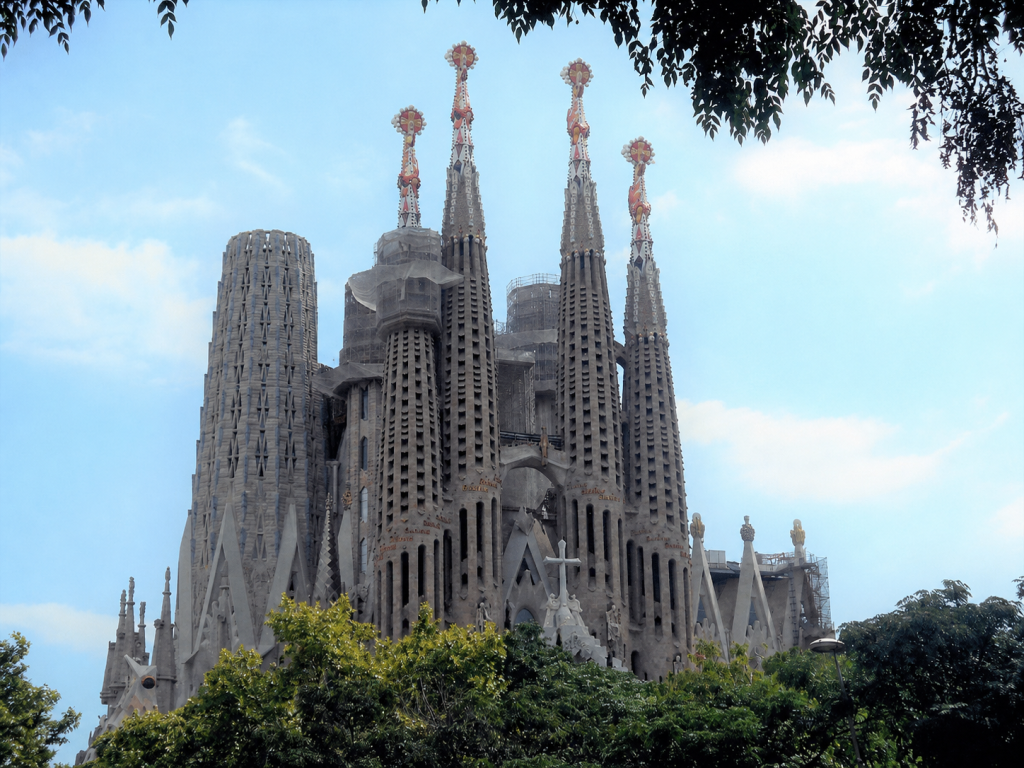
In full: Pope Leo XIV’s homily at the Basilica of the Sagrada Família
During the Barcelona leg of his Apostolic Journey to Spain, Pope Leo XIV delivered this homily at the Basilica of the Sagrada Família, reflecting on faith, beauty, evangelisation, the witness of Antoni Gaudí, and the Cross of Christ that now crowns the church’s highest tower. Read the full text. O Lord, our Sovereign, how glorious is your name throughout all the earth! (Psalm 8:2,10) With the words of this psalm, so full of joy and wonder, I greet all of you, dear brothers and sisters. I express my gratitude to Their Majesties, and I thank Cardinal Juan José Omella, Archbishop of Barcelona, as well as the other brother bishops and all those who join us in prayer: priests, deacons, religious brothers and sisters. On this festive evening for the whole city of Barcelona and for the Spanish people, particularly the Catalan people, I extend my grateful greeting to the public authorities, as well as to members of other Christian communities and other religions who are taking part in our thanksgiving. Today the Basilica of the Sagrada Família welcomes us in this beautiful city, opening its doors as if they were its arms, inviting each one of us to this altar to hear the Word of God. It is a temple that makes us a family loved by the Lord, nourished by his very life in the Eucharist. Thus, the city of Barcelona and all of Catalonia gather in this temple, which is also a sign of unity and concord for the whole of Spain. They lift up their gaze to encounter the face of God the Father, shining forth in his Son made man, Jesus Christ. As we give thanks to the Lord for his love towards us, we praise him for what he accomplishes in our lives. We give thanks in a particular way for this extraordinary basilica, which Pope Benedict XVI consecrated in 2010, recalling that it is a visible sign of the invisible God, for whose glory its towers rise heavenward (cf. Homily for the Consecration, 7 November 2010). In continuity with the prayer of my predecessor, in a few moments I will bless its highest tower, the Tower of Jesus Christ. This church is a single building, composed of many stones. It is a house that has grown steadily over the years, following one unified plan. All of us are the living stones of this work, which has Christ as its foundation and summit, its beginning and its end. Far more than a monument, the Basilica of the Sagrada Família remains today a work under construction, reminding us that the Christian life is always a journey, because it is a project that God himself carries out. Let us not inhabit, then, an unfinished work, but rather a temple that is still under construction. Its imperfection is not a defect, because it bears witness to a desire. It does not signify a lack; rather, it expresses a promise that we wish to honour with fidelity. Our gratitude thus becomes a commitment, as we cooperate in God’s plan, that is, in the building work to which he himself calls us. Since we are temples of the Holy Spirit (cf. 1 Corinthians 6:15, 19), this work coincides with our own lives, which God conceives as a masterpiece that we are to accomplish together. He calls us to collaborate with him (cf. 1 Corinthians 3:9). In this regard, we keep in our hearts the words that the Lord addressed to King David: “Would you build me a house to dwell in?” (2 Samuel 7:5). On the contrary, “The Lord declares to you that the Lord himself will establish a house for you” (v. 11). Through this announcement, Scripture teaches us that it is not we who provide God with a dwelling place; rather, it is God who gives us a place. And the place he gives us is his own heart: the place of the Son for us who were strangers, the place of the beloved for us who are sinners. His will is fulfilled through Jesus. We can therefore understand the meaning of what we have heard in the Gospel, when the Lord says to the Pharisees: “If you do not believe that I am he, you will die in your sins” (John 8:24). These are strong words, but they are by no means threats or blackmail. They are an invitation to salvation, that is, a call to freedom from Christ, who desires for us the ultimate and eternal good. In the face of the threat of evil, the Lord is always with us, always on our side. “I Am” : this is the most holy name that God entrusted to Moses from the burning bush, revealing his unshakable fidelity. Made man, he becomes for us Emmanuel, the source of grace and forgiveness, of salvation and new life. Dear brothers and sisters, we cannot believe in Jesus and promote war. We cannot believe in Jesus and kill the innocent. We cannot believe in Jesus and abandon those who suffer, those who weep, or those who flee from misery. Tonight, then, the Cross of Christ, which crowns this basilica, is the cross of the last who become first, of sinners who become saints, of the dead who rise again. The three façades of the Sagrada Família bear witness to this: the First became the Last for us at Christmas; through his sacrifice he redeemed us in the Passion; and his death gives us eternal life, making us sharers in divine glory. As we admire the Tower of Jesus Christ, let us raise our eyes to him, to the One who reveals to us the truth about God and the truth about ourselves. Looking at Christ, we can see the world with renewed eyes. The tower of the Cross then becomes a banner of charity, because God loves us in this way, transforming an instrument of death into a sign of hope. In the Cross of Jesus, our faith reaches its summit, as the inscription at the base of the spire proclaims: “Tu solus Sanctus, tu solus Dominus, tu solus Altissimus” (“You alone are Holy, you alone are Lord, you alone are the Most High”). This Cross shines by day, reflecting the light of the sun, and shines by night, illuminating the city like a beacon open to the Mediterranean. Although the light of Christ shines in the darkness, the darkness has not welcomed it (cf. John 1:5, 11). Yet this rejection does not cause God’s love to fail. “When you have lifted up the Son of Man,” the Lord says, “then you will know that I am he, and that I do nothing on my own authority, but speak just as the Father has taught me” (John 8:28). It is necessary to pass through the Passion of the Crucified in order to be illuminated by the glory of the Risen One. From all eternity, the Father teaches the gift of life, and the Son, who receives that life from him, gives it to all through the power of the Holy Spirit. This is why the Cross is the radiant sign of his love. When Christ is lifted up, his magnificent humanity shines forth, and our works give glory to God. These are the works of faith, and among them art holds a special place. It is precisely faith that gives form to the stones and meaning to the building that we inhabit together. In our prayer, therefore, we discover the original bond of all things with God, Creator of heaven and earth. He is the artist who has imprinted his splendour upon the cosmos. Created in his image, man responds to God’s work through his own ingenuity. Thus the artist transforms talent into praise and creativity into a witness to creation itself. As an architect aflame with faith, the Venerable Antoni Gaudí conceived these spaces with the desire to tell the story of the mysteries of the Lord’s life. In this way, he has proposed to us a spiritual pilgrimage that leads to an encounter with Christ, born, dead and risen for us. Together with Gaudí, whose death we commemorate on the centenary of his passing, we remember and give thanks this evening for all the promoters and benefactors, the artists and the workers who have contributed to the construction of an architectural masterpiece that is also an eloquent catechesis made of stone, colour and light. In her wisdom, the Church thus renews the Biblia pauperum of the ancient cathedrals, which are themselves rich messages of evangelisation. In this age of images, it becomes even more evident that art and beauty are outstanding channels of evangelisation. Dear brothers and sisters, the beauty of this temple encourages us to learn ever more from our Master and Lord the art of living according to his Gospel. As we lift our eyes to him, the crucified and risen Lord, let us commit ourselves to raising up the faces of those who lie in the dust (cf. 1 Samuel 2:8). Let us thus show that the Sagrada Família is the tallest church in the world, not in order to stand out in worldly rankings, but to guide the steps of the People of God who journey through this land of Catalonia, with the Cross lighting the way like a lamp kept burning as we await the return of the Bridegroom. May God be blessed forever! Photo credit: Canaan – Own work, CC BY-SA 4.0, https://commons.wikimedia.org/w/index.php?curid=71031111
Jun. 10, 2026
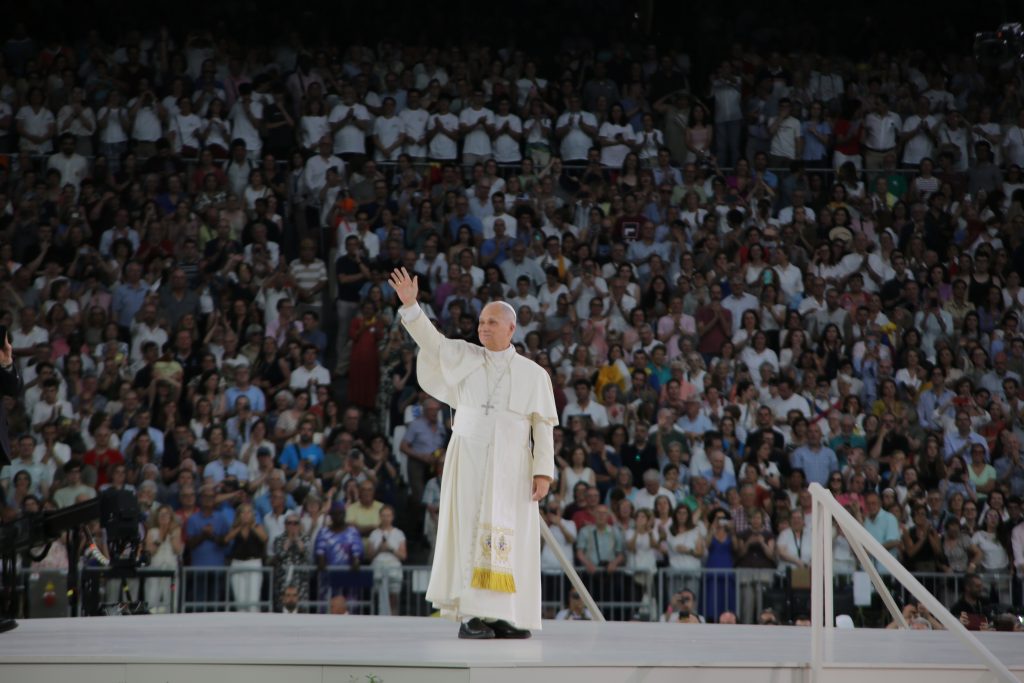
In pictures: Pope Leo XIV’s third day in Madrid
Pope Leo XIV’s third day in Madrid saw him address the Spanish Parliament, meet the country’s bishops, present the Golden Rose to Our Lady of Almudena and join more than 70,000 Catholics at Santiago Bernabéu Stadium. Here are the images from a day that combined politics, prayer, Marian devotion and a celebration of the Church in Spain The third day of Pope Leo’s apostolic visit to Spain began with a historic address to a joint session of the Spanish Parliament, the first ever delivered by a Pope, in which Leo XIV defended the dignity of every human person from conception to natural death, spoke about migration, religious freedom and artificial intelligence, and called on public life to be marked by dialogue and service. The Holy Father later met with Spain’s bishops at the headquarters of the Spanish Episcopal Conference, urging them to safeguard unity, heal divisions, accompany those entrusted to their care and continue the Church’s commitment to listening, justice, reparation and safeguarding. In the evening, he paid homage to Our Lady of Almudena, presenting the Golden Rose to Madrid’s patron saint and calling on the faithful to tear down the “walls” that divide people and societies. The day concluded with a vast diocesan celebration at Santiago Bernabéu Stadium, where more than 70,000 Catholics from Madrid, Alcalá de Henares and Getafe gathered to welcome the Pope. There, Leo XIV described the Church of Madrid as having “scored a truly memorable goal” and encouraged the faithful to live the joy of the Gospel with confidence and hope. Pope Leo XIV addresses a joint session of the Spanish Congress and Senate in Madrid on 8 June 2026, becoming the first Pope to speak before the Spanish Parliament. In his address, the Holy Father defended the dignity of every human person from conception to natural death, calling for protection of the unborn, support for the family, respect for religious freedom, and a renewed commitment to peace and social harmony. (Photo credit: Ballesteros/EFE) Attendees listen to Pope Leo XIV’s address. Pictured are Basque nationalist politician Mertxe Aizpurua (third from left, front row), Catalan pro-independence politician Gabriel Rufián (centre, front row), Senate spokesperson Alicia García Rodríguez (far right, back row) and former Deputy Prime Minister Cristina Narbona (centre, back row). (Photo credit: Ballesteros/EFE) Former Spanish Prime Minister José María Aznar (left) speaks with Catalan regional president Salvador Illa following Pope Leo XIV’s historic address. (Photo credit: Ballesteros/EFE) Francina Armengol, President of the Congress of Deputies, addresses the chamber. (Photo credit: Ballesteros/EFE) Pope Leo XIV Pope Leo XIV meets members of the Spanish Episcopal Conference at its headquarters in Madrid on 10 June 2026. Addressing the bishops during the 60th anniversary year of the conference, the Holy Father urged them to safeguard unity, promote dialogue, heal divisions and accompany the people entrusted to their care, while calling for continued commitment to truth, justice, reparation and prevention in response to abuse. (Photo credit: J.J. Guillén/EFE) Crowds gather outside the Royal Palace of Madrid as Pope Leo XIV passes in the popemobile during his visit to the Spanish capital on 8 June 2026. (Photo: Á. Pérez Meca/Europa Press) Pope Leo XIV celebrates a prayer service in Madrid’s Almudena Cathedral on 8 June 2026. During the gathering, the Holy Father paid homage to Our Lady of Almudena, presented the Golden Rose to the patron saint of Madrid, and called on the faithful to “tear down the walls” that divide people and societies in order to build communion, fraternal love and concord. (Photo: Á. Pérez Meca/Europa Press) A statue of Our Lady of Almudena is presented before more than 70,000 pilgrims gathered at Madrid’s Santiago Bernabéu Stadium during a diocesan celebration with Pope Leo XIV on 8 June 2026. The event brought together Catholics from the dioceses of Madrid, Alcalá de Henares and Getafe in a celebration of faith, family and ecclesial communion. (Photo credit: Gabriel Gonzalez-Andrío) Pope Leo XIV greets the faithful as he arrives at Madrid’s Santiago Bernabéu Stadium, later telling the crowd that “the Church of Madrid has scored a truly memorable goal.” (Photo credit: Gabriel Gonzalez-Andrío) Pope Leo XIV addresses pilgrims. In his remarks, the Holy Father described joy as a defining mark of Christian life and encouraged the faithful to become “an open Bible” for others, so that the Word of God might be visible in their faces and daily lives. (Photo credit: Gabriel Gonzalez-Andrío)
Jun. 9, 2026
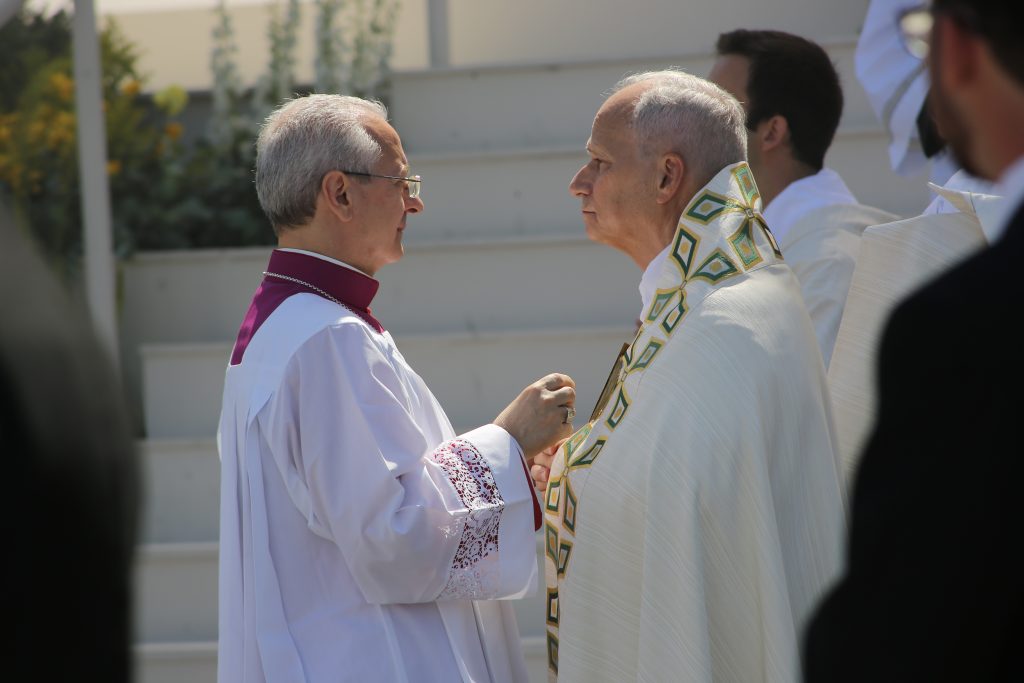
Day two of Pope Leo XIV’s visit to Spain sees one of Europe’s largest Catholic gatherings outside World Youth Day
An estimated 1.5 million people gathered in Madrid for Pope Leo XIV’s Corpus Christi Mass and procession on the second day of his apostolic visit to Spain. The crowd surpassed that of Saint John Paul II’s 2003 visit to Madrid and ranks among the largest Catholic gatherings in Europe outside World Youth Day Pope Leo’s second day of his apostolic visit to Spain began with Holy Mass for the feast of Corpus Christi. This year, Corpus Christi fell on Thursday 4 June. However, Spain, like many other countries, now transfers the solemnity to the following Sunday. Mass was celebrated in Plaza de Cibeles in central Madrid, with an estimated 1.5 million people in attendance. Earlier estimates had placed the number at 1.2 million, but as the day progressed a clearer picture emerged and the figures rose. The number is staggering. Indeed, excluding Saint John Paul II’s dramatic returns to Kraków during the Communist era, it might have been the largest European gatherings of Catholics outside a World Youth Day. By comparison, Pope John Paul II’s Mass in Ireland on 29 September 1979 attracted an estimated 1.25 million people. When he celebrated Mass in Madrid in 2003, around one million attended. Even accounting for Spain’s population growth since 2003, the figure represents a substantially larger proportion of the Spanish public coming out to see the Pope. The increase is in line with an apparent resurgence in Catholic identity in the country. A recent survey found that 45 per cent of Spaniards aged 15 to 29 identify as Catholic today, compared with 31.6 per cent in 2020. Spaniards often speak of there being “two Spains”. One is the conservative, Catholic Spain that takes pride in its saints, traditions and culture. The other seeks to sever those connections in the name of progressivism. It appears that, despite being governed by a socialist administration, the former remains vibrant. Panis Angelicus, music from the Taizé Community and the Tantum Ergo, Pange Lingua and Salve Regina all featured in a varied but traditionally inclined programme of liturgical music. Perhaps most notable for those looking for signs of tradition was the choir’s rendition of Verbum Supernum Prodiens, written by Saint Thomas Aquinas for the feast of Corpus Christi. Among the faithful were hundreds of children who had made their First Holy Communion this year and who, after Mass, took part in the Corpus Christi Eucharistic procession. There were also more than 150 bishops and some 1,600 priests in attendance. Their Majesties King Felipe VI and Queen Letizia of Spain, accompanied by Princess Leonor and Infanta Sofía, also attended the Mass. During his homily, Pope Leo XIV urged Spain’s Catholics not to allow their faith to become “a museum of the past”, but to remain a living source of charity, service and evangelisation. Reflecting on the Eucharist and Spain’s Catholic heritage, the Holy Father called on the faithful to become “builders of a new world” and to carry Christ’s presence into society, particularly through care for the poor, the suffering and those who have lost hope. For the Corpus Christi procession, a Galician artistic tradition was brought to Madrid, with more than 30,000 carnations transforming the city centre. This was made possible by the Asociación de Alfombristas del Corpus Christi de Ponteareas (Association of Corpus Christi Carpet Makers of Ponteareas). The decorations, known as floral carpets, covered more than 500 metres of Calle de Alcalá, one of Madrid’s longest streets. After the procession, the Holy Father took a short break from what has already been an exceptionally busy visit and held a private meeting with members of the Augustinian Order at the Apostolic Nunciature. As an Augustinian himself, Pope Leo has long been accustomed to community life and makes a point of visiting his religious brothers during his travels. Spain has historically had one of the largest Augustinian communities in the world, and Spanish Augustinians played a major role in the evangelisation of the Philippines, Latin America and parts of Africa. At 6pm, the Pope met representatives from the worlds of art, culture, business, labour and academia at Madrid’s Movistar Arena. The event, entitled “Weaving Networks with the Worlds of Culture, Art, the Economy and Sport”, aimed to encourage institutions and individuals to work together in taking responsibility for the human person amid rapid technological change. The gathering also highlighted Spain’s rich cultural heritage, with flamenco and classical guitar performances. Among those in attendance was the actor Antonio Banderas, who told the Pope he was “a victim of God’s spell” and described Jesus Christ as “the main protagonist of the movie of life”. Much like other events during the papal visit, the gathering placed considerable emphasis on Spain’s cultural heritage and its Catholic roots, bringing those traditions into public life. This theme was echoed in the words of the Holy Father, who asked those present: “What is it that we are sowing today, what exactly is flourishing and what is silently withering in our society; what values are we preserving and which are we allowing to die?” At the end of his second day, the papal visit appears to have so far been an outstanding success. Alongside the record attendance, another notable feature has been the absence of significant counter-protests. When Pope Benedict XVI visited Madrid for World Youth Day in 2011, there were loud and at times violent street protests demanding that his visit should not be funded by the state. Their absence is another indication that Catholicism in Spain is currently experiencing a period of renewed confidence.
Jun. 8, 2026
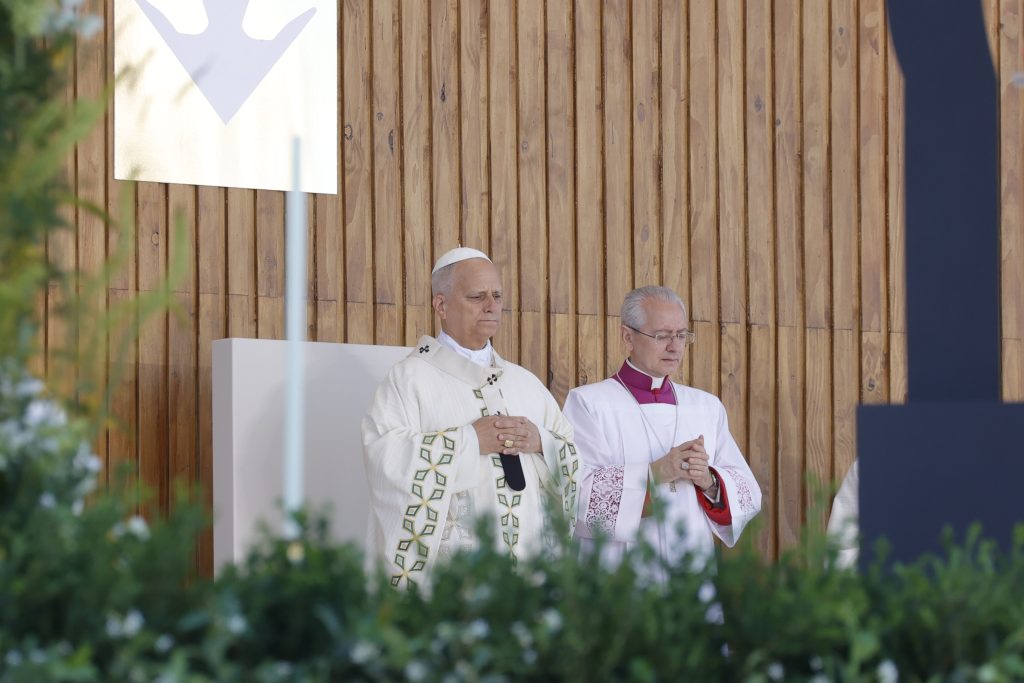
In full: Pope Leo XIV’s homily for the Solemnity of Corpus Christi in Madrid
On the Solemnity of Corpus Christi, Pope Leo XIV celebrated Mass before 1.2 million faithful in Madrid and delivered a homily centred on the Eucharist, charity and Spain’s Catholic heritage. Read the full text On the second day of his apostolic visit to Spain, the Holy Father, Pope Leo XIV, delivered an impassioned homily before 1.2 million faithful gathered in the centre of the nation’s capital. Speaking on the Solemnity of Corpus Christi, the Pope said that on this day Catholics celebrate that Jesus “does not remain enclosed within the church, but comes out to meet us”. He also exhorted Spain’s Catholics not to let their faith “become a museum”, but to be recognised as “a school that teaches us to kneel before God and before our neighbour, because no one can kneel before the Lord and despise a brother or sister”. Spain’s history is one of deep Catholic devotion, but it has also been marked by periods of anti-clerical socialism, leading many to speak of “two Spains”. Under Prime Minister Pedro Sánchez, the country has been subject to particularly aggressive secular and anti-Catholic legislation, notably laws limiting religious education in Catholic schools and introducing assisted suicide. Although the Holy Father has remained clear of political debate, his call for Spain to return to its Catholic roots struck a notably different tone from Sánchez’s secularism, which seeks to remove the Church’s presence in public life. The Holy Father concluded by praying for those present, imploring Jesus that “a full and abundant life may spring forth for you, for your families and for your country”. The full text is reproduced below: Dear priests, religious brothers and sisters, Your Majesties, brothers and sisters, With my heart filled with joy at the beginning of this journey to Spain, I preside over this celebration on the Solemnity of Corpus Christi. We are gathered around the Eucharist, the gift of Christ’s living presence among us. He who wished to offer us his life in order to bring us into communion with the Father and make us his children is here as the living bread come down from heaven, who nourishes us with the very life of God, with a love stronger than death. This remembrance of the Lord present in the Eucharistic bread is at the heart of your faith and of the history of your people. Here in Madrid, but also in so many other places throughout Spain, Corpus Christi is not merely another feast in the calendar, but a return to the roots of faith in order to renew love and fidelity to God. The solemn processions of this day have embodied for centuries the piety, the art, the music, the architecture and the life of the Spanish people, and even today they express and manifest the spiritual sentiment of this country, also through the beauty and elegance of the floral carpets, of the altars in the streets, the care devoted to the monstrances and displays, the hymns and the ornaments. This is not a matter of an external display, a folkloric survival, or a simple aesthetic adornment. Rather, it is faith in the presence of the Risen Lord, who is alive and continues to pass among us, who becomes bread for our hunger for life and visits the corners of our hearts and of our history, even the darkest ones. Thus, if in the Eucharistic celebration Christ gives himself as food, the procession proclaims that he does not remain enclosed within the church, but comes out to meet us. Jesus walks through the streets, crosses the squares, visits our neighbourhoods, and dwells in the places of our daily life. He is the God who is near and who walks with his people, the Lord of history, comfort for the weak, light for families, hope for the sick, peace for those who suffer. The Christ who passes through the streets in the monstrance is the same Christ who identifies himself with the poor, the downcast, those who are alone and abandoned. It is no coincidence that here in Spain the Church has for many years linked the Solemnity of Corpus Christi with the Day of Charity. It is not simply a matter of carrying the monstrance through the streets, but of allowing ourselves to be drawn out of selfishness, indifference, and a comfortable and private faith, in order to respond to his invitation to conversion, to change our way of seeing, and to open ourselves to his presence, a presence that transforms us and makes us builders of a new world. For this reason, the historical memory of the Corpus Christi processions cannot be imprisoned by nostalgic remembrance. Rather, it becomes an invitation for today, for our personal lives, for our relationships, for society, and for the building of the future. It is in this light that we must understand the invitation to remember that we heard in the first reading. “Remember the whole journey that the Lord your God made you travel during these forty years in the desert.” “Remember how, when you were hungry, he fed you with manna.” It is a matter of remembering precisely so as not to forget who the Lord is, so as not to fall into the temptation of trusting in other idols and feeding ourselves on a bread that does not satisfy. Therefore, here is a task entrusted to the Spain of today and tomorrow: that the religious faith which has animated this country for centuries may not become a museum of the past to be visited, but rather a school of faith from which people may still drink today. A school that teaches us to kneel before God and before our neighbour, because no one can kneel before the Lord and despise a brother or sister. A school that teaches us gratitude, the love that becomes a gift so that it may circulate among us and break the chains of every form of selfishness. A school in which we learn that God is truly present, and that we too are called to be present amid the situations and challenges of society, not to flee from them, but to commit ourselves personally to the building of the common good. Brothers and sisters, I wish to recall here Saint Manuel González, the bishop of the abandoned tabernacles. His life reminds us that the Eucharist cannot be honoured only during great celebrations or in an occasional way, but also through the silent fidelity of those who accompany the Lord with a humble and discreet friendship nourished day by day. I would also like to recall the poetic verses of Saint John of the Cross: “I know well the fountain that flows and runs, though it is night.” In the convent prison of Toledo, where he was imprisoned under extremely harsh conditions, precisely around Corpus Christi in the year 1578, he recognised, from within the darkness of that prison, the hidden presence of the Lord, from whom springs a light that never fails and a life that is never exhausted. Jesus in the Eucharist is that eternal fountain which remains hidden, a fountain that flows and quenches thirst, yet without dazzling, without imposing itself through outward power, without presenting itself in a spectacular manner. Let us return to him with sincere love. Let us open ourselves to an encounter with him. Let us allow him to refresh the dryness of our hearts so that we may then go out onto the roads of life and history carrying among people this stream of fresh water, a stream of love, peace, justice and joy. Let us drink once more from this Eucharistic fountain, which does not enclose us within a private devotion, but sends us out to our brothers and sisters, to families, to the poor, to those who suffer, to those who have lost hope. The grace of the Eucharist transforms us, but it also makes us protagonists in the transformation of history and signs of hope for those whom we encounter. May the Lord Jesus, present in the Eucharist, make you bread broken, given and offered, so that a full and abundant life may spring forth for you, for your families and for your country. Image credit: EUROPA PRESS – JESÚS HELLÍN
Jun. 7, 2026
Day one of Pope Leo XIV’s apostolic journey to Spain
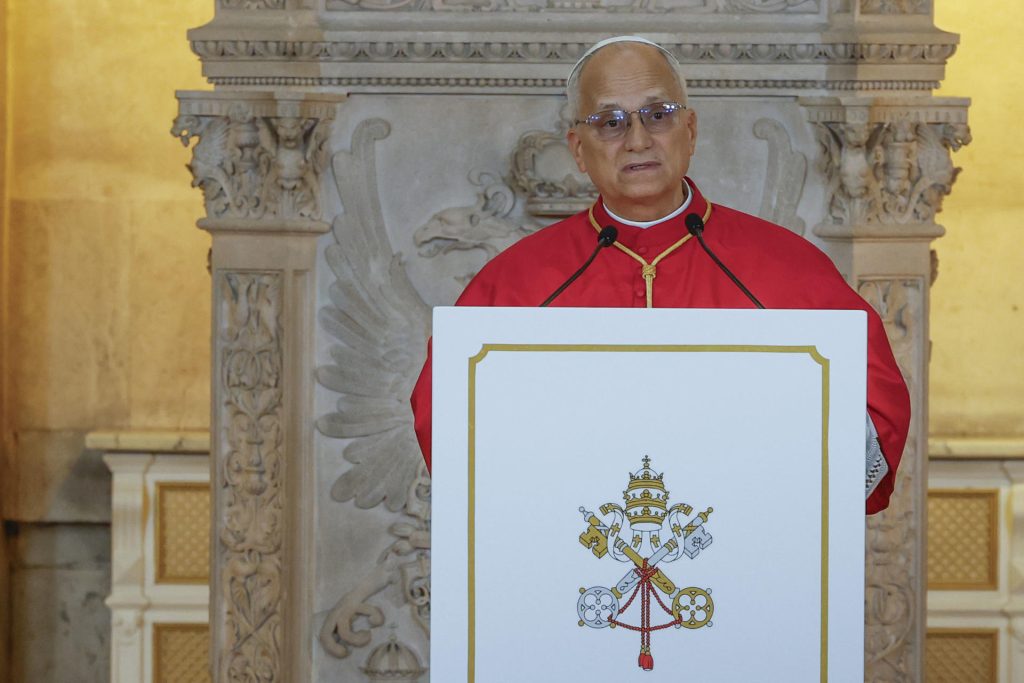
The Holy Father arrived in Madrid, met the Spanish Royal Family, called for unity and dialogue, visited a Catholic centre serving the homeless, and concluded the day with a youth prayer vigil attended by hundreds of thousands of people Pope Leo XIV arrived in Madrid on Saturday for the first day of his apostolic journey to Spain, a visit that will focus on evangelisation, youth, social outreach and the enduring Christian identity of one of Europe’s most historic Catholic nations. The papal aircraft departed Rome at 8am bound for Madrid, with the Holy Father using the flight to speak with journalists travelling with him. One exchange quickly generated attention beyond the religious press when Elise Ann Allen of Crux asked whether he supported Real Madrid or Barcelona. The Pope responded: “That’s easy… the Pope is for all teams, but Prevost is Real Madrid,” prompting an immediate reaction on social media. The Pope also reflected on signs of renewed religious interest among younger generations when questioned by CNN’s Christopher Lamb. Noting that Puerto Rican music personality Bad Bunny was performing in Madrid on the same evening, Pope Leo acknowledged the competing attractions facing young people in modern society. “If they are confronted with the question: do they want to see Bad Bunny or do they want to see the Pope, I think many will see Bad Bunny,” His Holiness said. Yet the Pope suggested that the growing number of young people exploring Christianity pointed to a deeper spiritual search. Speaking about a generation that has often grown up without a strong religious foundation, he said many were beginning to recognise “an emptiness” and “a lack of a sense of meaning”, adding that his visit might help awaken questions they were still struggling to define. The Holy Father touched down at Adolfo Suárez Madrid-Barajas Airport at 10.30am, where he was welcomed by Their Majesties King Felipe VI and Queen Letizia of Spain, His Eminence Cardinal José Cobo Cano, Archbishop of Madrid and Prime Minister Pedro Sánchez. Ahead of the arrival, Sánchez had issued a public message welcoming the pontiff to Spain, describing the country as “diverse” and “open” and expressing the hope that the papal visit would help strengthen “dialogue, understanding and hope”. A Vatican press document distributed to journalists covering the trip, a so-called working booklet prepared by the Dicastery for Communication, included a favourable biographical profile of Socialist Prime Minister Sánchez, crediting him with having “revitalised economic growth and social rights in Spain”. Sánchez’s government has supported abortion and euthanasia legislation, and the working document made no mention of either issue. The Holy See Press Office noted that the publication was intended as a journalistic working tool rather than an official Vatican text. From the airport, Pope Leo travelled to Madrid’s Royal Palace for the formal welcome ceremony in the Plaza de la Armería. Military honours were rendered and the national anthems of Spain and Vatican City State were performed before the pontiff proceeded to a private audience with King Felipe VI and Queen Letizia. He also met Princess Leonor, Princess of Asturias, and Infanta Sofía, continuing a tradition of cordial relations between the Spanish Crown and the Holy See that stretches back centuries. The first major speech of the journey followed shortly afterwards during a gathering with political authorities, representatives of civil society and members of the diplomatic corps. Addressing those assembled in the Royal Palace, Pope Leo said he had come to Spain “to affirm, encourage and instil a renewed fidelity to the Gospel among believers, as well as a deeper reconciliation and collaboration among the various elements of this nation”. While praising Spain’s commitment to international cooperation, His Holiness also encouraged efforts to strengthen social cohesion within the country. He thanked Spain for its “faithful adherence to international law and multilateralism”, which he said was demonstrated through “an active commitment to peace and solidarity among peoples”. The Pope’s remarks repeatedly returned to the themes of dialogue, unity and the common good. His Holiness called on Spaniards “to cultivate dialogue and civic friendship within your own country” and urged political and civic leaders to consider the perspectives of the poor and the young when shaping the future. Referring to tensions that have periodically emerged over questions of regional autonomy and national identity, the Pope encouraged the nation “to harmonise the claims for autonomy and unity”, while also expressing support for European cooperation as a contribution to the wider human family. Pope Leo also used the address to place his visit within the broader context of Spain’s Christian history. Describing the country as “a great country that, for nearly two millennia, has welcomed the Gospel”, he recalled the ancient tradition linking the evangelisation of the Iberian Peninsula to St James the Greater. The reference carried particular significance in a nation whose spiritual heritage remains closely connected to the shrine of Santiago de Compostela, one of Christianity’s most important pilgrimage destinations. The Pope noted that the tradition expressed the Spanish Church’s awareness of its continuity with the apostolic mission entrusted to the first disciples of Christ. After the official ceremonies and meetings in the centre of Madrid, the focus of the papal visit shifted towards the Church’s charitable mission. In the early evening, the Holy Father travelled to the CEDIA 24 Horas centre operated by Cáritas Madrid, a facility dedicated to serving people experiencing homelessness and social exclusion. The centre provides round-the-clock assistance and supported more than 2,500 people during the previous year while receiving dozens of visitors every day. Before arriving at CEDIA, Pope Leo spent time with a group of around 40 people affected by disability and illness. He was then welcomed at the centre by Cardinal José Cobo Cano, Archbishop of Madrid, together with staff, volunteers and beneficiaries of the project. During the visit, he listened to testimonies from Niurka, a woman originally from Cuba, Khadri, a migrant from Senegal, and Alicia, a volunteer representing the many people involved in the Church’s charitable outreach. Each offered a personal account of hardship, support and renewal before presenting symbolic gifts to the Pope. Responding to the testimonies, Pope Leo spoke warmly of the welcome he had received since arriving in Spain. Referring to a phrase used by Cardinal Cobo, he noted that “Anyone who is in Madrid is from Madrid” before adding: “And so I, too, am here among you as another Madrilenian.” Thanking those present for making him feel part of “a large and wonderful family”, he described the centre as a concrete example of Christian fraternity in action. “In this home, no one remains alone,” he said. “Here, each person’s joy and sorrow are the joy and sorrow of all.” The Pope said the work carried out at CEDIA reflected Christ’s own identification with the poor, vulnerable and forgotten. Referring to a song performed during the gathering, he highlighted the words, “In every dream I sought you, and none was in vain”, suggesting that they captured both the experiences shared during the visit and the spirit that sustained the centre’s daily mission of service. The final event of the Pope’s first day in Spain drew vast crowds to Madrid’s Plaza de Lima, where hundreds of thousands of young people gathered for an evening prayer vigil described by organisers as a festival of faith. Following introductory remarks by Cardinal Cobo on the challenges facing young people in contemporary society, the Pope answered a series of questions posed by youth representatives. Asked about the figures who had most influenced his faith, he cited St John Chrysostom, St Thomas of Villanova and St Turibius of Mogrovejo, praising their commitment to truth, charity and justice. He also reflected on his years as a missionary in Peru, recalling how encounters with communities facing hardship had deepened both his faith and his understanding of the Gospel. Throughout the encounter, Pope Leo encouraged young Catholics to cultivate prayer, silence and discernment in a noisy and distracted age. He urged them to seek God’s voice with sincerity, remain committed to truth and recognise that both marriage and religious life represent authentic Christian vocations. The vigil concluded with Eucharistic adoration, bringing to an end a demanding opening day that saw Pope Leo move from the ceremonial grandeur of state occasions to encounters with the poor, the sick and the young. (Photo credit: : J.J. Guillén/EFE)
Jun. 6, 2026
Pope Leo XIV’s first day in Spain in pictures
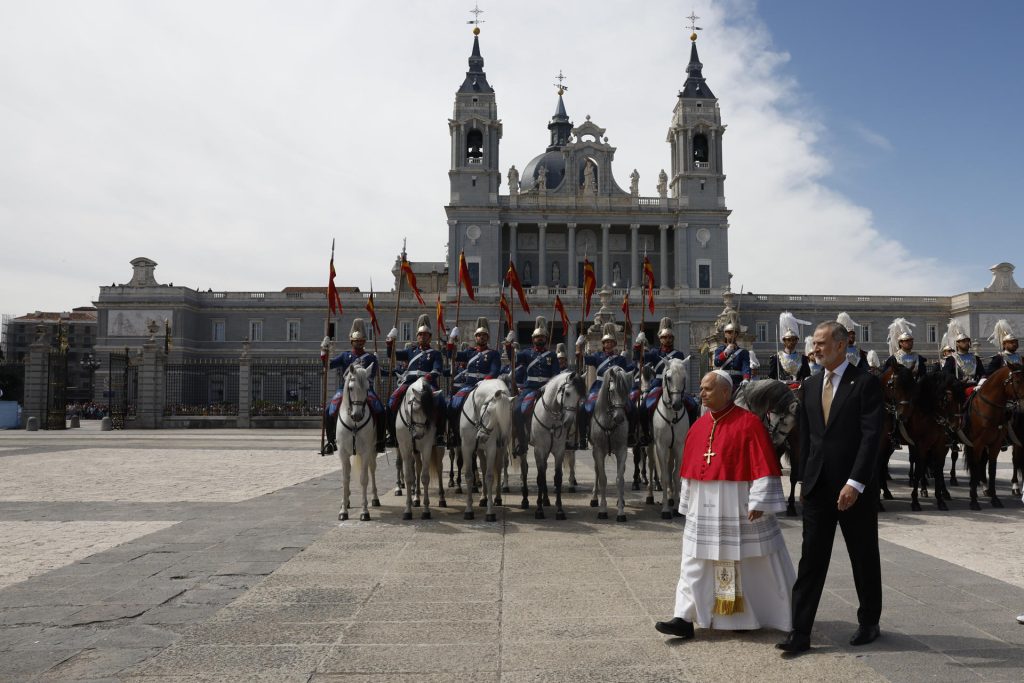
Pope Leo XIV has arrived in Spain for his first apostolic to the country. Our photo gallery captures the Holy Father’s arrival in Madrid, his meeting with King Felipe VI and Queen Letizia, the official welcome at the Royal Palace, and the opening moments of a visit focused on evangelisation, youth and the Church’s charitable mission Pope Leo XIV arrived in Madrid on Saturday to begin his first apostolic journey to Spain, a visit centred on evangelisation, youth and the Church’s charitable mission. During a packed opening day, the Pope met King Felipe VI and Queen Letizia at the Royal Palace, addressed political leaders and diplomats, visited a Cáritas centre serving people experiencing homelessness, and concluded the day before a crowd of hundreds of thousands of young people gathered for a prayer vigil in Plaza de Lima. Pope Leo XIV arrives at Adolfo Suárez Madrid–Barajas Airport to begin his first apostolic journey to Spain, which will last until 12 June. The Holy Father is greeted by Their Majesties King Felipe VI and Queen Letizia of Spain at Adolfo Suárez Madrid–Barajas Airport. At Madrid airport, the Pope is also greeted by the Prime Minister of Spain, Pedro Sánchez. Sánchez’s government has been responsible for some of the most aggressively secular and anti-Catholic laws the country has ever experienced, notably limiting religious education in Catholic schools and introducing assisted suicide. Pope Leo XIV arrives for a welcome ceremony at the Royal Palace of Madrid, where both the Spanish national anthem and the Pontifical Hymn are performed .(Photo credit: EFE/J.J. Guillén POOL) The Holy Father meets His Majesty King Felipe VI, Her Majesty Queen Letizia, Her Royal Highness the Princess of Asturias, and Her Royal Highness Infanta Sofía in the Gasparini Room of the Royal Palace of Madrid. Queen Letizia exercises the traditional privilège du blanc by wearing white in the Pope’s presence .(Photo credit: EFE/Ballesteros POOL) In the Hall of Columns, both the King and the Holy Father address the Diplomatic Corps. Pope Leo tells those gathered: “I come among you to confirm, encourage and inspire a renewed fidelity of believers to the Gospel, as well as a deeper reconciliation and cooperation between the various forces of this nation” Pope Leo arrives at the CEDIA 24-Hour Centre of Caritas Madrid, a project providing comprehensive care for people experiencing homelessness and social exclusion. (Photo credit: J.J. Guillén/EFE) Pope Leo, accompanied by his personal secretary, Monsignor Edgard Iván Rimaycuna Inga, listens to music performed by Niña Pastori, one of Spain’s most famous flamenco singers. (Photo credit: J.J. Guillén/EFE) Pope Leo shares a private word with His Eminence Cardinal José Cobo Cano, Cardinal Archbishop of Madrid. (Photo credit: J.J. Guillén/EFE) The Holy Father speaks to service users of Cáritas Madrid’s 24-Hour Emergency and Comprehensive Care Centre. The centre specialises in assisting people experiencing homelessness. On average, 82 people visit the day centre each day. In 2025, the centre assisted 2,562 people. (Photo credit: J.J. Guillén/EFE) Young people gather for a prayer vigil in Lima Square. Described as a “festival of faith”, the vigil includes music, the Rosary and Eucharistic Adoration. (Photo credit: Gabriel Gonzalez-Andrío) Spanish bishops wait for the Pope to arrive in Lima square. (Photo credit: Marcos Nogales) Pope Leo is welcomed at the vigil by some 600,000 young people. A recent survey found that 45 per cent of Spaniards aged 15 to 29 identify as Catholic today, compared with 31.6 per cent in 2020. (Photo credit: Luismagan) Pope Leo is welcomed at the vigil by some 600,000 young people. A recent survey found that 45 per cent of Spaniards aged 15 to 29 identify as Catholic today, compared with 31.6 per cent in 2020. (Photo credit: Luismagan) The Holy Father leads the crowd in Eucharistic Adoration, bringing the first day of his apostolic journey to Spain to a close. On Sunday, he will celebrate the Solemnity of Corpus Christi in Cibeles Square in central Madrid. (Photo credit: J.J. Guillén/EFE)
Jun. 6, 2026