

Christian Persecution
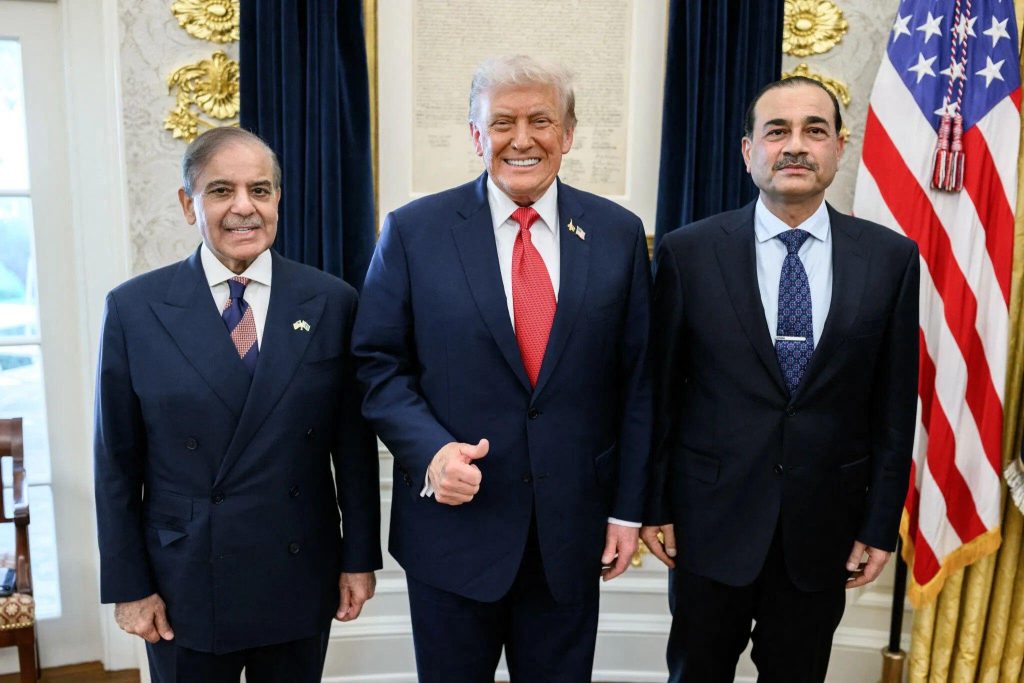
Trump says he is defending Christians. So why is he embracing Pakistan?
The Trump administration has repeatedly pledged to defend persecuted Christians around the world. Yet Washington continues to strengthen its relationship with Pakistan, one of the world’s worst countries in which to be a Christian At the end of last month, at a luxury resort overlooking Lake Lucerne in Switzerland’s Bürgenstock, JD Vance, the Vice President of the United States, joked that there were two “very important people” in his life, “an Indian and a Pakistani”. The Indian is, of course, his wife, Second Lady Usha Vance, born to Brahmin parents who immigrated to the U.S. in the 1980s. The Pakistani is Field Marshal Syed Asim Munir Ahmed Shah, whom Vance said he had spoken to more than anyone over the last three months. Vance said “we would not be here without his statesmanship” and that he is “a great military leader” and a “great diplomat”. The reason for his thanks is that, alongside Qatar, Pakistan has been leading negotiations between the United States and Iran to end the conflict between the two countries. Ignoring the fact that these negotiations have failed and that, for many, the war in Iran is something the United States should not be involved in, there is another pressing question. Why does Donald Trump’s apparently Christian-centric administration feel so comfortable in the hands of a country that has shown such hostility towards its Christian communities? The man whom Vance spends so much time talking to, and with whom Donald Trump held an unprecedented meeting at the White House, is one of many Pakistani leaders who have a long history of failing to protect Christians. After returning from Saudi Arabia, where he memorised the Quran, he was appointed brigadier. Since 2016, he has climbed the military ladder, leading to his appointment as Chief of Army Staff in 2022. Perhaps his most notable failure to address anti-Christian violence was the Jaranwala church arsons in 2023. The incident occurred after torn pages of the Quran were allegedly found near the Christian quarter of the city of Jaranwala, Punjab. Local mosques quickly took to their loudspeakers to encourage potential rioters and, soon, 26 Christian churches were burned alongside Christian homes being destroyed. The day after most of the violence had been carried out, the military stepped in to look busy and some order was restored. Field Marshal Asim Munir described the events as “extremely tragic”, and then let the police do their job, which included arresting two Christian men identified in social media posts as being responsible for the Quran pages being torn. But it should be noted that Field Marshal Asim Munir is one among many pernicious forces in a country where Christians are treated as second-class citizens. Indeed, there is an entire culture built around violence against religious minorities. Forced conversion is one notably horrid practice about which little is done, whereby Christian girls, normally underage, are taken from their family homes and intimidated into converting and marrying a Muslim man. The practice is so common that it has led to interventions by the United Nations. Another is the imprisonment and death penalty for Christians who allegedly insult Islam. Insulting members of Muhammad’s family, companions or wives carries a three-year prison sentence, defiling, damaging or desecrating the Quran means life imprisonment, and making derogatory remarks about Muhammad results in a mandatory death penalty. The laws effectively serve as a constant threat hanging over every Christian in the country, with Christians aware that the accusation alone could result in their death through mob violence long before the state carries out its own investigations. The law also has an extremely low evidential threshold, and defendants can often spend years in prison awaiting trial or appeal. Indeed, this week, Amir Peter, the brother of a Catholic priest in Pakistan, died in prison after being detained over allegedly false blasphemy charges while awaiting trial. Having allegedly made derogatory remarks about Muhammad, any conviction would likely have led to his execution anyway, but his health deteriorated rapidly, in part because the authorities allegedly denied him medical care during his imprisonment. Despite all of these concerns, a special relationship continues to be fostered. Indeed, it was Pakistan that unironically nominated Donald Trump for the Nobel Peace Prize in June 2025, and the following month the United States and Pakistan agreed a trade deal. Amid all this diplomatic cosying up, at no point has President Trump publicly raised the plight of the country’s Christians. Any concern has instead been channelled through the State Department’s annual reporting and through USCIRF, a rather limp response in comparison with its reaction to the Christmas Day bombings in Nigeria. According to Open Doors, a charity which documents the persecution of Christians around the world, Pakistan is the seventh worst country in the world in which to be a Christian. It therefore seems contradictory that, while the Trump administration claims to be “saving Christians throughout the world”, as the President himself said while speaking at the Faith & Freedom Coalition’s 2026 policy conference in Washington this month, it has not taken a stronger public stand against Pakistan’s treatment of its Christian minority.
Jul. 11, 2026
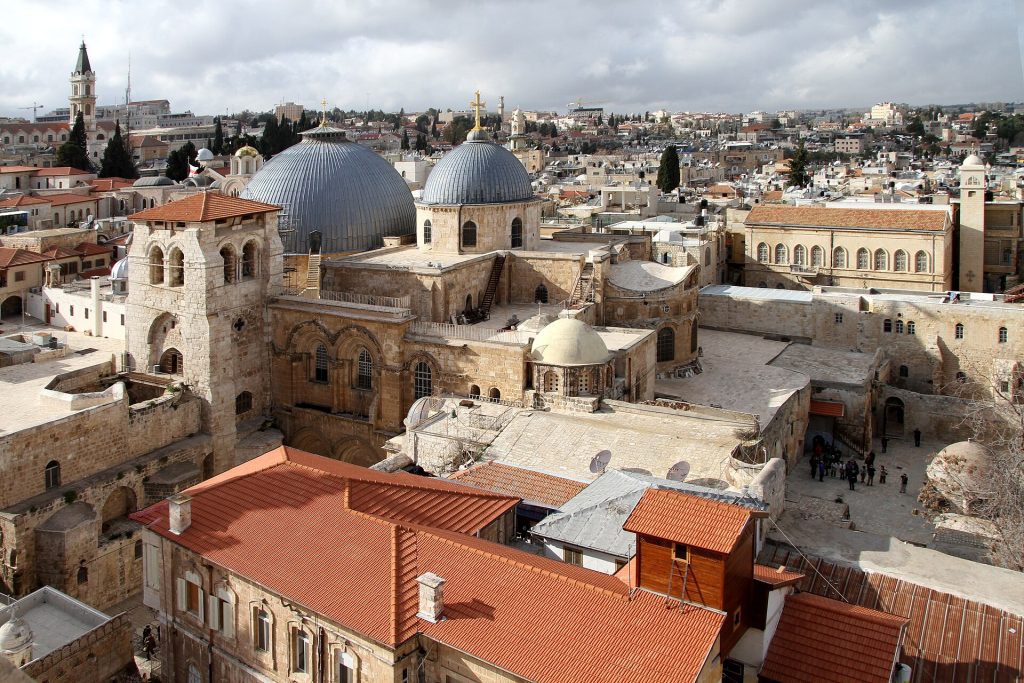
Christian harassment in Israel on course for record year
Reports of harassment against Christians in Israel have risen sharply, according to new figures released by the Religious Freedom Data Center. The Jerusalem-based organisation said it had already documented more than 88 incidents during the first half of 2026, including 63 recorded during the second quarter alone. If the trend continues, the total is expected […] Reports of harassment against Christians in Israel have risen sharply, according to new figures released by the Religious Freedom Data Center. The Jerusalem-based organisation said it had already documented more than 88 incidents during the first half of 2026, including 63 recorded during the second quarter alone. If the trend continues, the total is expected to surpass the 181 cases documented during 2025. Yisca Harani, founder of the Religious Freedom Data Center, said the increase had already exceeded expectations before the year had reached its halfway point. “We have surpassed all our numbers, and we haven’t reached the end of June yet,” she said while presenting the findings on 4 June. The documented cases include spitting, verbal insults, vandalism, desecration of graves and religious symbols, graffiti, and damage to church property. Other incidents have been reported beyond Jerusalem, including acts of vandalism and arson directed at Christian holy sites in northern Israel. Christian clergy and religious living in the city have long complained that harassment is a routine feature of daily life, particularly in areas where priests, monks, and nuns are easily identifiable by their religious dress. Harani, a Jewish-Israeli scholar who specialises in Christian-Jewish relations, told OSV news that many officials continued to regard such incidents as isolated acts carried out by a small number of extremists, often young people. She argued that this approach failed to recognise the scale of the problem. “Most of the incidents, which include spitting and verbal insults, vandalism and desecration of graves, tombstones, statues and crosses, and defacement of signs and graffiti, have taken place in Jerusalem’s Old City, on Mount Zion and near the Armenian Patriarchate,” she said. Concerns over the response of law enforcement authorities were also raised during the presentation of the report. According to OSV news, Ori Narov, director of the legal department of the Israel Religious Action Center, said that relatively few complaints resulted in successful investigations. He told participants that, of 25 complaints submitted by his organisation between 2012 and 2021, 19 cases had been closed without further action. According to Narov, authorities frequently cited reasons including the inability to identify suspects, conclusions that no offence had been committed, or decisions that investigations were not warranted. Despite those difficulties, he urged Christian leaders and institutions to continue reporting incidents and seeking legal remedies. “I have no doubt that the road is long,” Narov said. “But as we said, we are not afraid of a long road, and we will also reach a better future.” The latest figures follow similar findings published by the Rossing Center for Education and Dialogue, another Jerusalem-based organisation that monitors relations between religious communities. The Rossing Center recorded 111 incidents targeting Christians during 2024, compared with 94 in the previous year. Its most recent report documented 155 incidents during 2025, representing a substantial increase. Physical assaults, particularly spitting directed at clergy, accounted for the largest category of complaints, followed by attacks on churches and Christian property, verbal harassment, and the defacement of signs. Christians constitute less than two per cent of Israel’s population, numbering approximately 180,000 to 200,000 people. The majority are Arab Christians belonging to a variety of traditions, including the Catholic, Orthodox, and Protestant Churches. While Israel guarantees freedom of religion in law and is not generally grouped alongside countries where Christians face systematic state persecution, Church leaders have repeatedly expressed concern about the atmosphere confronting Christian communities, particularly in Jerusalem. Photo credit: Gerd Eichmann – Own work, CC BY-SA 4.0, https://commons.wikimedia.org/w/index.php?curid=95703949
Jun. 11, 2026
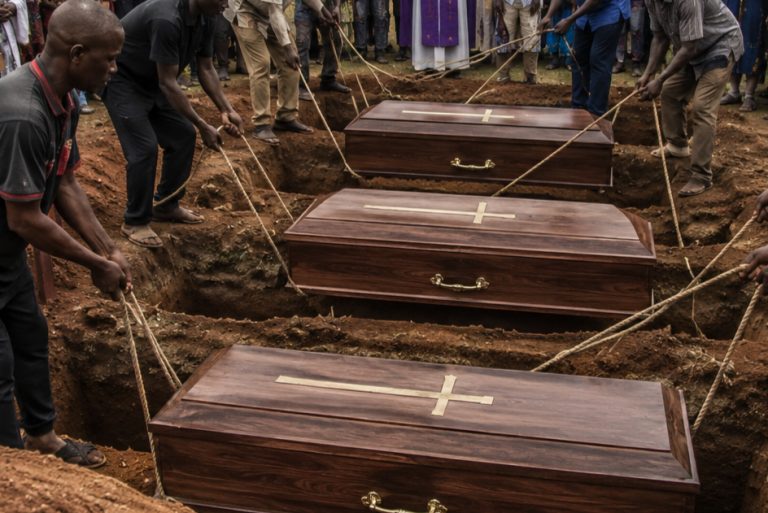
Four sentenced to death over 2022 massacre of 41 Catholics at Nigerian church
Four men have been sentenced to death for the 2022 attack on St Francis Xavier Catholic Church in Owo, Nigeria, in which 41 worshippers were killed during a Pentecost Mass. The ruling comes almost four years after one of the deadliest attacks on Christians in the country’s recent history Four men have been sentenced to death for the massacre of 41 worshippers at a Catholic church in Nigeria in a landmark ruling, almost four years after one of the country’s deadliest attacks on Christians. The Federal High Court in Abuja found Idris Abdulmalik Omeiza, Al Qasim Idris, Jamiu Abdulmalik and Abdulhaleem Idris guilty of terrorism offences connected to the Pentecost Sunday attack on St Francis Xavier Catholic Church in Owo, Ondo State, on 5 June 2022. The gunmen stormed the church during Mass and opened fire on the congregation before detonating explosives, leaving dozens dead and more than 100 people injured in scenes that horrified Catholics across Africa and beyond. Delivering judgment, Justice Emeka Nwite said the evidence against the four men was “neither shaken nor contradicted during cross-examination”. “Hence this court finds the first to fourth defendants guilty of all nine counts,” he said. The court imposed death sentences for the killings and handed down additional prison terms for terrorism-related offences, including membership of a terrorist organisation. A fifth defendant, Momoh Otuho Abubakar, was acquitted after the court ruled that prosecutors had failed to prove their case against him. The attack on Owo sent shockwaves through Nigeria because it took place in the predominantly Christian south-west, a region that had largely escaped the scale of violence experienced in other parts of the country. Worshippers had gathered to celebrate Pentecost when the attackers struck. Witnesses described hearing gunfire and explosions as panic spread through the packed church. Among those killed were children. One of the most harrowing testimonies heard during the trial came from a survivor who lost both legs below the knee and an eye after an explosive device detonated during the assault. The prosecution argued that the four convicted men had planned and carried out the attack as members of a terrorist network. Prosecutor Ayodeji Adedipe welcomed the verdict, telling the court: “Justice has been served. Justice has been done to the deceased who were murdered in cold blood.” Defence lawyers said the convictions would be appealed. The massacre drew condemnation from political and religious leaders around the world. Then-President Muhammadu Buhari described it as a “dastardly act”, saying that “only fiends from the nether region” could have carried out such a crime. Ondo State Governor Rotimi Akeredolu, who visited the scene shortly after the attack, called it a “vile and satanic attack” on innocent worshippers. Pope Francis also remembered the victims in his prayers, expressing his closeness to those who had been “painfully stricken in a moment of celebration”. The killings became a symbol of Nigeria’s worsening security crisis, which has seen churches, schools, villages and transport links targeted by armed groups across the country. At the time of the attack, no group immediately claimed responsibility, although Nigerian authorities later linked the atrocity to Islamist extremists operating in the region. The assault came amid growing concern among Christian leaders over attacks on clergy and worshippers. In the weeks surrounding the Owo massacre, kidnappings of priests and other church leaders were reported in several parts of the country, while armed gangs continued to terrorise communities through abductions and raids. Although Nigeria’s government rejects claims that Christians are being systematically targeted, church leaders have repeatedly called for stronger action to protect vulnerable communities and places of worship. The convictions are among the most significant secured by Nigerian authorities in relation to a major terrorist attack on a church. Under Nigerian law, the death sentences will require further legal processes before they can be carried out, and appeals are expected to follow. Another deadly incident was the coordinated Christmas Day church attacks in 2011, primarily the bombing at St Theresa’s Catholic Church in Madalla, near Abuja. On 25 December, Boko Haram carried out multiple strikes on Christian worshippers, with the Madalla attack killing at least 37 to 40 people and injuring dozens more as congregants left Mass. Bombings and shootings also targeted churches in Jos, Gadaka and Damaturu that day, contributing to a total death toll of around 40 to 50 across the affected sites. Another major massacre occurred in Yelewata, Benue State, in mid-June 2025, when Fulani militants attacked a displacement camp sheltering Christians. Reports indicate that around 200 people were killed in a single night, with attackers storming storefronts that had been converted into temporary shelters and using guns and other weapons against men, women and children.
Jun. 10, 2026
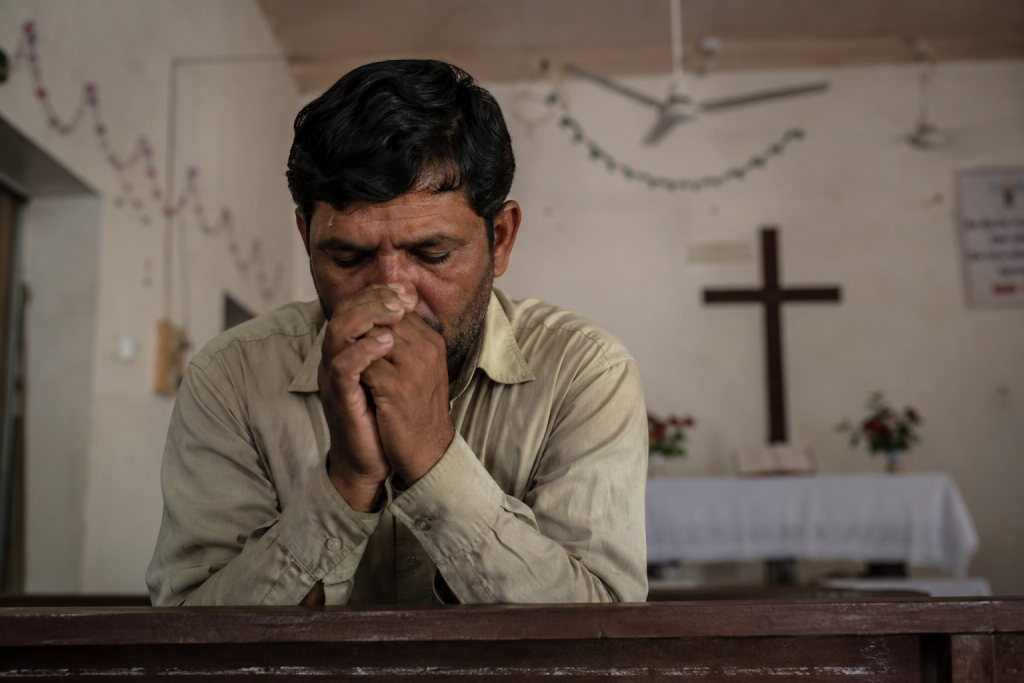
Cardinal Koch: More Christians martyred today than in the early Church
Cardinal Kurt Koch has said that more Christians are being martyred today than during the first centuries of the Church. Speaking at a pilgrimage for persecuted Christians in Switzerland, he said modern martyrs have created an “ecumenism of blood” that unites believers across denominational divides Cardinal Kurt Koch has said that more Christians are being martyred today than during the first centuries of the Church. The Swiss cardinal made the remarks during a pilgrimage for persecuted Christians at Einsiedeln Abbey, one of Europe’s most renowned Marian shrines, where he celebrated Mass before pilgrims gathered by Aid to the Church in Need (ACN) Switzerland. Reflecting on the witness of Christians who continue to suffer for their faith, the Prefect of the Dicastery for Promoting Christian Unity said: “Martyrdom truly belongs to the heart of Christianity. Today, there are more martyrs than in the first centuries of Church history.” Tacitus (56–120 AD), in his Annals , described Nero’s persecution in 64 AD, during which an “immense multitude” of Christians in Rome were arrested, tortured and executed, including being burned as torches, torn apart by dogs or crucified, not so much for arson as for “hatred of the human race”. Tacitus, a non-Christian senator writing decades later, viewed Christianity negatively but confirmed the brutality of the persecution. Later Christian writers such as Eusebius of Caesarea (c. 260–339 AD), in his Ecclesiastical History , compiled accounts of early persecutions and referred to “countless” or “myriads” of martyrs across different periods. However, modern scholars note that first-century persecutions were mostly local, with the number of Christian martyrs by 100 AD often estimated at around 7,500. The cardinal, who is also president of the pontifical foundation Aid to the Church in Need, used the occasion to highlight what he described as a sign of Christian unity emerging from persecution. “Dictators do not distinguish between Catholics, Orthodox, Lutherans, Anglicans or Protestants,” he said. “The blood that has been shed unites Christians beyond their divisions.” Quoting a phrase frequently employed by the late Pope Francis, Cardinal Koch referred to an “ecumenism of blood”, arguing that Christians are targeted not because of denominational differences but because of their shared faith in Jesus Christ. “Christians are not persecuted because they belong to a particular Church, but because of their faith in Christ,” he said. Special prayers were offered during the pilgrimage for Christian communities affected by violence and instability in countries including Iraq, Haiti, Pakistan and Indonesia. Pilgrims prayed for those enduring persecution, forced displacement, abduction and other forms of hardship because of their religious beliefs. The gathering also included discussions on the Church’s response to war, persecution and humanitarian crises, with participants reflecting on the role of faith and practical assistance in supporting communities living under pressure. In comments given in connection with the pilgrimage, Cardinal Koch spoke of his commitment to the work of the charity following his appointment as its president by Pope Leo XIV. He said he accepted the role “with great joy” and described the foundation as one that continually draws attention to parts of the Church experiencing severe hardship. The annual pilgrimage was held at the Benedictine abbey of Einsiedeln in central Switzerland, a site associated with Christian pilgrimage for centuries and which remains one of the country’s most important centres of Catholic devotion. The monastery is home to the celebrated Black Madonna of Einsiedeln, which attracts hundreds of thousands of pilgrims and visitors each year. In Europe, modern Christian persecution primarily manifests as what Pope Francis and others have described as “polite persecution”, a combination of cultural marginalisation and legal restrictions. Organisations such as the Observatory on Intolerance and Discrimination against Christians in Europe (OIDAC) documented around 2,444 anti-Christian hate crimes across 35 countries in 2023, including more than 2,000 incidents targeting churches and cemeteries. France reported nearly 1,000 cases, mostly vandalism, followed by the United Kingdom and Germany. These trends continued into 2024 and 2025, with reports of increased arson attacks on churches, nearly doubling in some years. Globally, Christian persecution involves severe restrictions and deadly violence. Open Doors’ World Watch List 2026 reported that more than 388 million Christians, approximately one in seven worldwide, face high levels of persecution and discrimination. During the reporting period, researchers documented 4,849 Christians murdered for their faith, roughly 13 per day, 4,712 detained, and 3,632 churches or Christian properties attacked. The vast majority of killings, more than 90 per cent, occurred in sub-Saharan Africa, particularly Nigeria, where Islamist groups such as Boko Haram and Fulani militants target Christian communities.
Jun. 8, 2026
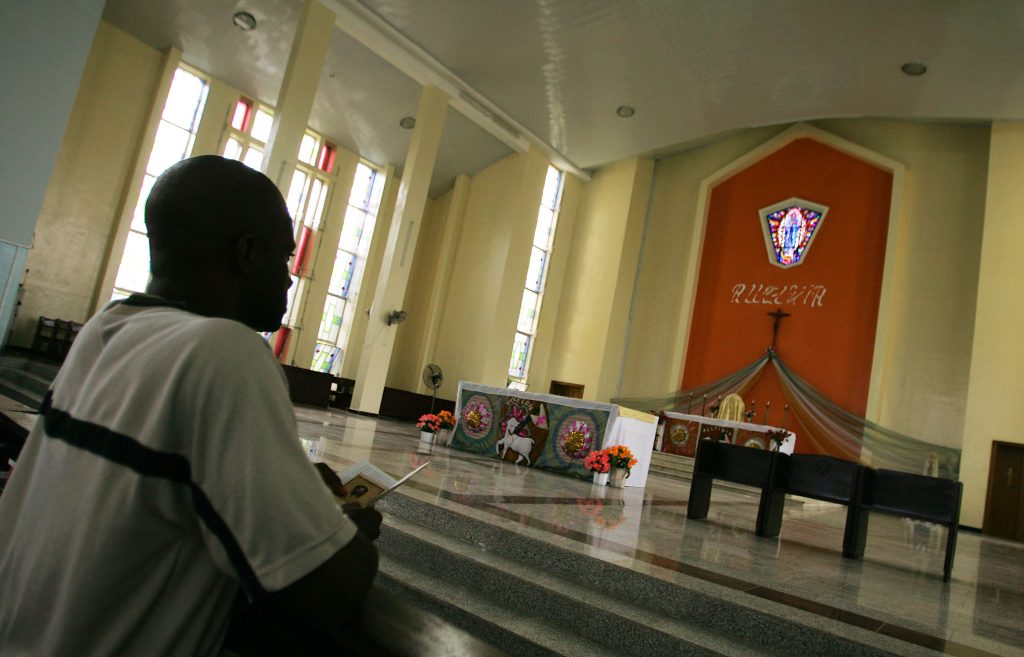
Nigerian archdiocese orders week of reparation after Blessed Sacrament stolen
The Archdiocese of Owerri has declared a week of prayer and reparation after thieves broke into an adoration chapel through the roof and stole a monstrance containing the Blessed Sacrament The Archdiocese of Owerri in southern Nigeria has declared a week of prayer and reparation after thieves broke into an adoration chapel and stole a monstrance containing the Blessed Sacrament. The desecration took place at St Mulumba Parish, Wetheral Road, Owerri, during the early hours of 29 April after intruders reportedly entered the chapel through the roof. In a statement to the faithful, Archbishop Lucius Iwejuru Ugorji said: “It is with great sadness that we inform you of the desecration of the Chapel of Adoration of St Mulumba Parish, Wetheral Road, Owerri. As reported by the parish priest, Rev. Fr Raymond Madu, unknown persons opened parts of the roof, gained access through the ceiling, and made away with the monstrance containing the Blessed Sacrament.” The archbishop ordered a week of prayer in reparation from 1 May to 8 May between 4pm and 6pm each day for parishioners of St Mulumba Parish. He also instructed priests across the archdiocese to observe more closely the Church’s regulations governing Eucharistic adoration. “All priests in the Owerri Archdiocese are reminded to strictly adhere to the norms and directives regarding the exposition of the Blessed Sacrament and adoration to avoid any recurrence,” Archbishop Ugorji said. “We emphasise that exposition is to take place only when a fitting attendance of the faithful is assured (cf. Can. 942). The Blessed Sacrament must never be left unattended during exposition,” the archbishop concluded. Fr Humphrey Tatah Mbuy told the Catholic World Report that prayers of reparation are offered after acts of sacrilege against churches or the Eucharist. “A prayer of reparation is a liturgical rite and spiritual act performed to make amends for the sacrilege committed against God and to restore the sacred character of the building,” Fr Mbuy said. He added: “The prayer is a way for the Church to apologise to God for the offence committed against His house.” Nigeria continues to experience significant violence against Christians, particularly in the north and Middle Belt. This often involves attacks by Fulani militants, Boko Haram affiliates or armed bandits, with churches and clergy frequently targeted. For example, over this year’s Easter season, armed attackers stormed two churches in the Ariko community of Kachia Local Government Area, Kaduna State, during services at the Evangelical Church Winning All (ECWA) and St Augustine’s Catholic Church. The gunmen opened fire indiscriminately, killing at least five worshippers and abducting dozens more. The Catholic Archdiocese of Kafanchan also confirmed the abduction of Fr Nathaniel Asuwaye after armed men attacked the priest’s residence in Karku in February. In a statement issued after the assault, the archdiocese described the incident as a “terrorist invasion”, while local Catholics organised Masses and rosaries for the safe return of the priest and those kidnapped alongside him. According to Open Doors, in 2024 Nigeria was the country with the highest number of Christians killed for their faith, with 3,100 Christians killed and 2,830 kidnapped that year. The Catholic Bishops’ Conference of Nigeria has warned on several occasions that attacks on churches, rectories and Christian villages are creating widespread fear among the faithful. Aid organisations including Aid to the Church in Need and the United States Commission on International Religious Freedom have also documented repeated incidents involving church burnings, abductions and the killing of clergy across the country.
May 12, 2026