Four men have been sentenced to death for the massacre of 41 worshippers at a Catholic church in Nigeria in a landmark ruling, almost four years after one of the country’s deadliest attacks on Christians.
The Federal High Court in Abuja found Idris Abdulmalik Omeiza, Al Qasim Idris, Jamiu Abdulmalik and Abdulhaleem Idris guilty of terrorism offences connected to the Pentecost Sunday attack on St Francis Xavier Catholic Church in Owo, Ondo State, on 5 June 2022.
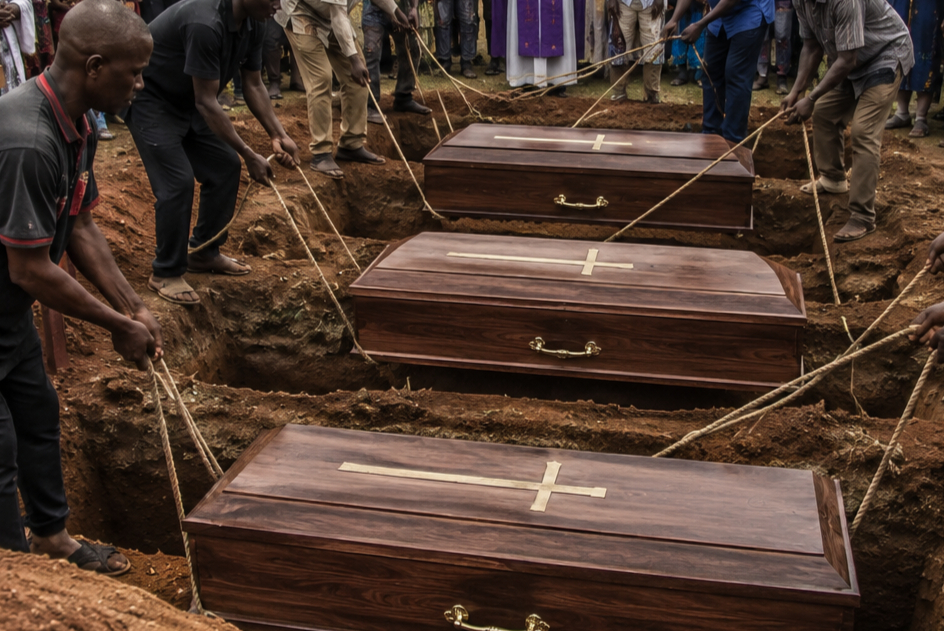
The gunmen stormed the church during Mass and opened fire on the congregation before detonating explosives, leaving dozens dead and more than 100 people injured in scenes that horrified Catholics across Africa and beyond.
Delivering judgment, Justice Emeka Nwite said the evidence against the four men was “neither shaken nor contradicted during cross-examination”.
“Hence this court finds the first to fourth defendants guilty of all nine counts,” he said.
The court imposed death sentences for the killings and handed down additional prison terms for terrorism-related offences, including membership of a terrorist organisation. A fifth defendant, Momoh Otuho Abubakar, was acquitted after the court ruled that prosecutors had failed to prove their case against him.
The attack on Owo sent shockwaves through Nigeria because it took place in the predominantly Christian south-west, a region that had largely escaped the scale of violence experienced in other parts of the country.
Worshippers had gathered to celebrate Pentecost when the attackers struck. Witnesses described hearing gunfire and explosions as panic spread through the packed church. Among those killed were children.
One of the most harrowing testimonies heard during the trial came from a survivor who lost both legs below the knee and an eye after an explosive device detonated during the assault.
The prosecution argued that the four convicted men had planned and carried out the attack as members of a terrorist network. Prosecutor Ayodeji Adedipe welcomed the verdict, telling the court: “Justice has been served. Justice has been done to the deceased who were murdered in cold blood.”
Defence lawyers said the convictions would be appealed.
The massacre drew condemnation from political and religious leaders around the world. Then-President Muhammadu Buhari described it as a “dastardly act”, saying that “only fiends from the nether region” could have carried out such a crime.
Ondo State Governor Rotimi Akeredolu, who visited the scene shortly after the attack, called it a “vile and satanic attack” on innocent worshippers. Pope Francis also remembered the victims in his prayers, expressing his closeness to those who had been “painfully stricken in a moment of celebration”.
The killings became a symbol of Nigeria’s worsening security crisis, which has seen churches, schools, villages and transport links targeted by armed groups across the country.
At the time of the attack, no group immediately claimed responsibility, although Nigerian authorities later linked the atrocity to Islamist extremists operating in the region.
The assault came amid growing concern among Christian leaders over attacks on clergy and worshippers. In the weeks surrounding the Owo massacre, kidnappings of priests and other church leaders were reported in several parts of the country, while armed gangs continued to terrorise communities through abductions and raids.
Although Nigeria’s government rejects claims that Christians are being systematically targeted, church leaders have repeatedly called for stronger action to protect vulnerable communities and places of worship.
The convictions are among the most significant secured by Nigerian authorities in relation to a major terrorist attack on a church. Under Nigerian law, the death sentences will require further legal processes before they can be carried out, and appeals are expected to follow.
Another deadly incident was the coordinated Christmas Day church attacks in 2011, primarily the bombing at St Theresa’s Catholic Church in Madalla, near Abuja. On 25 December, Boko Haram carried out multiple strikes on Christian worshippers, with the Madalla attack killing at least 37 to 40 people and injuring dozens more as congregants left Mass. Bombings and shootings also targeted churches in Jos, Gadaka and Damaturu that day, contributing to a total death toll of around 40 to 50 across the affected sites.
Another major massacre occurred in Yelewata, Benue State, in mid-June 2025, when Fulani militants attacked a displacement camp sheltering Christians. Reports indicate that around 200 people were killed in a single night, with attackers storming storefronts that had been converted into temporary shelters and using guns and other weapons against men, women and children.