At the end of last month, at a luxury resort overlooking Lake Lucerne in Switzerland’s Bürgenstock, JD Vance, the Vice President of the United States, joked that there were two “very important people” in his life, “an Indian and a Pakistani”. The Indian is, of course, his wife, Second Lady Usha Vance, born to Brahmin parents who immigrated to the U.S. in the 1980s.
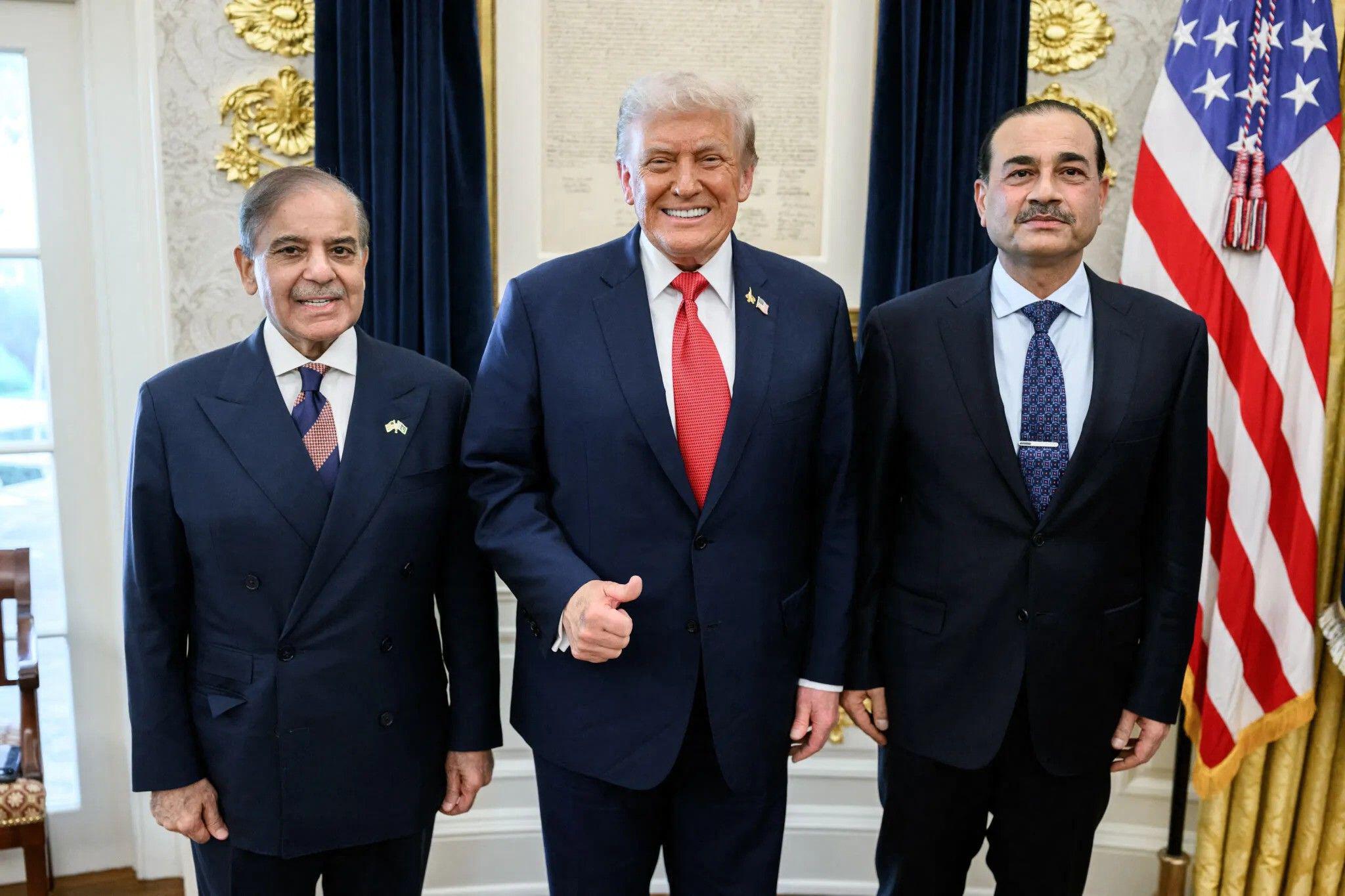
The Pakistani is Field Marshal Syed Asim Munir Ahmed Shah, whom Vance said he had spoken to more than anyone over the last three months. Vance said “we would not be here without his statesmanship” and that he is “a great military leader” and a “great diplomat”. The reason for his thanks is that, alongside Qatar, Pakistan has been leading negotiations between the United States and Iran to end the conflict between the two countries. Ignoring the fact that these negotiations have failed and that, for many, the war in Iran is something the United States should not be involved in, there is another pressing question. Why does Donald Trump’s apparently Christian-centric administration feel so comfortable in the hands of a country that has shown such hostility towards its Christian communities?
The man whom Vance spends so much time talking to, and with whom Donald Trump held an unprecedented meeting at the White House, is one of many Pakistani leaders who have a long history of failing to protect Christians. After returning from Saudi Arabia, where he memorised the Quran, he was appointed brigadier. Since 2016, he has climbed the military ladder, leading to his appointment as Chief of Army Staff in 2022.
Perhaps his most notable failure to address anti-Christian violence was the Jaranwala church arsons in 2023. The incident occurred after torn pages of the Quran were allegedly found near the Christian quarter of the city of Jaranwala, Punjab. Local mosques quickly took to their loudspeakers to encourage potential rioters and, soon, 26 Christian churches were burned alongside Christian homes being destroyed. The day after most of the violence had been carried out, the military stepped in to look busy and some order was restored. Field Marshal Asim Munir described the events as “extremely tragic”, and then let the police do their job, which included arresting two Christian men identified in social media posts as being responsible for the Quran pages being torn.
But it should be noted that Field Marshal Asim Munir is one among many pernicious forces in a country where Christians are treated as second-class citizens. Indeed, there is an entire culture built around violence against religious minorities. Forced conversion is one notably horrid practice about which little is done, whereby Christian girls, normally underage, are taken from their family homes and intimidated into converting and marrying a Muslim man. The practice is so common that it has led to interventions by the United Nations.
Another is the imprisonment and death penalty for Christians who allegedly insult Islam. Insulting members of Muhammad’s family, companions or wives carries a three-year prison sentence, defiling, damaging or desecrating the Quran means life imprisonment, and making derogatory remarks about Muhammad results in a mandatory death penalty. The laws effectively serve as a constant threat hanging over every Christian in the country, with Christians aware that the accusation alone could result in their death through mob violence long before the state carries out its own investigations.
The law also has an extremely low evidential threshold, and defendants can often spend years in prison awaiting trial or appeal. Indeed, this week, Amir Peter, the brother of a Catholic priest in Pakistan, died in prison after being detained over allegedly false blasphemy charges while awaiting trial. Having allegedly made derogatory remarks about Muhammad, any conviction would likely have led to his execution anyway, but his health deteriorated rapidly, in part because the authorities allegedly denied him medical care during his imprisonment.
Despite all of these concerns, a special relationship continues to be fostered. Indeed, it was Pakistan that unironically nominated Donald Trump for the Nobel Peace Prize in June 2025, and the following month the United States and Pakistan agreed a trade deal. Amid all this diplomatic cosying up, at no point has President Trump publicly raised the plight of the country’s Christians. Any concern has instead been channelled through the State Department’s annual reporting and through USCIRF, a rather limp response in comparison with its reaction to the Christmas Day bombings in Nigeria.
According to Open Doors, a charity which documents the persecution of Christians around the world, Pakistan is the seventh worst country in the world in which to be a Christian. It therefore seems contradictory that, while the Trump administration claims to be “saving Christians throughout the world”, as the President himself said while speaking at the Faith & Freedom Coalition’s 2026 policy conference in Washington this month, it has not taken a stronger public stand against Pakistan’s treatment of its Christian minority.