

The Vatican
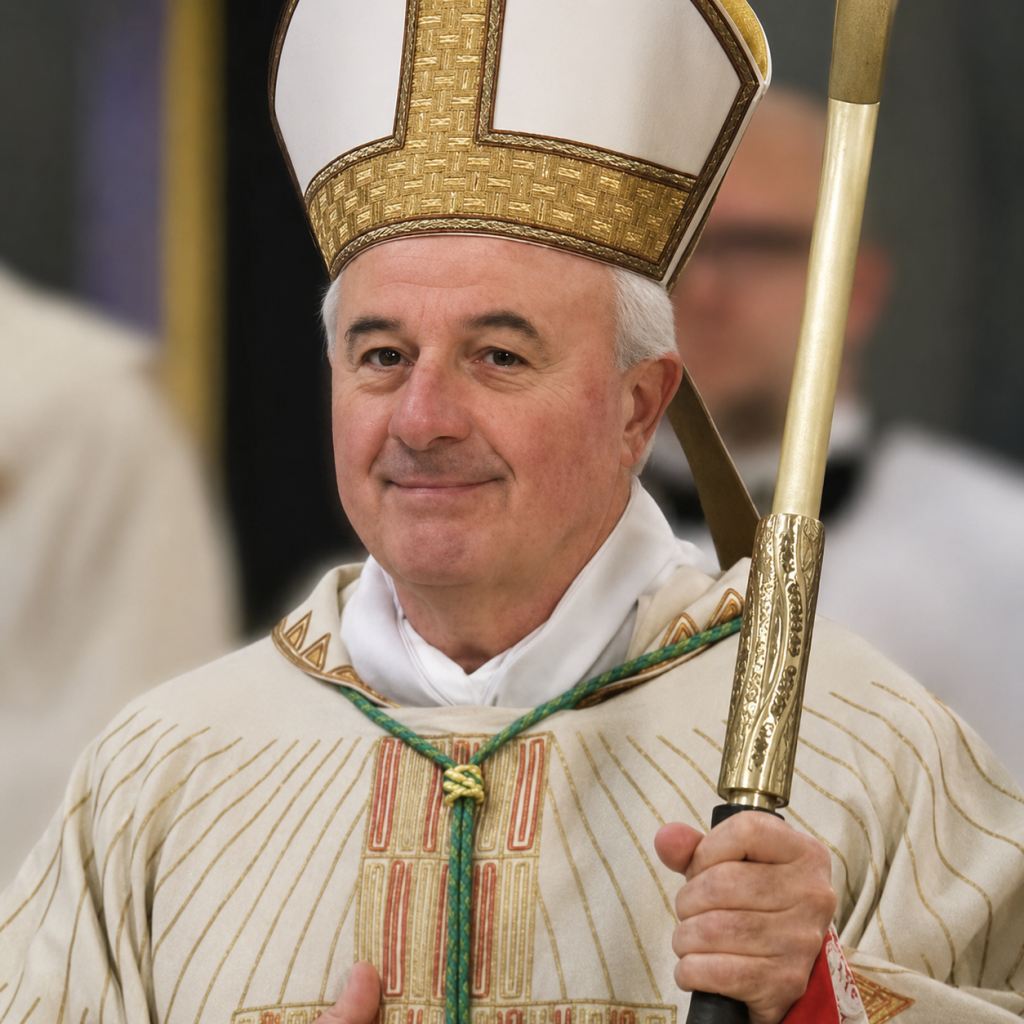
Francis era appointments unroofed from Rome: Di Tolve tipped for Chioggi
Bishop Michele Di Tolve, appointed as an auxiliary bishop of Rome by Pope Francis in 2023, is reportedly set to be transferred to the Diocese of Chioggia. This move is part of the latest Francis-era appointments being unroofed from Rome. An Auxiliary Bishop of the diocese of Rome may move to Chioggia, a seaside town south of Venice. According to an exclusive report by MessainLatino , Bishop Michele Di Tolve, an auxiliary bishop of Rome appointed by Pope Francis and currently serving as rector of the Pontifical Roman Major Seminary, is set to be transferred to the Diocese of Chioggia. According to MessainLatino , sources in the Diocese of Chioggia have indicated that this move is forthcoming, though it has not yet been formally confirmed by the Holy See. Bishop Di Tolve was born in Milan on 19 May 1963 and grew up in the parish of San Francesco d’Assisi in Grancia and Pagliera di Lainate. He completed his priestly formation at the Milanese archiepiscopal seminaries. Ordained deacon on 4 December 1988 in Cesano Maderno by Cardinal Carlo Maria Martini, he was ordained a priest on 10 June 1989 in Milan Cathedral by Cardinal Martini. In 2007, Cardinal Dionigi Tettamanzi appointed him head of the Catholic Religious Education Service and the School Pastoral Service. From 2008 to 2014, he served as the Supreme Moderator’s Delegate at the Higher Institute of Religious Sciences in Milan. In 2014, Cardinal Angelo Scola named him rector of the archiepiscopal seminary of Milan, effective from 2015. Pope Francis appointed him auxiliary bishop of Rome and titular bishop of Orrera on 26 May 2023. On 4 July 2023, he was named rector of the Pontifical Roman Major Seminary with the task of strengthening relationships between priestly formation institutions in the territory of the Diocese of Rome and coordinating their activities. This potential transfer forms part of small but substantial changes to the Francis-era appointments that have rooted themselves within the ecclesiastical personnel of the Vicariate and the Roman Curia, where the Pope has already implemented structural changes, correcting substantial parts of Francis’s reform. Gradual but firm, these adjustments reflect a deliberate approach to diocesan governance in Rome. On 30 June, Pope Leo XIV issued the motu proprio Confirma Fratres Tuos , rolling back key parts of Pope Francis’s 2023 reform of the Diocese of Rome. The document recentres diocesan governance around the Cardinal Vicar as the principal authority in the day-to-day government of the Pope’s diocese. After announcing the consecration of four new auxiliary bishops of Rome on 25 February, Pope Leo established a commission comprising all the auxiliary bishops and the Cardinal Vicar to review the apostolic constitution In Ecclesiarum Communione . Francis’s reform had significantly reduced the power of the Cardinal Vicar and increased the powers of the vicegerent and the episcopal council. Article 10 of In Ecclesiarum Communione described the Cardinal Vicar as “an auxiliary and vicar general” who would exercise episcopal ministry with ordinary vicarious power. The revised text under Pope Leo simplifies this, eliminating the description of the Cardinal Vicar as “an auxiliary and vicar general” and instead affirming that the Cardinal Vicar has “the high and effective direction of the Vicariate”, with only brief mention of the vicegerent at the end. Pope Francis had also dismissed most of his auxiliary bishops in favour of loyalty and abolished the historic centre pastoral sector of the Diocese of Rome. Beyond the structural reforms in the Diocese of Rome, Pope Leo has been slowly unwinding elements of the Curia. Cardinal Michael Czerny, who owed his Curia position to Pope Francis and was made a cardinal by him in 2019, was replaced as prefect of the Dicastery for Promoting Integral Human Development by Sister Alessandra Smerilli, FMA. Sister Smerilli had been an auditor at the 2018 Synod on Youth. Pope Francis appointed her as councillor of the Vatican City State and consultant to the General Secretariat of the Synod of Bishops in 2019. In 2020, she coordinated the economic task force of the Vatican Covid-19 Commission. She became undersecretary of the Faith and Development Section of the dicastery in March 2021, interim secretary in August that year, and permanent secretary in April 2022. Sources close to the dicastery told AdVaticanum she is “relatively popular internally and she is scandal free”. Cardinal Fabio Baggio, CS, was appointed pro-prefect alongside her. The Dicastery for Communication has seen a particularly striking change. The dicastery under Paolo Ruffini as prefect was viewed as entrenched in the Francis way of operating. Paolo Ruffini and his associates, described as the “Palazzo Pio Gang”, were seen as deeply connected to that approach, including Ruffini’s defence of Fr Rupnik. Montserrat Alvarado’s appointment as prefect in June to replace him was therefore incredible, coming as something of an unexpected move from an outsider. Sources told AdVaticanum that she told His Holiness that “she wanted to bring back orthodoxy”. Pope Leo XIV has also replaced Cardinal Konrad Krajewski, a loyalist of Pope Francis, as head of the Vatican’s principal charitable office, appointing the Spanish Augustinian Bishop Luis Marín de San Martín as the new Almoner of His Holiness and Prefect of the Dicastery for the Service of Charity. Cardinal Krajewski had served in the role since 2013 and became the first prefect of the dicastery following the Roman Curia reforms of 2022. The replacement of the cardinal, who is only 62 and well below the usual age for such transitions, raised questions. Nothing has been said about whether the change followed a request from the cardinal himself. Such abrupt transitions are uncommon in the Roman Curia, particularly when they involve a relatively young cardinal whose term has not reached its natural conclusion. Viewed in their entirety, these developments illustrate a slow but steady reorientation. The potential move of Bishop Di Tolve from his prominent roles in Rome to the Diocese of Chioggia would align with this pattern, removing one of the more recent Francis-era appointments from the centre of Roman ecclesiastical life.
Jul. 10, 2026
Cardinal Cupich on synodality
Cardinal Blase Cupich has described synodality as “the Church learning to dance”. Writing in the Vatican newspaper L’Osservatore Romano, the Archbishop of Chicago argued that “both dance and synodality require a shift from individual performance to collective harmony”, transforming individuals into “a single, moving body”. The reflection, published on 7 July under the title Synodality […] Cardinal Blase Cupich has described synodality as “the Church learning to dance”. Writing in the Vatican newspaper L’Osservatore Romano, the Archbishop of Chicago argued that “both dance and synodality require a shift from individual performance to collective harmony”, transforming individuals into “a single, moving body”. The reflection, published on 7 July under the title Synodality is like dancing , sees the cardinal use his childhood experience of learning the Croatian kolo, a Slavic folk dance, in his parish hall to explain one of the central themes of Pope Leo XIV’s pontificate. Rather than presenting synodality as a process centred on meetings or structures, Cardinal Cupich argues that it is fundamentally about listening to the Holy Spirit and to one another while remaining rooted in the Church’s tradition. Reflecting on the kolo, in which dancers join hands and move together in a circle or chain, Cardinal Cupich writes that the dance became “a means of socialising” and helped him understand the meaning of synodality, which derives from the Greek word synodos , meaning “walking together” or “travelling the same path”. Like the dance, the Cardinal writes, synodality “invites the entire community to assume the responsibility of moving forward in unison, attentive to the Holy Spirit and to one another.” The cardinal repeatedly returns to the importance of listening, arguing that just as dancers cannot begin without first listening to the music, so the Church cannot become authentically synodal without listening before speaking. “The fundamental step is not to speak or promulgate policies, but to listen deeply: to the Holy Spirit, Scripture, tradition, but also to listen attentively to one another, especially those on the margins,” he writes. “Just as a dancer who ignores the music becomes disconnected from the group, members of a community who don’t listen cease to act synodally.” He goes on to explain that synodality is not intended to diminish the distinct responsibilities of bishops, clergy, religious and lay faithful. Instead, he argues, each vocation contributes to the Church’s common mission in much the same way that individual dancers perform different movements within a single choreography. “The hierarchy, the laity, religious communities and theologians all have different charisms and roles,” Cardinal Cupich writes. “Synodality doesn’t flatten these differences; rather, like a great choreographer, it intertwines them. The beauty of dance depends on the fact that each dancer’s movement is needed for the entire performance to function.” The article also portrays synodality as a process requiring flexibility and trust rather than rigid planning. Describing it as “inherently a journey into uncharted territory”, the cardinal argues that dialogue inevitably brings moments of tension but that such disagreements should become opportunities for discernment rather than division. “When a community encounters tension or disagreement,” the Archbishop of Chicago writes, “synodality requires it not to abandon the stage, but to use that friction to pivot, adapt, and find a new way forward together.” Another central theme is continuity with the Church’s past. Comparing the dance floor to the foundations laid by previous generations, Cardinal Cupich argues that today’s Catholics inherit a tradition that makes genuine creativity possible rather than restricting it. He warns against what he calls the “tyranny of the present”, insisting that authentic synodality must remain in conversation not only with those living today but also with the saints and earlier generations of believers. “The boundaries set by Scripture, dogma, and historical councils are not restrictive cages,” Cupich writes. “They are the stable parameters that give our current movements context, security, and legitimacy.” The article concludes by returning to the image of dance as a way of expressing the Church’s communion. “Synodality is the Church learning to dance,” Cardinal Cupich writes. “It is a constant practice of listening to the divine melody, honoring each participant’s unique steps, and moving forward in a beautifully coordinated witness to the world.”
Jul. 9, 2026
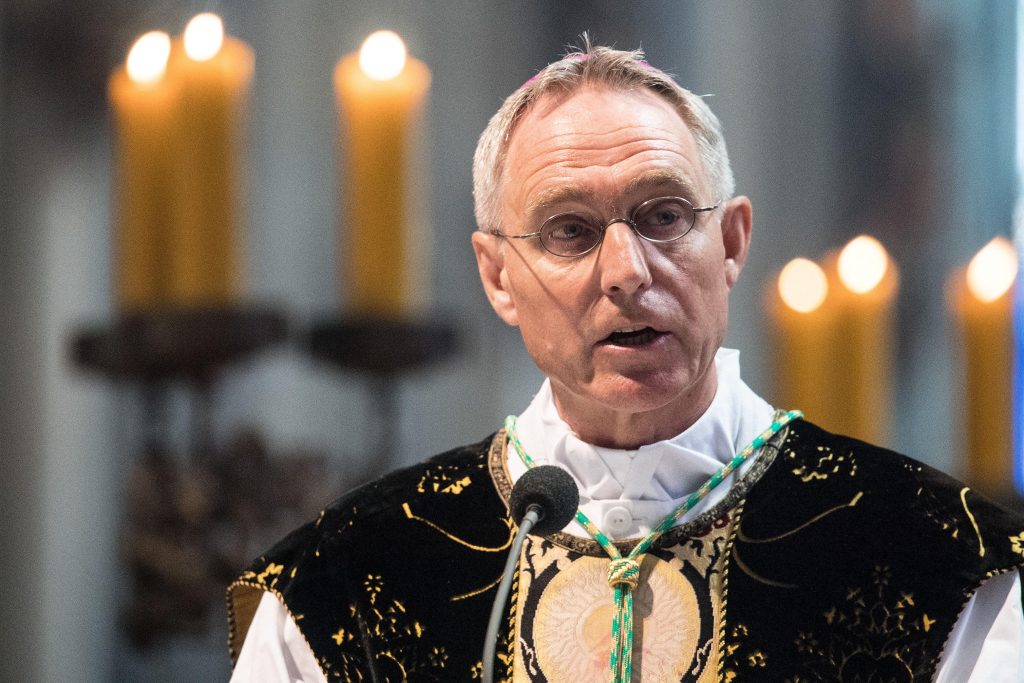
Archbishop Gänswein says now is the ‘kairos’ to lift Traditionis Custodes restrictions
Archbishop Georg Gänswein has said he believes “now is the kairos” to lift the restrictions imposed by Traditionis Custodes. Speaking in an interview with Il Giornale, Pope Benedict XVI’s former personal secretary also reflected on Benedict’s hopes for the older Roman Rite and recalled the pain he witnessed after the 2021 motu proprio Nineteen years after Pope Benedict XVI issued Summorum Pontificum , Archbishop Georg Gänswein, the late pontiff’s longtime personal secretary, expressed hope that the restrictions imposed under Traditionis Custodes could eventually be lifted. Speaking to the Italian newspaper Il Giornale , Vatican correspondent Nico Spuntoni, on the anniversary of Benedict’s 7 July 2007 apostolic letter, Archbishop Gänswein reflected on the origins of Summorum Pontificum , the former Pope’s intentions in liberalising the celebration of the pre-conciliar Roman Rite, and Benedict’s reaction after his successor, Pope Francis, substantially reversed that policy in 2021. Asked about recent calls for the removal of restrictions on the Traditional Latin Mass, Archbishop Gänswein replied: “I read it with interest. I also hope for a decision along these lines.” According to Archbishop Gänswein, Benedict’s principal objective was not only to expand opportunities for celebrating the older liturgy but to restore its place within the life of the Church. “To give full rights to a rite that had never been abolished,” the Archbishop said. “His goal was to restore its full citizenship in the Church and restore peace to the liturgy.” The former papal secretary recalled that Benedict remained undeterred despite opposition from sections of the episcopate. “He was used to receiving criticism,” Archbishop Gänswein said. “But when he was convinced that something was right, he continued towards his goal.” Although Summorum Pontificum was viewed as an important step in Benedict’s efforts to heal divisions with the Society of St Pius X, Archbishop Gänswein suggested that reconciliation with the traditionalist fraternity was not its primary purpose. Archbishop Gänswein said the motu proprio was conceived principally with the Church’s internal liturgical life in mind. Benedict had become convinced, following his experience overseeing matters relating to the implementation of Ecclesia Dei , that changes were needed in the way the older liturgy was regulated. Particular emphasis was placed on the attraction of the older liturgy among younger Catholics. Archbishop Gänswein said Benedict had always believed that a form of worship celebrated for centuries would continue to draw new generations of the faithful. “He had great faith in young people,” he said, adding that Benedict was pleased by the growth of communities established under the former Ecclesia Dei commission, which provided a canonical home for Catholics attached to the older liturgy while remaining fully within the structures of the Church. Asked whether Summorum Pontificum had succeeded, Archbishop Gänswein answered unequivocally: “Yes, it was about to bear fruit.” He pointed to the annual Paris-to-Chartres pilgrimage as evidence of growing interest among younger Catholics, arguing that many participants were drawn by what Gänswein described as “the beauty of the liturgy”. Archbishop Gänswein also rejected the suggestion that Catholics devoted to the Traditional Latin Mass are necessarily opposed to the reforms of the Second Vatican Council. “These young people are nourished by the beauty of the liturgy; they are not at all opposed to the Second Vatican Council,” the Archbishop said. “It is not true that those with a traditional liturgical sensibility who participate in Tridentine Masses are anti-conciliar; those who say so are motivated solely by ideology.” Perhaps the most damning part of the interview concerned Benedict XVI’s response after Pope Francis promulgated Traditionis Custodes , the motu proprio that substantially restricted the provisions of Summorum Pontificum and returned greater authority over celebrations of the older rite to diocesan bishops while introducing significant new limitations. Archbishop Gänswein said he personally read the text of Traditionis Custodes to the Pope Emeritus. “When I read Traditionis Custodes to him,” he recalled, “I saw that there was pain in his heart. That was my impression.” Looking to the future, he added: “Now I believe it is the kairos [the right moment] to remove those prohibitions and overcome the incident represented by that text.” The interview by Nico Spuntoni is in line with previous reporting by AdVaticanum, which cited sources close to both Archbishop Gänswein and Pope Emeritus Benedict XVI as saying that the promulgation of Traditionis Custodes “caused [Benedict] pain”. According to those sources, Benedict never expressed those feelings publicly, remaining faithful to the promise of silence he made following his resignation in 2013. The same report also revisited Archbishop Gänswein’s own position following Benedict’s retirement. Once serving as Prefect of the Papal Household while continuing as Benedict’s personal secretary, Archbishop Gänswein later left the Vatican before eventually being appointed Apostolic Nuncio to the Baltic states. As reported by AdVaticanum, Pope Emeritus Benedict XVI made both formal and informal requests for Archbishop Gänswein to remain in the Vatican after his own retirement. One source claimed, “Sometimes Benedict asked favours of Francis to keep Gänswein in the Vatican and not remove him, both formally and informally.” The report said those requests went unanswered.
Jul. 8, 2026
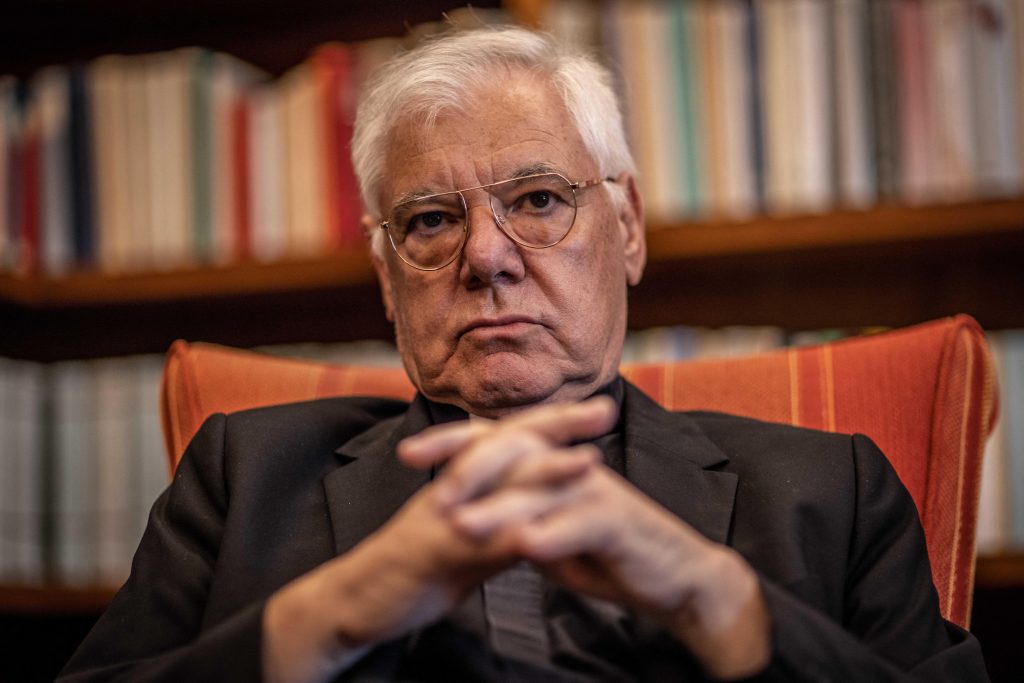
Cardinal Müller contradicts Cardinal Fernández on validity of SSPX confessions
Cardinal Gerhard Müller appears to have contradicted an explanatory note issued by Cardinal Víctor Manuel Fernández on the canonical status of the sacraments administered by the Priestly Society of Saint Pius X. In an interview with K-TV on 6 July, Cardinal Müller was asked whether confessions heard by priests of the Society of Saint Pius […] Cardinal Gerhard Müller appears to have contradicted an explanatory note issued by Cardinal Víctor Manuel Fernández on the canonical status of the sacraments administered by the Priestly Society of Saint Pius X. In an interview with K-TV on 6 July, Cardinal Müller was asked whether confessions heard by priests of the Society of Saint Pius X were valid or invalid. His response differed from the position set out in Cardinal Fernández’s explanatory note, published on 2 July. “The confessions are valid, but illicit,” Cardinal Müller said. “The power to forgive or retain sins is conferred through the sacrament of Holy Orders. Its exercise can only be restricted by the bishop or the Pope, as provided by canon law.” His remarks stand in contrast to the explanatory note issued by Cardinal Fernández, which stated in its third point: “Finally, the holy People of God are hereby warned that the sacred ministers of the Priestly Fraternity of St. Pius X administer the sacraments unlawfully and that the sacrament of penance administered by them and the marriages they officiate are invalid.” The suggestion that faculties for the sacrament of confession and the witnessing of marriages could be removed by means of an explanatory note has led some canonists to question the legal nature of the document. Fr Gerald Murray, a canon lawyer and consultant for EWTN, speaking on Raymond Arroyo’s show, argued that the faculties granted by Pope Francis for hearing confessions and witnessing marriages in SSPX chapels had not been validly withdrawn. As a result, he maintained that those sacraments continue to be administered validly. According to Fr Murray, the Church’s legal order requires precision when imposing canonical penalties. Fr Murray argued that penal laws, especially those concerning the grave offence of schism and the penalty of excommunication, must clearly identify both the offence committed and the doctrine allegedly denied. Without such clarity, he suggested, a canonical penalty cannot be presumed. At the same time, Fr Murray maintained that the Society’s bishops remain under excommunication. Aside from the question of confession, Cardinal Müller’s interview also addressed the relationship between the SSPX and the Catholic Church, and questions on the liturgy, ecclesial unity and the legacy of Pope Benedict XVI’s efforts at reconciliation. Cardinal Müller acknowledged that the implementation of the post-conciliar liturgical reforms had often been marred by serious shortcomings. “The implementation of the liturgical reform was marked by many abuses because many failed to grasp the spirit of the renewed liturgy and neglected its essential elements: the worship of God, the communication of salvation, and reverence before God,” the former Prefect of the Dicastery for the Doctrine of the Faith said. The German cardinal also rejected the suggestion that the Traditional Latin Mass had been abolished, reaffirming Summorum Pontificum and rejecting the viewpoint held by Cardinal Roche: “The so-called old rite is not forbidden. Rather, it is permitted to a certain extent and under certain conditions, and it is, of course, valid.” The cardinal also pointed to Pope Benedict XVI’s decision to allow broader use of the older liturgy, describing it as a prudent attempt to overcome longstanding divisions. “Pope Benedict XVI made the wise decision that the same Latin liturgy could be celebrated in both its ordinary and extraordinary forms,” Cardinal Müller said, adding that “the faithful always have the opportunity to attend the Holy Mass celebrated according to the older form.” Cardinal Müller also recognised that some Catholics are drawn towards the Society because they believe it safeguards Catholic doctrine and traditional liturgical practice. “Many people may have sympathies for the Priestly Fraternity of Saint Pius X because they believe that the Catholic faith and the liturgy are being preserved there against many of the abuses found in modernist circles. But that is not a justification,” he said. While acknowledging those concerns, Müller insisted that ecclesial communion ultimately depends upon union with the Roman Pontiff rather than agreement over liturgical preferences. “There may be some errors in the Church, but there is no Catholic unity apart from the Pope,” he said. He likewise defended the legitimacy of Pope Leo XIV, warning against questioning the authority of the reigning pontiff. “One cannot remedy an abuse by using false means. That Pope Leo exists and is the true, legitimate Pope is something no one can really call into question without calling his own Catholic faith into question.” His comments also revisited Pope Benedict XVI’s efforts to restore full communion with the Society after decades of strained relations. His Eminence said: “Benedict XVI was very generous and hoped that this would remove the deadlock and lead to full reconciliation.” Cardinal Müller added, while emphasising that the enduring guarantees of the Church’s unity belong not to any individual priestly fraternity but to the bishops in communion with the Pope: “Christ did not promise the FSSPX the Church’s indestructibility, and infallibility. These belong to the College of Bishops with the Pope at its head.”
Jul. 8, 2026
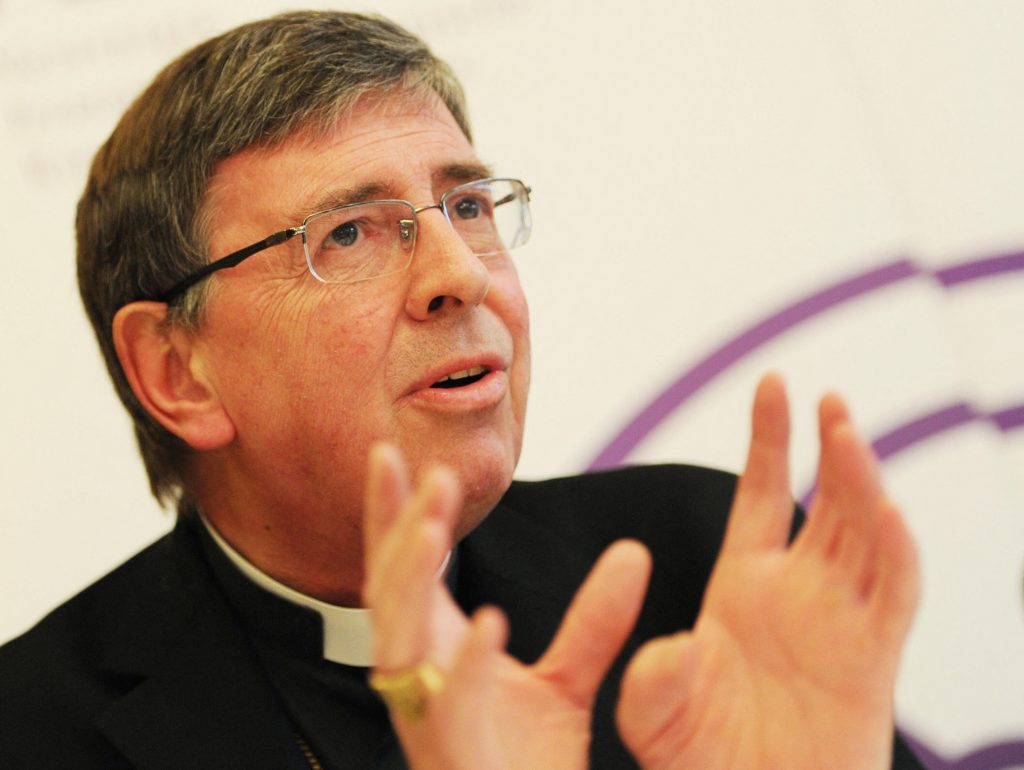
Cardinal Koch says reconciliation with SSPX remains possible
Cardinal Kurt Koch has expressed hope that dialogue between the Holy See and the Society of Saint Pius X can one day resume despite the recent episcopal consecrations. Speaking on the Communion podcast, the Prefect for Promoting Christian Unity also questioned whether the current situation can yet be described as a formal schism. Cardinal Kurt Koch has expressed hope that dialogue between the Holy See and the Society of Saint Pius X (SSPX) can eventually resume despite the Society’s recent episcopal consecrations. Speaking on the Communion podcast, the Swiss cardinal, Prefect of the Dicastery for Promoting Christian Unity, described excommunication as a “medicinal penalty” intended to encourage repentance rather than permanently sever communion with the Church. He insisted that the penalties incurred should not be viewed as the final chapter in relations between Rome and the traditionalist movement. “An excommunication is a medicinal penalty. It is not intended to be definitive; rather, it is meant to invite repentance so that one may find the way back,” Cardinal Koch said. Although the Prefect acknowledged that prospects for renewed discussions appear remote in the immediate aftermath of the consecrations, he nevertheless expressed confidence that reconciliation remains possible over the longer term. “I hope it will be possible in the future to resume new talks, so that they may find their way back into the Catholic Church,” he said, before adding: “At the moment I do not see that happening, but it would also be far too early.” Cardinal Koch suggested that patience would be required, pointing to previous ecclesiastical disputes that took years before meaningful conversations could begin again. Drawing a historical comparison, he noted that meaningful dialogue with the Old Catholics only became possible after several decades. He suggested a similar period of reflection may now be necessary before relations with the Society can progress. The cardinal also questioned whether it is yet accurate to describe the current situation as a formal schism. “I am not entirely convinced that one can already speak of a schism,” he said. Referring to the illicit episcopal consecrations carried out by Archbishop Marcel Lefebvre in 1988, Koch observed that Pope John Paul II had deliberately used the expression “schismatic act” rather than declaring that a completed schism existed. “Even in 1988, Pope John Paul II spoke of a ‘schismatic act.’ That is not necessarily the same thing, because a schismatic act concerns those who carried out the act and those who submitted themselves to it. That is not yet schism in the proper sense.” The distinction suggests that, in Koch’s view, the canonical consequences of the recent consecrations should not automatically be understood as creating a separate ecclesial body. Cardinal Koch also rejected suggestions that the Society has already established a fully fledged parallel Church. While acknowledging that the Society possesses bishops, he argued that it lacks the ordinary hierarchical structures that would normally characterise such a body. According to Koch, the Society has consistently maintained bishops for the sacramental power of orders rather than granting them ordinary jurisdiction. The Prefect noted that the Society continues to be governed by a priest superior rather than by a diocesan-style episcopal hierarchy, making the description of a parallel Church difficult to sustain. Earlier this year, when asked by this publication’s Vatican correspondent about dialogue with the SSPX, Cardinal Koch replied: “I am not involved in the dialogue with the SSPX. It is the responsibility of the Dicastery for the Doctrine of the Faith. Because of that I cannot be disponible for the meetings.” Cardinal Koch devoted considerable attention to what he sees as the deeper theological issues that continue to divide Rome and the Society. The Prefect argued that one of the central contradictions lies in the Society’s attitude towards papal authority. “This amounts to a form of self-authorisation for carrying out episcopal consecrations,” he said. He continued, “…a self-contradiction: on the one hand, they invoke the authority of the Pope in the most beautiful terms, yet on the decisive issues they go their own way.” Furthermore, Cardinal Koch argued that disagreement with particular papal decisions amounts to an incomplete acceptance of the post-conciliar papacy. “To me, this gives the impression of an abstract recognition of the Petrine primacy rather than a concrete recognition of the present Pope and of all the Popes since the Second Vatican Council.” Alongside his criticisms of the Society, however, Koch argued that recent events should also prompt self-examination within the wider Church. “It would be good to take the present dispute with the Society of St. Pius X as an opportunity to beat our own breast and reflect on what needs to be corrected,” the Prefect said. The prefect identified three areas where he believes misunderstandings or distortions have emerged in the decades following the Second Vatican Council. The first concerns the continuing relationship between the traditional Roman liturgy and the post-conciliar form of the Roman Rite, which he described as an unresolved question. Secondly, he criticised what he called ecclesiological pluralism within modern ecumenical thinking, arguing that some approaches wrongly treat all Churches and ecclesial communities as essentially equal, thereby obscuring the Catholic Church’s unique identity. His third concern was religious pluralism, which he described as the widespread belief that all religions provide equally valid paths to God. Koch maintained that these developments should not be confused with the authentic teaching of the Second Vatican Council itself. Instead, he suggested they represent later interpretations that have developed in the years since the Council. Furthermore, Cardinal Koch appeared to acknowledge that some of the concerns long raised by the Society relate to genuine post-conciliar tendencies, even while insisting that these should not be attributed to the Council’s actual texts. Despite the tensions created by the latest consecrations, Cardinal Koch believes that any return to formal discussions will require time, patience and, ultimately, the work of the Holy Spirit. As he put it, while the Church is responsible for what is possible, “the impossible is the realm of the Holy Spirit.”
Jul. 6, 2026
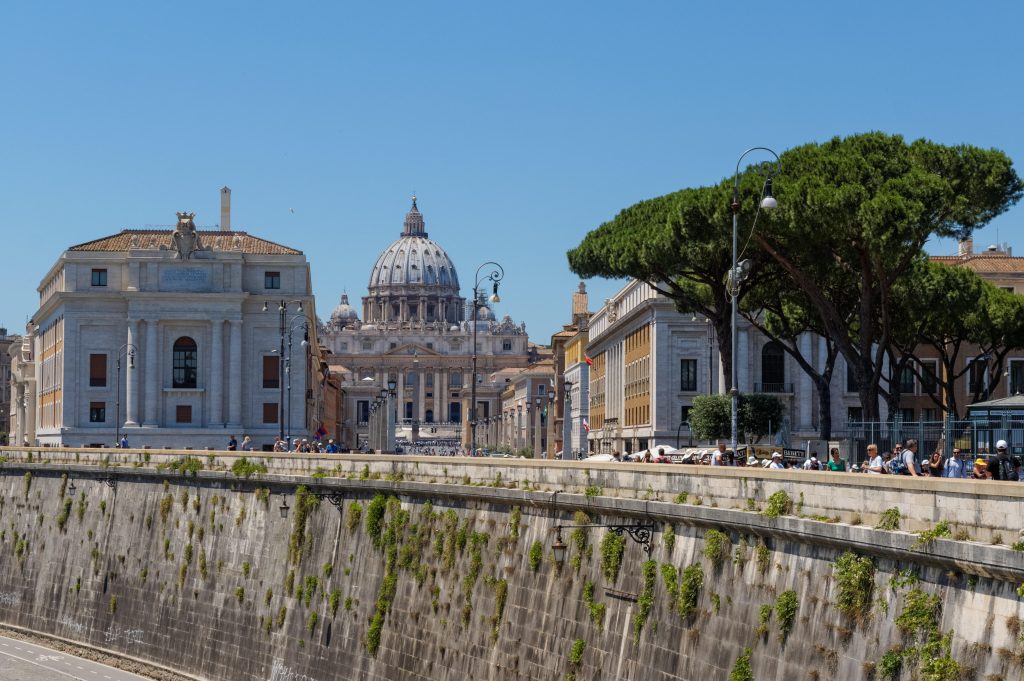
Pope Leo XIV overhauls Vatican financial watchdog with major governance reform
Pope Leo XIV has approved the biggest restructuring of the Vatican’s financial watchdog since its creation in 2010. The reform abolishes ASIF’s president and governing board, places its leadership under direct papal appointment and introduces a new management structure while expanding the authority’s role in overseeing the Holy See’s financial system Pope Leo XIV has approved the most significant restructuring of the Vatican’s financial watchdog, placing its leadership under direct papal appointment and replacing its long-standing governing board with a streamlined management structure. The reform of the Supervisory and Financial Information Authority (ASIF), promulgated through a chirograph published on 30 June, introduces a new statute for the body responsible for combating money laundering, monitoring suspicious financial activity and supervising the Vatican’s financial system. At the centre of the changes is the abolition of the authority’s president and board of directors, a structure that had existed in various forms since the institution was founded in 2010 as part of a wider effort to bring the Holy See into line with international financial standards. Under the new statute, ASIF will instead be led by a director and deputy director, both appointed by the Pope for renewable five-year terms. They will be assisted by consultors, who will also be appointed by the Pontiff and tasked with providing specialist expertise. The Vatican said the reform was the result of a long process through which the Holy See and Vatican City State have progressively adapted their legislation and institutions to meet evolving international requirements governing anti-money laundering measures, the financing of terrorism and prudential financial supervision. The new statute preserves ASIF’s core responsibilities. It retains exclusive competence for supervising and regulating efforts to prevent money laundering, terrorist financing and the financing of the proliferation of weapons of mass destruction. It also continues to function as the Vatican’s financial intelligence unit, receiving and analysing suspicious transaction reports while cooperating with international counterparts. In addition, ASIF remains responsible for the prudential supervision of entities carrying out professional financial activities within the Vatican’s legal framework. The authority’s internal structure has been reorganised around these three principal functions. Separate offices will oversee anti-money laundering supervision and regulation, financial intelligence activities and prudential supervision. A new legal affairs office has also been created, with responsibility for ensuring legal consistency across the authority’s work and safeguarding fundamental rights within financial intelligence operations. One notable feature of the reform is a strengthened relationship between ASIF and the Council for the Economy, the body established by Pope Francis to oversee the Holy See’s financial affairs. Under the new arrangements, ASIF’s annual report, budget forecasts and final accounts will be submitted directly to the Council for the Economy. The council will also be able to request reports on the authority’s activities. The reform also expands ASIF’s role in resolving disputes involving customers of the Institute for the Works of Religion (IOR), commonly known as the Vatican Bank. Previously limited to matters concerning payment systems, its arbitration competence will now extend across the full range of financial services offered by the institute. The changes come as the Holy See continues a lengthy process of financial reform that began during the pontificate of Benedict XVI and accelerated under Pope Francis. Benedict established the Financial Information Authority, known by its Italian initials AIF, in December 2010 through the motu proprio For the Prevention and Countering of Illegal Activities in the Area of Monetary and Financial Dealings . The move marked a watershed moment in Vatican financial governance as the Holy See sought to improve transparency and strengthen safeguards against financial crime. Further reforms followed in 2013 when Pope Francis expanded the authority’s responsibilities through legislation aimed at preventing money laundering, terrorist financing and the proliferation of weapons of mass destruction. Later that year, he approved a revised statute which affirmed that the authority would carry out its functions “in full autonomy and independence”. In 2020, amid broader reforms of Vatican financial institutions, the body was renamed the Supervisory and Financial Information Authority, reflecting its combined role as both regulator and financial intelligence unit. Its work has become increasingly important as the Holy See has sought recognition from international monitoring bodies and strengthened cooperation with foreign regulators and law enforcement agencies. The Vatican has repeatedly pointed to standards developed by organisations such as the Financial Action Task Force and the Egmont Group of Financial Intelligence Units as benchmarks for its reforms. The latest statute explicitly references developments in international regulations, including the European Union’s Sixth Anti-Money Laundering Directive and revisions adopted by the Egmont Group in 2025. The restructuring nevertheless marks a departure from the governance model traditionally associated with independent financial regulators. Until now, ASIF had been overseen by a president and board, a system comparable to arrangements found in many national supervisory authorities and central banks. The new structure aligns the watchdog more closely with the organisation of Roman Curia departments, which are generally headed by a single senior official appointed directly by the Pope.
Jul. 3, 2026