

Outside the Walls

Diocese of St Gallen campaign asks: ‘Shall we pave the way for the first female pope?’
The Diocese of St Gallen says its new “I’m In” campaign is intended to encourage participation in the Church. One poster has attracted particular attention for a question about the possibility of a female pope The Diocese of St Gallen has launched a public campaign that includes a call to “pave the way” for the election of the first female pope. The Swiss diocese unveiled its “I’m In” (Ich bin dabei) campaign in early May across around 25 towns and villages. Promoted through billboards, social media and a dedicated website, the project seeks to highlight the Church’s charitable, pastoral and educational work while encouraging greater public engagement. Among the posters is one featuring a pastoral worker posing the question: “Shall we pave the way for the election of the first female Pope?” The slogan is followed by the campaign’s recurring response: “I’m in.” The Church teaches that it lacks the authority to ordain women to the priesthood, a position reaffirmed by successive pontiffs and most notably set out by Pope St John Paul II in the 1994 apostolic letter Ordinatio Sacerdotalis. Since the papacy is intrinsically linked to the episcopate and priesthood, the prospect of a female pope is regarded by Catholic doctrine as impossible under the Church’s present understanding of Holy Orders. The campaign intends to present the Church as a place of participation and dialogue. Other advertisements focus on youth work, care for the elderly, prison and hospital chaplaincy, assistance for the poor, intercultural ministry, abuse prevention and Christian education. Clergy, employees and volunteers are shown asking a variety of questions intended to stimulate discussion before concluding with the phrase “I’m in”. The campaign has also drawn renewed attention to the leadership of the diocese under Bishop Beat Grögli, who was appointed by Pope Leo XIV in May 2025 following his election by the cathedral chapter of St Gallen. Bishop Grögli has long been associated with reform-minded positions within the Swiss Church and has publicly expressed support for the possibility of women being admitted to ordained ministry in the future. Speaking after his election as bishop, he stated: “Women’s priesthood will come.” In earlier comments, he argued that the theological case against the ordination of women was unconvincing. “I find the theological argumentation against the ordination of women to be weak,” the bishop said, adding that the prospect of women exercising priestly ministry did not trouble him should Rome one day permit it. Bishop Grögli has also argued that “the ordained ministry can no longer be solely a man’s affair”. While emphasising communion with Rome and the universal Church, he has likewise spoken favourably of synodality, describing it as a means of sharing responsibility across the Church and ensuring that the voices of clergy and laity are heard more fully. The bishop has also attracted attention for comments on the pastoral care of homosexual Catholics. In an interview discussing blessings for same-sex couples, he said: “I am a pastor. A blessing ceremony is not a church-political manifestation.” Bishop Grögli has also been critical of the Traditional Latin Mass and of communities attached to it. “Often the Old Mass is linked with certain theological ideas, worldviews and political opinions that are not mine at all,” the bishop said. He continued: “What is difficult about these groups is that they have withdrawn from the larger community. The liturgy they celebrate does not develop further.” These comments have contributed to the perception of Bishop Grögli as one of the more progressive figures within the Swiss episcopate. The controversy surrounding the “I’m In” campaign is likely to be received favourably in St Gallen itself. The diocese became internationally known during the pontificate of St John Paul II because of informal meetings held by a group of senior churchmen who gathered periodically in the Swiss city to discuss the future direction of the Church. The group, which included several prominent European cardinals and bishops, later became known as the “St Gallen Group”. Although its members rejected suggestions that it functioned as an organised political faction, it came to symbolise a reformist current within Catholicism that favoured greater collegiality, decentralisation and discussion of issues such as clerical celibacy and the role of women. Interest in the city intensified following the publication of authorised biographies of the late Cardinal Godfried Danneels of Belgium, who acknowledged participation in the meetings. The latest campaign is therefore likely to reinforce perceptions among many Catholics that St Gallen remains one of the most progressive dioceses in Europe. Its organisers, however, have presented the initiative primarily as an exercise in evangelisation and public engagement. Through posters, online videos and personal testimonies, the campaign seeks to showcase the work undertaken daily by clergy and volunteers and to encourage people to take part in parish and diocesan life. Bishop Grögli himself appears in campaign material explaining why he remains committed to the Church. “I’m in the Church because faith is important to me, because I want to live this faith with other people, and because I want to help shape the Church with my talents and joy,” the bishop says.
Jun. 19, 2026
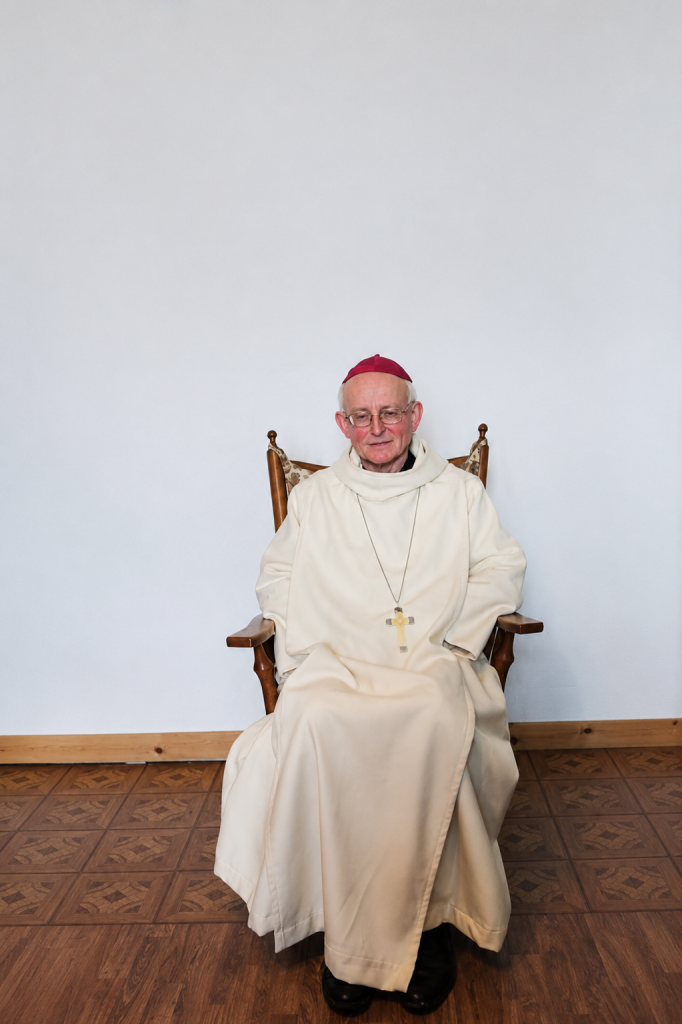
Aberdeen bishop says Catholics should not attend planned Papa Stronsay consecration
The Bishop of Aberdeen has warned Catholics not to attend the planned episcopal consecration of Fr Michael Mary on Papa Stronsay, saying any such ordination would be unlawful and a grave act of disobedience The Bishop of Aberdeen has warned Catholics not to attend the planned episcopal consecration of the founder of the Sons of the Most Holy Redeemer by a sedevacantist bishop. The statement by Bishop Hugh Gilbert OSB follows the announcement that Fr Michael Mary, the founder and Rector Major of the congregation based on the island of Papa Stronsay in Orkney, is due to be consecrated a bishop on 25 July by bishops associated with the sedevacantist movement. In a statement issued after news of the planned ceremony reached the Diocese of Aberdeen, Bishop Gilbert said he was obliged to clarify the Church’s position because the consecration is expected to take place within the geographical boundaries of his diocese. “Any such episcopal ordination would be unlawful and a grave act of disobedience, separating those taking part from communion with the Catholic Church,” the bishop said. “No member of the faithful should attend. This action is not ‘for the good of the Catholic Church’ as is falsely claimed.” The statement added: “This ordination would be celebrated without a papal mandate, by a group of bishops who deny that Our Holy Father Pope Leo XIV is actually the pope.” His Grace concluded: “This development is greatly to be regretted, and we can only pray that those concerned have a change of heart.” The statement marks the latest chapter in a dramatic rupture between the community and Rome that has unfolded over the past two years and culminated in plans for an episcopal consecration without papal approval. The announcement was made earlier on 18 June by Bishop Pierre Roy, a Canadian sedevacantist bishop, who said that Fr Michael Mary would receive episcopal consecration at the monastery on Papa Stronsay with the assistance of Bishops Rodrigo Ribeiro da Silva and Fernando Altamira. In a lengthy explanation of his decision, Bishop Roy argued that the congregation’s growing international presence required a resident bishop. He said the order now has a presence in Scotland, New Zealand and the United States, and undertakes apostolic work elsewhere in Oceania. “The Redemptorists have houses in Scotland, New Zealand, and the United States,” he wrote. “From these houses, they visit Samoa, Australia, and other places.” Bishop Roy argued that it had become increasingly difficult for him to provide oversight personally and said it was “reasonable and necessary to give the Redemptorists a bishop who could properly care for a flock that already knew the sound of his fatherly voice”. Bishop Roy openly acknowledged that the consecration would take place “in the absence of an apostolic mandate”, arguing that the Holy See is occupied by illegitimate authorities and therefore incapable of granting one. That position is the central claim of sedevacantism, a movement which maintains that there is currently no valid pope. Although different groups identify different points at which the papacy supposedly became vacant, they generally argue that the reforms and teachings associated with the Second Vatican Council demonstrate that recent pontiffs could not have been legitimate successors of St Peter. Founded in 1988 by Fr Michael Mary, during a period of intense turmoil following the episcopal consecrations carried out by Archbishop Marcel Lefebvre that same year, the congregation eventually established itself on Papa Stronsay, a remote island in the Orkney archipelago. The election of Pope Benedict XVI appeared to heal divisions with some traditionalist communities, and the congregation sought reconciliation with Rome, entering into full communion with the Holy See in 2008. That reconciliation appeared to be firmly consolidated in 2012 when the community received formal canonical recognition from Bishop Gilbert as a diocesan institute within the Diocese of Aberdeen. For a period, the congregation seemed to have secured a stable future within the life of the Church. However, tensions later emerged, particularly following controversies connected with the community’s activities in New Zealand. Disputes concerning alleged exorcisms and wider questions of governance and ecclesial obedience led to increasing scrutiny from Church authorities. Matters eventually reached a turning point when Bishop Michael Gielen of Christchurch withdrew the community’s faculties and ordered its departure from the diocese. Appeals failed, and relations between the congregation and ecclesiastical authorities deteriorated rapidly. The decisive break came when the community publicly rejected key developments in the post-conciliar Church and concluded that the Catholic faith could not be reconciled with what it described as the modern Church that emerged after the Second Vatican Council. That declaration prompted a strongly worded response from Bishop Gilbert, who said the diocese “deeply regrets the tone, direction and key elements” of the community’s position and warned that it was incompatible with the Catholic understanding of ecclesial unity.
Jun. 19, 2026
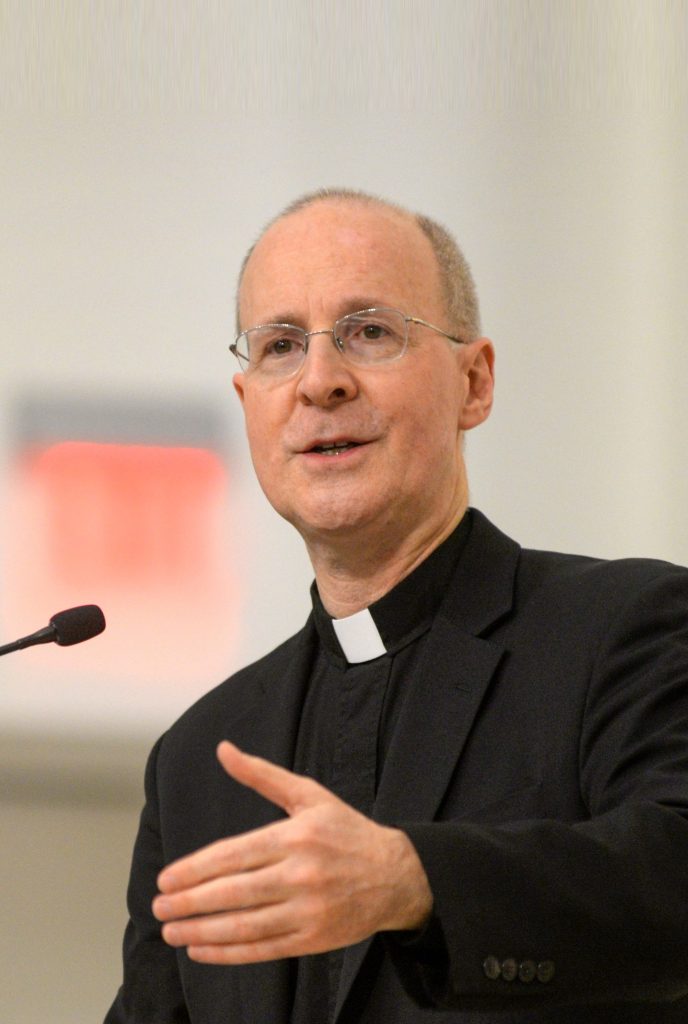
Two US cardinals back Fr James Martin’s LGBT outreach conference
Two US cardinals have sent messages of support to Outreach 2026, Fr James Martin’s annual LGBT Catholic conference. Both cardinals linked the gathering to the Synod on Synodality and the Church’s mission of accompaniment and evangelisation. Read more Two of the most influential cardinals in the Church in the United States have sent messages of support to Fr James Martin’s annual LGBT outreach conference. The messages were issued for Outreach 2026, a conference marking five years of Outreach, the LGBT Catholic resource organisation founded by Fr Martin in conjunction with America Media. The event, titled Walking Side by Side: Celebrating Five Years of Outreach Ministries , is taking place at Georgetown University in Washington, DC, from 19 to 21 June. In a letter dated 19 June, Cardinal McElroy, Archbishop of Washington, welcomed participants to the gathering and linked the conference to developments following both the Synod on Synodality and the pontificate of Pope Francis. “I am delighted to welcome you to the 2026 Outreach Conference here in Washington,” His Eminence wrote. “For I know that the Holy Spirit will be profoundly present in our meetings and discussions at this key time in the history of our Church and our nation.” The cardinal said the conference was being held at a moment when “the pastoral foundations laid by Pope Francis for authentic ministry to and with the LGBT community are being deepened and refined by Pope Leo”. Cardinal McElroy also mentioned the report of Study Group 9, one of the working groups established during the Synod on Synodality process. “And the conference comes directly after the release of Study Group 9 of the Synod on Synodality, which places LGBT ministry within a new paradigm that integrates powerfully the experience of faith-filled and diverse disciples as a basis for understanding the call to holiness in all of its concreteness,” Cardinal McElroy wrote. “This new paradigm points to the true pathway for establishing Todos, Todos, Todos in our Church, ever ancient and ever new.” The cardinal concluded by telling delegates that they would gather in Washington “for prayer, thanksgiving and dialogue”. Cardinal Blase Cupich, Archbishop of Chicago, also sent a message to conference participants, praising efforts to expand ministry and outreach to LGBT Catholics in parishes. “Greetings and best wishes as you gather for your conference, ‘Walking Side by Side: Celebrating Five Years of Outreach Ministries’,” the Cardinal Archbishop of Chicago wrote. “Listening to and accompanying each other are essential to ensuring a thriving Church.” The cardinal noted that the conference included leaders from parishes as well as representatives of the Archdiocese of Chicago’s Gay and Lesbian Outreach ministry. “I am pleased to note that this conference features leaders from some of our most vibrant parishes and our Archdiocesan Gay and Lesbian Outreach (AGLO), who will share their insights on fostering outreach to LGBTQ Catholics and a culture of welcome, hospitality and proclaiming the Gospel in our parishes and ministries,” His Eminence said. Cardinal Cupich said the theme of the conference reflected the priorities of a synodal Church and what he described as the “current new missionary age”. “The conference theme resonates well in our synodal Church and in the current new missionary age,” the cardinal wrote. He added that Christians should look to the example of the early Church: “It is helpful to look to the early Christians who were determined that no one felt left out or was left behind.” The Chicago cardinal said that listening to people’s experiences of faith and recognising evangelisation as a process enabled individuals to grow in their relationship with Christ and with fellow Catholics. “Making a greater effort to listen to people’s faith journeys by recognising evangelisation as a process enables people to grow in their relationship with Jesus Christ and in solidarity with other members of the Body of Christ,” Cardinal Cupich wrote. He added: “These efforts strengthen individuals and parishes in witnessing to the transforming power of Christ’s love, mercy and hope, a message desperately needed in our polarised culture and world.” Cardinal Cupich concluded by thanking those involved in the ministry and invoking the episcopal motto of Pope Leo XIV. “With gratitude for your commitment to outreach, I join my prayers to yours that the conference enriches you, encourages you to walk with others in faith and embodies, as Pope Leo XIV’s motto beautifully expresses, ‘In the One, we are one’ ( In illo uno unum ).” The conference programme includes liturgies, keynote addresses, panel discussions and workshops focused on LGBT ministry in the Catholic Church. Topics scheduled for discussion include theology and LGBT Catholics, parish outreach, mental health, Scripture, women in the Church and the experiences of transgender Catholics. Among the keynote speakers are Kerry Robinson, president and chief executive of Catholic Charities USA, and the Jesuit moral theologian Fr James Keenan. The gathering began on 19 June with a welcome Mass celebrated by Fr Martin and will conclude on 21 June with a commissioning service. Outreach traces its origins to Fr Martin’s wider ministry to Catholics who identify as LGBT and their families. The initiative emerged from work that followed publication of his 2017 book Building a Bridge , which called for greater dialogue between the Church and LGBT Catholics. Outreach launched formally in 2022 and has since organised conferences, published articles and hosted discussions focused on pastoral accompaniment and inclusion within the life of the Church. Previous Outreach events received messages of support from Pope Francis, who repeatedly encouraged pastoral outreach and accompaniment for LGBT Catholics and their families. In one message to participants, Pope Francis wrote: “I am glad that Cardinal Gregory will celebrate the Mass; I will be spiritually with him and with all of you, united in prayer.” Pope Francis also told Outreach that God “does not disown any of his children”, while encouraging ministry to LGBT Catholics and their families.
Jun. 19, 2026
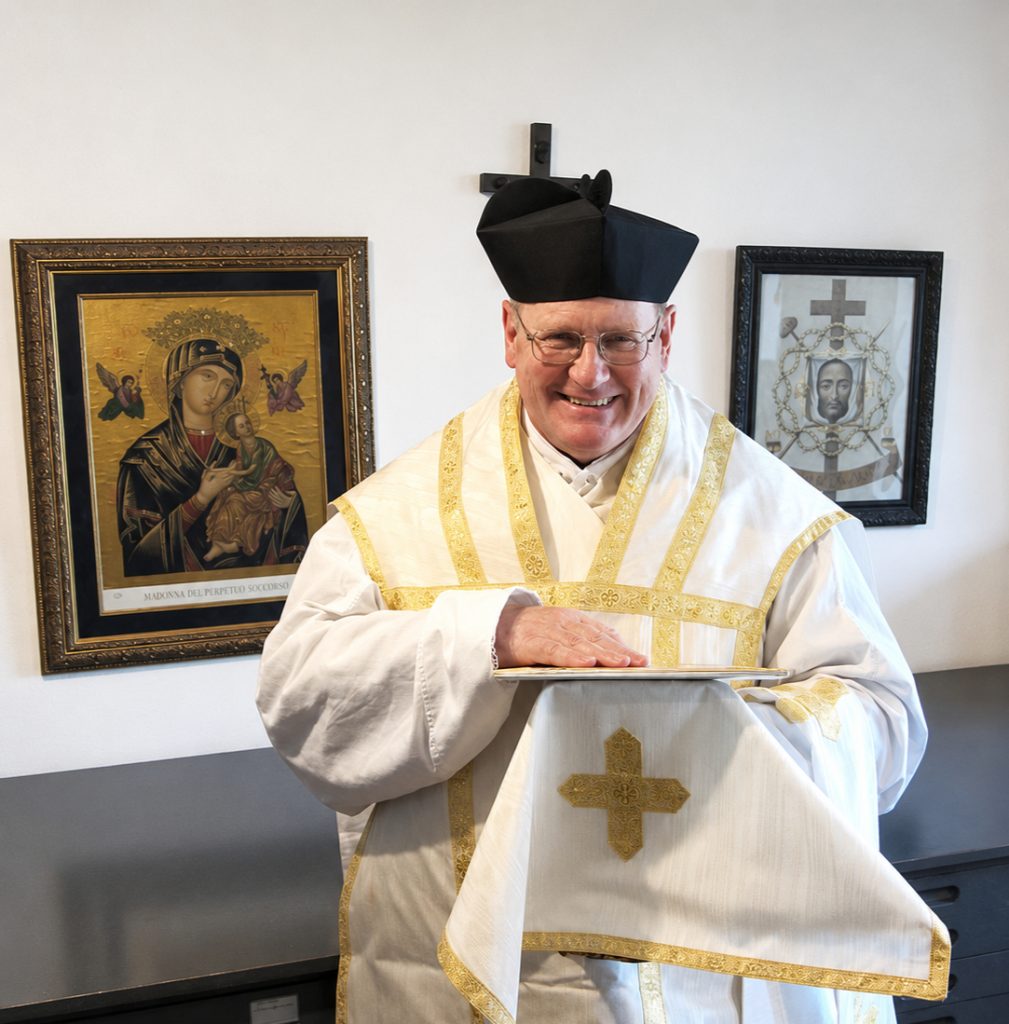
Founder of Papa Stronsay community to be consecrated bishop by sedevacantists
The founder of the Papa Stronsay-based Sons of the Most Holy Redeemer is set to be consecrated a bishop next month by sedevacantist bishops in Orkney. The ceremony will take place without a papal mandate and follows the community’s embrace of sedevacantism after years in full communion with Rome The founder of the Sons of the Most Holy Redeemer is to be consecrated a bishop next month in a dramatic escalation of the community’s break with Rome. Sedevacantist Bishop Pierre Roy announced on 18 June that Fr Michael Mary, founder and Rector Major of the Sons of the Most Holy Redeemer (FSSR), will receive episcopal consecration on 25 July at the order’s monastery in Orkney. The ceremony will take place without a papal mandate and will be attended by fellow sedevacantist bishops Bishop Rodrigo Ribeiro da Silva and Bishop Fernando Altamira as co-consecrators. Sedevacantists maintain that the papal throne (the See of Peter) has been vacant since the death or invalid election of the last legitimate pope, usually identified as Pope Pius XII, though in the case of the community of the Sons of the Most Holy Redeemer it appears to be John XXIII. They argue that subsequent popes have fallen into heresy or invalidly assumed office, rendering their elections null. As a result, sedevacantists do not believe there is currently a valid pope. They therefore reject any papal mandate or authority issued by Pope Leo XIV, viewing such directives as lacking legitimacy because the Chair of Peter is, in their view, vacant. In a lengthy letter explaining his decision, Bishop Roy said he had asked Fr Michael Mary to accept consecration “without any solicitation from the Redemptorists and despite some initial reluctance”. The announcement comes less than a year after the Transalpine Redemptorists publicly repudiated major developments in the post-conciliar Church and effectively embraced sedevacantism. Bishop Roy said he had maintained close contact with the community since June 2025 and had developed what he described as “a true communion of faith and a sincere friendship”. He argued that the geographical spread of the congregation made episcopal oversight from Canada increasingly impractical. “The Redemptorists have houses in Scotland, New Zealand, and the United States,” he wrote. “From these houses, they visit Samoa, Australia, and other places. Fulfilling my episcopal duties with the Redemptorists would require me to travel practically the entire world.” He added that shortages of clergy in his own Canadian missions meant his frequent absences were becoming difficult to sustain and that “it seemed reasonable and necessary to give the Redemptorists a bishop who could properly care for a flock that already knew the sound of his fatherly voice”. The most controversial passages of the letter concern the nature of the consecration itself. Bishop Roy explicitly acknowledged that it would take place “in the absence of an apostolic mandate”, asserting that “the See of Rome is clearly occupied by the enemies of God”. He continued: “His role will be to teach, govern, and sanctify in all fortitude and humility the flock that will gather around him.” Addressing the question of jurisdiction, Bishop Roy wrote: “I cannot grant him jurisdiction, and I fully acknowledge this. But Christ, the invisible head of the Church and source of all jurisdiction, can, and He certainly will in the limits of the present necessities of the Church, in the absence of a true Supreme Pontiff, so that he may shepherd the scattered flock that will recognise him as a Catholic bishop.” The bishop also indicated that Fr Michael Mary would be based principally in New Zealand, arguing that Oceania lacked what he regards as a traditional Catholic bishop. “Father Michael Mary will live primarily in New Zealand, where there is no traditional bishop,” he wrote. “It will therefore not be a luxury for Oceania and its 50 million souls to be able to count on the presence of a Catholic bishop.” Acknowledging that some would question the prudence of elevating a priest who had led his community into full communion with Rome in 2008 and had only recently separated from it, Bishop Roy argued that the experience had ultimately contributed to the community’s present convictions. “They could have returned to their old errors,” he wrote, “but instead chose to undertake a serious study of the Church’s situation.” He said that study had led them to “recognise the current vacancy of the Apostolic See” and to embrace what he described as “the only attitude compatible with the Catholic Faith in the face of conciliar apostasy”. Founded in 1988 by Fr Michael Mary as a traditionalist Redemptorist congregation, the community initially operated within the orbit of the Society of St Pius X following Archbishop Marcel Lefebvre’s illicit episcopal consecrations that same year. After periods in England and France, the community established itself on the island of Papa Stronsay in the Orkney archipelago, where it restored monastic life on a site associated with Christian settlement stretching back many centuries. The election of Pope Benedict XVI and his efforts to reconcile traditionalist groups proved decisive for the congregation’s future. Following the publication of Summorum Pontificum in 2007, the community sought reconciliation with the Holy See and was received into full canonical communion in 2008. The move was widely regarded at the time as one of the most significant successes of Benedict XVI’s attempt to heal divisions within the traditionalist movement. In 2012, the community received formal recognition as a diocesan institute from Bishop Hugh Gilbert of Aberdeen, apparently securing its place within the life of the Church. Questions surrounding alleged exorcisms attracted media scrutiny and diocesan concern. Reports published in New Zealand alleged that exorcisms had taken place without proper authorisation and included claims involving vulnerable individuals. Members of the community strongly disputed aspects of those allegations and rejected accusations that they had conducted major exorcisms involving minors. The controversy led to increased diocesan oversight and eventually a Vatican apostolic visitation. Although the findings of that investigation were never made public, events reached a climax in July 2024 when Bishop Michael Gielen ordered the community to leave the Diocese of Christchurch and withdrew its faculties. The bishop cited concerns relating to unity and obedience within the local Church. The congregation appealed against the decision, but the Holy See ultimately upheld the expulsion. It was during this period that relations between the community and ecclesiastical authorities deteriorated sharply. In October 2025, the Transalpine Redemptorists published an open letter explaining that they had reached the conclusion that “the Traditional Catholic Faith” was incompatible with what they described as “the new, modern Church, the fruit of the Second Vatican Council”. Referring to ecclesiastical authority, the Redemptorists stated: “When a superior departs from his own obedience to Christ the King, his command is no longer the arm of Christ but the gesture of a man.” They added: “We must obey God before man.” The declaration drew a swift response from Bishop Hugh Gilbert, whose Diocese of Aberdeen includes Papa Stronsay. The bishop said the diocese “deeply regrets the tone, direction and key elements of this Letter” and stated that it was “incompatible with the Catholic sense of the Church’s unity”.
Jun. 18, 2026
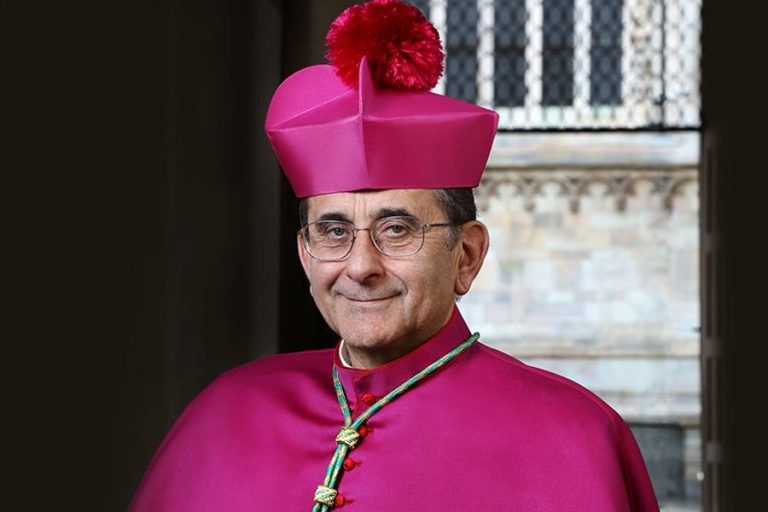
Archbishop of Milan criticised after LGBT Mass attendee receives Communion in ‘Ah Men’ T-shirt
A Mass celebrated by the Archbishop of Milan for an LGBT Catholic group has attracted criticism after images emerged of a participant wearing a rainbow-themed “Ah Men” T-shirt, a play on the word “Amen”, and later claiming he repeated the phrase while receiving Holy Communion The Archbishop of Milan has faced criticism after celebrating a Mass for an LGBT Catholic group on the Solemnity of the Sacred Heart of Jesus. Archbishop Mario Delpini presided at the Mass on 27 June at the Church of San Carlo al Lazzaretto in Milan, a church that has hosted gatherings of Catholics who experience same-sex attraction for several years. The event took place a week after the archbishop cancelled the annual Corpus Christi celebration, stating that “overtourism” and “heavy traffic” had made the prayerful nature of the event impossible. The liturgy was organised by Gruppo del Guado, an association founded in the 1980s for homosexual Catholics. Promotional material for the event featured a church rendered in rainbow colours and highlighted the participation of the Archbishop of Milan. According to reports in the Italian Catholic press, the Mass took place during Milan’s Pride celebrations and attracted around 50 participants. Local media reported that those present expressed appreciation for the archbishop’s attendance. During his homily for the feast of the Sacred Heart, Archbishop Delpini reflected on God’s love and election of His people. Quoting Scripture, he told those gathered: “The Lord has bound himself to you and chosen you not because you are the most numerous people; you are the smallest, but because he loves you.” The archbishop’s presence at the celebration quickly became the subject of criticism in parts of the Italian Catholic media, where questions were raised about the timing of the event and its association with a group dedicated to ministry among Catholics who identify as homosexual. The controversy intensified after images circulated on social media showing a participant wearing a T-shirt featuring a rainbow-coloured image of Jesus and the phrase “Ah Men”, a play on the liturgical response “Amen” and a reference to attraction between men. The individual later stated on Instagram that he had repeated the phrase while receiving Holy Communion from Archbishop Delpini. The incident drew particular criticism because it occurred during the Eucharistic celebration and on the Solemnity of the Sacred Heart of Jesus, one of the principal feasts of the Church’s liturgical year. The Church of San Carlo al Lazzaretto, where the Mass was celebrated, is situated in the Porta Venezia district of Milan, an area known for its association with the city’s LGBT community. The church has become a regular meeting place for Catholics with same-sex attraction, who gather there for prayer and Mass throughout the year. The latest controversy is not the first time Archbishop Delpini and the Archdiocese of Milan have faced scrutiny over questions relating to homosexuality and pastoral outreach. In a pastoral proposal for 2023–24, the archbishop called for particular attention to be given to “accompanying and understanding the experience of love and the different nuances of attraction, both to people of different genders and to people of the same gender”. The document stressed the importance of accompaniment and listening, while encouraging the Christian community to “assume responsibility for teaching about love” in all its dimensions. The guidance was criticised by some Catholic commentators, who argued that the language risked creating confusion about the Church’s teaching on homosexuality. Riccardo Cascioli, editor of the Italian Catholic newspaper La Nuova Bussola Quotidiana, wrote at the time that the Archdiocese of Milan had “fully embraced the line drawn by the gay lobby that has now taken command of the Catholic Church”. Referring to the pastoral emphasis on accompaniment, he questioned where such accompaniment was intended to lead. “Certainly, everyone must discover ‘his or her own vocation of love’, but this love is such a vague concept that anything can be put into it,” he wrote. The Archdiocese of Milan also attracted criticism in 2023 after a prayer vigil against “homo-transphobia” was held in one of its churches during Pride events in the city. Antonio Brandi, president of the pro-life organisation Pro Vita & Famiglia, questioned the decision and accused the event of promoting ideas contrary to Catholic teaching. “How can a Catholic church host an event that, while understandably praying against all discrimination, endorses theories that the Church rejects and that have no scientific basis?” he asked. Brandi also criticised material distributed during the vigil and objected to the inclusion of incidents that organisers cited as examples of “homo-transphobia”. The archdiocese defended its approach and rejected accusations that it had departed from Catholic teaching. Archbishop Delpini has also recently defended initiatives aimed at fostering dialogue with people of other faiths. Earlier this year, he responded to criticism after Muslim children attending summer activities at a parish oratory were given an opportunity to pray. The archbishop said the aim had been “to pay attention to non-Christian children” and ensure they were not present “only to play”, but were also able to pray. “There are also those who would like to teach me how to be a bishop,” he said. Appointed Archbishop of Milan by Pope Francis in 2017, Delpini leads the largest diocese in Italy and one of the largest in Europe. The see has historically been among the most prominent in the Catholic Church and was once occupied by Giovanni Battista Montini before his election as Pope Paul VI. The Archdiocese of Milan, which follows the distinctive Ambrosian Rite, has long been regarded as one of the most influential dioceses in the Catholic world. Its archbishops have frequently played a leading role in the life of the Church in both Italy and internationally. The archdiocese has not issued a public statement addressing the controversy.
Jun. 18, 2026
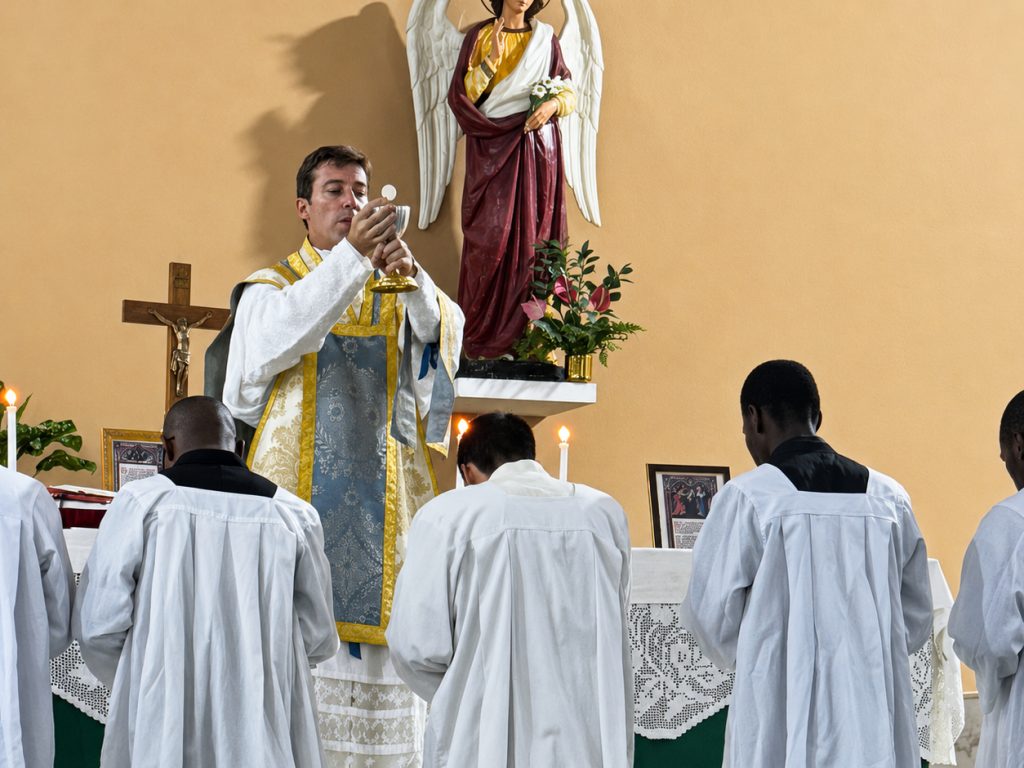
Father João Silveira denied permission to celebrate Mass in Ávila
Father João Silveira was denied permission to celebrate Holy Mass in Ávila after diocesan officials told him the local bishop had said: “That Mass is prohibited in this diocese” Father João Silveira, a Portuguese missionary priest, has been denied permission to celebrate Holy Mass at a chapel in Ávila, Spain. On 15 June, Fr Silveira was leading a group of pilgrims from the United States who had specifically requested his accompaniment because he exclusively celebrates the older form of the Roman Rite. When they arrived in Ávila, a Spanish city north-west of Madrid, the priest arranged to use a chapel to celebrate Holy Mass. He was then informed that, in order to do so, he would need authorisation from the local bishop, Bishop Jesús Rico García. As the Mass was private, Fr Silveira did not require permission. However, out of respect for the community allowing him to use the church, he agreed to seek it. When Fr Silveira arrived at the bishop’s residence with his celebret to demonstrate that he was a Catholic priest in good standing, he was received by the Vicar General of the diocese. After waiting for some time, he was informed by a diocesan employee that he did not have permission to celebrate the Mass and that the bishop had said: “That Mass is prohibited in this diocese.” Fr Silveira was then left to show himself out. Ordained a priest by Pope Saint John Paul II in 1979 and appointed bishop by Pope Francis in 2023, Bishop Jesús Rico García has held a variety of positions across the Spanish-speaking Church, including Spiritual Director of the Pontifical Spanish College of St Joseph and Rector of the Mosén Sol de México Seminary. He made local headlines when he used his episcopal consecration to call for a “Church open to all”. Responding to the situation, Fr Silveira asked on X: “What harm could possibly come to the world?” He also pointed out that the rite is “exactly the same one used in the convents of the Discalced Carmelites, stemming from the reform of Saint Teresa of Ávila and Saint John of the Cross”, and asked how it could have been “good for those great saints, but now it is bad for us?” The priest also pointed to Canon 932 §1, which states: “The Eucharistic celebration must be carried out in a sacred place unless, in a particular case, necessity requires otherwise; in that case, it must be celebrated in a decent place.” He argued that, in this case, the bishop had created a “necessity”, resulting in Holy Mass being celebrated in a hotel room rather than a church. Fr Silveira said this was not the first time he had been subject to such a ruling and stated that “Pope Leo must act quickly to put an end to these abuses of authority”. Fr Silveira is well known and respected among Catholics who attend the Traditional Latin Mass. As a missionary priest, he travels throughout the world to offer the Traditional Latin Mass, particularly in places where it is not readily available. His work regularly takes him to remote parts of Africa and Asia, where the Church is growing rapidly. At the time of writing, the priest’s post had been viewed more than 200,000 times. The Diocese of Ávila has not responded to AdVaticanum’s request for comment. However, speaking to the Spanish publication Religión Confidencial, the bishopric cited Pope Francis’s motu proprio Traditionis Custodes, explaining that “it clearly specifies that ‘the liturgical books promulgated by the Holy Pontiffs Paul VI and John Paul II, in conformity with the decrees of the Second Vatican Council, are the sole expression of the lex orandi of the Roman Rite’ (Article 1) and that ‘the diocesan bishop, as moderator, promoter, and custodian of all liturgical life in the particular Church entrusted to him, is responsible for regulating liturgical celebrations in his own diocese. Therefore, it is within his exclusive competence to authorise the use of the 1962 Missale Romanum in the diocese, following the guidelines of the Apostolic See’ (Article 2).” Commenting further on the situation, Fr Silveira wrote: “Of course, the bishop is the moderator of the liturgy in his diocese. However, among these powers of moderation, or organisation, the power to prohibit the Traditional Mass at his own discretion is not included. To do so is an abuse of authority, as can be understood from the arguments given earlier.” The priest quoted Pope Benedict XVI’s well-known assessment that “what was sacred for previous generations remains sacred and great for us as well, and cannot all of a sudden be entirely forbidden or even considered harmful”. He also noted that the same conclusion had been reached by the commission of nine cardinals convened in 1986 by Pope Saint John Paul II. He further argued that, because this was a private Mass, there was even less justification for prohibiting it. Fr Silveira asked: “It is not strange that ‘foreign’ priests pass through there: it is something that happens continuously. Would a priest of the Byzantine Rite also have been prohibited from celebrating?”
Jun. 18, 2026