

Outside the Walls
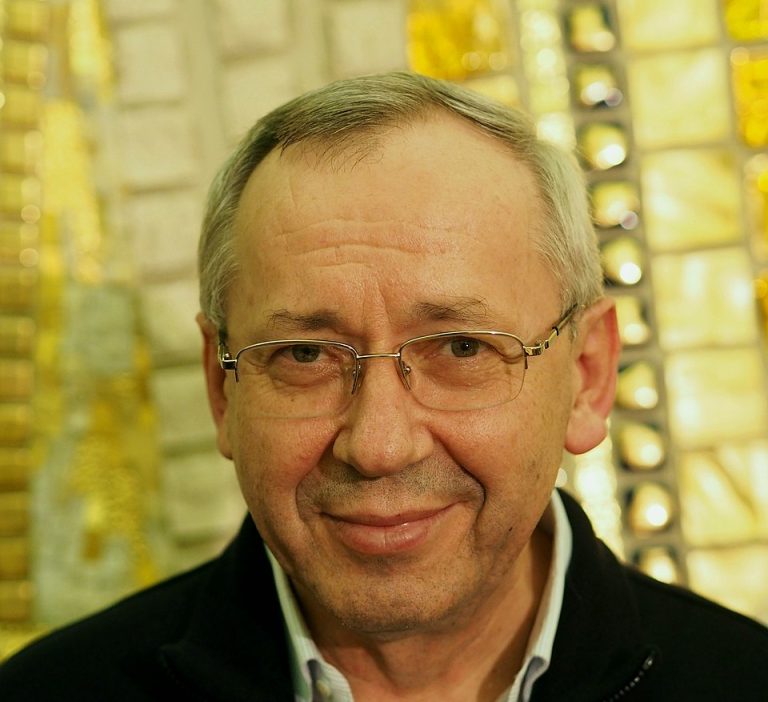
Jesuit priest apologises for celebrating Mass before Rupnik mosaic
A newly ordained Jesuit priest has publicly apologised after celebrating Mass in front of a mosaic by Marko Rupnik, saying he felt “deeply embarrassed” and questioning the continued silence surrounding the disgraced former Jesuit’s abuse allegations A Jesuit priest has apologised after celebrating Holy Mass in front of a mosaic created by the disgraced Slovenian priest Marko Rupnik. In a social media post, Fr Pierre Alexandre Collomb stated that he was “deeply embarrassed to have celebrated a Mass in front of a Rupnik mosaic, a Jesuit sexual abuser”. He continued by explaining that he had “begun the celebration by mentioning the victims of this man and my shame as a Jesuit”. The priest, who was ordained last year, also pointed out that there is “no mention of the victims or of this man’s actions” in the chapel, which he mistakenly identifies as “Bon Secours Chapel” rather than “Bon Conseil”, in the Archdiocese of Paris. He then asks: “How much longer this silence?” Marko Rupnik stands accused of abusing around 20 women, predominantly religious sisters, in one of the most troubling cases of clerical abuse in recent decades. His abuse appears to have been known to parts of the Church leadership before it became public, notably senior Czech and Slovenian prelates in the 1990s, whilst he continued to enjoy a privileged position in ecclesiastical life. In 2018, allegations of abuse were reported to Jesuit Father Juan Antonio Guerrero Alves, Rupnik’s superior, and in 2019 the Vatican deemed the accusations credible. Also in 2019, Rupnik was convicted and sanctioned by the Holy See for the ecclesiastical crime of absolution of an accomplice, which carries the penalty of excommunication. The excommunication was later lifted by Pope Francis after Rupnik repented of his crime. In 2020, Rupnik preached a Lenten meditation for priests working in the Roman Curia, attended by Pope Francis and Cardinal Luis Ladaria Ferrer, then Prefect of the Dicastery for the Doctrine of the Faith. In 2021, the Dicastery for the Doctrine of the Faith received a complaint alleging abuse of nuns in 1995 but ultimately dismissed the case because, under canon law at the time, the statute of limitations expired after 20 years, whereas the allegations related to events that had occurred almost 30 years earlier. Despite this, Rupnik designed the logo for the 2022 World Meeting of Families and is known to have met privately with Pope Francis in January 2022. In 2023, he was expelled by the Jesuits for a “stubborn refusal to observe the vow of obedience” but was then incardinated as a priest in the Diocese of Koper in Slovenia. Later that year, Pope Francis lifted the statute of limitations to allow the case against Rupnik to be reopened and, in March 2025, the Dicastery for the Doctrine of the Faith began selecting judges for a canonical trial. There has been significant delay in the process, and the trial has yet to begin. Rupnik’s art appears in a number of prominent churches around the world, including the Saint John Paul II National Shrine in Washington and the façade of the Basilica of Our Lady of the Rosary in Lourdes, France. Many institutions have either removed or covered the artwork of the disgraced priest. In 2024, Bishop Joseph Strickland called for his work to be “jettisoned from anything Catholic”. Despite this, the Centro Aletti, an international centre for art, theology and spirituality in Rome founded by Rupnik, continues to promote his work. It has also been reported that Rupnik is living in a monastery about an hour outside Rome and continues to travel internationally. In March 2025, he was confronted by a journalist at Rome’s airport.
Jun. 17, 2026
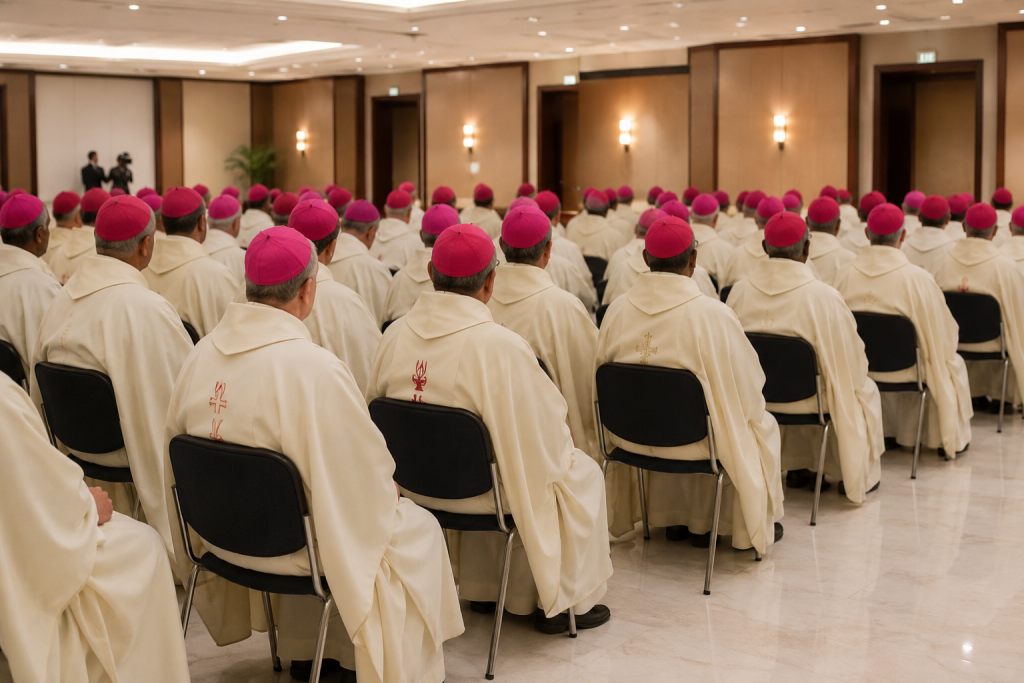
Italian bishops clash over calls to exclude Israeli novelist from literary festival
A public dispute between senior Italian bishops has erupted over calls to exclude Israeli novelist Eshkol Nevo from a literary festival in southern Italy, with one archbishop backing a petition against his appearance while others defend dialogue and condemn attempts to silence him A row over the appearance of an Israeli novelist at a literary festival in southern Italy has exposed divisions within the Italian Catholic hierarchy, with senior bishops publicly disagreeing with one another. Archbishop Franco Moscone of Manfredonia-Vieste-San Giovanni Rotondo has been criticised after signing a petition calling on organisers of the Il Libro Possibile festival to reconsider hosting the Israeli writer Eshkol Nevo at an event due to take place in Vieste next month. The petition, addressed to regional authorities and festival organisers, argues that Nevo has not taken a sufficiently clear public stance against the actions of the Israeli government in Gaza. Among its signatories are politicians, activists, academics and clergy, including Archbishop Moscone, whose archdiocese includes one of the festival venues. Speaking to Italian media, the archbishop defended his decision to support the initiative and rejected accusations that it amounted to censorship. “The issue is not that Nevo is Israeli,” His Grace said, arguing instead that intellectuals have a responsibility to speak clearly in the face of injustice. He said the novelist had not shown sufficient “criticism and clarity” regarding the actions of the Israeli government and described the situation in Gaza as a matter that could not be ignored by public figures with influence and visibility. The intervention quickly resulted in backlash from other Church leaders. Archbishop Giuseppe Baturi, Archbishop of Cagliari and Secretary General of the Italian Bishops’ Conference, sought to distance the bishops’ conference from the controversy while defending the principle of open dialogue. In an interview with Corriere della Sera, Archbishop Baturi said: “Peace is not built by preventing those who think differently from speaking, but by creating the conditions for them to be heard.” He stressed that the Italian Bishops’ Conference had “not intervened on the merits of the matter” and said Archbishop Moscone’s decision to sign the appeal was “a personal choice and the exercise of freedom of thought and expression”. “In the Church, personal conscience is not erased, but rather placed within a path of communion,” His Grace said. Addressing the conflict in the Holy Land, Archbishop Baturi echoed recent appeals by Cardinal Pierbattista Pizzaballa, the Latin Patriarch of Jerusalem, warning against language that strips people of their humanity. “Violence also stems from language that dehumanises others, and the Church must fight it: denounce violence and terrorism, but not fuel words that make others unrecognisable as human beings,” he said. More critical comments came from Archbishop Carmelo Pennisi of Monreale, who told the Italian daily, La Stampa, that the campaign against the writer was “an act of antisemitism”. The comments have brought into the open disagreements among Italian bishops over how Catholics should respond to the conflict in the Holy Land, which has generated strong reactions across Italy since the Hamas attacks of 7 October 2023 and the subsequent Israeli military campaign in Gaza. Festival organisers have refused to alter their programme and confirmed that Nevo will participate as scheduled. Rosella Santoro, the artistic director of Il Libro Possibile, said the festival would continue to provide a platform for a wide range of voices and rejected suggestions that writers should be judged according to the policies of their governments. Organisers noted that Nevo has repeatedly spoken publicly in favour of peace and dialogue and has expressed criticism of elements within Israeli politics. They also pointed out that the festival programme includes Palestinian voices and journalists covering the conflict, alongside Catholic representatives involved in interreligious dialogue and peace initiatives. The petition was promoted by activists and public figures in Puglia, including members of left-wing political movements and campaign groups opposed to the war in Gaza. While supporters argue that public figures should take stronger positions against the conflict, critics have questioned why Nevo was singled out given his record of supporting negotiations and criticising aspects of Israeli government policy. Nevo is one of Israel’s most prominent contemporary authors. His novels, translated into numerous languages, have earned an international readership. His best-known works include The Symmetry of Desires, Neuland and Three Floors, the latter adapted for cinema by Nanni Moretti. In recent years he has been associated with demonstrations against the government of Benjamin Netanyahu and has publicly criticised far-right figures within Israeli politics. The disagreement surrounding Nevo’s participation in Il Libro Possibile has become one of the clearest examples of those tensions within the Italian Church. Despite calls for his exclusion, the novelist remains on the programme and is expected to appear in Vieste on 21 July.
Jun. 16, 2026

Vatican nuncio says Israeli military activity forced aid convoy to divert in southern Lebanon
Archbishop Paolo Borgia, the Apostolic Nuncio to Lebanon, has described how a humanitarian convoy carrying food, medicine and fuel to isolated Christian communities in southern Lebanon was forced to divert after encountering Israeli military activity near the border The Apostolic Nuncio in Lebanon has described how a humanitarian convoy carrying aid to isolated Christian communities in the country’s south was forced to divert by the IDF. Archbishop Paolo Borgia, the Apostolic Nuncio to Lebanon, was leading a convoy of dozens of trucks laden with food, medicine and fuel when security concerns forced it to divert on 11 June while travelling towards the predominantly Christian village of Debel, close to the Israeli border. The convoy, organised with the support of Caritas and other Catholic agencies, had left Beirut early in the morning and was intended to reach Debel, as well as the neighbouring Christian villages of Ain Ebel and Rmeich. The mission also included displaced residents seeking to return temporarily to their homes after weeks of conflict and instability. Speaking to Vatican Media, Archbishop Borgia said the convoy had been unable to continue along its planned route after violence erupted in the area. “It was not possible to continue along the route” that had previously been coordinated with the relevant authorities, His Grace said, explaining that an alternative route had to be found after the security situation deteriorated. According to reports from those travelling with the convoy, Israeli military vehicles were present in the area and gunfire could be heard nearby. One individual quoted by AFP said: “We came face to face with several IDF tanks. We heard some gunfire directed at targets behind us. It wasn’t clear whether they were trying to intimidate us or targeting Hezbollah bases. There were moments of panic.” The convoy was delayed and ultimately forced to retrace part of its journey before obtaining fresh authorisations and proceeding by a different route. Archbishop Borgia said the aid mission eventually reached Debel after a journey lasting about 10 hours. The Archbishop stressed that the vehicles were carrying humanitarian assistance urgently needed by communities that have become increasingly cut off from the rest of Lebanon because of continuing military operations in the south. “We were all in our vehicles, in a long convoy carrying various kinds of humanitarian aid, especially food supplies, fruit, vegetables, water, as well as medicines and fuel,” the nuncio said. The aid was intended not only for households but also for local businesses and agricultural producers struggling to maintain daily life amid the conflict. Archbishop Borgia explained that supplies had been brought for village shops facing shortages, as well as for farmers and livestock breeders whose livelihoods have been severely disrupted. Although the convoy encountered danger, the nuncio said those involved had attempted to remain calm. “These are frightening situations, but one tries to deal with them calmly and keep a cool head in the moment,” the Archbishop said. There has been concern among Lebanon’s Christian communities over the security situation in the south of the country. In recent days, Israeli evacuation orders have reportedly been extended to areas containing Christian neighbourhoods that had previously not been directly affected by such measures. The city of Tyre, home to a significant Christian minority alongside its larger Muslim population, was among the areas affected by recent evacuation instructions. Residents were told to move north of the Zahrani River as Israeli military operations continued against Hezbollah positions. Israel and Hezbollah have remained locked in a cycle of confrontation despite ongoing diplomatic efforts aimed at reducing tensions across the region. The conflict along the Lebanese border has continued to produce civilian displacement and widespread disruption to normal life, particularly in villages situated close to the frontier. Archbishop Borgia indicated that the Church had no intention of abandoning the affected communities despite the dangers involved. “We are in a situation of war, but we will continue our commitment to helping the people,” Archbishop Borgia said. “I believe there will already be another convoy next week.” According to Archbishop Borgia, the June convoy marked his twentieth visit to southern Lebanon since the conflict began, comprising 17 humanitarian convoys and three pastoral visits. “It is important to be present,” His Grace said, “because this gives people the possibility of remaining in their communities and surviving.” The nuncio emphasised that the Church’s role extends beyond the delivery of material assistance. The presence of Church representatives in conflict zones also serves as a sign of solidarity with communities facing uncertainty and hardship. “With our presence, we bring the presence of the Pope, of the universal Church, and of the Lebanese Church, together with closeness and solidarity,” he said, adding that people needed “to feel understood and accompanied, embraced by the love of the Church itself”. The Church has played a significant humanitarian role throughout Lebanon’s recent crises, from the country’s economic collapse and the Beirut port explosion to repeated outbreaks of regional conflict. Catholic charities, religious orders and diocesan structures have often provided support in areas where state services have struggled to operate effectively. Southern Lebanon has long been home to some of the country’s oldest Christian communities, particularly among Maronite Catholics and Melkite Greek Catholics. Villages such as Debel, Ain Ebel and Rmeich have endured periods of conflict stretching back decades, including the Israeli occupation of southern Lebanon, the 2006 Lebanon war and subsequent border tensions. The Holy See has repeatedly called for peace in the region and for the protection of civilians regardless of religion or nationality. (photo credit: קרלוס הגדול – Own work, CC BY-SA 3.0, https://commons.wikimedia.org/w/index.php?curid=18059264 )
Jun. 16, 2026
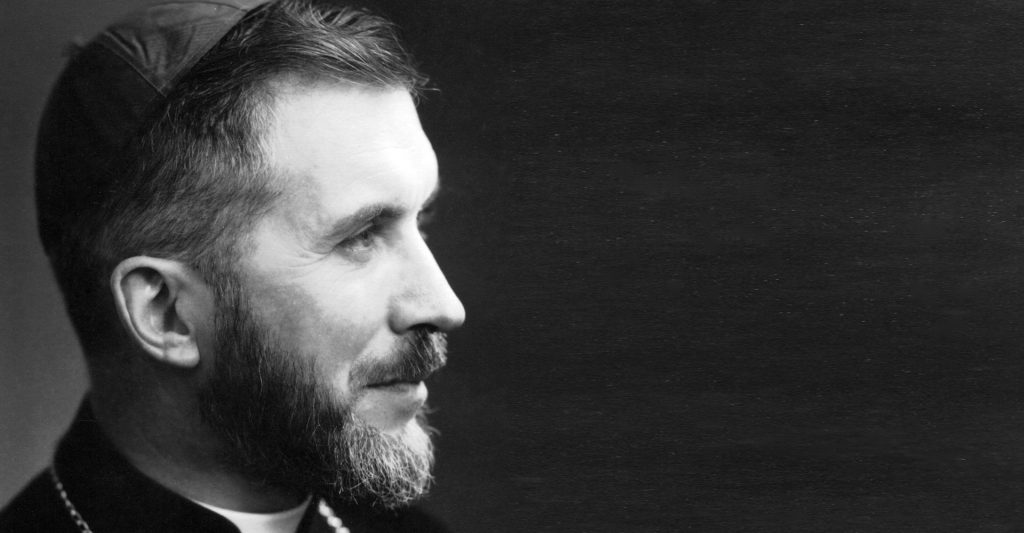
The SSPX, the Magisterium, and the temptation of the hinterland
Drawing on his own journey from Anglican bishop to Catholic convert, Gavin Ashenden argues that however compelling the SSPX may appear, the temptation to step beyond communion with Rome leads into a theological “hinterland” where private judgement takes precedence over the Magisterium I have been surprised at the extent of anxiety and animosity that almost always accompanies any discussion about the relationship between the SSPX and the Vatican. Over time, I have become increasingly grateful for and impressed by the witness and courage of Archbishop Lefebvre — but equally impressed by the flexibility of Benedict XVI and the way in which the dynamic relationship between the SSPX and the Vatican changed and modulated under his leadership. Of course, much of the anger and fear can be traced back to the complex question of the Second Vatican Council, the period of its reception, and the troubling phenomenon of “the spirit of Vatican II”. One of the attractions of the SSPX is that it cuts through the whole complexity like Alexander’s sword through the Gordian knot. Once you have accepted the SSPX and the integrity of its arguments, you no longer have to think or struggle with the difficulties that the Council and its reception throw up. As I have listened to people arguing on both sides, it has become clear that neither possesses a monopoly on unreasonableness, stubbornness, name-calling, vitriol, or misrepresentation. But one of the formative elements in my own becoming a Catholic was the importance of the Magisterium. I was one of those Anglicans who found it easy to persuade himself that, as an Anglican, I had the best of both worlds: Catholic integrity combined with Anglican freedom. I do not normally talk much about my time as an episcopal bishop, but one of the attractions of the invitation to accept consecration — in order to provide a foundation for dissident Anglicans fleeing the collapse of the Church of England but too anxious to convert fully to Rome — was the creation of yet another halfway house: a mixed ecclesial economy with enough that looked Catholic to persuade its adherents that they were Catholic, without requiring them to take the full step of submitting to the authority of the Holy Father and accepting in full the Catechism and the Magisterium. As it happened, the experience of trying to negotiate between different Anglo-Catholic groupings as we sought to construct a coalition of sacramentally minded Anglicans was one of the things that deepened my love and appreciation of the Magisterium. The moment one steps outside the authority of the Catholic Church and the privilege of being in communion with Rome, one enters a hinterland of revolution where the epistemological centre of one’s spirituality shifts from the Petrine river of authenticity to oneself. One might even describe this as the Protestant spirit. And the difficulty is this: it does not matter how Catholic your investments are, how Catholic your liturgy is, or how Catholic your spirituality may appear — if one is outside communion with Rome, one is not Catholic. It does not really matter what kind of heretical or schismatic posture one eventually adopts. It does not matter whether one is slightly to one side of the dotted line on the Anglican side, or slightly to the other side on the ultra-Catholic side. The end result is the same. If you are outside of communion with Rome, you are no longer truly Catholic. It is the Magisterium and communion with Peter that provide the distinctive difference. One of the temptations of supporting the SSPX is, of course, the fact that one no longer has to remain patient with the whole process of infighting and interpretation that the reception of the Council’s documents requires. Particularly within our modern culture, ten years can seem like a millennium. But as it happens, it does take longer for the full implications of a Council to seep into the bloodstream of the Church as the balancing act between past and present is refined and modulated. The relief and joy of abandoning the obscure hinterland where private judgement takes precedence over obedience and submission is something I would never want to exchange for a personalised validation of the faith — attractive though it may seem when the people running the show appear untrustworthy, unattractive theologically, or compromised in ways that place them at odds with authentic magisterial spirituality and identity. I am beginning to think from my conversations with informed individuals that although I had hoped Cardinal Fernández was operating independently from Leo XIV, it may be that the threatened excommunication is not a bluff. It may be that to consecrate bishops without papal approval is one that simply cannot be accepted by the Pope under any circumstances. It is very easy to compare the way in which the German Synodal Path has pushed at the limits of orthodoxy on the left — without being sharply reined in or excommunicated — and compare that unfavourably with the way the SSPX are being treated. But I think this mistakes the notion of symmetry. In political terms, there is no symmetry between those committed to progressive utopianism on the one hand and those committed to conserving and protecting what is good on the other, as though they were merely equal and opposite distortions of the same instinct. Likewise, I do not think that the liberal-progressive abuses of the Catholic faith on the left are equivalent to the proposed refusal to accept the limitations of canon law on the sacramental and traditionalist right. That is not to say I have any sympathy at all with the idiocies and Protestantisation of the faith in which the German Synodal process continues to indulge. But on the left, this generally takes the form of abusing process, stretching boundaries irresponsibly — the behaviour of a recalcitrant teenager not yet fully prepared to leave home forever, but continually testing how far the boundaries can be pushed. On the right, however, what the SSPX is contemplating is a direct and dramatic repudiation of canon law and obedience in a way that strikes at the very heart of Catholic order and Catholic identity. Bishops derive their authority from the Pope himself. Otherwise, in any true conceptual sense, they are not Catholic bishops at all. They become bishops of protest — bishops whose consecration is born out of a determination to protest against Petrine authority. However attracted I may be to the integrity of the Latin Mass, and however deep my mistrust of the inadequacies of the Novus Ordo may at times be, the boundary of canon law and obedient episcopal order becomes impossible to ignore. Schism is rather like pregnancy because one can no more be “a little bit pregnant” than one can be “a little bit schismatic”. I hope very much that Cardinal Fernández is bluffing. I hope very much that Leo XIV may simply have given him room to manoeuvre in order to test what may come of negotiations with the SSPX. However, if I am wrong, and if the SSPX do not back down — which seems the only likely scenario at present — then I would not exchange communion with Peter and the protection of the Magisterium for a quick-fix protest against the spirit of Vatican II. The price is too high.
Jun. 15, 2026
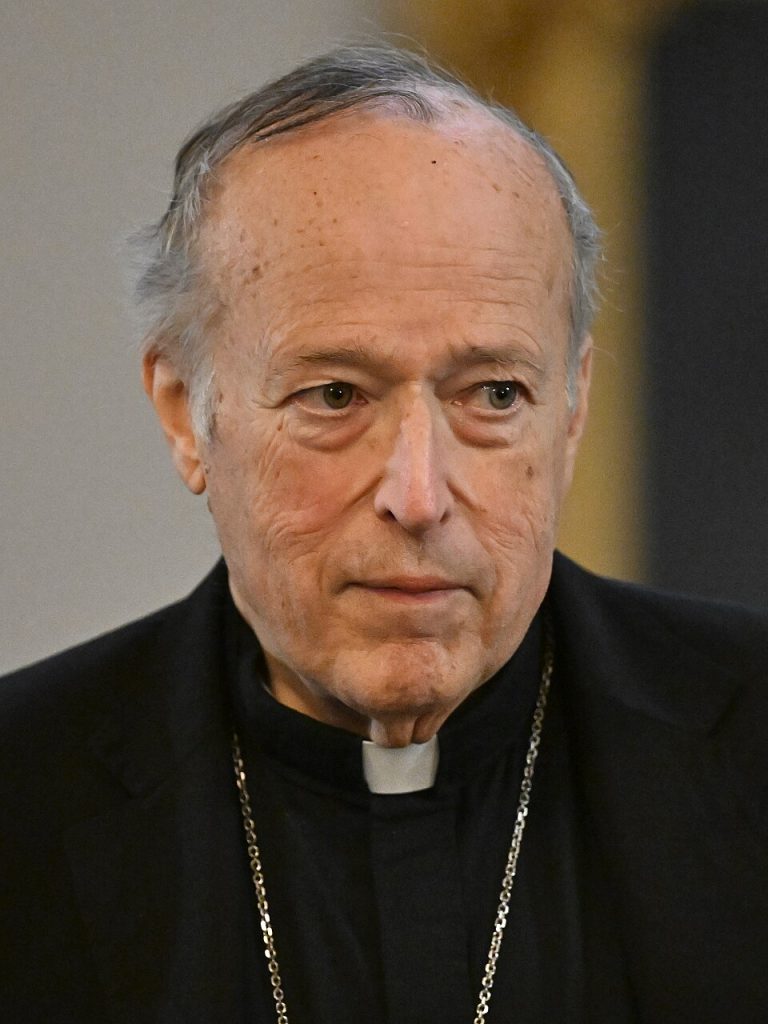
Cardinal McElroy reportedly gives verdict on altar rails in Washington
A reported directive from Cardinal Robert McElroy sets out policy on altar rails and kneelers in the Archdiocese of Washington Cardinal Robert McElroy of Washington has reportedly directed that altar rails are not to be installed or reinstalled in churches across the Archdiocese of Washington. The reported directive, first highlighted by journalist Christine Niles of Stella Maris Media, notes from a recent meeting with priests that discouraged the use of temporary kneelers for the reception of Holy Communion. According to Niles, concerns raised during the discussion included the potential disruption of Communion processions and the possibility that the use of kneelers could transform what Church law regards as an individual option into a more widespread practice. The Archdiocese of Washington has not publicly issued a statement on the reported policy, and no formal decree has yet appeared among official archdiocesan communications. The issue centres on the manner in which Catholics receive Holy Communion. In the United States, the norm approved by the bishops and confirmed by the Holy See is for communicants to receive standing after making a gesture of reverence. At the same time, universal Church law makes clear that Catholics who choose to kneel for Communion are not to be denied the sacrament on that account. The reported Washington policy comes after discussions in several American dioceses over altar rails, kneelers and other traditional liturgical furnishings. In recent months, the Diocese of Charlotte, North Carolina, became the focus of Vatican attention after Bishop Michael Martin ordered that altar rails, kneelers and prie-dieus were not to be used for the reception of Communion in public celebrations. The move caused more than 30 diocesan priests to submit formal dubia to the Vatican regarding the scope of episcopal authority over such practices. Bishop Martin wrote in a pastoral letter issued last December that the norms approved by the United States Conference of Catholic Bishops “do not envision the use of altar rails, kneelers, or prie-dieus for the reception of Communion”, arguing that their use contradicts the normative posture established by the conference. Supporters of altar rails and kneeling during Communion argue that such practices visibly express belief in the Real Presence of Christ in the Eucharist and foster a spirit of reverence. Among the most prominent advocates has been Bishop Athanasius Schneider, Auxiliary Bishop of Astana in Kazakhstan, who has repeatedly encouraged the faithful to receive Communion kneeling and on the tongue. In his book Dominus Est – It is the Lord! , Bishop Schneider wrote: “Would it not be more liturgically proper if, at the moment of Holy Communion … they would greet Him and receive Him on their knees?” He argued that kneeling before the Blessed Sacrament provides a visible witness to the Church’s faith in the Eucharistic mystery. Cardinal Raymond Burke has likewise spoken in favour of the practice, pointing to the example set by Pope Benedict XVI during his pontificate. Reflecting on Benedict’s decision to distribute Communion to kneeling communicants, Cardinal Burke said: “The Holy Father is giving a very clear lesson by his own insistence that the faithful receive Communion kneeling and on the tongue.” Similar views have been expressed by Cardinal Antonio Cañizares Llovera, the former prefect of the Congregation for Divine Worship and the Discipline of the Sacraments. He has urged Catholics to receive Communion on the tongue while kneeling, saying: “It is to simply know that we are before God himself and that He came to us and that we are undeserving.” Other bishops have emphasised the importance of maintaining the posture established by episcopal conferences for the sake of unity during the Communion procession. Cardinal Blase Cupich of Chicago has similarly stressed that the faithful process together as an expression of their identity as the Body of Christ and receive Holy Communion standing in accordance with the norm approved for the United States. He has described the practice as a “powerful symbolic expression” of ecclesial unity. The reported Washington directive has attracted particular attention because it concerns one of the largest and most influential dioceses in the United States. Cardinal McElroy, who was installed as Archbishop of Washington in March 2025 after serving for a decade as Bishop of San Diego, has become one of the most prominent voices among the American hierarchy. The controversy also follows another recent decision by the cardinal that generated headlines. Earlier this month, he removed Monsignor Stephen Rossetti as an exorcist of the Archdiocese of Washington and ended the archdiocese’s affiliation with the St Michael Center for Spiritual Renewal after comments linking UFO phenomena to demonic activity. Cardinal McElroy said the statements “gravely undermine the Church’s very precise teaching on the devil, demons and exorcism”.
Jun. 15, 2026
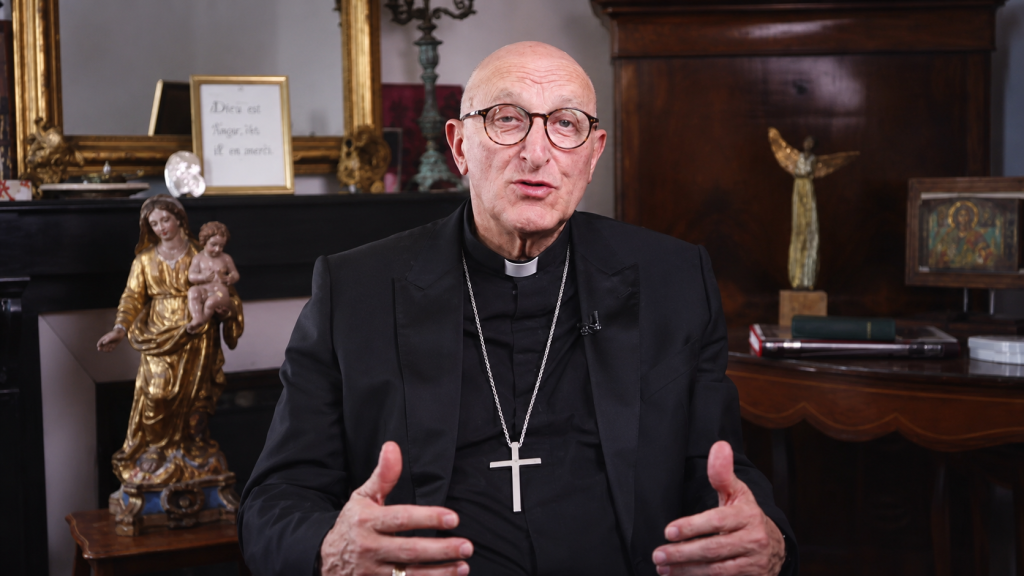
Bishop Dominique Rey breaks ranks over Paris church arts festival controversy
Bishop Dominique Rey has become among the first members of the hierarchy to address the controversy surrounding this year’s Nuit Blanche arts festival A French bishop has become one of the first members of the country’s hierarchy to speak publicly about the controversy surrounding the use of Paris churches during this year’s Nuit Blanche arts festival. Bishop Dominique Rey, the former Bishop of Fréjus-Toulon, intervened after days of criticism from Catholics over installations staged in several churches during the annual overnight cultural event in the French capital. Speaking to the French Catholic outlet Tribune Chrétienne, Bishop Rey said the dispute should be understood within the broader pattern of attacks on Christian places of worship. “We are currently witnessing an increase in the number of sacrilegious acts, vandalism and offensive insults that undermine the integrity of places of worship, which scandalise and outrage the faithful,” His Grace said. Bishop Rey continued: “Because these places are dedicated to liturgical life, prayer, contemplation and silence.” The bishop went on to question the appropriateness of using churches for events that bear no relation to their spiritual mission. “The Church cannot be the receptacle for events and demonstrations that are not related to the spiritual identity and religious purpose of these sacred places: churches, chapels, oratories and shrines,” Bishop Rey said. Across France there has been criticism over the installations hosted in churches as part of the 25th edition of Nuit Blanche, Paris’s annual all-night arts festival. The 2026 event was organised under the artistic direction of Barbara Butch, the French DJ and activist who became internationally known following her appearance during the opening ceremony of the Paris Olympic Games in 2024. Particular controversy surrounded the Church of Saint-Laurent in the 10th arrondissement, where visitors were invited to experience an installation entitled Sous la peau du ciel (“Under the Skin of the Sky”) by the artist Marie-Luce Nadal. The work consisted of an immersive sound installation incorporating anonymous recorded messages submitted by members of the public. The recordings were mixed with atmospheric data linked to lightning activity and played throughout the church. The event led to protests from groups of Catholics who argued that the event was incompatible with the sacred character of a consecrated church. Some gathered outside Saint-Laurent to pray the Rosary and sing hymns in reparation, while others attempted to prevent access to the building before police intervened. Six people were arrested during the disturbance and held in custody after allegations that elected officials had been jostled during the confrontation. The City of Paris subsequently announced that it would file a complaint against those involved and condemned what it described as attempts by religious extremists to disrupt a cultural event. However, the Paris public prosecutor later closed the case without bringing charges after investigators concluded that no offence could be sufficiently established and that individual responsibility for the alleged incidents could not be proven. Many have focused not only on the events themselves but also on what they regard as the silence of the Archdiocese of Paris. One of the most outspoken clerical critics has been Fr Christophe Buirette of the Diocese of Blois, who publicly criticised the decision to host the installation at Saint-Laurent. Speaking to Tribune Chrétienne, he described the episode as a serious affront to the sacred character of the church and declared: “Ce confrère, curé de Saint-Laurent, est une honte!” (“This fellow priest, the parish priest of Saint-Laurent, is a disgrace!”). The parish priest of Saint-Laurent, Fr Paul Dollié, has rejected accusations that the church was profaned. In a statement explaining his decision to host the installation, he said he had accepted the proposal after being assured that it contained no elements contrary to the Catholic faith and respected the character of the building. “I saw that this work was respectful of the place and that there were no elements contrary to the faith,” he said. Fr Dollié explained that the proposal had been presented through Art, Culture et Foi, an organisation that serves as a link between the City of Paris and the diocese on cultural projects. He said the installation possessed a spiritual and meditative dimension that offered an opportunity for dialogue with people distant from the Church. Under the country’s system of laïcité , many church buildings remain the property of local authorities while continuing to function as places of Catholic worship. That arrangement has periodically produced disputes over concerts, exhibitions and artistic performances staged within churches. Similar controversies have emerged in France over the past several decades whenever churches have hosted exhibitions or performances perceived by some Catholics as inappropriate. A notable example occurred in 2021 when Swedish musician Anna von Hausswolff was due to perform at the Church of Notre-Dame de Bon-Port in Nantes and later at the Church of Saint-Eustache in Paris. Both concerts were abandoned after Catholic protesters gathered outside the venues, praying the Rosary, singing hymns and blocking access for ticket holders. Critics argued that her lyrics, including lines from songs such as “Pills” (“Oh I, I made love with the devil”), and the overall aesthetic of her performances were incompatible with a Catholic church. Organisers, however, maintained that the events had received ecclesiastical approval and formed part of legitimate cultural programming.
Jun. 15, 2026