

Outside the Walls
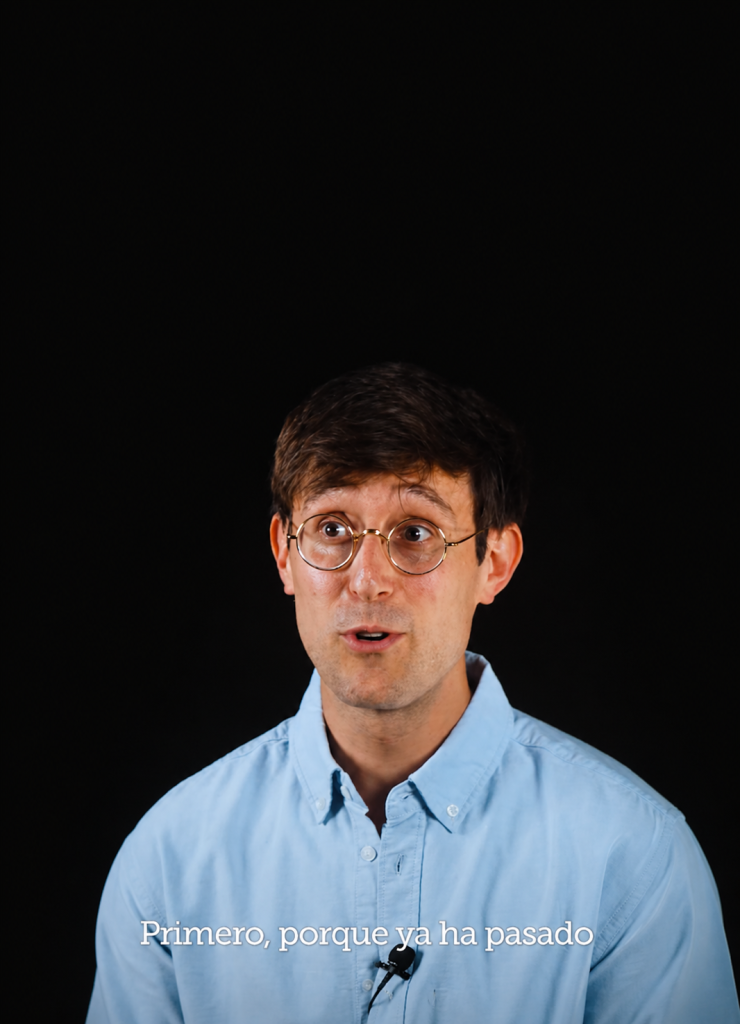
Another “influencer priest” leaves the priesthood
Fr Damián María Montes, a Spanish Redemptorist priest, has announced that he will no longer exercise his priestly ministry. A well-known figure across Spain, Fr Damián came to prominence through his participation in the third series of La Voz in 2015, where he reached the quarter-finals. During the programme, he performed secular songs including “Angels” […] Fr Damián María Montes, a Spanish Redemptorist priest, has announced that he will no longer exercise his priestly ministry. A well-known figure across Spain, Fr Damián came to prominence through his participation in the third series of La Voz in 2015, where he reached the quarter-finals. During the programme, he performed secular songs including “Angels” by Robbie Williams. Originally from Granada in southern Spain, he entered the Redemptorist postulancy at the age of 18. After studying at the Pontifical University of Comillas in Madrid, he spent a year on mission in Kolkata, India. On his return, he took his perpetual vows and was ordained a priest in Granada in 2013. He later held a variety of posts in Madrid before being transferred in 2024 to Granada, where he served as rector and superior at the Sanctuary of Our Lady of Perpetual Help. Throughout his years in active ministry, he maintained a substantial online presence, with almost 750,000 followers on TikTok and more than 35,000 on Instagram. His videos often took a catechetical form, with Fr Damián answering questions about the faith, alongside posts of himself in secular dress, often connected to the performing arts. One of his most recent Instagram posts showed him graduating after completing studies related to the Spanish poet, playwright and theatre director Federico García Lorca. On his website, he describes his academic career as being “characterized by a marked interdisciplinary approach that integrates literature, theater, pedagogy and humanistic thought.” In his most recent video, explaining his decision to leave the priesthood, he says: “After almost three years of questions, searching, silences and a deep inner struggle, I have decided to definitively retire from the exercise of the priestly ministry.” He adds that he is stepping back “in peace and with a clear conscience, knowing that I truly loved each mission entrusted to me, that I have paved the way, and that I have built necessary bridges of dialogue.” He does not go into detail about his reasons, telling his audience: “There are compelling reasons that I will keep to myself, reasons that support this decision and that made my missionary service extremely difficult.” While speaking warmly about his years as a missionary, he describes recent years as “very sad and very difficult”. He says that, in future, he hopes there will be new opportunities for him and that he might even be able to build a family. On his website, he states that he currently works as academic vice-director of the Ernesto Cardenal Foundation and as a language and literature teacher at the European Lyceum. The story of consecrated men and women leaving their vocations after achieving fame, often dubbed “influencers”, has become increasingly common. Cristina Scuccia, who won the 2014 edition of The Voice Italy , left her order in 2022. Similarly, Father Alberto Ravagnani, an Italian priest with a substantial online following and millions of views on YouTube, also announced his intention to leave the priesthood in February this year in a video posted on Instagram that bore notable similarities to Fr Damián’s. His Instagram account presented a life shaped by secular influences, including skincare, dancing and photographs of himself at the gym, alongside religious content. In 2025, he took part in a paid sponsorship post with Bondsupplements under the caption “Holy yes, but also healthy”. His departure was accompanied by a farewell book, which he promoted on his channel. Last year, the Vatican hosted a gathering of more than 1,000 priests for the Jubilee of Digital Missionaries and Catholic Influencers. While many priests and religious use social media successfully as a tool of evangelisation, bringing people closer to the Church, questions have arisen in recent years about whether such visibility can contribute to the secularisation of holy orders.
Jun. 24, 2026
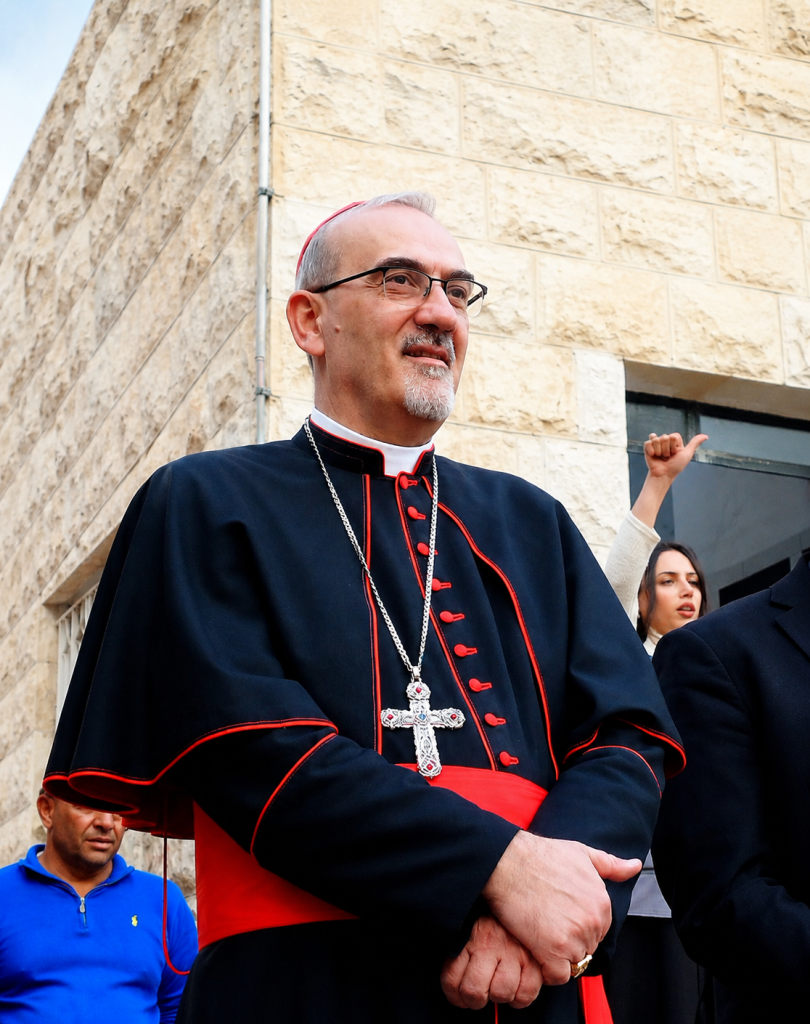
Cardinal Pizzaballa returns to Gaza with Patriarch Theophilos
Cardinal Pierbattista Pizzaballa has returned to Gaza alongside Patriarch Theophilos III in a fresh wartime visit to Holy Family parish Cardinal Pierbattista Pizzaballa has travelled to Gaza alongside the Greek Orthodox Patriarch of Jerusalem, Theophilos III, ahead of his departure for Rome to attend Pope Leo XIV’s second consistory. The Latin Patriarch of Jerusalem arrived in the territory on 22 June accompanied by Dr Josef Blotz, Grand Hospitaller of the Sovereign Military Order of Malta, and representatives of Malteser International, the Order’s humanitarian agency. In a statement issued the same day, the Latin Patriarchate of Jerusalem said the visit was intended to support both the Christian community and the wider population of Gaza as the war and humanitarian crisis continue. “The visit expresses the pastoral responsibility of the Churches of Jerusalem toward the local churches and toward the whole population of Gaza, where families continue to endure grave humanitarian suffering, fear, loss and uncertainty,” the Patriarchate said. It added that the presence of Patriarch Theophilos and Cardinal Pizzaballa carried the prayer of Jerusalem to Gaza’s wounded faithful and to all who suffer, in a ministry of consolation, mercy and steadfast Christian witness. According to the Patriarchate, the two Church leaders are meeting clergy, religious communities, local Christian families and others affected by the continuing conflict, hoping through “prayer, personal encounter and pastoral presence” to offer “spiritual strength, comfort and hope in the midst of deep suffering”. The Patriarchate described the mission as one aimed at bringing prayer, consolation and hope to those living through the continuing effects of war, displacement and uncertainty. The visit began at Holy Family parish, where Cardinal Pizzaballa and Patriarch Theophilos were welcomed by those sheltering within the church compound. The parish, led by Fr Gabriel Romanelli, has become a refuge for Christian and Muslim families since the outbreak of the war, providing shelter as well as access to food and water. After prayers led by Fr Romanelli, Cardinal Pizzaballa spoke briefly about the continuing hardships facing the population. “The situation is difficult,” he said, while assuring those present that Gaza remained a priority for the Churches of the Holy Land. He also said he was pleased to be able to return and meet the people of the territory in person, speaking of his joy at being able “to look into the eyes not only of the parishioners and those living around the church, but of all the inhabitants of this suffering city”. The Jerusalem patriarch has been among the most prominent Church leaders in the Middle East since the outbreak of the Israel-Hamas war and has repeatedly drawn international attention for his efforts to support Gaza’s small Christian community. His latest visit marks a return to a territory he has visited on several occasions during the conflict, despite the severe restrictions on access. In December 2025, Cardinal Pizzaballa travelled to Gaza shortly before Christmas and celebrated Mass at Holy Family parish, in what was regarded as an important sign of solidarity with local Christians trapped in the enclave. The current visit is also the second wartime journey to Gaza undertaken jointly by Cardinal Pizzaballa and Patriarch Theophilos. The two Church leaders previously travelled together following the Israeli strike on the Holy Family church compound in July last year, which killed three people and injured several others, including Fr Romanelli. In the aftermath, the two patriarchs made what was widely regarded as a historic visit to express solidarity with the victims and with Gaza’s Christian community, while also appealing for an end to the conflict and for a process of healing and reconciliation across the Holy Land.
Jun. 24, 2026
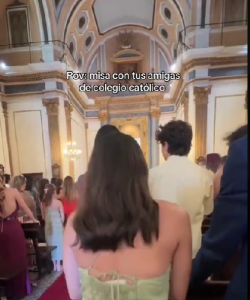
Spanish Catholics filmed committing sacrilege at wedding Mass
A video filmed at a wedding Mass in Spain has gone viral after appearing to show a group mocking the liturgy and the Eucharist A video showing a group of Spanish Catholics mocking the Mass and committing sacrilege against the Eucharist has gone viral. Published with the caption “POV: misa con tus amigas de colegio católico” (“Mass with your friends from Catholic school”), and apparently filmed in the Spanish city of Valencia, the video shows a group attending a wedding Mass and sitting towards the back of the church. The description reads: “Señor, no soy digno de que entres en mi casa, pero una palabra tuya bastará para sanarme” (“Lord, I am not worthy that you should enter under my roof, but only say the word and I shall be healed”). The video opens with the group making a loud noise. Then, during the part of the Mass in which the priest says “es justo y necesario” (“it is just and necessary”), the person filming points the camera at another member of the group and says “más justo y necesario” (“more right and more necessary”). The person on camera then says “es el dictador” (“he is the dictator”), apparently referring to the priest. The woman filming then asks another member of the group, “¿Tú vas a tomar la comunión?” (“Are you going to receive Communion?”), before adding: “Nos van a echar” (“They are going to throw us out”). Another member of the group then sings “ven a nuestras almas” (“come to our souls”) while making a mocking gesture. The most controversial part of the video comes when one of the group, having just returned from receiving the Eucharist, sticks out his tongue to show the Sacred Host and makes a horn-like hand gesture with his thumb, index finger and little finger extended. The video was originally posted on TikTok by the account “bellidamen”, but has since been deleted. The account, and an Instagram account under the same name, contain various other pieces of content, a significant portion of which is hostile to non-Spaniards living in Spain. In one video, “bellidamen” says: “Blondies, go home.” Despite the apparent disdain for Catholicism, another video on the account appears to celebrate a local Holy Week procession, with the caption: “What a cool tradition, full of flowers, colours and joy in the Poblats Marítims.” The TikTok account “bellidamen” has since deleted the original video, but it was later reuploaded by the Spanish Catholic group Universitarios Católicos . The caption on the reuploaded post reads: “What little education and what little respect there is in our society. Laughing at our faith (yes, always against the same ones) and playing with what is most sacred and important, committing a most grave sacrilege. Whoever eats the Lord unworthily eats his own condemnation.” At the time of writing, the reuploaded video has been viewed more than 800,000 times. AdVaticanum has contacted several of the people seen in the video, as well as the Diocese of Valencia, for comment. At the time of publication, none had responded.
Jun. 23, 2026
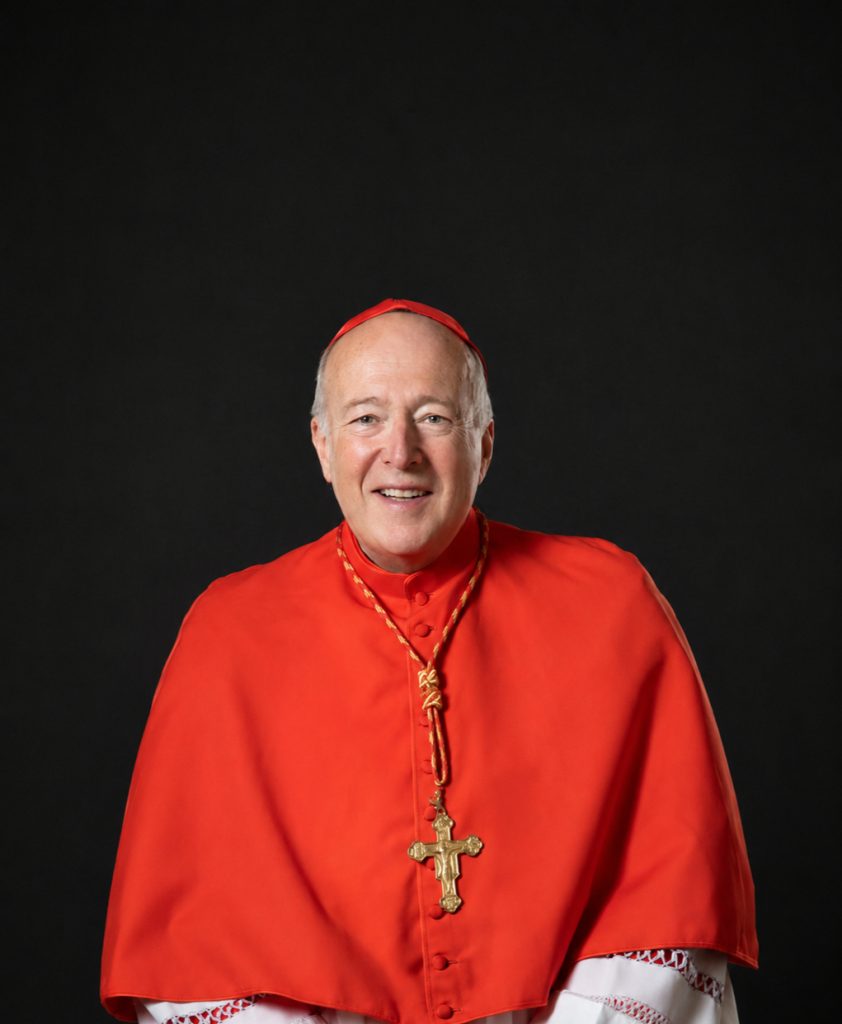
Cardinal McElroy says Church has “frequently wounded” LGBT Catholics through “judgmentalism and exclusion”
Cardinal Robert McElroy told the Outreach Conference in Washington that the Church has “frequently wounded the LGBT community through judgmentalism and exclusion”, while pointing to Pope Leo XIV and the Synod on Synodality as signs of a new pastoral approach Cardinal Robert McElroy has told a prominent Catholic conference for LGBT Catholics that the Church has “frequently wounded the LGBT community through judgmentalism and exclusion”. The Archbishop of Washington made the remarks during a homily on 20 June at the Outreach Conference, held at Georgetown University in Washington, DC, an annual gathering focused on ministry with LGBT Catholics. He argued that recent developments under Pope Leo XIV and the Synod on Synodality point towards a new approach to pastoral ministry. Addressing delegates, Cardinal McElroy said two recent developments in the life of the Church were particularly significant. The first, he said, was a comment made by Pope Leo XIV during a visit to Africa in April, when the pontiff stated that “the unity or division in the Church should not revolve around sexual matters”. Reflecting on the Pope’s words, Cardinal McElroy suggested that issues relating to sexual morality had often occupied a disproportionate place in Catholic discourse. “Too often, both in magisterial statements and on the popular level, sexual sins have been condemned with an ardour that effectively places them, in the eyes of many believers, at the core of the moral obligations of Christians,” His Eminence said. The Cardinal added that Pope Leo had instead highlighted “the comparative importance of economic justice, war and peace, immigration and racism as key elements of the Christian moral life”. The Cardinal said the second significant development was the publication in May of the report produced by Study Group 9, one of the working groups established during the Synod on Synodality process initiated under Pope Francis. Describing the report as “pathbreaking”, Cardinal McElroy focused on what he characterised as a new anthropological approach emerging from the synodal process. “Pastoral practice […] proceeds from the conviction that the concrete situations in which people find themselves are constitutive dimensions of how doctrine should be formed in the light of the kerygma,” the Archbishop of Washington said, arguing that this represented the most important legacy of the late Pope Francis. According to Cardinal McElroy, Francis sought “to reform our conception of pastoral theology and see it as a core element of coming to understand the […] formation of Catholic teaching”. The Washington archbishop repeated the point later in his address, insisting that pastoral practice should not be viewed merely as the application of pre-existing principles to individual circumstances. “Pastoral practice is not the understanding of how to apply an already formed and often reified set of principles to concrete situations,” he said. “It proceeds from the conviction that the concrete situations in which people find themselves are constitutive dimensions of how doctrine should be formed in the light of the kerygma.” His homily came a day after he issued a letter welcoming participants to the conference, which opened in the US capital this week. In the message, dated 19 June, Cardinal McElroy linked the gathering both to the legacy of Pope Francis and to developments during the opening phase of Pope Leo XIV’s pontificate. “I am delighted to welcome you to the 2026 Outreach Conference here in Washington,” he wrote. “For I know that the Holy Spirit will be profoundly present in our meetings and discussions at this key time in the history of our Church and our nation.” The Cardinal said the conference was taking place at a moment when “the pastoral foundations laid by Pope Francis for authentic ministry to and with the LGBT community are being deepened and refined by Pope Leo”. He also referred to the recently published report of Study Group 9, describing it as a significant contribution to the Church’s reflection on ministry and holiness. “And the conference comes directly after the release of Study Group 9 of the Synod on Synodality, which places LGBT ministry within a new paradigm that powerfully integrates the experience of faith-filled and diverse disciples as a basis for understanding the call to holiness in all of its concreteness,” he wrote. “This new paradigm points to the true pathway for establishing Todos, Todos, Todos in our Church, ever ancient and ever new.” The phrase “Todos, Todos, Todos” became widely associated with Pope Francis after he used it repeatedly during World Youth Day in Lisbon in 2023 while emphasising that the Church is open to all. Cardinal McElroy concluded his letter by telling delegates that they would gather for “prayer, thanksgiving and dialogue”. “And God will be in our midst,” the Cardinal wrote. Cardinal McElroy has long been among the most outspoken senior churchmen in the United States on questions relating to pastoral care for LGBT Catholics. Since his appointment to Washington, he has continued to advocate a more welcoming approach while stressing the importance of dialogue and accompaniment. The Outreach Conference has become one of the most prominent annual events dedicated to Catholic ministry with LGBT people in the United States. Its programme includes liturgies, keynote addresses, panel discussions and workshops focused on LGBT ministry in the Catholic Church. Topics scheduled for discussion include theology and LGBT Catholics, parish outreach, mental health, Scripture, women in the Church and the experiences of transgender Catholics. Among the keynote speakers are Kerry Robinson, president and chief executive of Catholic Charities USA, and the Jesuit moral theologian Fr James Keenan. The gathering began on 19 June with a welcome Mass celebrated by Fr Martin and will conclude on 21 June with a commissioning service. Outreach traces its origins to Fr Martin’s wider ministry to Catholics who identify as LGBT and their families. The initiative emerged from work that followed publication of his 2017 book Building a Bridge , which called for greater dialogue between the Church and LGBT Catholics. Outreach launched formally in 2022 and has since organised conferences, published articles and hosted discussions focused on pastoral accompaniment and inclusion within the life of the Church. Previous Outreach events received messages of support from Pope Francis, who repeatedly encouraged pastoral outreach and accompaniment for LGBT Catholics and their families. In one message to participants, Pope Francis wrote: “I am glad that Cardinal Gregory will celebrate the Mass; I will be spiritually with him and with all of you, united in prayer.” Pope Francis also told Outreach that God “does not disown any of his children”, while encouraging ministry to LGBT Catholics and their families.
Jun. 23, 2026
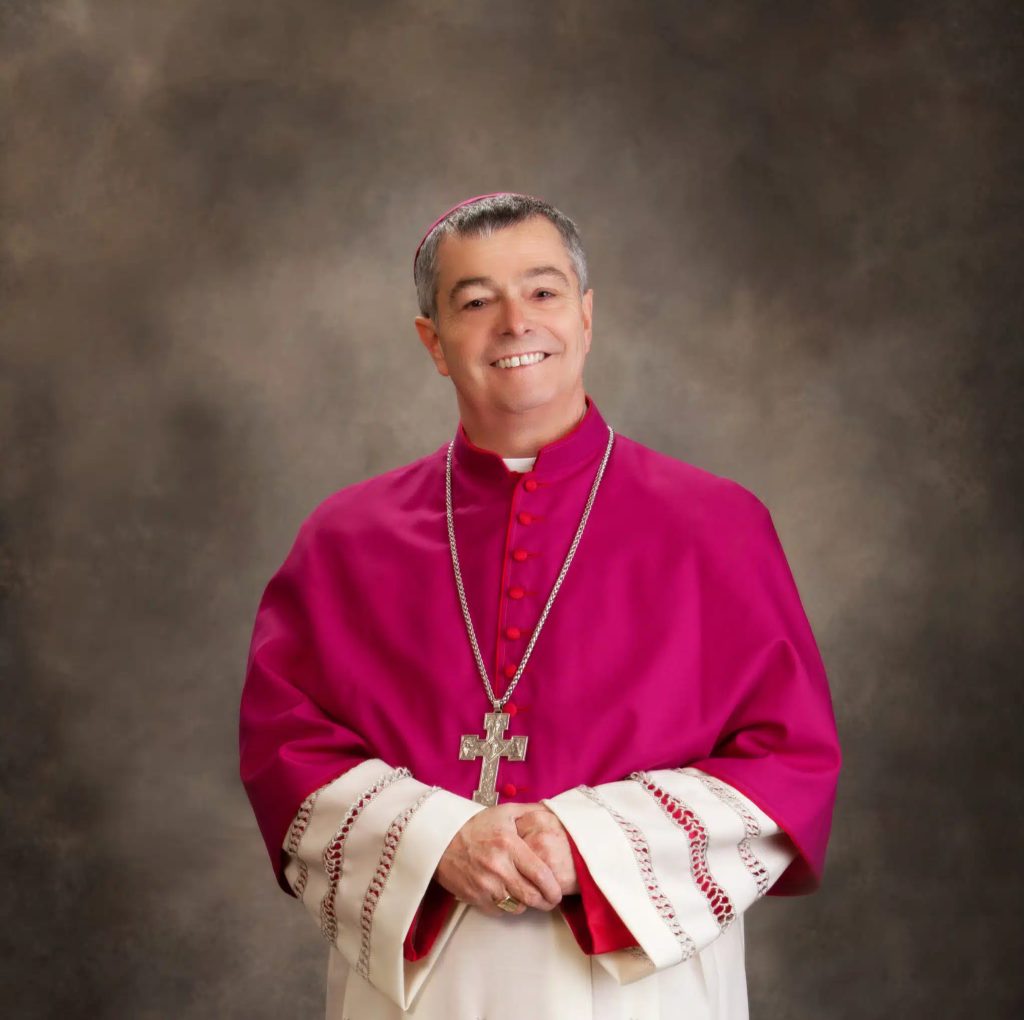
Owensboro Bishop Medley ends parish TLM and grants “permission” for Novus Ordo ad orientem instead
Bishop William Medley of Owensboro has ended the Traditional Latin Mass at a parish in Kentucky and granted “singular permission” for the Novus Ordo to be celebrated ad orientem in its place A Kentucky bishop has ordered the end of the Traditional Latin Mass in a diocesan parish after concluding that he could not satisfy Vatican conditions for permission to continue celebrating according to the 1962 Roman Missal. Bishop William F. Medley of Owensboro instructed Fr David Kennedy of Immaculate Conception Parish in Earlington to cease offering the Traditional Latin Mass after June 30, while granting “singular permission” for the celebration of the Novus Ordo ad orientem , which he suggests is said in Latin. In a letter dated May 18, Bishop Medley said he had reviewed correspondence received from the Holy See in 2023 regarding permission for the continued celebration of the older form of the Roman Rite. He wrote that Rome had indicated that any request to renew the permission would need to be accompanied by a report detailing attendance at the Masses and recounting “the steps which have been taken to lead the faithful who are attached to the antecedent liturgy towards the celebration of the liturgy according to the liturgical books reformed by decree of the Second Vatican Council and which form the unique expression of the lex orandi of the Roman Rite”. “As I am unable to demonstrate that this condition has been met, I have no standing to request an extension of the Holy See’s instruction, and I am directing you not to celebrate the Mass according to the Roman Missal of 1962 after June 30, 2026,” the bishop wrote. Bishop Medley said he recognised that some Catholics attached to the older liturgy had accepted attendance at the Mass of Paul VI celebrated in Latin. “I know that in some dioceses the faithful who have shown a preference for the Mass celebrated in Latin have accepted the Novus Ordo Mass celebrated in the Latin language,” he wrote. “I trust that between now and July 1, 2026, you can obtain the appropriate Missal of Paul VI in Latin. I will grant the singular permission to offer this Mass ad orientem.” The bishop revealed that he had delayed acting on the Vatican instruction for almost a year. “As we discussed, I have permitted nearly a year to pass beyond reception of this consent from the Holy See,” the bishop wrote. “I did this in recognition of the death of Pope Francis.” The Bishop of Owensboro added that he had allowed the continuation of the Traditional Latin Mass following the election of Pope Leo XIV “to see if he would reconsider the matter of the Mass offered in parish churches”. “After more than a year, and the January Consistory of the College of Cardinals in which they specifically chose not to review Traditionis Custodes, I feel obligated as bishop to act in accord with the direction of the Holy See,” Bishop Medley wrote. Addressing possible objections from parishioners, he told Fr Kennedy: “For the faithful who may object to this directive, you may certainly refer them to me, but please make clear that I am acting in accord with my promise to the Pope, the Bishop of Rome.” The letter concluded with the bishop thanking the priest for his ministry to what he described as a “small and unique community”. Traditionis Custodes placed limitations on the celebration of Mass according to the 1962 Missal and declared the liturgical books promulgated after the Second Vatican Council to be the “unique expression” of the Roman Rite. The document effectively reversed the approach taken by Pope Benedict XVI in Summorum Pontificum, his 2007 apostolic letter which granted priests broad freedom to celebrate the Traditional Latin Mass without requiring permission from their bishops. Since the promulgation of Traditionis Custodes, bishops throughout the United States and elsewhere have implemented the Vatican’s directives in different ways, with some restricting the older liturgy to designated locations while others have gradually withdrawn permissions altogether.
Jun. 22, 2026
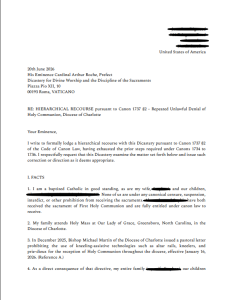
Published in full: Cardinal Roche receives recourse from Charlotte father after family says Communion was denied at altar rail
Cardinal Arthur Roche has received a formal recourse from a Charlotte father whose family says it was repeatedly denied Holy Communion after kneeling at an altar rail. AdVaticanum is publishing the appeal in full Cardinal Arthur Roche has received a letter of hierarchical recourse from a North Carolina father whose family claims it was repeatedly denied Holy Communion because they knelt at an altar rail, in a dispute arising from Bishop Michael Martin’s restrictions on kneeling for Communion in the Diocese of Charlotte. The appeal, submitted to the Dicastery for Divine Worship and the Discipline of the Sacraments on 20 June, is the latest development in a controversy that has been building for months at Our Lady of Grace parish in Greensboro, where tensions have intensified since diocesan restrictions on altar rails, kneelers and prie-dieux came into force earlier this year. The father, who filed the recourse without a canonical advocate, says that he, his wife and their two children were denied Holy Communion on three occasions after kneeling at the parish altar rail. The family also alleges that a similar incident occurred during a Confirmation Mass attended by Bishop Martin on 29 April. Speaking to AdVaticanum after the incident, the father described what happened when his family approached the rail during the liturgy. “He [Bishop Martin] was sitting in front of us when we went to the rail and he simply ignored us. All the priests turned their backs on us,” he said. He later added: “Everyone else communicated and we were denied. To be frank, it was very humiliating.” A letter of hierarchical recourse is a formal administrative appeal in Catholic canon law that allows clergy, religious or lay faithful who believe themselves aggrieved by a lower ecclesiastical authority’s decision to seek redress from that authority’s hierarchical superior. The recourse sent to Cardinal Roche opens by identifying the family and setting out their canonical status. The father states that he, his wife and children are all Catholics in good standing and emphasises that none is subject to any censure or prohibition preventing them from receiving the sacraments. “I am a baptized Catholic in good standing, as are my wife and our children,” he wrote. “None of us are under any canonical censure, suspension, interdict, or other prohibition from receiving the sacraments.” The appeal then traces the dispute back to a pastoral letter issued by Bishop Martin in December 2025, which prohibited the use of what the recourse describes as “kneeling-assistive technologies such as altar rails, kneelers, and prie-dieux” throughout the diocese from 16 January 2026. According to the father, the consequences of that directive became apparent at Our Lady of Grace when his family continued to approach Holy Communion in the same manner they had done for years. The recourse states that on 30 April, 10 May and 17 May the family approached the minister of Holy Communion and knelt at the altar rail before being passed over. “On each occasion, the minister declined to administer the Sacrament,” the document states. A significant portion of the appeal is devoted to rebutting any suggestion that the family failed to present themselves properly for Communion. “I wish to state formally and, for the avoidance of doubt: my family presented itself for Holy Communion on each of the three occasions listed above,” the father wrote. “The suggestion that we had not done so, or that the manner of our presentation was insufficient to constitute a request for the Sacrament, is without foundation.” He argues that kneeling at the altar rail had been the established practice at the parish for more than five years and that no communicant had previously been considered not to have presented himself for Communion while approaching in that manner. The appeal also raises concerns about the position of his wife, who is pregnant with the couple’s third child. The father tells Cardinal Roche that as the pregnancy progresses she will become increasingly dependent on physical support when rising from a kneeling position, and argues that the removal of altar rails and similar supports creates a practical obstacle to her continuing customary devotional practice. “I note with particular gravity that my wife is currently in her second trimester of pregnancy,” he wrote. “As her pregnancy advances, she will be physically unable to rise from a kneeling position without the assistance of the now banned kneeling-assistive technologies.” The recourse details the procedural steps taken before the matter reached Rome. The father says he submitted a written petition to Bishop Martin on 1 June seeking revocation or amendment of the policy. According to the document, the Diocese of Charlotte rejected the request on 4 June and subsequently informed him on 15 June that the policy would continue to be enforced. Having exhausted the remedies required under Canons 1734 to 1736, he lodged the present recourse under Canon 1737 §2. The appeal cites several provisions of canon law and liturgical legislation which it says are relevant to the dispute. Among them are Canon 912, which states that any baptised person not prohibited by law can and must be admitted to Holy Communion, and Canon 843 §1, which provides that sacred ministers may not deny the sacraments to those who seek them at appropriate times, are properly disposed and are not prohibited by law from receiving them. The father also points Cardinal Roche to Article 91 of Redemptionis Sacramentum , which states: “Therefore, it is not licit to deny Holy Communion to any of Christ’s faithful solely on the grounds, for example, that the person wishes to receive the Eucharist kneeling or standing.” The appeal additionally cites the American adaptation of the General Instruction of the Roman Missal , noting that although Communion is normally received standing, “Communicants should not be denied Holy Communion because they kneel.” Particular emphasis is placed on a 2002 response from the Congregation for Divine Worship and the Discipline of the Sacraments. “The Congregation considers any refusal of Holy Communion to a member of the faithful on the basis of his or her kneeling posture to be a grave violation of one of the most basic rights of the Christian faithful,” the document quotes. In the concluding sections of the recourse, the father argues that the dispute now extends beyond his own family and risks causing wider division within the diocese. “The faithful of the Diocese of Charlotte are, in great numbers, deeply devoted to the posture of kneeling before Our Lord in His Eucharist,” he wrote. “If left unresolved, this conflict is likely to cause lasting damage to the unity and peace of the local Church.” The father asks Cardinal Roche to acknowledge receipt of the recourse, suspend Bishop Martin’s directive while the case is considered, examine whether the denials of Holy Communion violated canon law, and direct that Holy Communion not be withheld solely because a communicant chooses to kneel. The Dicastery for Divine Worship and the Discipline of the Sacraments has not yet announced whether it will accept the recourse for formal examination. The letter is reproduced in full below:
Jun. 22, 2026