

Outside the Walls
Cardinal Nemet says Catholic-Orthodox relations have entered a new phase
Cardinal Ladislav Nemet says relations between the Catholic Church and the Serbian Orthodox Church have improved markedly in recent years. He also reflects on reconciliation in the Balkans, the dangers of hate speech and why the Church must avoid clericalisation Cardinal Ladislav Nemet has said relations between the Catholic Church and the Serbian Orthodox Church have entered a significantly more positive phase, while warning against clericalisation within the Church. In an interview with the Archdiocese of Belgrade’s internal news service, the Archbishop of Belgrade reflected on political tensions across the Balkans, the responsibilities of religious leaders and the dangers posed by nationalism and hate speech. He also argued that the Church must avoid clericalisation if it is to fulfil its mission faithfully. “I would say that the last five or six years have been good,” Cardinal Nemet said when asked about relations between Catholics and the Serbian Orthodox Church. “The coronavirus pandemic was a boundary that changed people and relationships to some extent. Shared suffering has helped us realise that we are closer to each other than some ideologies want to tell us.” The Cardinal suggested that the shared experience of the pandemic had cut across long-standing political and theological divisions, creating opportunities for cooperation that had previously been difficult to achieve. Rather than allowing religion to become another source of division, Cardinal Nemet argued that faith communities should draw upon what he described as religion’s original purpose: serving the common good. “We must not forget the power that lies in religion,” Cardinal Nemet said. “The original power of every religion is immense.” That influence, he continued, can either contribute to peace or be misused to deepen conflict. “This immense power can be used for good or for evil,” Cardinal Nemet said, adding that those entrusted with leading religious communities therefore bear “a huge responsibility”. The Cardinal argued that Catholics, Orthodox Christians, Protestants and Muslims each possess the capacity to influence society positively when they work together rather than against one another. Religious leaders, Cardinal Nemet said, should understand “how great the positive power of religions is when they unite and how much they can change the thinking of their followers and positively affect society”. The Archbishop also reflected on reconciliation in the Balkans, where the wars of the former Yugoslavia continue to shape political discourse more than three decades after the conflicts ended. Cardinal Nemet expressed concern that public debate remains rooted in hostility, warning that “hate speech is one of the greatest sources of all adversity”. If such language is “repeated enough”, he warned, “it becomes a reality, and this reality can later turn into actions that can be deadly”, recalling that “there has been a lot of bloodshed in this region in recent history”. Although acknowledging that relations between Croatia and Serbia have improved in some respects, Cardinal Nemet said reconciliation was progressing “too slowly”. Pointing to the example of France and Germany after the Second World War, he argued that “with good intentions and political action aimed at the common good, reconciliation is possible”. That common good, Cardinal Nemet added, must “promote not only the good of one’s own nation, but the good of the entire human family in this region”, with “much more” needing to be done “to strengthen friendly ties and bridges, and to reduce tensions that are always present and can very easily flare up again”. Outside of politics, Cardinal Nemet reflected on the wider contribution that religious dialogue can make in societies where different faith communities coexist. Referring to the Mediterranean Theological Meetings, he described the initiative as “an extremely positive” contribution at a time when religion has returned to global affairs with “enormous force”. While acknowledging that faith has not always been used positively, Cardinal Nemet insisted that “all religions can play an extremely important role in promoting a better and more humane life”, even though they can also become instruments for “wars, sowing hatred and excluding anyone who believes or thinks differently”. Participants often arrive at such gatherings with firmly established opinions, Cardinal Nemet acknowledged, observing that “everyone comes here with a certain attitude”. Nevertheless, he argued that “four days of being ‘bombarded’ with the idea of a possible civilisation of love or a civilisation of coexistence certainly changes both the young people and the lecturers”, demonstrating the value of sustained encounter and dialogue. The interview also addressed the relationship between religion and public life, with Cardinal Nemet warning against excessive clericalisation. Religious leaders, he argued, should recognise “areas in which they have no claim”. “If I am called to care for believers, my task is not to control their opinions or guide them at all costs,” Cardinal Nemet said. “I need to help them make independent decisions on their life path and to independently find the path to God.” “For me, clericalisation begins when I decide that my path is the only correct one. And it is not,” Cardinal Nemet continued. While describing religion as “one of the deepest feelings in man” and an important voice of conscience, he insisted that “religions cannot decide about life alone”. Science, politics and other aspects of society all have their legitimate place, while “religion can be the voice of conscience and say that something should be different, but it is not up to us to decide these things”. On episcopal leadership, Cardinal Nemet distinguished between constructive criticism and what he described as “blind criticism”. While some criticism helps identify “something I could have said, done or understood differently”, Cardinal Nemet said there are also attacks that arise “just because someone doesn’t like something, without a real and objective evaluation”. Even so, Cardinal Nemet insisted that the Church cannot retreat from its public mission. “We need to speak up,” he said, “but not to hurt or exclude, but to try to show how it could be different.” He linked that responsibility to the witness of the early Church, observing that “the first three centuries were a time of brave men and martyrs”, whose courage shaped Christianity’s development.
Jul. 20, 2026
US bishops say Trump administration should remove IVF from fertility benefits rule
The US Conference of Catholic Bishops has submitted a 17-page response to the Trump administration’s proposed fertility benefits rule, arguing that IVF should be removed and that federal policy should instead support treatments that address the underlying causes of infertility The United States Conference of Catholic Bishops has urged the Trump administration to remove in vitro fertilisation (IVF) from a proposed federal rule designed to expand fertility benefits. In a 17-page submission to the Departments of Labour, Health and Human Services, and the Treasury, the bishops welcomed the administration’s recognition that infertility is “a serious matter” and supported efforts to assist couples suffering from it. However, they contended that the proposed regulation should instead prioritise treatments that address the underlying causes of infertility. “We urge the Departments to refocus the rule on therapeutic, restorative treatments, and to abandon its inclusion of IVF, which is profoundly flawed both legally and morally,” wrote William J. Quinn, the USCCB’s general counsel, and Daniel Balserak, associate general counsel, in the closing recommendations of the public comment submitted on 13 July. While President Donald Trump has repeatedly expressed support for expanding access to IVF, the bishops argue that any federal framework should distinguish between restorative medical care and assisted reproductive technologies. At the centre of the bishops’ argument is the claim that infertility should be understood principally as a symptom of underlying medical conditions rather than as a disease in itself. Consequently, they argue that public policy should encourage medical interventions that seek to restore normal reproductive function. “The Church affirms the deep desire of spouses to welcome children and supports medical efforts to address infertility,” the submission states. “At the same time, public policy should not promote practices that undermine the dignity of human life or sever the connection between procreation and the marital act.” The bishops devote considerable attention to restorative reproductive medicine (RRM), describing it as an approach that seeks to identify and treat the causes of infertility rather than circumvent them. They welcomed sections of the proposed rule that would permit employers to offer benefits covering the diagnosis and treatment of infertility-related conditions, including disorders such as endometriosis, polycystic ovary syndrome and hormonal imbalances. They also praised the administration’s acknowledgement that medical treatments addressing the root causes of infertility should be encouraged, arguing that these provisions should be made even more explicit in the final regulation. According to the submission, restorative reproductive medicine “seeks to cooperate with or restore the normal physiology and anatomy of the human reproductive system without the use of methods that are inherently suppressive, circumventive, or destructive to natural human functions.” The bishops proposed several amendments that would strengthen support for restorative care, including clearer references to such treatments in the regulations, greater public awareness of restorative reproductive medicine, and safeguards ensuring that patients are able to access providers even when they are located outside their home states. They also suggested that employers offering fertility benefits should consider requiring restorative treatments before resorting to assisted reproductive technologies. The submission argues that IVF is fundamentally different from restorative medicine because it does not treat infertility but instead bypasses the medical conditions causing it. “In contrast to restorative reproductive medicine, in vitro fertilization does not aim to treat the underlying causes of infertility but seeks to bypass them,” the USCCB wrote. The document goes on to argue that IVF “kills countless children and violates others’ rights and dignity”, asserting that the destruction, freezing and selection of embryos represent a profound violation of human dignity. While acknowledging that couples pursuing IVF often do so with “the most sincere and loving intentions”, the bishops maintain that the procedure itself cannot be morally justified. “It must be said that being conceived by IVF does not make a person have any less dignity than anyone else,” the submission states. “All people bear the image and likeness of God and have equal, infinite dignity as a result. It is precisely for that reason that we advocate protecting them and their dignity in all circumstances and at all stages of life.” Beyond moral objections, the bishops also question whether IVF can properly be regarded as a treatment for infertility. They argue that because the procedure does not cure reproductive disorders, its inclusion within an excepted health benefit stretches the legal meaning of therapeutic care. They further contend that the proposed rule risks moving beyond healthcare into what they describe as a broader “family-formation benefit”, which they argue Congress did not authorise through existing legislation. The submission also criticises the proposal’s suggested lifetime benefit cap of $120,000, arguing that the figure has effectively been determined by the cost of IVF rather than by the cost of genuinely therapeutic medical treatment. Should the administration nevertheless decide to retain IVF within the final rule, the bishops’ conference calls for extensive safeguards. These include limiting the number of embryos created during each treatment cycle, excluding coverage for embryo destruction, selective reduction abortions and genetic screening, requiring fuller informed consent about IVF’s success rates and risks, and ensuring that IVF is used only after a confirmed diagnosis of infertility. Quoting Pope Francis, the submission states that children have “a right to grow up in a family with a father and a mother capable of creating a suitable environment for the child’s growth and emotional development”, arguing that the proposed regulations should define infertility in relation to the inability of a married man and woman to conceive naturally. The document concludes by setting out seven principal recommendations, including limiting fertility benefits to therapeutic treatments, redefining infertility in medical rather than social terms, recalibrating benefit limits around restorative medicine instead of IVF, strengthening religious liberty protections and excluding assisted reproductive technologies that the bishops believe violate human dignity. “The proposed rule represents a valuable opportunity to advance real solutions to infertility that respect the God-given dignity of parents and of children, born and preborn,” Quinn and Balserak conclude. “We urge the Departments to refocus the rule on therapeutic, restorative treatments, and to abandon its inclusion of IVF, which is profoundly flawed both legally and morally.”
Jul. 17, 2026
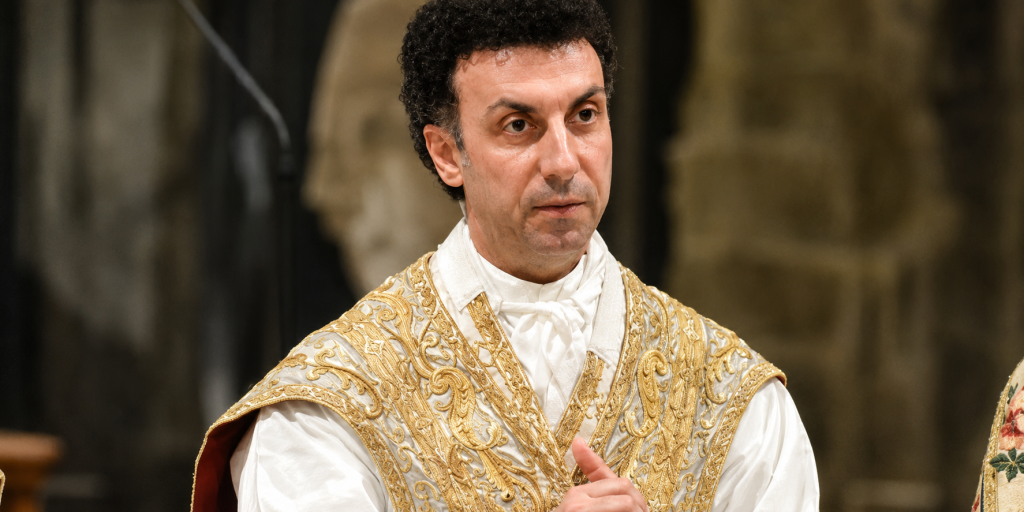
Fr Joachim Heimerl says Vienna Archbishop has imposed a “publication ban”
Fr Joachim Heimerl says Archbishop Josef Grünwidl of Vienna has imposed a “publication ban” on him under threat of suspension. In an interview with Stilum Curiae, the Austrian priest discusses the dispute, his understanding of priestly obedience, and why he believes the measure has no legal basis Fr Joachim Heimerl, a priest of the Archdiocese of Vienna, has said that Archbishop Josef Grünwidl has imposed a “publication ban” on him. In an interview with Marco Tosatti’s blog Stilum Curiae , the priest said the Archbishop sent “some letters that were not very friendly”. He said a recent letter informed him of a “publication ban” and warned that, if he did not comply, there would be “sanctions” that could even extend to “suspension”. Fr Joachim Heimerl is a well-known Austrian priest who was ordained for the Archdiocese of Vienna in 2019. Before his ordination, he was a scholar of German studies and published a variety of works. Upon entering the priesthood, he initially planned to serve in a purely pastoral role. Having experienced serious health problems himself, he believed his vocation was to serve other sick people “as a sick priest”, he explains. However, as his health further deteriorated, he was forced to withdraw from pastoral ministry. Since then, he says, his role as a priest “has been limited to prayer and Holy Mass”, which he celebrates exclusively in private in his home chapel. From this isolation, Fr Heimerl began writing for various Catholic outlets, including Die Tagespost and kath.net . Initially, his articles focused more on cultural commentary, and he cites his tribute to the opera singer Maria Callas as his finest piece. He subsequently turned his attention to the state of the modern Church. Since early 2024, he has written columns for LifeSite that have proved particularly contentious. In November 2024, he published an article entitled Pope Francis leads a ‘magisterium of lies and heresy’ with his ‘Pseudo Synod’ , followed in January 2025 by From the ashes of the ‘Bergoglian church’ the Catholic Church will rise again . Fr Heimerl describes his writing as “my form of pastoral care and preaching”, which remains a “solitary activity”. He believes Archbishop Grünwidl wants to make an example of him because of his “presence in the media”. He said he wrote to the Archbishop to explain that “nowadays it is quite common to impose ‘bans’ on those who profess the faith of the Church, while critics of celibacy and heretics remain undisturbed and can express themselves as they see fit.” He further argues that the Archbishop’s sanction “has no solid foundation and would therefore be legally worthless”, adding that “no one has the right to limit freedom of expression, not even an archbishop”. When questioned about the obedience he promised to his bishop at ordination, Fr Heimerl disputes that understanding of obedience, saying that “the obedience that every priest promises at the moment of ordination is owed solely to Christ and the Church”, which he believes he has “always adhered to”. He also argues that “obedience is never a sort of ‘counterpart’ to fundamental rights” and that, if it were used to limit his “constitutionally guaranteed individual rights”, it could become “what is commonly termed ‘spiritual abuse’.” It is not clear which constitution the priest is referring to. However, the matter may resolve itself naturally, as the priest explains that he has “been thinking about bidding farewell to my readers for some time” because his “health is not improving”. He does, however, say there are still some topics he would like to cover, including a reflection on the Holy Mass and something on the theme of Our Lady as Mediatrix of All Graces.
Jul. 17, 2026
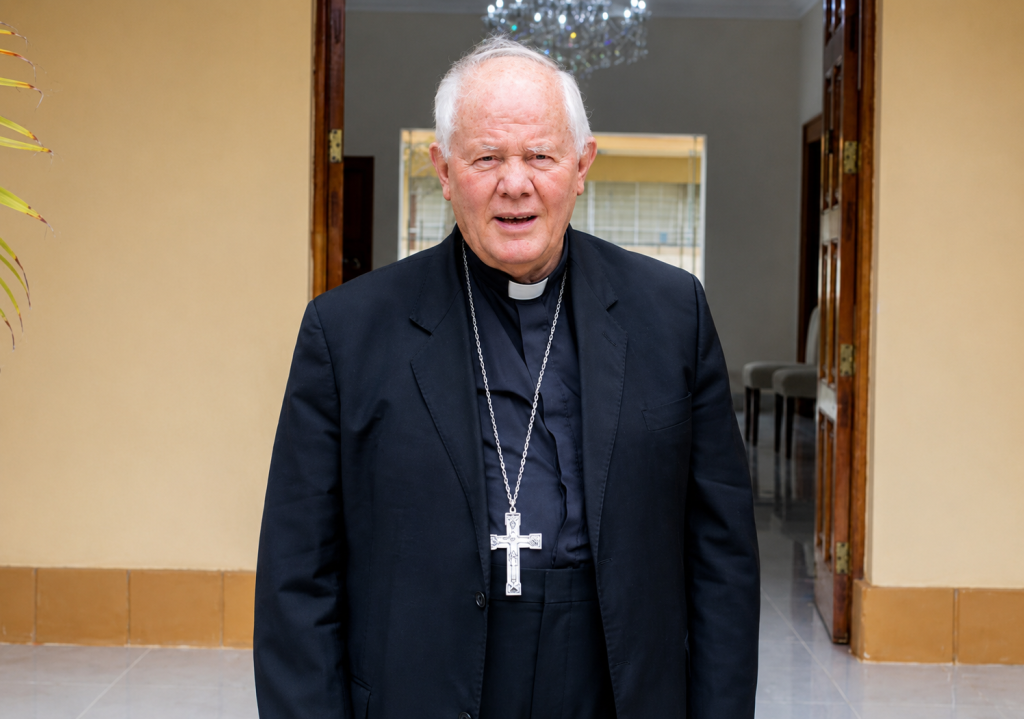
Pope Leo XIV accepts resignation of Peruvian bishop accused of sexual abuse
Pope Leo XIV has accepted the resignation of Bishop Antonio Santarsiero Rosa of Huacho, Peru. The bishop stands accused of sexual abuse and leaves office after reaching the canonical retirement age of 75 Pope Leo XIV has accepted the resignation of a Peruvian bishop as attention begins to turn towards the Pontiff’s expected journey to Latin America in November. The Holy See Press Office announced on 15 July that the Pope had accepted the resignation of Bishop Antonio Santarsiero Rosa, O.S.J., from the Diocese of Huacho after he reached the canonical retirement age of 75. No successor has yet been appointed, leaving the diocese temporarily without a bishop as the Vatican considers its next appointment. Bishop Santarsiero, who turned 75 on 13 June, was required under Canon 401 §1 of the Code of Canon Law to submit his resignation upon reaching the customary retirement age for bishops. Allegations have been made against the bishop, although the Vatican’s announcement made no reference to the accusations. A priest in 2024 submitted a dossier to the Apostolic Nunciature in Lima and to the Dicastery for Bishops alleging that Bishop Santarsiero had sexually abused both a former seminarian and the priest himself. According to the allegations, the former seminarian claimed that the bishop subjected him to unwanted sexual contact over a period of years beginning while he was still a minor. The complaint further alleged that promises of scholarships, employment and opportunities within the diocese were used to exert influence over him. The same dossier also contained allegations from a priest who had previously served as Bishop Santarsiero’s secretary. According to the documentation, the priest claimed he had been subjected to unwanted physical contact and psychological pressure. The complaint further alleged that, after rejecting the bishop’s alleged advances, attempts were made to undermine his credibility by circulating claims about his sexual orientation. When the allegations became public earlier this year, Bishop Santarsiero rejected them in their entirety. As the accusations attracted increasing attention, the bishop stepped aside from his responsibilities as Secretary General of the Peruvian Episcopal Conference, stating that he wished to “clarify the truth”, according to the conference’s statement. He has continued to categorically deny every allegation made against him. According to the material submitted by the complainant, documentation detailing the accusations was first presented to Cardinal Robert Prevost, then Prefect of the Dicastery for Bishops, in November 2024 before being personally delivered in Rome the following month. The Vatican has not publicly confirmed receipt of those submissions or indicated whether a canonical investigation was opened in response. The case has attracted attention because of the relationship between the then Cardinal Prevost, now Pope Leo XIV, and Bishop Santarsiero within the Peruvian episcopate. Both men served together in the leadership of the Peruvian Episcopal Conference for several years. Bishop Santarsiero became president of the conference’s Economic Council in 2017, while then Bishop Robert Prevost was elected Second Vice-President in 2018. Both were re-elected to those positions in 2022 for the 2022–2025 term and worked alongside one another until Pope Francis appointed Archbishop Prevost Prefect of the Dicastery for Bishops in January 2023. Their association did not end with Archbishop Prevost’s move to Rome. The two bishops continued to appear together at ecclesiastical events, including a Mass celebrated by Cardinal Prevost in Chiclayo in November 2023, which Bishop Santarsiero attended. There is no evidence or suggestion that either as Bishop or Pope that Pope Leo XIV had any reason to suspect that Bishop Santarsiero was behaving improperly. Their association is normal and expected with their ecclesiastical positions. Born in Avigliano, Italy, in 1951, Bishop Santarsiero entered the Oblates of St Joseph in 1973 after qualifying in typography. He pursued philosophical and theological studies at the Pontifical and Civil Theological Faculty of Lima before being ordained to the priesthood on 14 June 1980. His episcopal ministry began in 2001 when Pope St John Paul II appointed him Prelate of Huari. Following his episcopal ordination later that year, he led the territorial prelature until 2004, when the same Pope transferred him to the Diocese of Huacho. Bishop Santarsiero formally took possession of the diocese on 25 April 2004 and remained there for more than 21 years. The timing of the resignation is also notable given Pope Leo XIV’s expected apostolic journey to Latin America later this year. As AdVaticanum has previously reported, unlike the Pope’s recent visit to Spain, which centred on a single country, the November trip is expected to encompass several countries. AdVaticanum understands that the Holy See is preparing an itinerary that will include Peru, Uruguay and Argentina, with elements of the Peruvian programme already beginning to emerge ahead of an official announcement expected later this month. The acceptance of Bishop Santarsiero’s resignation removes one unresolved leadership issue in the Peruvian Church before the Pope’s anticipated arrival. The Holy See has offered no explanation beyond accepting the resignation submitted in accordance with canon law, but the decision leaves the Diocese of Huacho vacant as preparations continue for the Pontiff’s expected visit to the region. AdVaticanum understands that Peru is expected to present the greatest challenges during the visit, primarily because of continuing tensions surrounding the Archdiocese of Lima. Local reporting has pointed to ongoing internal disputes and power struggles linked to a series of decisions taken by Cardinal Carlos Castillo. AdVaticanum further understands that planned public appearances involving Pope Leo XIV and Cardinal Castillo have been kept to a minimum, effectively sidelining the Archbishop of Lima during the anticipated visit.
Jul. 16, 2026
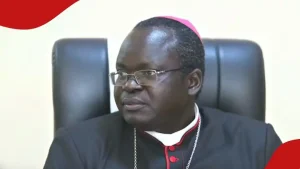
Bishop asks women to stop pursuing Catholic priests
After suspending six priests and introducing reforms across the Diocese of Maralal, Bishop Hieronymus Joya has appealed to women not to pursue relationships with Catholic clergy, defending priestly celibacy and warning that priests remain vulnerable to temptation The Bishop of Maralal has asked for women not to pursue relationships with Catholic priests. Bishop Hieronymus Emusugut Joya, I.M.C. made the remarks after introducing disciplinary measures across the Diocese of Maralal and suspending six priests over allegations ranging from adultery to the abuse of ecclesiastical authority, negligence in administration, and the mismanagement of Church property. “For those intending to tempt priests and force them into affairs that go against their beliefs and priestly calling, please stop,” the bishop said. “These priests are human and have feelings. If you convince them, they might fall.” His intervention came as he defended the Church’s expectation of priestly celibacy while addressing recent disciplinary action within the diocese. Referring to priests who maintain relationships or have children, Bishop Joya questioned how they could faithfully fulfil their ministry while carrying responsibilities incompatible with their vocation. “How can you do the business of God when you have private businesses, a woman, and a child to support?” the Kenyan bishop asked. The latest comments follow reforms announced during Mass, when the bishop outlined what he described as a determined effort to restore discipline, accountability and sound governance throughout the northern Kenyan diocese. The disciplinary measures include the suspension of Fr Paul Maina, Fr Peter Musau, Fr Stephen Lekasuyan, Fr Peter Nderitu, Fr Christopher Letikirich and Fr John Dida. According to Bishop Joya, the sanctions were imposed only after credible evidence had been gathered and canonical procedures observed. “I do not accuse any priest without credible evidence,” he said, explaining that he had acted “in accordance with the Code of Canon Law” to safeguard both “the integrity of the priesthood and the proper stewardship of Church property”. The six suspensions represent around 15 per cent of the diocese’s clergy. During his latest remarks, he also disclosed that one of the priests concerned had contributed to the closure of Wamba Hospital, although he did not elaborate further. Alongside the suspensions, Bishop Joya has introduced a series of binding regulations governing priestly life throughout the diocese. Priests are now required to return to their presbyteries by 7.00 pm each evening for community prayer and may not spend the night away from their residence without the bishop’s permission. Overnight stays by lay people in priests’ residences or religious houses have likewise been prohibited unless prior authorisation has been granted. The reforms also tighten expectations surrounding alcohol, financial administration and personal conduct. Priests are forbidden from drinking in bars or consuming alcohol in parish residences, while anyone found intoxicated is barred from celebrating the liturgy. “It is painful to state that I found the diocese with multiple problems, but no one was willing to tell me the cause of the problems and how to get the solution,” the bishop said. Research by A. W. Richard Sipe, based primarily on interviews with North American clergy, estimated that only around 50 per cent of priests were practising celibacy at any given time, with others engaging in sexual relationships with adults. Vincent Doyle has suggested that priests have fathered thousands of children globally among the approximately 415,000 Catholic clergy, indicating that non-adherence is not uncommon, although precise figures are unavailable owing to underreporting and secrecy. In Africa, qualitative reports have documented cases of priests violating celibacy through relationships and fathering children, often with cultural pressures playing a part. A 1988 report from Malawi described local priests impregnating 29 nuns in one women’s congregation. In Kenya’s Samburu region, a priest has previously been linked to fathering a child with a 16-year-old girl. Reports have also documented priests maintaining secret families in various African countries, contributing to breakaway churches of married former priests in Uganda that have attracted thousands of followers. Photo: Ramogi TV. Read more
Jul. 16, 2026
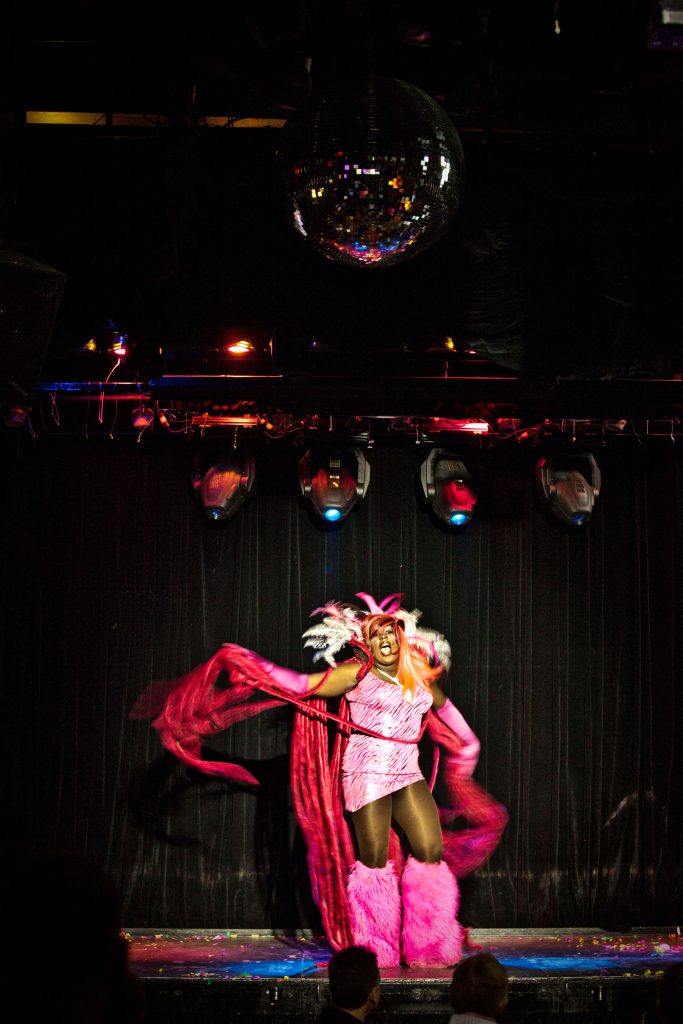
Government-funded drag group ordered to stop events at former Catholic church
A government-funded drag group has been ordered to stop events at a former Catholic church in Sydney after landlords said performances had mocked the religious beliefs of millions of Christians. The venue had received a $100,000 grant from Create NSW Divine Playhouse, a theatre in a deconsecrated Catholic church in Sydney which has received $100,000 in government funding, has been ordered to stop “engaging in offensive trade”. The playhouse, which initially called itself “Unholy Playhouse”, had planned a series of events, including one on Sunday 12 July dubbed “Sunday Mess — An Unholy Brunch Party: The Resurrection”. However, protests from local men’s groups followed the first event. Fit for the Kingdom and the Christian brotherhood Prodigal Sons protested outside the playhouse during “The First Rite – Opening Night” on 8 July. The following day, the landlords sent a notice of breach to the venue’s organiser, Heaps Gay Events, saying it had “insulted and mocked the sincerely held religious beliefs of millions of Christian Australians”. The venue was given two days to cease operations. Heaps Gay describes itself as “coaxing Sydney out of its shell with larger-than-life parties and events since 2013” and says it aims to “spread inclusive love through art”. The building itself was constructed as a Catholic church 158 years ago, but it was deconsecrated in 1932. Since then, it has served as both a theatre and a school. The promotion of the event proved particularly controversial. On the group’s Instagram account, which has since been removed, the bio described it as a “Sanctuary for Mischief”, with a cross as its profile picture. Screenshots seen by AdVaticanum show men dressed as nuns alongside the caption “Sanctifying this wonderful sanctuary”, while another shows a group huddled beside a statue of the Blessed Virgin Mary with the caption “We’ve come a long way baby, Unholy opens this week”. The most offensive image showed a man dressed as a pig offering McDonald’s French fries with the captions “Body of Christ?” and “nom nom”. Despite the offensive nature of the planned events, some defended the playhouse. Australian politician Cate Faehrmann described the criticism as a “wave of manufactured outrage from dangerous conservative activists who want to police what art can exist and who gets to belong in our city”. The organisation has also received strong government backing, with a $100,000 grant from the state’s arts agency, Create NSW. The opening night was attended by several political dignitaries, including Sydney Deputy Lord Mayor Jess Miller. Speaking at the event, Miller said: “What happens between us when we come to places like this is we create cathedral communities that are ultimately so much stronger for being together than for being split.” Speaking to AdVaticanum, Fit for the Kingdom said: “Our most sacred rituals, such as the Holy Sacrifice of the Mass, the Liturgy of the Hours, and practices like exorcism, are not only mocked but incorporated into sexually promiscuous scenes and acts.” Explaining the decision to protest, Fit for the Kingdom’s Tomas Mones-Cazon said: “We believe it is our duty as Christians, and especially as men, to stand up for our faith, raise awareness that this is happening, and, most importantly, pray for the conversion and contrition of heart on the part of the organisers and those involved.” He also made it clear that, while “we would prefer former churches not be turned into nightclubs”, the issue was not the use of a former church for secular events but rather that “our Lord and Saviour is actively being mocked inside the venue, and we will not remain silent in the face of ongoing blasphemy, particularly when it is supported by taxpayer dollars.” Following the cancellation of the events, it is understood that the City of Sydney is considering a proposal to redevelop the former church into luxury apartments.
Jul. 15, 2026