

Outside the Walls
Priest among three detained over murder of Mozambican bishop
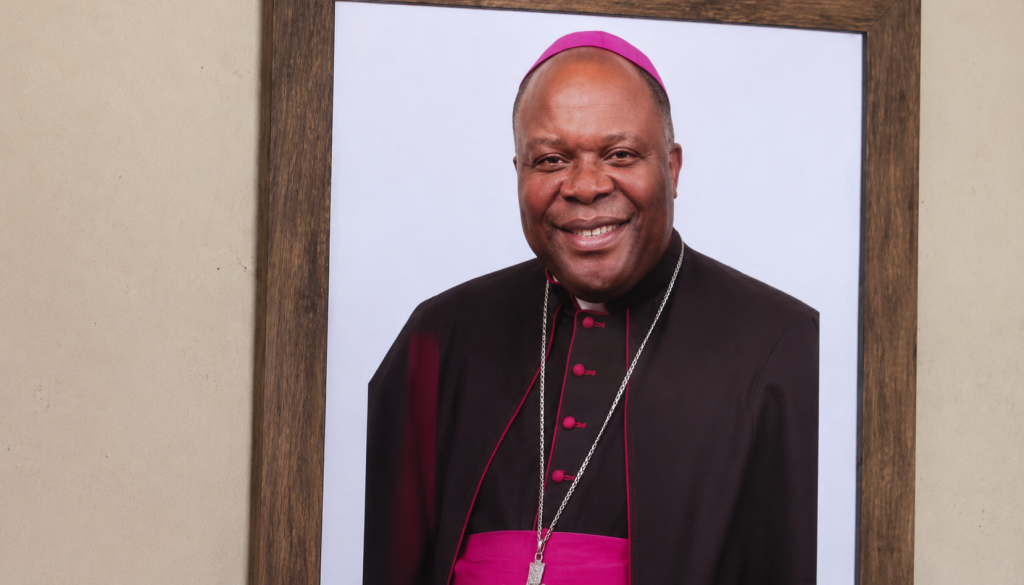
A Catholic priest, a security guard and a gardener have been placed in preventive detention as investigators probe the killing of Bishop Osório Citora Afonso of Quelimane. The bishop was shot dead at his residence on 6 June A Catholic priest has been detained on suspicion of involvement in the murder of Bishop Osório Citora Afonso of Quelimane in a dramatic development in the investigation into the killing of one of Mozambique’s most senior churchmen. The priest, together with a security guard and a gardener employed at the bishop’s residence, has been placed in preventive detention after appearing before an investigating judge in Zambézia Province, where Bishop Afonso was shot dead on 6 June. Mozambican authorities have not released the names of the suspects and have disclosed little about the evidence that led to the arrests. The arrests are a significant turn in a case that has shocked Catholics across Africa. Mozambique’s National Criminal Investigation Service (SERNIC) said Bishop Afonso died a violent death after being shot with a firearm. Investigators have carried out forensic examinations, ballistic tests, DNA analysis and other technical procedures as part of the inquiry. Questions remain, however, over how the killing was carried out and whether others may have been involved. Initial reports following the bishop’s death suggested that attackers entered the episcopal residence from outside the compound before fatally shooting him. Bishop Afonso was reportedly struck in the chest and his body was later found inside the residence. The prospect that a member of the clergy could be implicated in the crime has stunned many Catholics in Mozambique. According to reports from the country, the detained priest belongs to the Diocese of Quelimane. Authorities have not commented publicly on the alleged role played by any of the suspects while investigations continue. Bishop Afonso, a Consolata Missionary, had led the Diocese of Quelimane since August 2025 and was also serving as Apostolic Administrator of Beira. Before returning to Mozambique, he spent several years working in Rome at the Dicastery for Evangelisation. His murder prompted an outpouring of grief from Church leaders in Mozambique and beyond. Archbishop Inácio Saúre, president of the Mozambican bishops’ conference, said shortly after the killing that the bishop had been found “lifeless and in strange circumstances that have yet to be clarified”. The bishops later described the killing as “an attempt to silence the voice of faith, justice and peace” and demanded a thorough investigation into the crime. Pope Leo XIV also expressed his sorrow following the bishop’s death. In a message released by the Holy See, the Pope said he had learned “with sorrow of the grave act of violence” which claimed the life of Bishop Afonso and assured the faithful of his prayers. The Pope said he joined “in prayer with the people of the dioceses and of Mozambique in this hour of distress” and asked the Lord to “stay the hand of the violent”. During the bishop’s funeral in Quelimane, the Apostolic Nuncio to Mozambique, Archbishop Luis Miguel Muñoz Cárdaba, called for the full truth about the killing to emerge. “We must not fear the truth. The truth sets us free,” the Archbishop said. The Nuncio described Bishop Afonso as “a man of peace” and “a man of reconciliation”, adding that the Church must remain steadfast in seeking justice. The killing has been condemned across the continent. The Symposium of Episcopal Conferences of Africa and Madagascar expressed its “profound shock, sorrow, and indignation” at the bishop’s death, while clergy in Mozambique denounced the murder as a “barbaric act” and a “heinous act”.
Jun. 13, 2026
Consecration, canonisation causes and safeguarding votes headline US bishops’ meeting
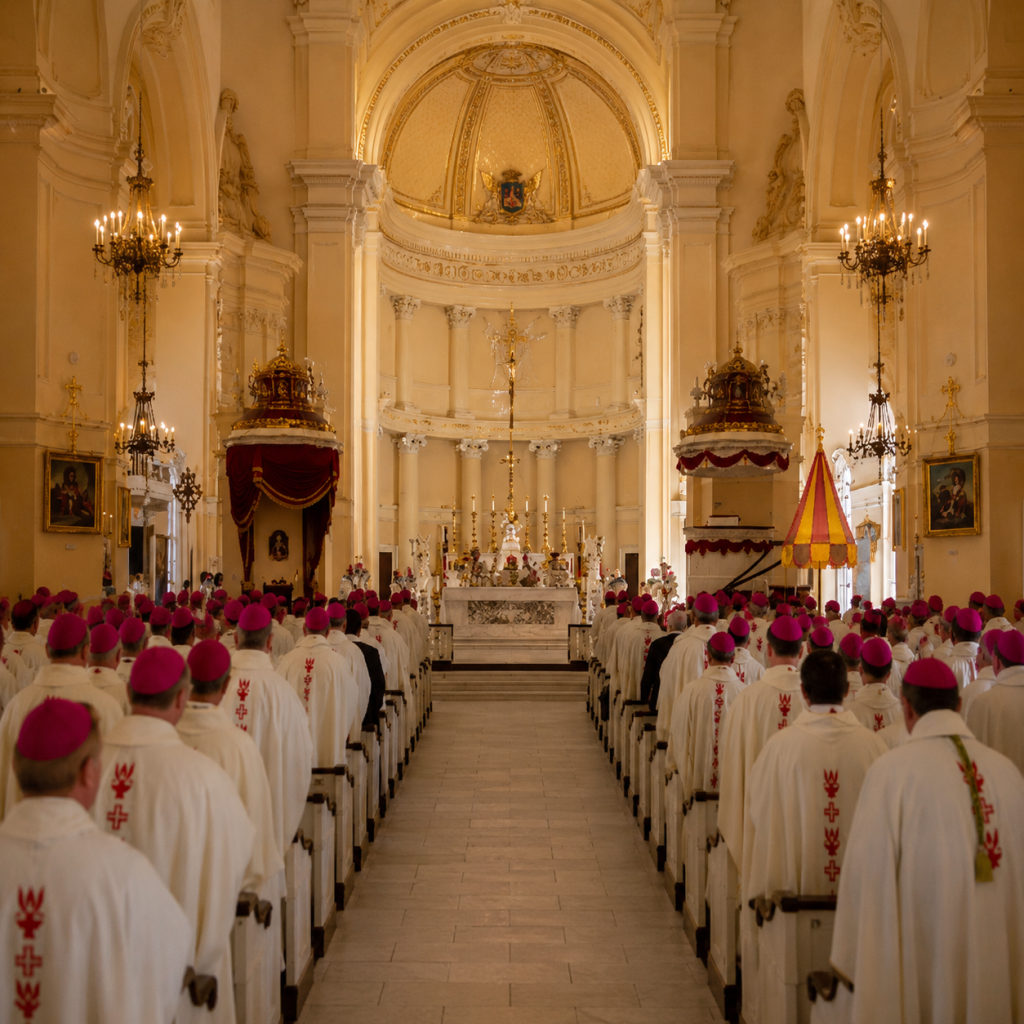
The US bishops have concluded their Spring Plenary Assembly in Orlando after approving revisions to the Dallas Charter, advancing two sainthood causes and carrying out a national consecration of the United States to the Sacred Heart of Jesus The bishops of the United States have concluded their 2026 Spring Plenary Assembly in Orlando, Florida, with a series of votes on liturgy, safeguarding and sainthood causes, culminating in the historic consecration of the nation to the Sacred Heart of Jesus as part of the country’s semiquincentennial celebrations. The three day meeting of the United States Conference of Catholic Bishops (USCCB), held from 10 to 12 June at the Omni Resort in ChampionsGate, was the first spring assembly under the leadership of Archbishop Paul S. Coakley of Oklahoma City since his election as president of the conference last year. Public sessions were held on 10 and 11 June before the bishops moved into private discussions and concluding business. The gathering opened with prayer, the approval of the agenda and minutes from previous meetings, and addresses from Archbishop Coakley and the Apostolic Nuncio to the United States, Archbishop Gabriele Giordano Caccia. Bishops also received reports on synodality, Hispanic ministry, prison outreach and safeguarding, while voting on a number of key measures affecting the life of the Church in the United States. In his presidential address, Archbishop Coakley centred his remarks on the theme of Christian hope, warning that contemporary society faces profound threats to human dignity and increasing social fragmentation. The archbishop said the bishops had a responsibility to restore hope wherever it had been lost, particularly through defending the dignity of every human person. “Society tends to disregard and cast aside what it deems useless,” Archbishop Coakley said. “But life, human life, can never be adequately valued based on it being useful or useless. Or a burden or unworthy of protection.” “To restore hope necessitates preaching exactly that, that life is a gift from God. Every life has value and dignity, and we cannot forfeit that dignity, even when it is besmirched by sin and wickedness. It comes from God.” The USCCB president linked this mission to opposition to abortion, euthanasia, racism, abuse and the neglect of the poor, arguing that the Church must be a visible witness to the value of every human life. Archbishop Coakley also highlighted the problem of political and ecclesial division, describing polarisation as a serious obstacle to the Church’s mission. “Polarisation within our country, and even within our Church, is a scandal that can only be overcome through encounter, through the cultivation of interpersonal relationships and conversations between those who may disagree,” the archbishop said. “We must never give up on those who are different or see things differently. We must continue to proclaim the truth of Christ, and the dignity given to each person by the Lord.” The archbishop said the bishops’ conference was working to promote faithful citizenship by encouraging dialogue and placing faith before politics: “A faith that inspires hope, respect, and the pursuit of the common good.” Archbishop Coakley also referred to a January visit to the White House, describing it as cordial while stressing the importance of continued engagement with political leaders. “[W]e must stay in the conversation,” he said, adding that “now is the time for dialogue and building bridges”. One of the most significant discussions of the assembly concerned Catholic higher education. Bishops heard from educational leaders about the challenges facing Catholic colleges and universities at a time of declining religious identity and increasing secularisation. Among the contributions was a presentation by Dr Jonathan J. Schnell, president of the University of St Thomas in Houston, who urged Catholic institutions to recover a stronger sense of their mission. Dr Schnell argued that Catholic universities should embrace their distinctive religious identity rather than resemble secular institutions or political organisations. He said academic freedom must always be ordered towards truth and warned against reducing higher education to workforce preparation. Instead, he said, Catholic colleges should understand themselves as forming the Church’s future intellectual leaders and potentially future Doctors of the Church. Dr Schnell expressed concern about declining numbers of Catholics among faculty and students, revealing that he had recently declined an offer to lead a Catholic institution where most staff and students were not Catholic. “We have changed the demographic and the composition of the faculty and the student body to the point that it has affected what [John Henry] Newman called the genius loci, the spirit of the place,” he said. Drawing on Newman’s vision of a Catholic university, Dr Schnell said Catholic identity depended not only on liturgies and theology classes but on the culture of campus life itself, including student conversations, traditions and the shared assumptions of the academic community. “This Catholic identity can be formed but not engineered,” he said, arguing that it should influence curricula, appointments and decisions about public honours and speaking invitations. Addressing the bishops directly, Dr Schnell urged them to take a more active role in safeguarding Catholic identity. “You could be more vocal, you could be more pushy, and I think you are being too respectful. You own the word ‘Catholic’. We academic administrators don’t,” he said. The assembly also advanced two causes for canonisation. By voice vote, the bishops authorised the opening of the diocesan cause of Monsignor Joseph Francis Buh, a Slovenian born missionary priest who ministered in Minnesota during the nineteenth century and became known for his pastoral work among immigrant communities. The bishops likewise approved the advancement of the cause of Servant of God John Rick Miller, a Catholic layman, husband, father, businessman and international missionary whose spirituality was marked by devotion to the Sacred Heart, the Immaculate Heart of Mary and Eucharistic adoration. The cause was promoted by Bishop Thomas John Paprocki of Springfield in Illinois and Archbishop Thomas Wenski of Miami. The bishops also approved portions of a new edition of the Lectionary for Mass and voted in favour of the 2025 Roman Missal–Liturgy of the Hours Supplement, continuing a years long process of revising liturgical texts for use in the United States. Safeguarding issues occupied a substantial part of the second day of the assembly, when bishops debated and ultimately approved revisions to the Charter for the Protection of Children and Young People, commonly known as the Dallas Charter. First adopted in 2002 in response to the clerical abuse crisis, the Charter sets national standards for the protection of minors and for responding to allegations of abuse involving clergy. The revised text passed by a vote of 176 to 22, with six abstentions, after an unsuccessful effort to postpone the decision until November. Archbishop Shawn McKnight of Kansas City proposed delaying the vote so bishops could consult diocesan review boards, priest councils and abuse survivors. “We will be morally committing ourselves, and everybody under us in our dioceses, to what we hold out in this statement,” Archbishop McKnight said. Bishop Earl Fernandes of Columbus supported the proposal, saying: “I don’t know that we lose very much by delaying.” “When they aren’t sufficiently consulted, there’s been strong pushback,” the bishop added. Several bishops echoed those concerns. Archbishop Paul Etienne of Seattle said he would welcome additional consultation with diocesan bodies and safeguarding officials. “I think the request that’s being made is very legitimate,” Archbishop Etienne said. Bishop Oscar Cantú of San Jose argued that little would be lost through a delay and that broader consultation would strengthen support for the document in local Churches. “Maybe many of us have become synodality weary, but I would say this is an occasion where, as has been mentioned, very little is lost in delaying and much is to be gained,” Bishop Cantú said. However, Bishop Barry C. Knestout of Richmond, chairman of the Committee on the Protection of Children and Young People, insisted that the revisions had already undergone extensive consultation and were ready for approval. “I’m not quite sure what’s gained through the additional time,” Bishop Knestout said. “There has been quite a bit of consultation already.” Auxiliary Bishop Adam Parker of Baltimore, a member of the drafting committee, likewise argued that several years of consultation had already taken place and that further delays were unlikely to produce substantial changes. The motion to postpone failed by 126 votes to 73, with five abstentions, clearing the way for the final vote. The revised Charter seeks to maintain an exclusive focus on the abuse of minors by clergy while clarifying terminology and balancing support for victims and survivors with due process protections for accused priests. Bishop Knestout indicated that a separate document addressing misconduct involving adults and vulnerable adults is being developed. The most visible moment of the assembly came on the afternoon of 11 June when the bishops travelled to the Basilica of the National Shrine of Mary, Queen of the Universe for the consecration of the United States to the Sacred Heart of Jesus. The act followed a national novena and formed part of the Church’s contribution to the 250th anniversary of the Declaration of Independence. Relics of Saint Margaret Mary Alacoque, whose seventeenth century visions helped spread devotion to the Sacred Heart, were present during the liturgy. Archbishop William E. Lori of Baltimore preached the homily, focusing on reconciliation, mercy and hope. The consecration was livestreamed nationally and received support from President Donald Trump. The ceremony marked the first time the United States had been formally consecrated to the Sacred Heart by the nation’s bishops and followed a devotion promoted by numerous popes, including Pope Leo XIII, who consecrated the world to the Sacred Heart in 1899. As the bishops concluded their meeting, the themes of hope, renewal and evangelisation remained at the forefront. The combination of practical decisions on liturgy and safeguarding, discussions on Catholic identity and synodality, and the unprecedented consecration of the nation to the Sacred Heart gave the Orlando assembly a significance that extended beyond routine conference business.
Jun. 13, 2026
“The future belongs to God”: US bishops consecrate America to the Sacred Heart
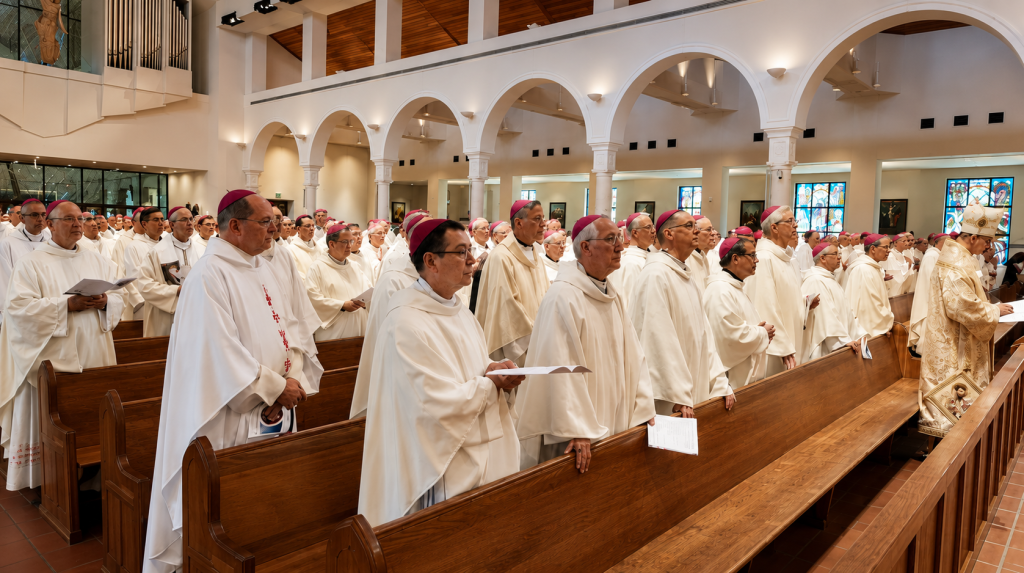
Gathering in Orlando, the Catholic bishops of the United States placed both the Church and the nation under the protection of the Sacred Heart The Catholic bishops of the United States have consecrated the nation to the Sacred Heart of Jesus, marking the 250th anniversary year of American independence. The act of consecration took place on 11 June during the spring plenary assembly of the United States Conference of Catholic Bishops in Orlando, Florida. Bishops from across the country took part in the public act of prayer and devotion that organisers said was intended to place both the Church and the nation under the protection and mercy of Christ. Preaching at the Mass, Archbishop William Lori of Baltimore said the occasion was not primarily a celebration of the nation’s approaching semiquincentennial but an act of faith. “We gather, not first to celebrate ourselves, but to consecrate. To entrust. To place the Church in the United States, and indeed the whole nation, into the Sacred Heart of Jesus Christ,” Archbishop Lori said. He told the congregation that the consecration acknowledged that history is ultimately shaped by God’s providence rather than human achievement alone. “We consecrate our nation, not because it is perfect, but because it is beloved by God,” he said. “We entrust to the Heart of Christ our achievements and failures, our hopes and anxieties, our present challenges and our future aspirations.” The archbishop said the Church approached the moment with gratitude for the blessings received throughout American history while recognising the need for repentance and renewal. “We cannot come to the Heart of Christ while pretending we have no need of His mercy,” he said. Drawing on the Gospel reading in which Christ tells His disciples to remain in His love, Archbishop Lori described the Sacred Heart as “the revelation of God’s love made flesh” and said devotion to it offered an antidote to political and ideological division. “The Sacred Heart does not divide; it reconciles. It does not harden hearts; it transforms them. It does not simply invite us to receive love; it sends us forth to share it,” he said. “The future belongs to God,” Archbishop Lori said. “And so we place into His Heart not only ourselves but generations yet unborn, and all those who will inherit the Church and the nation we leave behind.” The consecration itself was led by Archbishop Paul Coakley of Oklahoma City, president of the bishops’ conference. In the prayer, the bishops entrusted the nation to the Sacred Heart and asked for healing, justice, reconciliation and peace. The prayer gave thanks for the blessings received by the United States, sought forgiveness for sins committed against God and human dignity, and asked that the Church become an ever clearer sign of Christ’s presence in society. Repeated invocations of “Most Sacred Heart of Jesus, have mercy on us” were offered throughout the ceremony. The act of consecration followed a period of reflection by several bishops on the significance of devotion to the Sacred Heart in contemporary society. Archbishop Alexander Sample of Portland argued that devotion to the Sacred Heart offered an answer to what he described as the spiritual anxieties of modern life, including loneliness, insecurity and the search for identity. “The Sacred Heart of Jesus is not merely a symbol,” Archbishop Sample said. “It is the living Heart of the Risen Lord, still beating with love for humanity.” Reflecting on Christ’s sacrificial love, Archbishop Sample said believers could find freedom from the need to base their worth on success or failure. “When we know that we are loved by Christ, we no longer need to build our identity on achievements or failures,” he said. Archbishop Shelton Fabre of Louisville focused on the relationship between devotion to the Sacred Heart and ecclesial unity. He urged bishops to model genuine communion within the Church and resist reducing people to ideological categories. “The Sacred Heart of Jesus never encounters us as categories,” Archbishop Fabre said. “Jesus Christ does not love abstractions. He loves people.” He argued that Christian communion is founded not upon personal preference or political affinity but upon participation in the life of Christ. Archbishop Bernard Hebda of St Paul and Minneapolis spoke about the transforming power of Christ’s love upon wounded hearts. Referring to the motto of St John Henry Newman, Cor ad cor loquitur , or “heart speaks to heart”, he encouraged deeper prayer and a more intimate relationship with Christ. “Drawing near to the heart of Jesus, entering into that intimate dialogue with Jesus, changes everything,” Archbishop Hebda said. Before the Mass, the bishops participated in Eucharistic adoration and venerated relics associated with St Margaret Mary Alacoque, the seventeenth-century French Visitation nun whose visions helped spread devotion to the Sacred Heart throughout the Catholic world. The consecration took place against the backdrop of preparations for the 250th anniversary of the Declaration of Independence in 2026 and formed part of the programme of commemorations taking place across the United States. Devotion to the Sacred Heart occupies a prominent place in Catholic spirituality. Rooted in the Gospel accounts of Christ’s love and sacrifice, it gained renewed prominence through the revelations received by St Margaret Mary between 1673 and 1675. The devotion was subsequently promoted by numerous popes and religious orders and became one of the most widespread expressions of Catholic piety. In 1899, Pope Leo XIII consecrated the entire human race to the Sacred Heart, describing the act as one of the most important of his pontificate.
Jun. 12, 2026
French bishops release itinerary for papal trip
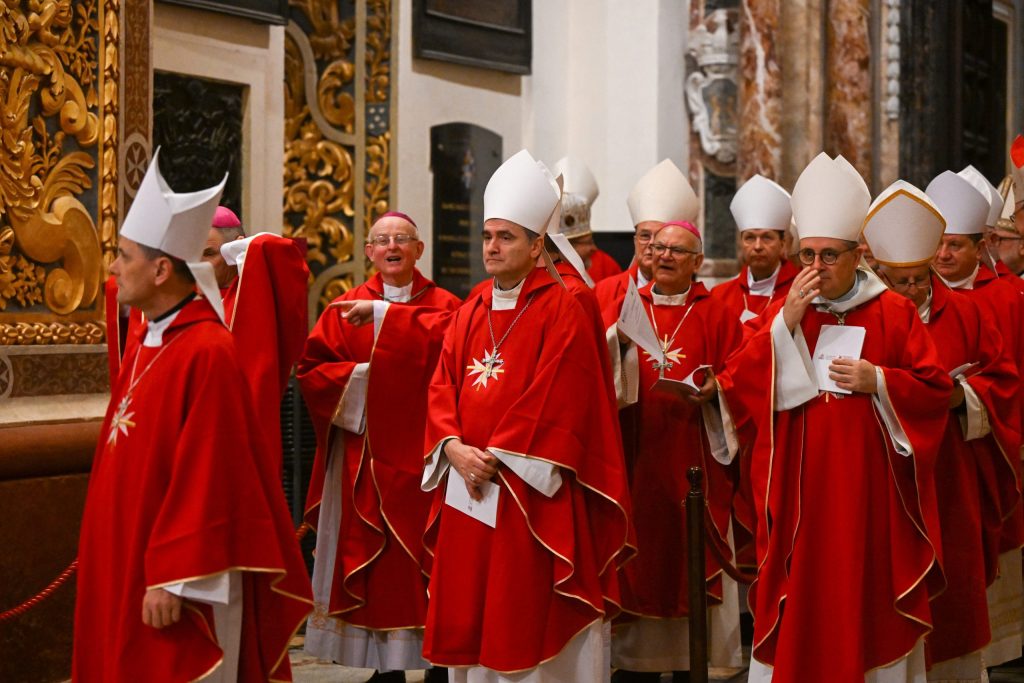
Pope Leo XIV’s visit to France will take him to Paris, Lourdes and Metz from 25 to 28 September. As his apostolic journey to Spain draws to a close, the French bishops have released the first details of the papal itinerary The French bishops have released the first details of Pope Leo XIV’s apostolic journey to France, confirming a programme that will take the Pontiff to Paris, Lourdes and Metz during a visit scheduled from 25 to 28 September. The itinerary, published by the Conference of Bishops of France on 9 June, includes Solemn Vespers at Notre-Dame Cathedral in Paris on the opening day of the visit, a national youth prayer vigil, an open-air Mass in the French capital, a pilgrimage to Lourdes, and a final Mass in Metz. The announcement was made by Cardinal Jean-Marc Aveline, Archbishop of Marseille and president of the bishops’ conference, who said preparations had been under way for several months and that discussions with the Pope had begun shortly after the start of his pontificate. “From the very beginning of his pontificate, I invited Leo XIV to visit us,” Cardinal Aveline wrote. “He was not difficult to convince, so great is his esteem for our country, for its role in the world, for its rich spiritual history, and for its missionary zeal.” The cardinal said he had begun working with the Pope on a draft programme for the visit in April and noted that a steering committee had already been established to coordinate preparations between the bishops’ conference and the dioceses due to receive the Pontiff. According to the schedule released by the bishops, Pope Leo will begin the visit on Friday, 25 September, with Solemn Vespers at Notre-Dame de Paris. Priests, deacons and their wives, consecrated persons, religious brothers and sisters, and seminarians from across France have been invited to attend. Later that evening, the Pope will join young people from throughout the country for a large prayer vigil in Paris. The following afternoon, Saturday 26 September, he will celebrate a solemn open-air Mass in the French capital. On Sunday 27 September, Pope Leo will travel to Lourdes, where he is scheduled to celebrate Mass on the meadow facing the grotto associated with the apparitions of the Blessed Virgin Mary to St Bernadette Soubirous in 1858. The final event announced by the bishops is a Mass at Saint-Étienne Cathedral in Metz on Monday 28 September. The bishops stressed that the Holy See has yet to publish the complete programme and that further practical information regarding participation in the various events will be released in due course. The visit was first announced by the French bishops in May. At the time, they described the prospect of welcoming the new Pope as “a great joy and a great responsibility” and said his presence would be an opportunity for the Church in France to share its experiences with the successor of St Peter while being strengthened by his ministry. In his latest message, Cardinal Aveline urged Catholics to prepare spiritually for the visit. “Above all, we must prepare ourselves to receive the grace that God wishes to bestow upon France and our Church,” he said. “Through our inner openness and our missionary boldness, let us prepare ourselves to cooperate in the work that the Holy Spirit will accomplish in hearts during the visit of the successor of Peter.” Notre-Dame Cathedral is one of the most iconic symbols of French Catholicism, Gothic architecture and national identity. Located on the Île de la Cité in Paris, it is dedicated to the Virgin Mary and has been the site of major historical events, including coronations and Te Deums. It suffered a devastating fire in 2019 but reopened in late 2024. The visit will mark the first papal visit to the cathedral since its reopening. The Mass in Lourdes will take place at one of the world’s most important Marian shrines, associated with St Bernadette’s 1858 apparitions of the Virgin Mary. The shrine attracts millions of pilgrims each year for prayer, healing and the famous torchlight processions. Previous papal visitors have included Pope John Paul II and Pope Benedict XVI. Less attention has been given to the Mass at Saint-Étienne Cathedral in Metz. Nicknamed the “Lantern of the Good Lord” because of its vast stained-glass windows, among the largest collections in the world, the cathedral stands in the Moselle region of Lorraine near the German border. The area has a complex history shaped by shifting frontiers, war and reconciliation. The date of the Mass falls almost exactly 38 years after St John Paul II’s visit to Metz in October 1988, creating a notable historical parallel.
Jun. 12, 2026
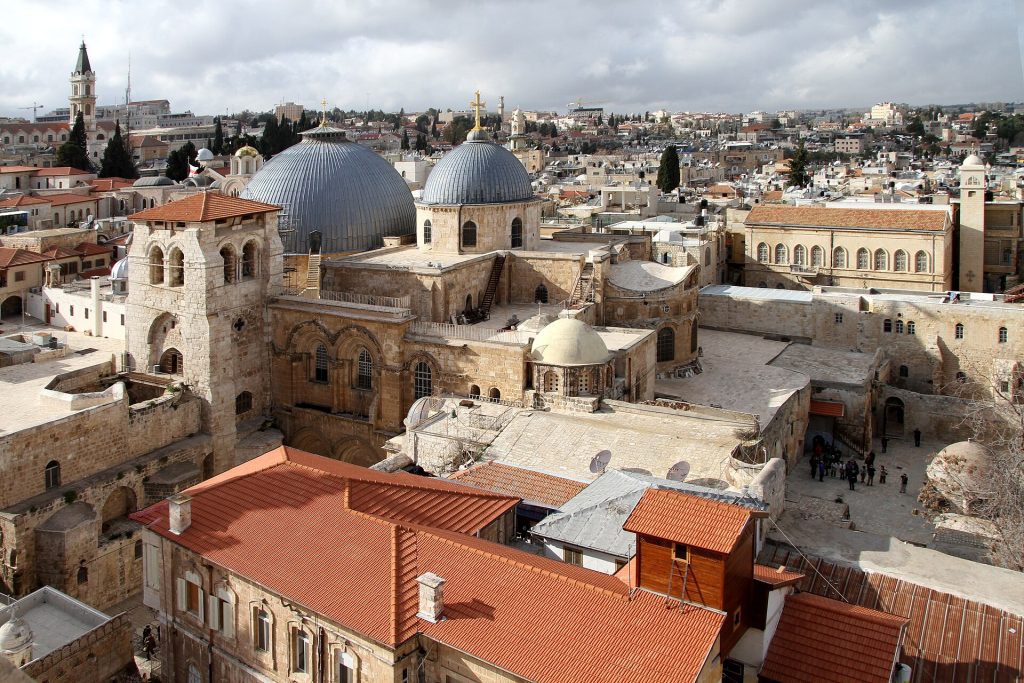
Christian harassment in Israel on course for record year
Reports of harassment against Christians in Israel have risen sharply, according to new figures released by the Religious Freedom Data Center. The Jerusalem-based organisation said it had already documented more than 88 incidents during the first half of 2026, including 63 recorded during the second quarter alone. If the trend continues, the total is expected […] Reports of harassment against Christians in Israel have risen sharply, according to new figures released by the Religious Freedom Data Center. The Jerusalem-based organisation said it had already documented more than 88 incidents during the first half of 2026, including 63 recorded during the second quarter alone. If the trend continues, the total is expected to surpass the 181 cases documented during 2025. Yisca Harani, founder of the Religious Freedom Data Center, said the increase had already exceeded expectations before the year had reached its halfway point. “We have surpassed all our numbers, and we haven’t reached the end of June yet,” she said while presenting the findings on 4 June. The documented cases include spitting, verbal insults, vandalism, desecration of graves and religious symbols, graffiti, and damage to church property. Other incidents have been reported beyond Jerusalem, including acts of vandalism and arson directed at Christian holy sites in northern Israel. Christian clergy and religious living in the city have long complained that harassment is a routine feature of daily life, particularly in areas where priests, monks, and nuns are easily identifiable by their religious dress. Harani, a Jewish-Israeli scholar who specialises in Christian-Jewish relations, told OSV news that many officials continued to regard such incidents as isolated acts carried out by a small number of extremists, often young people. She argued that this approach failed to recognise the scale of the problem. “Most of the incidents, which include spitting and verbal insults, vandalism and desecration of graves, tombstones, statues and crosses, and defacement of signs and graffiti, have taken place in Jerusalem’s Old City, on Mount Zion and near the Armenian Patriarchate,” she said. Concerns over the response of law enforcement authorities were also raised during the presentation of the report. According to OSV news, Ori Narov, director of the legal department of the Israel Religious Action Center, said that relatively few complaints resulted in successful investigations. He told participants that, of 25 complaints submitted by his organisation between 2012 and 2021, 19 cases had been closed without further action. According to Narov, authorities frequently cited reasons including the inability to identify suspects, conclusions that no offence had been committed, or decisions that investigations were not warranted. Despite those difficulties, he urged Christian leaders and institutions to continue reporting incidents and seeking legal remedies. “I have no doubt that the road is long,” Narov said. “But as we said, we are not afraid of a long road, and we will also reach a better future.” The latest figures follow similar findings published by the Rossing Center for Education and Dialogue, another Jerusalem-based organisation that monitors relations between religious communities. The Rossing Center recorded 111 incidents targeting Christians during 2024, compared with 94 in the previous year. Its most recent report documented 155 incidents during 2025, representing a substantial increase. Physical assaults, particularly spitting directed at clergy, accounted for the largest category of complaints, followed by attacks on churches and Christian property, verbal harassment, and the defacement of signs. Christians constitute less than two per cent of Israel’s population, numbering approximately 180,000 to 200,000 people. The majority are Arab Christians belonging to a variety of traditions, including the Catholic, Orthodox, and Protestant Churches. While Israel guarantees freedom of religion in law and is not generally grouped alongside countries where Christians face systematic state persecution, Church leaders have repeatedly expressed concern about the atmosphere confronting Christian communities, particularly in Jerusalem. Photo credit: Gerd Eichmann – Own work, CC BY-SA 4.0, https://commons.wikimedia.org/w/index.php?curid=95703949
Jun. 11, 2026
Schneider: Pope Leo “continues” Francis’s reforms
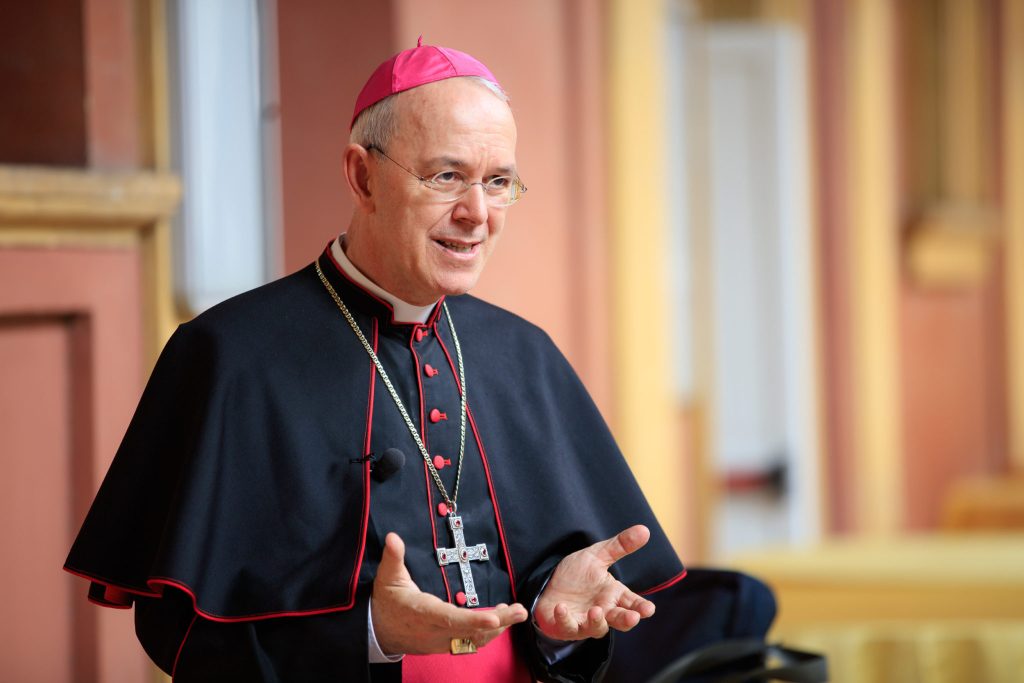
Bishop Athanasius Schneider has said Pope Leo XIV “continues” the course set by Pope Francis, arguing that both pontiffs see recent developments in the Church as a natural consequence of Vatican II. In a recent interview, he also discussed the SSPX, Vatican II and what he described as a doctrinal crisis within the Church. Bishop Athanasius Schneider has said that Pope Leo XIV is continuing the course pursued by Pope Francis. The auxiliary bishop of Astana made the remarks in a lengthy interview published on 8 June on the YouTube channel Veritatis Vox. He discussed Pope Leo’s pontificate, the authority of Vatican II, the doctrinal crisis in the Church and the position of the Society of St Pius X. Reflecting on the new pontificate, Bishop Schneider argued that Pope Francis viewed his reforms as a natural consequence of the council and suggested that Pope Leo shares the same understanding. “Pope Francis, with all his so-called reforms, which were very questionable also doctrinally, was convinced that this is a natural, coherent development of the teaching of Vatican II,” he said, adding: “In this sense, it’s obvious that Pope Leo continues and understands it.” The bishop also delivered a stark assessment of the state of the Church, claiming that some senior clerics had drifted away from the fullness of Catholic teaching. He said a “remarkable number of high-ranking clergy – cardinals and bishops” no longer held “the Catholic faith in its fullness” and had embraced “another church: half Protestant, half worldly, adapted to the spirit of the age”. He argued that attempts to reconcile Catholic teaching with modern secular culture had produced confusion among the faithful. According to Bishop Schneider, some Church leaders had sought to adapt the faith “completely to the world”, resulting in “widespread confusion, obscurity and darkness in doctrine, morals and liturgy”. Much of the interview focused on the continuing debate over Vatican II, a subject that has long divided traditionalist Catholics and Church authorities. Bishop Schneider criticised what he sees as an unwillingness among some Vatican officials to acknowledge difficulties within certain conciliar texts. Referring to comments by Cardinal Víctor Manuel Fernández, prefect of the Dicastery for the Doctrine of the Faith, he said that insisting Vatican II could not be corrected effectively treated “a pastoral, non-definitive council as if it were infallible”. He added that Church authorities had spent decades treating the council as “a de facto untouchable teaching”. The bishop also challenged comments by Cardinal Gerhard Müller, the former prefect of the Congregation for the Doctrine of the Faith, who has argued that the council must be accepted in its entirety. Bishop Schneider said such a position was “not correct”, maintaining that Vatican II and Pope St Paul VI had explicitly stated that the council did not intend to define new dogmas or issue definitive teachings binding on all Catholics. He added that Cardinal Müller “directly contradicts the Council itself and Paul VI”. Addressing broader questions of authority within the Church, Bishop Schneider criticised what he described as demands for unquestioning acceptance of disputed teachings. “To demand acceptance of problematic teachings by ‘switching off our intellect’ is an abuse of authority,” he said, invoking a well-known observation by G.K. Chesterton that Catholics are asked to remove their hats when entering church, “not their heads”. The bishop further argued that elements of Vatican II placed excessive emphasis on human concerns at the expense of the supernatural mission of the Church. He said the council contained “tendencies toward naturalism and anthropocentrism, emphasizing temporal realities at the expense of the supernatural life of grace and eternity”, identifying the pastoral constitution Gaudium et Spes as “the clearest expression of this tendency”. He also referred to the late Belgian Cardinal Léon-Joseph Suenens, one of the most influential figures at the council, who famously described Vatican II as a “French Revolution inside the Catholic Church”. Bishop Schneider said that “in some way, he was correct”, arguing that the council initiated a process that encouraged naturalistic and anthropocentric approaches within ecclesial life. The interview also addressed the Society of St Pius X, whose relationship with Rome remains in limbo as the 1 July episcopal consecrations approach. Bishop Schneider defended Catholics attached to the SSPX and questioned what he described as unequal disciplinary standards within the Church. Referring to the possibility of sanctions against traditionalists, he said it would be unjust to punish those who “recognize the Pope” and wish to “serve the Roman Church” but find themselves facing “a dilemma of conscience”. By contrast, he criticised supporters of Germany’s Synodal Way and other bishops whom he accused of promoting doctrinal error without consequence. “Meanwhile,” he said, “the German Synodal Way and other bishops around the world proclaim openly heresies and commit blasphemies really during liturgies, all unpunished, not admonished.” Photo credit: Voice of the family
Jun. 10, 2026