

Latest
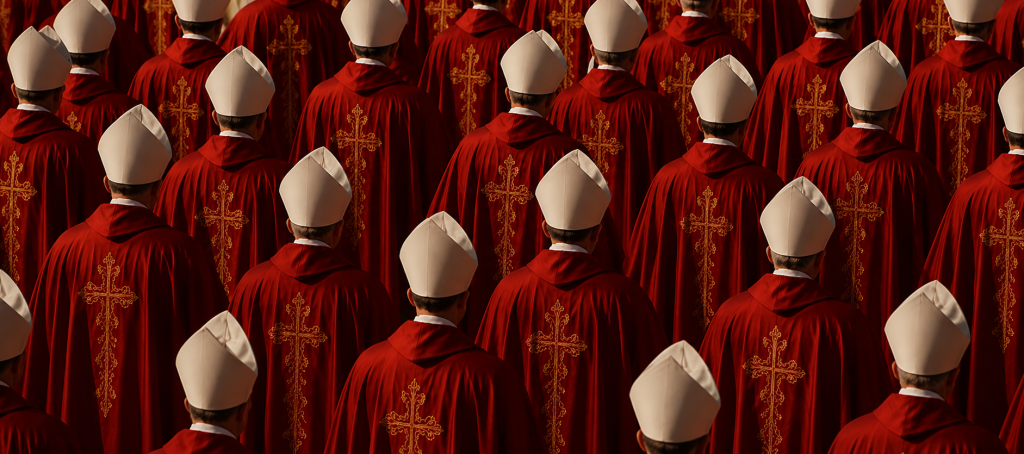
Vatican publishes detailed programme for Extraordinary Consistory
The Vatican has published an unusually detailed programme for the Extraordinary Consistory, setting out the themes cardinals will discuss as well as the procedures, time limits and reporting structure for the two-day meeting The Vatican has released an unusually detailed briefing on this month’s Extraordinary Consistory of Cardinals, revealing not only the themes to be discussed but also the tightly controlled procedures that will govern the meeting. In an information note issued to accredited journalists, the Holy See Press Office confirmed that cardinals attending the 26–27 June meeting have been instructed to maintain confidentiality and refrain from speaking to the media during the proceedings “in order to maintain a climate of fraternal dialogue”. As usual, journalists will not be permitted into the hall during discussions, but the Vatican has promised a degree of transparency beyond that seen at many previous consistories. The Holy Father’s opening remarks and concluding address will be broadcast live by Vatican Media, while the texts of the biblical meditation and the principal introductory speeches delivered during the four sessions will be released to accredited journalists. The Vatican also said that summaries of proceedings will be distributed after each of the first three sessions. The briefing additionally disclosed the internal structure of the discussions. As was the case during the January consistory, participants will be divided into separate groups. One section will consist of nine groups made up of cardinal electors serving as ordinaries, including apostolic nuncios and cardinal electors who have completed service as diocesan ordinaries. A second section will comprise eleven groups made up of cardinals serving in the Roman Curia together with non-elector cardinals. Each group will be assigned a chairman and secretary. The chairman will moderate discussion, while the secretary will be responsible for collecting contributions and drafting a final report on behalf of the group. The Vatican also revealed a strict methodology for discussion. After a brief introduction lasting around ten minutes, proceedings in each group will unfold in three stages. The first stage consists of personal interventions, with each cardinal limited to a maximum of three minutes while responding to questions set out in the programme. The second stage, described by the Vatican as “shared listening”, will allow participants to speak again for a maximum of two minutes. During this phase, no new proposals may be introduced. Cardinals are instead expected to identify “the most significant points that emerged from the previous listening session”. The third stage will focus on drafting a report. According to the Vatican note, “The Secretary, with the help of all the Group members, collects the fruits of the discussion and proceeds to draft the final report.” Reports prepared by the groups will then be presented during plenary sessions. The Vatican said the groups of cardinal ordinaries will each present reports lasting no more than three minutes, while the other groups will also be given an opportunity to report back. The first session on 26 June will open with a biblical meditation by Cardinal Grzegorz Ryś under the title “In what world are we called to proclaim the Gospel?” Cardinals will then discuss two questions. The first asks: “What sufferings, tensions and questions are most forcefully affecting the peoples and ecclesial communities entrusted to your care today?” The second asks: “What signs of hope, of fidelity to the Gospel, and of possible reconciliation are important to bring to common listening?” The afternoon session will focus on “The culture of power and the civilisation of love”. The discussion will be introduced by Cardinal Víctor Manuel Fernández and will draw on Chapter V of the papal text Magnifica Humanitas , specifically paragraphs 182 to 192. Cardinals will be asked: “How do the tensions, divisions and conflicts that are sweeping across the world today affect the life of our Churches and our peoples?” A second question asks: “What languages, attitudes and practices can help build reconciliation, coexistence and peace?” The programme released by the Vatican shows that the following morning’s discussions will be introduced by Cardinal Stephen Brislin under the heading “Building for Good: The Construction Sites of Our Time”. The session will draw upon the introduction and conclusion of Magnifica Humanitas and ask cardinals to identify fractures within their own societies that make it more difficult to pursue the common good. The cardinals will also be invited to consider: “What expectations and questions emerge from the people and peoples that the Church is called to listen to and that perhaps we do not listen to enough?” A third question asks what “supports, guidelines, or initiatives from local Churches and the universal Church could most effectively assist the commitment to building the common good”. The final session of the consistory will move to the New Synod Hall and focus on implementation of the Synod. Cardinal Mario Grech will introduce discussions using the document Towards the Synodal Assemblies 2027–2028: Stages, Criteria, and Tools for Preparation . Unlike the previous sessions, the programme provides for a dedicated period of questions seeking clarification on the synodal process before cardinals enter into direct dialogue with Pope Leo XIV. The final exchange will consist of free interventions limited to three minutes before the Pope delivers a concluding address. The Vatican’s information note also confirmed that all reports produced by the discussion groups will be submitted electronically. “ The consistory will conclude with the singing of the Te Deum before a dinner with Pope Leo XIV in the Paul VI Hall. The publication of both the programme and the procedural framework provides one of the clearest indications yet of how this pontificate intends to conduct consultation with the College of Cardinals, while also revealing the specific texts, questions and discussion methods that will shape deliberations over the two days. The most striking aspect of the release is the extent to which the structures and working methods developed during the pontificate of Pope Francis have survived into the reign of Pope Leo XIV. The synodal framework established under Francis was never likely to disappear. Even so, the level of continuity revealed by the consistory programme is notable. The division of cardinals into small discussion groups, the emphasis on “shared listening”, the appointment of secretaries responsible for producing collective reports, and the strict time limits imposed on interventions all mirror procedures that became familiar during the Synod on Synodality. Rather than marking a departure from the Francis era, the arrangements suggest that many of its assumptions about consultation and decision-making remain firmly embedded within the Vatican’s institutional culture. We saw during the January consistory that synodal elements would remain part of the Vatican’s approach to consultation, and that expectation has now been borne out. That gathering was framed largely around listening, small-group discussion and collective reporting, and the same methodology now appears to have been carried over into the forthcoming Extraordinary Consistory. The prominence given to the Synod Secretariat is equally revealing. The final session of the consistory will not simply discuss synodality in general terms but will be structured around the Secretariat’s document, Towards the Synodal Assemblies 2027–2028: Stages, Criteria, and Tools for Preparation , with Cardinal Mario Grech leading the discussion. That decision points to the continuing influence of the synodal apparatus created during the previous pontificate. The fact that an Extraordinary Consistory of Cardinals is being organised according to methodologies developed by the Synod Secretariat, and that the future stages of the synodal process occupy a dedicated session with the Pope himself, shows that the office remains one of the most important centres of influence in the Vatican, with a role that extends well beyond the conclusion of the Synod on Synodality itself.
Jun. 23, 2026
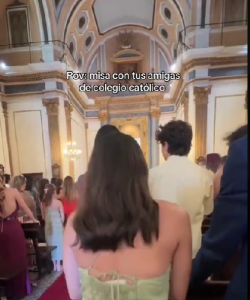
Spanish Catholics filmed committing sacrilege at wedding Mass
A video filmed at a wedding Mass in Spain has gone viral after appearing to show a group mocking the liturgy and the Eucharist A video showing a group of Spanish Catholics mocking the Mass and committing sacrilege against the Eucharist has gone viral. Published with the caption “POV: misa con tus amigas de colegio católico” (“Mass with your friends from Catholic school”), and apparently filmed in the Spanish city of Valencia, the video shows a group attending a wedding Mass and sitting towards the back of the church. The description reads: “Señor, no soy digno de que entres en mi casa, pero una palabra tuya bastará para sanarme” (“Lord, I am not worthy that you should enter under my roof, but only say the word and I shall be healed”). The video opens with the group making a loud noise. Then, during the part of the Mass in which the priest says “es justo y necesario” (“it is just and necessary”), the person filming points the camera at another member of the group and says “más justo y necesario” (“more right and more necessary”). The person on camera then says “es el dictador” (“he is the dictator”), apparently referring to the priest. The woman filming then asks another member of the group, “¿Tú vas a tomar la comunión?” (“Are you going to receive Communion?”), before adding: “Nos van a echar” (“They are going to throw us out”). Another member of the group then sings “ven a nuestras almas” (“come to our souls”) while making a mocking gesture. The most controversial part of the video comes when one of the group, having just returned from receiving the Eucharist, sticks out his tongue to show the Sacred Host and makes a horn-like hand gesture with his thumb, index finger and little finger extended. The video was originally posted on TikTok by the account “bellidamen”, but has since been deleted. The account, and an Instagram account under the same name, contain various other pieces of content, a significant portion of which is hostile to non-Spaniards living in Spain. In one video, “bellidamen” says: “Blondies, go home.” Despite the apparent disdain for Catholicism, another video on the account appears to celebrate a local Holy Week procession, with the caption: “What a cool tradition, full of flowers, colours and joy in the Poblats Marítims.” The TikTok account “bellidamen” has since deleted the original video, but it was later reuploaded by the Spanish Catholic group Universitarios Católicos . The caption on the reuploaded post reads: “What little education and what little respect there is in our society. Laughing at our faith (yes, always against the same ones) and playing with what is most sacred and important, committing a most grave sacrilege. Whoever eats the Lord unworthily eats his own condemnation.” At the time of writing, the reuploaded video has been viewed more than 800,000 times. AdVaticanum has contacted several of the people seen in the video, as well as the Diocese of Valencia, for comment. At the time of publication, none had responded.
Jun. 23, 2026
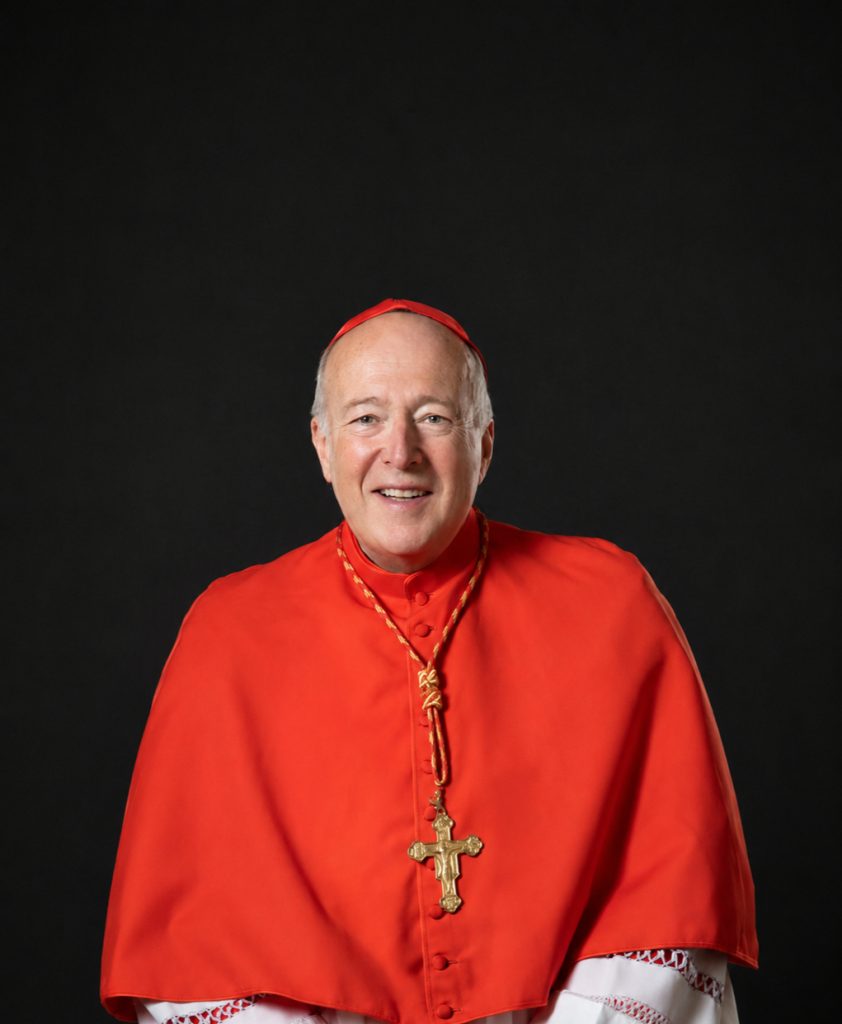
Cardinal McElroy says Church has “frequently wounded” LGBT Catholics through “judgmentalism and exclusion”
Cardinal Robert McElroy told the Outreach Conference in Washington that the Church has “frequently wounded the LGBT community through judgmentalism and exclusion”, while pointing to Pope Leo XIV and the Synod on Synodality as signs of a new pastoral approach Cardinal Robert McElroy has told a prominent Catholic conference for LGBT Catholics that the Church has “frequently wounded the LGBT community through judgmentalism and exclusion”. The Archbishop of Washington made the remarks during a homily on 20 June at the Outreach Conference, held at Georgetown University in Washington, DC, an annual gathering focused on ministry with LGBT Catholics. He argued that recent developments under Pope Leo XIV and the Synod on Synodality point towards a new approach to pastoral ministry. Addressing delegates, Cardinal McElroy said two recent developments in the life of the Church were particularly significant. The first, he said, was a comment made by Pope Leo XIV during a visit to Africa in April, when the pontiff stated that “the unity or division in the Church should not revolve around sexual matters”. Reflecting on the Pope’s words, Cardinal McElroy suggested that issues relating to sexual morality had often occupied a disproportionate place in Catholic discourse. “Too often, both in magisterial statements and on the popular level, sexual sins have been condemned with an ardour that effectively places them, in the eyes of many believers, at the core of the moral obligations of Christians,” His Eminence said. The Cardinal added that Pope Leo had instead highlighted “the comparative importance of economic justice, war and peace, immigration and racism as key elements of the Christian moral life”. The Cardinal said the second significant development was the publication in May of the report produced by Study Group 9, one of the working groups established during the Synod on Synodality process initiated under Pope Francis. Describing the report as “pathbreaking”, Cardinal McElroy focused on what he characterised as a new anthropological approach emerging from the synodal process. “Pastoral practice […] proceeds from the conviction that the concrete situations in which people find themselves are constitutive dimensions of how doctrine should be formed in the light of the kerygma,” the Archbishop of Washington said, arguing that this represented the most important legacy of the late Pope Francis. According to Cardinal McElroy, Francis sought “to reform our conception of pastoral theology and see it as a core element of coming to understand the […] formation of Catholic teaching”. The Washington archbishop repeated the point later in his address, insisting that pastoral practice should not be viewed merely as the application of pre-existing principles to individual circumstances. “Pastoral practice is not the understanding of how to apply an already formed and often reified set of principles to concrete situations,” he said. “It proceeds from the conviction that the concrete situations in which people find themselves are constitutive dimensions of how doctrine should be formed in the light of the kerygma.” His homily came a day after he issued a letter welcoming participants to the conference, which opened in the US capital this week. In the message, dated 19 June, Cardinal McElroy linked the gathering both to the legacy of Pope Francis and to developments during the opening phase of Pope Leo XIV’s pontificate. “I am delighted to welcome you to the 2026 Outreach Conference here in Washington,” he wrote. “For I know that the Holy Spirit will be profoundly present in our meetings and discussions at this key time in the history of our Church and our nation.” The Cardinal said the conference was taking place at a moment when “the pastoral foundations laid by Pope Francis for authentic ministry to and with the LGBT community are being deepened and refined by Pope Leo”. He also referred to the recently published report of Study Group 9, describing it as a significant contribution to the Church’s reflection on ministry and holiness. “And the conference comes directly after the release of Study Group 9 of the Synod on Synodality, which places LGBT ministry within a new paradigm that powerfully integrates the experience of faith-filled and diverse disciples as a basis for understanding the call to holiness in all of its concreteness,” he wrote. “This new paradigm points to the true pathway for establishing Todos, Todos, Todos in our Church, ever ancient and ever new.” The phrase “Todos, Todos, Todos” became widely associated with Pope Francis after he used it repeatedly during World Youth Day in Lisbon in 2023 while emphasising that the Church is open to all. Cardinal McElroy concluded his letter by telling delegates that they would gather for “prayer, thanksgiving and dialogue”. “And God will be in our midst,” the Cardinal wrote. Cardinal McElroy has long been among the most outspoken senior churchmen in the United States on questions relating to pastoral care for LGBT Catholics. Since his appointment to Washington, he has continued to advocate a more welcoming approach while stressing the importance of dialogue and accompaniment. The Outreach Conference has become one of the most prominent annual events dedicated to Catholic ministry with LGBT people in the United States. Its programme includes liturgies, keynote addresses, panel discussions and workshops focused on LGBT ministry in the Catholic Church. Topics scheduled for discussion include theology and LGBT Catholics, parish outreach, mental health, Scripture, women in the Church and the experiences of transgender Catholics. Among the keynote speakers are Kerry Robinson, president and chief executive of Catholic Charities USA, and the Jesuit moral theologian Fr James Keenan. The gathering began on 19 June with a welcome Mass celebrated by Fr Martin and will conclude on 21 June with a commissioning service. Outreach traces its origins to Fr Martin’s wider ministry to Catholics who identify as LGBT and their families. The initiative emerged from work that followed publication of his 2017 book Building a Bridge , which called for greater dialogue between the Church and LGBT Catholics. Outreach launched formally in 2022 and has since organised conferences, published articles and hosted discussions focused on pastoral accompaniment and inclusion within the life of the Church. Previous Outreach events received messages of support from Pope Francis, who repeatedly encouraged pastoral outreach and accompaniment for LGBT Catholics and their families. In one message to participants, Pope Francis wrote: “I am glad that Cardinal Gregory will celebrate the Mass; I will be spiritually with him and with all of you, united in prayer.” Pope Francis also told Outreach that God “does not disown any of his children”, while encouraging ministry to LGBT Catholics and their families.
Jun. 23, 2026
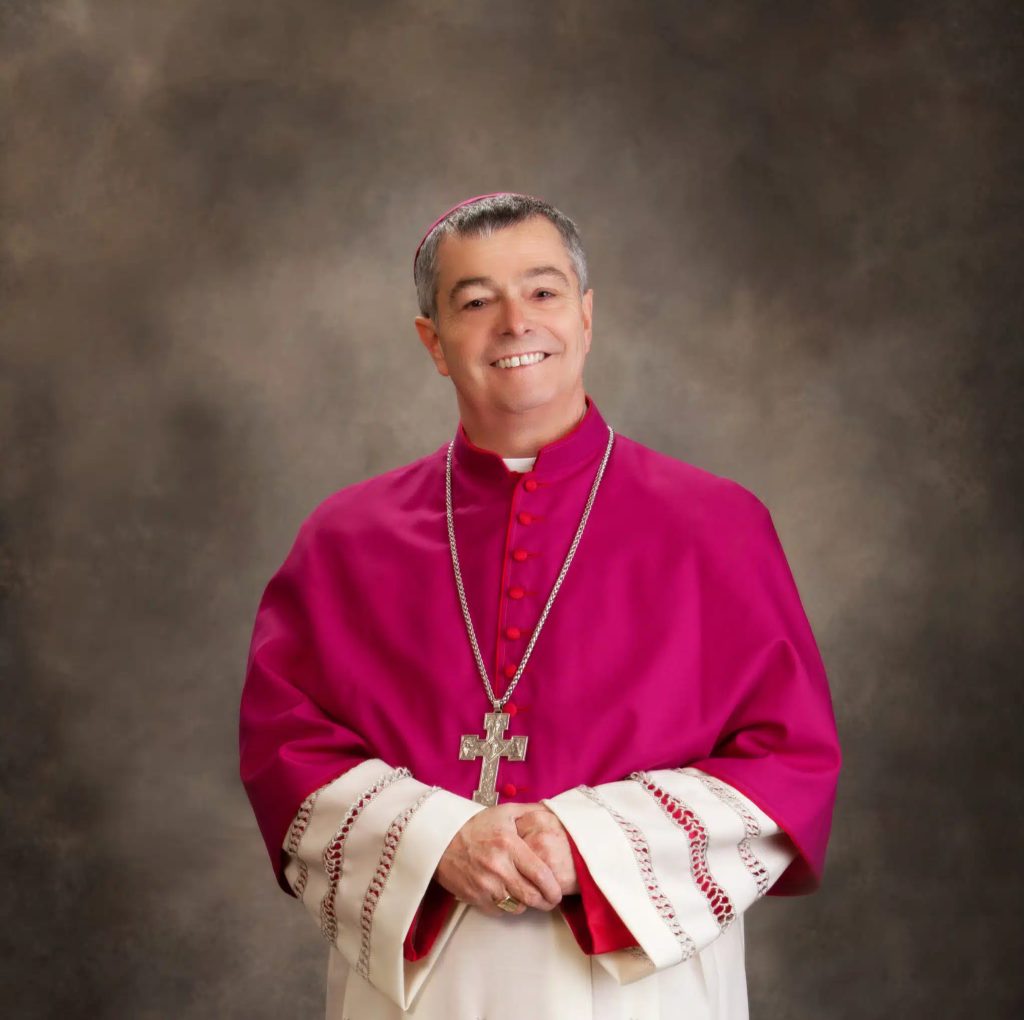
Owensboro Bishop Medley ends parish TLM and grants “permission” for Novus Ordo ad orientem instead
Bishop William Medley of Owensboro has ended the Traditional Latin Mass at a parish in Kentucky and granted “singular permission” for the Novus Ordo to be celebrated ad orientem in its place A Kentucky bishop has ordered the end of the Traditional Latin Mass in a diocesan parish after concluding that he could not satisfy Vatican conditions for permission to continue celebrating according to the 1962 Roman Missal. Bishop William F. Medley of Owensboro instructed Fr David Kennedy of Immaculate Conception Parish in Earlington to cease offering the Traditional Latin Mass after June 30, while granting “singular permission” for the celebration of the Novus Ordo ad orientem , which he suggests is said in Latin. In a letter dated May 18, Bishop Medley said he had reviewed correspondence received from the Holy See in 2023 regarding permission for the continued celebration of the older form of the Roman Rite. He wrote that Rome had indicated that any request to renew the permission would need to be accompanied by a report detailing attendance at the Masses and recounting “the steps which have been taken to lead the faithful who are attached to the antecedent liturgy towards the celebration of the liturgy according to the liturgical books reformed by decree of the Second Vatican Council and which form the unique expression of the lex orandi of the Roman Rite”. “As I am unable to demonstrate that this condition has been met, I have no standing to request an extension of the Holy See’s instruction, and I am directing you not to celebrate the Mass according to the Roman Missal of 1962 after June 30, 2026,” the bishop wrote. Bishop Medley said he recognised that some Catholics attached to the older liturgy had accepted attendance at the Mass of Paul VI celebrated in Latin. “I know that in some dioceses the faithful who have shown a preference for the Mass celebrated in Latin have accepted the Novus Ordo Mass celebrated in the Latin language,” he wrote. “I trust that between now and July 1, 2026, you can obtain the appropriate Missal of Paul VI in Latin. I will grant the singular permission to offer this Mass ad orientem.” The bishop revealed that he had delayed acting on the Vatican instruction for almost a year. “As we discussed, I have permitted nearly a year to pass beyond reception of this consent from the Holy See,” the bishop wrote. “I did this in recognition of the death of Pope Francis.” The Bishop of Owensboro added that he had allowed the continuation of the Traditional Latin Mass following the election of Pope Leo XIV “to see if he would reconsider the matter of the Mass offered in parish churches”. “After more than a year, and the January Consistory of the College of Cardinals in which they specifically chose not to review Traditionis Custodes, I feel obligated as bishop to act in accord with the direction of the Holy See,” Bishop Medley wrote. Addressing possible objections from parishioners, he told Fr Kennedy: “For the faithful who may object to this directive, you may certainly refer them to me, but please make clear that I am acting in accord with my promise to the Pope, the Bishop of Rome.” The letter concluded with the bishop thanking the priest for his ministry to what he described as a “small and unique community”. Traditionis Custodes placed limitations on the celebration of Mass according to the 1962 Missal and declared the liturgical books promulgated after the Second Vatican Council to be the “unique expression” of the Roman Rite. The document effectively reversed the approach taken by Pope Benedict XVI in Summorum Pontificum, his 2007 apostolic letter which granted priests broad freedom to celebrate the Traditional Latin Mass without requiring permission from their bishops. Since the promulgation of Traditionis Custodes, bishops throughout the United States and elsewhere have implemented the Vatican’s directives in different ways, with some restricting the older liturgy to designated locations while others have gradually withdrawn permissions altogether.
Jun. 22, 2026
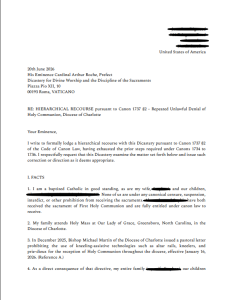
Published in full: Cardinal Roche receives recourse from Charlotte father after family says Communion was denied at altar rail
Cardinal Arthur Roche has received a formal recourse from a Charlotte father whose family says it was repeatedly denied Holy Communion after kneeling at an altar rail. AdVaticanum is publishing the appeal in full Cardinal Arthur Roche has received a letter of hierarchical recourse from a North Carolina father whose family claims it was repeatedly denied Holy Communion because they knelt at an altar rail, in a dispute arising from Bishop Michael Martin’s restrictions on kneeling for Communion in the Diocese of Charlotte. The appeal, submitted to the Dicastery for Divine Worship and the Discipline of the Sacraments on 20 June, is the latest development in a controversy that has been building for months at Our Lady of Grace parish in Greensboro, where tensions have intensified since diocesan restrictions on altar rails, kneelers and prie-dieux came into force earlier this year. The father, who filed the recourse without a canonical advocate, says that he, his wife and their two children were denied Holy Communion on three occasions after kneeling at the parish altar rail. The family also alleges that a similar incident occurred during a Confirmation Mass attended by Bishop Martin on 29 April. Speaking to AdVaticanum after the incident, the father described what happened when his family approached the rail during the liturgy. “He [Bishop Martin] was sitting in front of us when we went to the rail and he simply ignored us. All the priests turned their backs on us,” he said. He later added: “Everyone else communicated and we were denied. To be frank, it was very humiliating.” A letter of hierarchical recourse is a formal administrative appeal in Catholic canon law that allows clergy, religious or lay faithful who believe themselves aggrieved by a lower ecclesiastical authority’s decision to seek redress from that authority’s hierarchical superior. The recourse sent to Cardinal Roche opens by identifying the family and setting out their canonical status. The father states that he, his wife and children are all Catholics in good standing and emphasises that none is subject to any censure or prohibition preventing them from receiving the sacraments. “I am a baptized Catholic in good standing, as are my wife and our children,” he wrote. “None of us are under any canonical censure, suspension, interdict, or other prohibition from receiving the sacraments.” The appeal then traces the dispute back to a pastoral letter issued by Bishop Martin in December 2025, which prohibited the use of what the recourse describes as “kneeling-assistive technologies such as altar rails, kneelers, and prie-dieux” throughout the diocese from 16 January 2026. According to the father, the consequences of that directive became apparent at Our Lady of Grace when his family continued to approach Holy Communion in the same manner they had done for years. The recourse states that on 30 April, 10 May and 17 May the family approached the minister of Holy Communion and knelt at the altar rail before being passed over. “On each occasion, the minister declined to administer the Sacrament,” the document states. A significant portion of the appeal is devoted to rebutting any suggestion that the family failed to present themselves properly for Communion. “I wish to state formally and, for the avoidance of doubt: my family presented itself for Holy Communion on each of the three occasions listed above,” the father wrote. “The suggestion that we had not done so, or that the manner of our presentation was insufficient to constitute a request for the Sacrament, is without foundation.” He argues that kneeling at the altar rail had been the established practice at the parish for more than five years and that no communicant had previously been considered not to have presented himself for Communion while approaching in that manner. The appeal also raises concerns about the position of his wife, who is pregnant with the couple’s third child. The father tells Cardinal Roche that as the pregnancy progresses she will become increasingly dependent on physical support when rising from a kneeling position, and argues that the removal of altar rails and similar supports creates a practical obstacle to her continuing customary devotional practice. “I note with particular gravity that my wife is currently in her second trimester of pregnancy,” he wrote. “As her pregnancy advances, she will be physically unable to rise from a kneeling position without the assistance of the now banned kneeling-assistive technologies.” The recourse details the procedural steps taken before the matter reached Rome. The father says he submitted a written petition to Bishop Martin on 1 June seeking revocation or amendment of the policy. According to the document, the Diocese of Charlotte rejected the request on 4 June and subsequently informed him on 15 June that the policy would continue to be enforced. Having exhausted the remedies required under Canons 1734 to 1736, he lodged the present recourse under Canon 1737 §2. The appeal cites several provisions of canon law and liturgical legislation which it says are relevant to the dispute. Among them are Canon 912, which states that any baptised person not prohibited by law can and must be admitted to Holy Communion, and Canon 843 §1, which provides that sacred ministers may not deny the sacraments to those who seek them at appropriate times, are properly disposed and are not prohibited by law from receiving them. The father also points Cardinal Roche to Article 91 of Redemptionis Sacramentum , which states: “Therefore, it is not licit to deny Holy Communion to any of Christ’s faithful solely on the grounds, for example, that the person wishes to receive the Eucharist kneeling or standing.” The appeal additionally cites the American adaptation of the General Instruction of the Roman Missal , noting that although Communion is normally received standing, “Communicants should not be denied Holy Communion because they kneel.” Particular emphasis is placed on a 2002 response from the Congregation for Divine Worship and the Discipline of the Sacraments. “The Congregation considers any refusal of Holy Communion to a member of the faithful on the basis of his or her kneeling posture to be a grave violation of one of the most basic rights of the Christian faithful,” the document quotes. In the concluding sections of the recourse, the father argues that the dispute now extends beyond his own family and risks causing wider division within the diocese. “The faithful of the Diocese of Charlotte are, in great numbers, deeply devoted to the posture of kneeling before Our Lord in His Eucharist,” he wrote. “If left unresolved, this conflict is likely to cause lasting damage to the unity and peace of the local Church.” The father asks Cardinal Roche to acknowledge receipt of the recourse, suspend Bishop Martin’s directive while the case is considered, examine whether the denials of Holy Communion violated canon law, and direct that Holy Communion not be withheld solely because a communicant chooses to kneel. The Dicastery for Divine Worship and the Discipline of the Sacraments has not yet announced whether it will accept the recourse for formal examination. The letter is reproduced in full below:
Jun. 22, 2026
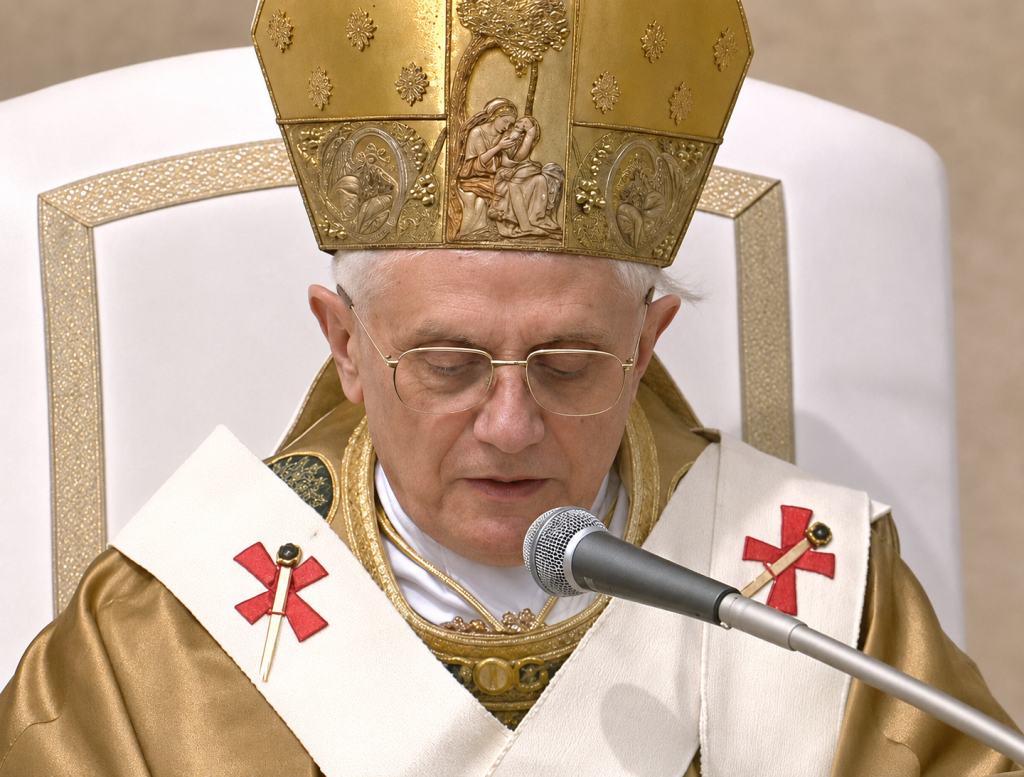
A novena of Benedict XVI’s greatest homilies and addresses, day 2: the Inauguration Mass
Day two of our novena of Benedict XVI’s greatest homilies and addresses features the homily delivered at the Inauguration Mass of his pontificate, preached in St Peter’s Square just days after his election in April 2005 The second text in this novena is the homily delivered by Benedict XVI at the Mass inaugurating his pontificate on 24 April 2005, five days after his election to the Chair of St Peter. If the Pro Eligendo Romano Pontifice homily has often been read as Cardinal Ratzinger’s diagnosis of the spiritual confusion of the modern West, the inauguration homily can be read as Benedict’s answer to it. Preached in St Peter’s Square before the universal Church and a watching world, it set the tone for the pontificate that was about to begin: one centred not on novelty or personality, but on the person of Jesus Christ, the freedom of the Christian life, and the duty of the Pope to serve rather than rule in worldly terms. It was in this homily that Benedict delivered one of the most memorable lines of his pontificate: “Do not be afraid of Christ! He takes nothing away, and he gives you everything.” Read after the pre-conclave homily, the inauguration sermon shows the transition from Cardinal Ratzinger, diagnosing the dangers of relativism, to Benedict XVI, setting out the Christ-centred vision that would shape his pontificate. It is therefore the natural second text in this series. During these days of great intensity, we have chanted the litany of the saints on three different occasions: at the funeral of our Holy Father John Paul II; as the Cardinals entered the Conclave; and again today, when we sang it with the response: Tu illum adiuva – sustain the new Successor of Saint Peter. On each occasion, in a particular way, I found great consolation in listening to this prayerful chant. How alone we all felt after the passing of John Paul II – the Pope who for over twenty-six years had been our shepherd and guide on our journey through life! He crossed the threshold of the next life, entering into the mystery of God. But he did not take this step alone. Those who believe are never alone – neither in life nor in death. At that moment, we could call upon the Saints from every age – his friends, his brothers and sisters in the faith – knowing that they would form a living procession to accompany him into the next world, into the glory of God. We knew that his arrival was awaited. Now we know that he is among his own and is truly at home. We were also consoled as we made our solemn entrance into Conclave, to elect the one whom the Lord had chosen. How would we be able to discern his name? How could 115 Bishops, from every culture and every country, discover the one on whom the Lord wished to confer the mission of binding and loosing? Once again, we knew that we were not alone, we knew that we were surrounded, led and guided by the friends of God. And now, at this moment, weak servant of God that I am, I must assume this enormous task, which truly exceeds all human capacity. How can I do this? How will I be able to do it? All of you, my dear friends, have just invoked the entire host of Saints, represented by some of the great names in the history of God’s dealings with mankind. In this way, I too can say with renewed conviction: I am not alone. I do not have to carry alone what in truth I could never carry alone. All the Saints of God are there to protect me, to sustain me and to carry me. And your prayers, my dear friends, your indulgence, your love, your faith and your hope accompany me. Indeed, the communion of Saints consists not only of the great men and women who went before us and whose names we know. All of us belong to the communion of Saints, we who have been baptized in the name of the Father, and of the Son and of the Holy Spirit, we who draw life from the gift of Christ’s Body and Blood, through which he transforms us and makes us like himself. Yes, the Church is alive – this is the wonderful experience of these days. During those sad days of the Pope’s illness and death, it became wonderfully evident to us that the Church is alive. And the Church is young. She holds within herself the future of the world and therefore shows each of us the way towards the future. The Church is alive and we are seeing it: we are experiencing the joy that the Risen Lord promised his followers. The Church is alive – she is alive because Christ is alive, because he is truly risen. In the suffering that we saw on the Holy Father’s face in those days of Easter, we contemplated the mystery of Christ’s Passion and we touched his wounds. But throughout these days we have also been able, in a profound sense, to touch the Risen One. We have been able to experience the joy that he promised, after a brief period of darkness, as the fruit of his resurrection. The Church is alive – with these words, I greet with great joy and gratitude all of you gathered here, my venerable brother Cardinals and Bishops, my dear priests, deacons, Church workers, catechists. I greet you, men and women Religious, witnesses of the transfiguring presence of God. I greet you, members of the lay faithful, immersed in the great task of building up the Kingdom of God which spreads throughout the world, in every area of life. With great affection I also greet all those who have been reborn in the sacrament of Baptism but are not yet in full communion with us; and you, my brothers and sisters of the Jewish people, to whom we are joined by a great shared spiritual heritage, one rooted in God’s irrevocable promises. Finally, like a wave gathering force, my thoughts go out to all men and women of today, to believers and non-believers alike. Dear friends! At this moment there is no need for me to present a programme of governance. I was able to give an indication of what I see as my task in my Message of Wednesday 20 April, and there will be other opportunities to do so. My real programme of governance is not to do my own will, not to pursue my own ideas, but to listen, together with the whole Church, to the word and the will of the Lord, to be guided by Him, so that He himself will lead the Church at this hour of our history. Instead of putting forward a programme, I should simply like to comment on the two liturgical symbols which represent the inauguration of the Petrine Ministry; both these symbols, moreover, reflect clearly what we heard proclaimed in today’s readings. The first symbol is the Pallium, woven in pure wool, which will be placed on my shoulders. This ancient sign, which the Bishops of Rome have worn since the fourth century, may be considered an image of the yoke of Christ, which the Bishop of this City, the Servant of the Servants of God, takes upon his shoulders. God’s yoke is God’s will, which we accept. And this will does not weigh down on us, oppressing us and taking away our freedom. To know what God wants, to know where the path of life is found – this was Israel’s joy, this was her great privilege. It is also our joy: God’s will does not alienate us, it purifies us – even if this can be painful – and so it leads us to ourselves. In this way, we serve not only him, but the salvation of the whole world, of all history. The symbolism of the Pallium is even more concrete: the lamb’s wool is meant to represent the lost, sick or weak sheep which the shepherd places on his shoulders and carries to the waters of life. For the Fathers of the Church, the parable of the lost sheep, which the shepherd seeks in the desert, was an image of the mystery of Christ and the Church. The human race – every one of us – is the sheep lost in the desert which no longer knows the way. The Son of God will not let this happen; he cannot abandon humanity in so wretched a condition. He leaps to his feet and abandons the glory of heaven, in order to go in search of the sheep and pursue it, all the way to the Cross. He takes it upon his shoulders and carries our humanity; he carries us all – he is the good shepherd who lays down his life for the sheep. What the Pallium indicates first and foremost is that we are all carried by Christ. But at the same time it invites us to carry one another. Hence the Pallium becomes a symbol of the shepherd’s mission, of which the Second Reading and the Gospel speak. The pastor must be inspired by Christ’s holy zeal: for him it is not a matter of indifference that so many people are living in the desert. And there are so many kinds of desert. There is the desert of poverty, the desert of hunger and thirst, the desert of abandonment, of loneliness, of destroyed love. There is the desert of God’s darkness, the emptiness of souls no longer aware of their dignity or the goal of human life. The external deserts in the world are growing, because the internal deserts have become so vast. Therefore the earth’s treasures no longer serve to build God’s garden for all to live in, but they have been made to serve the powers of exploitation and destruction. The Church as a whole and all her Pastors, like Christ, must set out to lead people out of the desert, towards the place of life, towards friendship with the Son of God, towards the One who gives us life, and life in abundance. The symbol of the lamb also has a deeper meaning. In the Ancient Near East, it was customary for kings to style themselves shepherds of their people. This was an image of their power, a cynical image: to them their subjects were like sheep, which the shepherd could dispose of as he wished. When the shepherd of all humanity, the living God, himself became a lamb, he stood on the side of the lambs, with those who are downtrodden and killed. This is how he reveals himself to be the true shepherd: “I am the Good Shepherd . . . I lay down my life for the sheep”, Jesus says of himself (Jn 10:14f). It is not power, but love that redeems us! This is God’s sign: he himself is love. How often we wish that God would make show himself stronger, that he would strike decisively, defeating evil and creating a better world. All ideologies of power justify themselves in exactly this way, they justify the destruction of whatever would stand in the way of progress and the liberation of humanity. We suffer on account of God’s patience. And yet, we need his patience. God, who became a lamb, tells us that the world is saved by the Crucified One, not by those who crucified him. The world is redeemed by the patience of God. It is destroyed by the impatience of man. One of the basic characteristics of a shepherd must be to love the people entrusted to him, even as he loves Christ whom he serves. “Feed my sheep”, says Christ to Peter, and now, at this moment, he says it to me as well. Feeding means loving, and loving also means being ready to suffer. Loving means giving the sheep what is truly good, the nourishment of God’s truth, of God’s word, the nourishment of his presence, which he gives us in the Blessed Sacrament. My dear friends – at this moment I can only say: pray for me, that I may learn to love the Lord more and more. Pray for me, that I may learn to love his flock more and more – in other words, you, the holy Church, each one of you and all of you together. Pray for me, that I may not flee for fear of the wolves. Let us pray for one another, that the Lord will carry us and that we will learn to carry one another. The second symbol used in today’s liturgy to express the inauguration of the Petrine Ministry is the presentation of the fisherman’s ring. Peter’s call to be a shepherd, which we heard in the Gospel, comes after the account of a miraculous catch of fish: after a night in which the disciples had let down their nets without success, they see the Risen Lord on the shore. He tells them to let down their nets once more, and the nets become so full that they can hardly pull them in; 153 large fish: “and although there were so many, the net was not torn” (Jn 21:11). This account, coming at the end of Jesus’s earthly journey with his disciples, corresponds to an account found at the beginning: there too, the disciples had caught nothing the entire night; there too, Jesus had invited Simon once more to put out into the deep. And Simon, who was not yet called Peter, gave the wonderful reply: “Master, at your word I will let down the nets.” And then came the conferral of his mission: “Do not be afraid. Henceforth you will be catching men” (Lk 5:1-11). Today too the Church and the successors of the Apostles are told to put out into the deep sea of history and to let down the nets, so as to win men and women over to the Gospel – to God, to Christ, to true life. The Fathers made a very significant commentary on this singular task. This is what they say: for a fish, created for water, it is fatal to be taken out of the sea, to be removed from its vital element to serve as human food. But in the mission of a fisher of men, the reverse is true. We are living in alienation, in the salt waters of suffering and death; in a sea of darkness without light. The net of the Gospel pulls us out of the waters of death and brings us into the splendour of God’s light, into true life. It is really true: as we follow Christ in this mission to be fishers of men, we must bring men and women out of the sea that is salted with so many forms of alienation and onto the land of life, into the light of God. It is really so: the purpose of our lives is to reveal God to men. And only where God is seen does life truly begin. Only when we meet the living God in Christ do we know what life is. We are not some casual and meaningless product of evolution. Each of us is the result of a thought of God. Each of us is willed, each of us is loved, each of us is necessary. There is nothing more beautiful than to be surprised by the Gospel, by the encounter with Christ. There is nothing more beautiful than to know Him and to speak to others of our friendship with Him. The task of the shepherd, the task of the fisher of men, can often seem wearisome. But it is beautiful and wonderful, because it is truly a service to joy, to God’s joy which longs to break into the world. Here I want to add something: both the image of the shepherd and that of the fisherman issue an explicit call to unity. “I have other sheep that are not of this fold; I must lead them too, and they will heed my voice. So there shall be one flock, one shepherd” (Jn 10:16); these are the words of Jesus at the end of his discourse on the Good Shepherd. And the account of the 153 large fish ends with the joyful statement: “although there were so many, the net was not torn” (Jn 21:11). Alas, beloved Lord, with sorrow we must now acknowledge that it has been torn! But no – we must not be sad! Let us rejoice because of your promise, which does not disappoint, and let us do all we can to pursue the path towards the unity you have promised. Let us remember it in our prayer to the Lord, as we plead with him: yes, Lord, remember your promise. Grant that we may be one flock and one shepherd! Do not allow your net to be torn, help us to be servants of unity! At this point, my mind goes back to 22 October 1978, when Pope John Paul II began his ministry here in Saint Peter’s Square. His words on that occasion constantly echo in my ears: “Do not be afraid! Open wide the doors for Christ!” The Pope was addressing the mighty, the powerful of this world, who feared that Christ might take away something of their power if they were to let him in, if they were to allow the faith to be free. Yes, he would certainly have taken something away from them: the dominion of corruption, the manipulation of law and the freedom to do as they pleased. But he would not have taken away anything that pertains to human freedom or dignity, or to the building of a just society. The Pope was also speaking to everyone, especially the young. Are we not perhaps all afraid in some way? If we let Christ enter fully into our lives, if we open ourselves totally to him, are we not afraid that He might take something away from us? Are we not perhaps afraid to give up something significant, something unique, something that makes life so beautiful? Do we not then risk ending up diminished and deprived of our freedom? And once again the Pope said: No! If we let Christ into our lives, we lose nothing, nothing, absolutely nothing of what makes life free, beautiful and great. No! Only in this friendship are the doors of life opened wide. Only in this friendship is the great potential of human existence truly revealed. Only in this friendship do we experience beauty and liberation. And so, today, with great strength and great conviction, on the basis of long personal experience of life, I say to you, dear young people: Do not be afraid of Christ! He takes nothing away, and he gives you everything. When we give ourselves to him, we receive a hundredfold in return. Yes, open, open wide the doors to Christ – and you will find true life. Amen.
Jun. 22, 2026