

Culture
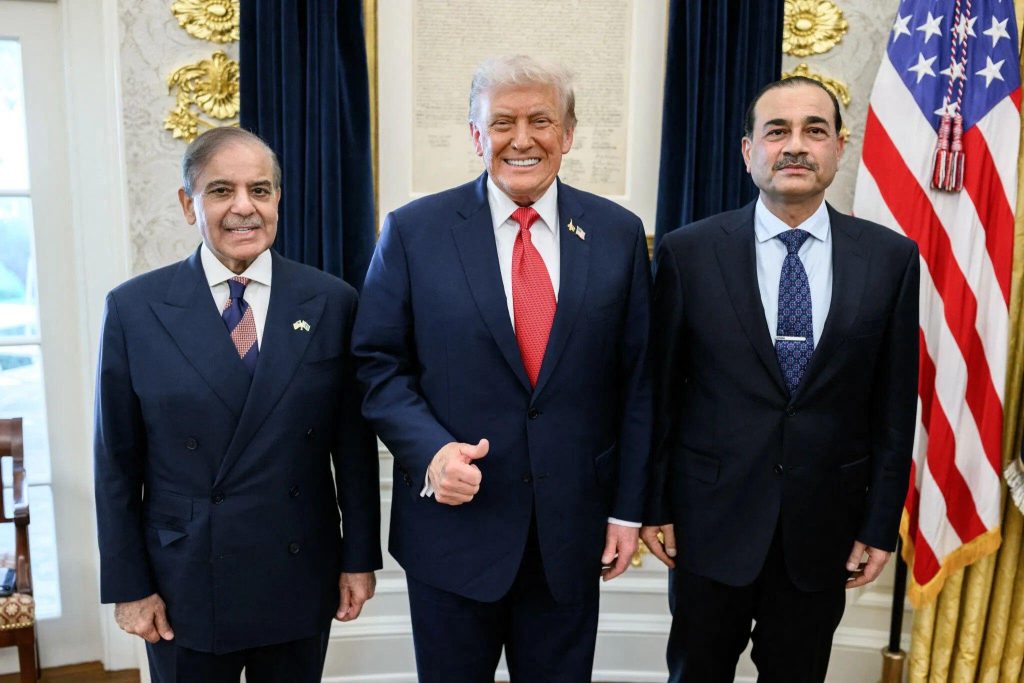
Trump says he is defending Christians. So why is he embracing Pakistan?
The Trump administration has repeatedly pledged to defend persecuted Christians around the world. Yet Washington continues to strengthen its relationship with Pakistan, one of the world’s worst countries in which to be a Christian At the end of last month, at a luxury resort overlooking Lake Lucerne in Switzerland’s Bürgenstock, JD Vance, the Vice President of the United States, joked that there were two “very important people” in his life, “an Indian and a Pakistani”. The Indian is, of course, his wife, Second Lady Usha Vance, born to Brahmin parents who immigrated to the U.S. in the 1980s. The Pakistani is Field Marshal Syed Asim Munir Ahmed Shah, whom Vance said he had spoken to more than anyone over the last three months. Vance said “we would not be here without his statesmanship” and that he is “a great military leader” and a “great diplomat”. The reason for his thanks is that, alongside Qatar, Pakistan has been leading negotiations between the United States and Iran to end the conflict between the two countries. Ignoring the fact that these negotiations have failed and that, for many, the war in Iran is something the United States should not be involved in, there is another pressing question. Why does Donald Trump’s apparently Christian-centric administration feel so comfortable in the hands of a country that has shown such hostility towards its Christian communities? The man whom Vance spends so much time talking to, and with whom Donald Trump held an unprecedented meeting at the White House, is one of many Pakistani leaders who have a long history of failing to protect Christians. After returning from Saudi Arabia, where he memorised the Quran, he was appointed brigadier. Since 2016, he has climbed the military ladder, leading to his appointment as Chief of Army Staff in 2022. Perhaps his most notable failure to address anti-Christian violence was the Jaranwala church arsons in 2023. The incident occurred after torn pages of the Quran were allegedly found near the Christian quarter of the city of Jaranwala, Punjab. Local mosques quickly took to their loudspeakers to encourage potential rioters and, soon, 26 Christian churches were burned alongside Christian homes being destroyed. The day after most of the violence had been carried out, the military stepped in to look busy and some order was restored. Field Marshal Asim Munir described the events as “extremely tragic”, and then let the police do their job, which included arresting two Christian men identified in social media posts as being responsible for the Quran pages being torn. But it should be noted that Field Marshal Asim Munir is one among many pernicious forces in a country where Christians are treated as second-class citizens. Indeed, there is an entire culture built around violence against religious minorities. Forced conversion is one notably horrid practice about which little is done, whereby Christian girls, normally underage, are taken from their family homes and intimidated into converting and marrying a Muslim man. The practice is so common that it has led to interventions by the United Nations. Another is the imprisonment and death penalty for Christians who allegedly insult Islam. Insulting members of Muhammad’s family, companions or wives carries a three-year prison sentence, defiling, damaging or desecrating the Quran means life imprisonment, and making derogatory remarks about Muhammad results in a mandatory death penalty. The laws effectively serve as a constant threat hanging over every Christian in the country, with Christians aware that the accusation alone could result in their death through mob violence long before the state carries out its own investigations. The law also has an extremely low evidential threshold, and defendants can often spend years in prison awaiting trial or appeal. Indeed, this week, Amir Peter, the brother of a Catholic priest in Pakistan, died in prison after being detained over allegedly false blasphemy charges while awaiting trial. Having allegedly made derogatory remarks about Muhammad, any conviction would likely have led to his execution anyway, but his health deteriorated rapidly, in part because the authorities allegedly denied him medical care during his imprisonment. Despite all of these concerns, a special relationship continues to be fostered. Indeed, it was Pakistan that unironically nominated Donald Trump for the Nobel Peace Prize in June 2025, and the following month the United States and Pakistan agreed a trade deal. Amid all this diplomatic cosying up, at no point has President Trump publicly raised the plight of the country’s Christians. Any concern has instead been channelled through the State Department’s annual reporting and through USCIRF, a rather limp response in comparison with its reaction to the Christmas Day bombings in Nigeria. According to Open Doors, a charity which documents the persecution of Christians around the world, Pakistan is the seventh worst country in the world in which to be a Christian. It therefore seems contradictory that, while the Trump administration claims to be “saving Christians throughout the world”, as the President himself said while speaking at the Faith & Freedom Coalition’s 2026 policy conference in Washington this month, it has not taken a stronger public stand against Pakistan’s treatment of its Christian minority.
Jul. 11, 2026
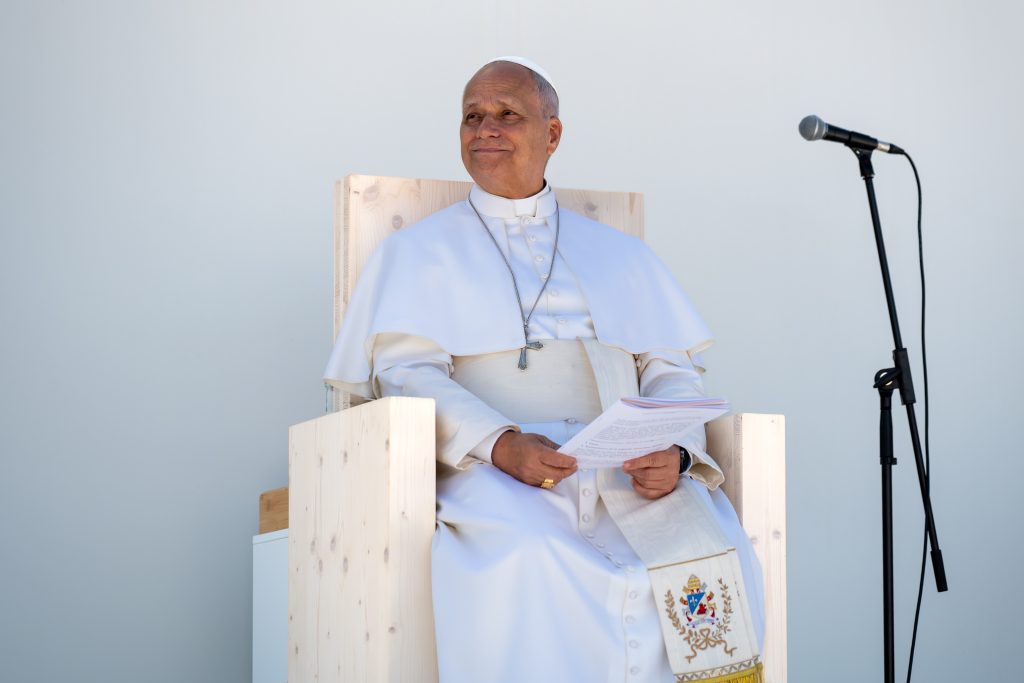
A week later: what Pope Leo’s Spain trip tells us
More than 1.5 million people attended Pope Leo XIV’s Corpus Christi Mass in Madrid. Yet the lasting significance of the trip may lie in what it revealed about Spain’s culture, politics and religious identity A week on from the first apostolic visit to Spain in more than a decade, a great deal has happened in the life of the Church. Cardinal Camillo Ruini, one of the most respected churchmen of his generation, has died. The Holy Father has addressed the situation with the Society of Saint Pius X in off-the-cuff remarks. Details of the June consistory have been leaked. But despite the unusually busy week, the aftermath of the trip can still be felt. The Holy Father used his Wednesday General Audience to reflect on the “warmth” of the reception he received, and the themes he brought to Spain are still being discussed across the country. The trip, and the reaction that followed, offered several insights into both Pope Leo’s pontificate and the state of the Church in Spain. The first is that Pope Leo has the ability to speak with clarity on matters of faith and morals without sitting comfortably in any political camp. Spain is currently under a particularly strong strain of progressivism, with Pedro Sánchez’s socialist government aggressively separating the country from its Catholic past and attacking the sanctity of life, notably through the introduction of assisted suicide. Pope Leo appeared entirely at ease using his speech to the Spanish Parliament, the first by a pontiff, to address politicians’ treatment of the vulnerable. He asked: “Can a community that casts into the shadows the unborn child, the elderly, the sick, those who suffer in silence, or those who depend entirely on the care of others be called fully just?” In case the point was not clear enough, the pontiff also told the politicians that “every human life must be recognised and safeguarded from conception to its natural end, in every circumstance of its existence.” It made for uncomfortable listening in a country which, less than a month earlier, had been scandalised that the government’s commitment to assisted suicide had resulted in the death of Noelia Castillo, a 25 year old disabled survivor of sexual abuse. When the pontiff turned to migration, he adopted a tone that neither the PP and Vox on the right nor Sánchez’s Spanish Socialist Workers’ Party could fully embrace. The Pope called for compassion towards those who have experienced the “tragic drama of migration”, which “challenges the conscience of nations and the ethical foundation of the international order today”. He also stated that wherever there is discrimination based on “national, ethnic, religious or linguistic origin”, human dignity is “seriously violated”. Such sentiments stand in contrast to Vox’s calls for mass deportations and restrictions on citizenship and residence permits for those from what it describes as an “Islamic culture”. At the same time, the Pope was equally keen to defend the right of people to remain in their homelands, a point rarely addressed in contemporary European debates on migration. He said that the matter “goes beyond any purely demographic or economic analysis”, a point which seemed to point to Sánchez’s disproportionate emphasis on the supposed economic benefits of migration. He also stated that the situation “goes beyond the mere management of migration flows”, words that seemed particularly pertinent given the Spanish government’s recent decision to regularise hundreds of thousands of illegal immigrants. Another lesson is that the pain caused by clerical sexual abuse is far from over. As the Pope himself told journalists during the outbound flight to Madrid, sexual abuse remains an “open wound”. He told Spain’s bishops that “one of the most painful encounters is with those who have been wounded precisely by those who were supposed to care for them”. He urged the ecclesial community to respond through “listening, truth, justice, reparations and an even more determined commitment to prevention and a culture of care”. Spain has been comparatively slow in confronting the legacy of clerical sexual abuse, and it was only this year that the country’s bishops’ conference reached an agreement with the government to establish a process for support and reparations for survivors. The theme followed the Holy Father as he left Madrid and travelled to Barcelona. On the second day of the Catalan leg of the trip, he visited the Benedictine Abbey of Montserrat, a symbol of Catalan identity. Yet the abbey has also made headlines in recent years because of revelations concerning abuse committed by former monks. In 2019, it emerged that Andreu Soler, a monk who died in 2008, had abused at least twelve minors over several decades at the institution. During the same year, another monk abused a 17 year old. Jaume Soler Villegas, known as Brother Gabriel, was sentenced to two years in prison, while the monastery was ordered to pay €20,000 in compensation. Miguel Hurtado, the first person to report abuse at Montserrat, sent a letter to the Apostolic Nunciature in Madrid requesting that the papal visit to the Abbey be cancelled. While thousands gathered outside to welcome the Pope, local and international media focused on the abuse scandals and questioned whether an abbey so recently associated with such cases should receive a papal visit. The third lesson, and perhaps the most significant, is that the Catholic character of Spain remains far stronger than many assume. Before the visit, establishing precisely what that meant was remarkably difficult. The Vatican’s pre-visit statistics painted an exceptionally positive picture, listing 45 million Catholics in a population of 49 million, suggesting that 93.25 per cent of Spaniards are Catholic. Based largely on baptismal records, the figures appeared impossibly high. Pew Research put the figure at around 70 per cent in 2020, while the Spanish Centre for Sociological Research (CIS) found that 54.3 per cent of Spaniards identify as Catholic today. At the same time, a poll conducted by Fundación SM found that 45 per cent of Spaniards aged between 15 and 29 identify as Catholic, compared with 31.6 per cent in 2020. The figures are inconsistent and difficult to interpret, but that ambiguity mirrors the reality of the Spanish Church itself. Millions attend Holy Week processions every year, and religious festivals remain a central feature of Spanish life. A man from Málaga once told me that, despite never having been baptised, he always visits his favourite statue of Christ during Holy Week. Six of Spain’s ten national public holidays are religious in origin, including the Assumption and the Immaculate Conception. Even many secular celebrations retain a religious dimension. Spain’s National Day falls on the feast of Our Lady of the Pillar, while New Year’s Day is, for many, the Solemnity of Mary, Mother of God. Alongside this visible Catholic culture, however, there is also widespread religious indifference. While the hermandades , or brotherhoods, continue to attract many young people, Sunday Mass in the average Spanish town will often have few under fifty. Spain has the largest number of monasteries in the world and more than 1,000 men preparing for the priesthood, yet almost 150 religious houses closed between 2012 and 2022. A history of anti-clericalism and the long association of the Church with Francoism have left the Church’s place in society less secure than in neighbouring Italy, where Catholic identity remains more closely intertwined with national identity, or in Malta, a former Spanish possession where legal protections for unborn children remained in place until very recently. Yet Pope Leo’s visit represented a major vote of confidence in the Church. Around 1.5 million people attended the Corpus Christi Mass celebrated by the Holy Father. By comparison, Madrid’s population is approximately 3.5 million, making the scale of attendance proportionally huge. It was one of the largest gatherings of Catholics in Europe outside World Youth Day and represented a 50 per cent increase on attendance during Pope Saint John Paul II’s visit to the city in 2003. Much of the press enjoyed pointing out that the Pope was competing with Bad Bunny, who was touring Spain at the same time. In reality, there was little competition. Despite the remarkable success of the Puerto Rican singer, whose residency broke records for ticket sales by a single artist in Spain, his three-week tour attracted fewer than a quarter of the people who attended events during the Holy Father’s one-week visit. The apostolic visit to Spain was always going to be a significant test. Spain is a religiously complex country, marked by both anti-clerical sentiment and intense religious devotion. In the end, it proved a remarkable personal success for the Holy Father and for the Church more broadly. Yet the pace of the modern papacy allows little time for reflection. Attention will soon turn to the next major challenge. If there is a country capable of matching Spain’s combination of deep Catholic roots and anti-clerical tradition, it is the Church’s eldest daughter, France, which Pope Leo is due to visit in September.
Jun. 20, 2026
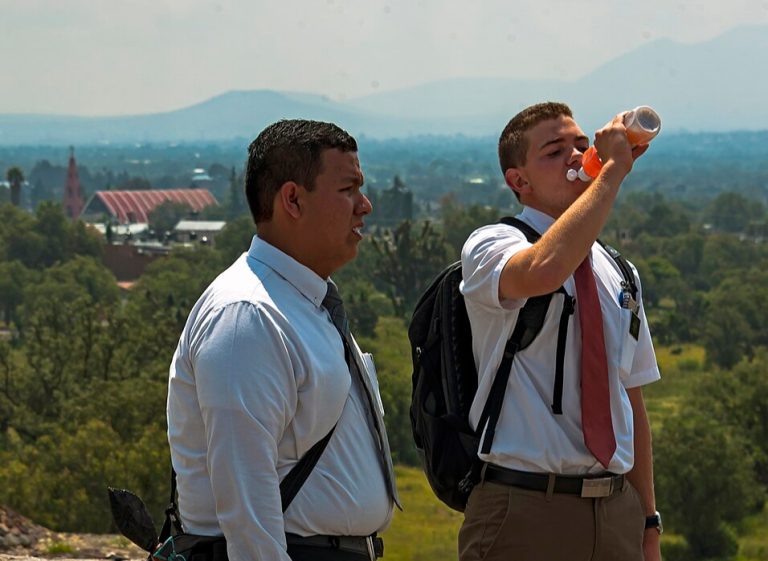
Are Mormons Christians? The uncomfortable truth
A dispute over how the Pentagon categorised Mormons has reopened one of Christianity’s oldest questions. What makes someone a Christian, and who decides where the boundaries lie? A dispute about religious classification has turned into a far more uncomfortable question: where does Christianity actually begin and end? It began, as these things often do now, with a bureaucratic decision rather than a theological one. Earlier this month, the Pentagon dramatically reduced the number of religious categories available to service personnel. In the first version of the revised list, the Church of Jesus Christ of Latter-day Saints appeared separately but was not included among the groups classified as “Christian”. The backlash was immediate, particularly from LDS politicians and commentators in Utah, who protested that they explicitly worship Jesus Christ and must therefore be regarded as Christians. The Pentagon hastily revised the list and insisted that no theological judgment had been intended.
Jun. 10, 2026
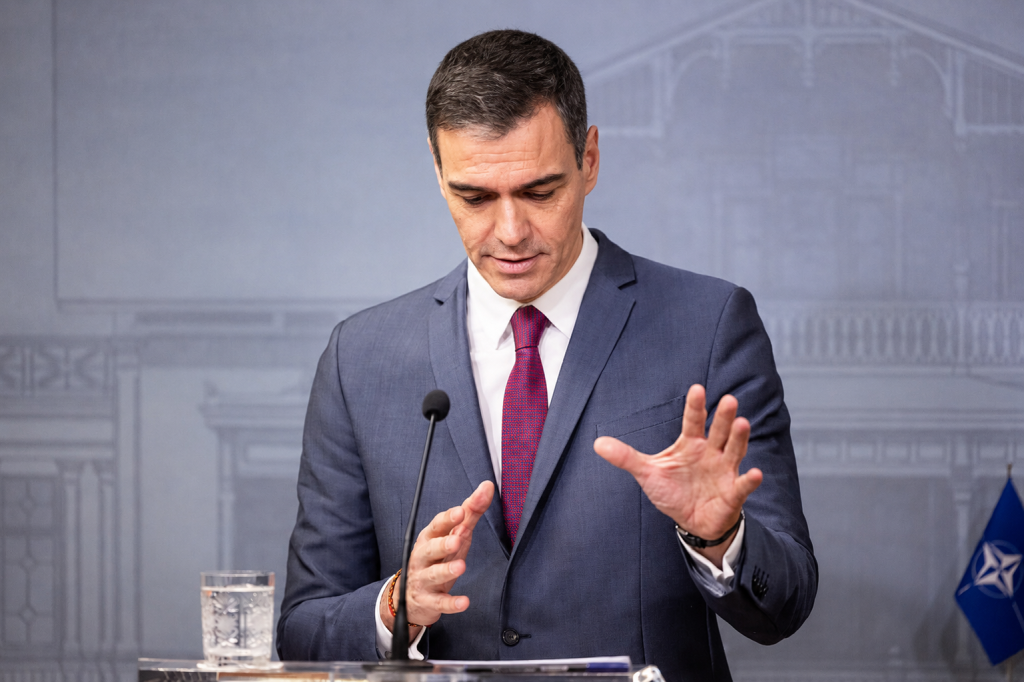
The biggest loser from Pope Leo XIV’s trip to Madrid: Pedro Sánchez
Madrid delivered vast crowds, Spanish flags, a packed Bernabéu and one of Europe’s largest Catholic gatherings outside World Youth Day. For Pedro Sánchez, Pope Leo XIV’s visit may have been a reminder that the Spain he opposes remains very much alive Pedro Sánchez has been noticeably absent during the papal visit to Madrid. He made the trip to the airport to greet the Holy Father and had a private audience before the Pope’s speech at the Spanish parliament, but apart from that, Spain’s prime minister has kept away. With the papal convoy heading to Barcelona, where the apostolic visit will take a turn for the Catalan, that absence will likely continue. However, he is due to make appearances in the third leg of the trip, in the Canary Islands. It is fair to assume that Sánchez is decidedly unhappy with the whole Madrid part of the event. Much of the secular media have covered the papal visit as an endorsement of the leader of the Spanish Socialist Workers’ Party, as he happens to hold views on migrants which are broadly similar to the Holy Father’s. But when one realises that the status of migrants is, shockingly, not the only issue popes and prime ministers can hold opinions on, the situation becomes more complex and, particularly in Madrid, decidedly less favourable for Sánchez. To understand this, it is important to know how Spanish society sees itself. Spaniards will often speak of there being two Spains. There is the socially conservative Spain which is proud of its cultural heritage. Bullfighting, saints and festivals, costumes and pageantry all exist in this Spain, where Catholicism takes pride of place. The Franco era is not openly celebrated, unless you take a turn to the fringes, but in this Spain it is understood, albeit quietly, as not being all bad. The royal family are beyond reproach, unless in favour of the Carlist pretender. The socially conservative Spain finds Madrid as its motherland, with the famous cities of Andalucía, Seville, Granada and Málaga, as its summerhouses. It holds the regions pushing for independence in disdain, with Catalonia being particularly offensive. Dressing smartly, or having a la Rojigualda, the nickname of the Spanish flag, bracelet is generally considered a sign of belonging to this Spain. The other Spain is equally definable, partly because it defines itself as being the opposite of the other. It abhors bullfighting, finds pomp unbearable and is still deeply troubled by the Spanish Civil War and indeed the entire Franco period. The monarchy is either tolerated or actively opposed. Severing the Church from Spanish life is a principal aim. All semblance of the morality of the Church should first be ridiculed and then removed. The unborn have no rights and assisted suicide is the way to sanitise suffering, since suffering is Catholic and therefore bad. Pedro Sánchez comfortably sits within the second Spain. For many, he is the poster boy of left-wing politics and has made it surprisingly appealing. He looks well put together and polished, a far cry from the purple-haired radical left. Under his administration, the second Spain has launched one of its most aggressive attacks on the first. In 2019, after more than four decades of burial at the vast basilica, the remains of Franco were removed from the Valley of the Fallen and, in 2022, the Democratic Memory Law redesignated the Valley of the Fallen as the Valley of Cuelgamuros. The law also accelerated the removal of Franco-era symbols from public life, and abolished a number of noble titles granted during the dictatorship. In 2021, Sánchez introduced assisted suicide, making the apparently Catholic Spain one of the few countries in Europe to permit state-sanctioned suicide. In the same year, LOMLOE, the Celaá Law, was introduced, removing Religious Education from pupils’ grade averages. The law also removed public funding from single-sex schools. Based on no credible pedagogical research, the move was seen as an intentional attempt to harm the country’s hundreds of Opus Dei schools, which are predominantly single-sex. The Pope’s Madrid leg of his trip has been a true celebration of everything the first Spain holds dear. There has been an entire event held to showcase Spanish art and culture, where the Pope asked the Spanish to consider: “What is it that we are sowing today, what exactly is flourishing and what is silently withering in our society; what values are we preserving and which are we allowing to die?” He also delivered a forceful address at the Spanish parliament. In it, he asked: “Can a community that casts into the shadows the unborn child, the elderly, the sick, those who suffer in silence or those who depend entirely on the care of others be called fully just?” Sánchez, who has shown a considerable disinterest in the unborn and elderly through his political opinions, would have been distinctly deterred by the Pope’s question. At Madrid’s Santiago Bernabéu Stadium, he attended a gathering of the dioceses of Madrid, Alcalá de Henares and Getafe in celebration of faith, family and ecclesial communion. He was given a rock star-like welcome, with crowds chanting, “Contigo, León, un solo corazón” (“With you, Leo, one heart”). It was the kind of reception Sánchez could only dream of receiving. The numbers will also be a shock to a prime minister who has no love for the Church. Some 1.5 million attended the Pope’s Corpus Christi Mass, making it one of the largest gatherings of Catholics outside World Youth Day. Sánchez was absent, but with a crowd equivalent to almost half of Madrid gathered, waving Spanish flags and partaking in one of the most ancient solemnities of the Church, the first Spain was out in force. When Sánchez joins the Pope in the Canary Islands, he will be relieved to be reunited on the issue of migration, which will dominate the final leg of his journey. But the magnitude of Madrid will stick with him. A celebration of all things Catholic and traditionally Spanish will likely not have been well received. The numbers will also be a concern, as few could have predicted such a gigantic turnout. The crowds are in line with an apparent resurgence in Catholic identity in the country, with a recent survey finding that 45 per cent of Spaniards aged 15 to 29 identify as Catholic today, compared with 31.6 per cent in 2020. For a socialist, that is a very bad thing.
Jun. 9, 2026
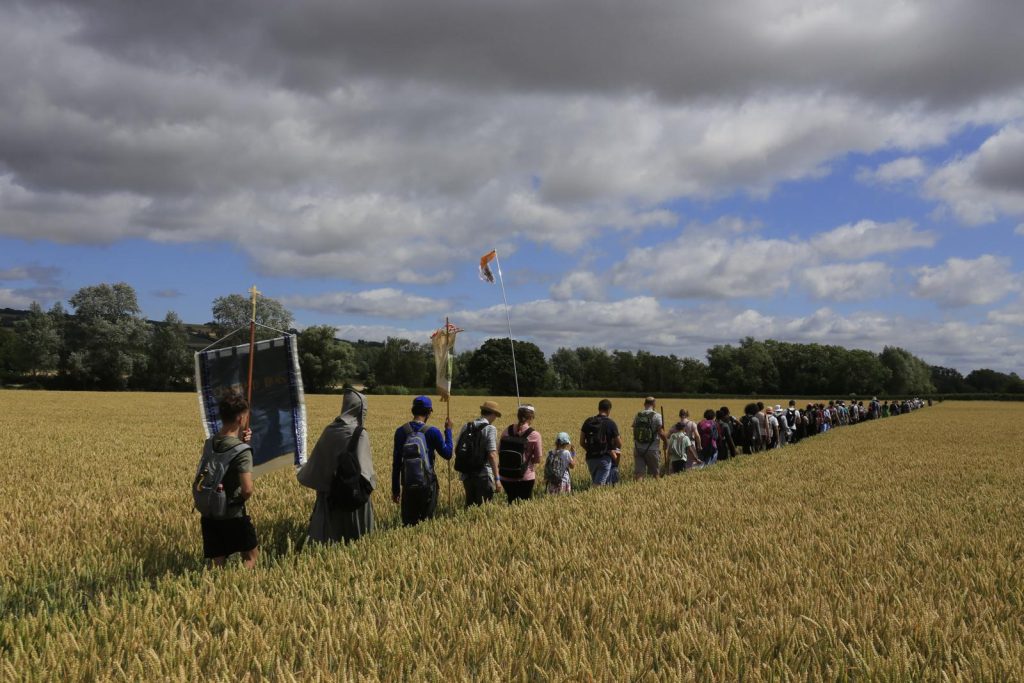
‘Our Lady of Christendom’: UK establishes a ‘sibling’ pilgrimage to Chartres
More than 20,000 pilgrims walked from Paris to Chartres this Pentecost. Now the UK has launched its own version. Inspired by the famous Chartres pilgrimage, Our Lady of Christendom will lead pilgrims from Oxford to Evesham Abbey, the site of the first recorded apparition of Our Lady in England This year’s Pentecost weekend marked the 44th annual Notre-Dame de Chrétienté pilgrimage, where more than 20,000 pilgrims made the journey on foot from Paris to Chartres. With an average age of 22 and hundreds of priests and religious accompanying the pilgrims, Notre-Dame de Chrétienté has become associated with a revival of Catholic worship and devotion to the traditional liturgy of the Church. Although most pilgrims are French, the Notre-Dame de Chrétienté pilgrimage has attracted participants from abroad since its founding in 1982. Witnessing the energy and vitality the pilgrimage brings to those who take part, many have returned to their home countries seeking to establish similar routes. Now the UK has organised its own. Organised by the apostolate Our Lady of Christendom, the pilgrimage begins at St Gregory and St Augustine’s in Oxford, a parish renowned for its reverent celebration of the Traditional Latin Mass in a city where the ancient rite is already well represented. Pilgrims will then walk through the Cotswolds, camping for two nights before arriving at the ruins of Evesham Abbey on the third day. Evesham is the site of the earliest recorded Marian apparition in England, where, according to tradition, the Virgin Mary appeared to a pig keeper named Eof. The apparition led St Ecgwine, Bishop of Worcester, to found a monastery on the site, which grew into Evesham Abbey and became an important centre of Marian pilgrimage. During the Dissolution of the Monasteries in the 1530s, most of the abbey was destroyed, although the bell tower survives today. The origins of the pilgrimage can be traced to a one-day pilgrimage held last year from Tewkesbury Abbey, the of the UK’s second-oldest Marian apparition, to the ruins of Evesham Abbey. A Dominican Rite Sung Mass was offered at The Immaculate Conception and St Egwin’s Catholic Church in Evesham, and the pilgrimage carried relics of St Mary Margaret Alacoque and St Claude de la Colombière, linking participants spiritually with Chartres. Last year’s pilgrims pray before the relics of St Mary Margaret Alacoque and St Claude de la Colombière Organisers hope the pilgrimage will contribute to the restoration of the Kingdom of Christ in the UK and foster devotion to the Blessed Virgin Mary. The initiative comes at a time of growing interest in Catholicism across the UK. Westminster has recorded a 100 per cent increase in adult baptisms over the past two years, while the Oxford Oratory received more adults into the Church this February than during the whole of the previous year. By bringing together Catholics for three days of prayer, penance and pilgrimage, organisers hope to build on that renewed interest and encourage a deeper commitment to the faith. The pilgrimage’s president, Andrea Cabanas, attributes its existence to divine providence, telling AdVaticanum that it is “only through God’s Providence that ‘Our Lady of Christendom Pilgrimage’ exists today”. She said organisers have received support from “both Chartres and Covadonga pilgrimages”, as well as from their chaplain and local faithful who have donated and prayed for the pilgrimage’s success. She added that organisers have placed particular trust in the intercession of St Joseph, St John Henry Newman and Blessed Dominic Barberi. Cabanas is encouraging others to get involved, asking people to “support and volunteer with their God-given gifts in the restoration of the Kingdom of Christ here in Britain, especially those who live in this country and have been attending Chartres pilgrimage for many years”. Those wishing to attend this year’s pilgrimage have until 19 June to register via the pilgrimage website . Priests and religious are invited to attend free of charge, and priests will be able to celebrate their own private Masses during the pilgrimage.
Jun. 5, 2026
Walking to Chartres: the revival of Catholic France
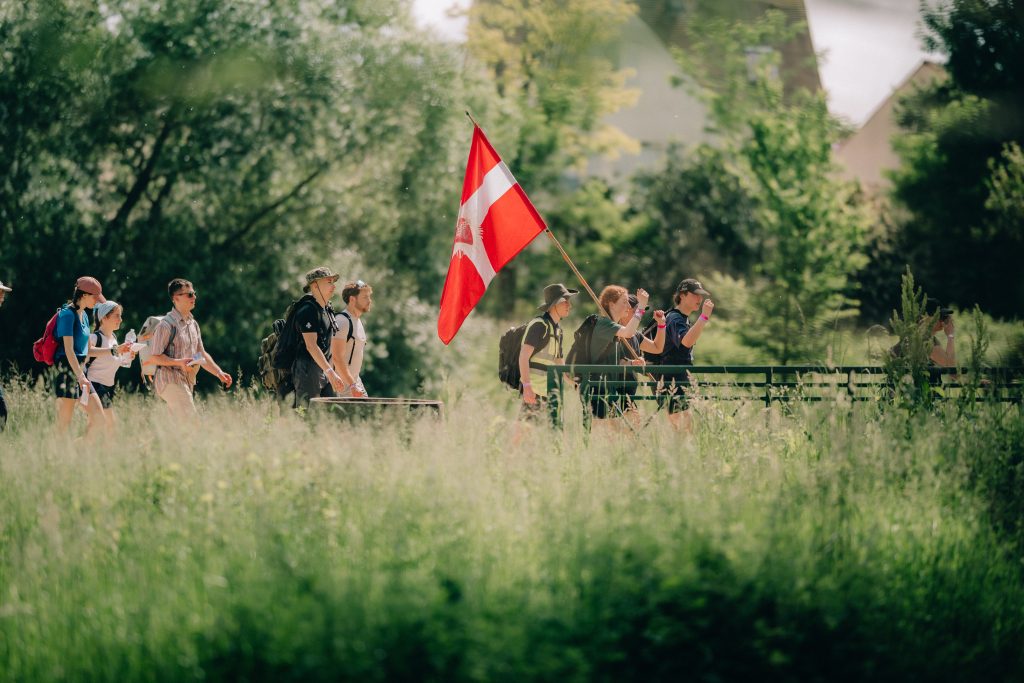
France has seen a surge in adult baptisms. At the same time, more than 20,000 pilgrims completed the three-day pilgrimage to Chartres, the flagship event of the Traditional Latin Mass movement in France. This is the story behind its remarkable growth This year’s annual Notre-Dame de Chrétienté pilgrimage saw more than 20,000, mostly young people make their way from Paris to Chartres amid a Europe-wide heatwave. It is another record-breaking year for the event, which is supported by a further 6,000 volunteers. Like much that is found in the traditional wing of the Church, the pilgrimage is both old and new. New in the sense that it has a vitality brought about by its young attendees. Old in the sense that its origins are medieval. The city of Chartres owes its association with pilgrimage to the Sancta Camisa, a piece of silk worn by Our Lady during the Nativity. Depending on the account, Charlemagne either stole the relic in Constantinople, or was given it by the Byzantine imperial family, and then in turn gave it to his grandson Charles II, also known as Charles the Bald, who presented it to Chartres Cathedral in 876. The Sancta Camisa came to prominence in 911, when Chartres was subjected to a Viking raid. Gantelme, the bishop and military leader of Chartres, is reported to have displayed the relic above the town gate. This is said to have emboldened the defenders of Chartres and terrified the pagan army, resulting in the town withstanding the attack. The episode led to the conversion of Rollo, the Viking leader, his pledge of allegiance to Charles the Simple, more charitably known as Charles III, and the establishment of the Duchy of Normandy, with Rollo as its first duke. Just over a century and a half later, that duchy would successfully invade England, a feat no one has yet matched. Over the ensuing centuries, the cathedral was subjected to successive fires. After each one, however, the people of Chartres rebuilt it in ever more splendid forms. The “Cult of the Carts”, a medieval devotion in which lay people harnessed themselves to carts in place of oxen to transport building materials, finds one of its most famous examples in Chartres. In a letter written by Abbot Haymo of Saint-Pierre-sur-Dives to the monks of Tutbury Abbey in England, Haymo described people of all social classes dragging materials to Chartres catherdral as an act of piety and penance. During the late Middle Ages and the Renaissance, Chartres became a major centre of Christian pilgrimage. Great fairs were held for the Presentation, the Annunciation, the Assumption and the Nativity, with pilgrims arriving in time to join the festivities. The area surrounding the cathedral functioned as a free-trade zone, exempt from state taxation and governed instead by cathedral authorities. On 7 August 1773, the high altar designed by Charles-Antoine Bridan, depicting the Blessed Virgin Mary’s Assumption into Heaven, was consecrated. Today it remains one of the most iconic features of the medieval cathedral, alongside its celebrated stained-glass windows. More than a century later, another Charles became synonymous with the cathedral. Charles Péguy, the French poet and essayist, helped keep the pilgrimage to Chartres alive by establishing the Paris route. Péguy spent much of his early life detached from religion and would probably have identified more as a Dreyfusard than anything else. Yet his growing nationalism ultimately led him back to France’s Catholic heritage, perhaps most clearly expressed in Le Mystère de la charité de Jeanne d’Arc ( The Mystery of the Charity of Joan of Arc ), first published in 1910. In 1911, at the deathbed of his son Pierre, he made a promise that if his son recovered, he would make a pilgrimage to Chartres beginning in Paris. In 1912, he completed the journey, which left him transformed. He took his students on the pilgrimage and, when he was killed in battle in 1914, they continued the pilgrimage in his honour. Péguy’s faith was complicated. He was married to a divorcee and was never able to be sacramentally reconciled with the Church. However, his Catholicism by conviction bears considerable witness to the power of the Church to draw people in, no matter the obstacles in their path. Like many good traditions, Chartres fell out of use in the years of liturgical upheaval that followed the Second Vatican Council. The Paris to Chartres route, etched into Catholic intellectual France by Péguy, ceased to exist and it was not until 1982 that it resurfaced. It is now associated with the traditionalist movement within the Church. In 1988, after Archbishop Marcel Lefebvre was excommunicated following the illicit episcopal consecrations at Écône, a reality sadly familiar for this year’s pilgrimage, the Society of Saint Pius X began to walk the route in reverse, starting in Chartres and finishing in Paris, a journey it makes to this day. Organised by Notre-Dame de Chrétienté, the pilgrimage has grown at a staggering rate. In 2010, attendance reached 10,000. By 2023, organisers had to close registration early and limit attendance to 16,000, with this year’s numbers exceeding 20,000. This year’s journey started on Saturday 23 May, with Holy Mass at Saint-Sulpice, Paris’s second-largest church, where pilgrims gathered from 5 a.m., filling the surrounding streets. A military-style operation enabled pilgrims to drop off their tents and bags before being escorted through the Saturday morning streets of Paris. Priests process into Saint-Sulpice for the opening Mass of the pilgrimage Walking through the streets of Paris, pilgrims sang hymns while carrying banners displaying saints to whom they are devoted. More than 4,000 religious and priests accompanied the groups, with the short distances between chapters providing opportunities for confession. Pilgrims walk through the French countryside At the end of the first day, pilgrims camped at a vast campsite in Senlisse. Tents were erected for the night, with special areas for priests to celebrate individual Masses from 4 a.m. The following day, at 5.30 a.m., pilgrims were woken for what was potentially the most arduous day of the journey because of the heat and sun exposure, making their way to an open field en route for Pentecost Sunday Mass celebrated by Father Antonius Maria Mamsery, Superior General of the Missionaries of the Holy Cross, a community devoted to the Traditional Latin Mass. Speaking to AdVaticanum after Mass, Father Antonius described the pilgrimage as the “hope of Europe” and “the hope of the revival of the faith and of Catholicism as it once was”. After another evening in a specially erected campsite, the final leg of the journey was completed on Pentecost Monday, a national holiday in France. The crowds arrived singing “Chartres sonne, Chartres t’appelle” (“Chartres rings, Chartres calls you”), before a Solemn Pontifical High Mass celebrated by Cardinal Raymond Burke. His Eminence Cardinal Raymond Burke blesses pilgrims before celebrating a Solemn Pontifical High Mass at the conclusion of the Notre-Dame de Chrétienté pilgrimage in Chartres. Today the pilgrimage has an international character, with pilgrims travelling from as far afield as Australia and South America. However, it remains predominantly French. France is currently experiencing a revival in Catholic devotion, with more than 13,000 adult baptisms this year, a 270 per cent increase in just five years, with the largest cohort, 42 per cent, aged between 18 and 26. The combined number of adult and adolescent baptisms exceeds 20,000, roughly equivalent to the number of pilgrims who took part in this year’s pilgrimage. It is therefore no coincidence that this year’s pilgrimage theme is mission. Organisers said the event stands “at the heart of this spiritual awakening in France, for which prayers have been offered for 44 years”, and it was notable that passers-by were handed leaflets as the pilgrimage passed through towns and villages. The Bishop of Chartres, Bishop Philippe Christory, who gladly welcomes the throngs of pilgrims to his cathedral each year, acknowledged that although the increase in baptisms is significant, “so many are still so far away from the Church”. Speaking to AdVaticanum, he said: “We have to love. Love is the key, the door and the way. Otherwise, this is all nonsense, if it is not for love of God and love for our brothers.” A cynic might judge the turnout to be relatively small compared with the millions who gather for World Youth Day. But the pilgrimage exists without extensive promotion from the Church’s hierarchy, and it is a journey made entirely on foot. It is a pilgrimage of penance and mortification that requires a level of commitment and physical endurance beyond that of a typical pilgrimage. Perhaps a fairer comparison would be Rome’s annual marathon, which 22,000 people completed in 2025 in cooler weather and over less than half the distance. What is increasingly clear is that Chartres represents a phenomenon that it is now impossible for the Church hierarchy to ignore: a younger generation of Catholics is devoted to the Traditional Latin Mass in substantial numbers, and that this devotion will persevere through any restrictions imposed upon it. The first signs of this acknowledgement are becoming apparent, notably in Pope Leo’s request earlier this year that the French bishops show charity towards those attached to the traditional form of the Mass. Brother João, a member of the Fraternity of St Joseph the Guardian, a community that offers the Traditional Latin Mass in the Diocese of Fréjus-Toulon to re-evangelise France, put it succinctly when he told AdVaticanum: “Chartres is a testimony.” With a younger generation of clergy also rising through the Church’s hierarchical ranks who share the same devotion, it remains only a question of time before that testimony leads to concrete action and the promotion, rather than the penalisation, of the Church’s most ancient and edifying liturgical expression. Photo credit: Notre-Dame de Chrétienté
Jun. 3, 2026