

Catechesis
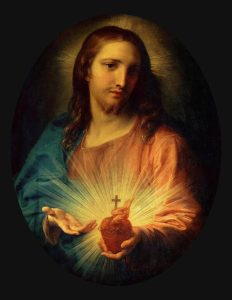
The healing power of the Sacred Heart
In a reflection for the month of the Sacred Heart, Brother René Stockman considers the writings of Saint Claude La Colombière, the reality of suffering, and the healing that comes through trust in God’s mercy “My God, I am so firmly convinced that You watch over those who have placed their hope in You, and that one will lack nothing when one expects everything from You, that I have resolved to live without worry from now on and to entrust to You everything that troubles me: ‘Lord, You let me dwell in safety. I need not be afraid; I can sleep in peace’ (Psalm 4:9). People may take everything from me: my possessions, my honour; illness may sap my strength so that I can no longer even serve You; I may even lose Your grace through my sins: but never shall I lose the hope that I shall keep until the last day of my life. Nothing and no one will be able to take this hope from me”. These words are those of Saint Claude La Colombière, a 17th-century Jesuit who was the spiritual director of Saint Marguerite-Marie Alacoque in Paray-le-Monial. The latter is perhaps better known to us because of the devotion to the Sacred Heart of Jesus, which gained a special place within the Church through her. Saint Claude La Colombière is less known. I first discovered him during a chance visit to Paray-le-Monial and was struck by the words he wrote about his trust in God’s mercy. For that faith in God’s mercy is the very heart of the Sacred Heart devotion to which we are especially invited during the month of June. God’s mercy is the absolute expression of his love for each and every one of us and is therefore truly unconditional. If we become truly convinced of this, then we will be able to identify with the words of Claude de Colombière. He takes as his starting point the line from Psalm 4: “Lord, you let me dwell in safety. I need not be afraid; I can sleep in peace.” We all know moments when we are anything but sleeping peacefully, because all sorts of problems disturb our sleep. These may be the conflicts we had the previous day with someone close to our hearts, or a disappointment suffered at the hands of a person from whom we certainly did not expect it. As Claude points out, our honour can be wounded and we can be portrayed in a completely false light. We may be falsely accused, causing everything we have built up as good to vanish into thin air, as it were, and be overshadowed by negativity. We may fall victim to gossip that drags our name through the mud, and we know the proportions this can take today when it finds its way onto the internet. And yes, illness too can completely derail our plans and push us into an unwanted passivity, leaving us lacking even the strength to pray. It is a list that could be added to. But the intention here is not to list everything that can disturb our sleep and our inner peace, tranquillity and serenity. The question is how we deal with all this, and whether, if we wish to maintain the illusion of having the strength to process it all ourselves, we will actually succeed in doing so. Claude de Colombière does not run away from the problems that befall him or the disappointments he faces; he faces them squarely. But he knows how to hand them over and entrust them to God’s mercy. It is thanks to his growing realisation that he is truly loved by God that he becomes convinced that nothing is too much to entrust to God’s mercy. God’s loving and merciful heart is so much greater than his own heart, troubled by the many worries that surround and afflict him, that it has the power to fully compensate for and heal the loss of his inner peace, and to bestow upon him, as it were, a new heart. The unconditional love and mercy that God radiates towards him, and towards us, causes an equally unconditional hope to grow within him and within us, a hope that no one and nothing can take away from us. Here we need no artificial means to regain our peace of mind, but will be healed from within and our wounds will be completely healed, so that not even a painful scar will remain. At a time when everything is expected of medical technology, including the healing of psychological and existential ailments and wounds, the therapy offered to us here may sound rather unscientific. We have become accustomed to a different language. There is a grain of truth in the observation that the confessional has been replaced by the psychologist’s chair and penance for the prescription for a psychotropic drug. In saying this, we do not detract from the merits of the ever-advancing field of medicine, through which so many people can be helped more effectively; yet we do ask ourselves whether, by losing faith in God’s mercy, we have not closed off a path to deeper healing and restoration. It is from this same conviction that we can look up to the image of Jesus, who showed Saint Faustina his open heart, from which a stream of blood and water flowed, and in which Jesus inspired Sister Faustina to utter the words: “Jesus, I trust in You.” It is through the blood and water flowing to us from the opened heart of Jesus that we can be purified and healed of everything that troubles us. It is this grace that we may receive in the sacrament of Confession, from which many have completely turned away through ignorance or growing indifference. When we ignore sin, the conviction that we do not need forgiveness grows. It is enough to forgive ourselves, or, from a position of moral relativism, to decide for ourselves what is good and bad, so that ultimately we regard everything we do as good. But in the sacrament of reconciliation we are able to experience that healing power of God’s mercy, and moral relativism will slip away. As Claude de Colombière points out, we are called to entrust everything that weighs us down to God’s mercy and never lose hope again. That is why devotion to the Sacred Heart is not merely a relic of a distant past, but an invitation to open ourselves directly to God’s unconditional love and mercy and to allow Him to heal us from within. Sacred Heart of Jesus, have mercy on us.
Jun. 14, 2026
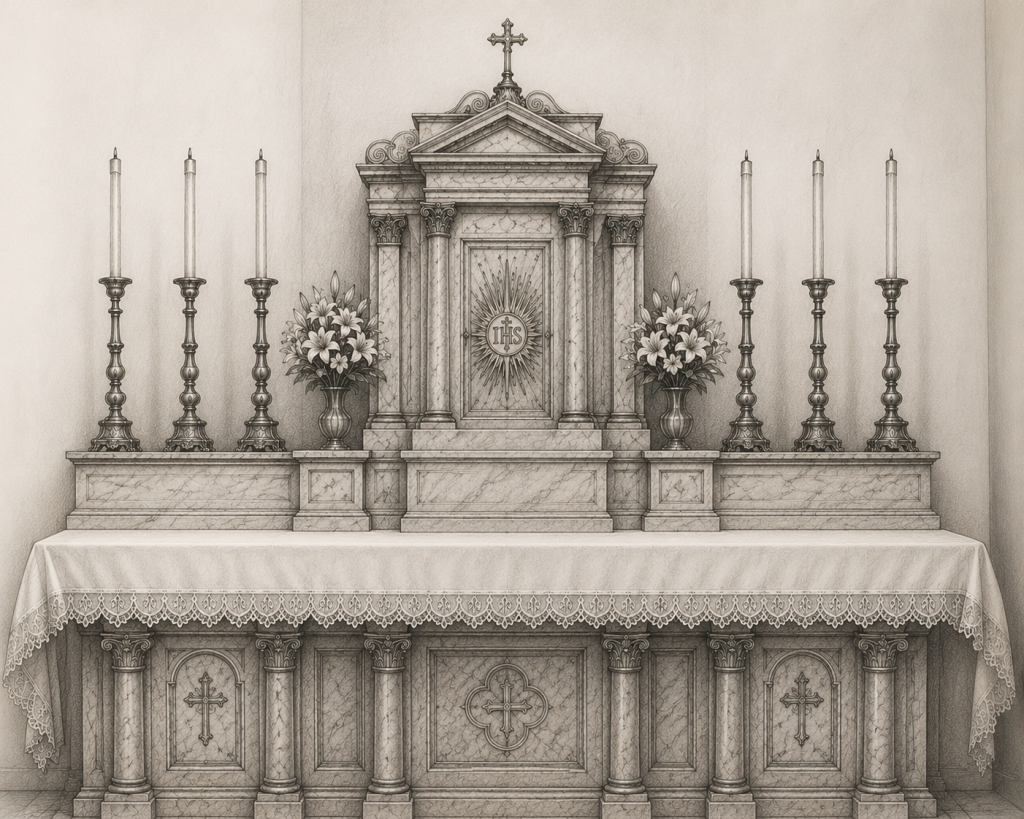
“Jesus of Nazareth is passing by”
From the Ark of the Covenant to the tabernacle, Fr Daniel Seward explains how the Old Testament points towards the mystery of the Eucharist The very first journey made by the incarnate Son of God was from Nazareth to Ein Karem, enclosed within the womb of His Blessed Mother. Mary walked through the hill country of Judea, following the route of the Ark of the Covenant one thousand years before. We call Mary the Ark of the Covenant because she was the first Eucharistic vessel, carrying Jesus along the road. The Ark of the Covenant contained a piece of the manna that fell upon the Israelites in the wilderness, “Your fathers ate the manna in the desert”; it also housed the tablets of the Law and Aaron’s rod that bloomed. Our Lord is the Bread of Life, the giver of the Law, and the High Priest of our Salvation. So everything that we see about the Ark is a shadow and a prophecy of Jesus Himself. On the day of the dedication of the Tabernacle, two of Aaron’s sons, Nadab and Abihu, brought unholy fire into the sanctuary and were themselves consumed by fire. The Levites carrying the Ark across the River Jordan passed along the riverbed with dry feet, as the Jordan parted before the Ark. Joshua carried the Ark seven times around the city of Jericho, and its walls tumbled down. When the Ark was captured by the Philistines, everywhere that it stayed, the enemies of God were struck down by tumours. Placed in the temple of the Philistine god Dagon, the Ark brought his colossal statue crashing to the ground. The milch cows that pulled the Ark away from the Philistines brought it straight back to the land of Israel, passing their lowing calves without a second glance. When the men of Beth Shemesh presumptuously opened the Ark, seventy of them were struck down by the Lord. When the Ark was being transported to Jerusalem by King David, and reached the threshing floor of Nacon, the oxen stumbled, and Uzzah put out his hand to steady the Ark, and fell down dead. If all these things applied to the type and the shadow, how much more terrible and awe-inspiring is the reality: that Sacrament in which our Lord and Saviour dwells among us bodily, made present in His entirety to each of us. This is what St Paul tells the Corinthians: “Therefore whoever eats this bread or drinks this cup of the Lord in an unworthy manner will be guilty of the body and blood of the Lord. But let a man examine himself, and so let him eat of the bread and drink of the cup. For he who eats and drinks in an unworthy manner eats and drinks judgment to himself, not discerning the Lord’s body. For this reason many are weak and sick among you, and many sleep.” When King David eventually brought the Ark to Jerusalem, he leapt and danced before it, sacrificing to the Lord and distributing food and drink to all the people of Israel. In the Old Covenant the glory of God was concealed: in the gold-overlaid acacia wood box, under the mercy seat and the two cherubim, and in the cloud that covered Moses’ encounters with the Lord, or the dedication of the Tabernacle and the Temple. When Our Lady travelled through the mountains of Judea, she concealed the secret of God’s presence within her womb. Only John the Baptist, within Elizabeth’s womb, recognised the presence of the Christ, and, like David leaping before the Ark, leapt in homage to Jesus. Our Lord would travel again, with His parents, into Egypt. According to legendary traditions preserved by Coptic Christians, as the Holy Family passed through the land, pagan idols and statues fell to the ground, and springs rose from the earth. In a more reliable canonical account, St Mark’s Gospel tells how, when Jesus crossed to the other side of the Sea of Galilee, into the pagan territory of the Gerasenes, and had come out of the boat, immediately there met Him out of the tombs a man with an unclean spirit, filled with a legion of demons, whom the Lord cast into the herd of swine. “Jesus of Nazareth is passing by.” As Our Lord walked towards Jericho, a blind man, Bartimaeus, sitting by the roadside begging, heard these words and cried out, “Son of David, have mercy on me!” The Lord gave him his sight, and Bartimaeus followed Him, glorifying God, and all the people, when they saw it, gave praise to God. Bartimaeus recognised who Jesus is, even though he could not see. The demons on the far side of the Jordan quailed in terror before Him, although He was clothed in His humanity. The idols of Egypt crumbled to dust before a baby. John the Baptist knew Him, even before they were born. And we know Him. We know Him, concealed under the appearances of Bread and Wine. We know that in the Eucharist, there is no bread and wine. We know that here in our Tabernacle, and upon our altar, and given to be present as our very food, is the One whose glory rested upon the Ark in mystery, before whom David leapt and danced, and who gave the manna from heaven. The Eucharist is not only the sign; it is the reality. We too must approach with reverence, with faith, with awe, and also with trust and gratitude, because what Moses glimpsed in shadow, we receive in its fulness: the Body, Blood, Soul, and Divinity of Jesus Christ. Tonight, and again on Sunday, we will take Him on another journey through the streets of York. Many will see Him and will not know Him, but can we not hope that He will cast out evil, touch hearts, turn people from sin, inspire conversion and pour out His mercy on all whom He will pass? We can do our simple part by pouring out all the outward tokens of our love, by pointing to the One whom we carry. If the Blessed Sacrament passes you, and you can kneel, kneel down. Above all, be present. Our Lady didn’t send a letter to Elizabeth; she took Jesus to her. David, when exiled from Jerusalem, longed above all to be able to approach the Lord in His sanctuary: “One thing have I asked of the Lord, that I will seek after; that I may dwell in the house of the Lord all the days of my life, to behold the beauty of the Lord, and to inquire in his temple.” “O God, You are my God; Early will I seek You; My soul thirsts for You; My flesh longs for You In a dry and thirsty land Where there is no water. So I have looked for You in the sanctuary, To see Your power and Your glory.” When David flees before Absalom, he says to Zadok the priest, “If I find favour in the eyes of the Lord, he will bring me back and let me see both [the Ark] and his habitation.” Just as the Lord makes Himself physically present to us, so we have to respond in the same way. It’s no good generally agreeing with the Catholic religion but not coming to Mass. The actual, bodily celebration of the Holy Mass was the reason why our martyrs laid down their lives. It’s no good vaguely approving of processions but not taking part in them. David and John the Baptist leapt, and you can walk, and show to the disordered world that in the Eucharist there is peace, mercy and love. Our Holy Father Pope Leo, in his encyclical published last week, Magnifica Humanitas, presents the Blessed Sacrament as the antidote to the virtual world of loneliness, in which individuals are reduced to algorithms and human relationships are obliterated by artificial intelligence. The Pope says: “The spirituality that we need is a Eucharistic spirituality, that is a spirituality of ecclesial unity in love.” In other words, to receive and to worship the Lord in Holy Communion is never a purely individual act. It must be communion, it must lead us to a shared witness, it must lead us to look outwards and to bring about the Kingdom of God in the world. Pope Leo says: “It is from this communion that Christian solidarity also arises, since, as Pope Benedict XVI said, ‘union with Christ is also union with all those to whom he gives himself’… In the Eucharist we find a visible manifestation of the reality that we ‘are the Church of Christ, his members, his body. We are brothers and sisters in him. And in Christ, though many and diverse, we are one: In Illo uno unum.’ The Eucharist opens us to justice and sharing, with a preferential concern for those who are burdened by poverty or marginalisation. And while new economic and technological networks can generate exclusion, isolation and dependencies, the Church, nourished by the Eucharist, is called to make visible a different paradigm, one that preserves human connections, gives a voice to the invisible and ensures that processes are aimed at respecting people’s dignity.” Isaiah said, “Truly You are God who hides Himself, O God of Israel, the Saviour.” But here, in the Sacrament of Unity, is the God who manifests Himself, who bursts into our world, whom we will carry onto our streets, who breaks the bonds of slavery and estrangement, who has come to bring Life. “Jesus of Nazareth is passing by.” Fr Daniel Seward is Parish Priest at the York Oratory, a thriving Catholic community in the centre of York, served by the Oratorian priests and brothers. For more information about their work, please visit: yorkoratory.com.
Jun. 12, 2026
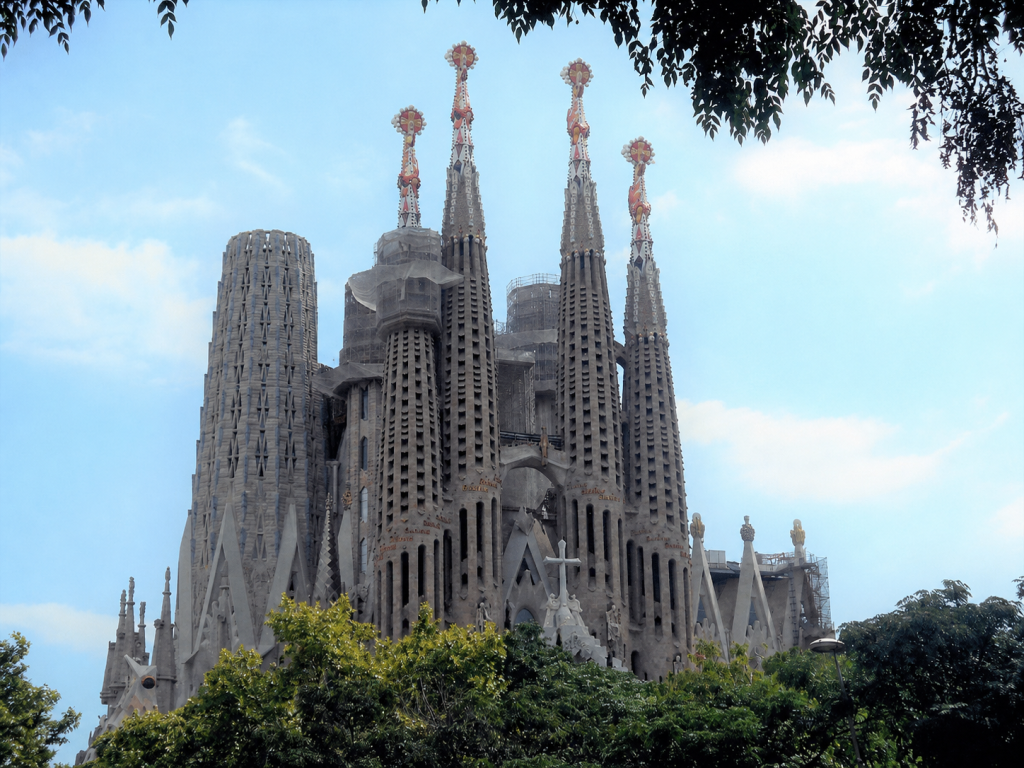
In full: Pope Leo XIV’s homily at the Basilica of the Sagrada Família
During the Barcelona leg of his Apostolic Journey to Spain, Pope Leo XIV delivered this homily at the Basilica of the Sagrada Família, reflecting on faith, beauty, evangelisation, the witness of Antoni Gaudí, and the Cross of Christ that now crowns the church’s highest tower. Read the full text. O Lord, our Sovereign, how glorious is your name throughout all the earth! (Psalm 8:2,10) With the words of this psalm, so full of joy and wonder, I greet all of you, dear brothers and sisters. I express my gratitude to Their Majesties, and I thank Cardinal Juan José Omella, Archbishop of Barcelona, as well as the other brother bishops and all those who join us in prayer: priests, deacons, religious brothers and sisters. On this festive evening for the whole city of Barcelona and for the Spanish people, particularly the Catalan people, I extend my grateful greeting to the public authorities, as well as to members of other Christian communities and other religions who are taking part in our thanksgiving. Today the Basilica of the Sagrada Família welcomes us in this beautiful city, opening its doors as if they were its arms, inviting each one of us to this altar to hear the Word of God. It is a temple that makes us a family loved by the Lord, nourished by his very life in the Eucharist. Thus, the city of Barcelona and all of Catalonia gather in this temple, which is also a sign of unity and concord for the whole of Spain. They lift up their gaze to encounter the face of God the Father, shining forth in his Son made man, Jesus Christ. As we give thanks to the Lord for his love towards us, we praise him for what he accomplishes in our lives. We give thanks in a particular way for this extraordinary basilica, which Pope Benedict XVI consecrated in 2010, recalling that it is a visible sign of the invisible God, for whose glory its towers rise heavenward (cf. Homily for the Consecration, 7 November 2010). In continuity with the prayer of my predecessor, in a few moments I will bless its highest tower, the Tower of Jesus Christ. This church is a single building, composed of many stones. It is a house that has grown steadily over the years, following one unified plan. All of us are the living stones of this work, which has Christ as its foundation and summit, its beginning and its end. Far more than a monument, the Basilica of the Sagrada Família remains today a work under construction, reminding us that the Christian life is always a journey, because it is a project that God himself carries out. Let us not inhabit, then, an unfinished work, but rather a temple that is still under construction. Its imperfection is not a defect, because it bears witness to a desire. It does not signify a lack; rather, it expresses a promise that we wish to honour with fidelity. Our gratitude thus becomes a commitment, as we cooperate in God’s plan, that is, in the building work to which he himself calls us. Since we are temples of the Holy Spirit (cf. 1 Corinthians 6:15, 19), this work coincides with our own lives, which God conceives as a masterpiece that we are to accomplish together. He calls us to collaborate with him (cf. 1 Corinthians 3:9). In this regard, we keep in our hearts the words that the Lord addressed to King David: “Would you build me a house to dwell in?” (2 Samuel 7:5). On the contrary, “The Lord declares to you that the Lord himself will establish a house for you” (v. 11). Through this announcement, Scripture teaches us that it is not we who provide God with a dwelling place; rather, it is God who gives us a place. And the place he gives us is his own heart: the place of the Son for us who were strangers, the place of the beloved for us who are sinners. His will is fulfilled through Jesus. We can therefore understand the meaning of what we have heard in the Gospel, when the Lord says to the Pharisees: “If you do not believe that I am he, you will die in your sins” (John 8:24). These are strong words, but they are by no means threats or blackmail. They are an invitation to salvation, that is, a call to freedom from Christ, who desires for us the ultimate and eternal good. In the face of the threat of evil, the Lord is always with us, always on our side. “I Am” : this is the most holy name that God entrusted to Moses from the burning bush, revealing his unshakable fidelity. Made man, he becomes for us Emmanuel, the source of grace and forgiveness, of salvation and new life. Dear brothers and sisters, we cannot believe in Jesus and promote war. We cannot believe in Jesus and kill the innocent. We cannot believe in Jesus and abandon those who suffer, those who weep, or those who flee from misery. Tonight, then, the Cross of Christ, which crowns this basilica, is the cross of the last who become first, of sinners who become saints, of the dead who rise again. The three façades of the Sagrada Família bear witness to this: the First became the Last for us at Christmas; through his sacrifice he redeemed us in the Passion; and his death gives us eternal life, making us sharers in divine glory. As we admire the Tower of Jesus Christ, let us raise our eyes to him, to the One who reveals to us the truth about God and the truth about ourselves. Looking at Christ, we can see the world with renewed eyes. The tower of the Cross then becomes a banner of charity, because God loves us in this way, transforming an instrument of death into a sign of hope. In the Cross of Jesus, our faith reaches its summit, as the inscription at the base of the spire proclaims: “Tu solus Sanctus, tu solus Dominus, tu solus Altissimus” (“You alone are Holy, you alone are Lord, you alone are the Most High”). This Cross shines by day, reflecting the light of the sun, and shines by night, illuminating the city like a beacon open to the Mediterranean. Although the light of Christ shines in the darkness, the darkness has not welcomed it (cf. John 1:5, 11). Yet this rejection does not cause God’s love to fail. “When you have lifted up the Son of Man,” the Lord says, “then you will know that I am he, and that I do nothing on my own authority, but speak just as the Father has taught me” (John 8:28). It is necessary to pass through the Passion of the Crucified in order to be illuminated by the glory of the Risen One. From all eternity, the Father teaches the gift of life, and the Son, who receives that life from him, gives it to all through the power of the Holy Spirit. This is why the Cross is the radiant sign of his love. When Christ is lifted up, his magnificent humanity shines forth, and our works give glory to God. These are the works of faith, and among them art holds a special place. It is precisely faith that gives form to the stones and meaning to the building that we inhabit together. In our prayer, therefore, we discover the original bond of all things with God, Creator of heaven and earth. He is the artist who has imprinted his splendour upon the cosmos. Created in his image, man responds to God’s work through his own ingenuity. Thus the artist transforms talent into praise and creativity into a witness to creation itself. As an architect aflame with faith, the Venerable Antoni Gaudí conceived these spaces with the desire to tell the story of the mysteries of the Lord’s life. In this way, he has proposed to us a spiritual pilgrimage that leads to an encounter with Christ, born, dead and risen for us. Together with Gaudí, whose death we commemorate on the centenary of his passing, we remember and give thanks this evening for all the promoters and benefactors, the artists and the workers who have contributed to the construction of an architectural masterpiece that is also an eloquent catechesis made of stone, colour and light. In her wisdom, the Church thus renews the Biblia pauperum of the ancient cathedrals, which are themselves rich messages of evangelisation. In this age of images, it becomes even more evident that art and beauty are outstanding channels of evangelisation. Dear brothers and sisters, the beauty of this temple encourages us to learn ever more from our Master and Lord the art of living according to his Gospel. As we lift our eyes to him, the crucified and risen Lord, let us commit ourselves to raising up the faces of those who lie in the dust (cf. 1 Samuel 2:8). Let us thus show that the Sagrada Família is the tallest church in the world, not in order to stand out in worldly rankings, but to guide the steps of the People of God who journey through this land of Catalonia, with the Cross lighting the way like a lamp kept burning as we await the return of the Bridegroom. May God be blessed forever! Photo credit: Canaan – Own work, CC BY-SA 4.0, https://commons.wikimedia.org/w/index.php?curid=71031111
Jun. 10, 2026
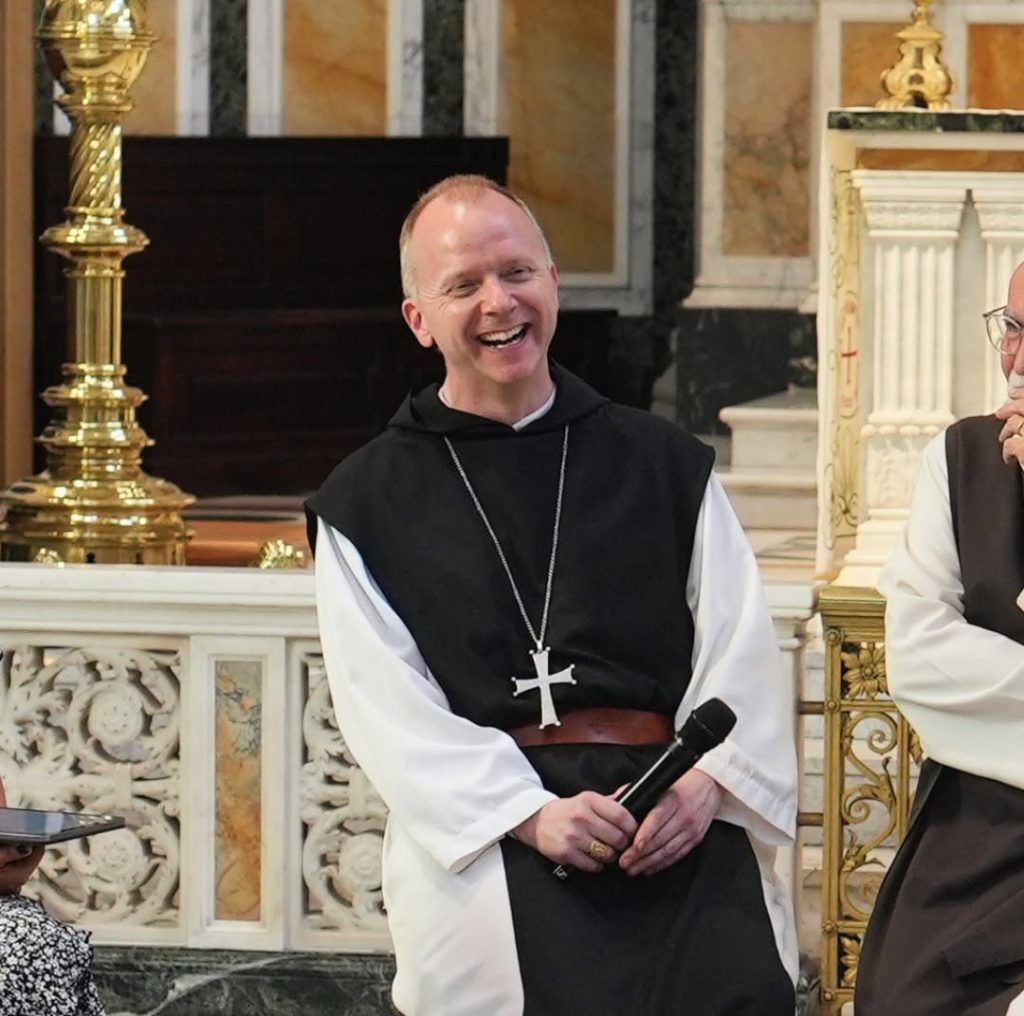
‘Summit in Soho’: Bishop Erik Varden and Father Jacques Philippe bring monastic wisdom to the heart of London
More than 250 attendees gathered in London at the end of last month for the St Patrick’s Summit in Soho. Titled ‘Freedom of the Heart’, the event was centred on using monastic wisdom for everyday life and was hosted for young Catholics feeling the pressures of modern secular life. The summit brought together Bishop Erik […] More than 250 attendees gathered in London at the end of last month for the St Patrick’s Summit in Soho. Titled ‘Freedom of the Heart’, the event was centred on using monastic wisdom for everyday life and was hosted for young Catholics feeling the pressures of modern secular life. The summit brought together Bishop Erik Varden and Father Jacques Philippe, two of the most popular writers in the Church today. Bishop Erik Varden was born in Norway in 1974 and was baptised into a Lutheran family. In his teenage years, however, he declared himself an atheist “with a degree of self-satisfied pride and a degree of vanity”. At around the age of 15, he experienced what he later described as an “awakening of the supernatural” through music and beauty. Received into the Catholic Church while studying theology at the University of Cambridge, he later entered the Trappist monastery of Mount Saint Bernard Abbey in 2002. Ordained priest in 2011, elected abbot in 2015 and appointed Bishop of Trondheim in 2019 by Pope Francis, Bishop Varden has gained a wide readership for his ability to present the wisdom of the monastic tradition and the Desert Fathers through a contemporary lens. He was was also invited personally by Pope Leo XIV to preach the Lenten Retreat in the Vatican, during which he spoke on St Bernard of Clairvaux. Father Jacques Philippe was born in Lorraine, France, in 1947. After studying mathematics and spending several years teaching, he joined the Community of the Beatitudes in 1976 and was ordained a priest in 1985. He spent several years in Jerusalem and Nazareth studying Hebrew and the Jewish roots of Christianity, and also studied theology and canon law in Rome. A prolific author, Philippe has sold more than one million books in 24 languages, including Interior Freedom and Time for God. He has become internationally known for presenting the teachings of spiritual masters such as St John of the Cross and St Teresa of Avila in a simple and practical way. In Bishop Varden’s keynote address, ‘Purity of Heart and the Unity of Life’, he reflected on the Christian understanding of freedom as the ordering of the whole person towards God in unity. Drawing from Scripture and the monastic tradition, he argued that purity of heart is not something “repressive”, but integrated: the healing of our desires so that life becomes centred on love. Referencing the Beatitude, “Blessed are the pure in heart, for they shall see God”, and drawing on themes from his book Chastity: Reconciliation of the Senses , Bishop Varden suggested that modern society often misunderstands freedom as liberation from constraints. The Christian notion of freedom, however, is “about enabling commitment. Christ came to make the two one… Christianity entertains hope of transcending human dichotomies… through a transfiguration in love that realises our thirst for infinity through graced communion with Infinite Being.” Bishop Varden suggested that modern society misunderstands the role of celibacy, viewing it through a negative lens, as though it were merely the absence of sexuality. Drawing from the teaching of the Church, such as St John Paul II’s Pastores Dabo Vobis , he highlighted that celibacy and chastity have a thoroughly positive reality. The desires and longings that we naturally have are to be fulfilled directly by God himself, through contemplation in this life and the beatific vision in the next. Bishop Varden also noted the growing difficulty young people face in forming deep relationships, suggesting that beneath this lies a broader crisis of desire and purpose. Throughout the talk, Bishop Varden returned to the theme of contemplation, citing St Bruno of Cologne and the maxim “ubi amor, ibi oculus” (where the love is, there the eye is also). What people love ultimately determines how they see reality. True freedom consists not in self-assertion, but in learning to live in a manner “disarmed” before God and our neighbours. Echoing themes from Pope Leo XIV, Bishop Varden spoke of a “chastity of society” capable of overcoming division. He concluded with the image of water being transformed into wine, suggesting that grace does not destroy human nature, but elevates it, making us “partakers of the divine nature” (2 Peter 1:4). Father Jacques Philippe’s keynote, titled ‘Interior Freedom and the Healing of Desire’, explored the same Beatitude: “Blessed are the pure in heart, for they shall see God.” Purity of heart is not something reserved for spiritual elites but is attainable for all, even the “fragile and wounded”, through a life of prayer, hope and perseverance in God’s grace. Using the story of Elijah, Fr Philippe contrasted purity as worship of the living God with impurity as worship of idols. An impure heart is divided among competing loves, but a pure heart is wholly oriented towards God. Fr Philippe also emphasised the thought of St John of the Cross that even the smallest acts performed with genuine love are far greater than all other works performed without charity. Fr Philippe made the theological virtue of hope a centrepiece of his address. Hope enables Christians to continue seeking holiness despite their weaknesses. He cited St Teresa of Avila’s determination and encouraged the audience not to be discouraged by setbacks, but to persevere with confidence in God’s mercy. He then turned to St Thérèse of Lisieux, whose ‘Little Way’ allowed her to “see the gentle face of Jesus” and allowed Him to work within her. Thanksgiving for the graces received makes us pure and “not self-centred”, and frees the Christian from excessive self-preoccupation. The keynotes were followed by a joint discussion and Q&A between Bishop Varden and Fr Philippe on living these principles daily. When asked where the journey towards purity of heart begins, Bishop Varden suggested honest questions: “Where am I fragmented? Where am I stuck?” He referenced Christ’s encounter with the paralytic, noting that healing begins with the willingness to answer the Lord’s question: “Do you want to be healed?” Fr Philippe emphasised the supernatural means of the Christian life, such as the sacraments, but also natural means, such as asking for help. “This can be difficult,” he noted, but is very important. The audience also asked about their relationship with screens and modern distractions, during which both speakers spoke of the importance of real-life friendship and praying together in person. Fr Philippe remarked that “it is beautiful to be together”, allowing real human relationships to be lived out. The summit also included Mass, shared meals and talks from the Dominican Sisters of St Joseph, where Sister Carino O.P. reflected on how “a rule of life” rooted in prayer, work and rest can help Christians find greater freedom. At this time in the Church and in modern society, when many young people are searching for meaning amid distraction, isolation and spiritual uncertainty, St Patrick’s Summit offers something rare: a vision of Christian freedom rooted in prayer, friendship, healing and communion with Jesus Christ. The strong attendance, together with previous talks that have attracted thousands of views on YouTube, shows that the hunger for the spiritual life remains very much alive, and that churches like St Patrick’s can be a cornerstone in fostering it.
Jun. 8, 2026
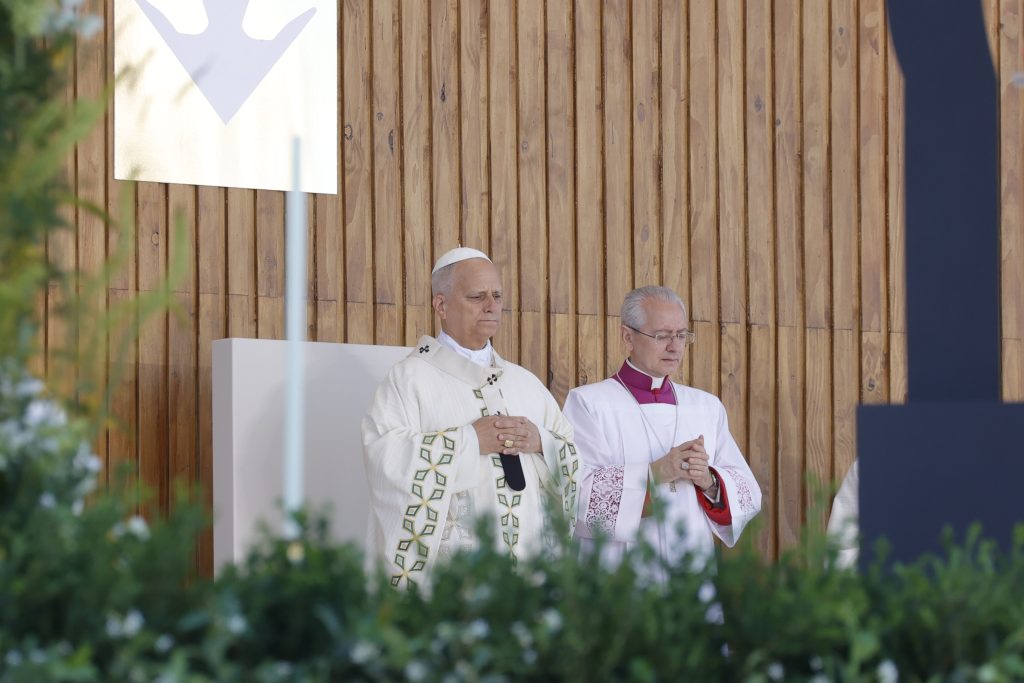
In full: Pope Leo XIV’s homily for the Solemnity of Corpus Christi in Madrid
On the Solemnity of Corpus Christi, Pope Leo XIV celebrated Mass before 1.2 million faithful in Madrid and delivered a homily centred on the Eucharist, charity and Spain’s Catholic heritage. Read the full text On the second day of his apostolic visit to Spain, the Holy Father, Pope Leo XIV, delivered an impassioned homily before 1.2 million faithful gathered in the centre of the nation’s capital. Speaking on the Solemnity of Corpus Christi, the Pope said that on this day Catholics celebrate that Jesus “does not remain enclosed within the church, but comes out to meet us”. He also exhorted Spain’s Catholics not to let their faith “become a museum”, but to be recognised as “a school that teaches us to kneel before God and before our neighbour, because no one can kneel before the Lord and despise a brother or sister”. Spain’s history is one of deep Catholic devotion, but it has also been marked by periods of anti-clerical socialism, leading many to speak of “two Spains”. Under Prime Minister Pedro Sánchez, the country has been subject to particularly aggressive secular and anti-Catholic legislation, notably laws limiting religious education in Catholic schools and introducing assisted suicide. Although the Holy Father has remained clear of political debate, his call for Spain to return to its Catholic roots struck a notably different tone from Sánchez’s secularism, which seeks to remove the Church’s presence in public life. The Holy Father concluded by praying for those present, imploring Jesus that “a full and abundant life may spring forth for you, for your families and for your country”. The full text is reproduced below: Dear priests, religious brothers and sisters, Your Majesties, brothers and sisters, With my heart filled with joy at the beginning of this journey to Spain, I preside over this celebration on the Solemnity of Corpus Christi. We are gathered around the Eucharist, the gift of Christ’s living presence among us. He who wished to offer us his life in order to bring us into communion with the Father and make us his children is here as the living bread come down from heaven, who nourishes us with the very life of God, with a love stronger than death. This remembrance of the Lord present in the Eucharistic bread is at the heart of your faith and of the history of your people. Here in Madrid, but also in so many other places throughout Spain, Corpus Christi is not merely another feast in the calendar, but a return to the roots of faith in order to renew love and fidelity to God. The solemn processions of this day have embodied for centuries the piety, the art, the music, the architecture and the life of the Spanish people, and even today they express and manifest the spiritual sentiment of this country, also through the beauty and elegance of the floral carpets, of the altars in the streets, the care devoted to the monstrances and displays, the hymns and the ornaments. This is not a matter of an external display, a folkloric survival, or a simple aesthetic adornment. Rather, it is faith in the presence of the Risen Lord, who is alive and continues to pass among us, who becomes bread for our hunger for life and visits the corners of our hearts and of our history, even the darkest ones. Thus, if in the Eucharistic celebration Christ gives himself as food, the procession proclaims that he does not remain enclosed within the church, but comes out to meet us. Jesus walks through the streets, crosses the squares, visits our neighbourhoods, and dwells in the places of our daily life. He is the God who is near and who walks with his people, the Lord of history, comfort for the weak, light for families, hope for the sick, peace for those who suffer. The Christ who passes through the streets in the monstrance is the same Christ who identifies himself with the poor, the downcast, those who are alone and abandoned. It is no coincidence that here in Spain the Church has for many years linked the Solemnity of Corpus Christi with the Day of Charity. It is not simply a matter of carrying the monstrance through the streets, but of allowing ourselves to be drawn out of selfishness, indifference, and a comfortable and private faith, in order to respond to his invitation to conversion, to change our way of seeing, and to open ourselves to his presence, a presence that transforms us and makes us builders of a new world. For this reason, the historical memory of the Corpus Christi processions cannot be imprisoned by nostalgic remembrance. Rather, it becomes an invitation for today, for our personal lives, for our relationships, for society, and for the building of the future. It is in this light that we must understand the invitation to remember that we heard in the first reading. “Remember the whole journey that the Lord your God made you travel during these forty years in the desert.” “Remember how, when you were hungry, he fed you with manna.” It is a matter of remembering precisely so as not to forget who the Lord is, so as not to fall into the temptation of trusting in other idols and feeding ourselves on a bread that does not satisfy. Therefore, here is a task entrusted to the Spain of today and tomorrow: that the religious faith which has animated this country for centuries may not become a museum of the past to be visited, but rather a school of faith from which people may still drink today. A school that teaches us to kneel before God and before our neighbour, because no one can kneel before the Lord and despise a brother or sister. A school that teaches us gratitude, the love that becomes a gift so that it may circulate among us and break the chains of every form of selfishness. A school in which we learn that God is truly present, and that we too are called to be present amid the situations and challenges of society, not to flee from them, but to commit ourselves personally to the building of the common good. Brothers and sisters, I wish to recall here Saint Manuel González, the bishop of the abandoned tabernacles. His life reminds us that the Eucharist cannot be honoured only during great celebrations or in an occasional way, but also through the silent fidelity of those who accompany the Lord with a humble and discreet friendship nourished day by day. I would also like to recall the poetic verses of Saint John of the Cross: “I know well the fountain that flows and runs, though it is night.” In the convent prison of Toledo, where he was imprisoned under extremely harsh conditions, precisely around Corpus Christi in the year 1578, he recognised, from within the darkness of that prison, the hidden presence of the Lord, from whom springs a light that never fails and a life that is never exhausted. Jesus in the Eucharist is that eternal fountain which remains hidden, a fountain that flows and quenches thirst, yet without dazzling, without imposing itself through outward power, without presenting itself in a spectacular manner. Let us return to him with sincere love. Let us open ourselves to an encounter with him. Let us allow him to refresh the dryness of our hearts so that we may then go out onto the roads of life and history carrying among people this stream of fresh water, a stream of love, peace, justice and joy. Let us drink once more from this Eucharistic fountain, which does not enclose us within a private devotion, but sends us out to our brothers and sisters, to families, to the poor, to those who suffer, to those who have lost hope. The grace of the Eucharist transforms us, but it also makes us protagonists in the transformation of history and signs of hope for those whom we encounter. May the Lord Jesus, present in the Eucharist, make you bread broken, given and offered, so that a full and abundant life may spring forth for you, for your families and for your country. Image credit: EUROPA PRESS – JESÚS HELLÍN
Jun. 7, 2026
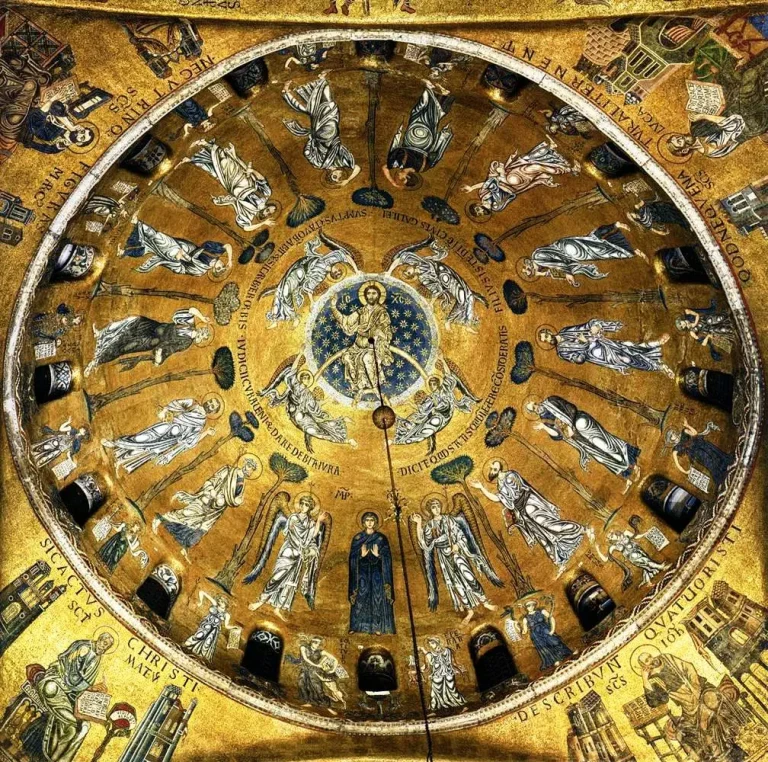
St Leo the Great on the Ascension and the triumph of faith
In this sermon for the Feast of the Ascension, St Leo the Great reflects on Christ’s triumph over death, the transformation of the Apostles after the Ascension, and the call for Christians to lift their hearts above earthly things and towards eternity The mystery of our salvation, dearly beloved, which the Creator of the universe valued at the price of His blood, has now been carried out under conditions of humiliation from the day of His bodily birth to the end of His Passion. And although even in the form of a slave many signs of Divinity have beamed out, yet the events of all that period served particularly to show the reality of His assumed Manhood. But after the Passion, when the chains of death were broken, which had exposed its own strength by attacking Him, Who was ignorant of sin, weakness was turned into power, mortality into eternity, contumely into glory, which the Lord Jesus Christ showed by many clear proofs in the sight of many, until He carried even into heaven the triumphant victory which He had won over the dead. As therefore at the Easter commemoration, the Lord’s Resurrection was the cause of our rejoicing, so the subject of our present gladness is His Ascension, as we commemorate and duly venerate that day on which the Nature of our humility in Christ was raised above all the host of heaven, over all the ranks of angels, beyond the height of all powers, to sit with God the Father. On which Providential order of events we are founded and built up, that God’s Grace might become more wondrous, when, notwithstanding the removal from men’s sight of what was rightly felt to command their awe, faith did not fail, hope did not waver, love did not grow cold. For it is the strength of great minds and the light of firmly faithful souls unhesitatingly to believe what is not seen with the bodily sight, and there to fix one’s affections whither you cannot direct your gaze. And whence should this Godliness spring up in our hearts, or how should a man be justified by faith, if our salvation rested on those things only which lie beneath our eyes? Hence our Lord said to him who seemed to doubt Christ’s Resurrection until he had tested by sight and touch the traces of His Passion in His very Flesh: “Because you have seen Me, you have believed: blessed are they who have not seen and yet have believed” (John 20:29). In order, therefore, dearly beloved, that we may be capable of this blessedness, when all things were fulfilled which concerned the Gospel preaching and the mysteries of the New Testament, our Lord Jesus Christ, on the fortieth day after the Resurrection in the presence of the disciples, was raised into heaven, and terminated His presence with us in the body, to abide on the Father’s right hand until the times Divinely foreordained for multiplying the sons of the Church are accomplished, and He comes to judge the living and the dead in the same flesh in which He ascended. And so that which till then was visible of our Redeemer was changed into a sacramental presence, and that faith might be more excellent and stronger, sight gave way to doctrine, the authority of which was to be accepted by believing hearts enlightened with rays from above. This Faith, increased by the Lord’s Ascension and established by the gift of the Holy Ghost, was not terrified by bonds, imprisonments, banishments, hunger, fire, attacks by wild beasts, or refined torments of cruel persecutors. For this Faith throughout the world not only men, but even women, not only beardless boys, but even tender maids, fought to the shedding of their blood. This Faith cast out spirits, drove off sicknesses, and raised the dead; and through it the blessed Apostles themselves also, who after being confirmed by so many miracles and instructed by so many discourses, had yet been panic-stricken by the horrors of the Lord’s Passion and had not accepted the truth of His Resurrection without hesitation, made such progress after the Lord’s Ascension that everything which had previously filled them with fear was turned into joy. For they had lifted the whole contemplation of their mind to the Godhead of Him that sat at the Father’s right hand, and were no longer hindered by the barrier of corporeal sight from directing their mind’s gaze to That Which had never quitted the Father’s side in descending to earth, and had not forsaken the disciples in ascending to heaven. The Son of Man and Son of God, therefore, dearly beloved, then attained a more excellent and holier fame, when He betook Himself back to the glory of the Father’s Majesty, and in an ineffable manner began to be nearer to the Father in respect of His Godhead, after having become farther away in respect of His manhood. A better instructed faith then began to draw closer to a conception of the Son’s equality with the Father without the necessity of handling the corporeal substance in Christ, whereby He is less than the Father, since, while the Nature of the glorified Body still remained, the faith of believers was called upon to touch not with the hand of flesh, but with the spiritual understanding the Only-begotten, Who was equal with the Father. Hence comes that which the Lord said after His Resurrection, when Mary Magdalene, representing the Church, hastened to approach and touch Him: “Touch Me not, for I have not yet ascended to My Father” (John 20:17): that is, I would not have you come to Me as to a human body, nor yet recognise Me by fleshly perceptions: I put you off for higher things, I prepare greater things for you. When I have ascended to My Father, then you shall handle Me more perfectly and truly, for you shall grasp what you cannot touch and believe what you cannot see. But when the disciples’ eyes followed the ascending Lord to heaven with upward gaze of earnest wonder, two angels stood by them in raiment shining with wondrous brightness, who also said: “You men of Galilee, why do you stand gazing into heaven? This Jesus Who was taken up from you into heaven shall so come as you saw Him going into heaven” (Acts 1:11). By which words all the sons of the Church were taught to believe that Jesus Christ will come visibly in the same Flesh wherewith He ascended, and not to doubt that all things are subjected to Him on Whom the ministry of angels had waited from the first beginning of His Birth. For, as an angel announced to the blessed Virgin that Christ should be conceived by the Holy Ghost, so the voice of heavenly beings sang of His being born of the Virgin also to the shepherds. As messengers from above were the first to attest His having risen from the dead, so the service of angels was employed to foretell His coming in very Flesh to judge the world, that we might understand what great powers will come with Him as Judge, when such great ones ministered to Him even in being judged. And so, dearly beloved, let us rejoice with spiritual joy, and let us with gladness pay God worthy thanks and raise our hearts’ eyes unimpeded to those heights where Christ is. Minds that have heard the call to be uplifted must not be pressed down by earthly affections; they that are foreordained to things eternal must not be taken up with the things that perish; they that have entered on the way of Truth must not be entangled in treacherous snares, and the faithful must so take their course through these temporal things as to remember that they are sojourning in the vale of this world, in which, even though they meet with some attractions, they must not sinfully embrace them, but bravely pass through them. For to this devotion the blessed Apostle Peter arouses us, and entreating us with that loving eagerness which he conceived for feeding Christ’s sheep by the threefold profession of love for the Lord, says: “Dearly beloved, I beseech you, as strangers and pilgrims, abstain from fleshly lusts which war against the soul” (1 Peter 2:11). But for whom do fleshly pleasures wage war, if not for the devil, whose delight it is to fetter souls that strive after things above with the enticements of corruptible good things, and to draw them away from those abodes from which he himself has been banished? Against his plots every believer must keep careful watch that he may crush his foe on the side whence the attack is made. And there is no more powerful weapon, dearly beloved, against the devil’s wiles than kindly mercy and bounteous charity, by which every sin is either escaped or vanquished. But this lofty power is not attained until that which is opposed to it be overthrown. And what so hostile to mercy and works of charity as avarice, from the root of which spring all evils? And unless it be destroyed by lack of nourishment, there must needs grow in the ground of that heart in which this evil weed has taken root the thorns and briars of vices rather than any seed of true goodness. Let us then, dearly beloved, resist this pestilential evil and follow after charity, without which no virtue can flourish, that by this path of love whereby Christ came down to us, we too may mount up to Him, to Whom with God the Father and the Holy Spirit is honour and glory for ever and ever. Amen.
May 14, 2026