The Society of Saint Pius X has consecrated four bishops without papal mandate. The event, announced in February this year, has seen more than 15,000 pilgrims arrive in Écône, Switzerland, at the Society’s international seminary.
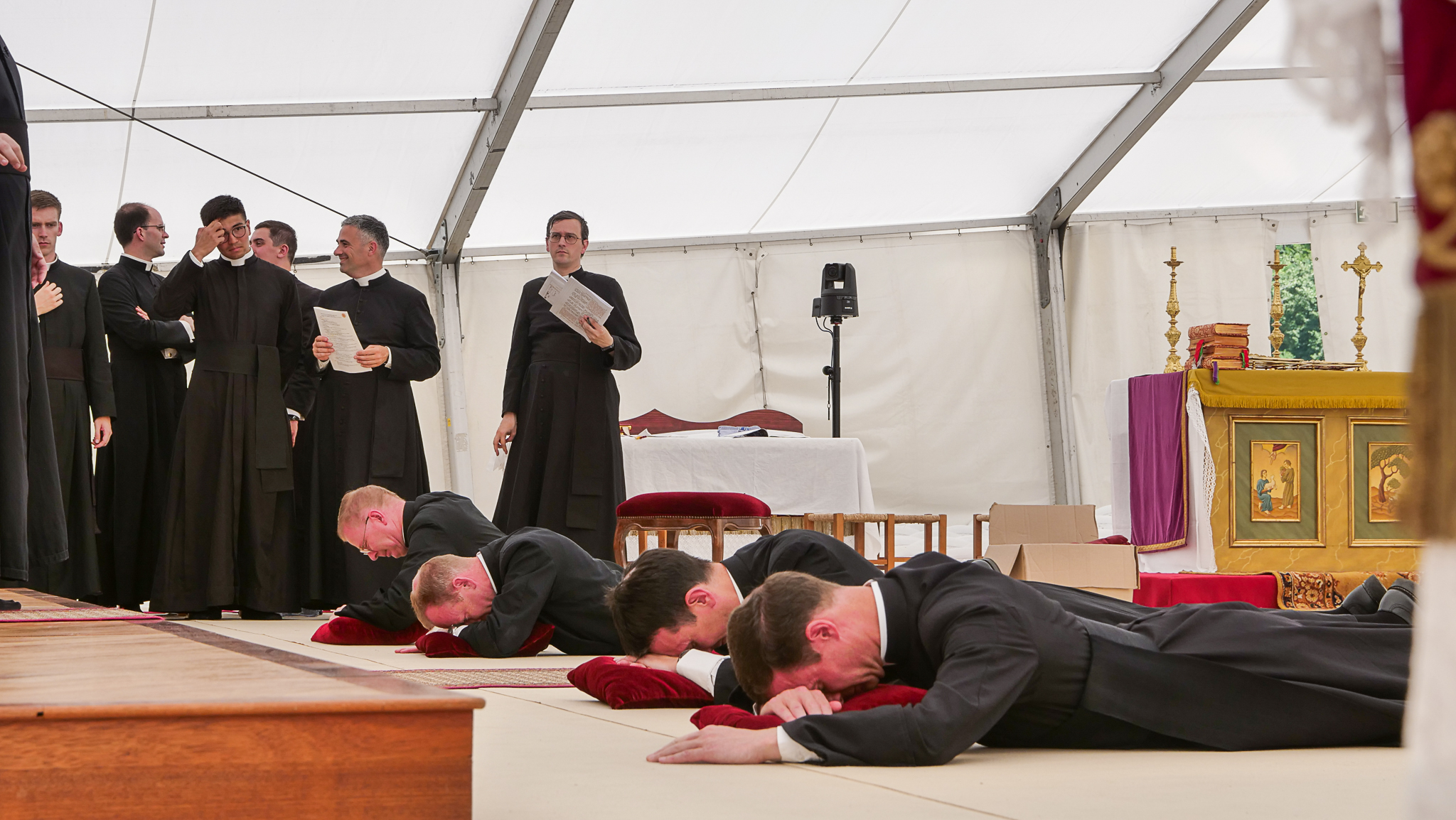
Bishop Pascal Schreiber (Switzerland), Bishop Michael Goldade (USA), Bishop Michel Poinsinet (France) and Bishop Marc Hanappier (France) were consecrated in a ceremony lasting more than three hours.
The decision to consecrate bishops is justified by the Society as a “grave necessity”. With just two of the four bishops consecrated by Archbishop Marcel Lefebvre in 1988 still alive, Bishop Alfonso de Galarreta and Bishop Bernard Fellay, the Society explains that “the two remaining bishops do not suffice for the task” and that “the SSPX must equip itself to continue its apostolate, thereby responding to the pastoral needs of the faithful”.
The Society has grown considerably since it was established in 1970, with more than 750 priests, 264 men training for the priesthood and 145 lay brothers. There are also 88 SSPX nuns and 19 SSPX-affiliated religious communities. Across the world, the SSPX’s ministries in 77 countries comprise 17 districts with 184 priories. There are 798 Mass centres serving what is believed to be around one million “SSPX faithful”, those who regularly attend SSPX services.
The Vatican, and Pope Leo himself, have repeatedly warned against the consecrations. Yesterday, on the eve of the event, in a letter dated 29 June, the Feast of Saints Peter and Paul, Pope Leo wrote to Fr Davide Pagliarani, the SSPX Superior General, stating: “I plead with you and ask you with all my heart: please turn back!” Calling the consecrations a “schismatic act”, the Holy Father stated that “the Church is open to a path of dialogue and understanding that the Holy Spirit can make possible and fruitful.”
Responding to the letter, Fr Davide Pagliarani spoke of the good the Society had done, noting the “thousands of souls who have rediscovered the Catholic Faith” and that the SSPX existed so that they might “attain salvation through this instrument which divine providence has placed at their disposal”. The priest concluded by asking the Holy Father to “please give us your blessing”.
In today’s homily, Fr Davide Pagliarani explained that they were not carrying out the consecrations to separate themselves from the Church, but rather to assist the Church’s mission, adding that these bishops would in turn benefit the Church.
The ceremony was carried out on the Feast of the Precious Blood, which, prior to the liturgical reforms of the 1960s, was celebrated separately from Corpus Christi on 1 July throughout the Church. The consecrations are carried out within the context of Holy Mass, beginning after the Gradual and, once concluded, the Mass continuing with the Gospel.
At the beginning of the consecrations, the bishop’s duties are read to the candidates, explaining that “the bishop must judge, interpret, consecrate, ordain, offer, baptise and confirm.”
A notable moment, which has been seen on only a couple of occasions over the past 50 years, was the bishops’ offertory procession. Here the bishops presented two loaves of bread, two candles and two barrels of wine emblazoned with their coats of arms, representing the three consumable elements used in the Holy Mass.
The consecration of the bishops’ hands is similar to that used for priests, but the oil used is the Sacred Chrism rather than the Oil of Catechumens, referencing the kingly consecration of bishops. “May whatsoever you shall bless be blessed, whatsoever you may sanctify be sanctified, and may the imposition of your consecrated hands and your thumb contribute to the salvation of souls.”
Just like any other sacrament, the consecration requires form and matter. At the end of the Litany of the Saints, the imposition of hands constitutes the matter of the sacrament. Here, the Gospels are placed upon the bishops-elect’s shoulders, resting on their head, where they remain until the giving of the bishop’s ring. The consecratory Preface then concludes with the form by which the priests become bishops. The ceremony that follows is almost exactly the same as that standardised in the Rite of Consecration of a Bishop following the Council of Trent.
After the consecration, Holy Mass resumed. The newly consecrated Bishops received the Body of Christ from the same, larger, Host and the Precious Blood from the same chalice.